
Best thing to kill ants in the house: Ultimate 2025 Fix
Finding the Right Ant Control Solution for Your Home
The best thing to kill ants in the house depends on your specific situation, but here are the top options that actually work:
For Complete Colony Elimination:
- Slow-acting baits (borax-based) – Takes 1-2 weeks but kills the entire nest
- Liquid ant bait stations – Ants carry poison back to the queen
For Immediate Results:
- Contact sprays (soap and water solutions) – Kills ants on contact
- Diatomaceous earth – Natural powder that dehydrates ants
For Prevention:
- Perimeter barriers – Granulated treatments around your home’s foundation
- Natural repellents – Essential oils and vinegar to disrupt ant trails
When you find ants marching across your kitchen counter, you want them gone immediately. But what most homeowners don’t realize is that killing the ants you see won’t solve your problem. Those worker ants are just a fraction of an entire colony, which can number in the thousands, with a queen continuously laying eggs. This is why many DIY attempts fail and ants keep coming back.
The most effective approach is to identify the type of ant, eliminate the entire colony, and prevent future invasions. Some methods work fast but offer only temporary relief, while others take longer but deliver permanent results by destroying the source.
I’m Waltham Pest Control, President & CEO of Waltham Pest Control. With over 40 years of experience helping Massachusetts homeowners, I’ve seen which methods provide lasting results and which are a waste of time. My goal is to help you find the best thing to kill ants in the house for your specific problem.
Know your best thing to kill ants in the house terms:
First Steps: Identifying Your Ant Problem
Before choosing the best thing to kill ants in the house, you need to play detective. Understanding your specific ant problem is the first step toward choosing the right battle plan.
Signs of an Infestation
The most obvious clue is seeing the ants themselves, but where and how you see them provides important information.
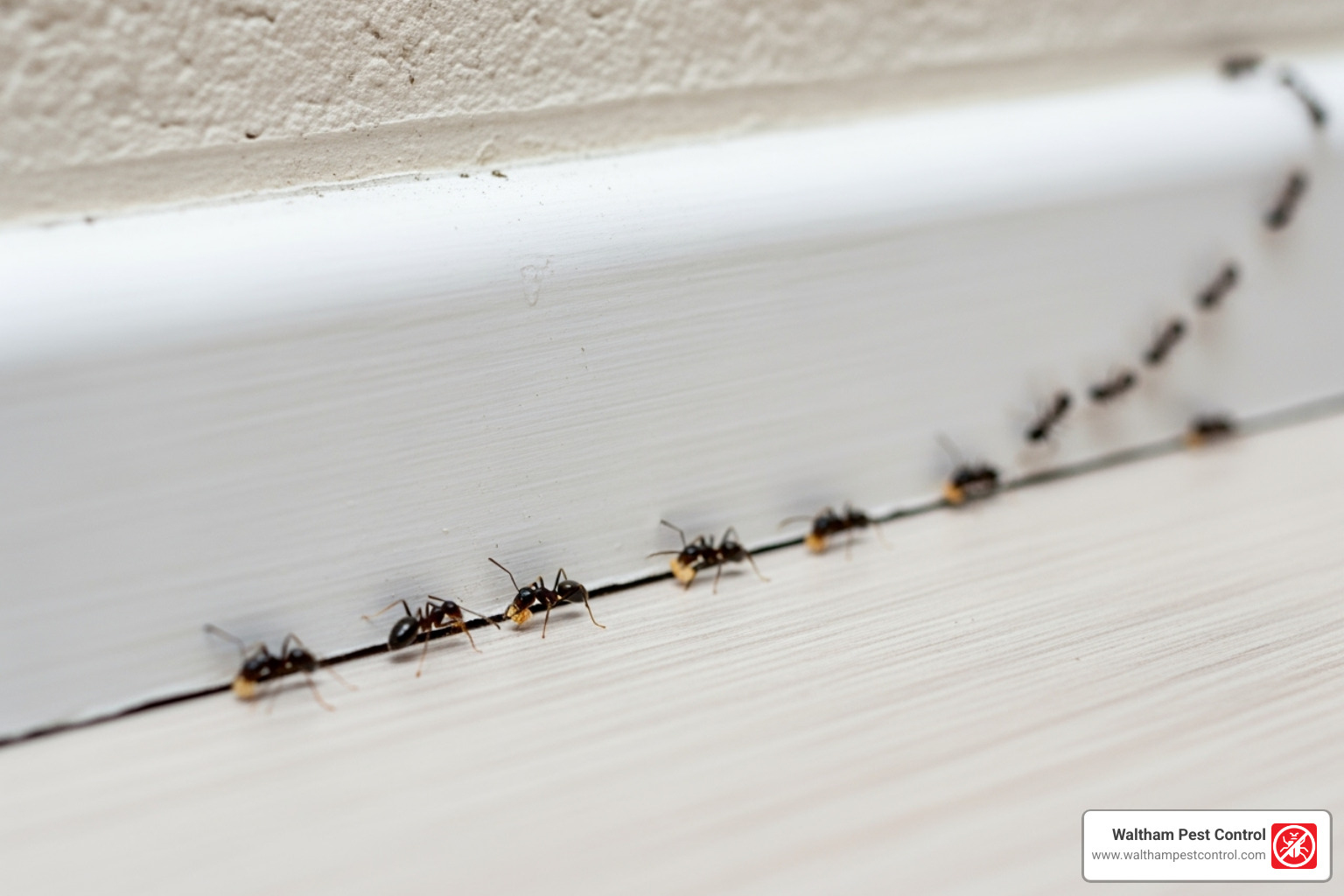
Look for ant trails, which are lines of ants following invisible chemical pheromone paths to food. For some species, like carpenter ants, you might find small piles of frass, which looks like sawdust and indicates they are chewing through wood to build nests.
The kitchen is often ground zero, where you’ll find ants in the pantry or kitchen searching for crumbs, spills, or open food containers. They are attracted to sweets, starches, and pet food. You may also notice ant activity spikes in spring and fall as they seek shelter and food indoors due to changing weather.
Why Ant Type Matters
Identifying the ant species is crucial because different ants have different behaviors and food preferences, which impacts the effectiveness of treatments.
Some ants, often called sugar ants, prefer sweet foods. Others are protein ants, drawn to greasy or fatty foods. Using the wrong type of bait will be ineffective. For example, if you’re battling little red ants in your house or red ants in your house near your sugar bowl, a sweet bait is the logical choice.
Carpenter ants are a more serious concern. They don’t eat wood but tunnel through it to create nests, which can cause significant structural damage over time. Learning how to exterminate carpenter ants in your house requires a specialized approach beyond general ant killers.
A swarm of winged ants indoors is a major red flag, indicating a mature colony is inside your home and ready to expand.
Following the Trail: Finding Entry Points
Once you’ve spotted ants, try to find how they’re getting in. Follow their trails to look for tiny openings, such as:
- Cracks in walls or the foundation
- Gaps around windows and doors
- Holes near floorboards or radiators
- Openings where utility lines enter the house
Identifying these entry points is a critical step for long-term prevention.
Comparing Ant Control Methods: Baits vs. Sprays vs. Repellents
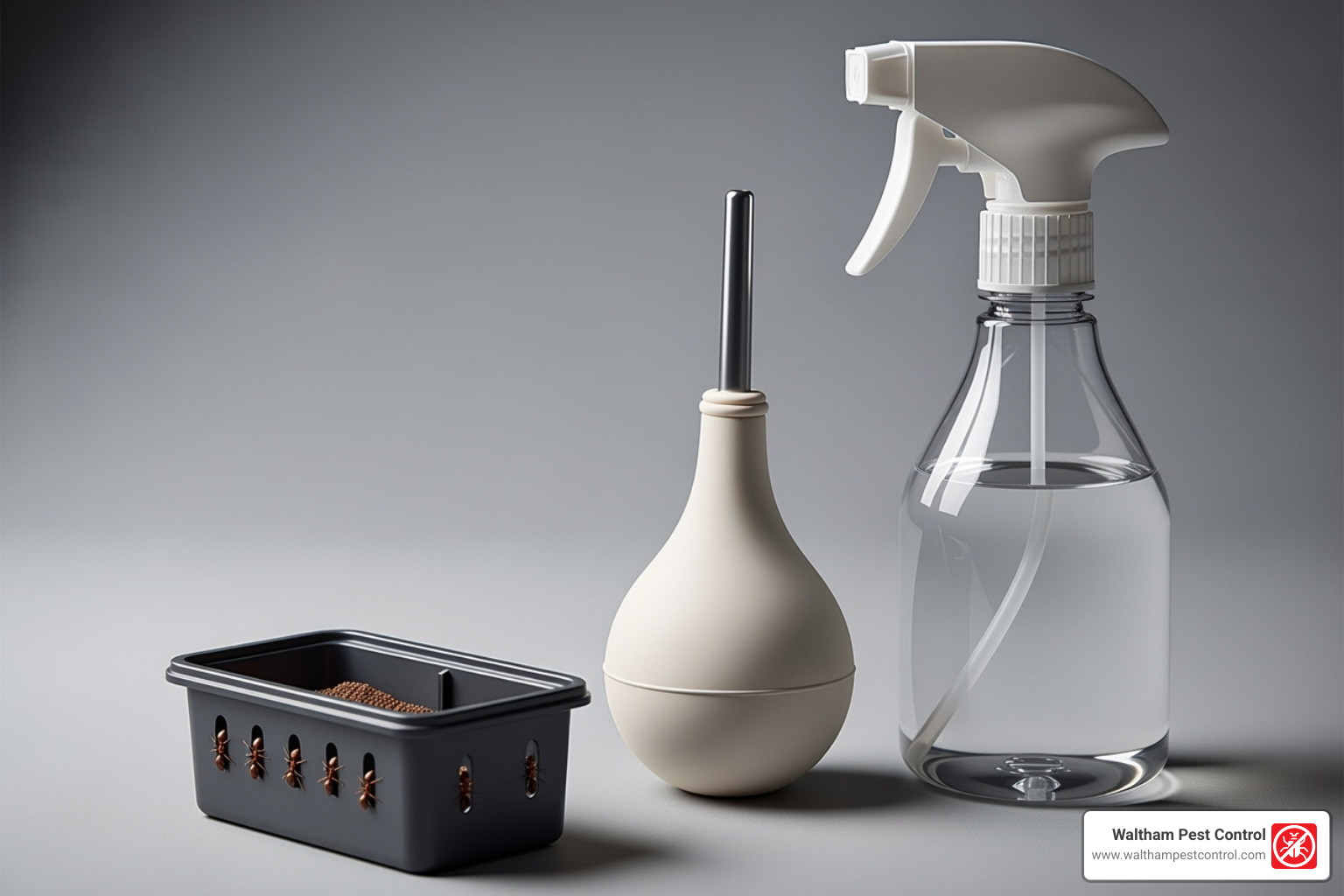
Once you’ve identified your ant problem, it’s time to choose your strategy. The main tools in your arsenal are baits, contact sprays, and repellents. Each serves a different purpose, and understanding their strengths and weaknesses is key to success.
Here’s a quick comparison of these methods:
| Method | Speed of Action | Long-Term Effectiveness | Safety Considerations | Primary Use |
|---|---|---|---|---|
| Baits | Slow (days-weeks) | High (colony elimination) | Generally low risk if placed correctly, but toxic if ingested. | Eliminating entire colonies, including the queen. |
| Contact Sprays | Immediate (seconds) | Low (kills only visible ants) | Can be toxic; use with ventilation; avoid food surfaces. | Quick kill of visible ants, disrupting trails. |
| Repellents | Immediate (deterrent) | Moderate (requires reapplication) | Generally low risk, often natural, but can irritate. | Preventing entry, disrupting communication. |
Slow-Acting Baits: The Colony Killers
If you’re looking for the best thing to kill ants in the house for a permanent solution, slow-acting baits are the answer. They are not about instant gratification but long-term victory.
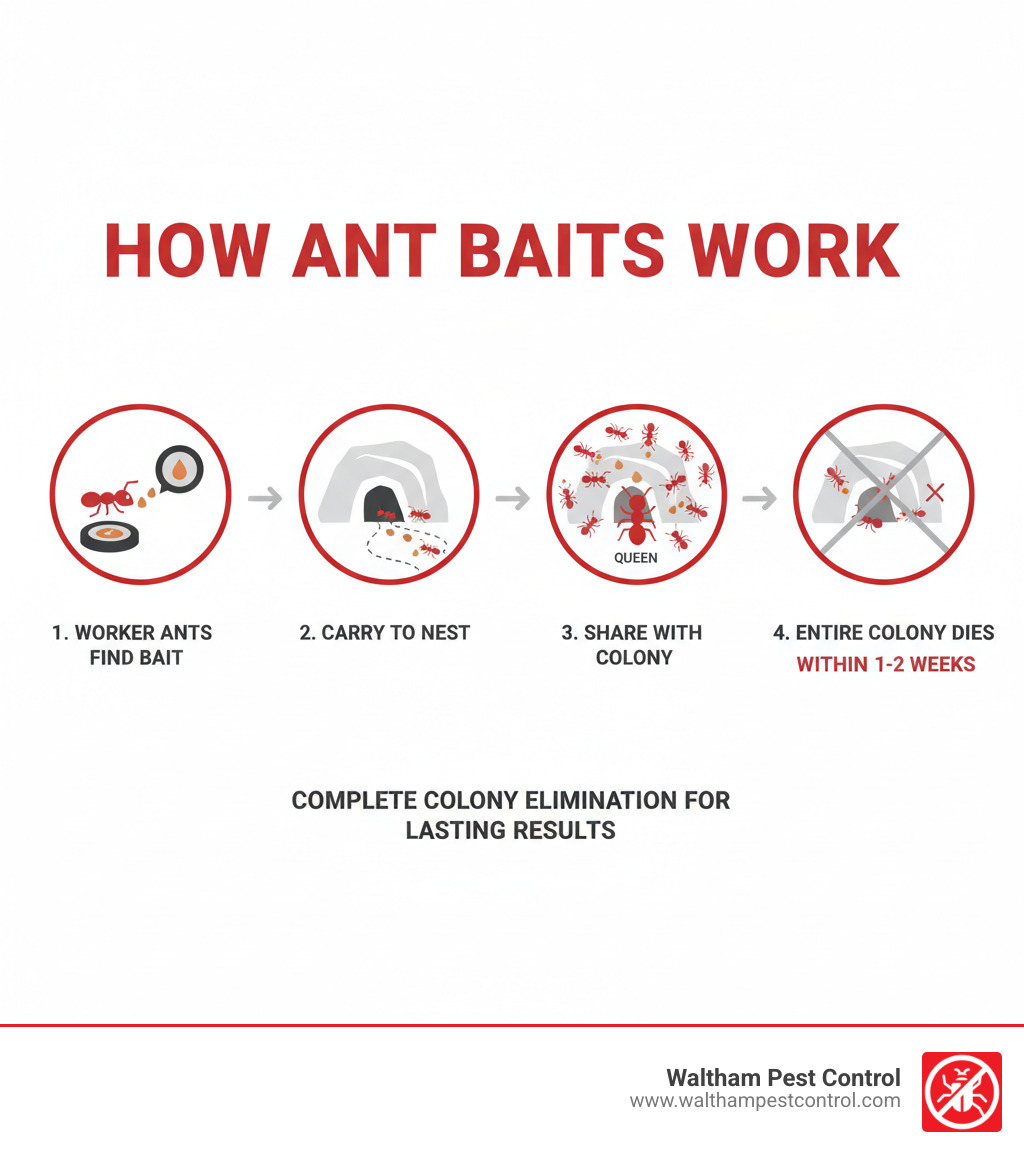
Baits trick worker ants into carrying a slow-acting poison back to the nest. There, they share the ‘food’ with the rest of the colony, including the queen. Eliminating the queen and colony is the only way to truly stop an ant problem. No queen means no new ants, and the colony collapses.
Ants can be picky, with some preferring sugars and others proteins. Baits come in different forms, like liquid vs. gel baits, to appeal to different species. Since adult ants primarily consume liquids, these are often highly effective. An ant bait station indoor can be a great choice.
Patience is required; it can take one to two weeks to wipe out an entire colony. You might even see more ants at first, which is a good sign they’ve found the bait and are taking it back to the nest.
Contact Sprays: For Immediate Results
When you want visible ants gone immediately, contact sprays are the tool. They offer the satisfaction of watching ants stop in their tracks.
These sprays work by killing ants on contact. A simple, non-toxic option is a mixture of soap and water, which breaks down the ants’ exoskeleton and causes dehydration. Spraying also helps clean scent trails, the invisible pheromone highways ants use to steer.
When to use sprays? They are perfect for sudden sightings on a counter or floor. However, it’s crucial to understand why sprays don’t solve the root problem. You’re only killing a tiny fraction of the colony, while the queen and the nest remain hidden and safe. Sprays are a quick fix, not a long-term solution.
Repellents: Creating a “Keep Out” Zone
Repellents don’t kill ants; they create a boundary that ants avoid. They act as a “no trespassing” sign for tiny invaders.
How repellents work is by disrupting the ants’ sense of smell or their crucial pheromone trails. Without these trails, ants become confused and cannot communicate food locations to the colony.
You can also create physical barriers. Natural repellents like essential oils (peppermint, tea tree), cinnamon, coffee grounds, or white vinegar can be placed near entry points.
Repellents are best for prevention and are most effective when combined with a colony-eliminating bait strategy to keep your home ant-free.
What is the best thing to kill ants in the house? Top Solutions Explored
After four decades in pest control, I can tell you that the best thing to kill ants in the house isn’t always a spray bottle. The most effective solutions work behind the scenes to target the real problem: the hidden colony.
The best approach depends on whether you need immediate results, total colony elimination, or natural solutions. Here are the top strategies that deliver lasting results.
For Total Colony Elimination: The best thing to kill ants in the house is a slow-acting bait
When you want ants gone for good, slow-acting baits are your secret weapon. These baits turn the ants’ teamwork against them. Worker ants find the bait and carry it back to share with the colony, spreading the poison to the queen.
Borax and boric acid are the workhorses of effective ant baits. Borax is a natural mineral that works slowly enough to allow worker ants to transport it back to the nest before they die. When ants consume borax, it disrupts their digestive system, leading to death within 24 to 72 hours. This ensures the deadly meal is shared with the queen and larvae.
This effectiveness on the entire nest is what separates successful ant control from the endless cycle of spraying visible ants. While borax is found in many household products, baits should always be placed where children and pets cannot reach them. Covered bait stations are ideal for this purpose.
For a Natural & Pet-Safe Approach: Diatomaceous Earth
For families with children or pets, food-grade diatomaceous earth is a safe and effective option. This fine powder comes from the fossilized remains of tiny aquatic organisms called diatoms.
Unlike chemical pesticides, it works physically. The microscopic sharp edges damage the ants’ exoskeletons and absorb their body’s oils, leading to dehydration. Because no poison is involved, it’s one of the safest options for indoor use.
For best results, apply the powder in cracks and crevices where you’ve seen ant activity, such as along baseboards and around entry points. Always use food-grade diatomaceous earth, not the type used for pool filters. While generally safe, it’s best to avoid inhaling any fine powder.
For Perimeter Protection: The best thing to kill ants in the house before they get in
Often, the best thing to kill ants in the house is to stop them from entering in the first place. A protective barrier around your home’s exterior can prevent ant problems before they begin.
Barrier treatments around your home’s foundation create an invisible shield. This can be done with liquid perimeter sprays or granulated powders for yards. Some non-repellent liquid formulas are particularly effective because ants walk through the treated area and unknowingly carry the product back to their colony.
Application frequency in spring and fall is ideal, as it targets ants when they are most active and seeking to establish new colonies near your home. This proactive approach is central to our ant control outside house strategy, helping prevent an ant infestation outside from becoming an indoor problem.
The Ultimate Goal: Preventing Ants from Coming Back
Finding the best thing to kill ants in the house is only half the battle. Once the current infestation is gone, your work shifts to prevention to ensure they don’t return.
Preventing future invasions is easier than dealing with an active one. It requires consistent attention to three key areas: sealing entry points, removing attractants, and using natural deterrents.
Seal All Entry Points
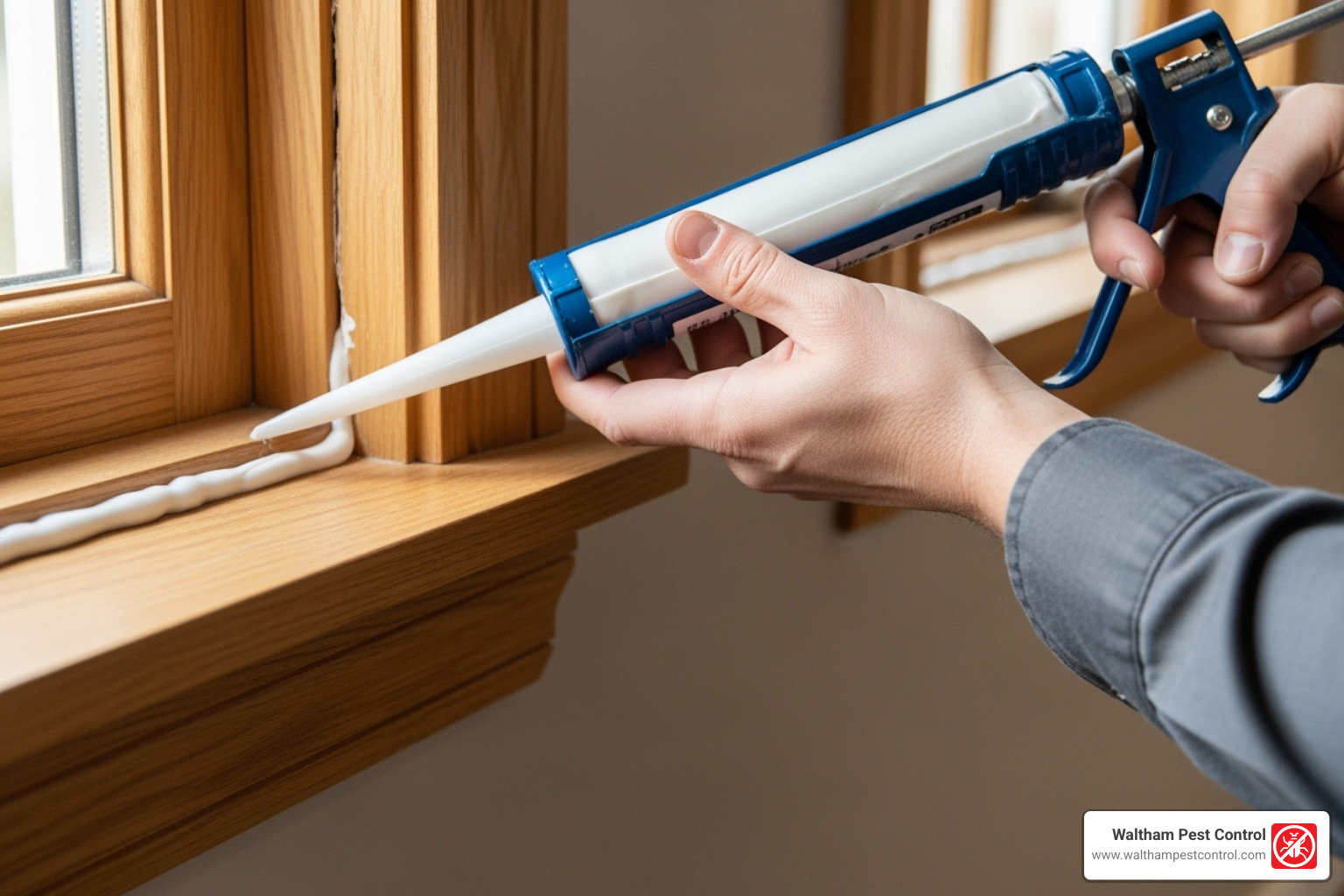
Ants can squeeze through the tiniest of cracks. A thorough inspection of your home is the first step. Walk around your foundation and look for gaps, especially where pipes and wires enter the house. Check for worn weather stripping and small gaps around window frames and door thresholds.
Use a quality silicone caulk and new weather stripping to seal these openings. Also, be sure to trim any tree branches that touch your house, as they can act as bridges for ants to access your roof and upper floors.
Eliminate Food and Water Sources
This step is critical for long-term ant prevention. Ants are constantly foraging, and even tiny crumbs can attract a colony.
Practice diligent sanitation. Keep surfaces free of food residue, especially countertops, cabinets, and floors. Store all dry goods, including pet food, in airtight containers. Cardboard boxes and plastic bags are not ant-proof.
Clean up after pets promptly and address any moisture issues. Fix leaky faucets or pipes, as ants need water just as much as food. A consistent daily cleaning routine—wiping spills, washing dishes, and sweeping crumbs—makes a huge difference.
Use Natural Ant Deterrents
Natural deterrents work by creating scents that ants dislike, disrupting their communication trails. These methods are excellent for families with children and pets.
Peppermint oil is a well-known repellent; scientific research on peppermint oil’s repellent properties confirms its effectiveness against certain ant species. A simple spray of peppermint oil mixed with water can be applied around entry points.
Cinnamon and white vinegar are also effective. Sprinkling ground cinnamon or placing cinnamon sticks can deter ants. A spray of equal parts white vinegar and water not only repels ants but also erases their scent trails. Used coffee grounds can be sprinkled around your home’s perimeter.
The key to success with these methods is strategic placement and regular reapplication at entry points and along previous ant trails.
Frequently Asked Questions about Killing Ants
It’s natural to have questions when dealing with an ant problem. Here are expert answers to some common concerns.
How long does it take to get rid of ants completely?
The timeline depends on the method you choose and the size of the infestation. If you use slow-acting baits, it typically takes 1 to 2 weeks for the entire colony to be eliminated. Worker ants need time to carry the bait back to the nest and share it. In contrast, contact sprays provide immediate but temporary results, as they only kill the ants you see.
Prevention is an ongoing effort. By consistently sealing entry points and eliminating food sources, you can keep ants away for good. Minor issues can often be resolved in a couple of weeks, while more severe infestations may take longer.
Are natural ant killers really effective?
Yes, many natural ant killers are effective, but it’s important to distinguish between those that kill and those that deter. Food-grade diatomaceous earth is a powerful natural killer that works by dehydrating ants. Borax, used in baits, is also a lethal natural mineral that can wipe out a colony.
On the other hand, substances like essential oils (peppermint, tea tree) and vinegar are primarily repellents. Their strong scents disrupt ant trails and discourage them from entering an area, but they typically won’t eliminate the colony. They are best used for prevention or for very minor ant sightings.
When should I call a professional exterminator for ants?
While many DIY methods can handle minor issues, there are times when calling a professional is the best thing to kill ants in the house permanently.
Consider professional help if:
- The infestation is persistent or recurring. If you’ve tried home remedies and the ants keep coming back, it’s time for an expert.
- You suspect damaging species like carpenter ants. These ants can cause structural damage, and a professional can implement targeted indoor ant extermination strategies to protect your home.
- The infestation is large or widespread. If you’re facing a massive pavement ant infestation or a general ant infestation in home that feels overwhelming, professionals have the tools to handle it efficiently.
- You have safety concerns or want a guaranteed solution. A professional pest control company can offer custom solutions, including green pest control programs. While the cost to exterminate ants in house can vary, a quote from Waltham Pest Control will be based on your specific situation. Investing in professional services from an ant control company near me often saves time and frustration in the long run.
Conclusion: Your Action Plan for an Ant-Free Home
Dealing with ants in your home can be frustrating, but reclaiming your space is entirely achievable with the right plan. We’ve learned that the best thing to kill ants in the house isn’t a single product but a smart, three-step approach.
First, Identify the signs of an infestation and the type of ant to choose the right tools. Next, Eliminate the colony using the appropriate method. For a long-term solution, slow-acting baits are often the most effective, while sprays offer immediate but temporary relief. Finally, Prevent their return by sealing entry points, maintaining a clean environment free of food and water sources, and using natural deterrents.
Sometimes, despite your best efforts, an ant problem can be too stubborn or overwhelming to handle alone. If you’re facing a persistent infestation or simply want the fastest, most effective solution, calling in professionals is the best course of action. Here at Waltham Pest Control, we have been serving Eastern Massachusetts for over 40 years. Our licensed and insured team is committed to providing quality, cost-effective, and lasting pest management solutions for homes and businesses.
Don’t let ants march all over your peace of mind. If you’re ready to say goodbye to unwanted guests for good, contact us today for a comprehensive pest management plan. We’re here to help you achieve the ant-free home you deserve!
