

Little red ants in house: 1st Eviction!
Why Those Tiny Red Invaders Need Your Immediate Attention
Little red ants in house situations can quickly escalate from a minor annoyance to a full-blown infestation, threatening your comfort and food safety. These persistent invaders are scouts for colonies that can number in the thousands, searching for food, water, and shelter in your home.
Quick Answer: How to Remove Little Red Ants from Your House
- Identify the species – Different ants require different treatments.
- Eliminate food sources – Store food in airtight containers and clean spills immediately.
- Remove water access – Fix leaky pipes and wipe down wet surfaces.
- Seal entry points – Caulk cracks around your foundation, windows, and doors.
- Call professionals for persistent infestations – DIY methods can make the problem worse.
The challenge isn’t just the ants you see. As research from Alberta Health Services shows, some species like Pharaoh ants can “bud” or split when disturbed by sprays, spreading the infestation rather than eliminating it. Once a scout finds resources, it lays a pheromone trail that guides thousands of colony-mates straight to your kitchen.
I’m Waltham Pest Control, President & CEO of Waltham Pest Control. With over 40 years of experience, I know that successful ant control requires targeting the entire colony, not just the workers on your countertops. Understanding the invader is the first step to taking back your home.
Little red ants in house terms to remember:
Identifying the Common Types of Little Red Ants in House
Before you can treat a little red ants in house problem, you must know which species you’re dealing with. Different ants require different solutions, so correct identification is your most powerful first step. While many look similar, their size, behavior, and nesting habits vary significantly.
Common Culprits in Eastern Massachusetts
Several red ant species are common in Eastern Massachusetts homes, including in our service areas like Burlington, Acton, and Newton.
Pharaoh Ants are a primary concern. These tiny ants are just 1.5 mm long and can be yellow to reddish-brown. They are notorious for ‘budding’—if disturbed by sprays, the colony splits into multiple new colonies, worsening the infestation. They don’t bite but are known to contaminate food.
European Fire Ants, unlike their southern cousins, are found here in Massachusetts. They are reddish, 0.13 to 0.5 inches long, and can deliver a painful sting. They typically nest outdoors under rocks or debris but will venture inside for food.
Pavement Ants are the most common ant pest in our state. They are about 0.13 inches long and dark brown to reddish-brown. They nest under sidewalks and foundations and can deliver a painful bite, though it is not venomous.
Acrobat Ants are recognizable by their heart-shaped abdomen, which they raise over their body when threatened. They are reddish-brown and often nest in moist or decaying wood inside your home.
Pyramid Ants are about 0.13 inches long with a reddish head and thorax and a black abdomen. They are named for the pyramid-shaped mounds of soil at their nest entrances, usually found outdoors.
Here’s a quick comparison of some of our common local “red” ant visitors:
| Species | Size (approx.) | Color | Nest Location | Stinging Ability |
|---|---|---|---|---|
| Pharaoh Ant | 1.5 mm | Yellow to reddish-brown | Hard-to-reach indoor areas (baseboards, furniture) | No |
| Fire Ant | 0.13-0.5 inches | Red all over | Outdoors (mounds, under debris), can forage indoors | Yes (painful) |
| Pavement Ant | 0.13 inches | Dark brown to reddish | Under pavement, foundations, can forage indoors | Yes (painful bite) |
How to Get a Positive ID
Getting a positive ID can be tricky, but you can gather clues for a professional.
- Observe their behavior: Do they march in neat, single-file lines (like Pharaoh ants) or move more erratically?
- Find the nest location: Are they emerging from a crack in the wall, from under a concrete slab, or from a mound of dirt outside? Pavement ants nest under concrete, while Pharaoh ants prefer hidden indoor spots.
- Examine physical features: Note their size, color, and any unique shapes, like the Acrobat ant’s heart-shaped abdomen. If possible, collect a specimen on clear tape for a professional to examine.
Definitive identification often requires a trained eye. Our team at Waltham Pest Control can accurately identify the species invading your home, ensuring we use the right strategy to get rid of them for good. For more details, see our guide on Dealing with Ant Infestation.
Why Ants Are Attracted to Your Home
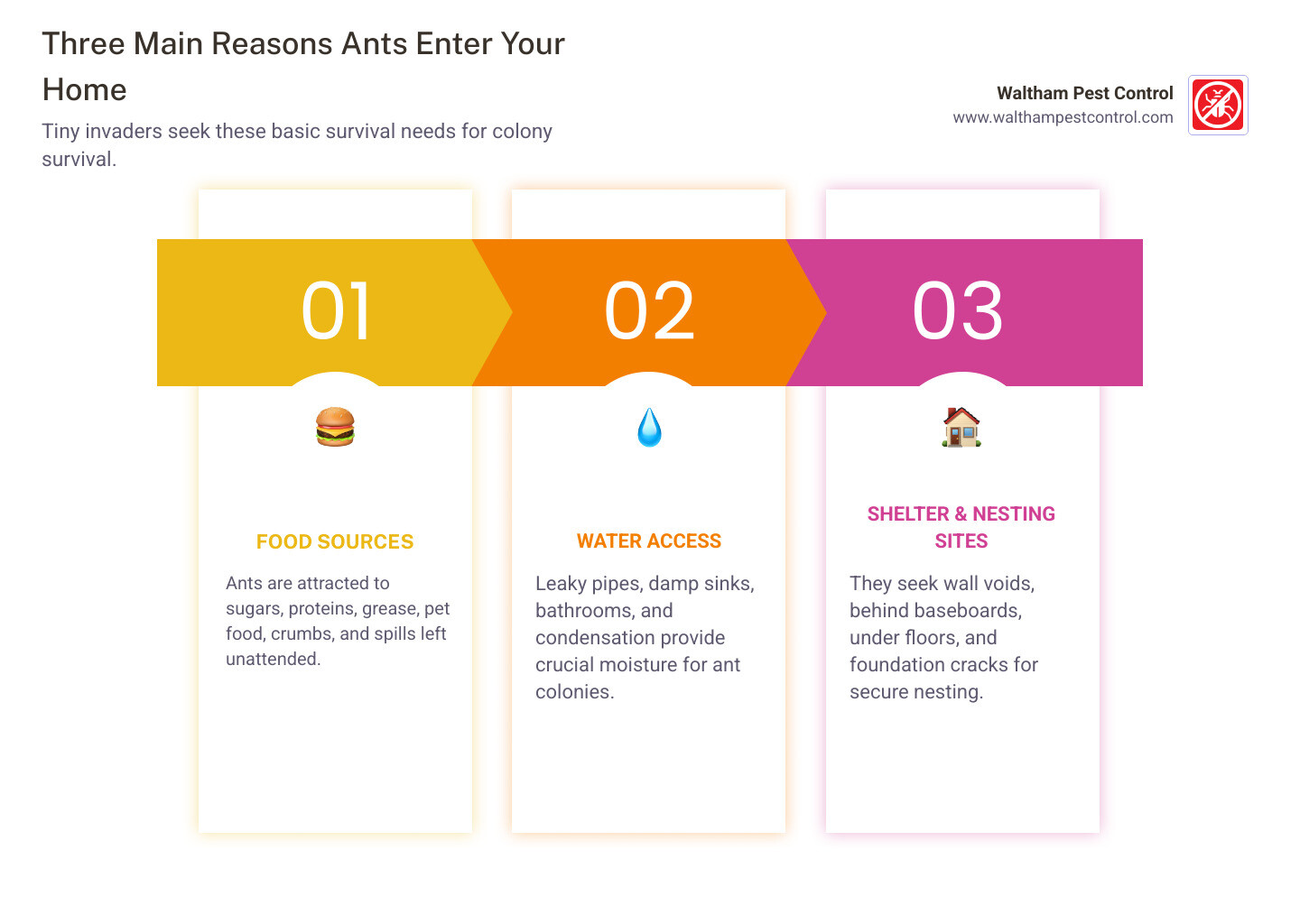
Wondering why little red ants in house situations seem to appear from nowhere? It’s not personal. Ants are driven by fundamental survival needs: food, water, and shelter. To a foraging ant, your climate-controlled home often looks like the perfect place to find all three.
The Search for Food
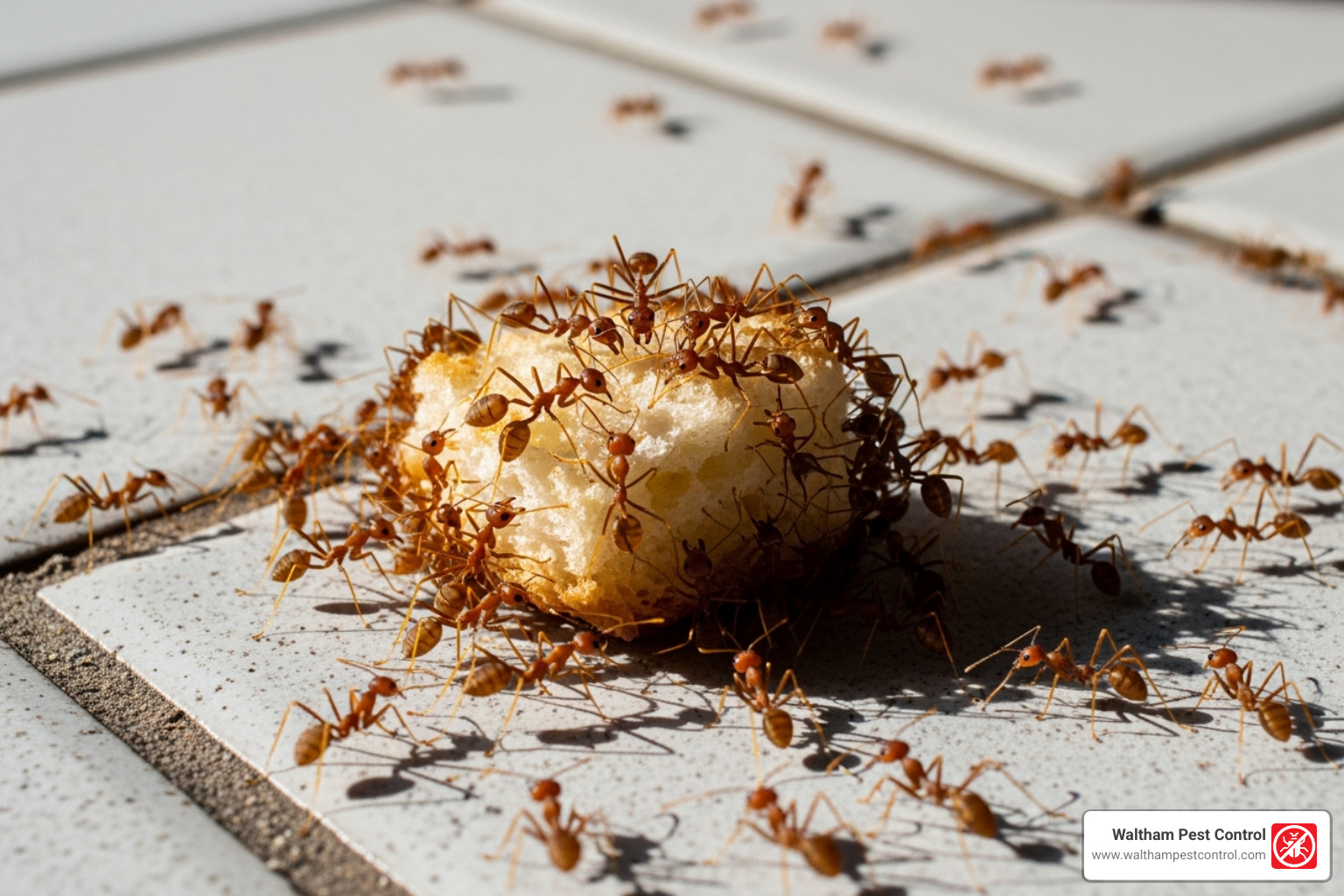
Your kitchen and pantry are prime targets for ants, who are nature’s efficient clean-up crew. They can detect even the smallest crumb or spill.
Many species, including Pharaoh ants, are drawn to sweets like spilled juice or an open sugar container. Others seek proteins and fats, meaning pet food, grease splatters, or meat scraps in the trash are highly attractive. A single scout ant can find these microscopic food particles and lay down a pheromone trail, inviting the entire colony to a feast.
The Need for Water
Like all living things, ants need water. During dry spells, they will actively seek moisture inside your home.
A dripping faucet, a leaky pipe under a sink, or even condensation on windows can provide a vital water source. High-humidity areas like bathrooms, basements, and laundry rooms are common hot spots. Even a damp sponge or a pet’s water bowl can become an oasis for a thirsty colony.
Seeking Shelter and Nesting Sites
Ants are always looking for safe, protected places to establish their colonies. Your home offers plenty of ideal real estate.
Wall voids, the space behind baseboards, or areas under floors can become secure nesting sites. Pharaoh ants particularly favor warm, moist, hidden indoor spots. Tiny cracks in your home’s foundation, gaps around windows, or where utility lines enter the house act as superhighways for ants seeking shelter.
Ants may also move indoors to escape harsh weather, such as heavy rain or the onset of cold temperatures, leading to persistent year-round infestations.
Understanding these attractants is the first step in prevention. Learn more in our guide on House Ants: How to Prevent Them and How to Treat Them.
Prevention: Your First Line of Defense
When it comes to little red ants in house situations, an ounce of prevention is worth a pound of cure. It’s far easier and less expensive to keep ants out than to evict them once they’ve moved in. By making your home less attractive and harder to access, you’re proactively protecting your home and family from infestations.
Kitchen and Food Storage Tips
Your kitchen is ground zero in the battle against ants. A few simple habits can make it much less appealing to them.
- Use airtight containers: Transfer cereals, sugar, flour, and pet food into sealed containers. Cardboard boxes and paper bags offer easy access for ants.
- Clean spills immediately: A single drop of honey or a few grains of sugar is a feast for a scout ant. Wipe down counters and floors promptly.
- Deep clean regularly: Pull out appliances to clean behind them, wipe down cabinet interiors, and degrease your stovetop to remove hidden food sources.
- Seal your trash: Use trash cans with tight-fitting lids and take out food waste frequently.
- Don’t leave food out: This includes dirty dishes, pet food, and fruit bowls. If you must leave pet food out, place the bowl in a shallow dish of water to create a protective moat.
For more sanitation strategies, see our Ants Control guide.
Eliminating Entry Points and Outdoor Havens
Ants can squeeze through the tiniest of cracks. Sealing their entry points is a crucial prevention step.
- Caulk cracks and crevices: Inspect your home’s foundation, exterior walls, and around windows and doors, sealing any gaps you find.
- Seal gaps around pipes: Use caulk or expanding foam to close openings where utility lines, water pipes, and wires enter your home.
- Repair window screens: A small tear is an open invitation for ants and other pests.
- Clear yard debris: Keep piles of leaves, landscape timbers, and rocks away from your foundation to eliminate ant nesting sites.
- Store firewood properly: Keep firewood liftd and at least 20 feet from your house. A woodpile next to your door is a common source of infestations.
- Manage moisture: Fix leaky outdoor faucets, ensure proper drainage, and keep mulch from touching your foundation.
For more outdoor strategies, visit our Ant Control Outside House resource page.
Control Methods: Why Professional Solutions Work Best
When prevention isn’t enough and you’re facing an army of little red ants in house, it’s time to go on the offensive. However, this is where many DIY efforts fail and can even make the problem worse.
An ant colony is like an iceberg: the workers you see are just the tip. The real problem is the hidden nest with a queen (or queens) producing thousands of new ants. Until the queen is eliminated, the colony will survive. Worker ants only live a few weeks, but a queen can live for years, constantly replenishing the population.
Why DIY Methods Rarely Work for Little Red Ants in House
Many homeowners try everything from vinegar sprays to commercial bug sprays, only to find the ants return. Here’s why most DIY methods are ineffective:
- Surface sprays are temporary: They kill only the ants they touch, leaving the nest and queen unharmed. This is like putting a band-aid on a major wound.
- They can cause “budding”: With species like Pharaoh ants, disturbing their trails with sprays can cause the colony to split. This survival tactic turns one infestation into several new ones throughout your home.
- They have limited reach: DIY products simply can’t penetrate the hidden spaces where ants nest, such as inside walls, under floors, or deep within foundations.
Note: For persistent or large infestations, professional assessment is strongly recommended. Limit DIY attempts to basic cleaning and prevention only.
When to Call an Ant Pest Control Company
Recognizing when you’re outmatched is key. Here are clear signs it’s time to call for professional help:
- Persistent infestations: If you see steady streams of ants despite cleaning and sealing entry points.
- Nests inside walls: If you hear faint rustling sounds or see ants emerging from outlets or baseboards.
- Basic prevention fails: When your best efforts aren’t enough to stop the ants.
- Stinging species: Fire ants require professional handling due to their painful stings and potential for allergic reactions.
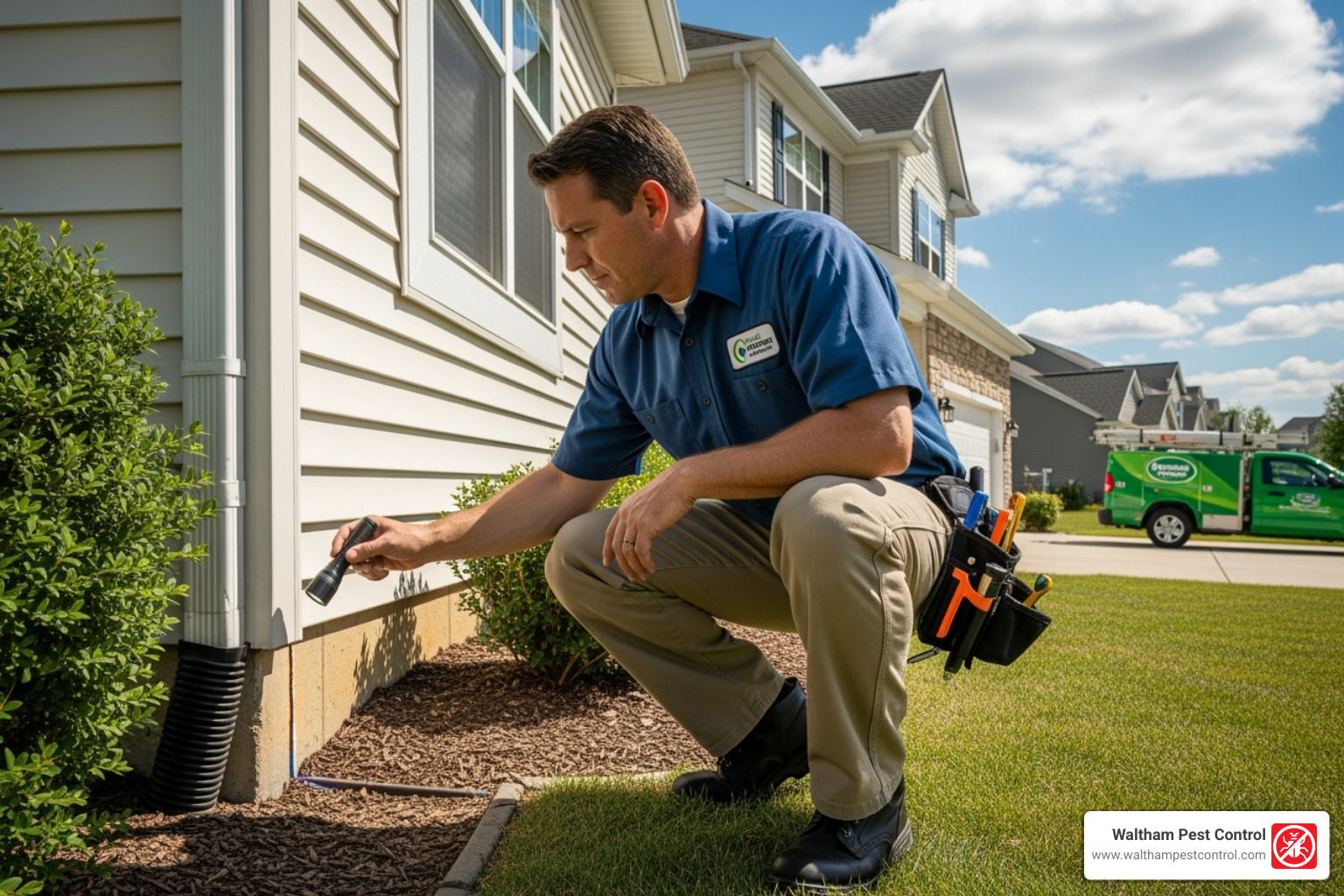
Professionals use a strategic approach, starting with an inspection to identify the species and locate nests. We use targeted baits that worker ants carry back to the colony, eliminating the queen and the entire nest from within. This method uses the ants’ own behavior to solve the problem effectively.
Based on internet data, professional ant treatment costs typically range from $150–$500+, though complex infestations can reach $1,500 or more depending on the property size and severity. These are average costs and not actual prices for Waltham Pest Control, as our pricing is customized after a thorough assessment.
Learn more about professional methods in our guide on What Do Pest Control Companies Use for Ants?.
Frequently Asked Questions about Small Red Ants
We often hear similar questions from homeowners dealing with little red ants in house situations. Here are some of the most common ones.
Are the little red ants in house dangerous to people or pets?
The danger level depends on the species:
- Stinging Species: European fire ants, found in our region, can deliver painful stings that cause red welts and, in some cases, allergic reactions.
- Food Contamination: Pharaoh ants don’t sting, but they pose a health risk. They can get into sealed food packaging and contaminate it with bacteria they carry.
- Property Damage: Some ants, like the reddish-brown Acrobat ant, can nest in and damage moist wood.
- Nuisance: Even non-stinging ants are an unsanitary nuisance in food preparation areas.
For more on pest-related health risks, refer to public health resources like Alberta Health Services Environmental Public Health.
How does an ant colony work and why is it so hard to get rid of?
Ant colonies are resilient social structures, making them difficult to eliminate:
- The Queen: The queen is the colony’s reproductive engine. Unless she is eliminated, the colony will rebound.
- Pheromone Trails: Foraging worker ants lay down chemical trails to guide others to food, which is why you see them marching in lines.
- Hidden Nests: Colonies are typically located in protected, inaccessible areas like wall voids or under foundations, shielding them from most DIY treatments.
- Budding: When threatened, some species like Pharaoh ants can split into multiple new colonies, a process called “budding.” Some species form vast several nests known as supercolonies.
Effective control must target the entire hidden colony, not just the visible workers.
What are the signs of a major ant infestation?
How do you know if you have a few scouts or a full-blown infestation? Look for these signs:
- Consistent Ant Trails: A continuous line of ants is a clear sign of an established colony.
- Visible Nests: Look for mounds of dirt in your yard or along sidewalks (for outdoor species) or small piles of sawdust-like frass near baseboards (for wood-nesting ants).
- Ants in Your Pantry: Finding ants consistently in your food means they have a reliable food source and are well-established.
- Rustling Sounds in Walls: In severe cases, you may hear faint sounds from nests inside walls.
- Ants in Unusual Places: Finding ants in bathrooms or bedrooms suggests a large, widespread infestation.
If you see these signs, it’s time to act. Learn more in our guide on Dealing with Ant Infestation.
Conclusion
Dealing with little red ants in house situations is frustrating, but you can reclaim your space with the right strategy. The key steps are identifying the specific ant species and implementing proactive prevention by sealing entry points and maintaining a clean home.
However, when facing a persistent infestation, especially with tricky species like Pharaoh or fire ants, professional treatment is essential. DIY solutions often fail because they don’t eliminate the hidden colony and queen, and can sometimes make the problem worse.
At Waltham Pest Control, we understand the challenges of ant infestations in Eastern Massachusetts. With over 40 years of experience, our licensed technicians provide effective, environmentally responsible solutions custom to your home. We don’t just treat the symptoms; we target the entire colony for a long-term solution.
Don’t let these tiny pests take over your home. For comprehensive and effective removal of house ants, consult with professionals.
Get a professional pest inspection today!
