

Best Thing for Ants in the House: 10 Powerful Solutions 2025
The Most Effective Solutions for Indoor Ant Infestations
If you’re searching for the best thing for ants in the house, here’s a quick answer to save you time:
| Best Solutions for Indoor Ants | Why It Works |
|---|---|
| Ant Baits | Slow-acting poison carried back to kill the entire colony, including the queen |
| Diatomaceous Earth | Safe, natural powder that dehydrates ants on contact |
| Borax & Sugar Mix | DIY bait that attracts ants and eliminates the colony |
| Professional Treatment | Species-specific solutions for complete elimination |
Finding ants marching across your kitchen counter can be frustrating and unsettling. Those tiny invaders aren’t just a nuisance—they can contaminate food, spread bacteria, and in some cases (like carpenter ants), even damage your home’s structure. What makes these pests particularly challenging is their organized colony structure and persistent foraging behavior.
Ants are incredibly resourceful creatures with an amazing sense of smell—four to five times stronger than most other insects. They use powerful pheromone trails to communicate food sources and entry points, making them difficult to eliminate without addressing the entire colony.
When ants invade your home, they’re typically seeking three things:
- Food (especially sugars, proteins, and fats)
- Water (from leaky pipes or condensation)
- Shelter (particularly during seasonal changes)
Understanding what attracts ants and how they operate is the first step in effective control. The most successful approach combines proper identification, targeted treatment, and preventive measures.
I’m Waltham Pest Control, President & CEO of Waltham Pest Control with over 40 years of experience helping Massachusetts homeowners find the best thing for ants in the house through integrated pest management solutions that eliminate colonies at their source.
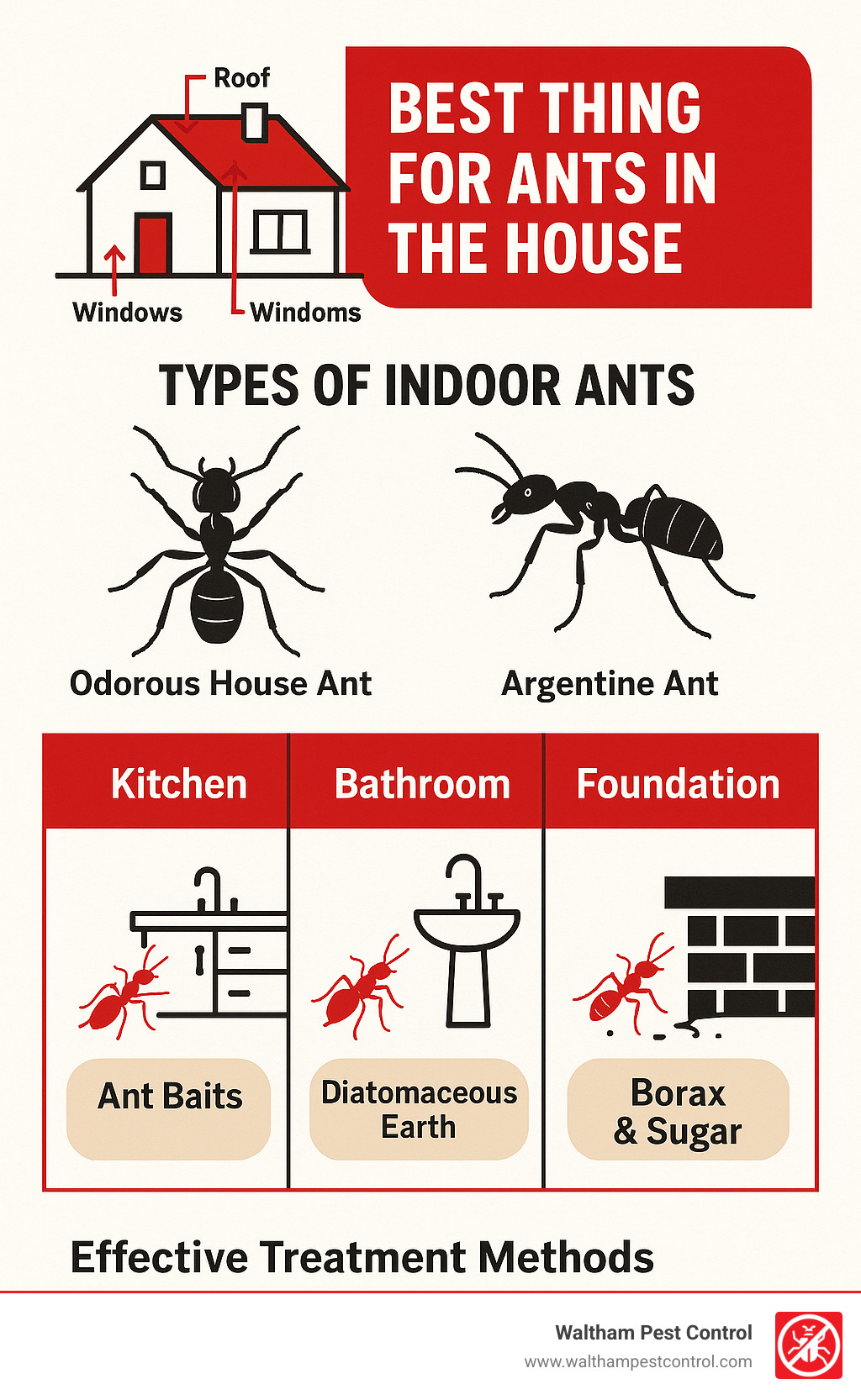
Simple guide to best thing for ants in the house:
Why Ants Invade Your Home
Ever wondered why those tiny invaders keep finding their way into your spotless kitchen? It’s not personal—ants are simply following their instincts, guided by one of nature’s most remarkable navigation systems.
“Ants have an extremely perceptive sense of smell, with four to five times more odor receptors than most other insects,” explains our senior entomologist at Waltham Pest Control. “This incredible sensory ability lets them detect even the faintest food scent from surprising distances.”
Those persistent trails of ants marching across your counter aren’t random wanderers—they’re following invisible chemical highways laid down by scout ants. According to scientific research on ant pheromones, these chemical signals are so powerful that some can persist for days, directing the colony straight to resources in your home.
When Massachusetts experiences long periods of dry weather, you might notice more ants indoors. These little survivors are seeking moisture, along with food and shelter—the survival trifecta that makes your cozy home irresistible.
What Attracts Ants in the First Place?
Your home is a treasure trove of ant delicacies, even when you think it’s clean. Those sugary substances like the tiny splash of juice behind the fridge or protein sources like pet food left in bowls overnight are ant magnets. Many species are particularly drawn to fats and oils that might remain as residue on your stovetop or counters, while others prefer carbohydrates from bread crumbs or cereal.
I remember visiting a frustrated customer in Burlington who kept a kitchen that would pass military inspection, yet still battled an ongoing ant problem. The culprit? A pet water bowl with barely noticeable food particles floating on the surface—a perfect protein buffet for local odorous house ants.
Even the smallest overlooked spill can trigger a full-scale invasion. That’s because once a scout ant finds food, it lays down a scent trail on its return journey, essentially creating a highway that directs hundreds of its nestmates straight to your pantry.
How Do Ants Get Inside?
Ants are nature’s ultimate home invaders, capable of finding entry points that most homeowners never notice. Those tiny cracks in foundations might seem insignificant to you, but they’re grand entrances for ants that can squeeze through gaps as small as 1/16 of an inch.
Gaps around windows and doors with worn weather stripping create perfect opportunities, while utility line entrances where cables and pipes enter your home often provide direct access. Many Massachusetts homeowners don’t realize that vegetation bridges—those tree branches or shrubs touching your house—create natural highways for ants to bypass all your ground-level defenses.
In older homes throughout Eastern Massachusetts, foundation gaps are particularly common culprits. During a recent inspection in Lexington, we finded a thriving ant colony accessing a second-story window via a single tree branch touching the house—a perfect demonstration of how resourceful these tiny invaders can be.
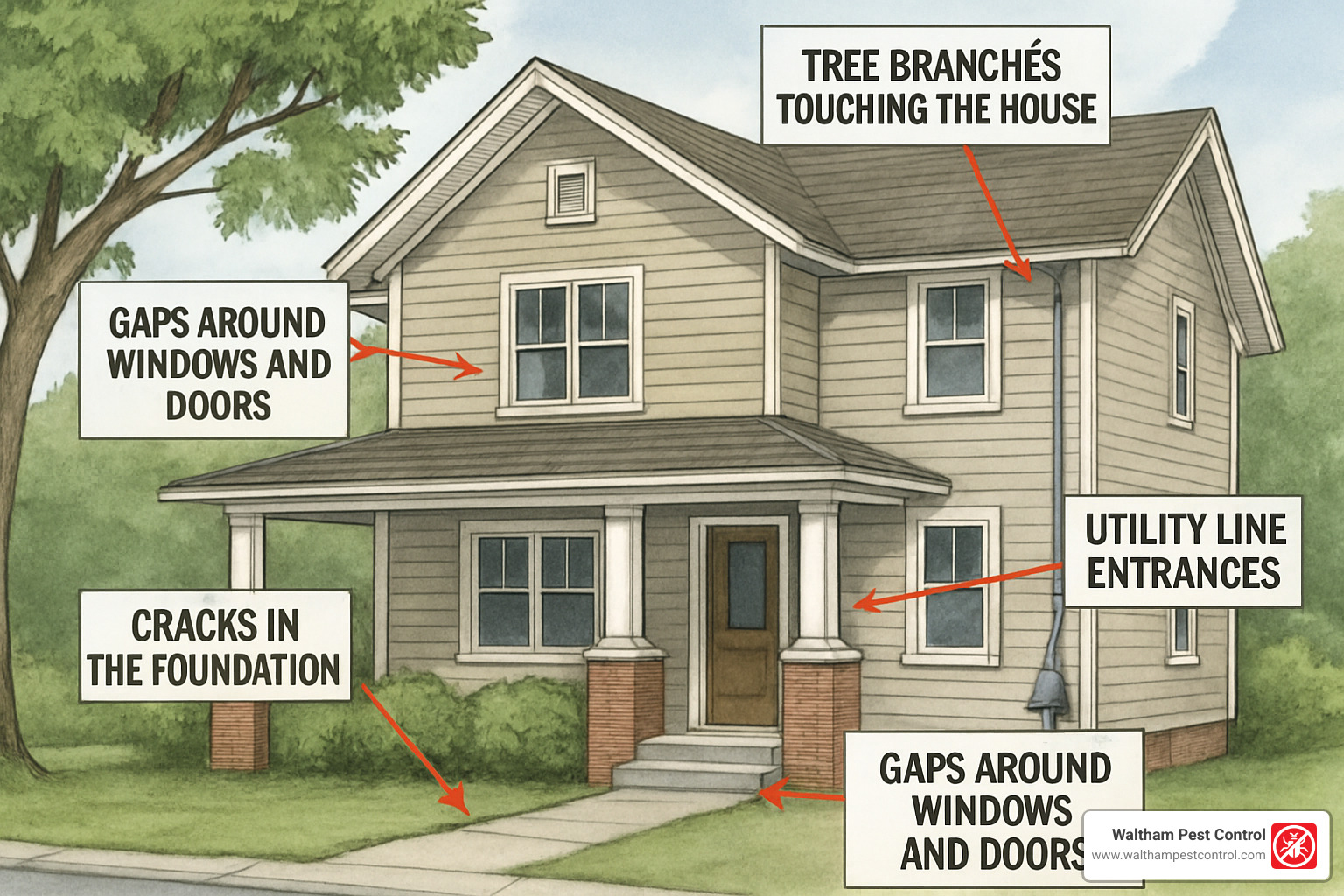
Understanding why and how ants enter your home is the first step toward finding the best thing for ants in the house—a targeted approach that addresses not just the symptoms but the root causes of your ant problem.
Identifying Your Indoor Ant Enemy
When tiny invaders march across your countertop, knowing exactly which species you’re dealing with makes all the difference in getting rid of them. With over 12,000 ant species worldwide and dozens commonly appearing in Massachusetts homes, proper identification is your first step toward effective control.
“All common pest ants are outdoors by nature, and the only true indoor nesting ant is the Pharaoh ant,” explains our entomologist. “Different species have different nesting habits, food preferences, and reproductive behaviors that directly impact which control methods will be most effective.”
Why Correct ID Matters Before Treatment
I’ve seen it countless times – homeowners spinning their wheels with the wrong treatments because they didn’t properly identify their tiny foes. Using the wrong approach doesn’t just waste your time and money; it can actually make your ant problem worse.
Proper identification matters because:
Your ant’s nesting habits dramatically affect treatment strategy – carpenter ants create galleries in wood, while pavement ants prefer setting up shop under concrete slabs. Food preferences vary significantly between species, with some craving sweets while others hunt for proteins. Colony structures differ too – some species maintain multiple queens or satellite colonies that require specific treatment approaches.
Risk assessment is another crucial factor. While most ants are primarily nuisance pests, carpenter ants can cause serious structural damage if left unchecked. And perhaps most importantly, treatment selection depends entirely on correctly identifying your invader – the wrong bait type will simply be ignored by certain species.
One of our Cambridge customers learned this lesson the hard way. They’d been diligently setting out sugar-based baits for weeks with zero results. Once we identified their problem as protein-loving carpenter ants, we switched to a protein-based bait that eliminated the problem within days.
For more detailed information on specific ant species in your area, visit our House Ant Control page.
Quick Guide to Spot-On Identification
Let me help you become an ant detective with this simplified guide to the most common indoor ant species we encounter in Massachusetts homes:
Odorous House Ants are small fellows, typically less than 1/8 inch long with brown to black coloring. Their most distinctive trait? Crush one (though I don’t recommend it) and you’ll detect a peculiar rotten coconut smell. They’re sweet lovers that form very distinct trails between food sources and their nests.
Carpenter Ants stand out with their impressive size – 1/4 to 1/2 inch long, usually black, sometimes sporting a reddish thorax. These nocturnal woodworkers can chew through wood, leaving behind sawdust-like material called frass. Finding this material is a warning sign that deserves immediate attention.
Pavement Ants measure about 1/8 inch long with dark brown to black bodies and lighter-colored legs. True to their name, they typically nest under sidewalks, driveways, or foundation slabs. Their slow-moving nature makes them commonly spotted around kitchen floors.
Pharaoh Ants are tiny troublemakers, about 1/16 inch long with light yellow to reddish coloring and darker abdomens. Unlike their cousins, they’re true indoor nesters, often hiding in wall voids and electrical outlets. These versatile eaters enjoy both sweets and proteins, making them particularly challenging to control.
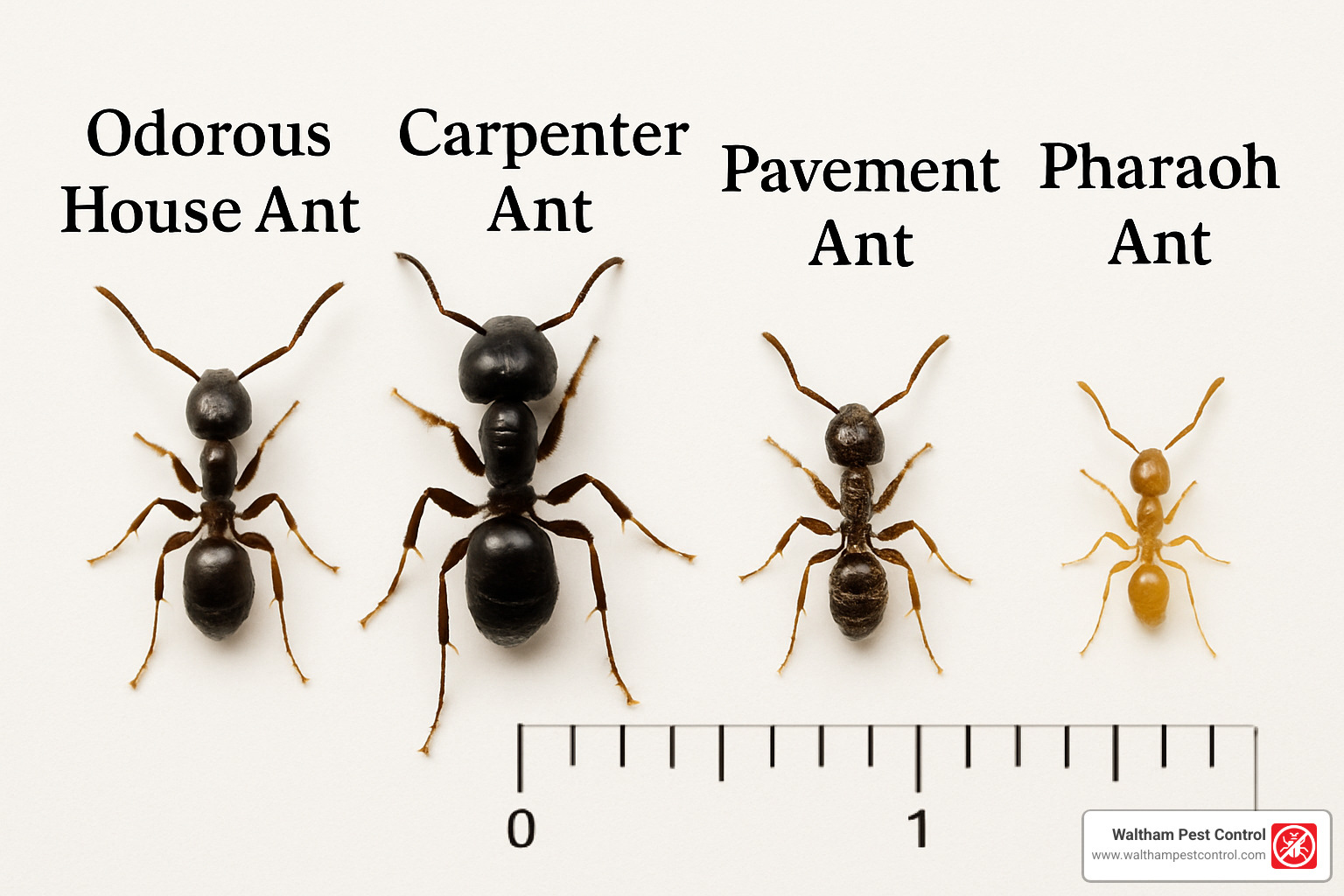
The Best Thing for Ants in the House: Integrated Treatment Game-Plan
After four decades of battling ant invasions across Eastern Massachusetts homes, I’ve learned one crucial lesson: there’s no single magic bullet for ant control. What truly works is a thoughtful, comprehensive approach custom to your specific situation.
“Ant baits are considered the most effective method for controlling an ant infestation,” our technical director often tells worried homeowners. “They work brilliantly because they kill both the ants that feed on the bait and the larvae when scouts track the liquid back to the colony.”
The best thing for ants in the house isn’t just one product—it’s a strategic combination of methods working together. We call this Integrated Pest Management (IPM), and it’s the gold standard for lasting results:
| Method | Best For | Effectiveness | Safety | Speed |
|---|---|---|---|---|
| Ant Baits | Colony elimination | Excellent | High (when properly placed) | Slow (3-14 days) |
| Diatomaceous Earth | Barrier treatment | Good | Very high (food grade) | Medium (2-7 days) |
| Essential Oils | Temporary repellent | Fair | Very high | Immediate but short-lived |
| Non-repellent Sprays | Professional application | Excellent | Moderate (requires proper application) | Medium (2-5 days) |
The Best Thing for Ants in the House: Colony-Killing Baits
Think of ant baits as Trojan horses—they’re designed to be attractive enough that worker ants willingly carry the poison back to share with their family. This slow-acting approach is deliberately patient, allowing time for the bait to reach the heart of the colony.
“The magic of borax-based baits is their delayed action,” explains our lead technician with a smile. “When customers see more ants initially gathering around fresh bait, they often panic—but that’s actually exactly what we want to see! Those workers are unwittingly becoming delivery agents for colony destruction.”
For bait success, timing and placement are everything. Place small amounts directly on active ant trails rather than disrupting them. Match your bait type to your ant species—sweet-loving ants need sugar-based baits, while protein-hunters require meat or grease-based options. And perhaps hardest of all—be patient. Complete colony elimination typically takes 3-14 days as the poison gradually works its way through the social structure.
One Newton customer called recently, concerned that her kitchen counter was suddenly crawling with more ants after placing baits. I reassured her this was actually a positive sign—the scouts had found the bait attractive and were recruiting nestmates to the “food source.” A week later, her ant problem had completely vanished.
For more specialized information about effective indoor bait options, visit our Ant Bait Station Indoor page.
The Best Thing for Ants in the House: Natural & Non-Toxic Options
For families with young children, pets, or environmental concerns, several gentler options can effectively manage smaller ant invasions:
Food-Grade Diatomaceous Earth (DE) works like microscopic razor blades to insects while remaining completely safe for humans and pets. This fine powder dehydrates ants on contact by damaging their exoskeletons. Simply apply a thin, barely visible layer where ants travel and along entry points. It remains effective indefinitely as long as it stays dry.
“After sprinkling food-grade diatomaceous earth behind my kitchen cabinets and along baseboards,” shared one delighted Arlington customer, “I saw a dramatic reduction in ant trails within just a few days. It’s been my go-to solution for three years now.”
Vinegar solutions (equal parts white vinegar and water) serve double duty by killing ants on contact while erasing their scent trails. While you might not love the temporary pickle smell, ants absolutely detest it. A quick counter wipe-down with this mixture daily can dramatically reduce indoor ant activity.
Peppermint oil isn’t just pleasantly fragrant for humans—it’s absolutely repulsive to ants. Mix 10-20 drops with two cups of water in a spray bottle and apply weekly along baseboards and entry points. This approach is backed by science too—research published in the Journal of Economic Entomology confirms peppermint oil contains compounds that effectively repel and kill certain ant species.
Baking soda and sugar creates a deceptively attractive trap. The sugar lures ants in, while the baking soda disrupts their internal digestive systems. Mix one part baking soda with three parts sugar and place small amounts in shallow lids near ant activity.
Safe Use of Sprays Indoors (Last Resort)
I’ll be honest—reaching for the spray can when you see ants is tempting but usually counterproductive. Here’s why we consider sprays a last resort option:
“Ant poison may make you feel like you’re accomplishing something, but you’re not,” our technical director often warns. “Contact sprays kill only the visible ants—about 20% of the colony—and can actually make the problem worse through ‘budding,’ where stressed colonies split into multiple nests.”
If your situation truly requires spray treatment, proceed with caution. Choose non-repellent formulations that won’t scatter the colony, and apply only in cracks and crevices—never on broad surfaces or near food prep areas. Always ensure proper ventilation and keep children and pets away until thoroughly dry.
The most effective spray applications typically come from licensed professionals who understand the delicate balance between effectiveness and safety. They have access to commercial-grade products specifically designed for indoor use and the training to apply them correctly.
The best thing for ants in the house isn’t a quick kill—it’s a comprehensive approach that eliminates the entire colony while preventing future invasions. Patience and persistence will ultimately win the ant war.
Step-by-Step Prevention to Keep Ants from Marching Back
After successfully eliminating an ant infestation, prevention becomes your primary focus. Even the best thing for ants in the house won’t provide lasting relief without addressing the conditions that invited them in the first place.
“The best defense against ants is a good offense,” says our prevention specialist. “Implementing these preventive measures can dramatically reduce the likelihood of future invasions.”
Our comprehensive prevention plan focuses on four key areas that make your home less attractive to ants. First, establish daily cleaning routines that eliminate food sources. Second, seal entry points to block their access routes. Third, control moisture that attracts ants seeking water. And finally, maintain your yard to create a buffer zone around your home.
When we visited a family in Watertown who had recurring ant problems every spring, we finded they were skipping these prevention steps. Once they implemented our recommendations, they enjoyed their first ant-free summer in years!
For more detailed prevention strategies, visit our guide on House Ants: How to Prevent Them and How to Treat Them.
Finding & Sealing Entry Points
One of the most effective preventive measures is blocking ant access to your home:
“Ants enter through cracks and crevices in the structure, around windows, through doors or openings in the foundation, and will also use trees and other plants that touch the house to find an entry,” explains our building exclusion specialist.
Identifying entry points can be tricky since ants can squeeze through tiny gaps. Try using glue traps along baseboards and near suspected entry areas to catch ants and reveal their travel paths. Once identified, seal these pathways with silicone caulk, which provides a durable barrier ants can’t chew through.
Don’t forget about your doors and windows. Install door sweeps on exterior doors and replace worn weather-stripping to eliminate those tiny gaps that welcome ants inside. One customer in Medford was amazed when our technician used a simple glue trap to identify an entry point behind a baseboard heater that had been the source of recurring ant problems for years. Once sealed, the ants never returned.
Creating a vegetation-free zone around your home’s perimeter also helps tremendously. Trim back branches and shrubs so they don’t touch your house, eliminating these natural bridges ants use to bypass your defenses. Finally, check where utility lines enter your home—these are often overlooked entry points that need sealing.
Kitchen & Bathroom Habits that Repel Ants
Your daily habits in moisture-rich areas like kitchens and bathrooms can significantly impact ant activity. Small changes can make a big difference in keeping these spaces ant-free.
In the kitchen, store food in airtight containers, especially sweets, grains, and pet food that attract ants. Make wiping counters with a vinegar solution part of your daily routine—not only does this clean food residue, but it also disrupts those invisible pheromone trails ants follow. Don’t forget about those hard-to-reach spots under appliances where crumbs accumulate—these are ant magnets!
Taking out garbage frequently helps eliminate food odors that attract scouts. One Waltham customer in Newton shared: “Following your technician’s advice about storing pet food in sealed containers and wiping down feeding areas after each meal completely eliminated our summer ant problem. Such a simple change made all the difference!”
Your bathroom might seem like an unlikely place for ants, but it offers what they crave—water. Fix dripping faucets and running toilets promptly, as these moisture sources are ant magnets. Seal grout lines in tile to eliminate hidden moisture pathways, and keep floors dry through good ventilation to reduce humidity. Even storing toiletries in closed cabinets can help, as many personal care products contain sweeteners that attract ants.

Consistency is key when it comes to ant prevention. These small daily habits might seem insignificant, but together they create an environment that’s far less appealing to ants. As we like to tell our customers—an ounce of prevention truly is worth a pound of cure when it comes to keeping ants from marching back into your home.
When to Stop DIY and Call the Pros
Sometimes, despite your best efforts with DIY ant control, those persistent little invaders just won’t surrender. Knowing when it’s time to wave the white flag and call in professional reinforcements can save you months of frustration and prevent more serious problems from developing.
“If you’ve given baiting a solid week and still see steady ant traffic, or if problems keep returning after temporary success, it’s probably time for professional help,” explains our operations manager with a reassuring smile. “Even the best thing for ants in the house won’t work in every situation, especially with established colonies or multiple entry points.”
Consider reaching out to professionals when you notice:
Your DIY treatments aren’t making a dent after 7-10 days of consistent application. This often indicates a large colony or multiple colonies that need more comprehensive treatment. One Waltham customer tried six different over-the-counter products before calling us, only to find three separate colonies were invading from different directions!
Carpenter ants deserve immediate professional attention. Unlike other ant species that are merely annoying, these wood-destroyers can cause expensive structural damage to your home. If you spot large black ants (¼ to ½ inch long), especially at night, don’t wait to make the call.
When you find small piles of sawdust-like material (called frass) near wooden structures, hear hollow-sounding wood when tapped, or notice visible damage to wooden elements (particularly in areas with moisture issues) – these are clear warning signs that carpenter ants have moved beyond nuisance to potential threat.
Multiple ant species appearing simultaneously often indicates complex problems requiring specialized treatment protocols. Different species respond to different baits and treatments, making professional identification crucial.
Seasonal recurring infestations suggest established outdoor colonies that keep sending new scouts indoors. These resilient colonies typically need outdoor treatment that targets the source of your indoor problem.
Ants in unusual locations like bedrooms, bathrooms, or upper floors far from food sources may indicate nests inside wall voids or structural elements that DIY methods simply can’t reach.
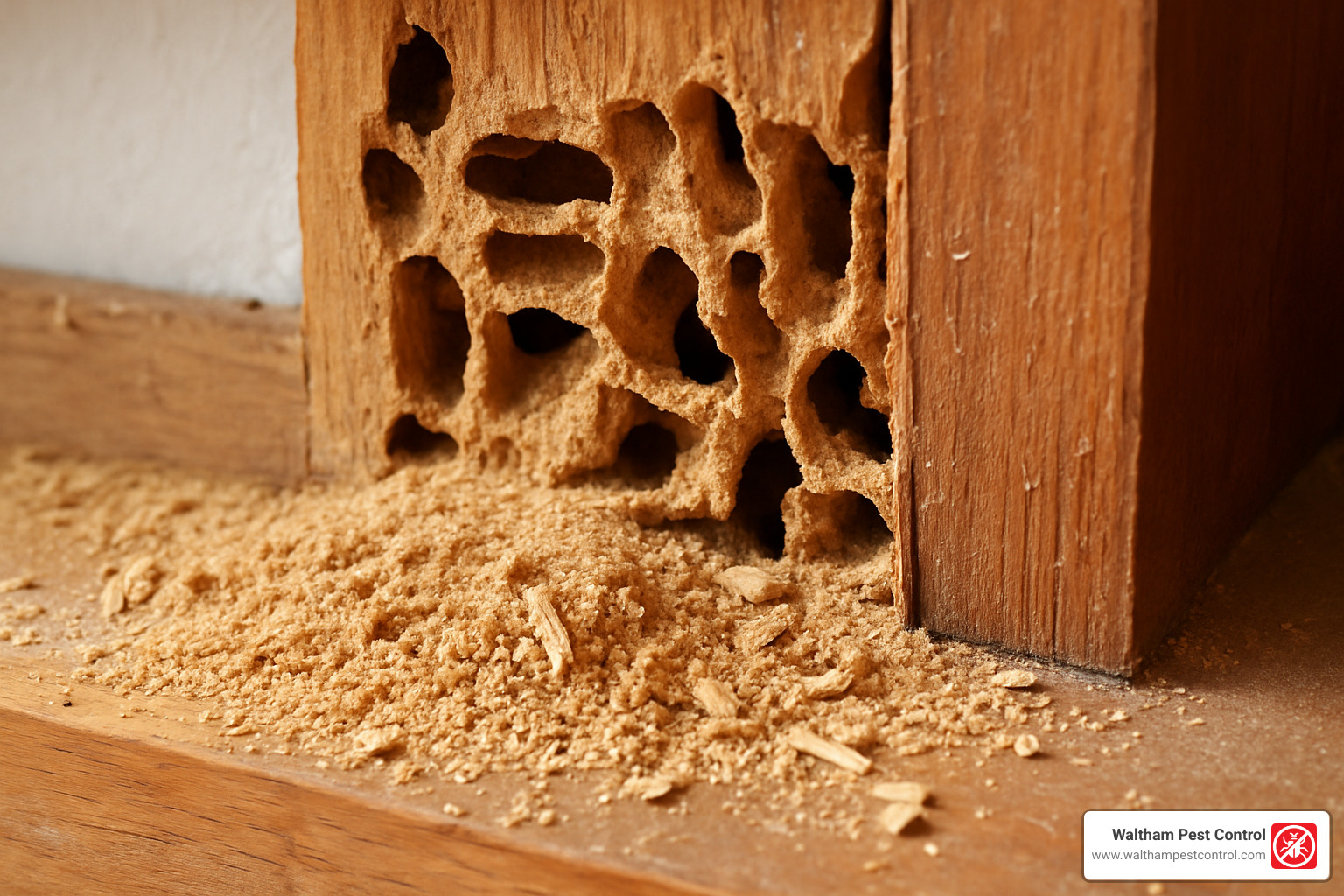
Professional ant control brings several significant advantages that DIY methods simply can’t match. Trained technicians offer accurate species identification based on years of entomological training – crucial since different ants require different treatment approaches. They also have access to commercial-grade products with formulations not available to consumers, often providing faster and more complete results.
A professional service provides comprehensive treatment plans that address both indoor symptoms and outdoor sources – something many homeowners overlook. Many companies, including Waltham Pest Control, offer warranty protection against recurring infestations, giving you peace of mind that the problem will be solved for good.
Perhaps most importantly, professionals bring structural knowledge to identify hidden nests and entry points that the untrained eye might miss. As one relieved customer in Lexington told us, “Your technician found ant nests in places I never would have thought to look – inside a hollow door frame and behind the dishwasher!”
Based on internet data, professional ant control treatments typically range from $175 for a single treatment to $600+ for comprehensive programs with follow-up visits. However, these are average estimates and not actual costs for Waltham Pest Control services.
If you’re dealing with a persistent or concerning ant problem, visit our Best Pest Control Company for Ants page to learn more about how professional solutions can provide lasting relief and protect your home from future invasions.
Frequently Asked Questions about Indoor Ant Control
How fast will baits eliminate a colony?
When it comes to ant baits, patience truly is a virtue. While you might be eager to see results overnight, effective colony elimination follows a natural timeline that gives the bait time to work its magic.
“Complete control may take up to two weeks,” our lead technician often reminds anxious homeowners. “What many people don’t realize is that seeing increased ant activity initially is actually a good sign – it means they’re taking the bait back to share with the colony.”
Here’s what you can typically expect when using ant baits properly:
- 24-72 hours: You’ll notice a reduction in visible foraging ants as the first workers consume the bait
- 3-7 days: A significant decrease in ant activity becomes apparent as the poison spreads through the colony
- 1-2 weeks: Complete colony elimination for most household ant species, including the all-important queen
One of our customers in Cambridge shared a common experience: “After placing the recommended baits, I was concerned when I initially saw more ants. Your technician explained this meant the bait was working, and sure enough, by day five, they had completely disappeared.”
If you’re still seeing persistent activity after two full weeks, this may indicate you’re dealing with multiple colonies or particularly large ones that might require professional intervention.
Are natural remedies safe for pets and kids?
Many homeowners prefer natural solutions when children and furry family members are part of the household. The good news is that most natural ant remedies can be used safely with some common-sense precautions.
Food-grade diatomaceous earth is generally considered safe, but should be applied in cracks, crevices, and areas where curious little hands and paws won’t reach. The fine powder can cause respiratory irritation if inhaled in large amounts, so apply it thoughtfully.
Vinegar solutions work wonderfully for wiping down surfaces and disrupting pheromone trails. They’re perfectly safe once dry, though you might want to keep pets away during application simply to prevent them from tracking through wet areas.
When it comes to essential oils like peppermint, lemon, or tea tree, a bit more caution is needed. While these smell delightful to us, some oils can be toxic to pets, especially cats whose livers process these compounds differently than humans. Apply in limited areas and ensure they’re completely dry before allowing pet access.
Borax mixtures, though less toxic than many commercial insecticides, still require careful placement. “I always recommend placing borax-based baits inside tamper-resistant stations,” explains our safety specialist. “This gives you the effectiveness without the worry.”
The golden rule with any ant control product, even natural ones: store them out of reach of children and pets, and apply them where direct contact is unlikely.
Do I need outdoor treatment to stop indoor ants?
If you’re only treating ants inside your home, you might be missing the bigger picture. As our staff entomologist often explains, “All common pest ants are outdoors by nature. Indoor treatment alone is like putting a bandage on a symptom without addressing the cause.”
Think of it this way: the ants you see in your kitchen represent just a tiny fraction of a much larger colony that’s likely based outside your home. While indoor treatments can eliminate the scouts and workers you see, the outdoor colony continues producing more foragers to replace them.
You should strongly consider outdoor treatment when:
Your ant problems keep returning despite thorough indoor treatments
You notice visible ant trails leading from your yard into your home
There are multiple ant mounds or nests visible in your lawn or garden
You experience predictable seasonal ant invasions, typically in spring and fall
A comprehensive outdoor approach includes treating visible nests directly, creating a protective barrier around your home’s perimeter, addressing conditions that attract ants (like aphid-infested plants that produce honeydew), and maintaining a dry zone around your foundation.
The results can be dramatic, as one Woburn customer finded: “After three years of fighting ants inside our kitchen every spring, your technician treated our yard and perimeter. It’s been two years now without a single ant indoors!”
Finding the best thing for ants in the house often means looking beyond your four walls to create a complete solution that addresses the source of your problem outside while eliminating the immediate indoor invaders.
Conclusion
Finding the best thing for ants in the house is a bit like solving a mystery—you need to identify the culprit, understand their habits, and create a plan that gets to the root of the problem. After walking through all the options and strategies, let’s bring everything together.
Think of your ant control journey as a three-part story: identification, treatment, and prevention. Skip any chapter, and those tiny invaders will likely return for a sequel you don’t want to watch.
The most successful ant control strategies aren’t about quick fixes—they’re about understanding the enemy and playing the long game. Those worker ants you see are just the tip of the iceberg, with potentially thousands more hiding in a colony that needs to be your real target.
Here’s what truly works for lasting ant control:
Proper identification is your foundation. Each ant species has different vulnerabilities and preferences—carpenter ants require different approaches than odorous house ants. Taking time to identify your specific invader pays dividends in treatment effectiveness.
Baits remain the gold standard for most indoor ant problems. They may work slowly, but their colony-eliminating power makes them worth the patience. Remember how those scout ants share food with the entire colony? That’s exactly why baits are so effective—they turn the ants’ own behavior against them.
Natural methods like diatomaceous earth and essential oils offer safe alternatives for households with children and pets. While they might require more frequent application, many homeowners appreciate their lower environmental impact.
Prevention truly is the best medicine. All the baits in the world won’t help if you’ve got food crumbs scattered across countertops or leaky pipes creating ant-friendly moisture zones. Your daily habits—wiping counters, sealing food, fixing leaks—are powerful weapons in keeping ants at bay.
Sometimes, calling in the professionals makes the most sense. This is especially true with carpenter ants (which can cause structural damage) or when DIY methods haven’t solved the problem after multiple attempts. Professional pest control technicians bring specialized knowledge, commercial-grade products, and systematic approaches that can resolve even the most stubborn infestations.
At Waltham Pest Control, we’ve spent over four decades helping Massachusetts homeowners win their battles against ants. Our approach combines scientific understanding with practical solutions custom to your specific situation and ant species.
For persistent ant problems or concerns about potential damage, consider reaching out to our team. We service communities throughout Eastern Massachusetts, including pest control services in Amesbury, MA and surrounding areas.
Remember—when it comes to ants, addressing only the visible workers without targeting the colony is like treating the symptoms while ignoring the disease. With the right approach combining identification, targeted treatment, and consistent prevention, you can enjoy an ant-free home year-round.
