

Red ants in house: #1 Control Guide
Why Red Ants in Your Home Demand Immediate Attention
Finding red ants in house is alarming for good reason. These invaders aren’t just a nuisance; they can pose serious risks to your family’s safety and your property.
Quick Facts About Red Ants in Your Home:
- Fire ants can deliver painful stings that cause burning sensations and allergic reactions.
- Colonies can contain up to 100,000 members once established.
- They enter homes seeking food, water, and shelter, especially during extreme weather.
- Professional identification is crucial since not all red ants are the same species.
- Prevention focuses on sealing entry points and eliminating attractants like food crumbs.
Red ants enter homes through cracks as small as 0.5 mm, making complete exclusion difficult without professional help. Once inside, they establish trails to food sources and can quickly multiply into massive infestations.
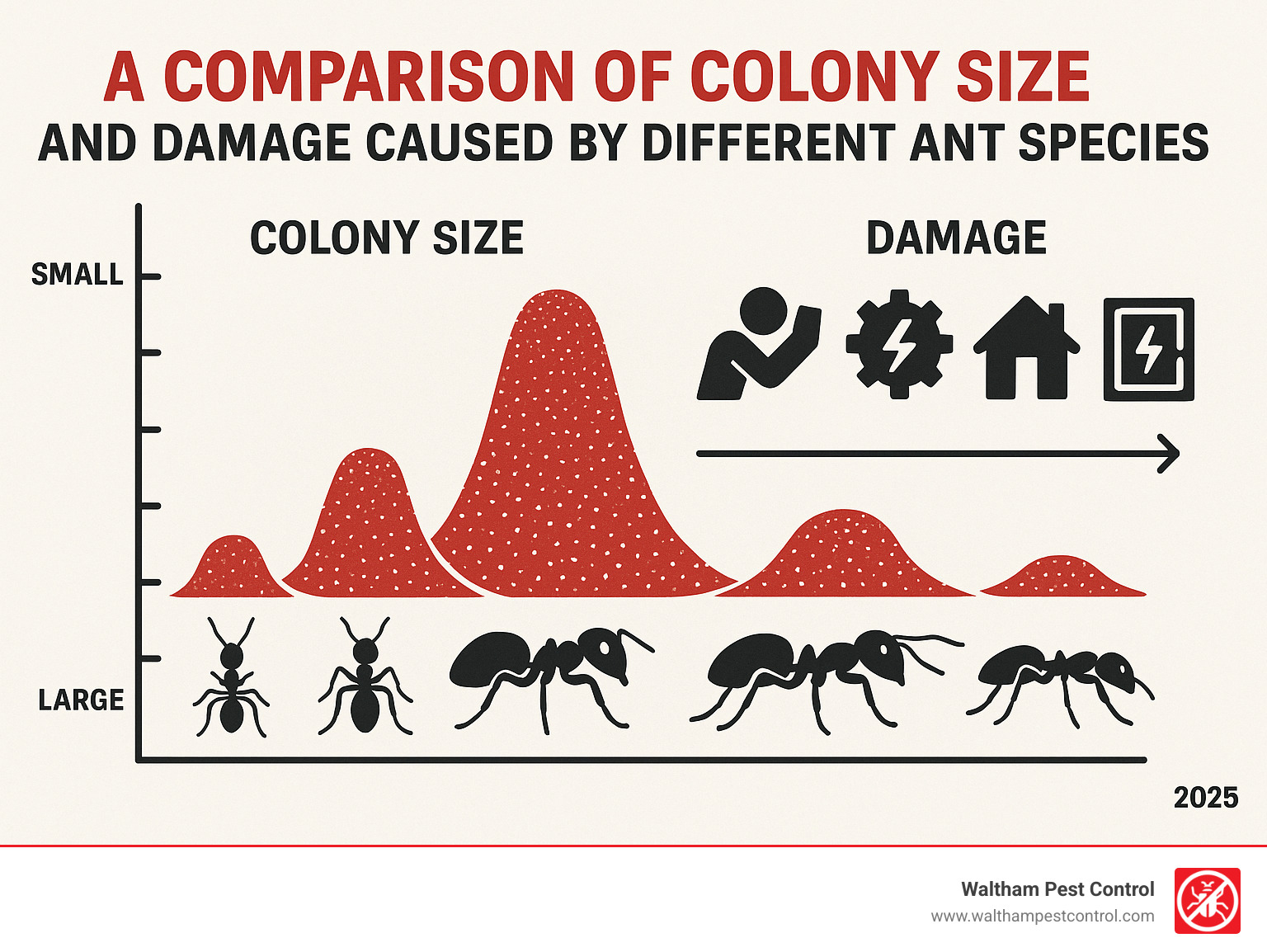
Different species pose different threats. Fire ants inject venom that causes intense pain and can trigger severe allergic reactions. Some species even damage electrical equipment by swarming into air conditioners and circuit boxes.
As Waltham Pest Control, President and CEO of Waltham Pest Control with over 40 years of experience, I’ve helped countless Eastern Massachusetts homeowners deal with red ants in house situations safely and effectively. My team understands the unique challenges these pests present and the most effective methods to eliminate them for good.
Simple red ants in house glossary:
What Are “Red Ants” and How Do I Identify Them?
The term “red ants” is a general description for various reddish-colored ant species. It’s easy to assume any red ant you see is a fire ant, but this isn’t always the case. Correct identification is the crucial first step in any effective pest control strategy, as different species require different approaches.
Ants are cold-blooded insects that thrive in warmer temperatures, which is why we often see increased activity during spring, summer, and fall. Their colonies can range from a few dozen to hundreds of thousands of members, with nests built in various places, from visible mounds in your yard to hidden spots inside your walls.
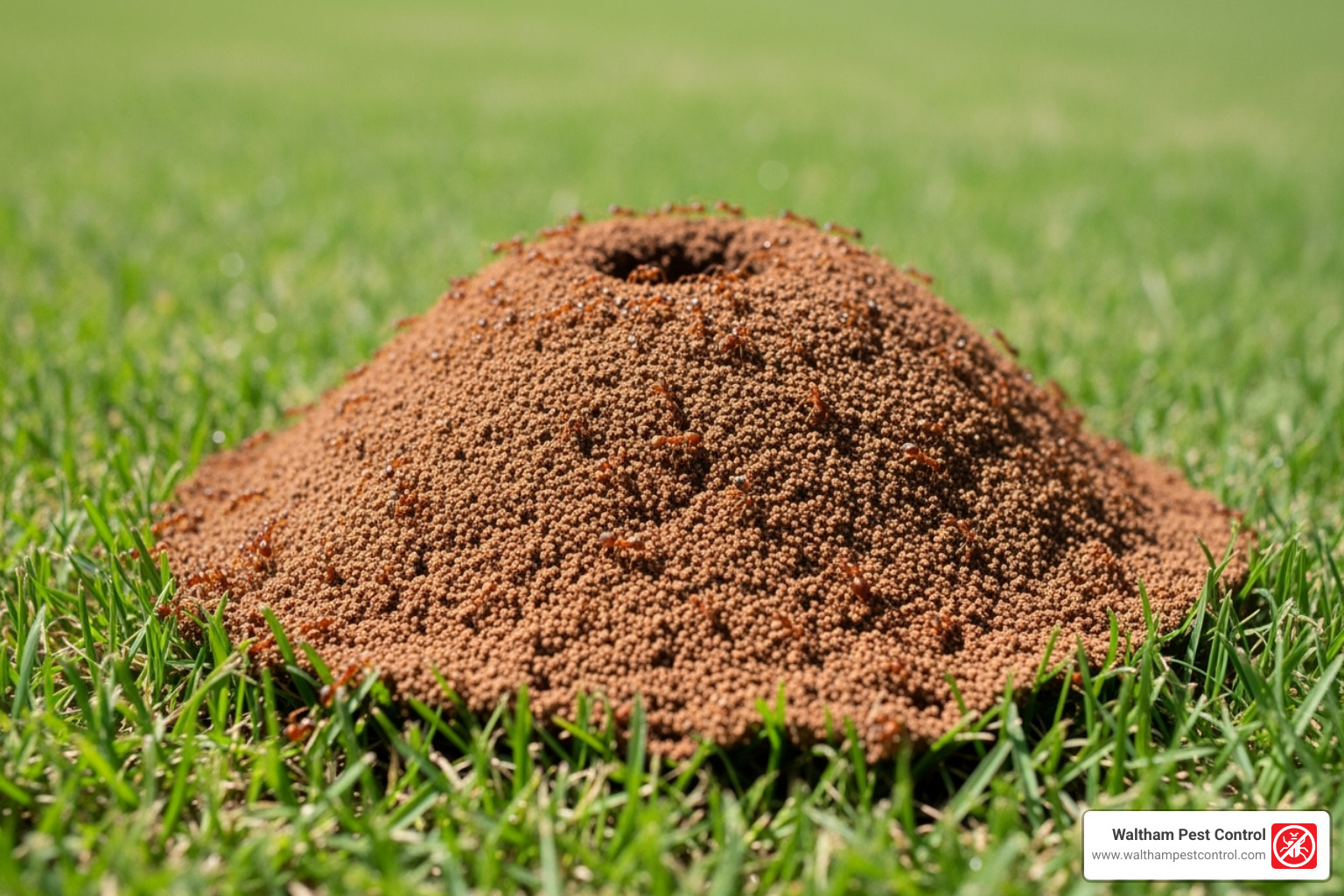
When identifying red ants, we look at their size, coloration, number of waist “nodes,” and behavior. Pinpointing the exact species often requires expert knowledge.
Common Red Ant Species Found in Homes
Let’s explore some of the most common red-colored ant species you might encounter in your home, especially here in Eastern Massachusetts:
| Species | Size | Color | Key Features | Danger Level |
|---|---|---|---|---|
| Imported Fire Ants (RIFA) | 0.13 to 0.5 inches | Reddish-brown to reddish-black | Polymorphic workers (varying sizes), two waist nodes, visible stinger, build dome-shaped mounds with no central hole. | High: Painful, burning sting, venomous, can cause allergic reactions (including anaphylaxis), damage electrical equipment. |
| Pharaoh Ants | Approximately 0.063 inches | Pale yellow to reddish-brown, often with a darker abdomen | Tiny, trail indoors near water and food sources, 12-segmented antenna with a 3-segmented club. | Moderate: Do not sting, but contaminate food, spread bacteria and pathogens, difficult to eliminate due to colony splitting. |
| Pavement Ants | Around 0.13 inches | Dark brown to black, but can appear reddish | Nest under pavement, sidewalks, driveways; aggressive when disturbed; two waist nodes. | Low to Moderate: Painful bite, but not venomous or disease-carrying. Can be a major nuisance. |
| Carpenter Ants | Up to 0.625 inches | Can be black, red, or a combination | Larger ants that nest in wood (often moist or decaying), can cause structural damage. | Low to Moderate: Do not sting, but can bite. Primarily a property damage risk. |
Key Dangers and Risks of an Infestation
When we talk about red ants in house, especially fire ants, the risks are more than just a nuisance:
- Painful Stings and Venom: Fire ants are aggressive and deliver painful stings. They bite to grip the skin, then sting and inject venom (solenopsin), causing a burning sensation, itching, and white pustules.
- Allergic Reactions: For some individuals, fire ant venom can trigger severe allergic reactions, including life-threatening anaphylaxis, which requires immediate emergency medical attention. Infants and the elderly are particularly at risk.
- Food Contamination: All ants can contaminate food as they forage. Pharaoh ants are particularly known for spreading harmful bacteria and pathogens in kitchens.
- Structural Damage: While fire ants don’t chew wood, other “red” ants like carpenter ants can cause significant structural damage by hollowing out wooden structures to build their nests.
- Electrical Malfunctions: Fire ants are attracted to electrical currents and can swarm into equipment like air conditioners and circuit boxes. This can lead to short circuits, equipment damage, and fire hazards. A report from Texas A&M University stated that red imported fire ants cause billions of dollars in damage each year, much of it electrical.
- Large Colony Sizes: Red imported fire ant colonies can contain up to 100,000 members, making them incredibly difficult to eliminate without professional intervention.
Why Do I Have Red Ants in My House?
Understanding why red ants in house situations happen is key to preventing them. Ants have basic survival needs, and when your home offers better resources than the outdoors, they will find their way inside.
Ants are efficient scouts. When one finds food or water in your home, it lays a pheromone trail for others to follow, quickly turning a single ant into an infestation. Ant invasions often coincide with environmental triggers like droughts, heavy rains, or extreme temperatures, which make your home’s stable conditions especially attractive.
The Search for Food and Water
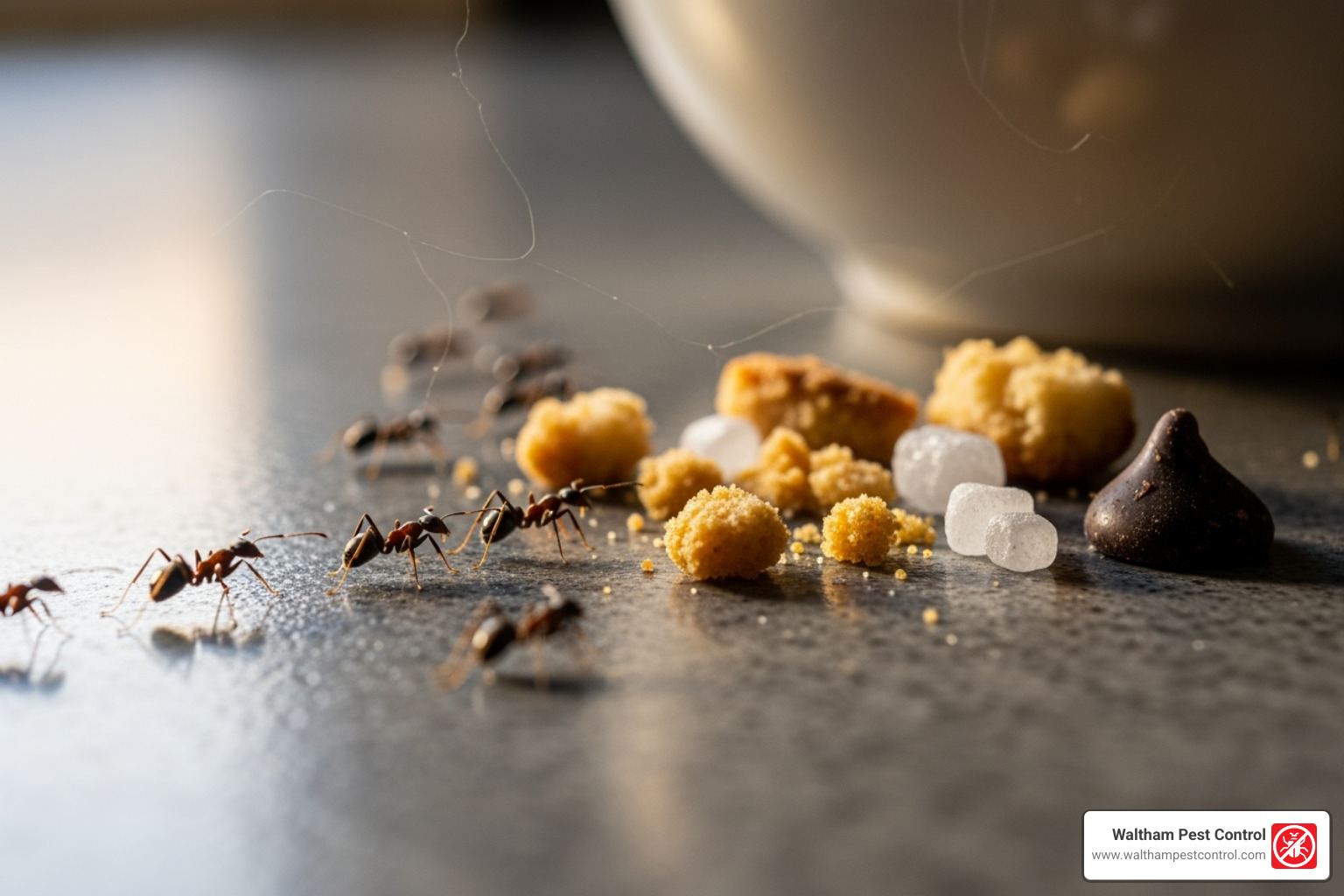
Your kitchen is a treasure trove for hungry ants. They are drawn to sugary spills, crumbs, unsealed food, and grease splatter. Pet food bowls are particularly problematic, as leaving food out all day creates a constant buffet for ants.
Water is equally important for ant survival. Leaky pipes under sinks, dripping faucets, and condensation around windows provide essential moisture, especially during dry periods. Pharaoh ants are particularly attracted to humid areas and can often be found trailing near kitchen sinks or bathroom fixtures. Even minor plumbing issues can sustain an entire ant colony.
Seeking Shelter and Favorable Conditions
Beyond food and water, your home offers protection from the elements and a stable environment for nesting. During intense heat, drought, or heavy rain, your climate-controlled home becomes a sanctuary.
Entry points are surprisingly easy for ants to exploit. These tiny invaders can squeeze through cracks as small as 0.5 millimeters. Foundation cracks, gaps around windows and doors, and openings where utility lines enter your home all serve as highways for ant traffic.
The warmth and protection your home provides make it an ideal nesting location. Wall voids, spaces under floorboards, and even attic insulation can house thriving ant colonies. Once established, these indoor colonies are challenging to eliminate because they’re protected from weather and natural predators.
How to Prevent Red Ants from Entering Your Home
The best way to deal with red ants in house problems is to stop them before they start. Prevention works on two fronts: blocking their entry points and removing what attracts them. It’s like removing the welcome mat and locking the door at the same time.
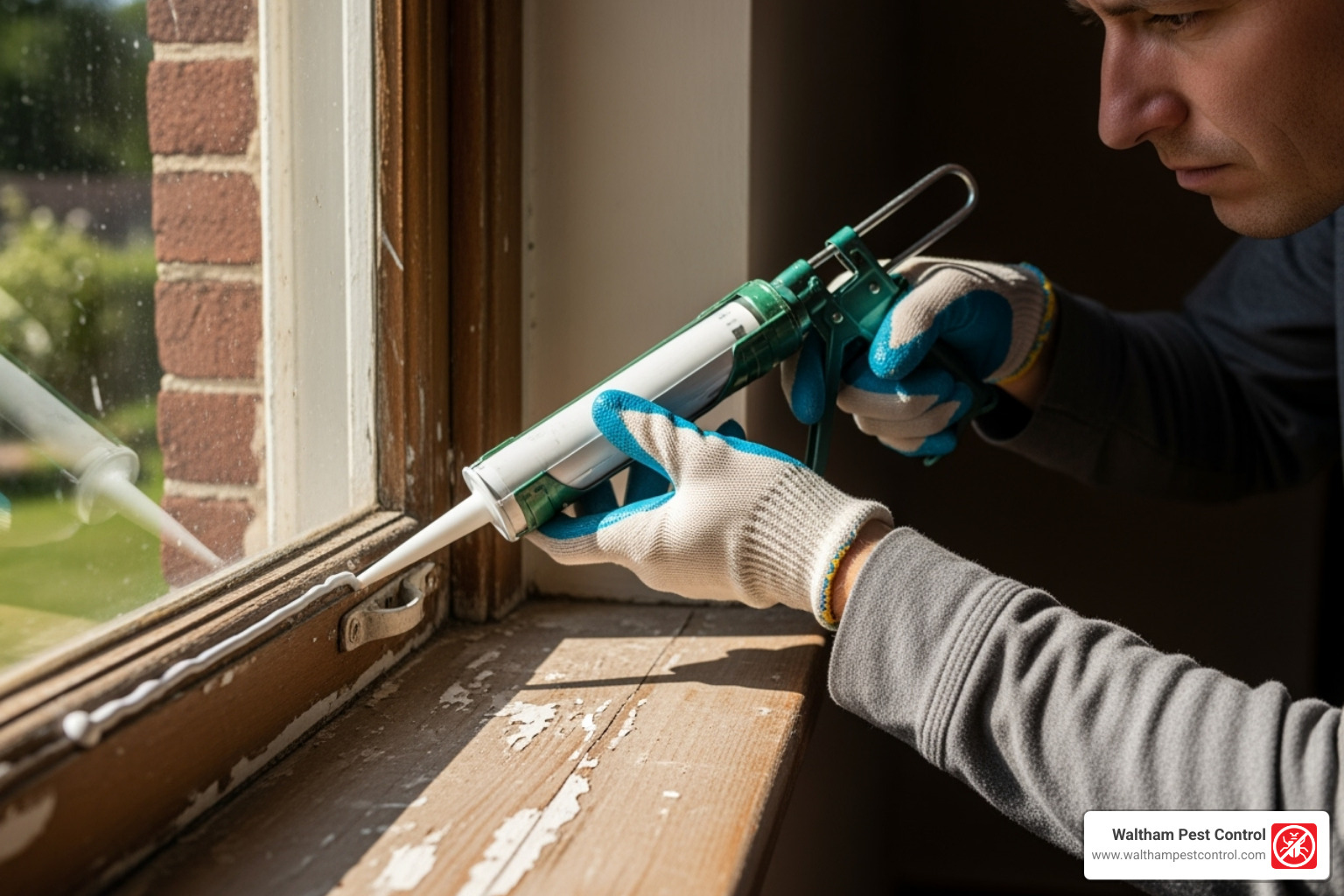
Sealing Entry Points
Ants can squeeze through cracks as small as 0.5 mm, turning tiny gaps into superhighways. Caulking and sealing should be your first line of defense. Walk around your home’s exterior and seal any cracks or gaps in your foundation, around window frames, and where utility lines enter your home.
Check that your window screens are intact and install door sweeps on all exterior doors. These simple additions can block a major entry route. If your home has brick veneer, consider installing mesh covers over weep holes to keep ants out while allowing proper ventilation.
Eliminating Attractants
Even a sealed home can attract ants if it smells like a restaurant. The key is making your home as unappealing as possible from an ant’s perspective.
Cleanliness is crucial. Wipe down kitchen counters daily, sweep up crumbs promptly, and don’t let dirty dishes sit in the sink. That sticky spot under the toaster is a guide for ants.
Proper food storage makes a huge difference. Transfer food from cardboard boxes and paper bags into airtight containers. Avoid leaving pet food out all day, as this creates a reliable food source for every ant in the neighborhood.
Moisture control is equally important. Fix leaky pipes and dripping faucets. Ants need water, and a steady drip is like a personal water fountain for them. Check under sinks, around water heaters, and anywhere condensation might collect.
Trash management and landscape maintenance complete your prevention strategy. Empty garbage cans regularly and keep outdoor bins sealed. Trim vegetation away from your house to remove potential bridges for ants. Clear leaf litter and debris near your foundation that could shelter ant colonies.
Prevention is an ongoing process, not a one-time fix. A few minutes of maintenance each week can save you from a major red ants in house problem.
Understanding and Managing Red Ants in House
When prevention fails and you find red ants in house, it’s time for action. Effective ant control isn’t about spraying the ants you see; it’s about eliminating the entire colony, including the queen in her nest.
Simply spraying visible ants is often ineffective and can even make the problem worse. Store-bought sprays kill only foraging workers, and some can cause the colony to split into multiple new nests, deepening the infestation. The most effective approach combines inspection and identification with targeted treatments that reach the source of the problem.
Understanding Safe and Effective Control Options
Professional ant control follows Integrated Pest Management (IPM), a comprehensive strategy that tackles the problem from multiple angles:
- Thorough Inspection and Identification: Our licensed technicians examine the ants, their trails, and potential nesting sites to determine the species and the extent of the infestation. This is essential for choosing the correct treatment.
- Targeted Treatments: We use professional-grade baits and other customized treatments. Worker ants carry these baits back to the colony, eliminating the queen and her entire family from the inside out.
- Exclusion and Sanitation: We help identify and seal the entry points ants are using and offer practical advice on maintaining a clean, dry environment to make your home less appealing to future scouts.
- Ongoing Prevention Plans: Regular monitoring visits allow us to catch new activity early and apply preventative treatments before small problems become major infestations.
Note: While some homeowners may attempt DIY methods, these are often limited in effectiveness and may not be suitable for large or persistent infestations. For best results and safety, consult a professional pest control service such as Waltham Pest Control.
When to Call a Professional for Red Ants in House
Sometimes it’s clear you need an expert. Call a professional for:
- Persistent infestations that return despite your best efforts, indicating a large, established colony.
- Nests in walls or other inaccessible areas that require specialized equipment to reach.
- Large colonies, like fire ant mounds, which can house up to 100,000 members and require professional-grade treatments.
- Dangerous species like fire ants, whose venomous stings can cause serious allergic reactions. Disturbing their nests is risky.
- Identification uncertainty, as misidentification can lead to ineffective treatments that waste time and money.
- The need for specialized equipment and professional-grade products that aren’t available to homeowners.
At Waltham Pest Control, our 40+ years of experience means we’ve seen it all. Our licensed and insured team has the expertise and equipment to solve your ant problem safely and permanently.
Frequently Asked Questions about Red Ants
Are all red ants dangerous fire ants?
No, not all red-colored ants are fire ants. Many common species, like pavement ants, can appear reddish but are far less dangerous. Fire ants are uniquely aggressive and deliver a painful, venomous sting that causes a burning sensation. Proper identification is crucial before taking action, which is why a professional inspection is so valuable.
What is the fastest way to deal with red ants in house?
While you might want an instant fix, the most effective long-term solution involves eliminating the entire colony, including the queen. This is best achieved with targeted baits and professional treatments that worker ants carry back to the nest. Professional-grade treatments typically show significant results within 7 to 14 days by solving the problem at its source. For immediate, safe, and lasting results, professional treatment is your best bet.
Can red ants cause damage to my home?
Yes, some red ant species can cause significant damage. Fire ants are a surprising electrical hazard, often swarming into air conditioning units and circuit boxes, which can lead to short circuits and equipment failure. Carpenter ants, which can also be reddish, cause structural damage by tunneling through wood to create their nests. Even non-destructive species like Pharaoh ants pose health risks by contaminating food and spreading bacteria.
Secure Your Home from Red Ant Invaders
Finding red ants in house is stressful, but with the right approach, you can solve the problem for good. We’ve learned that “red ants” is a catch-all term for many species, each with unique behaviors and risks. Some sting, while others damage your home’s structure.
Identification is your first line of defense. Knowing whether you’re facing a nuisance pavement ant or an aggressive fire ant colony is critical for effective treatment.
Prevention remains your best friend. Sealing entry points (as small as 0.5 mm) and removing food and water sources makes your home far less appealing to ant scouts.
When these persistent pests get inside, professional help ensures both safety and effectiveness. This is especially true for dangerous species like fire ants, large colonies hidden in walls, or infestations that keep returning.
Here in Eastern Massachusetts, we at Waltham Pest Control have been helping homeowners win the war against red ants in house for over 40 years. From Acton to Newton, from Burlington to Cambridge and Framingham, we’ve seen and solved it all. Our licensed and insured team is committed to protecting your home and family.
Don’t let red ants steal your peace of mind. Contact us for residential pest control services today, and let us help you reclaim your space once and for all. Your home should be your sanctuary, not an ant highway.
