

Ant infestation in home: Conquer 2025!
Understanding Your Home’s Ant Problem
Finding an ant infestation in home is frustrating, but you can regain control quickly by understanding the enemy and following a few focused steps:
- Remove Food & Water – Diligently wipe up spills and crumbs, store food (including pet food) in airtight containers, and fix any plumbing or roof leaks. Ants need moisture as much as they need food.
- Seal Entry Points – Conduct a thorough inspection of your home’s exterior. Use caulk to seal cracks and crevices around windows, doors, utility lines, and the foundation. Even the smallest gap is an open door for ants.
- Deploy Ant Baits Strategically – Place professional-grade, slow-acting baits along known ant trails. Foraging ants will carry the bait back to the nest, sharing it with the colony and, most importantly, the queen.
- Identify the Ant Type – Different ant species are attracted to different baits (sugar-based vs. protein-based) and require different treatment strategies. Proper identification is the cornerstone of effective control.
- Call a Professional – If the ant trails keep reappearing or you suspect a destructive species like carpenter ants, it’s time to call in experts. They can locate the hidden colony and eliminate it at the source.
Why is it so hard to win the battle? A single ant colony can number in the thousands, and a queen may live for decades, producing hundreds of thousands of offspring (see more about ant life cycles on Wikipedia). The visible foragers you see are only a tiny fraction of the real problem; the rest of the colony, including the queen, is hidden safely in walls, under floors, in soil, or within damp wood.
I’m Waltham Pest Control, President & CEO of Waltham Pest Control. For 40-plus years our Burlington-based team has helped Eastern Massachusetts homeowners solve stubborn pest problems, including complex ant colonies that just won’t quit.
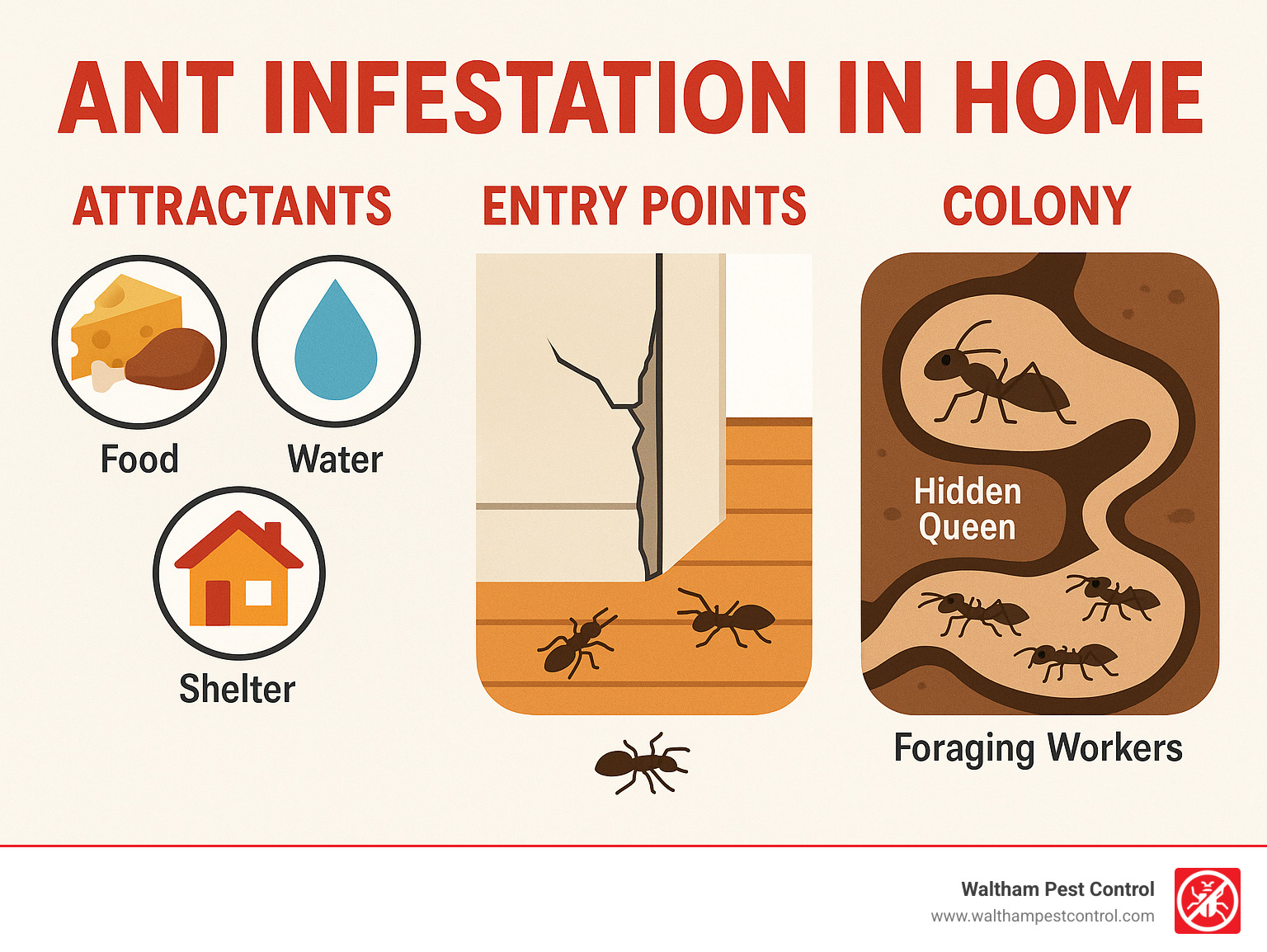
Essential terms:
Understanding the Invasion: Why and How Ants Enter Your Home
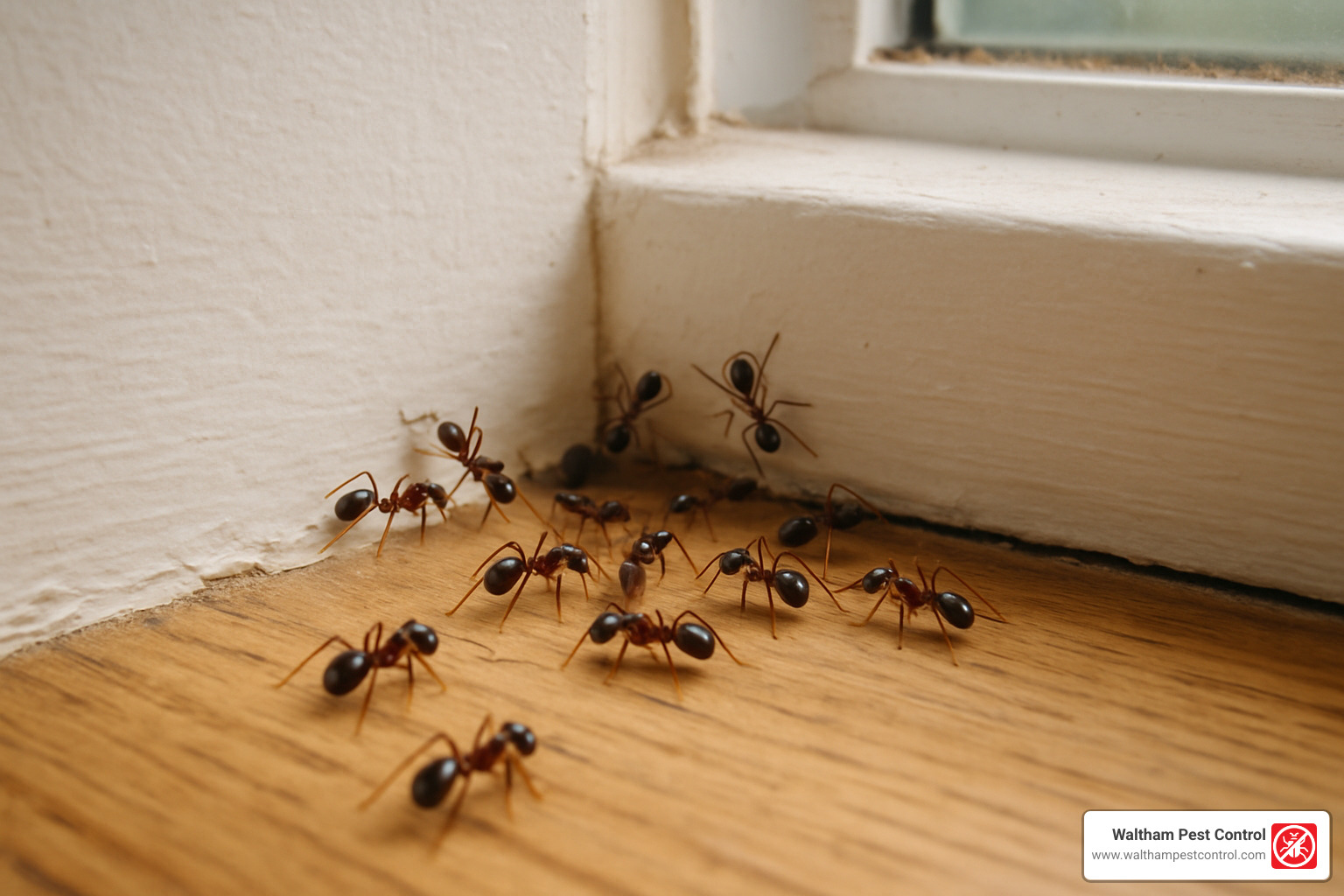
From an ant’s perspective, your home is a five-star resort offering an endless buffet, abundant water sources, and secure shelter from the elements. Understanding these attractants is the first step to making your home less inviting.
Food – The primary driver for most infestations. Sugary spills, greasy residue on the stovetop, unsealed pantry goods, and pet kibble left out overnight act like a powerful dinner bell. Even the cleanest kitchen has microscopic crumbs in crevices and under appliances that scout ants are experts at finding.
Water – Ants need water to survive. Leaky pipes under a sink, faucet drips, condensation on windows or cold pipes, and overwatered houseplants create the perfect hydrating stations for a thirsty colony, especially during hot and dry Massachusetts summers.
Shelter – Your home provides a stable, protected environment. Extreme weather, such as heavy rain, summer droughts, or even the first cold snaps of fall, can drive entire colonies indoors in search of refuge. They find shelter in wall voids, beneath floors, and inside insulation.
How Ants Find Their Way Inside
Ants are masters of infiltration. A few scout ants will explore an area, and once one finds a resource, it returns to the nest while laying down an invisible chemical signal called a pheromone trail. This trail acts as a highway, guiding hundreds or thousands of other workers from the colony straight to the prize. They can squeeze through openings thinner than a credit card, such as cracks in the foundation, gaps under doors, torn window screens, and entry points for utility lines. They may also hitchhike on potted plants, firewood, or patio furniture you bring inside.
Hidden Attractants You Might Miss
- Sticky residue on garbage cans or unrinsed recycling bins
- Crumbs that have fallen beneath or behind appliances like the toaster or refrigerator
- Full vacuum cleaner bags, which can be a buffet for ants
- Damp or rotting wood in basements, crawl spaces, or around windows, which entices carpenter ants
- Honeydew, a sweet substance secreted by aphids on houseplants or garden plants near the home
Identifying the Enemy: Common Ants and Signs of an Infestation

Solving any ant infestation in home starts with proper identification. Different species require different baits and control methods, so knowing your enemy is crucial for victory.
Obvious clues of an infestation include:
- Live ant trails: Long lines of ants marching along baseboards, across countertops, or up walls, especially in kitchens and bathrooms.
- Piles of sawdust-like frass: Fine wood shavings mixed with debris, pushed out of nests by carpenter ants. Look for these piles on floors, windowsills, or in basements.
- Small soil mounds: Pavement ants often excavate sand and soil from beneath patios, driveways, and foundation slabs, creating small mounds along the edges.
- Winged swarmers: In the spring or summer, you might see a sudden emergence of winged ants. This is a sign of a mature, healthy colony looking to expand.
- Faint rustling in walls: At night, you may hear soft rustling or crunching sounds from within walls, a tell-tale sign of a carpenter ant colony at work.
Snapshot of Common Massachusetts Ants
| Ant Type | Size & Color | Where They Nest | Main Concern |
|---|---|---|---|
| Carpenter | 1/4″–1/2″, black/red-black | Damp or decaying wood | Structural damage |
| Pavement | ~1/8″, dark brown-black | Pavement cracks, slabs | Food contamination |
| Odorous House | 1/16″–1/8″, brown-black | Moist wall voids, under floors | Strong odor & food spoilage |
| Argentine | ~1/8″, light-dark brown | Massive soil colonies, walls | Large numbers overwhelm homes |
Carpenter Ants are a primary concern in Massachusetts because they destroy wood to build their nests. Unlike termites, they don’t eat the wood but excavate it, creating smooth, clean galleries that can compromise the structural integrity of your home over time.
Pavement Ants are commonly seen on sidewalks and driveways but will readily forage inside for food, creating trails to your kitchen. They are attracted to a wide range of foods, including sweets, grease, and dead insects.
Odorous House Ants get their name from the pungent, rotten coconut-like smell they emit when crushed. They are highly adaptable, often nesting in wall voids near hot water pipes or under floors, and can be difficult to control as they often move their nests.
Argentine Ants are an invasive species known for forming massive “supercolonies” with multiple queens. They can quickly overwhelm a home with their sheer numbers, creating extensive trails and contaminating food sources.
The Dangers and Damages: Are Ants More Than Just a Nuisance?
While a few ants on the counter might seem like a minor annoyance, a full-blown ant infestation in home can pose significant risks to your health, property, and peace of mind.
- Food Contamination: Ants don’t wipe their feet. They can travel through garbage, drains, and other unsanitary areas before walking across your food preparation surfaces, dishes, and pantry items. In the process, they can track bacteria such as Salmonella, E. coli, Staphylococcus, and Clostridium, potentially leading to foodborne illness.
- Allergic Reactions: While less common in Massachusetts than in other regions, some ant species can bite or sting. These bites can cause localized pain, itching, and swelling. For sensitive individuals, they can trigger more significant allergic reactions.
- Serious Property Damage: This is the most significant risk associated with carpenter ants. They excavate nests and galleries in wood, preferring damp or damaged wood but also moving into sound structural timbers. Over time, this can weaken floor joists, wall studs, window frames, and porch supports, leading to costly and complex repairs.
- Plant and Garden Problems: Many ant species, including pavement and odorous house ants, protect and “farm” aphids and other sap-sucking insects. The ants feed on the sweet honeydew these pests produce. This symbiotic relationship allows aphid populations to explode, causing significant damage to your houseplants and garden.
Ignoring an ant problem allows these risks to grow. Fast, targeted control is essential to prevent a small nuisance from escalating into an expensive and hazardous situation.
Your Action Plan for an Ant Infestation in Home
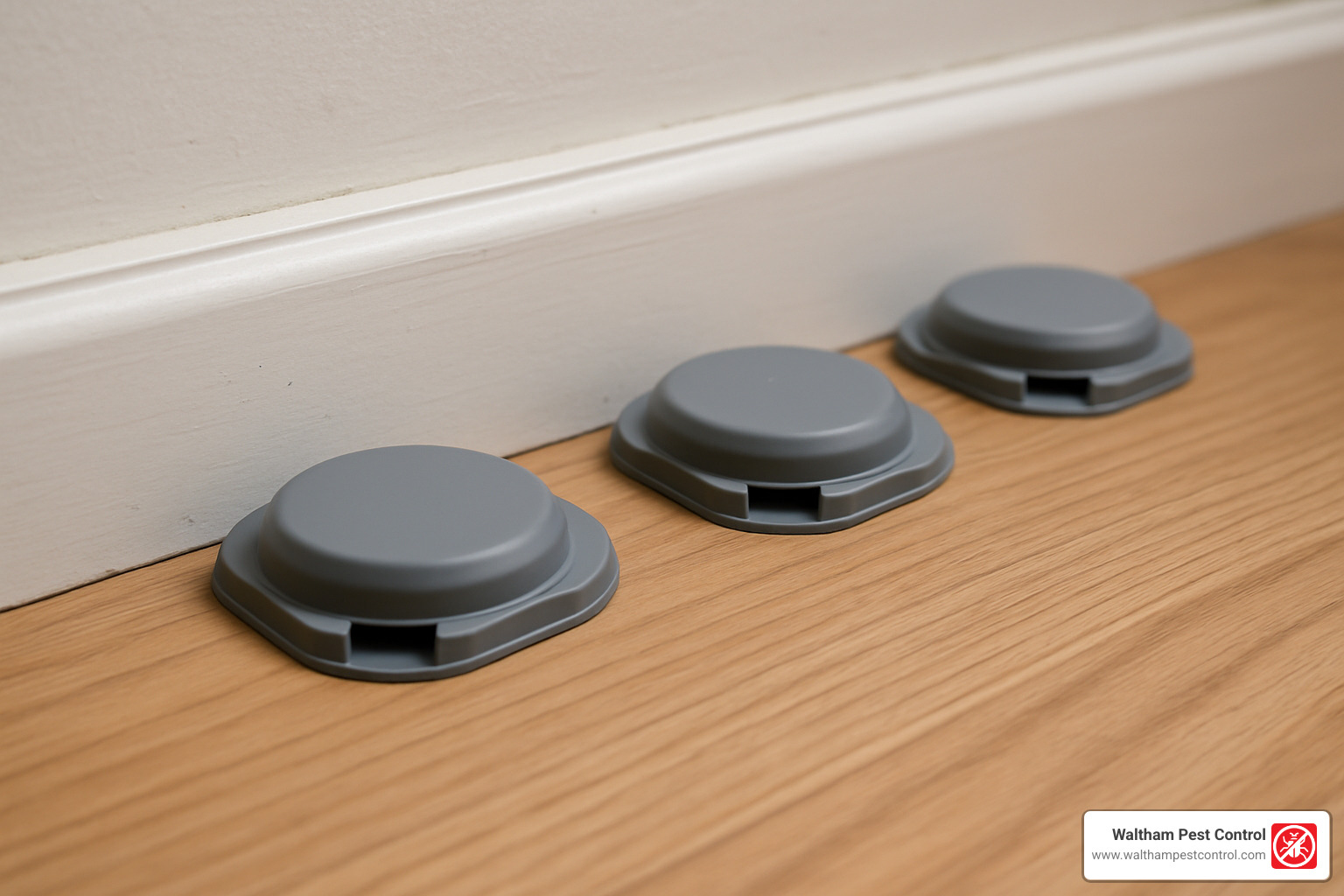
When you see ants foraging in your kitchen, they represent only about 20% of the colony. A lasting fix must go beyond what you can see and target the queen and the unseen nest.
Why Most DIY Sprays Disappoint
It’s tempting to grab a can of ant spray from the hardware store. However, these contact sprays kill only the ants they touch and don’t reach the nest. Worse, many common sprays are repellent. The ants that survive will detect the chemical barrier and, in a survival response known as “budding,” the colony may split into multiple new satellite colonies. This can spread the infestation to other rooms in your house, making the problem much more difficult to solve.
The Professional Edge: Baits & Integrated Pest Management (IPM)
Professionals use a smarter approach centered on slow-acting, non-repellent baits. Foraging workers find the bait, identify it as food, and carry it back to the nest. There, they share it with other workers, larvae, and the queen through a process called trophallaxis. This method quietly and effectively eliminates the entire colony from the inside out. At Waltham Pest Control, we incorporate this into a comprehensive Integrated Pest Management (IPM) program that includes:
- A thorough inspection to identify the species and locate nests.
- Removing attractants and sealing entry points.
- Placing species-specific, professional-grade baits in strategic locations.
- Monitoring activity to ensure complete colony elimination.
Natural Deterrents – Good, Not Ultimate
Substances like peppermint oil, vinegar cleansers, cinnamon, or diatomaceous earth can be useful. They can disrupt pheromone trails, deter ants from a specific area, or kill a few foragers. However, they are temporary repellents, not a solution. Use them as short-term aids to manage visible ants while a more robust treatment plan addresses the source of the problem—the colony.
Long-Term Prevention: How to Keep Ants from Coming Back
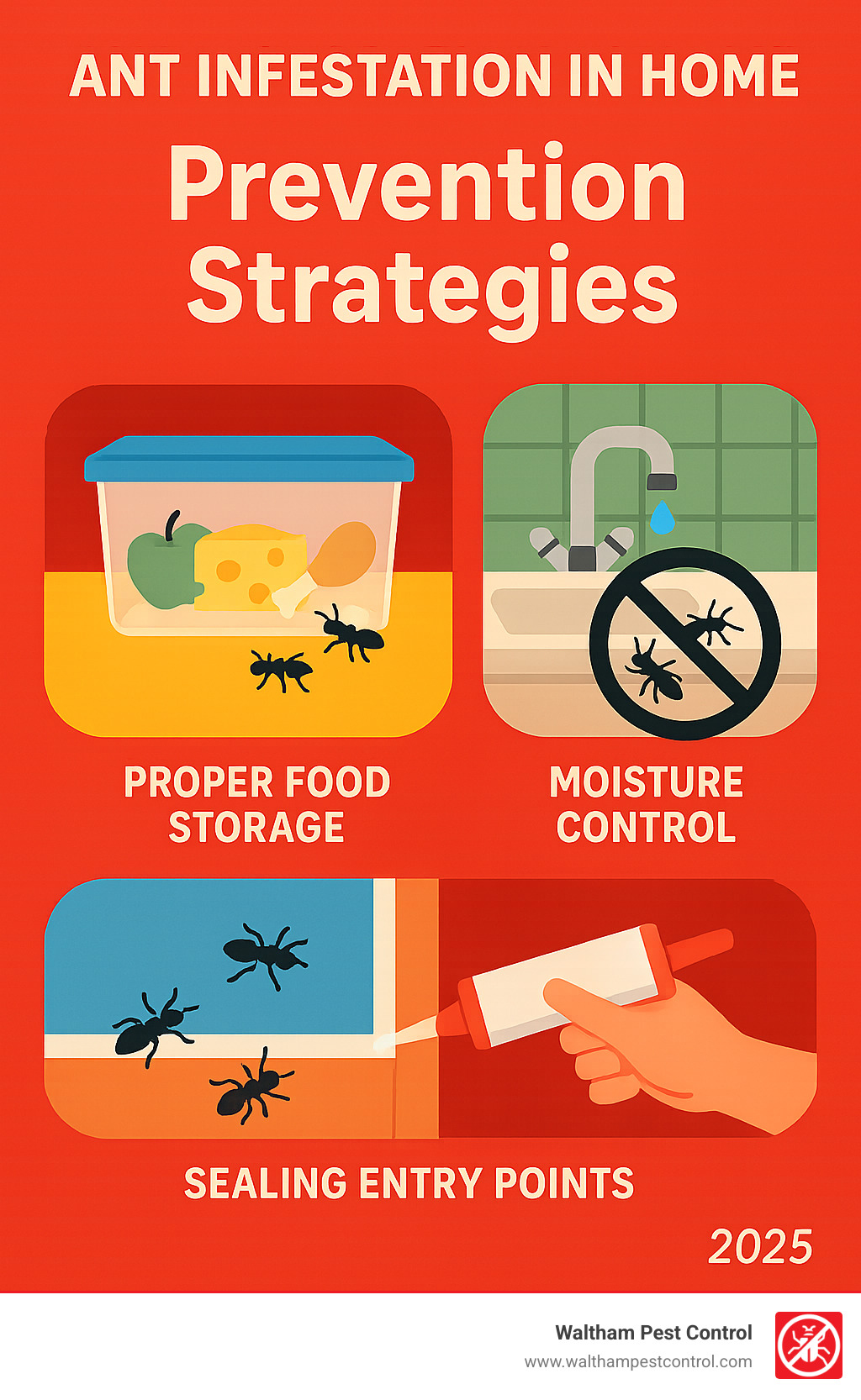
Once you’ve eliminated an infestation, the goal is to prevent a new one from starting. Think of prevention as fortifying your home against future invaders. This requires a consistent focus on sanitation, moisture control, exclusion, and landscape management.
Sanitation: Remove the Buffet
- Wipe up spills and crumbs from counters, floors, and shelves immediately.
- Store food, including sugar, syrup, honey, and pet food, in airtight containers.
- Rinse recyclables thoroughly before placing them in the bin.
- Use a trash can with a tight-fitting lid and take it out regularly.
- Clean pet food and water bowls daily.
Moisture Control: Turn Off the Taps
- Promptly fix any leaky faucets, pipes, or appliances.
- Use dehumidifiers and fans to keep basements, attics, and crawl spaces dry.
- Insulate cold water pipes to prevent condensation from forming.
- Ensure your gutters are clean and downspouts direct water away from the foundation.
Exclusion: Seal the Entrances
- Regularly inspect your home’s foundation and exterior walls for cracks and seal them with caulk.
- Seal gaps around where pipes, wires, and cables enter your home.
- Repair or replace damaged window and door screens.
- Install door sweeps on exterior doors to close the gap at the bottom.
Landscape Management: Create a Buffer Zone
- Trim tree branches and shrubs so they don’t touch your house, as ants use these as bridges.
- Keep mulch, firewood, and landscape timbers at least a foot away from the foundation.
- Ensure the soil around your foundation slopes away from the house to promote proper drainage and avoid moisture buildup.
More details: House Ants: How to Prevent Them and How to Treat Them.
When to Call the Professionals: Securing Your Home for Good
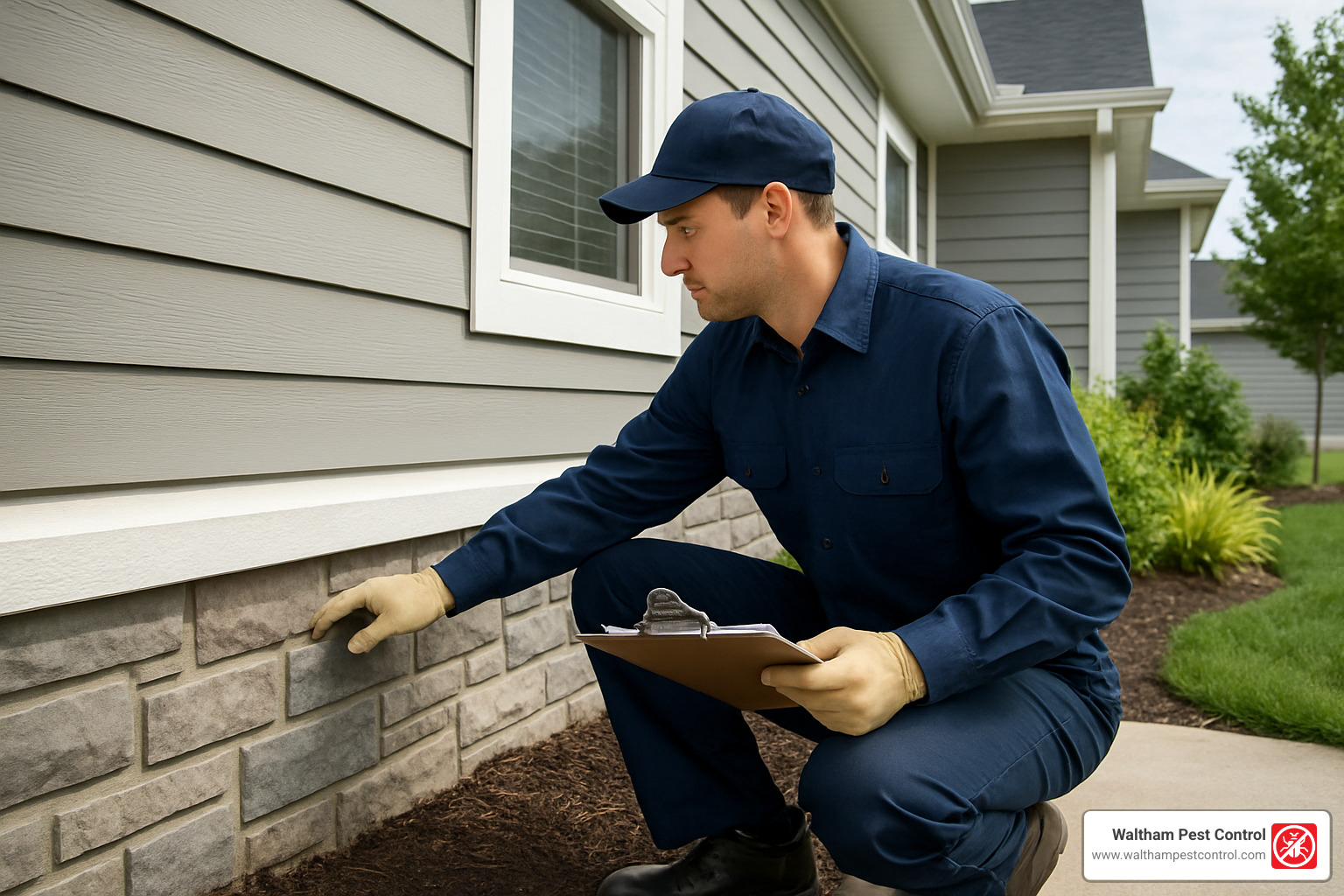
DIY methods can sometimes manage a few stray ants, but many situations require professional expertise to achieve a lasting solution. Don’t hesitate to call Waltham Pest Control if:
- Ant trails return days or weeks after your DIY efforts.
- You see large numbers of ants, indicating a significant infestation.
- The infestation is widespread, appearing in multiple rooms.
- You see ants emerging from wall voids, ceilings, or electrical outlets.
- You notice piles of frass (sawdust) or hear rustling in the walls, suggesting destructive carpenter ants.
What a Professional Service Entails
Our licensed technicians don’t just spray; they solve the problem at its source.
- Comprehensive Inspection: We identify the specific ant species, locate foraging trails, find entry points, and use our experience to pinpoint the likely location of the hidden nest.
- Customized Treatment Strategy: Based on our findings, we develop a targeted plan. This often involves using a combination of professional-grade baits, non-repellent liquid treatments applied to the exterior perimeter, and specialized dusts for treating wall voids.
- Follow-Up & Guarantee: We stand by our work. We will follow up to ensure the treatment was successful and provide you with actionable advice to prevent future infestations. Our goal is to guarantee your home is ant-free.
Average internet-reported ant extermination prices range widely—from about $150 up to $1,000+—because every infestation is different. The cost depends heavily on the species (a carpenter ant job is more complex than a pavement ant issue), the size and location of the colony, and the extent of the infestation. We provide a clear, accurate quote after a thorough inspection.
Frequently Asked Questions about Home Ant Infestations
What is the fastest way to get rid of ants?
The fastest way to get lasting relief is a two-step process. First, clean visible trails with a 50/50 vinegar-water solution to disrupt the pheromone trail and temporarily stop foragers. Second, place slow-acting professional baits near the trails. This allows worker ants to carry the bait back to the nest, eliminating the entire colony, including the queen. A contact spray only kills the few ants you see, not the thousands in the nest.
Why do ants keep coming back even after I clean?
Cleaning removes food sources, which is a crucial prevention step. However, it doesn’t eliminate the established colony or the invisible pheromone trails leading into your home. As long as the queen is alive and well in her hidden nest, she will continue to produce new workers, and scouts will eventually return to find new resources.
Are the ants in my house dangerous?
Most common house ants, like pavement ants or odorous house ants, are primarily nuisance pests that contaminate food. However, carpenter ants are a serious threat because they can cause significant structural damage to your home by tunneling through wood. While less common, some ant species can also deliver painful bites or stings. If you see large black ants or are unsure of the species, it’s safest to call a professional.
Are professional ant treatments safe for my family and pets?
Yes. At Waltham Pest Control, safety is our top priority. Our licensed technicians use products and methods that are highly targeted to ants. We apply treatments strategically in cracks, crevices, and voids that are inaccessible to children and pets. We always provide clear instructions for any necessary precautions, ensuring the well-being of your family.
Why do I see more ants after a treatment?
Occasionally, you might see a temporary increase in ant activity right after a professional baiting treatment. This is actually a good sign! It means the bait is working as designed, attracting the ants so they will consume it and carry it back to the colony. This activity should subside within a few days as the bait takes effect on the nest.
Conclusion
Trying to eliminate an ant infestation by spraying the foragers you see is a temporary fix for a permanent problem. Long-term success depends on a strategy that focuses on total colony elimination and robust prevention. If ants are threatening your peace of mind and property in your Eastern Massachusetts home, Waltham Pest Control’s licensed experts are ready to provide a definitive solution.
Visit our Residential Pest Control page to schedule your inspection today.
