

Ant Deterrent Natural: 10 Powerful Solutions That Work 2025
Why Natural Ant Deterrents Are Your First Line of Defense
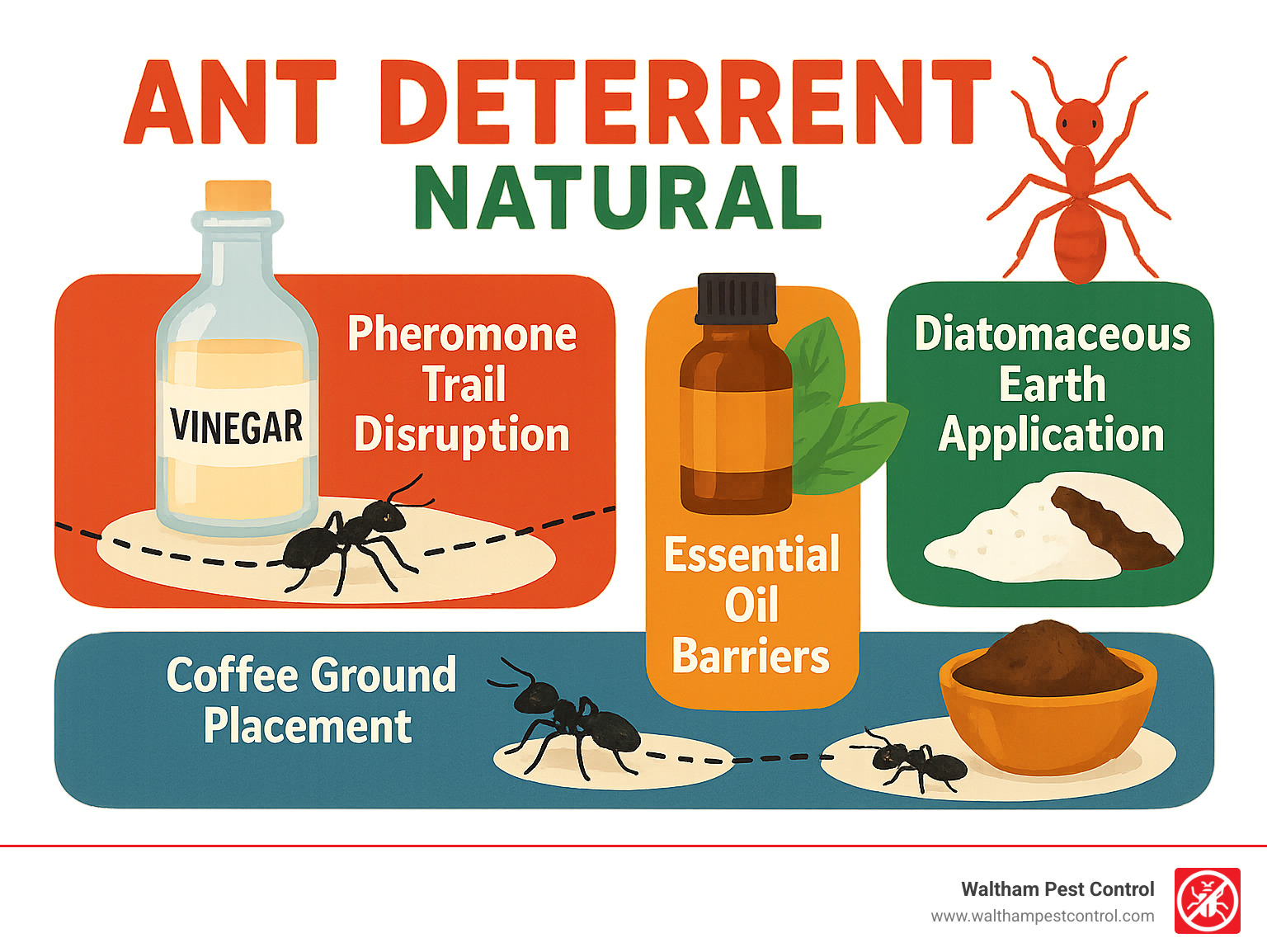
Ant deterrent natural methods have become the go-to solution for homeowners who want to protect their families from harsh chemicals while effectively controlling ant invasions. These eco-friendly approaches work by disrupting ant communication, creating physical barriers, or using scents that ants naturally avoid.
Quick Natural Ant Deterrent Solutions:
– Peppermint oil spray – 89.8% mortality rate in studies, masks pheromone trails
– White vinegar solution – 1:1 ratio with water disrupts scent trails instantly
– Diatomaceous earth – Food-grade powder desiccates ant exoskeletons
– Coffee grounds – Arabian coffee shows highest ant mortality rates
– Cinnamon barriers – Trans-cinnamaldehyde repels and kills on contact
– Borax-sugar bait – Slow-acting poison that targets entire colonies
One morning, you might wake up to find “a few ants in the dining room” that somehow multiply into hundreds within days. This common scenario drives families to seek safe, effective solutions that won’t expose children and pets to toxic pesticides.
The science behind natural deterrents is simple but powerful. Ants steer using pheromone trails – chemical highways that lead workers to food sources. When you disrupt these trails with vinegar or mask them with strong essential oils, you break their communication system.
I’m Waltham Pest Control, President & CEO of Waltham Pest Control, and in my 40+ years of experience, I’ve seen how ant deterrent natural methods can effectively complement professional treatments for long-term pest management.
Terms related to ant deterrent natural:
– ant exterminator cost
– ants control
– best pest control company for ants
How Do Natural Ant Deterrents Work?
Ever wonder why your grandmother’s cinnamon trick actually works against ants? The science behind ant deterrent natural methods is fascinating and surprisingly sophisticated.
The Secret World of Ant Communication
Ants steer your home using invisible chemical highways called pheromone trails. When a scout ant finds your pet’s food bowl, it marks a scented path back to the colony. Soon, you’ll see a steady stream of worker ants following this invisible roadmap.
This is where natural deterrents become your secret weapon. Ant deterrent natural solutions work by scrambling these chemical messages. When you spray white vinegar along ant trails, you’re essentially erasing their GPS system. The acetic acid breaks down the pheromone markers, leaving confused ants wandering aimlessly.
Overwhelming Their Super-Sensitive Noses
Ants have incredibly sensitive smell receptors – much more powerful than ours. What seems like a pleasant peppermint scent to us is overwhelming chaos to an ant. Scientific research on peppermint oil efficacy shows that compounds like terpene, alcohol, and menthol act as natural fumigants.
The results are impressive. University studies found that peppermint oil achieved an 89.8% mortality rate in Argentine ants within 24 hours. The oil doesn’t just repel – it actually disrupts their respiratory system while masking the pheromone trails they depend on.
Physical Barriers That Pack a Punch
Some natural methods work through physical interference. Food-grade diatomaceous earth looks harmless to us, but it’s like walking through microscopic glass shards for ants. These fossilized algae particles absorb the waxy coating on ant exoskeletons, causing fatal dehydration.
The Trojan Horse Strategy
The most clever natural deterrents use ants’ own social behavior against them. Boric acid mixed with honey creates an irresistible bait that ants eagerly carry back to share with their colony. The slow-acting poison gives worker ants time to feed larvae and other adults before taking effect.
For more detailed information about how ant colonies function and why these methods exploit their natural behaviors, More info about ant biology provides excellent insights into these remarkable insects.
Top 10 Ant Deterrent Natural Solutions
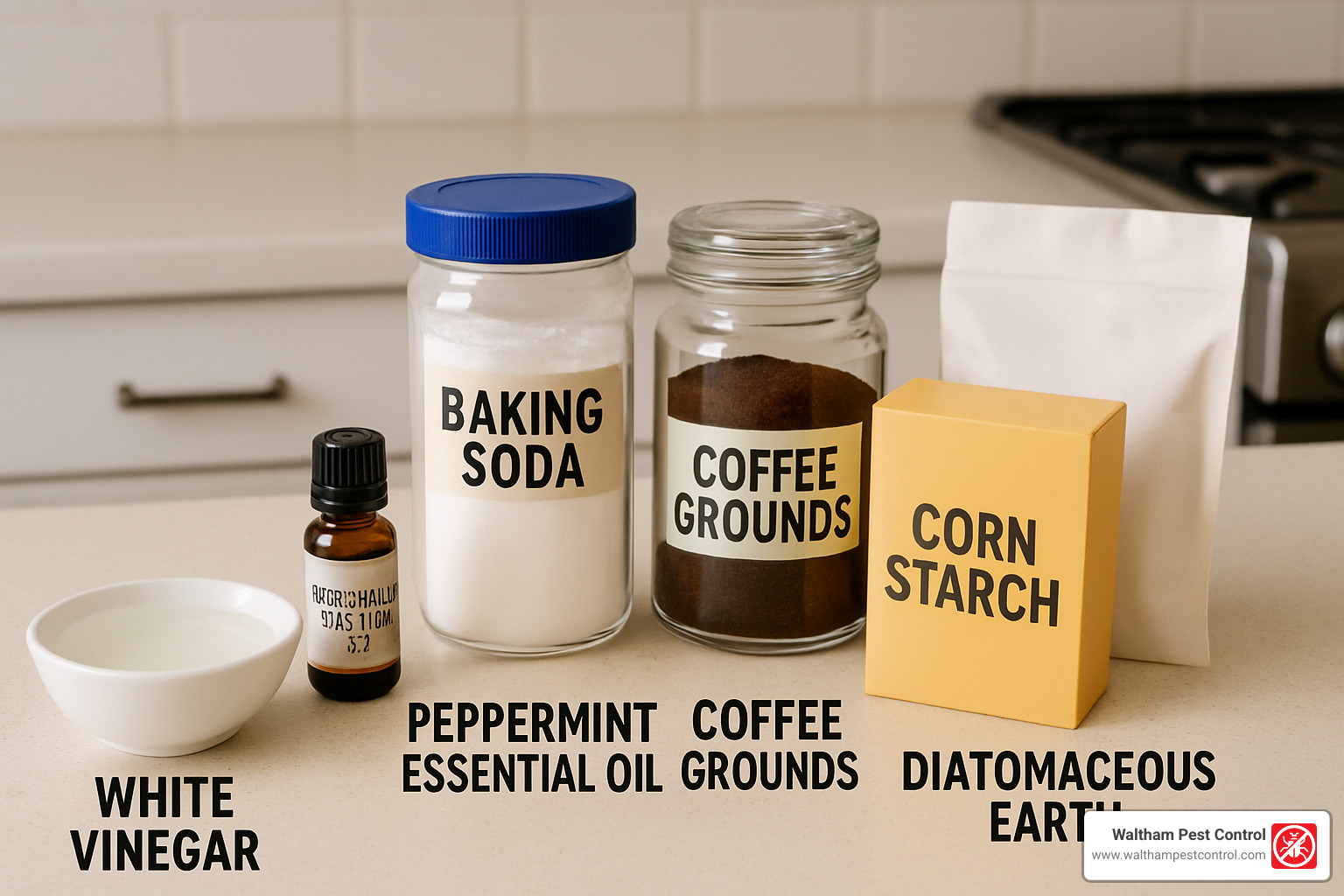
Walk into any kitchen in Eastern Massachusetts, and you’ll find at least five powerful ant deterrent natural solutions hiding in plain sight. After four decades of helping homeowners tackle ant problems, I’ve learned that the most effective remedies often come from your pantry, spice rack, or medicine cabinet.
For comprehensive guidance on natural approaches, visit our Tips for Natural Pest Control Solutions page.
Essential Oil Powerhouses: Your Go-To Ant Deterrent Natural
Peppermint oil reigns supreme in natural ant control. This powerful essential oil doesn’t just smell amazing to humans – its menthol compounds completely scramble ant navigation systems. Research shows that a simple 1% peppermint oil solution repels ants effectively, while doubling the concentration to 2% can actually kill them on contact.
Creating your own peppermint spray is surprisingly simple. Mix 10-20 drops of pure peppermint essential oil with 2 cups of warm water and add 2 drops of dish soap to help everything blend together.
Tea tree oil brings its own unique advantages to ant control. This Australian native contains compounds that both repel and eliminate ants. Try mixing 10 drops of tea tree oil with 15 drops of peppermint oil and 1/4 cup of water for a multi-mechanism spray.
Lemon eucalyptus oil offers something special – it’s actually EPA-approved as a biopesticide. The oil contains p-Menthane-3,8-diol (PMD), giving it official recognition for pest control effectiveness.
Kitchen Staples That Double as Ant Deterrent Natural Barriers
White vinegar works like magic because its acetic acid literally erases the chemical highways ants use to steer. A simple 1:1 vinegar-to-water mixture kills ants on contact while cleaning away their pheromone trails.
The baking soda and sugar combination operates like a Trojan horse. Sugar lures ants in with its sweet appeal, while baking soda delivers a fatal surprise. When ants consume baking soda, it reacts with acids in their digestive systems, causing internal disruption.
Lemon juice and citrus peels pack a double punch against ant invasions. The D-limonene in citrus peels proves toxic to ants on contact, while fresh lemon juice disrupts their scent trails with its strong acidic properties.
Minerals & Powders That Kill, Not Just Repel
Diatomaceous earth represents nature’s microscopic warfare against ants. This powder consists of fossilized diatoms with razor-sharp edges that slice through ant exoskeletons while absorbing their body oils. Always wear an N95 mask during application to avoid inhaling the fine particles.
Boric acid takes a strategic approach by targeting entire colonies. When mixed with attractants like honey or peanut butter, it creates slow-acting baits that worker ants carry back to their nests.
Coffee grounds offer an aromatic solution that many homeowners love. Research demonstrates that brewed coffee grounds repel household ants, with Arabian coffee showing the highest mortality rates.
Cinnamon brings both pleasant aroma and serious ant-fighting power. A 2008 study revealed that cinnamon leaf essential oil containing trans-cinnamaldehyde effectively kills and repels ants.
Boiling water provides the most immediate solution for outdoor ant hills. Pouring boiling water directly onto ant mounds can eliminate entire colonies instantly.
Finally, deterrent plants like mint, tansy, and pennyroyal create natural barriers around your home’s perimeter.
DIY Sprays, Baits, and Barriers
Ready to create your own ant deterrent natural arsenal? After four decades of helping homeowners in Eastern Massachusetts, I’ve learned that the best solutions often come from your own kitchen.
The Ultimate Vinegar-Soap Spray
This powerhouse combination tackles ants from three angles at once. The vinegar’s acetic acid erases pheromone trails, dish soap acts as a surfactant to help the solution stick to surfaces, and baking soda provides gentle abrasive action.
Here’s what works: Mix 2 cups of white or apple cider vinegar with 2 tablespoons of liquid dish soap and 2 tablespoons of baking soda. You might notice some fizzing when you add the baking soda – that’s perfectly normal!
Borax-Honey Colony Killer
This recipe requires more caution but delivers impressive results by targeting the entire colony. The genius lies in ants’ natural food-sharing behavior – worker ants carry the poisoned bait back to feed larvae and other colony members.
The proven formula: Combine 2 tablespoons of borax with 1/4 cup of honey or corn syrup until well mixed. Place small teaspoon-sized portions on disposable cards near ant trails, but keep them completely out of reach of children and pets.
Diatomaceous Earth Perimeter Defense
Think of food-grade diatomaceous earth as creating an invisible fortress around your home. This ancient method uses microscopic fossilized algae that slice through ant exoskeletons while absorbing their body oils.
Application technique: Sprinkle a continuous band about 1/2-inch high and 2 inches wide around your home’s foundation. The key is consistency – any gaps in your DE barrier become ant highways.
| Method Type | Speed of Action | Duration | Best For | Safety Level |
|---|---|---|---|---|
| Sprays | Immediate | 1-3 days | Active trails | High |
| Baits | 3-7 days | Weeks | Colony elimination | Medium* |
| Powders | Hours to days | 1-2 weeks | Perimeter defense | High |
| Barriers | Immediate | Until disturbed | Prevention | High |
*Borax baits require careful placement away from children and pets
The beauty of these DIY solutions lies in their flexibility. Sprays work instantly for immediate relief, while baits provide long-term colony control. Powder barriers offer continuous protection, and chalk lines give you quick prevention for specific entry points.
For situations requiring more intensive treatment, our Ant Bait Station Indoor solutions can complement these natural methods perfectly.
Prevention & Safety Tips for Homes with Kids, Pets, and Gardens
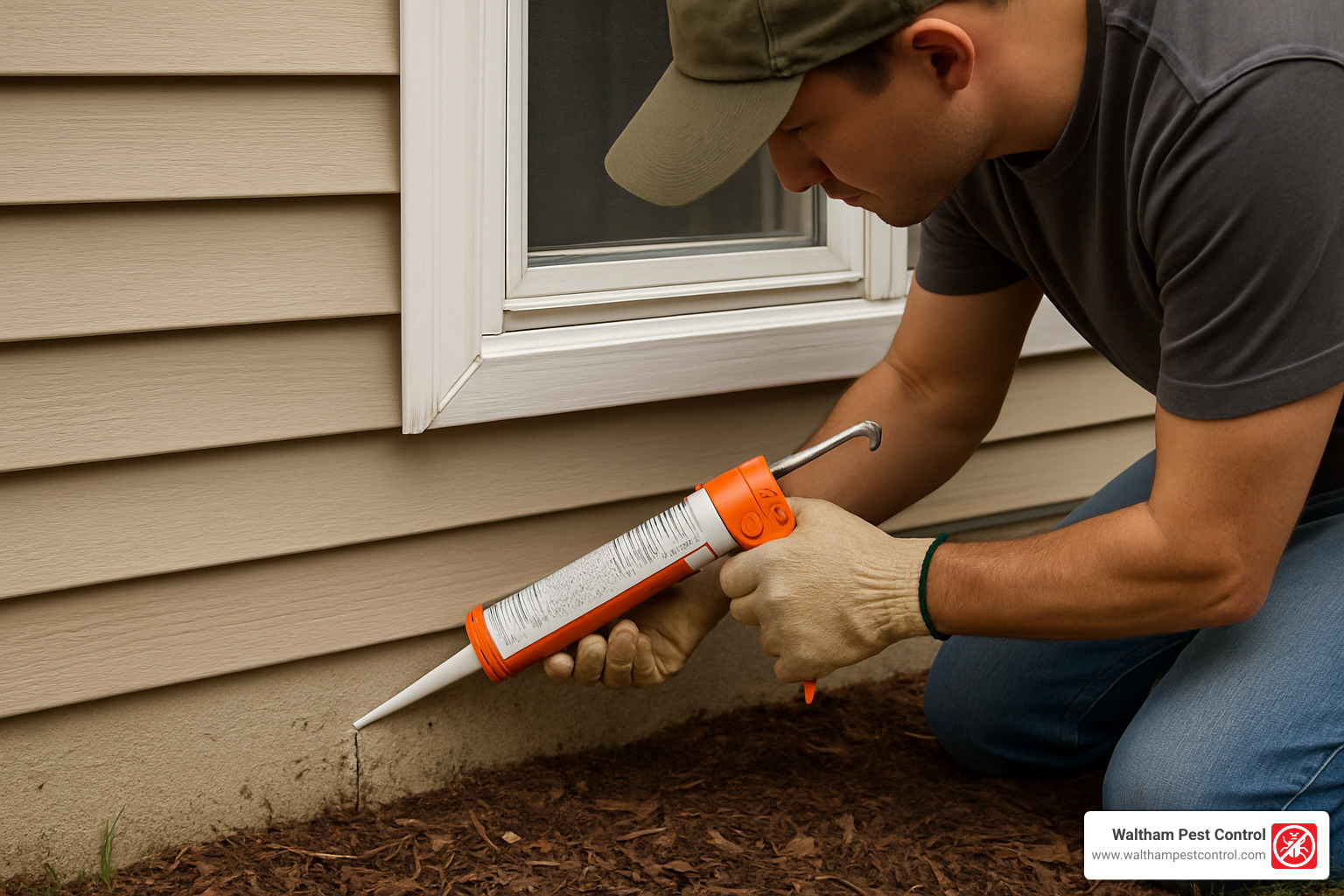
The most effective ant deterrent natural strategy combines active treatments with preventive measures that make your home less attractive to ants in the first place.
Sealing Entry Points
Ants can squeeze through cracks as small as 1/64 of an inch. Inspect and seal gaps around:
– Windows and door frames
– Foundation cracks
– Pipe and wire entry points
– Baseboards and trim
Use clear caulk for visible areas and expanding foam for larger gaps. This single step can reduce ant invasions by up to 80%.
Food Storage and Kitchen Hygiene
Ants can detect food sources from remarkable distances. Implement these storage practices:
– Store all food in airtight containers
– Clean up crumbs and spills immediately
– Wipe down surfaces with vinegar solution daily
– Keep pet food bowls clean
– Take out trash regularly and use tight-fitting lids
Pet and Child Safety Guidelines
When using natural deterrents around vulnerable family members:
Essential Oils: Always dilute properly and avoid direct contact with skin. Check ASPCA toxicity databases before using oils around pets.
Borax Products: While natural, borax is toxic to mammals. Use only in tamper-resistant bait stations or areas completely inaccessible to children and pets.
Diatomaceous Earth: Use only food-grade DE and avoid inhalation during application.
Reapplication Timeline
Natural deterrents require more frequent reapplication than chemical pesticides:
– Spray solutions: Every 2-3 days or after cleaning
– Essential oil cotton balls: Weekly
– Powder barriers: Every 2-3 weeks or after rain
– Coffee grounds: Every few days as they dry out
Garden and Landscape Considerations
Plant natural ant-repelling species around your home’s perimeter:
– Peppermint and spearmint
– Lavender
– Lemon balm
– Basil
For comprehensive prevention strategies, visit our guide on House Ants – How to Prevent Them and How to Treat Them.
When Natural Isn’t Enough: Calling in the Pros
Sometimes you’ll try every ant deterrent natural method in the book, only to watch those persistent little invaders march right back into your kitchen the next morning. After four decades of helping families across Eastern Massachusetts, I’ve seen plenty of situations where natural methods simply can’t match the scope of the problem.
Understanding the Limits of Natural Solutions
Natural deterrents work wonderfully for small foraging groups and common household ants like odorous house ants or pavement ants. But certain species and situations require a different approach entirely. Carpenter ants burrow deep into wall voids and wooden structures where your peppermint oil spray simply can’t reach. Fire ants build aggressive colonies that can quickly overwhelm even the most carefully applied diatomaceous earth barriers.
Recognizing When It’s Time for Professional Help
You’ll know it’s time to call in the pros when ants keep returning within 24-48 hours despite your best natural efforts. Seeing winged ants (we call them swarmers) is a clear sign you’re dealing with mature colonies that have outgrown DIY solutions. If you notice structural damage from carpenter ants or find multiple entry points that seem impossible to seal, professional intervention becomes necessary.
What Professional Treatment Actually Costs
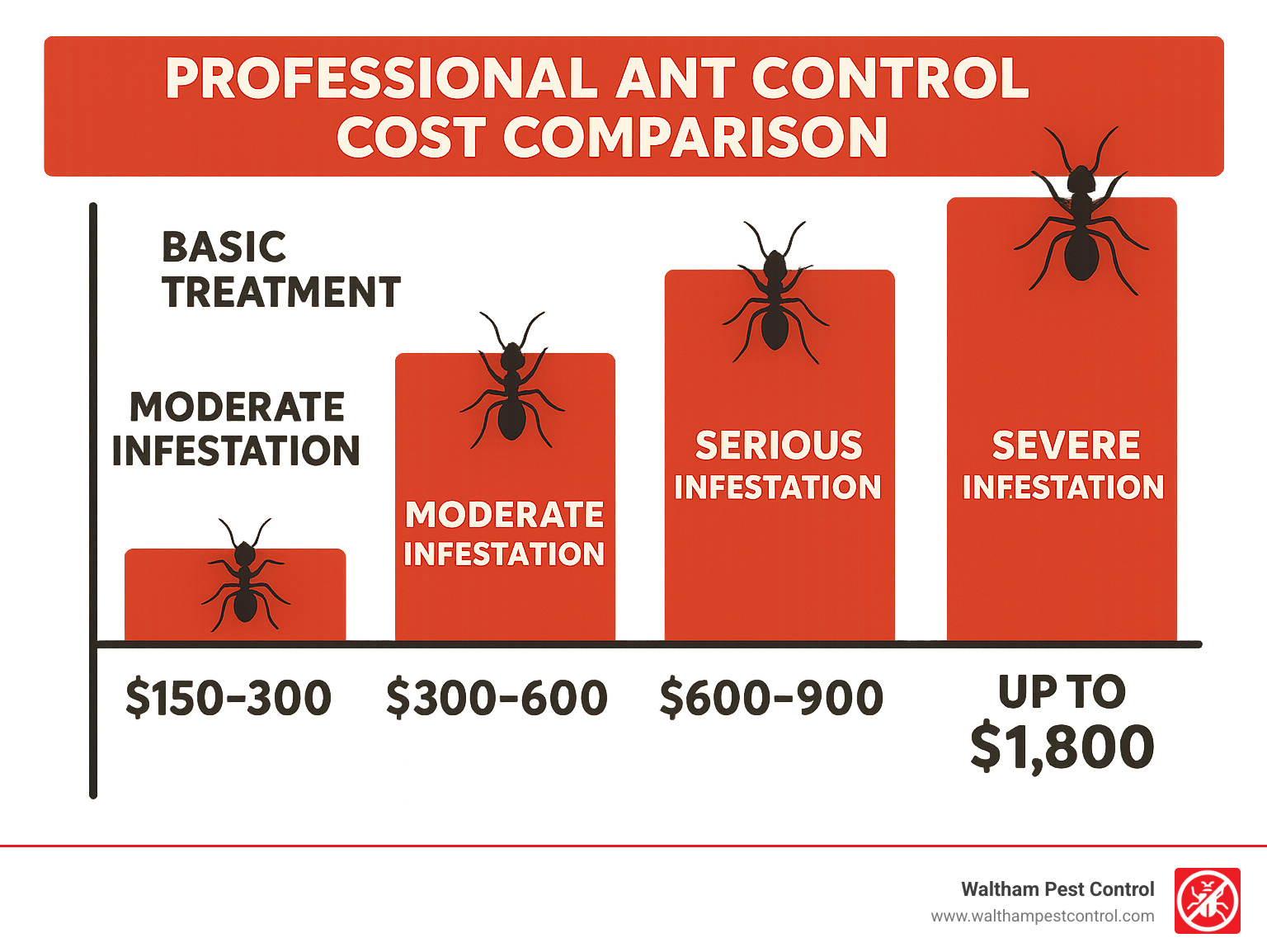
Professional ant control services typically range from $150-$600 for initial treatment, with severe infestations potentially reaching over $1,800. These are average costs based on internet research and don’t reflect specific pricing for our services. Several factors influence the final cost, including your property size, the severity of infestation, which ant species you’re dealing with, and how many treatments are needed.
The Value of Professional Inspection
Licensed exterminators bring capabilities that natural methods simply cannot provide. We can identify the exact ant species you’re dealing with, which determines the most effective treatment approach. Finding hidden nests and satellite colonies requires specialized knowledge and equipment that most homeowners don’t have access to.
At Waltham Pest Control, we actually encourage homeowners to try natural methods first for minor ant problems. However, we’re here when you need that next level of expertise and long-term solution.
For expert ant control services in your area, visit our Ant Control Company Near Me page to connect with our experienced team.
Frequently Asked Questions about Natural Ant Control
How often should I reapply natural repellents?
The frequency of reapplication depends on which ant deterrent natural method you choose and your specific environment. After four decades of helping homeowners, I’ve learned that consistency beats intensity every time.
Spray solutions like vinegar and essential oil mixtures need the most frequent attention. Plan to reapply every 2-3 days, or immediately after you’ve cleaned the treated surfaces.
Powder barriers offer more staying power. Your diatomaceous earth and cinnamon lines typically last 2-3 weeks indoors, but outdoor applications need refreshing after every rain.
Essential oil cotton balls lose their punch as the scent fades, usually within a week. Replace them on a regular schedule for consistent protection.
Coffee grounds work wonderfully when fresh but become nearly useless once they’re completely dried out. Replace them every 3-4 days.
Are these methods safe around children and pets?
Most ant deterrent natural solutions are significantly safer than chemical pesticides, but “natural” doesn’t automatically mean “harmless.” As a father and grandfather myself, I understand the importance of protecting our most vulnerable family members.
The safest options include white vinegar solutions, food-grade diatomaceous earth, coffee grounds, citrus peels, cinnamon barriers, pepper lines, and chalk lines. These pose minimal risk beyond possible temporary eye irritation from vinegar.
Essential oils require more caution than many people realize. While wonderfully effective, they can cause skin irritation or allergic reactions in sensitive individuals. More importantly, certain oils are toxic to cats and dogs. Always check ASPCA guidelines before using any essential oil around pets.
Borax baits deserve special attention because while borax occurs naturally, it’s still toxic to mammals when consumed. Only use these baits in tamper-resistant stations or locations that are completely inaccessible to curious children and pets.
When do I need a licensed exterminator instead of DIY?
Natural methods excel at prevention and handling minor infestations, but certain situations require professional expertise that no amount of peppermint oil can replace.
Immediate professional help becomes necessary when you’re dealing with carpenter ants that are actually damaging your home’s structure, or aggressive fire ants whose painful stings pose health risks. If you’ve been consistently applying natural treatments but ants return within 48 hours, it’s time to call in reinforcements.
Species identification often determines success. Common household ants like odorous house ants respond beautifully to ant deterrent natural methods, but carpenter ants, pharaoh ants, and imported fire ants require specialized approaches.
At Waltham Pest Control, we often recommend starting with natural methods for minor problems while scheduling a professional consultation for persistent or severe infestations.
Conclusion
Finding ants marching across your kitchen counter doesn’t have to mean reaching for harsh chemical sprays that worry you about your family’s safety. Ant deterrent natural methods offer a powerful arsenal of safe, effective solutions that can tackle most household ant problems when you apply them thoughtfully and consistently.
Throughout this guide, we’ve explored how simple household ingredients become mighty ant-fighting tools. That bottle of peppermint oil in your medicine cabinet delivers an impressive 89.8% mortality rate against stubborn Argentine ants. The white vinegar in your pantry instantly erases the invisible highways ants use to steer your home. Even your morning coffee grounds create barriers that send ants packing.
The real magic happens when you understand the science behind these solutions. Ants aren’t just randomly wandering into your space – they’re following sophisticated chemical communication systems that natural deterrents can disrupt, mask, or completely obliterate.
Success with natural methods requires patience and consistency. Unlike one-time chemical treatments, these gentle approaches work best when you reapply them regularly and combine multiple strategies. Think of it as building layers of defense rather than launching a single attack.
But let’s be honest – natural methods aren’t magic bullets for every situation. After four decades helping Eastern Massachusetts families, we’ve learned that ant deterrent natural solutions excel at prevention and handling common household ants, but they meet their match against carpenter ants boring through your home’s structure or aggressive fire ant colonies.
This is where the balanced approach really shines. Start with prevention – seal those tiny cracks, store food properly, and maintain the cleanliness that makes your home less attractive to scouts. Escalate to targeted natural treatments when you spot the first signs of invasion. And don’t hesitate to call in professional reinforcements when the situation grows beyond what weekend DIY projects can handle.
At Waltham Pest Control, we see natural deterrents and professional services as partners, not competitors. Our licensed technicians often recommend starting with the safe, natural methods we’ve covered while developing comprehensive strategies that address the root causes of your specific ant problems.
Your ant-free home is absolutely achievable. Begin with these proven ant deterrent natural techniques today, knowing you have professional backup when you need it.
For comprehensive ant control strategies and expert consultation, visit our Best Ant Control in House page to connect with our licensed professionals who understand both natural solutions and when stronger measures become necessary.
