
How to control sugar ants in the house 101: Solved!
Why Sugar Ants Target Your Home and How to Stop Them
How to control sugar ants in the house starts with understanding what draws these tiny invaders to your kitchen in the first place. These persistent pests can detect food from incredible distances – they have four times more odor receptors than other insects, allowing them to smell crumbs and spills from far away.
Quick Control Methods:
- Disrupt their trails – Spray 1:1 vinegar and water solution where you see ant lines
- Eliminate food sources – Store food in airtight containers and clean up spills immediately
- Use targeted baits – Place slow-acting borax-based baits near ant activity
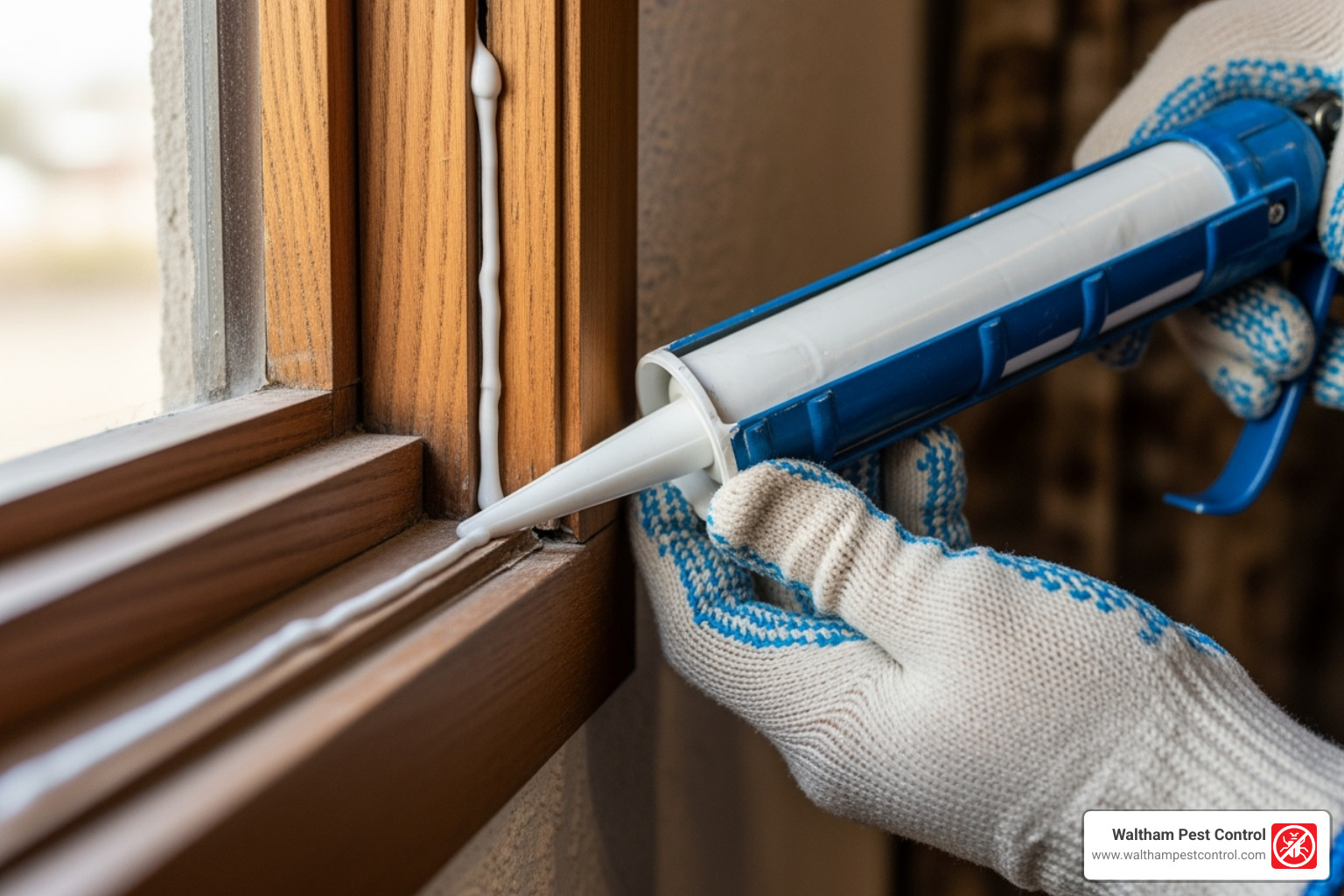
- Seal entry points – Fill cracks around windows, doors, and baseboards with caulk
- Remove moisture – Fix leaky pipes and eliminate standing water
The term “sugar ant” actually refers to several common household ant species, including Odorous House Ants and Pavement Ants. These small, light-colored ants don’t just seek sugar – they’re attracted to proteins, fats, and moisture too.
What makes sugar ants particularly challenging is their budding behavior. Unlike other ant species, they can have multiple queens that split off to form new colonies. This means that simply killing the ants you see won’t solve the problem – you need a comprehensive strategy.
The key to effective control is disrupting their communication system. Scout ants leave invisible pheromone trails that guide thousands of other ants to your food sources. Without breaking these chemical highways, you’ll see endless streams of ants marching across your counters.
I’m Waltham Pest Control, President and CEO of Waltham Pest Control, with over 40 years of experience helping Eastern Massachusetts homeowners understand how to control sugar ants in the house using proven integrated pest management techniques. Through decades of treating ant infestations, I’ve learned that successful control requires targeting both the ants you see and the colonies you don’t.
How to control sugar ants in the house terms you need:
Understanding the Invasion: What Are Sugar Ants and Why Are They Here?
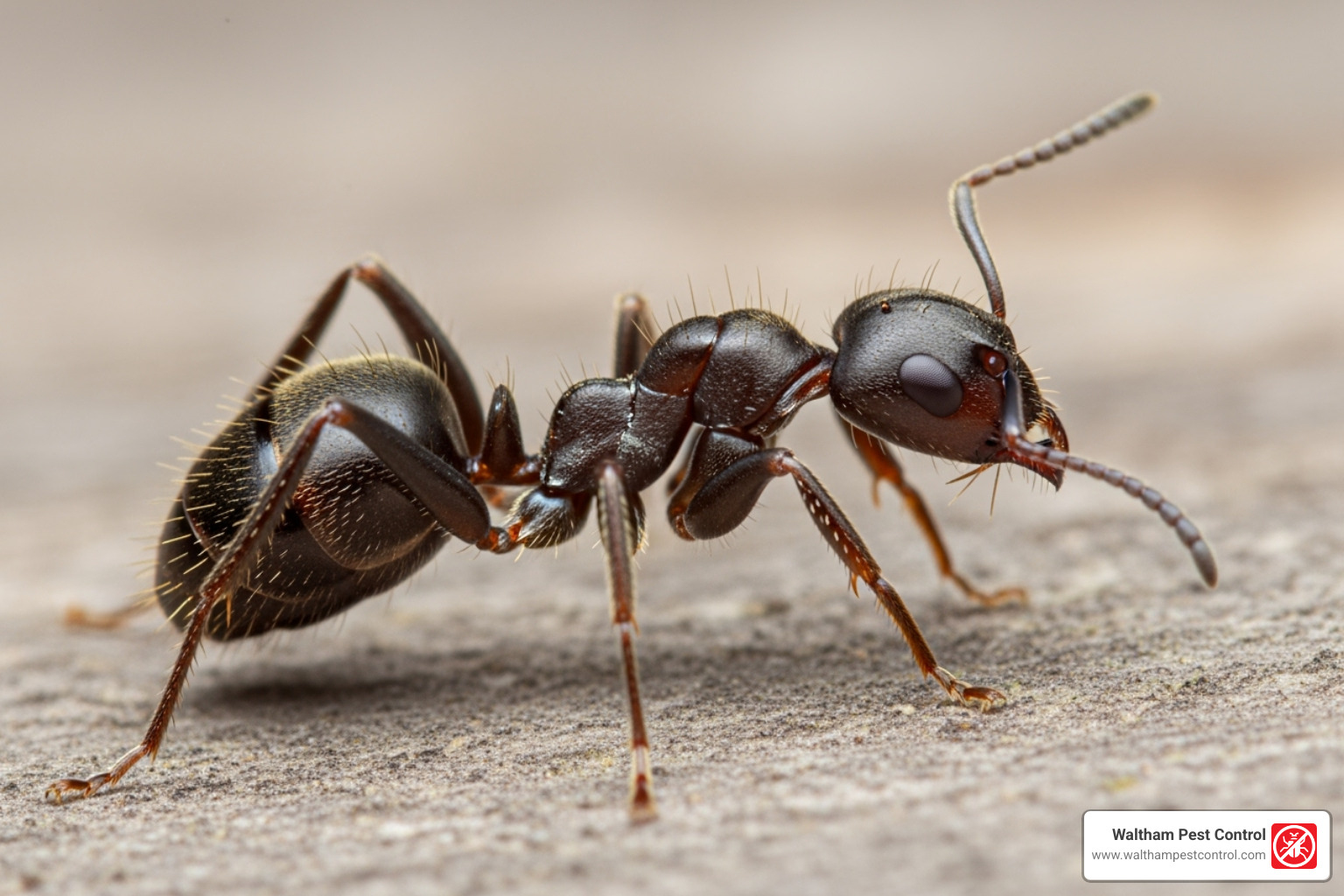
Picture this: you’re making your morning coffee when you spot a tiny ant scurrying across your counter. Then another. And another. Before you know it, there’s a whole parade marching toward that sugar you spilled yesterday. Welcome to “sugar ants” – those persistent little invaders that seem to appear out of nowhere.
Here’s the thing though – “sugar ant” isn’t actually a real species. It’s just what we call any small ant that shows up in our kitchens looking for a sweet snack. In Eastern Massachusetts, the ants crashing your breakfast party are most likely Odorous House Ants or Pavement Ants. Both are opportunistic little creatures that aren’t picky about their food sources – they’ll happily munch on proteins, fats, and anything else they can find.
The signs of an infestation are pretty hard to miss. You’ll see those telltale ant trails leading from cracks in your baseboards straight to your pantry. Sometimes you might even find their nests tucked away in wall voids or under your floors. While these ants won’t make you sick directly, they can contaminate your food and turn your peaceful kitchen into their personal highway system.
Understanding how to control sugar ants in the house starts with knowing exactly what you’re dealing with. Once you identify the species, you can target their specific behaviors and preferences more effectively. For comprehensive strategies, check out our guide on Dealing With Ant Infestation.
What Exactly Are “Sugar Ants”?
Let’s get to know your uninvited guests a bit better. The two main culprits in most Massachusetts homes have some pretty distinctive characteristics once you know what to look for.
Odorous House Ants are the smaller of the two, measuring just 2.5-3mm long with colors ranging from black to brown. Here’s a fun (and slightly gross) fact: if you accidentally crush one, you’ll immediately know it’s an Odorous House Ant because of that unmistakable “rotten coconut” smell they release. It’s nature’s way of saying “you got the wrong guy!”
These ants are particularly tricky because they practice something called budding behavior. Instead of having just one queen like many ant species, they can have multiple queens in a single colony. When things get crowded, some queens will pack up and move out with a group of workers to start fresh colonies nearby. It’s like having your ant problem multiply right before your eyes.
Pavement Ants are slightly different creatures altogether. They’re similar in size to Odorous House Ants but prefer the great outdoors, typically setting up shop around concrete, sidewalks, or under rocks. Don’t let their outdoor preference fool you though – they’re more than happy to venture inside when your kitchen offers better dining options than the backyard.
| Feature | Odorous House Ant | Pavement Ant |
|---|---|---|
| Size | 2.5-3 mm | Small, similar size |
| Color | Black to brown | Dark brown to black |
| Distinctive Smell | “Rotten coconut” when crushed | None |
| Colony Structure | Multiple queens (budding) | Usually single queen |
| Preferred Location | Indoors and outdoors | Primarily outdoors |
Why Are They Attracted to Your Home?
Think of your home from an ant’s perspective – it’s basically a five-star resort with room service. You’ve got everything they need: food, water, and shelter, all conveniently located under one roof.
The food situation is what usually draws them in first. Those crumbs under your toaster, the sticky spill on your counter you meant to clean up later, or even your pet’s food bowl can smell like a gourmet buffet to an ant. Thanks to their incredibly powerful odor receptors, they can detect these food sources from surprisingly far away – we’re talking about insects that have four times more smell receptors than most other bugs.
Water sources are equally important, especially during dry spells. That leaky pipe under your sink, condensation on your pipes, or even damp areas in your bathroom become essential pit stops on their daily rounds. Any standing water, no matter how small, can sustain a colony.
Finally, your home offers premium shelter options. Wall voids, spaces under floors, and areas behind appliances provide perfect protection from weather and predators. These hidden spots let colonies grow undisturbed until you start noticing their foraging trails.
The reality is that even the cleanest homes can attract ants. A single forgotten crumb or a tiny spill can be enough to put your house on their radar. For more detailed prevention strategies, explore our comprehensive guide on House Ants: How to Prevent Them and How to Treat Them.
The Pheromone Problem: Erasing the Ants’ Invisible Highway
Picture this: you’ve just spotted a single ant wandering across your kitchen counter. You squash it and think the problem is solved. But within hours, there’s a parade of ants following the exact same path. What’s going on?
Here’s the fascinating (and frustrating) truth about how to control sugar ants in the house: that first ant was a scout, and it left behind an invisible chemical breadcrumb trail called a pheromone. Think of it as nature’s version of GPS directions, guiding every ant in the colony straight to your cookie jar.
When scout ants find food in your home, they don’t just feast and forget. On their journey back to the nest, they continuously lay down these chemical markers. The role of pheromones in ant communication is incredibly sophisticated – these scent trails can last for days or even weeks, creating a highway that hundreds of worker ants will follow.
This is exactly why simply killing the visible ants feels like playing whack-a-mole. You might eliminate a few foragers, but that invisible highway remains wide open for business. The importance of disrupting the trail cannot be overstated – without breaking this chemical communication, you’ll see endless waves of ants marching through your kitchen.
Understanding this behavior changes everything about your approach to ant control. Instead of just focusing on the ants you can see, you need to erase their invisible roadmap. Only then will you prevent more ants from following the same route to your food sources.
How to Disrupt Pheromone Trails
Breaking up these chemical highways is one of the most critical steps in winning the war against sugar ants. The good news? You probably already have everything you need in your cleaning cabinet.
Using a 1:1 vinegar and water solution is your first line of defense. White vinegar doesn’t just clean – it completely destroys the pheromone trails that ants depend on. Mix equal parts white vinegar and water in a spray bottle, then spray directly onto any visible ant trails. The acidic nature of vinegar breaks down the chemical markers while also acting as a natural repellent.
Soapy water serves double duty as both a contact killer and trail remover. Mix about one part dish soap with nine parts water in a spray bottle. When you spray this solution directly on ants, it kills them on contact by breaking down their protective waxy coating. More importantly, the soap helps wash away the invisible pheromone trails they’ve left behind.
Cleaning countertops, floors, and baseboards where you’ve seen ant activity is essential for long-term success. Pay special attention to areas around food prep zones, pet feeding areas, and anywhere you’ve spotted ant trails. A diluted bleach solution or even commercial cleaners can effectively break down these chemical pathways.
Here’s a crucial tip from my four decades in pest control: the importance of cleaning before baiting cannot be ignored. You want to eliminate competing food sources and old pheromone trails so that ants are drawn to your strategically placed baits, not distracted by leftover crumbs or existing scent trails. Clean first, then bait – this sequence makes all the difference in your success rate.
How to Control Sugar Ants in the House: An Integrated Approach
When it comes to how to control sugar ants in the house, there’s no magic bullet that will solve your problem overnight. At Waltham Pest Control, we’ve learned through four decades of experience that the most effective approach is Integrated Pest Management (IPM) – a comprehensive strategy that combines prevention, sanitation, and targeted control methods.
Think of it like protecting a castle. You wouldn’t just build walls and call it done, right? You’d also post guards, keep the gates locked, and have a plan for any invaders who slip through. That’s exactly how we approach ant control – multiple layers of defense working together for long-term success.
This integrated approach focuses on understanding why ants are choosing your home and then systematically removing those attractions while blocking their access. It’s more work upfront than just spraying some ant killer, but it delivers lasting results that keep your kitchen ant-free for months, not days.
Step 1: Prevention and Exclusion
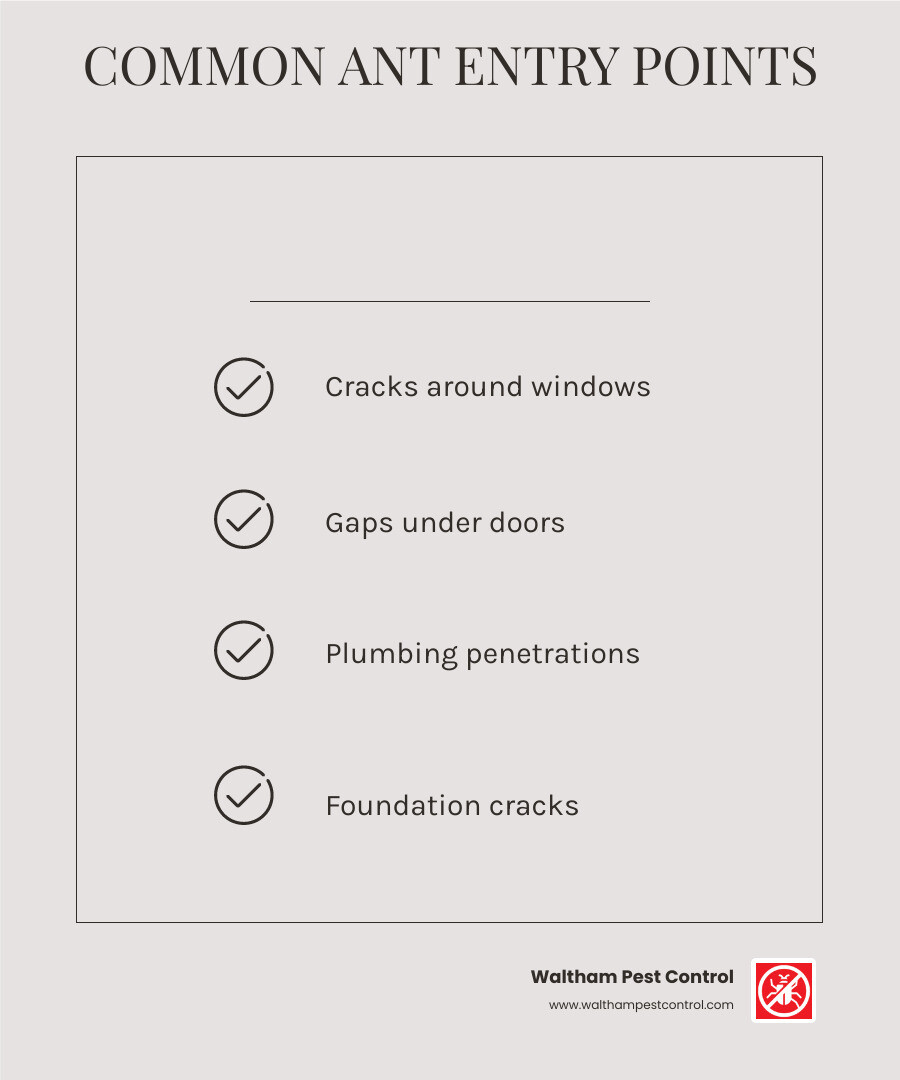
The best ant problem is the one that never starts. Sealing entry points is your first and most important defense against sugar ant invasions. These tiny invaders can squeeze through cracks smaller than a credit card, so even gaps that look insignificant to us are superhighways to them.
Walk around your home with a tube of silicone caulk and look for potential entry points. Check around windows and doors first – these are the most common entry points. Look closely at baseboards, especially where they meet corners or where pipes and wires enter walls. Even hairline cracks can become ant highways when a colony is on the move.
Don’t forget about window screens and door sweeps. A small tear in a screen might not seem like a big deal for keeping flies out, but it’s an open invitation for ants. Door sweeps that have worn down or warped create perfect entry gaps along the bottom of doors.
Your landscaping can either help or hurt your ant prevention efforts. Trim trees and bushes so they’re at least a foot away from your foundation and roofline. Ants are excellent climbers and will use overhanging branches as bridges directly to your home. Creating a barrier of rocks or pebbles around your foundation can also deter ground-dwelling ants from getting too comfortable near your house.
For comprehensive outdoor ant prevention strategies, check out our guide on Ant Control Outside House.
Step 2: Sanitation and Source Removal
Even the most determined ants will move on if there’s nothing for them to find. Storing food in airtight containers is absolutely critical – those cardboard cereal boxes and paper sugar bags might as well have “Welcome Ants” signs on them. Invest in quality plastic containers with tight-fitting lids or glass jars with rubber gaskets.
The immediate cleanup rule is non-negotiable: spills and crumbs get cleaned up the moment they happen. I know it sounds obsessive, but ants can detect food particles that are invisible to us. That tiny drop of juice on the counter or those microscopic cake crumbs on the floor are like neon signs to passing scout ants.
Pet food management often gets overlooked, but it’s a major ant attractant. Don’t leave pet bowls out all day with food in them. Some of our clients even create “moats” by placing pet food dishes inside wider, shallow containers filled with water – it sounds silly, but it works!
Regular trash disposal and fixing water leaks round out your sanitation efforts. Use strong garbage bags, take trash out frequently, and consider storing smelly food waste in the freezer until pickup day. Any source of moisture – from dripping faucets to condensation under sinks – needs immediate attention.
Step 3: Effective and Strategic Control Methods
Once you’ve blocked entry points and eliminated food sources, targeted control methods can effectively eliminate any remaining ant activity. Slow-acting ant baits are your secret weapon here because they turn the ants’ own social behavior against them.
These baits contain attractants mixed with slow-acting toxins. Worker ants take the bait back to share with the colony, eventually reaching the queen and eliminating the entire nest. Boric acid-based baits are particularly effective because they work gradually, giving ants time to spread the poison throughout the colony before they die.
Food-grade diatomaceous earth offers another approach that works through physical rather than chemical action. When ants walk through this fine powder, the microscopic sharp edges damage their exoskeletons, causing fatal dehydration. Food-grade diatomaceous earth can be lightly sprinkled along ant trails and around entry points.
For persistent infestations where ants are nesting inside wall voids or other hidden areas, professional-grade dusts and gels can reach places that surface treatments can’t touch. These products ensure the active ingredient gets to the heart of the problem.
The key to successful baiting is patience and proper placement. For detailed guidance on effective baiting strategies, explore our comprehensive guide on Bait for Ants in House.
When to Call a Professional for an Ant Infestation
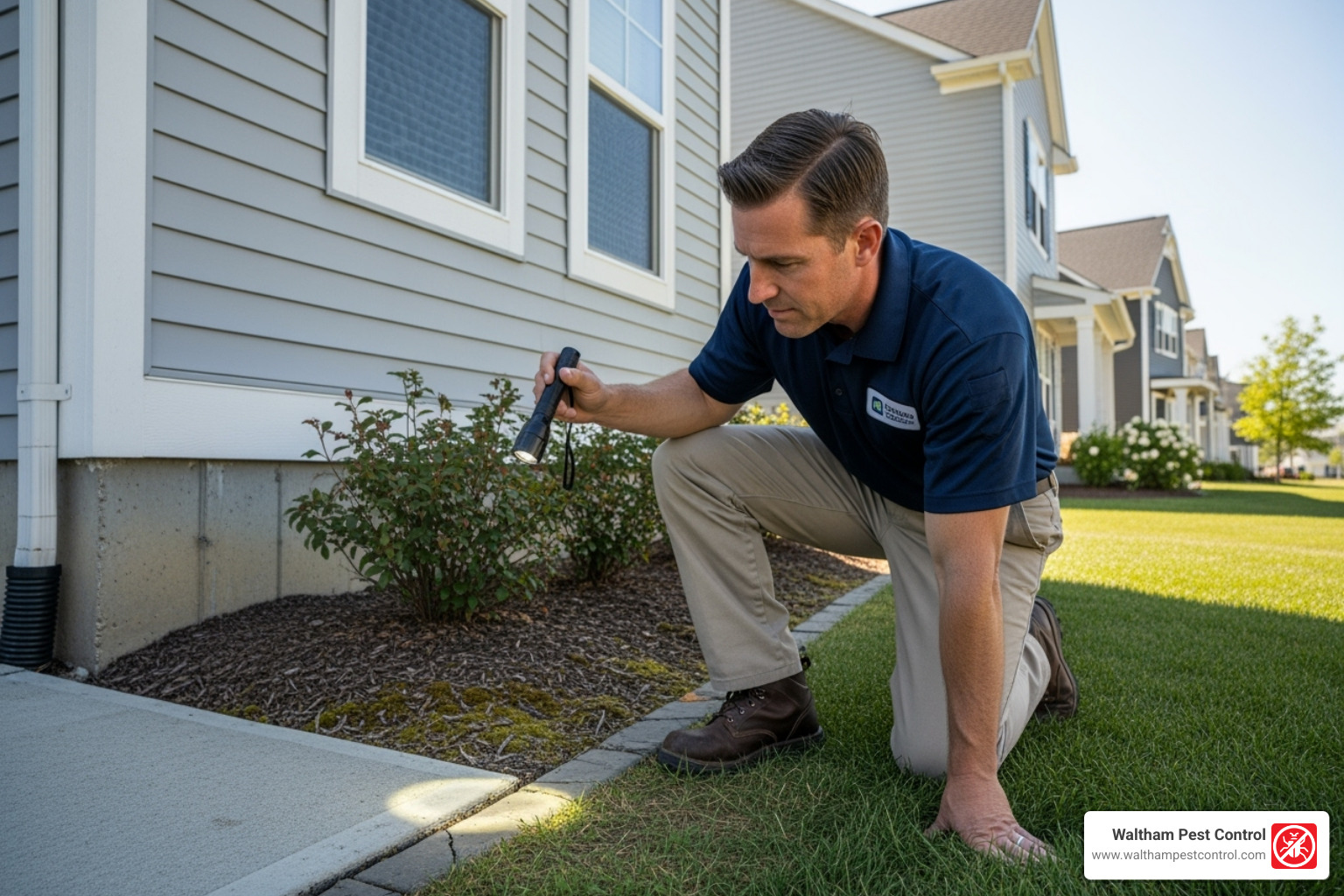
Sometimes, despite your best efforts with cleaning, baiting, and sealing, those pesky sugar ants just won’t take the hint. It’s like they’ve organized a resistance movement in your kitchen! When how to control sugar ants in the house becomes a losing battle, it might be time to call in the cavalry.
At Waltham Pest Control, we’ve seen homeowners try every trick in the book – from cinnamon barriers to elaborate bait stations that look like tiny ant restaurants. While we admire the creativity, there are situations where professional intervention becomes the most practical solution. Our 40+ years of experience have taught us that some ant problems are simply too complex, too widespread, or too well-established for DIY methods alone.
The tricky part about sugar ant infestations is that what you see is often just the tip of the iceberg. Those worker ants marching across your counter represent a much larger colony hidden somewhere in your walls, under your floors, or even outside your home. Professional pest control technicians have the tools, knowledge, and products to reach these hidden colonies and eliminate the source of your problem.
How to know if you have a serious sugar ant problem
Recognizing when you’ve moved from a minor nuisance to a serious infestation can save you weeks of frustration and wasted effort. Persistent trails despite cleaning and baiting are often the first red flag – if you’re still seeing consistent ant highways after implementing proper sanitation and bait stations, the colony is likely well-established and thriving.
Ants appearing in multiple rooms is another clear indicator that you’re dealing with more than a simple kitchen invasion. When sugar ants start showing up in bathrooms, bedrooms, or living areas, it suggests either a large colony with extensive foraging patterns or multiple satellite colonies throughout your home.
One of the most concerning signs is seeing winged ants indoors, also called swarmers. These reproductive ants indicate a mature colony that’s ready to expand and create new nests. If you spot winged ants inside your home, especially during spring and summer months, it’s a strong signal that the infestation has reached a critical stage.
Perhaps most frustrating is when the infestation seems to get worse over time despite your control efforts. This often happens because DIY methods may eliminate some worker ants but fail to reach the queen and the heart of the colony. The colony simply replaces the lost workers and continues growing.
Difficulty identifying the ant species can also lead to treatment failures. What you think are harmless sugar ants might actually be carpenter ants, which require completely different control strategies and can cause structural damage to your home. Proper species identification is crucial for effective treatment.
What to Expect from a Professional Pest Control Service
When you contact Waltham Pest Control, you’re not just getting someone to spray chemicals around your house. Our approach starts with a thorough inspection to identify species and locate nests – something that often reveals why DIY efforts haven’t been successful. Our licensed technicians know exactly where to look for hidden colonies and can distinguish between different ant species that might require different treatment approaches.
We develop a customized treatment plan based on IPM principles rather than using a one-size-fits-all approach. This might involve strategic bait placement in areas you can’t access, application of professional-grade dusts in wall voids, or targeted treatments around your home’s exterior to create a protective barrier.
Our use of professional-grade products and techniques gives us access to more effective active ingredients and application methods than consumer products. These aren’t available in stores because they require specialized knowledge and licensing to use safely and effectively.
Follow-up visits to ensure elimination are often necessary for serious infestations. Sugar ants can be persistent, and we want to make sure our treatment has reached every part of the colony. Our commitment is to provide lasting results, not just temporary relief.
For comprehensive solutions custom to your specific situation, explore our Indoor Ant Extermination services.
Understanding the Cost of Professional Ant Control
Professional ant control represents an investment in your peace of mind and the long-term protection of your home. The cost for our services is determined by a variety of factors unique to your situation.
Factors influencing price like home size and severity of infestation play significant roles in determining the final cost. A small apartment with a minor ant problem will require less time and materials than a large home with multiple colonies. The accessibility of nests, the specific ant species involved, and whether follow-up treatments are needed all impact the overall investment.
At Waltham Pest Control, we believe in providing accurate, direct quotes based on a proper inspection of your property. This ensures you receive a fair price for a customized solution. Our goal is to provide cost-effective services that focus on long-term elimination, giving you lasting results.
For more detailed information about factors that influence treatment costs, visit our guide on Ant Exterminator Cost.
Conclusion
Learning how to control sugar ants in the house is like mastering a three-part dance – and once you know the steps, you’ll wonder why those tiny invaders ever seemed so intimidating.
Throughout this guide, we’ve finded that effective ant control goes far beyond the obvious “spray and pray” approach. The real secret lies in understanding how these clever little creatures think and communicate. When you disrupt their invisible pheromone highways and cut off their access to your home’s resources, you’re not just winning a battle – you’re winning the war.
Our integrated strategy revolves around three essential pillars that work together like a well-oiled machine. Exclusion means sealing up those sneaky entry points that ants love to exploit – think of it as locking your doors before the party crashers arrive. Sanitation keeps your home clean and removes the very things that make ants pack their bags and move in permanently. Finally, targeted control uses smart baits and treatments that don’t just eliminate the ants you see, but reach deep into the colony to eliminate the queen herself.
Here’s what I’ve learned after four decades in pest control: prevention truly is the most effective long-term solution. When you consistently maintain good cleaning habits and keep your home’s defenses strong, you’re creating an environment that ants simply don’t find appealing. It’s like hanging up a “No Vacancy” sign that actually works.
But let’s be honest – sometimes life gets busy, and despite your best intentions, these persistent little creatures can become overwhelming. Maybe you’ve tried everything in this guide, or perhaps you’re dealing with nests hidden deep inside your walls. When DIY methods aren’t cutting it anymore, there’s no shame in calling for backup.
For persistent or overwhelming infestations, professional help is the most reliable path to an ant-free home. At Waltham Pest Control, we’ve spent over 40 years perfecting our approach to ant control throughout Eastern Massachusetts. We understand that every home is different, and we’re committed to providing licensed, insured, and cost-effective solutions that actually work long-term.
Whether you’re in Acton, Burlington, Cambridge, or any of the communities we serve, we’re here when you need us. Our goal isn’t just to eliminate your current ant problem – it’s to give you the peace of mind that comes with knowing your home is truly protected.
For comprehensive and professional house ant solutions, explore our pest control services.
