

Ant Infestation Outside: 7 Powerful Warning Signs 2025
Understanding the Scale of Outdoor Ant Problems
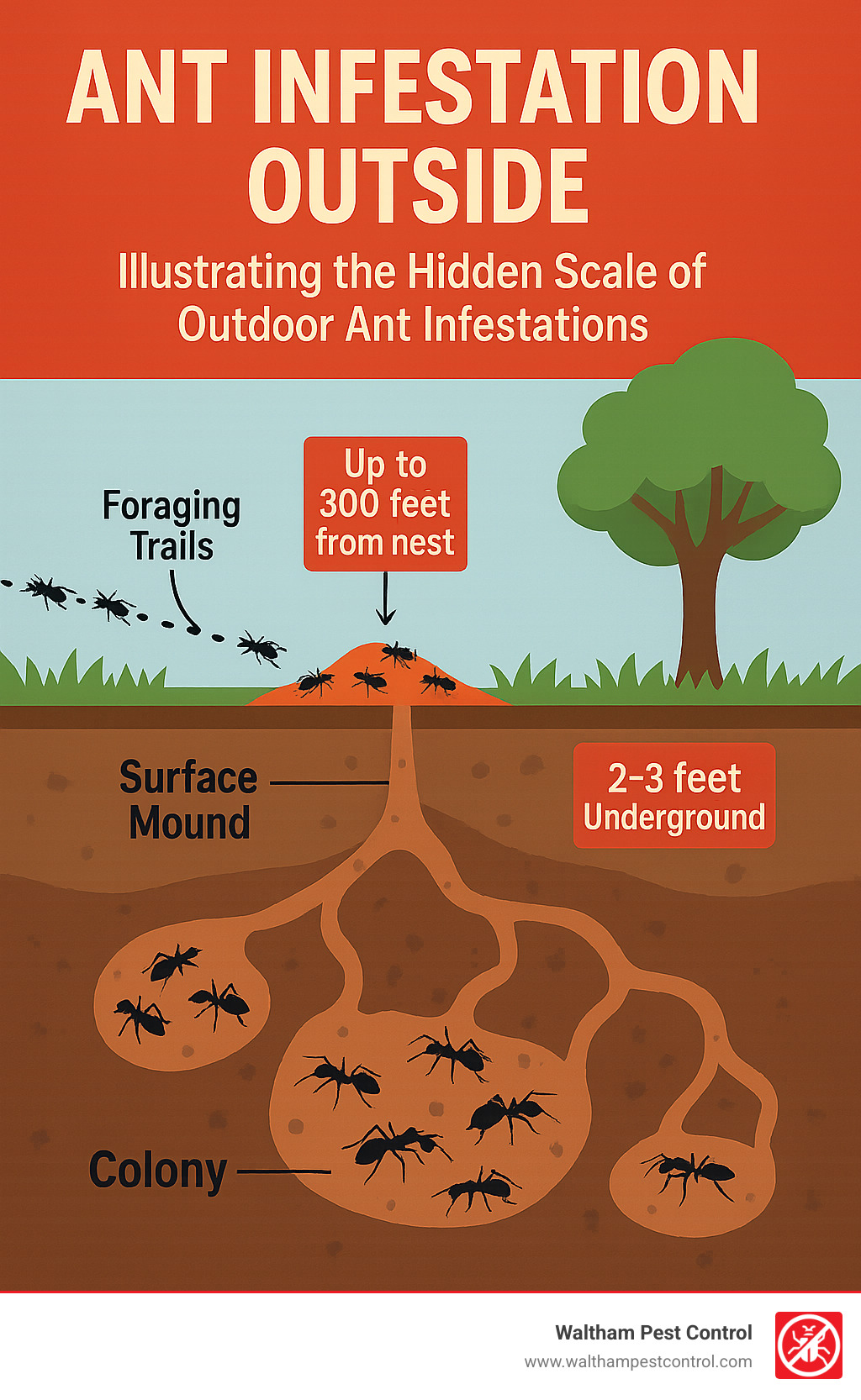
Ant infestation outside your Massachusetts home can transform your peaceful yard into a maze of unsightly mounds and stinging encounters. When ants establish colonies in your outdoor spaces, you’re facing an underground network that can extend 2-3 feet deep and spread 2-4 feet around each mound.
Key Facts About Outdoor Ant Infestations:
- Colony size: Can range from dozens to millions of ants per colony
- Foraging range: Worker ants travel up to 300 feet from their nest
- Species diversity: Over 12,000 ant species worldwide, with several common in Massachusetts
- Seasonal activity: Most active during spring and fall months
- Underground extent: Visible mounds represent only the tip of the colony
Outdoor ant problems differ significantly from indoor issues. While indoor ants typically seek food and water, outdoor colonies establish permanent territories in your soil, mulch, and landscaping. These infestations can damage your lawn by creating unsightly mounds, disturbing plant roots, and protecting harmful pests like aphids.
Safety becomes a real concern with species like fire ants, which deliver painful stings that can cause allergic reactions. Even seemingly harmless pavement ants can carry pathogenic bacteria and create trip hazards with their sand displacement activities.
I’m Waltham Pest Control, President & CEO of Waltham Pest Control, and over my 40+ years in the pest control industry, I’ve helped countless Massachusetts homeowners tackle ant infestation outside their properties. From carpenter ants hollowing out deck supports to pavement ants undermining patio stones, I’ve seen how outdoor colonies can quickly spiral from minor nuisance to major property concern.
Explore more about ant infestation outside:
– House Ant Control
– ant bait station indoor
– best thing for ants in the house
The Usual Suspects: Outdoor Ant Species & Their Motives
When dealing with an ant infestation outside your Massachusetts home, knowing your enemy makes all the difference. With over 12,000 ant species worldwide, here in Eastern Massachusetts, we typically see four main troublemakers.
Carpenter ants are the giants of the ant world, growing up to half an inch long. These black or red-black ants don’t eat wood – they’re master excavators, hollowing out moisture-damaged wood to create elaborate gallery systems. I’ve found carpenter ant highways running through rotting fence posts and deck supports like tiny subway tunnels.
Pavement ants are why you’re constantly sweeping sand off your patio. These dark brown ants nest underneath driveways and sidewalks, relocating sand from between paver stones and creating miniature construction sites across your hardscaping.
Fire ants deliver painful stings that create characteristic white pustules. Their dome-shaped mounds appear overnight in sunny spots, and they’re incredibly territorial. Disturb one mound, and hundreds of angry defenders swarm out.
Argentine ants are marathon runners that create supercolonies spanning entire neighborhoods. Unlike other species that fight each other, Argentine ants from different colonies work together. They’re moisture addicts, making your leaky outdoor faucet like a five-star resort.
Worker ants travel up to 300 feet from their nest, meaning the colony causing garden problems might be located under your neighbor’s shed or across the street.
Why Ants Choose Your Yard
Organic debris like fallen leaves creates perfect nesting materials while holding moisture ants need. Mulch beds offer shelter, moisture, and easy digging – basically ant paradise.
Sap and nectar from trees and flowers provide natural sugar sources. Leaky spigots and irrigation offer reliable water access that transforms temporary visits into permanent colonies.
Compost bins become all-you-can-eat buffets with luxury housing. Food scraps from outdoor dining create pheromone trails guiding thousands of workers to your patio.
How Other Pests Invite Ants
Aphids, scale insects, and mealybugs secrete honeydew that ants harvest like farmers. In return, ants provide protection services, fighting off beneficial insects that would control pest populations.
This partnership explains why treating only ants often fails. The underlying pest problem continues broadcasting “free food” signals that attract new colonies. Integrated pest management requires tackling both ants and their pest partners simultaneously.
Spotting Trouble Early: Signs and Impact of an ant infestation outside

Catching ant infestation outside early saves thousands of dollars and countless hours of frustration.
Soil mounds popping up overnight are often the first visible sign. These hills are just the tip of the iceberg – beneath lies a complex network extending several feet in every direction.
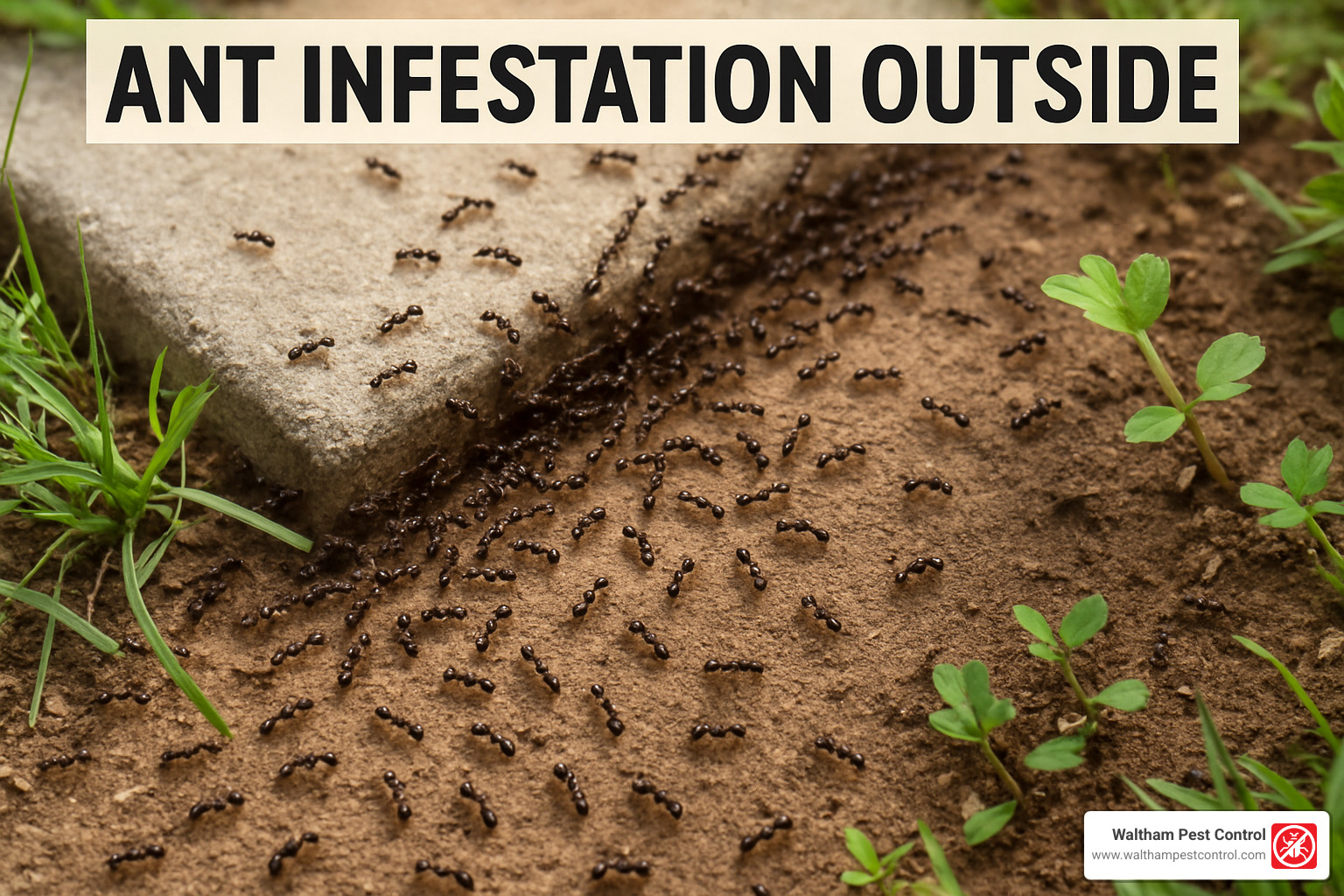
Displaced sand around patio stones and driveway edges indicates pavement ant excavation. Ant trails on concrete surfaces reveal established pheromone highways stretching up to 300 feet from nests.
Carpenter ants create smooth, clean galleries in deck posts and fence boards, leaving small piles of wood shavings near entrance holes. Turf thinning around colonies creates brown patches as ant tunneling disrupts root systems.
Red Flags of an ant infestation outside
Frass piles are carpenter ants’ calling cards – wood shavings near gallery entrances. Winged swarmers during spring and fall indicate mature colonies ready to expand.
Tree bark highways show established routes where ants farm aphids in canopies. Plant wilt in areas with heavy ant activity often results from disrupted root systems.
How Infestations Harm Lawns & Gardens
Anthill smothering creates expanding dead zones requiring expensive lawn renovation. Root aeration imbalance occurs when extensive tunneling creates air pockets that dry out roots.
Aphid farming damage intensifies as ants protect destructive pests from natural enemies. Structural wood risk escalates as carpenter ants hollow out deck posts and supports, creating safety hazards.
Action Plan: Track, Treat, and Eliminate Colonies
Success with ant infestation outside depends on thinking like a detective first, then a strategist. Follow ant highways during dawn and dusk when colonies are most active, tracking pheromone trails back to the source.
Nest probing with a screwdriver helps determine if you’re dealing with shallow surface colonies or deep networks under patio stones. Timing your attack during early morning or late evening catches most ants at home.
Targeted drench applications deliver treatment directly into colony hearts, penetrating 2-3 feet down where queens and workers live. Choose between baits versus contact kill based on your situation – baits work like Trojan horses, while contact sprays provide immediate satisfaction but often miss underground populations.
Non-repellent perimeter treatments create invisible barriers ants cross unknowingly, carrying treatment back to nests.
Professional treatment costs vary widely. Based on internet data, expect average ranges of $175-$650 for professional outdoor ant control, though severe cases can easily triple these amounts.
For comprehensive solutions, explore our Ant Control Outside House services.
Natural Options vs Chemical Tools
Boiling water provides immediate satisfaction, killing about 60% of colonies when poured into nest entrances. Survivors often scatter to establish new nests.
Diatomaceous earth absorbs oils from ant exoskeletons, causing dehydration. Food-grade DE is safe around kids and pets but becomes useless when wet.
Borax bait turns worker ants into delivery drivers for colony destruction. Mix 3 tablespoons boric acid with 1 cup sugar and 3 cups water, but place carefully away from children and pets.
Essential oils like peppermint create natural repellent barriers. Scientific research on peppermint oil repellency shows measurable deterrent effects.
Commercial insecticides provide longer-lasting control with professional-grade formulations protecting properties for months.
| Treatment Method | Effectiveness | Speed | Duration | Safety | Cost |
|---|---|---|---|---|---|
| Boiling Water | 60% kill rate | Immediate | Single use | High burn risk | Very Low |
| Diatomaceous Earth | Moderate | 3-7 days | Until wet | Pet/child safe | Low |
| Borax Bait | High | 1-2 weeks | Single use | Toxic if ingested | Low |
| Commercial Insecticide | Very High | 1-3 days | 1-3 months | Follow label | Moderate |
When to Call Pros & Estimated Costs
Large colonies with multiple mounds often overwhelm DIY efforts. Multiple queens in supercolonies require professional coordination. Stinging species make treatment a safety issue.
Based on internet research, professional outdoor ant control typically ranges from $175-$650 for average properties, though severe infestations can cost three times these amounts.
Prevention Blueprint: Keep ant infestation outside from Coming Back
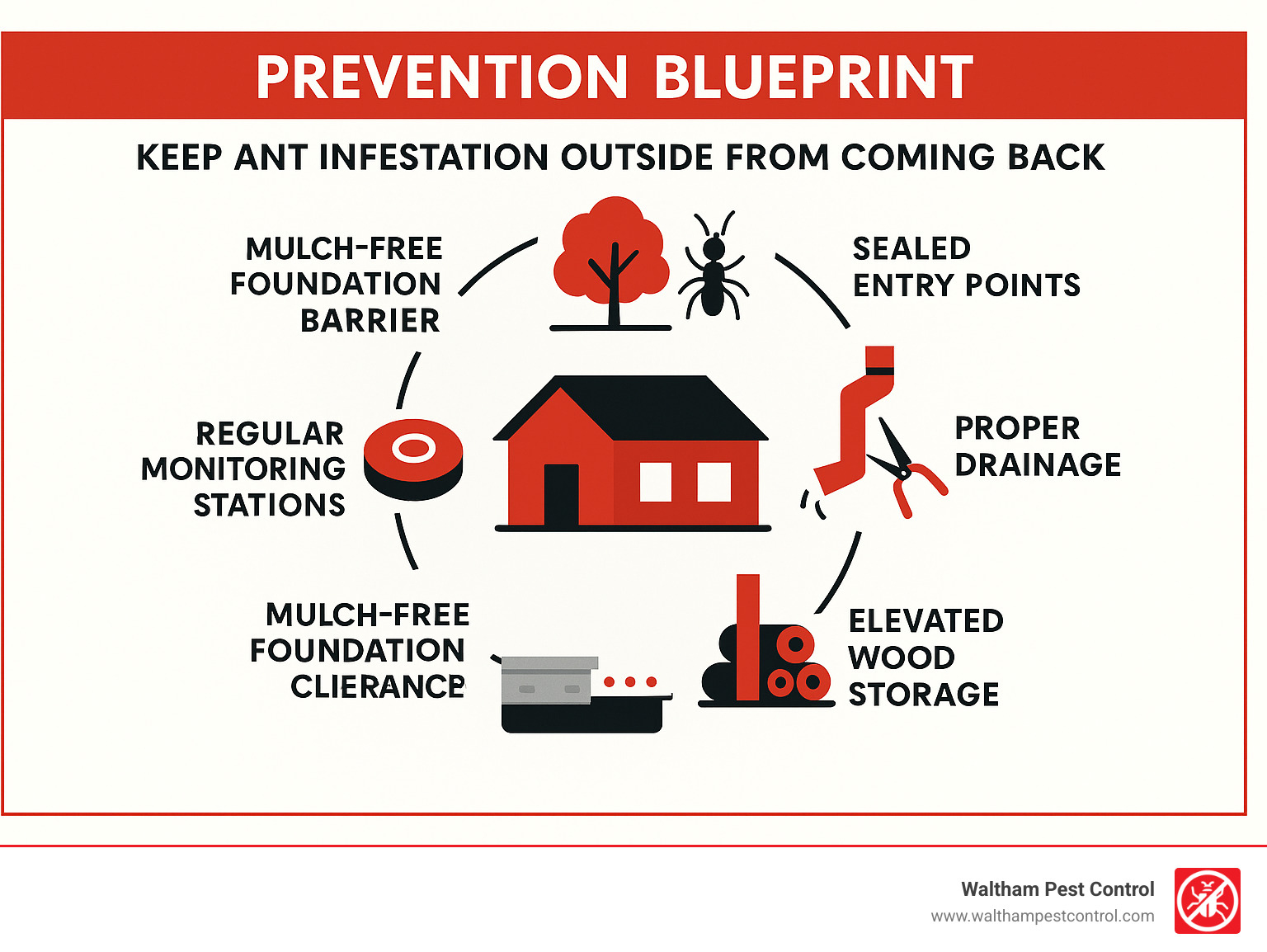
Prevention saves countless headaches and dollars. Mulch barriers should stay 12 inches from foundation walls – when mulch touches your house, it’s like rolling out a red carpet for ants.
Water sources are ant magnets. Walk your property monthly, checking irrigation systems, downspouts, and hose connections. A five-minute inspection prevents months of problems.
Tree branches touching your roof create superhighways bypassing ground-level defenses. Maintain six feet of clearance between vegetation and your home.
Firewood storage should be 18 inches off the ground and 20 feet from your house. Use metal supports instead of wooden pallets that become ant condos.
Seal cracks in driveways and sidewalks with polyurethane caulk. These aren’t just eyesores – they’re ant apartment buildings.
Regular yard maintenance disrupts colonies before establishment. Remove fallen leaves and organic debris that ants use for nesting materials.
Yard Maintenance Checklist
Weekly debris removal focuses on areas near foundations, under decks, and around outdoor dining spots. Lawn care with regular mowing eliminates thick grass layers where ants nest.
Aphid control with horticultural oils prevents the honeydew that attracts ants. Compost management requires keeping bins 50 feet from your house and turning materials regularly.
Eco-Friendly & Pet-Safe Solutions
When dealing with ant infestation outside while keeping family, pets, and gardens safe, effective natural options exist.
Food-grade diatomaceous earth works like tiny glass shards to ant exoskeletons, causing dehydration without chemical toxicity. It’s completely safe if kids or pets accidentally contact it.
Neem oil kills ants on contact while controlling aphids that attract them. This botanical solution breaks down naturally within days.
Citrus peel vinegar turns kitchen scraps into pleasant-smelling ant deterrent. Steep orange and lemon peels in white vinegar for a week, strain, and spray around activity areas.
Coffee grounds deter ants while adding organic matter to soil. Water moats for pet bowls create chemical-free barriers by placing food bowls inside larger dishes filled with soapy water.
Scientific research on peppermint oil repellency confirms natural essential oils provide measurable deterrent effects.
Balancing Control with Garden Ecology
Beneficial ants help gardens by aerating soil and controlling pests. Focus efforts on problem species in problem areas while protecting beneficial insects.
Birds and toads naturally control ant populations. Encourage these allies with bird baths and diverse plantings. Spot-treating problem zones makes more sense than broadcasting treatments across entire properties.
Frequently Asked Questions about Outdoor Ant Infestation
Do natural remedies really work for large colonies?
Natural remedies work wonders for smaller problems but often struggle against massive underground colonies. Boiling water kills about 60% of colonies, leaving survivors to rebuild. Essential oils and diatomaceous earth work beautifully as deterrents but asking them to eliminate supercolonies is like emptying a swimming pool with a teaspoon.
Small colonies with single queens often respond well to persistent natural treatments. But sprawling Argentine ant highways usually need professional-grade products.
How long does it take to eliminate an ant infestation outside?
Small, single-queen colonies often surrender within 1-2 weeks with proper treatment. Large supercolonies can take 4-8 weeks or longer for complete elimination.
Bait treatments require 1-2 weeks to reach and eliminate queens. Most professional treatments show dramatic improvement within the first week, but monitoring continues for 2-3 weeks to confirm complete elimination.
Are perimeter sprays safe for vegetable gardens?
Modern ant control products have improved significantly in safety. Always check pre-harvest intervals on labels. Buffer zones of 10 feet between treated areas and vegetable gardens provide peace of mind.
Organic-approved products eliminate guesswork entirely for extensive food gardens, though they may require more frequent applications.
Conclusion
Dealing with ant infestation outside your Massachusetts home isn’t just about spraying the ants you can see – it’s about understanding that you’re facing an underground city that can house millions of residents and stretch several feet in every direction. The good news? With the right approach, you can reclaim your outdoor spaces and keep them ant-free for the long haul.
The secret to lasting success lies in what I call the monitor-treat-prevent cycle. Think of it like tending a garden – you can’t just plant once and walk away. Regular monitoring helps you catch new ant activity before a few scouts turn into a full-blown colony. Targeted treatments eliminate the problems you find. And prevention measures keep new colonies from seeing your property as prime real estate.
Ecological mindfulness doesn’t mean letting ants take over your patio. It means being smart about your approach. Some ants actually help your garden by aerating soil and controlling other pests. The key is focusing your efforts on problem species in problem areas while protecting the beneficial insects that keep your outdoor ecosystem healthy.
After four decades in the pest control business here in Eastern Massachusetts, I’ve learned that every property tells its own story. The sandy soil in some Burlington neighborhoods creates different challenges than the clay-heavy ground we see in other areas. The mature oak trees that make Lexington beautiful also create perfect highways for carpenter ants. Understanding these local nuances makes all the difference in creating effective, lasting solutions.
Our comprehensive approach goes beyond just treating the ants you see today. We look at what’s attracting them to your property in the first place – that leaky irrigation line, the mulch piled against your foundation, or the aphid colony that’s turned your roses into an ant buffet. By addressing these underlying issues, we help ensure that your ant problems don’t keep coming back season after season.
Whether you’re dealing with fire ant mounds in your lawn or carpenter ants threatening your deck, you don’t have to tackle this alone. From Burlington to Boston, from Lexington to Lynn, we’ve helped countless families enjoy their outdoor spaces again without worrying about painful stings or unsightly ant trails.
For comprehensive help with your outdoor ant challenges, explore our pest services and find how our experienced team can create a customized solution that fits your specific situation. We’re here to provide effective, safe solutions that give you back the peaceful outdoor spaces you deserve.
