

Can Hornets Fly in the Rain? 7 Shocking Facts for 2025
Why Understanding Hornet Flight in Wet Weather Matters
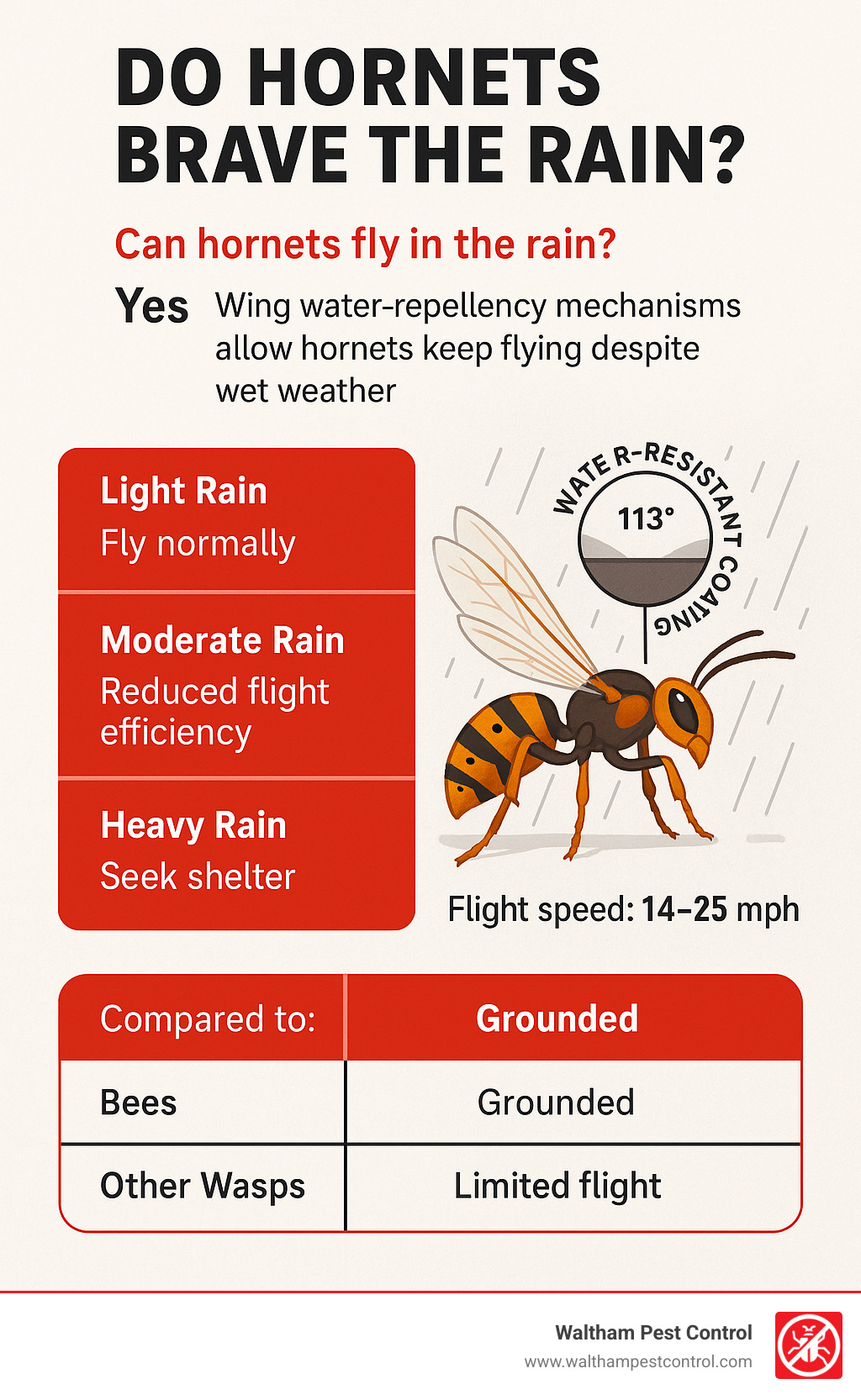
Can hornets fly in the rain? Yes, most hornets can continue flying in light rain thanks to their water-repellent wing coatings and powerful flight muscles, though heavy downpours may force them to seek shelter.
Quick Answer:
– Light rain/drizzle: Hornets fly normally with minimal impact
– Moderate rain: Reduced flight efficiency but still capable
– Heavy rain: Usually seek shelter but may fly short distances
– Key factor: Water-resistant wing coating with 113° contact angle
– Flight speed: Maintained at 14-25 mph even when wet
When planning outdoor activities in Massachusetts or noticing hornet activity around your property during uncertain weather, understanding their rain-flight capabilities becomes crucial for safety. Unlike honeybees that often ground themselves in wet conditions, hornets are remarkably resilient flyers that can continue foraging and defending their nests even during light precipitation.
The question of hornet flight in rain matters because these insects don’t simply disappear when storm clouds gather. Their ability to remain active during wet weather affects everything from when it’s safe to work in your yard to optimal timing for professional nest removal services.
Learn more about can hornets fly in the rain:
– are hornets active at night
– are ground hornets aggressive
– baby hornets
Why People Ask “Can Hornets Fly in the Rain?”
The search intent behind this question typically stems from practical safety concerns and outdoor activity planning. Homeowners in Eastern Massachusetts frequently wonder whether they can safely tend their gardens, mow their lawns, or host outdoor gatherings when rain threatens and hornets are present on their property.
Many people have observed hornets seemingly disappear during heavy downpours, leading to the assumption that these insects are grounded by wet weather. However, this observation often reflects behavioral changes rather than physical inability to fly. Understanding the difference helps you make informed decisions about outdoor activities and pest control timing.
Can Hornets Fly in the Rain? The Short Answer
Can hornets fly in the rain? Yes, they absolutely can! These remarkable insects have evolved impressive adaptations that keep them airborne even when the weather turns wet. Unlike typical backyard bees that might call it quits at the first sign of drizzle, hornets are surprisingly tough when it comes to flying in precipitation.
The secret lies in their water-repellent wings and specialized body coating. Hornets have what scientists call a hydrophobic cuticle – nature’s own waterproof coating. This waxy layer makes water bead up and roll right off their wings instead of soaking in and weighing them down.
Scientific research on wasp wing water repellency shows that these wings achieve a contact angle of about 113°. When raindrops hit a hornet’s wing, they essentially bounce off like water droplets on a freshly waxed car.
Their wingbeat frequency is another game-changer. Hornets beat their wings at an incredible 300 times per second – significantly faster than bees or flies. This rapid-fire wing movement creates enough centrifugal force to literally fling water droplets away while generating the lift needed to stay airborne, even when carrying extra water weight.
The Physics Behind It: How Wet Wings Still Generate Lift
The science behind hornet flight in rain is fascinating. That contact angle of 113° comes from tiny micro-nano textures on their wing surfaces that work like super-hydrophobic lotus leaves. These microscopic bumps and valleys create the “lotus effect.”
When water does stick to their wings, hornets compensate by increasing their wingbeat frequency and adjusting how their wings slice through the air. Their powerful chest muscles are strong enough to overcome the extra weight and drag that water creates.
The rapid wingbeats also create inertia shedding – water droplets can’t keep up with the incredibly fast wing movements and get thrown off naturally. This combination of water-repelling surfaces and super-fast wing movement means hornets can essentially shake off water while continuing to fly.
Can Hornets Fly in the Rain? Myth-busting Facts
Let’s clear up common misconceptions about can hornets fly in the rain. The biggest factor people overlook is rain intensity. There’s a huge difference between light drizzle and a heavy downpour when it comes to hornet flight capabilities.
In light rain or drizzle, hornets can fly almost normally with minimal impact. But in heavy downpour territory, even these resilient insects face real challenges. The energy cost of flying in heavy rain increases dramatically – those wet wings require significantly more power to generate the same lift, leading to exhaustion risk.
The reality is that can hornets fly in the rain depends on specific conditions, but these insects are far more capable in wet weather than most people realize.
How Rain Alters Hornet Behavior Around the Nest
When storm clouds gather over Eastern Massachusetts, hornets don’t simply shut down operations. Instead, can hornets fly in the rain becomes a question of behavioral adaptation rather than physical limitation. Rain significantly changes how these resilient insects organize their daily activities around the nest.
Hornets can sense approaching storms before the first raindrop falls. When barometric pressure drops, hornets often become more active, not less. You might notice increased buzzing around nests as workers rush to complete foraging missions and prepare for weather changes ahead.
Forager return patterns shift dramatically during wet weather. According to research from the Texas A&M AgriLife Extension Service, hornets can detect changes in barometric pressure, humidity, and temperature that signal approaching storms. This early warning system allows them to make shorter, more frequent trips rather than their usual extended foraging expeditions.
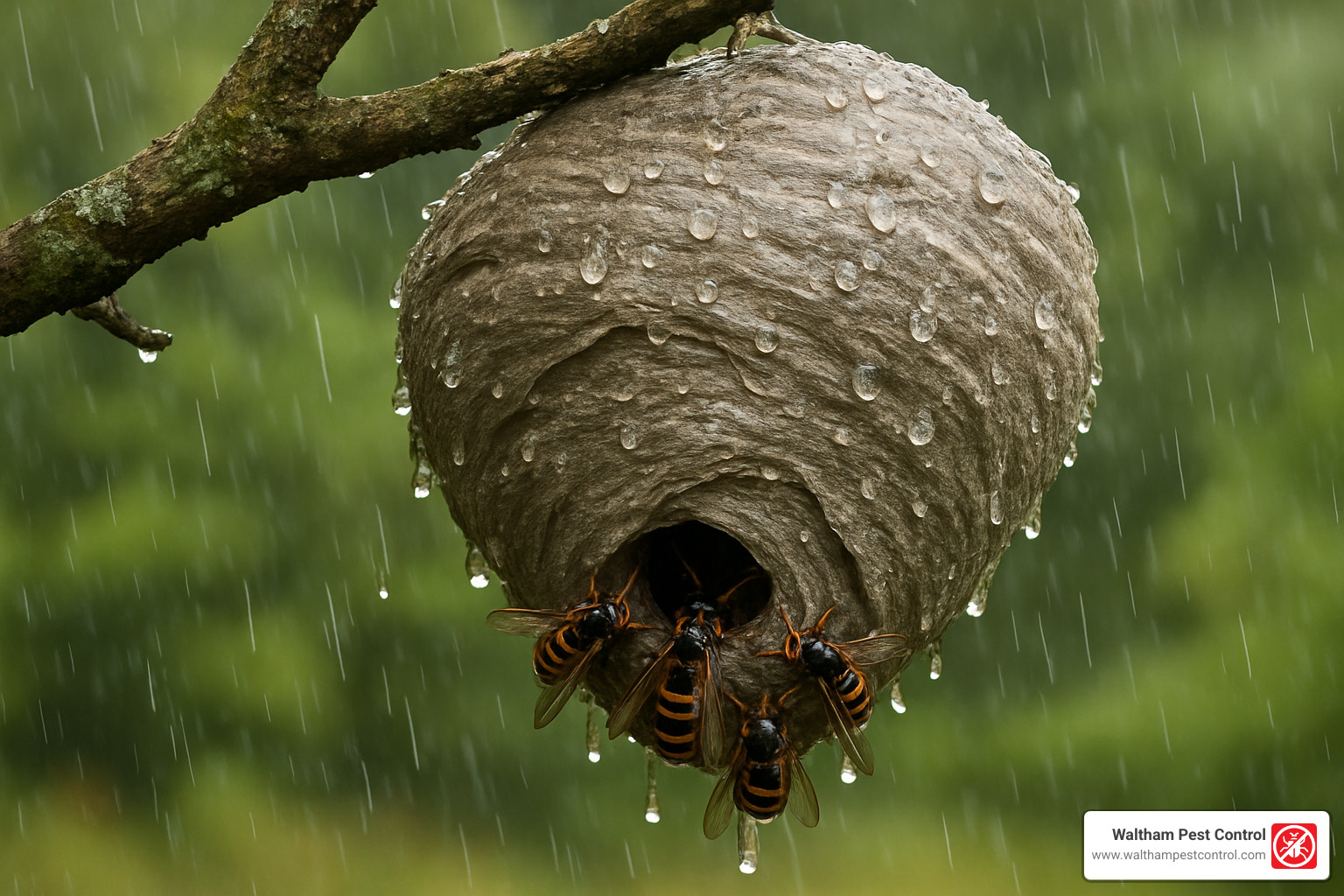
Nest guarding behavior becomes noticeably more intense during rain events. Worker hornets position themselves like sentries closer to nest entrances, ready to defend their home when flight conditions become challenging.
Do Hornets Stay Home or Keep Hunting?
The question of whether hornets hunker down or keep hunting during rain doesn’t have a simple answer. Unlike honeybees that retreat to their hives at the first hint of moisture, hornets show remarkable flexibility in their foraging decisions based on colony needs and weather intensity.
Protein needs often override weather concerns. When larvae are hungry and the colony requires fresh insect protein, European hornets will venture out even during light drizzle. The colony’s survival needs create powerful motivation that trumps personal comfort.
Sugar foraging tells a different story. Nectar becomes watered down during rain, making it less energy-efficient for hornets to collect. Smart hornets tend to postpone these sweet-seeking missions until the sun returns and sugar concentrations improve.
Nest Maintenance under Wet Conditions
Hornet nests have surprising water resistance when properly built and positioned. The paper pulp material, created from chewed wood fibers mixed with hornet saliva, forms a surprisingly effective barrier against moisture when layered correctly.
Covered nest sites are no accident. European hornets show strong preferences for wall cavities, hollow trees, and building overhangs that provide natural umbrella protection. Bald-faced hornets compensate by constructing multiple envelope layers that work like sophisticated raincoat systems.
Water runoff management becomes a critical maintenance task during New England’s wet seasons. Worker hornets actively patrol their homes, reinforcing areas where water might penetrate and ensuring proper drainage around nest entrances.
Species Showdown: European, Bald-Faced & Asian Hornets in Wet Weather
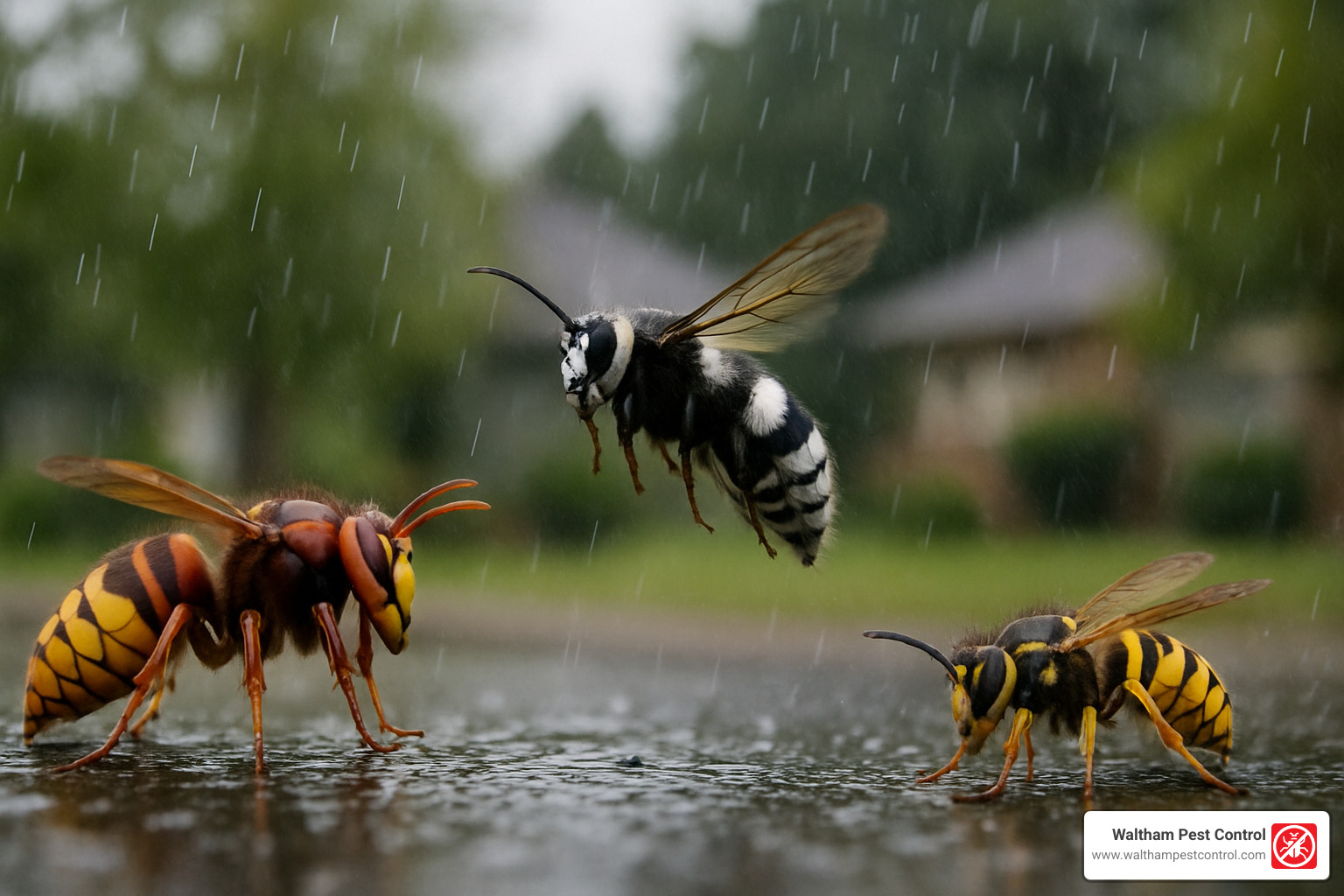
Not all hornets handle rain the same way. Here in Massachusetts, we mainly deal with European hornets and bald-faced hornets (which are actually large wasps, despite their name). Each species has developed its own ways to cope when the skies open up.
European hornets are the heavyweight champions of wet weather flying. These impressive insects stretch over an inch long, making them the largest hornets you’ll encounter in Eastern Massachusetts. Their size gives them real advantages when can hornets fly in the rain becomes a practical question. Those powerful flight muscles can push through wind and water that would send smaller insects scrambling for cover.
Bald-faced hornets might be smaller at about ⅝ inch, but don’t underestimate them. They’re scrappy fighters that can zip through the air at speeds up to 25 mph. When a sudden shower hits, they use that speed to dart back to their nests faster than you can say “umbrella.”
European Hornets After Dark—and After Rain
European hornets are night owls. These fascinating insects will venture out after dark, and they don’t let a little rain stop them. I’ve seen them buzzing around porch lights and streetlights even during light drizzle, seemingly unbothered by the wet conditions.
Their attraction to lights creates interesting scenarios during rainy evenings. You might hear them tapping against your windows or see them circling outdoor fixtures, completely ignoring the fact that it’s both dark and damp outside. This behavior showcases their impressive rain tolerance – while other insects are tucked away waiting for better weather, European hornets are still out there hunting.
Baldfaced Hornets & Sudden Downpours
Bald-faced hornets face a unique challenge because they often build their nests out in the open, hanging from tree branches or building eaves. Their nests feature multiple envelope layers that work like sophisticated raincoat systems, with air pockets that keep the interior dry and insulated.
When storm clouds gather quickly, their flight speed of 25 mph becomes their secret weapon. These hornets can streak back to their nests faster than most people can run for cover.
How Other Wasps & Bees Stack Up
The differences become clear when you compare hornets to their smaller relatives. Honeybees are basically grounded the moment they get wet – their fuzzy bodies soak up water like tiny sponges. Bumblebees handle moisture slightly better thanks to their size, but they still prefer to wait out anything more than a light mist.
| Species | Rain Tolerance | Flight Speed | Wingbeat Frequency | Water Resistance |
|---|---|---|---|---|
| European Hornet | High | 14-25 mph | 300/second | Excellent |
| Bald-faced Hornet | Moderate-High | Up to 25 mph | ~300/second | Good |
| Yellowjacket | Moderate | 15-20 mph | 250/second | Fair |
| Honeybee | Low | 15-20 mph | 230/second | Poor |
| Bumblebee | Low-Moderate | 10-15 mph | 200/second | Fair |
Risks When It Pours: For Hornets and for You
When the skies really open up, even these remarkable flying insects face serious challenges. Heavy rainfall can damage hornet wings when large raindrops strike at high velocity. The delicate wing membranes that work beautifully in dry conditions can tear or become compromised under this kind of assault.
Extended exposure to heavy rain exhausts hornets quickly. They’re already working overtime to maintain flight against increased drag and weight of water droplets clinging to their bodies. Drowning becomes a genuine threat when hornets get knocked down into puddles or standing water.
Can hornets fly in the rain safely? The answer changes dramatically when light drizzle becomes a downpour. You’ll notice erratic flight patterns during heavy rain as hornets struggle to maintain their usual precision and control. They may fly lower than normal, change direction suddenly, or appear to “bounce” through the air.
This erratic behavior creates real safety concerns for people. Hornets that can’t fly their normal patterns may seem more aggressive or unpredictable. They might end up in places you wouldn’t expect them – like under covered porches, in doorways, or near windows where they’re seeking shelter.
The heightened defensiveness during wet weather significantly increases your risk of getting stung. When hornets are already stressed by challenging flying conditions and worried about their nest getting soaked, they’re much more likely to interpret any movement or vibration as a threat.
For detailed information about hornet aggression and safety, check out our guide on Are Black and Yellow Wasps Dangerous?
Human Safety Tips for Rainy-Day Encounters
Rainy weather changes the whole game when it comes to hornet safety. These insects are already on high alert, so your approach needs to be extra cautious. Avoid any vibrations that might seem threatening. Don’t slam doors, stomp on porches, or make sudden movements near areas where hornets might be sheltering.
Protective clothing becomes even more critical during wet weather encounters. Wet fabric offers less protection against stings – those hornet stingers can penetrate damp clothing more easily than dry materials. Plus, reduced visibility during rain makes it much harder to spot approaching hornets until they’re dangerously close.
If you absolutely must work outdoors during light rain in areas where hornets are present, wear thick, dry clothing and seriously consider whether the task can wait. Many hornet encounters during wet weather could be avoided simply by postponing outdoor activities until conditions improve.
Timing Nest Removal Around Weather
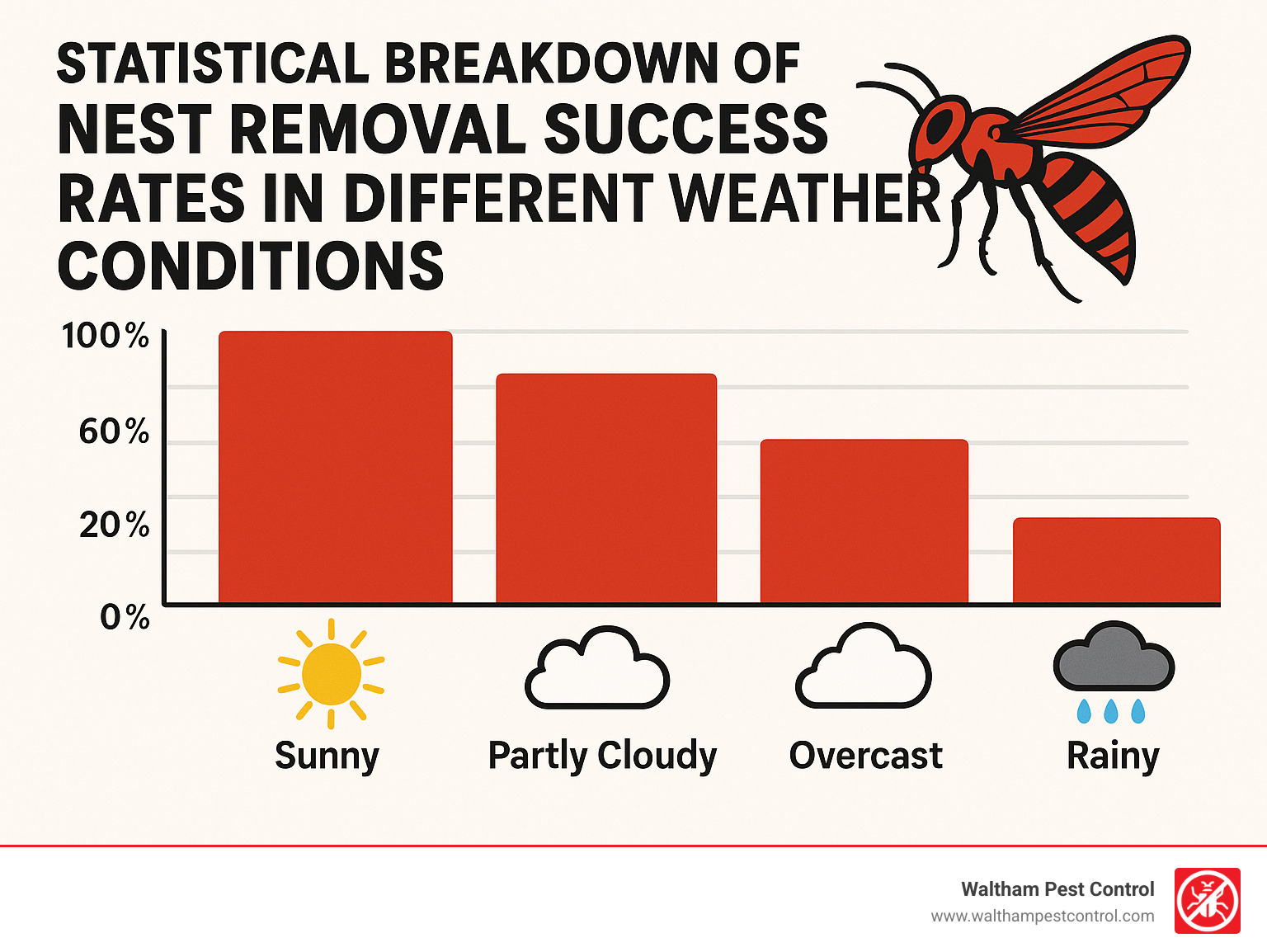
Weather timing can be your best friend when it comes to hornet nest removal. Can hornets fly in the rain? Yes, but their behavior changes dramatically during wet weather, creating opportunities for safer and more effective nest removal.
During rainy periods, hornets naturally become less active and tend to huddle closer to their nests. This clustering behavior creates predictable patterns that experienced professionals can work with. The hornets are present but operating at reduced capacity, making it easier to target the entire colony effectively.
Cooler temperatures that typically accompany rain events slow down hornet metabolism and reaction times. Their movements become less frantic, and their response time to threats decreases significantly.
The sweet spot for professional removal often occurs during transitional weather periods – just before or after rain events. During these windows, hornets are still somewhat subdued from weather effects, but conditions are dry enough for safe equipment operation and chemical application.
For detailed guidance on optimal timing strategies, check out our comprehensive guide on the Best Time to Remove Hornets Nest.
Average Cost to Remove a Nest in Massachusetts
Hornet nest removal costs across Massachusetts vary widely based on complexity and timing. According to internet research, you might expect to pay anywhere from $150 to $600 for standard residential situations. However, challenging locations, multiple nests, or emergency weather-related calls can push costs to $1,800 or more. These figures represent average costs based on internet data and don’t reflect Waltham Pest Control’s actual pricing.
Weather conditions can impact removal costs. Wet weather might require specialized safety equipment, waterproof chemical applications, or additional crew members for safety.
DIY vs Professional: Why Moisture Makes a Difference
Wet weather turns hornet nest removal from risky into downright dangerous. Chemical runoff becomes a serious concern when pesticides mix with rainwater, potentially harming your landscaping or reducing treatment effectiveness. Most homeowners don’t have the specialized equipment needed to contain chemicals during wet applications.
Ladder safety multiplies as a concern during damp conditions. Wet decks, slippery roof surfaces, and reduced visibility create perfect conditions for serious accidents. Professional pest control technicians train specifically for challenging weather conditions and carry specialized safety equipment.
Remember how hornets become more defensive and unpredictable during wet weather? This behavioral change makes professional intervention even more valuable. The bottom line is simple: wet weather amplifies every risk involved in hornet nest removal.
For safe, effective removal regardless of weather conditions, explore our professional Hornet and Wasp Nest Removal services.
Frequently Asked Questions about Can Hornets Fly in the Rain
Can hornets sense an approaching storm?
Hornets are remarkably weather-aware creatures that can detect approaching storms well before humans notice the first raindrops. These insects pick up on barometric pressure changes, shifts in humidity, temperature drops, and changing wind patterns that signal incoming weather systems.
You’ll often notice increased hornet activity in the hours before a storm hits Eastern Massachusetts. They seem to go into overdrive, with workers frantically collecting food and making final foraging trips before conditions deteriorate.
Does rainy weather make hornets more aggressive?
Yes – rainy weather definitely puts hornets on edge. Can hornets fly in the rain becomes less important than whether they’ll sting you for getting too close to their nest.
Several factors contribute to this increased defensiveness during wet weather. First, hornets expend more energy flying in rain, making them more stressed and reactive. Second, they’re genuinely concerned about protecting their paper nests from water damage, so they position themselves as guards closer to nest entrances.
The combination of physical stress and protective instincts creates a perfect storm for aggressive behavior. Hornets become especially sensitive to vibrations and disturbances near their nests during wet conditions.
Are hornet nests waterproof?
Hornet nests are impressively water-resistant but not completely waterproof – think of them as having good rain jackets rather than submarine-level protection. The paper-like construction that hornets create from chewed wood fibers mixed with saliva provides excellent protection against light to moderate rainfall, especially when positioned in naturally sheltered locations.
Most hornet species are smart architects who choose covered building sites specifically to minimize water exposure. European hornets typically build inside wall cavities, hollow trees, or under building overhangs. Bald-faced hornets construct multiple envelope layers that help shed water away from the interior brood chambers.
However, prolonged exposure to heavy rain can eventually compromise nest structures. This vulnerability explains why hornets become so defensive during storms – they’re literally protecting their homes from potential collapse.
Conclusion
Now you know the answer to can hornets fly in the rain – and it’s more nuanced than you might have expected! These incredible insects have evolved remarkable adaptations that keep them airborne even when the weather turns wet. Their water-repellent wing coatings, lightning-fast wingbeats, and sturdy build make them surprisingly resilient flyers compared to their bee cousins who head straight home at the first raindrop.
The science behind their rain-flying abilities is fascinating. With wing contact angles of 113° and wingbeat frequencies of 300 strokes per second, hornets can literally shake off water while maintaining flight speeds up to 25 mph.
But here’s what really matters for your safety: hornets don’t just disappear when storm clouds roll in. They become more defensive around their nests, change their foraging patterns, and may show up in unexpected places as they seek shelter. Whether you’re in Burlington, Lexington, or anywhere else in Eastern Massachusetts, understanding that hornets remain active during wet weather helps you plan outdoor activities more safely.
The behavioral changes we’ve explored – from increased nest guarding to altered flight patterns – highlight why professional pest control becomes even more critical during challenging weather conditions. When hornets are stressed by rain and more likely to sting, attempting removal becomes significantly more dangerous.
At Waltham Pest Control, our four decades of experience in Eastern Massachusetts weather patterns has taught us that can hornets fly in the rain isn’t just a curious question – it’s essential knowledge for effective pest management. We’ve seen how hornets adapt to our region’s unpredictable weather, from sudden summer downpours to extended rainy periods.
For expert help with hornet problems in any weather condition, our experienced team provides comprehensive Hornet and Wasp Nest Removal services custom to Eastern Massachusetts conditions. Because when it comes to hornets that can fly in the rain, you deserve protection that works rain or shine.
