

Nighttime Hornet Activity: Fact vs. Fiction
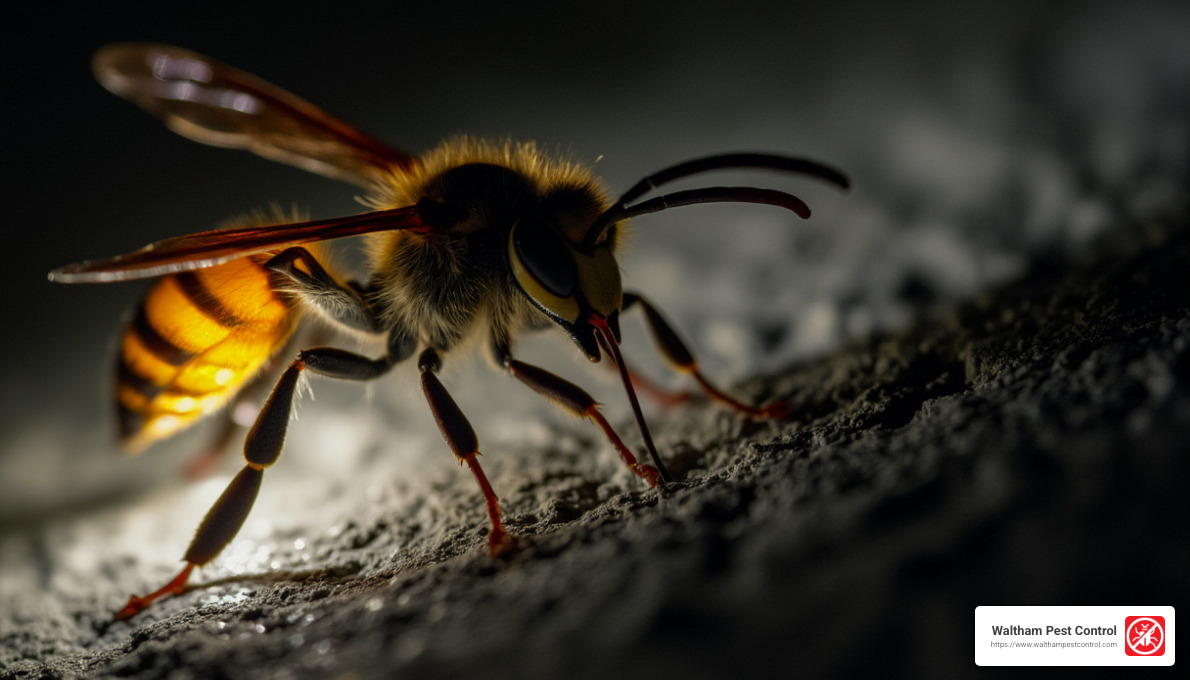
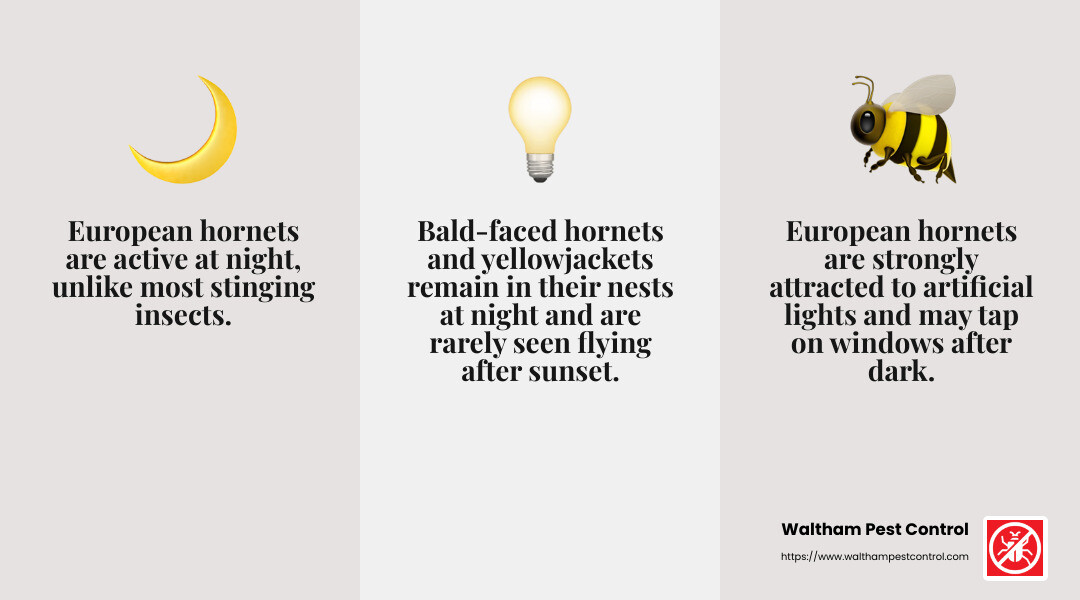
Are hornets active at night? The answer isn’t as straightforward as you might think. While most stinging insects call it a day when the sun sets, European hornets (Vespa crabro) break this rule completely. These large insects remain quite active after dark and show a fascinating attraction to lights – often becoming unwelcome visitors at your windows on summer evenings.
Most other hornet species, including the common bald-faced hornet, follow a more predictable pattern, returning to their nests to rest when daylight fades. This difference in behavior can be surprising – and sometimes alarming – for Massachusetts homeowners who expect all stinging insects to be dormant after sunset.
| Hornet Species | Active at Night? | Attracted to Light? |
|---|---|---|
| European Hornet | Yes | Yes – will tap on windows |
| Bald-faced Hornet | No – rests in nest | No |
| Yellowjacket | Rarely | Minimal attraction |
If you’ve noticed large, wasp-like insects buzzing around your porch lights or repeatedly tapping against your windows after dark, you’re almost certainly dealing with European hornets. These are the only true hornet species in North America that regularly fly after sunset. Their attraction to artificial light sources is so strong that they’ll often spend hours bumping against glass, trying to reach the indoor lights that fascinate them.
This nocturnal behavior can be particularly startling if you’re relaxing in a well-lit room and suddenly hear the distinctive tapping of a large insect against your window. Many Massachusetts residents are caught off guard by this activity, having grown accustomed to other stinging insects that become inactive after sunset.
I’m Waltham Pest Control, President & CEO of Waltham Pest Control. With over 40 years helping Massachusetts homeowners handle stinging insects, I’ve seen how surprising nighttime hornet activity can be. My team has extensive experience identifying and safely removing hornet nests throughout Eastern Massachusetts, including those species that don’t follow the typical “sleep at night” pattern.
Curious to learn more about dealing with hornets? These related articles might help:
– are ground hornets aggressive
– best time to remove hornets nest
– who to call for hornets nest removal
Are Hornets Active at Night?
The world of stinging insects follows some pretty predictable patterns – most buzz around during daylight and tuck themselves away after sunset. European hornets, however, didn’t get that memo.
These remarkable insects break all the rules when it comes to nighttime activity. While their yellowjacket cousins and bald-faced hornets are sound asleep, European hornets continue patrolling, hunting, and – much to the dismay of many Massachusetts homeowners – bumping against lit windows.
Scientific research reveals something fascinating: European hornets can fly in light conditions about 100 times dimmer than what common wasps need. They can take flight at light levels around 0.03 lumens per square meter, which explains why you might spot them buzzing around your porch light when other insects are nowhere to be seen.
“Unlike most stinging insects, European hornets can be active at night and are attracted to light,” confirms entomologists from Penn State Extension. This unusual behavior makes them unique among North America’s stinging insects.
But what gives them this superpower? According to research published in PLOS ONE, it’s not specialized night-vision adaptations. Instead, it’s simply their large body and eye size, combined with neural pooling (where multiple visual receptors combine signals). As Dr. Kelber and colleagues noted: “Hornets are capable of seeing in dim light simply due to their large body and thus eye size.”
Are Hornets Active at Night in Massachusetts?
Here in Massachusetts, European hornet activity follows distinct seasonal patterns that affect when you’re likely to encounter them after dark. As summer progresses into fall, these insects become increasingly active, with peak nighttime activity typically occurring from July through October.
Our New England climate creates ideal conditions for European hornets. During those warm summer evenings when temperatures stay above 50°F (10°C), they remain quite active well after the sun goes down. But once the thermometer drops below this threshold, they become noticeably less energetic.
Late summer and early fall bring a particular uptick in nighttime activity. This is when colonies are at their largest, and workers intensify foraging to support their growing numbers. It’s also precisely when we receive the most calls from concerned homeowners in Burlington, Lexington, Concord, and surrounding communities.
“Often the house is near woodland and workers from a nest miles away are drawn to security lights,” explains our team who frequently responds to these nighttime hornet encounters across Massachusetts.
Are Hornets Active at Night Around Windows?
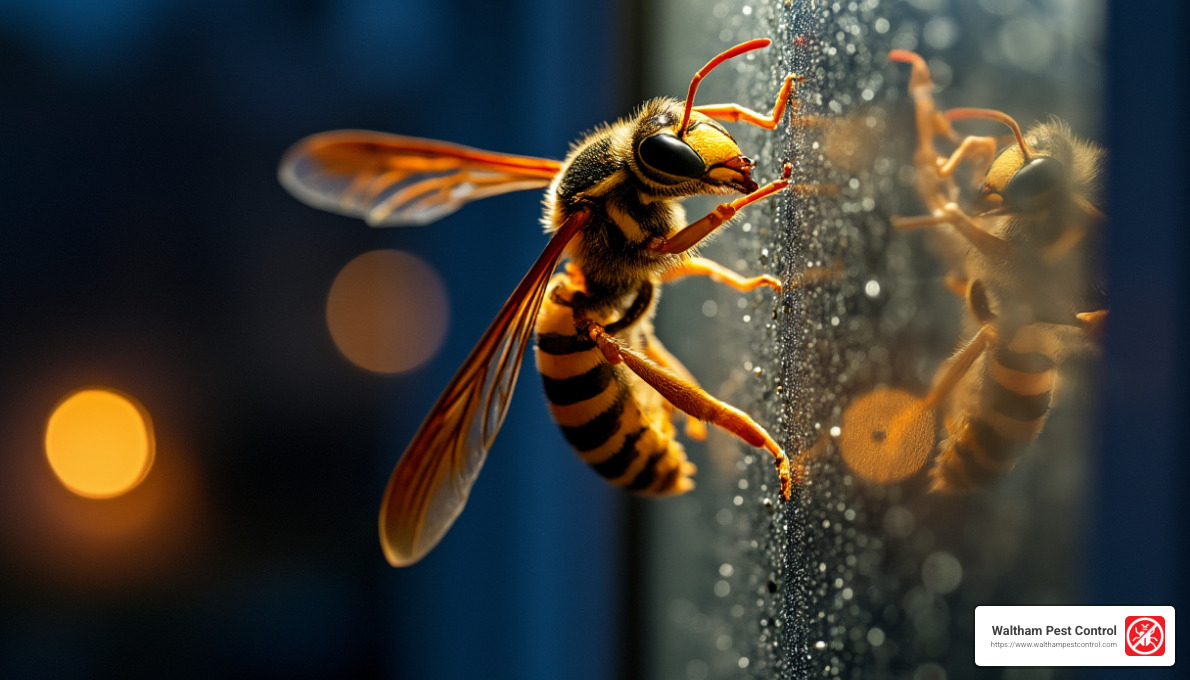
That mysterious tapping sound on your windows after dark? It’s likely European hornets trying to reach your indoor lights. This behavior is one of the most common – and startling – nighttime encounters Massachusetts residents have with these insects.
European hornets have a powerful attraction to light sources, especially the warm glow coming from inside homes. As they repeatedly attempt to reach these lights, they collide with glass windows, creating a distinctive tapping sound that can be quite unnerving if you don’t know what’s causing it.
“Hornets emit a loud hum and aren’t shy about crashing into your windows—be grateful for the glass!” as one of our technicians puts it after years of European hornet call-outs.
If you’re curious about observing this behavior safely, we recommend:
– Keep windows closed when interior lights are on
– Observe from inside through closed windows
– Avoid opening doors with lights behind you
– Draw curtains or blinds to block escaping light
– Switch off unnecessary exterior lights
One of our Waltham customers shared: “We kept hearing this strange tapping sound on our second-floor windows every night. It wasn’t until we carefully looked that we realized European hornets were repeatedly flying into the glass, attracted by our bedroom lights.”
Understanding the nocturnal activity patterns of hornets helps explain these encounters and provides the first step toward safely managing their presence around your home.
Night-Shift Species: European Hornets & Other Stingers
Not all buzzing visitors to your porch light are created equal. When we talk about are hornets active at night, we’re really talking about a fascinating exception to the rule in the insect world.
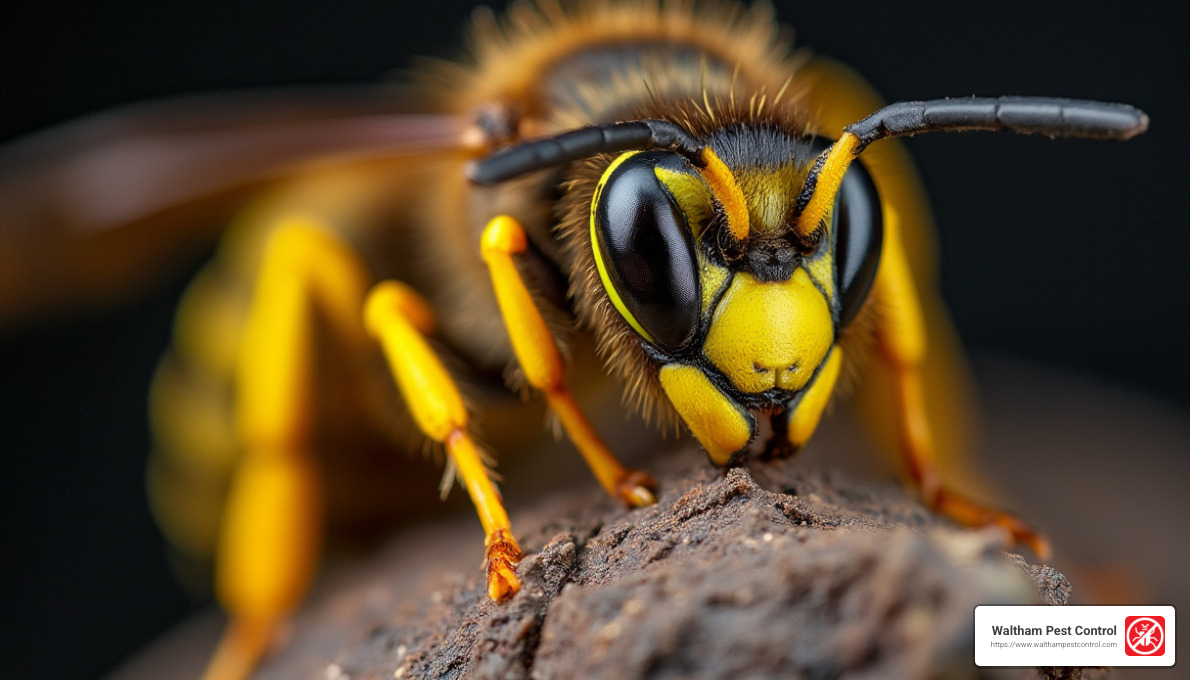
The European hornet (Vespa crabro) stands alone as North America’s only true nocturnal hornet. These impressive insects arrived on our shores around 1840, just before the Civil War, and have since made themselves quite comfortable throughout the eastern United States, including across Massachusetts. You’ll recognize them by their substantial size—about 1 to 1.5 inches long, with queens reaching the upper end of that range—and their distinctive brownish bodies decorated with yellow markings.
Despite what their name suggests, bald-faced hornets aren’t true hornets at all. These imposters are actually a type of yellowjacket, sporting a dapper black body with white facial markings (hence the “bald-faced” moniker). At about 0.75 inches long, they’re notably smaller than their European cousins. Most importantly for our discussion, these lookalikes clock out when the sun sets.
Regular yellowjackets—those familiar black and yellow-banded wasps that crash summer picnics—occasionally linger around dusk but rarely venture out in complete darkness. They’re the classic 9-to-5 workers of the wasp world.
You might have heard alarming news about the Asian giant hornet (now officially renamed the Northern giant hornet). Rest easy—these headline-grabbing insects haven’t established themselves in Massachusetts or anywhere in the eastern United States.
| Species | Size | Color | Active at Night? | Nest Location |
|---|---|---|---|---|
| European Hornet | 1-1.5 inches | Brown with yellow markings | Yes | Tree hollows, buildings, attics |
| Bald-faced Hornet | 0.75 inches | Black with white markings | No | Aerial nests in trees, shrubs |
| Yellowjacket | 0.5 inches | Black with yellow bands | Rarely | Ground, wall voids, attics |
| Paper Wasp | 0.75-1 inch | Brown with yellow markings | No | Open-celled paper nests under eaves |
Why European Hornets Break the Rules
What makes European hornets such night owls when their cousins are tucked away in their nests? It comes down to some clever adaptations that give them a unique edge in the insect world.
Their substantial body size isn’t just intimidating—it’s functional. Those larger bodies support bigger compound eyes that can gather more light than smaller insects, giving them a natural advantage after sunset. Rather than evolving specialized night-vision equipment, European hornets use a clever technique called neural pooling. This is essentially the insect equivalent of turning up the brightness on a dim photo; multiple visual receptors combine their signals to create a more sensitive picture of the world.
“Light intensity is the limiting factor that keeps hornets from flying at even dimmer light levels,” as researchers who studied hornet vision have noted. This explains their seemingly magnetic attraction to your porch lights—they’re naturally drawn to operate at the lowest light levels their visual system can handle.
There are some smart survival advantages to this nocturnal lifestyle too. By hunting after dark, European hornets gain access to a buffet of moths and other nocturnal insects that daytime hunters miss out on. Plus, there’s a lot less competition when you’re the only predatory wasp working the night shift.
I once watched a European hornet skillfully pluck moths from around a street lamp in Lexington—a perfect example of how these adaptable insects have carved out their own nocturnal niche.
Bald-Faced Hornets: Day Workers Only
Unlike their European relatives, bald-faced hornets are strictly 9-to-5 insects. As the sun sets across Massachusetts, these distinctive black and white wasps return to their papery nests for the night.
“Bald-faced hornets are most active during the day and take shelter inside their nests at night,” confirm entomologists who study these creatures. Their daily routine is remarkably structured: foraging for insect prey to feed hungry larvae, collecting wood fibers to expand their architectural marvels, defending territory from potential threats, and continuously expanding their distinctive paper nests.
This predictable schedule actually creates a strategic opportunity. “When dealing with bald-faced hornets, we often plan removals for after sunset when the colony is inside the nest and less likely to become defensive,” shared one of our pest control technicians with over 20 years of experience in Massachusetts. “With European hornets, that strategy doesn’t work because they remain active throughout the night.”
The contrast between these species highlights why proper identification is so crucial. What works for managing one type of stinging insect might be completely ineffective—or even dangerous—when applied to another. When Massachusetts homeowners call us about “hornets” active after dark, we immediately know we’re likely dealing with European hornets rather than their day-shift relatives.
What Hornets Do After Dark—And Why Lights Matter
Wondering what those large hornets are up to once the sun goes down? European hornets don’t punch out when darkness falls—they’re just getting started with their night shift!
While most stinging insects call it a day at dusk, European hornets maintain a busy schedule throughout the evening hours. Their nighttime agenda is quite diverse and explains why you might be hearing that distinctive tapping on your windows after dark.
Foraging keeps European hornets busy well into the night. They’re excellent nocturnal hunters, targeting moths and other insects that are also active after sunset. Those porch lights that help you find your keys? They’re essentially setting up an all-you-can-eat buffet for hungry hornets.
Nest maintenance doesn’t stop when the sun goes down either. Worker hornets continue their construction and repair duties around the clock, adding to their paper nests regardless of the hour.
One particularly interesting nighttime behavior is bark stripping. “European hornets strip bark from certain bushes (especially lilac) to feed on plant sap,” according to Penn State Extension. If you’ve noticed mysterious damage on your lilac bushes in Lexington or Concord, those evening hornet visitors may be responsible.
Inside the nest, the queen continues laying eggs throughout the night. The colony’s work never truly stops, which is why European hornets have developed the ability to function in low light conditions.
Are Hornets Attracted to Light Sources at Night?
If you’ve ever wondered “are hornets active at night” while watching them repeatedly fly into your bedroom window, the answer is a resounding yes—and artificial light is the main culprit.
European hornets are strongly drawn to light sources, particularly white and blue-toned lights. This isn’t just casual interest—they’ll repeatedly crash into illuminated windows in determined attempts to reach the light inside.
“Worker hornets are active at night and are attracted to lights, sometimes flying into windows,” notes Orkin researchers who study hornet behavior. This attraction is likely tied to their unique ability to steer in dim conditions.
Not all lighting affects hornets the same way, though. White and blue lights act like hornet magnets, while yellow “bug lights” generate much less interest. Red lights are practically invisible to hornets’ visual system, making them excellent alternatives for outdoor areas.
Armed with this knowledge, you can make simple changes to reduce nighttime hornet encounters:
- Replace white exterior bulbs with yellow “bug lights”
- Consider red lighting for high-activity areas
- Install timers or motion sensors on outdoor lights
- Close curtains before turning on interior lights
- Reduce unnecessary landscape lighting
A customer in Sudbury told us: “After switching our porch lights to yellow bulbs and installing curtains in our sunroom, we no longer have hornets tapping on our windows every night. It’s such a simple solution that made a huge difference.”
For more detailed information about light attraction, check out the latest facts on light attraction from entomology experts.
Common Nighttime Behaviors You Might Notice
If European hornets have taken up residence near your Massachusetts home, you’ll likely observe several distinctive behaviors after dark.
Hovering around security lights is a common sight. European hornets will circle outdoor lights for hours, feasting on the insects drawn to the illumination. This aerial predation continues throughout the evening, with hornets making repeated hunting passes around bright fixtures.
The most reported (and unnerving) behavior is their persistent banging against windows. This isn’t random—they’re trying to reach the light sources inside your home. The repeated tapping can be quite loud, often startling homeowners who aren’t expecting insect visitors after dark.
“European hornets are attracted to light and may tap on windows as they try to reach illumination at night,” explains pest management professionals who regularly handle hornet calls throughout Eastern Massachusetts.
Interestingly, these industrious insects do take a brief short pre-dawn rest. Research shows that European hornets are least active during the early pre-dawn hours, taking a short break before resuming their busy schedule at first light.
Perhaps most concerning is their capacity for defensive swarming at night. Unlike yellowjackets or paper wasps that become dormant after dark, European hornets will actively defend their nest if disturbed at night—a fact that surprises many homeowners.
A Burlington resident shared this eye-opening experience: “We didn’t realize we had a European hornet nest in our attic until we turned on the attic light one evening and several large hornets immediately became active and started flying around the light fixture. It was quite alarming since we always thought hornets would be dormant at night.”
Understanding these nighttime behaviors isn’t just fascinating—it’s practical knowledge that helps Massachusetts homeowners know when and how to safely address hornet issues around their property.
Homeowner Safety: Spotting, Preventing & Timing Nest Removal

Let’s talk safety first when it comes to those night-flying hornets around your home. Unlike honeybees that sting once and call it a day, European hornets can sting repeatedly—and trust me, it’s not an experience you want to have. These stings aren’t just painful; they can be downright dangerous for some folks.
Did you know stinging insects send more than half a million Americans to emergency rooms each year? For those with allergies, a hornet sting isn’t just uncomfortable—it can be life-threatening. This is why identifying and addressing hornet activity around your home shouldn’t be taken lightly.
You might have nighttime hornets if you notice those large 1-1.5 inch insects buzzing around your porch lights after sunset. That mysterious tapping on your windows? Could very well be hornets drawn to your indoor lighting. Other telltale signs include stripped bark on trees (especially lilacs—they love those), paper-like nests tucked into tree hollows or your attic, and hornets entering or exiting openings in your home during evening hours.
Preventing nighttime hornet encounters starts with smart lighting choices. Those bright white bulbs are basically dinner bells for hornets—switch them out for yellow “bug lights” or red bulbs that hornets barely notice. Seal up any cracks or gaps in your home’s exterior to block potential entry points. A thorough cleanup of fallen fruit and food residue removes potential attractions, while intact window screens provide a simple but effective barrier.
“I always tell my Massachusetts customers that keeping outdoor lights off at night is one of the simplest ways to reduce hornet problems,” shared one of our senior technicians who’s been handling hornet calls for over twenty years.
When it comes to nest removal, timing is everything—and this is definitely a situation where professional help from services like Waltham Pest Control makes all the difference. Our teams have both the experience and specialized equipment to handle these potentially dangerous insects safely.
When Is the Safest Time to Remove or Treat a Nest?
Even though European hornets break the rules by staying active after dark, early morning remains your best window for nest treatment. There’s a good reason for this timing strategy.
During those quiet pre-dawn hours, European hornets experience their least active period—a brief respite before they kick into gear at sunrise. This timing sweet spot means most colony members are tucked inside the nest, allowing for more complete treatment. The cooler temperatures (ideally below 50°F) further reduce their flight activity and aggressiveness. Plus, early morning provides just enough natural light to work without needing artificial lights that could attract more hornets.
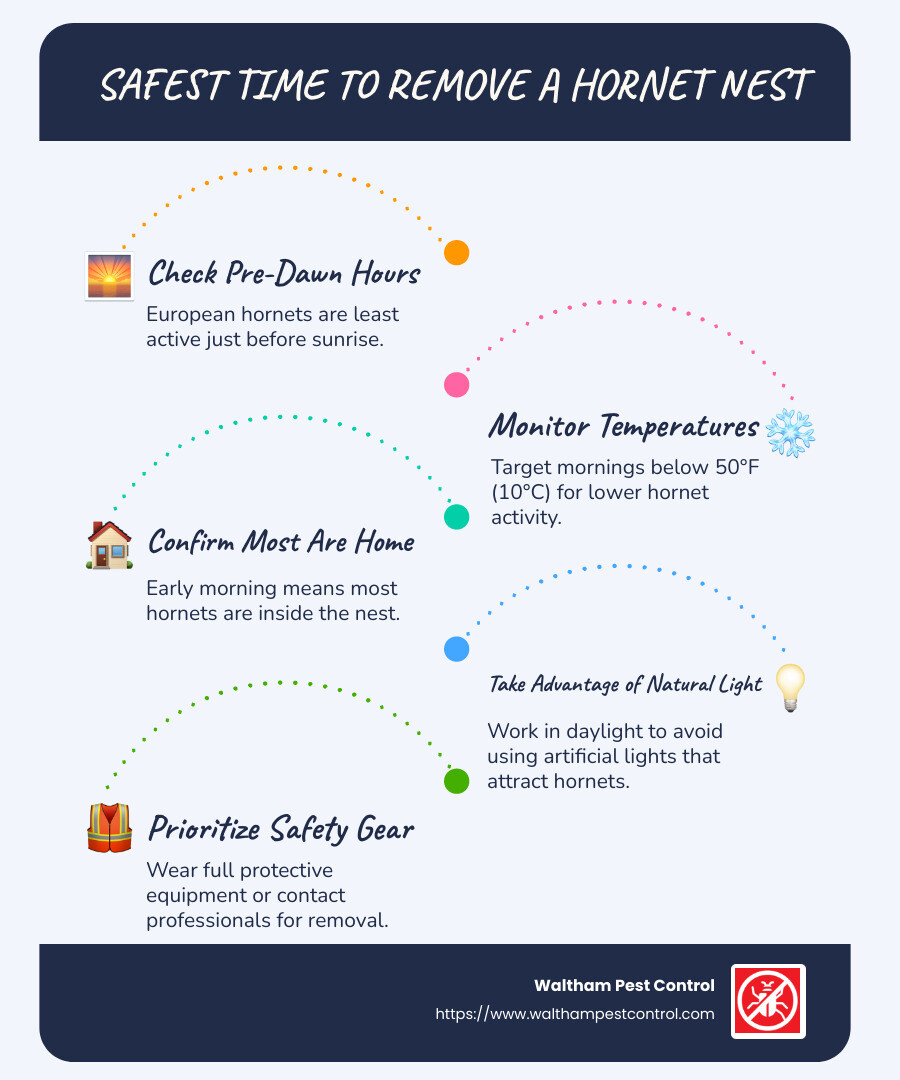
“We consistently find that treating European hornet nests in those early morning hours gives us the best combination of safety and effectiveness,” explains our lead technician. “The colony is home, but they’re at their sleepiest.”
While late evening works well for bald-faced hornet nests (since they’re not night owls), European hornets require that specific pre-dawn approach for optimal results.
DIY vs. Professional: What the Experts Recommend
I understand the temptation to handle hornet problems yourself—it seems straightforward enough, right? But when dealing with European hornets that remain active at night, the risks multiply quickly.
Professional hornet removal brings crucial advantages to the table. First, proper identification ensures the right approach for the specific hornet species you’re dealing with. Our technicians arrive with specialized protective gear and application equipment designed specifically for these scenarios. We ensure complete nest elimination, drastically reducing the chance you’ll face a repeat infestation next season. Most importantly, professional services minimize your risk of painful stings and potential allergic reactions.
“After trying to remove a nest myself and ending up with three stings and a partially removed nest, I called Waltham,” shared a customer from Lexington. “They came out the next morning, properly identified it as European hornets, and had the whole thing gone in under an hour. Should have just called them first!”
If you’re still considering the DIY route, please understand that proper protection isn’t optional—it’s essential. You’ll need full-body coveralls with elastic cuffs, a bee veil or face shield, heavy-duty gloves, and boots with pants tucked in. Without this gear, you’re taking unnecessary risks with potentially aggressive insects.
Cost is often a consideration when deciding between DIY and professional removal. Based on industry averages (not Waltham Pest Control’s specific pricing), professional hornet nest removal typically ranges from $150 for simple removals to $900 for complex situations. High-end treatments for large or difficult-to-access nests can potentially reach $2,700 or more. While not insignificant, these costs reflect the specialized training, equipment, and risk involved.
For anyone with known allergies to insect stings, professional removal isn’t just recommended—it’s the only safe option. As allergists consistently warn, even a single sting can trigger life-threatening reactions in sensitive individuals.
At Waltham Pest Control, we’ve safely removed thousands of hornet nests across Massachusetts over our four decades in business. Our technicians receive specialized training in handling European hornets’ unique nighttime activity patterns, ensuring effective treatment with minimal risk to your family.
A customer from Newton recently shared: “I noticed European hornets flying around our porch lights every night and finally found their nest in a tree cavity near our house. Waltham came early the next morning and removed it completely. Their technician knew exactly when and how to approach the nest safely, considering the hornets’ activity patterns.”
For more insights on why professional help makes sense with these night-active insects, check out our article on 5 Reasons Why Massachusetts Residents Should Rely on Professionals for Hornet Nest Removal.
When it comes to are hornets active at night, understanding their behavior is your first line of defense. For more information about handling aggressive stinging insects, our resource on Are Ground Hornets Aggressive? provides valuable insights to keep your family safe.
Conclusion
When it comes to the question “are hornets active at night,” the answer isn’t as straightforward as you might think. Throughout this article, we’ve uncovered some fascinating insights about these misunderstood insects that Massachusetts homeowners should know.
European hornets—the only true hornet species in North America—break the rules that govern most stinging insects by remaining active after sunset. Their large eyes and special neural adaptations allow them to steer in dim light without having specialized night vision. This unique capability means they continue foraging, maintaining their nests, and unfortunately, banging against your windows long after other wasps have called it a day.
In contrast, bald-faced hornets (which aren’t true hornets at all) follow the more typical pattern of resting in their nests once darkness falls. This distinction is crucial when planning how to deal with a nest on your property.
For Massachusetts homeowners, managing nighttime encounters with European hornets comes down to some simple but effective strategies. Switching to yellow bulbs, keeping curtains drawn, and using smart lighting systems can dramatically reduce those startling tap-tap-tap sounds on your windows after dark. These small changes can make a big difference in your comfort level during summer evenings.
When it comes to nest removal, timing is everything. The safest window for addressing European hornet nests is during those quiet pre-dawn hours when even these night owls take a brief rest. But given the risks involved—especially considering their ability to sting multiple times and defend their nests aggressively even at night—professional removal is always the wisest choice.
Here at Waltham Pest Control, we’ve spent over four decades helping Eastern Massachusetts residents safely manage hornet problems. Our technicians understand the unique challenges posed by European hornets’ nocturnal habits and know exactly when and how to approach removal with minimal risk.
Don’t let concerns about hornets keep you from enjoying your evenings outdoors. With the right knowledge and professional assistance when needed, you can maintain a peaceful coexistence with these fascinating—if sometimes intimidating—creatures.
For residents in specific Massachusetts communities seeking more custom information, visit our page on Hornets Nest Removal in Tewksbury.
When it comes to dealing with hornets that work the night shift, a little knowledge and the right professional help can ensure your home remains a safe, sting-free sanctuary all year round.
