
Best Ant Control: Proven Solutions 2025
Why Finding the Best Ant Control Solution Matters
Best ant control starts with understanding that these tiny invaders can quickly turn from a minor nuisance into a major problem. With over 15,000 species of ants worldwide and about 25 that commonly infest homes, choosing the right approach makes the difference between temporary relief and permanent elimination.
Top Ant Control Methods:
- Liquid Baits – Target entire colonies by poisoning the queen
- Residual Sprays – Create protective barriers lasting weeks (professional-grade treatments)
- Dusts/Powders – Long-term crack and crevice protection (diatomaceous earth, boric acid)
- Professional Services – Complete inspection, identification, and customized treatment plans
Once ants establish a colony in your home, they leave chemical trails called pheromones that guide thousands of workers to food sources. A single colony can contain over 100,000 ants with multiple queens, making surface sprays that only kill visible ants largely ineffective.
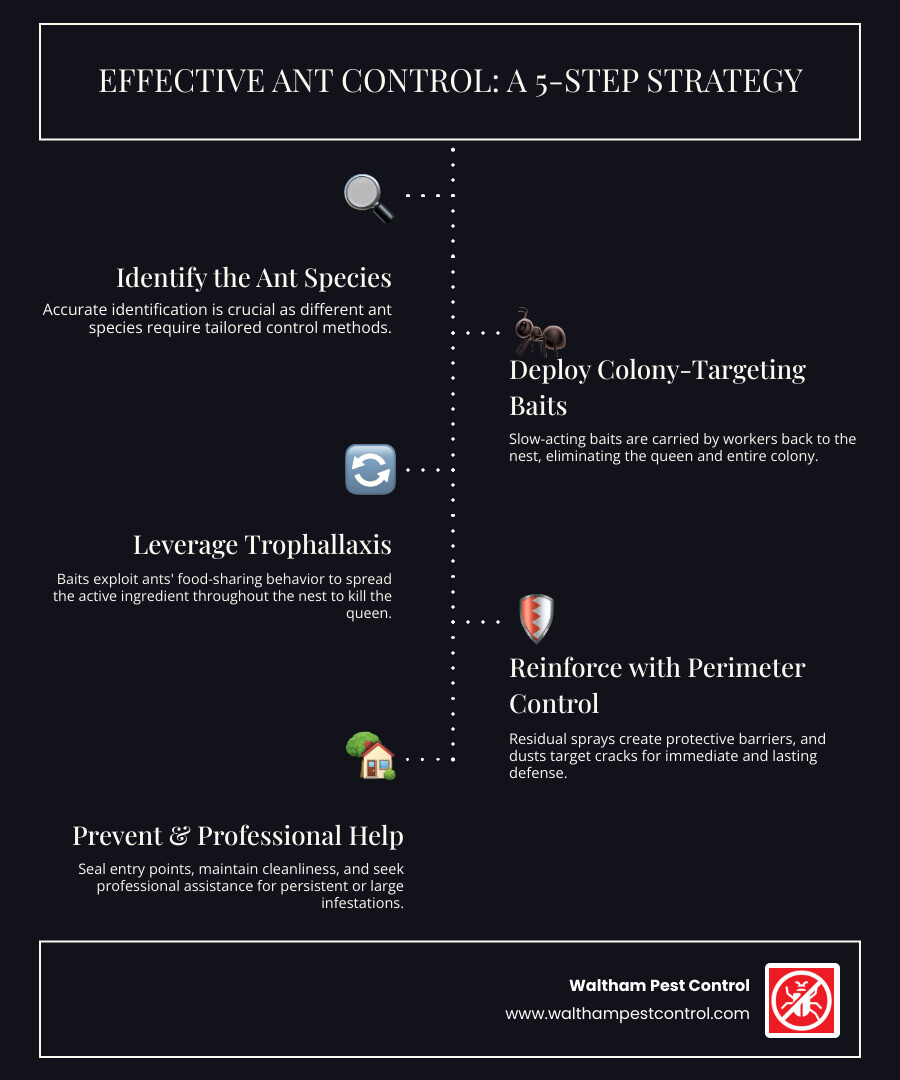
The key to successful ant control lies in targeting the entire colony, not just the workers you see marching across your kitchen counter. This requires understanding which ant species you’re dealing with and selecting the right formulation – whether it’s a slow-acting bait that workers carry back to poison the queen, or a professional-grade barrier treatment that prevents new infestations.
I’m Waltham Pest Control, President & CEO of Waltham Pest Control, with over 40 years of experience helping Massachusetts homeowners identify and implement the best ant control strategies for their specific situations. My team and I have seen every type of ant problem imaginable, from carpenter ants damaging home structures to persistent pavement ant invasions that seem impossible to stop.
Best ant control word guide:
- dealing with ant infestation
- exterminating carpenter ants in house
- how to exterminate ants inside the house
First Step: Identifying the Ant Invading Your Home
Picture this: you spot a line of tiny invaders marching across your kitchen counter, and your first instinct might be to grab the nearest spray bottle. But hold on! The best ant control strategy starts with playing detective, not warrior.
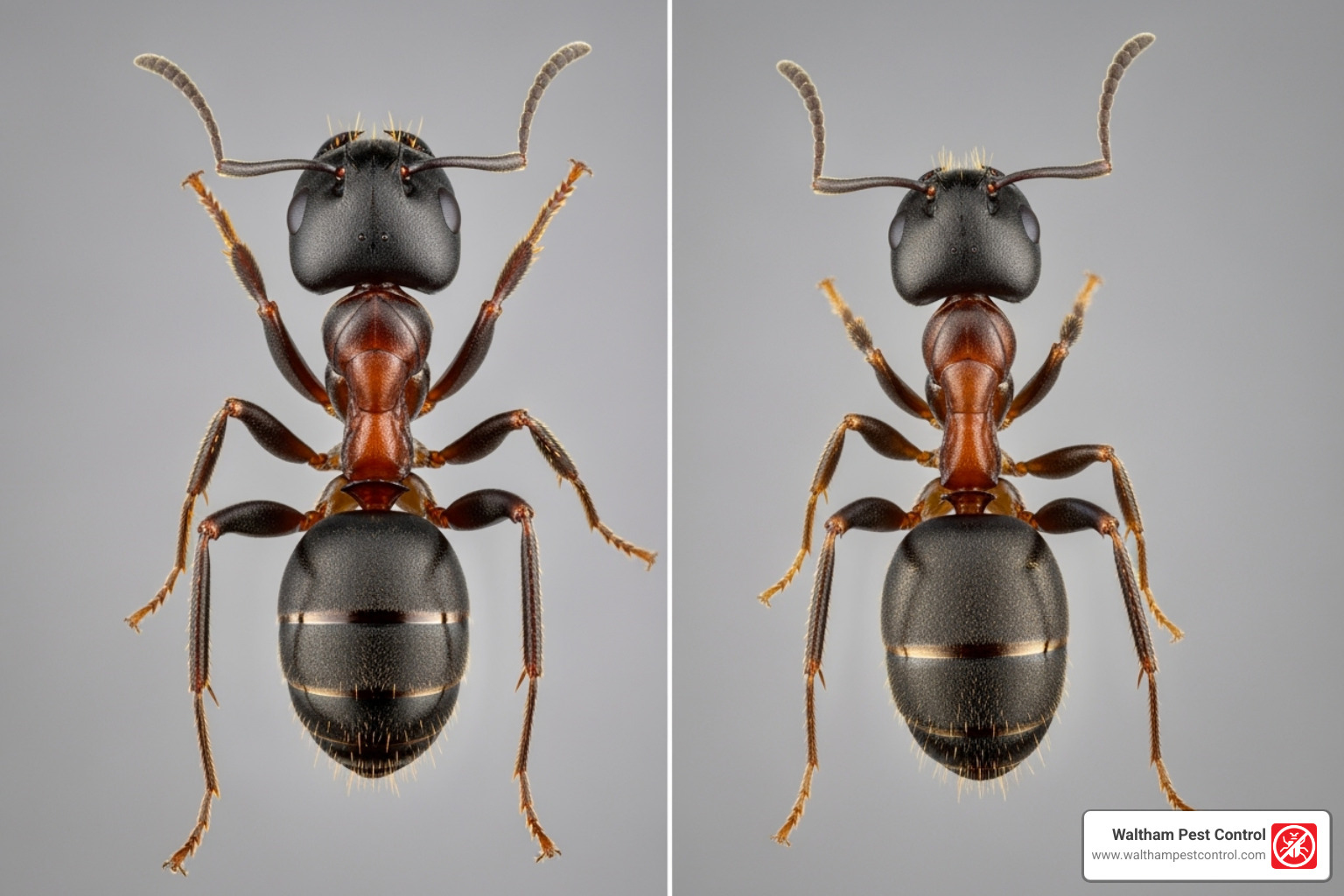
Think of ant identification like choosing the right key for a lock. Each ant species has its own quirks, favorite foods, and hiding spots. What works brilliantly against carpenter ants might barely tickle pavement ants. That’s why taking a few minutes to identify your tiny invaders can save you weeks of frustration and failed attempts.
The beauty of proper identification lies in creating custom solutions that actually work. Instead of throwing everything at the wall and hoping something sticks, you’ll know exactly which approach will send these unwelcome guests packing for good.
For a deeper dive into the fascinating world of household invaders, check out our comprehensive guide on House Ants.
Common Ants in Massachusetts
Here in Eastern Massachusetts, we’ve gotten to know our local ant population quite well over the past four decades. Let me introduce you to the usual suspects that love to crash the party in your home.
Carpenter Ants are the ones that make homeowners lose sleep – and for good reason. These large, dark ants don’t actually eat your house (that’s a common myth), but they do something almost as concerning: they carve out cozy apartments in your wooden structures. You’ll know they’ve been busy when you find small piles of frass – basically ant sawdust – near wooden areas.
The real problem isn’t that they’ll bring your house down overnight, but rather the slow, steady damage they can cause if left unchecked. It’s like having a very patient, very small construction crew working in reverse. Learn more about protecting your biggest investment with our guide on Carpenter Ants: Protecting Your Home From Structural Damage.
Pavement Ants are the opportunists of the ant world. These dark brown to black ants have mastered the art of urban living, setting up shop under sidewalk cracks and foundation slabs. They’re particularly sneaky about finding their way into your home through the tiniest foundation cracks, especially when they’re on the hunt for moisture or a midnight snack.
What makes them tricky is their persistence – they’ve basically turned your driveway into their neighborhood, with nests under pavement that can be surprisingly extensive. If these industrious little guys have made themselves too comfortable, our Pavement Ant Infestation guide has the solutions you need.
Odorous House Ants come with their own built-in warning system – crush one accidentally, and you’ll immediately understand why they got their name. That distinctive rotten coconut smell is unmistakable and honestly, quite unpleasant. These small, dark ants are the sweet-eating ants of the bunch, making a beeline for anything sugary in your kitchen.
Finally, there are Pharaoh Ants – the tiny troublemakers that make even experienced pest control professionals pause. These tiny ants are masters of survival, with the frustrating ability to split their colonies when threatened (imagine if every time you tried to evict someone, they just multiplied). What’s more concerning is their potential for spreading disease, making their elimination not just a matter of convenience, but health and safety.
The key to achieving the best ant control results is remembering that each of these species requires a different approach. It’s like having the right tool for each job – and trust me, after 40 years in this business, having the right tool makes all the difference.
Your Battle Plan: A Guide to Ant Control Formulations
Now that you’ve identified your tiny home invaders, it’s time to select the right arsenal. Think of ant control like choosing the right tool for a job – you wouldn’t use a hammer to tighten a screw, and you shouldn’t use a contact spray when you need colony elimination.
Understanding how ant killers work is crucial for achieving the best ant control. Some products act as contact killers, delivering immediate results by eliminating ants on the spot. Others work as baits, using a delayed approach that targets the entire colony, including the queen and her offspring hidden deep within the nest.
| Factor | Liquid Baits | Dusts/Powders | Sprays |
|---|---|---|---|
| Speed | Slow (days to weeks for colony elimination) | Varies (fast contact, slow for colony) | Fast (immediate knockdown) |
| Target | Entire Colony (queen, larvae, workers) | Individual Ants, Barriers, Nests (if dusted) | Individual Ants, Trails, Barriers |
| Safety | Generally safer when contained in stations | Can be messy, caution with inhalation/pets | Caution with direct contact, fumes |
| Use Case | Indoor/Outdoor, Colony Elimination | Cracks, Crevices, Wall Voids, Perimeter | Spot Treatment, Perimeter Defense, Repellent |
The difference between these approaches can mean the difference between a temporary fix and a permanent solution. Contact killers might give you immediate satisfaction when you see those ants drop, but they won’t address the thousands of ants you can’t see back in the colony.
Choosing the best ant control product for your home
Selecting the right product isn’t a guessing game – it’s about matching your specific situation with the right solution. The infestation location plays a huge role in your decision. Indoor problems often require different approaches than outdoor colonies, and some products work better in specific environments.
Your ant species matters tremendously here. Remember those carpenter ants we talked about earlier? They respond differently to treatments than those tiny pharaoh ants. What attracts a sweet-loving odorous house ant might not even register with a protein-seeking carpenter ant.
Safety considerations should never be an afterthought, especially with pets and children in the home. Some products require more caution than others, and understanding these differences helps you make informed decisions that protect your family while solving your ant problem.
Finally, consider your goals. Are you looking for immediate relief from the ant highway marching across your kitchen counter, or are you committed to complete colony elimination that prevents future invasions? Your timeline and expectations will guide you toward the right formulation.
The product label is your most important guide. It tells you exactly how much to use, where to apply it, where not to apply it, and the safety measures needed to protect your family and pets.
The Power of Ant Baits for Total Colony Elimination
When your goal is the best ant control with lasting results, ant baits become your most powerful weapon. The brilliance of baits lies in turning the ants’ own social behavior against them.
Here’s how the magic happens: worker ants find your strategically placed bait and think they’ve hit the jackpot. They consume the sweet or protein-rich treat and carry it back to share with their colony mates. This food-sharing behavior, called trophallaxis, ensures that the active ingredient reaches every member of the colony, including the queen and developing larvae hidden deep within the nest.
Patience becomes your virtue with baiting strategies. You might actually see more ants initially as word spreads through the colony about this amazing new food source. Don’t panic and don’t spray them – this increased activity means your plan is working perfectly. The ants are doing exactly what you want them to do: taking the bait back to eliminate the entire colony.
Within a few days, you’ll notice activity starting to decrease. Complete colony elimination typically takes one to two weeks, depending on the colony’s size and structure. For detailed information on effective indoor baiting strategies, check out our guide on the best indoor ant bait.
When comparing liquid baits versus Diatomaceous Earth, understanding their different approaches helps you choose wisely. Liquid baits work as true colony killers, using attractive food sources laced with ingredients that disrupt the ants’ biology. Worker ants consume the bait, share it through trophallaxis, and effectively poison the entire colony from within.
Diatomaceous Earth, on the other hand, works as a contact killer and barrier. This natural powder, made from fossilized diatoms, damages ants’ exoskeletons, causing dehydration and death within 48 hours. While effective for individual ants and creating protective barriers, it typically doesn’t eliminate entire colonies since it’s not carried back to the queen like food baits are.
Using Sprays and Dusts for Immediate and Perimeter Control
While baits work from the inside out, sprays and dusts provide immediate results and create protective barriers – essential components of comprehensive ant control.
Contact sprays deliver instant gratification. They knock down ants on contact, making them perfect for dealing with visible trails or individual scouts. However, they’re like treating a symptom rather than the disease. Spraying visible ants might feel satisfying, but it won’t touch the thousands of ants back in the nest or prevent new ones from following the same trails.
Residual sprays offer a different approach by creating invisible barriers that last weeks or even months after application. Applied around your home’s perimeter, near windows, doors, and foundation areas, they act like invisible fences that kill ants attempting to cross into your territory. This preventative approach stops problems before they start. For comprehensive information on spray applications, explore our guide on Ant Spray Indoor and Outdoor.
Dusts excel in hard-to-reach places where other treatments can’t go. Applied to cracks, crevices, wall voids, and other hidden areas, they provide long-lasting protection by adhering to surfaces and transferring to ants as they travel through treated areas. Professional pest control services often use dusts for accessing hidden nests that homeowners can’t reach.
The science behind these treatments continues to evolve, with research into active ingredients like those found in scientific research on insecticide dusts showing how different compounds affect insect nervous systems. This research helps develop more effective and targeted treatments for persistent ant problems.
When DIY Isn’t Enough: Calling a Professional for the Best Ant Control
Sometimes, despite your best DIY efforts, those persistent little invaders just refuse to take the hint. You’ve tried baits, sprays, and even that coffee grounds trick your neighbor swears by, but the ants keep marching back like they own the place. When this happens, it’s time to wave the white flag and call in the professionals for the best ant control.
Persistent infestations are the most obvious red flag. If you’ve been battling the same ant problem for weeks or months, or if the situation seems to be getting worse despite your treatments, the colony has likely established multiple nests or found ways to work around your DIY efforts.
Large colonies present another challenge that’s often beyond DIY capabilities. When you’re seeing thousands of ants or suspect multiple nests throughout your property, you’re dealing with a population that can exceed 100,000 individuals. That’s simply too many ants for store-bought products to handle effectively.
Structural damage from carpenter ants requires immediate professional attention. If you’re noticing wood damage, finding piles of frass (sawdust-like debris), or hearing rustling sounds in your walls, waiting could mean expensive repairs down the road. Carpenter ants don’t mess around when it comes to excavating their dream homes in your wooden structures.
The tricky part about ant colonies is that they often establish hidden nests in places you’d never think to look – deep within walls, under concrete slabs, or in other inaccessible areas. Professional pest control technicians have the tools and experience to locate these hidden strongholds and eliminate them properly.
If you’re experiencing a widespread Ant Infestation in Home, professional intervention becomes not just helpful, but necessary for complete resolution.
What to Expect from a Professional Ant Exterminator
When you call a professional pest control company like Waltham Pest Control, you’re not just hiring someone to spray chemicals around your house. You’re investing in a comprehensive approach that follows Integrated Pest Management (IPM) principles – a systematic method that ensures the best ant control results.
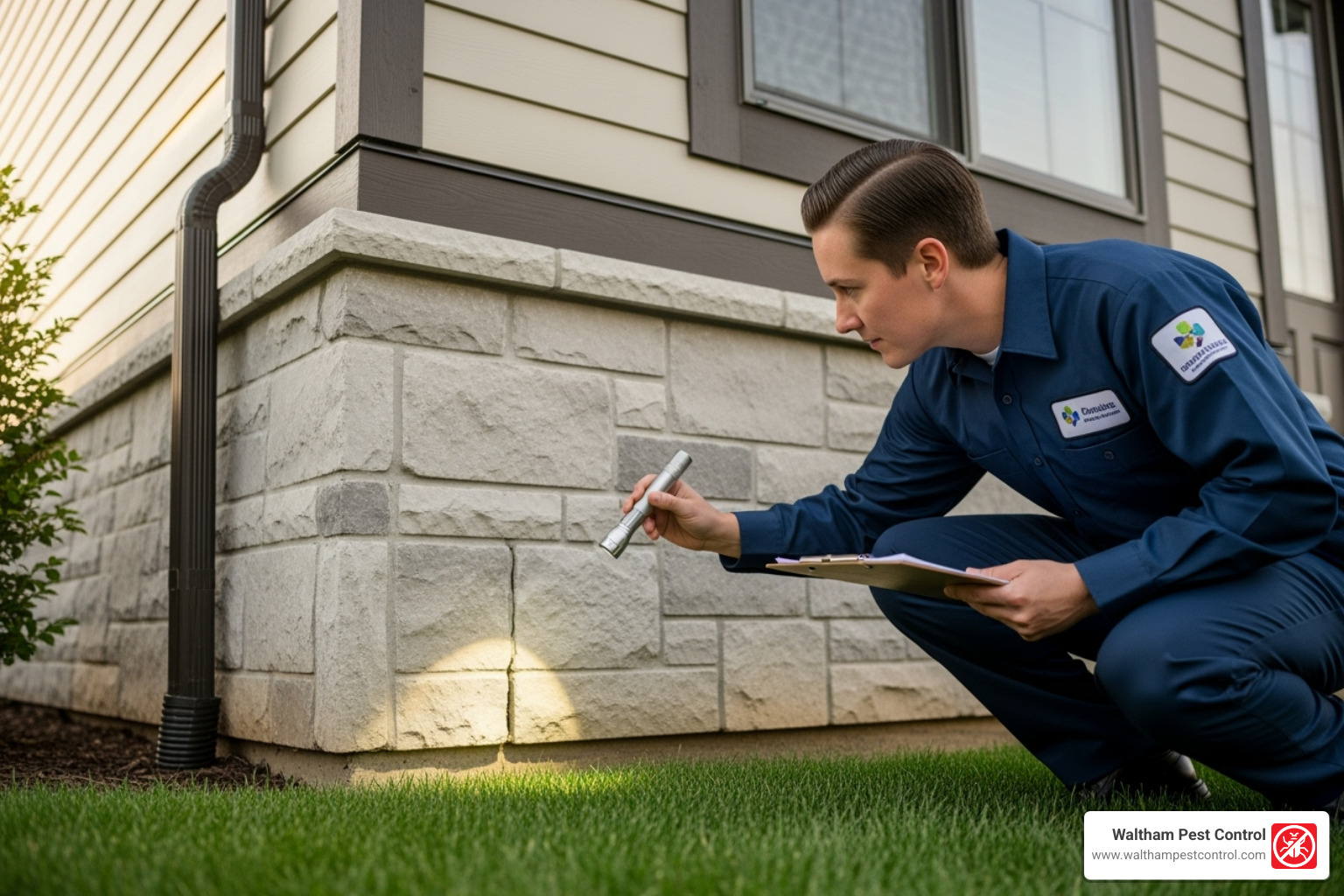
The process begins with a thorough inspection conducted by our licensed exterminators. We examine every nook and cranny of your home and property, looking for ant trails, entry points, moisture sources, and potential nesting sites. This detective work is crucial because successful ant control depends on understanding exactly what you’re dealing with.
Accurate identification comes next. Our team can distinguish between carpenter ants, pavement ants, and other species that might look similar to untrained eyes. This identification drives every decision we make about treatment methods, because what works for odorous house ants might be completely ineffective against pharaoh ants.
Based on our findings, we develop a customized treatment plan custom to your specific situation. This isn’t a one-size-fits-all approach – we consider the ant species, the extent of the infestation, your home’s unique characteristics, and your family’s safety needs.
Professional exterminators have access to professional-grade products that aren’t available to consumers. These include highly effective gel baits that ants find irresistible and carry back to share with their entire colony, and non-repellent insecticides that ants unknowingly track throughout their nest, eliminating the entire population from within.
The job doesn’t end with the initial treatment. We provide follow-up services and monitoring to ensure the colony has been eliminated and to prevent future infestations. We’ll also identify and help you address conditions that attracted ants in the first place.
For a detailed look at our systematic approach to household ant elimination, visit our House Ants Exterminator page.
When considering professional services, costs can vary significantly based on factors like the ant species involved, the severity of your infestation, your property size, and the number of treatments required. Based on general industry data, professional ant extermination services typically range from $150 to over $500, though complex situations may require additional investment. These are average market costs and not specific quotes from Waltham Pest Control.
Are Natural Remedies a Good Choice for the best ant control?
Many homeowners are drawn to natural or homemade remedies for ant control, and I understand the appeal. Solutions like white vinegar, dish soap, coffee grounds, and essential oils (cinnamon, wintergreen, clove, mint) seem safer and more environmentally friendly than commercial products.
Here’s the reality: while these natural methods can provide some temporary relief, they’re primarily repellents rather than killers. Vinegar disrupts the pheromone trails that ants use for navigation, making it harder for them to find their way around. Dish soap can suffocate individual ants on contact. But neither addresses the real problem – the colony and the queen safely tucked away in their nest.
The fundamental issue with most natural remedies is that they don’t provide the systemic colony elimination needed for lasting best ant control. If you only kill or repel the worker ants you can see, the colony simply sends out more replacements. It’s like trying to empty a swimming pool with a teacup while someone keeps the hose running.
Commercial and professional methods work better because they’re specifically formulated to be carried back to the nest. Products containing active ingredients like borax in baits or specialized insecticides in sprays are designed with delayed action that allows worker ants to share the poison with the queen and larvae before dying. This inside-out approach is what achieves true colony-wide elimination.
After four decades in the pest control business, I’ve seen countless homeowners spend months battling ant problems with natural remedies, only to call us when the situation becomes unbearable. While I appreciate the desire to try gentler methods first, relying solely on natural remedies often leads to prolonged frustration and a more entrenched ant problem that ultimately requires professional intervention anyway.
For more insights on overcoming persistent ant challenges, read our comprehensive guide on Dealing with Ant Infestation.
Frequently Asked Questions about Ant Control
What is the most effective way to get rid of ants permanently?
The secret to permanent ant elimination lies in one crucial strategy: targeting the entire colony, especially the queen. Think of it like this – if you only swat the workers you see marching across your counter, it’s like trying to empty the ocean with a teaspoon. The colony will simply send out more replacements.
The best ant control approach uses slow-acting baits that worker ants eagerly collect and carry back home. These baits work like a Trojan horse – the workers unknowingly deliver poison directly to the queen and larvae, eliminating the source of your problem. It’s brilliant in its simplicity.
But baits alone aren’t enough for permanent results. You’ll also need to seal entry points around windows, doors, and foundation cracks where ants sneak in. Keep your home clean, especially around food prep areas, and store pantry items in sealed containers.
For severe or persistent infestations, professional treatment often provides the most reliable path to permanent relief. We can accurately identify which ant species you’re dealing with, locate those sneaky hidden nests, and apply professional-grade products specifically designed for complete colony elimination.
How long does it take for ant bait to work?
Here’s where patience becomes your best friend. When you first put out ant bait, don’t panic if you suddenly see more ants than before – this actually means the bait is working perfectly! The workers are excited about their new food source and are calling in reinforcements to help collect it.
You’ll typically see a significant decrease in ant activity within a few days, but complete colony elimination usually takes one to two weeks. The timeline depends on how large the colony is and how efficiently those worker ants transport the bait back to feed the queen and larvae.
Colony size makes a huge difference here. A small nest might be eliminated in just a few days, while a massive colony with multiple queens could take the full two weeks. The key is resisting the urge to spray or disturb the ants during this process – let them do their work of carrying the poison home.
Is it safe to use ant killers around pets and children?
Safety around our loved ones – both two-legged and four-legged – is absolutely paramount. The golden rule is simple: always read and follow the product label instructions exactly. That label isn’t just a suggestion; it’s literally the law and contains critical safety information.
Some products are naturally safer choices for homes with pets and children. Diatomaceous Earth, for example, is considered non-toxic when applied correctly and can be an effective part of your ant control strategy.
For other baits and sprays, the key safety measures include keeping products completely out of reach and ensuring proper ventilation during and after application. Many ant baits come in child-resistant stations specifically designed to keep curious little hands and paws away from the active ingredients.
When we provide professional treatments, we use products formulated at concentrations that are effective against insects while maintaining safety for your family. We typically recommend staying out of treated areas for a few hours until surfaces are completely dry.
When in doubt, always consult with a professional. We can recommend the safest approach for your specific situation and provide peace of mind that your ant problem is being solved without compromising your family’s wellbeing.
Secure Your Home from Ants for Good
Congratulations! You’ve made it through the complete guide to achieving the best ant control for your home. Think of this journey as building a fortress against these tiny invaders – one that protects not just for today, but for years to come.
The secret to lasting success lies in understanding that identification is absolutely key. Just like you wouldn’t use the same medicine for every illness, different ant species require different approaches. Those carpenter ants threatening your home’s structure need a completely different strategy than the sweet-loving odorous house ants raiding your kitchen.
Choose your method based on your specific infestation. Are you dealing with a few scouts, or has an entire colony decided your home is their new headquarters? For widespread infestations, baits that target the queen offer the best long-term solution. For immediate relief or perimeter defense, sprays and dusts create powerful barriers that keep new invaders at bay.
But here’s the real game-changer: prevention. Making your home less appealing to ants is like changing the locks after an unwanted visitor. Cleanliness becomes your best friend – those tiny crumbs that seem insignificant to us are like breadcrumb trails leading straight to your door for hungry ants.
Store food in sealed containers – yes, even that bag of pet food in the garage. Ants have an incredible sense of smell and can detect food sources from surprising distances. Seal cracks around your foundation, windows, and doors, because ants can squeeze through spaces you’d never imagine. Trim vegetation away from your home’s exterior walls, as overhanging branches and shrubs create convenient highways for ant armies.
Sometimes, despite your best efforts, you need reinforcements. That’s where Waltham Pest Control comes in. With 40 years of experience serving Eastern Massachusetts communities, we’ve seen every type of ant problem imaginable. We’re licensed and insured, and we understand that every home and every ant problem is unique.
From Burlington to Cambridge, Newton to Framingham, we’ve helped thousands of homeowners reclaim their spaces from persistent ant invaders. Our approach combines the science of pest control with the understanding that your home is your sanctuary.
Ready to solve your ant problem? Learn how to prevent and treat house ants with our expert guide.
