
Ant Spray Indoor and Outdoor: Safe & Effective 2025
Navigating Ant Spray Solutions for Your Home
When ants invade, ant spray indoor and outdoor products are a primary line of defense, designed to tackle infestations inside your home and around its perimeter. Understanding these tools is key to regaining control.
Here’s a quick overview:
- Purpose: To kill ants on contact or create a lasting barrier that eliminates them over time.
- Key Areas: Indoors, target baseboards, cracks, and under appliances. Outdoors, treat foundations, patios, and entry points like windows and doors.
- Main Types: Contact killers offer immediate results for visible ants, while residual (or barrier) sprays provide long-term protection for weeks or months.
This guide will explore how these sprays work, proper application techniques, and safety measures to protect your home effectively.
Waltham Pest Control, President & CEO of Waltham Pest Control, brings over 40 years of pest control experience in Eastern Massachusetts. He is an expert in effective ant spray indoor and outdoor solutions and integrated pest management.
Understanding How Ant Sprays Work
An ant spray indoor and outdoor product works by using active ingredients to disrupt an ant’s nervous system, leading to paralysis and death. Some sprays kill on contact, while others leave a residual barrier that works for weeks or months. The effectiveness lies in the chemical action of ingredients like pyrethroids (permethrin, bifenthrin), which are synthetic versions of a substance found in chrysanthemum flowers.
For a deeper look into professional-grade solutions, see our guide on What Do Pest Control Companies Use For Ants?.
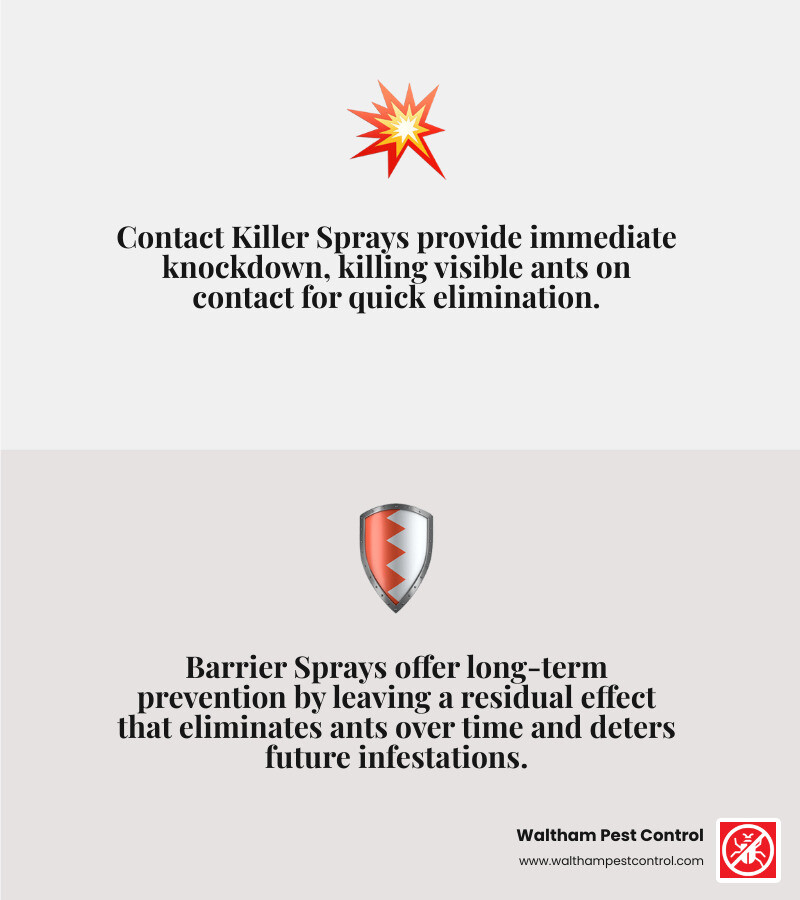
Contact Killers vs. Non-Repellent Sprays
There are two main strategies for ant sprays:
- Contact Killers: These provide immediate results, killing ants you can see on direct contact. While satisfying, this method typically only eliminates foraging ants (about 20% of the colony) and doesn’t address the nest. Smart ants may also learn to avoid sprayed areas.
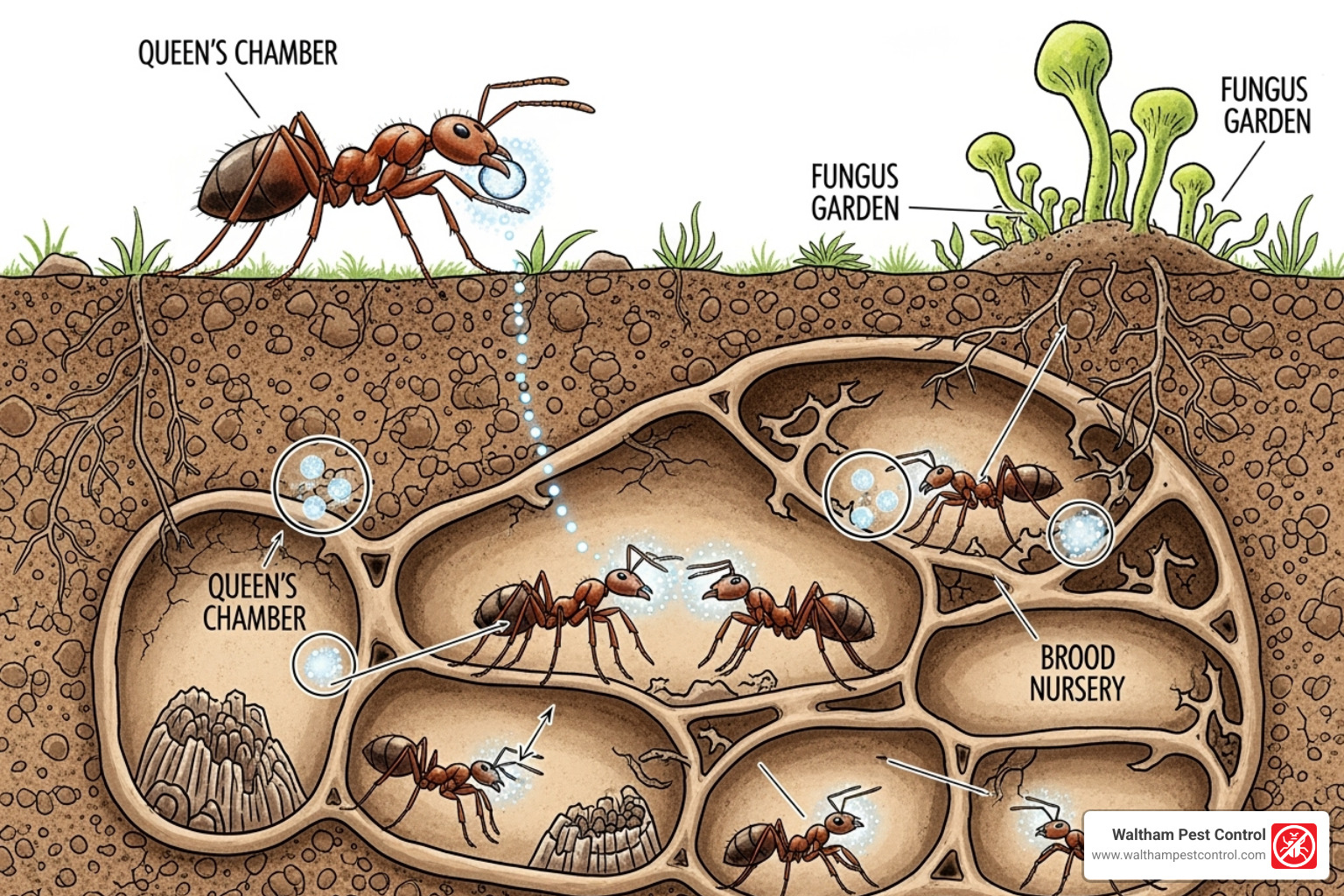
- Non-Repellent Sprays: This is the key to colony elimination. These sprays are undetectable, so ants walk through the substance and carry it back to the nest. The slow-acting insecticide is then spread throughout the colony via social grooming and food sharing—a “transfer effect.” This process ensures the poison reaches the queen and other hidden ants, wiping out the entire colony from within.
Common Active Ingredients and Their Effects
The power of an ant spray indoor and outdoor comes from its active ingredients:
- Pyrethroids (e.g., Permethrin, Bifenthrin, Zeta-Cypermethrin): These common ingredients attack the ant’s nervous system for a rapid knockdown. Permethrin is effective but breaks down in sunlight and is highly toxic to cats. Bifenthrin and Zeta-Cypermethrin are often used in long-lasting residual sprays.
- Fipronil: A professional-grade, non-repellent insecticide. Its slow-acting nature makes it ideal for the “transfer effect,” leading to complete colony elimination. Its use is often restricted to licensed professionals.
- Borax: Commonly found in ant baits, not sprays. It disrupts an ant’s digestive system when ingested.
- Botanical Oils (e.g., Peppermint Oil, Lemongrass Oil): Natural options that can repel ants and disrupt their scent trails. They are less effective for long-term control or colony elimination compared to chemical insecticides.
At Waltham Pest Control, our licensed technicians use advanced, high-efficacy products not available to the public, ensuring safe and comprehensive ant control solutions across Eastern Massachusetts.
A Guide to Using Ant Spray Indoor and Outdoor
Strategic application of ant spray indoor and outdoor products is crucial for success. It’s not just about spraying—it’s about creating a planned defense for your home. Before you begin, always read and follow the manufacturer’s label directions for safety and effectiveness.
For a complete defense against pests, explore our Home Pest Control Solutions.
Best Practices for Indoor Application
Focus on ant highways and hiding spots. Apply spray to:
- Cracks and Crevices: Along and behind baseboards, and around window and door frames.
- Kitchens and Bathrooms: Under and behind appliances (stove, fridge, dishwasher), near water pipes, and under sinks. In pantries, remove food first before treating shelves.
- Perimeter Barrier: For residual sprays, apply a 4-inch band along the interior perimeter where pests are seen. Wet the surface without soaking it.
Safety Reminders: Ensure good ventilation by opening windows. Cover or remove all food, utensils, and food-prep surfaces before spraying. Wash surfaces with soap and water after the spray has dried. For more tips, see our article on Ant Spray Indoor.
Effective Strategies for Outdoor Application
Creating an exterior shield is your first line of defense to stop ants before they get inside.
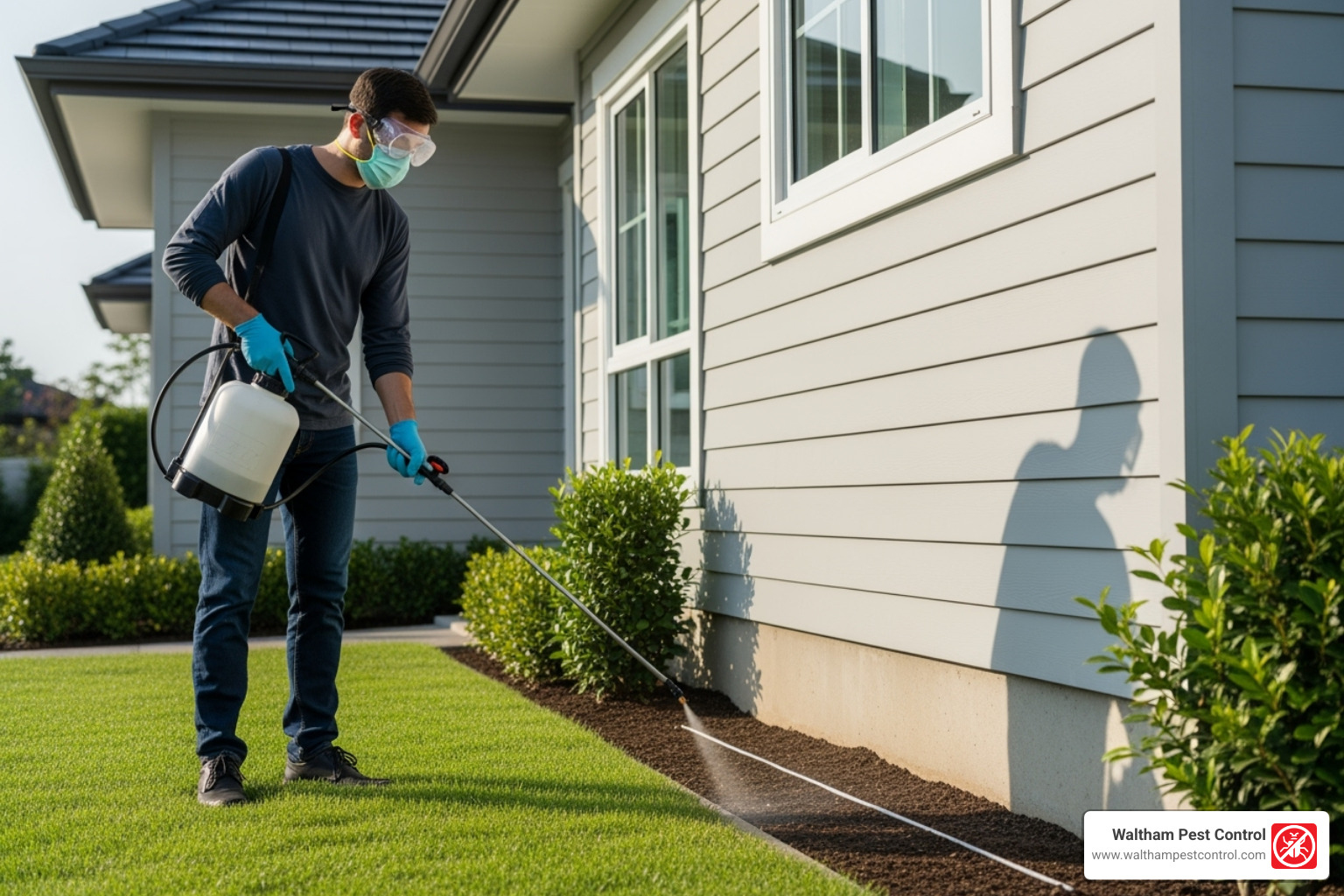
- Foundation Barrier: Apply a 12-inch band of spray around your home’s entire foundation.
- Entry Points: Treat around doors, window frames, screens, and where utility lines enter the house.
- Outdoor Living Spaces: Spray patios, balconies, and decks, especially where they connect to the house.
- Weather and Landscaping: Apply on a calm day when rain is not expected. Sunlight can degrade some chemicals like permethrin, reducing their lifespan. Trim vegetation so it doesn’t touch your house, creating a bridge for ants. Rake mulch at least 6 inches away from the foundation.
Proper outdoor application can significantly reduce the number of ants trying to enter your home. Learn more from our guide on Ant Control Outside House.
Safety First: Precautions When Using Ant Sprays
Ant sprays are chemicals, so safety must be the top priority to protect your family, pets, and the environment. The product label is your most important guide—always follow its directions for safe and effective use.
At Waltham Pest Control, safety is central to our service. Learn more about our approach in our guide to Safe And Effective Pest Control Solutions.
Protecting People and Pets
Before you spray, read the entire product label. It contains specific instructions and warnings for that ant spray indoor and outdoor product.
- Allow to Dry: Keep people and pets off treated surfaces until they are completely dry. This is when the chemicals are most potent.
- Ventilate: When spraying indoors, open windows and use fans to circulate air during and after application to clear fumes.
- Protect Pets: Keep all pets away from treated areas until dry. Be aware that some ingredients, like permethrin, are highly toxic to cats. Cover fish tanks, as many insecticides are harmful to aquatic life.
- Keep Kids Safe: Keep children away from treated areas. Store all pest control products in their original containers, out of reach of children and pets.
For more official guidance, consult the U.S. Environmental Protection Agency’s tips for safe pesticide use.
Proper Handling and Disposal
Proper handling and disposal are essential for personal and environmental safety.
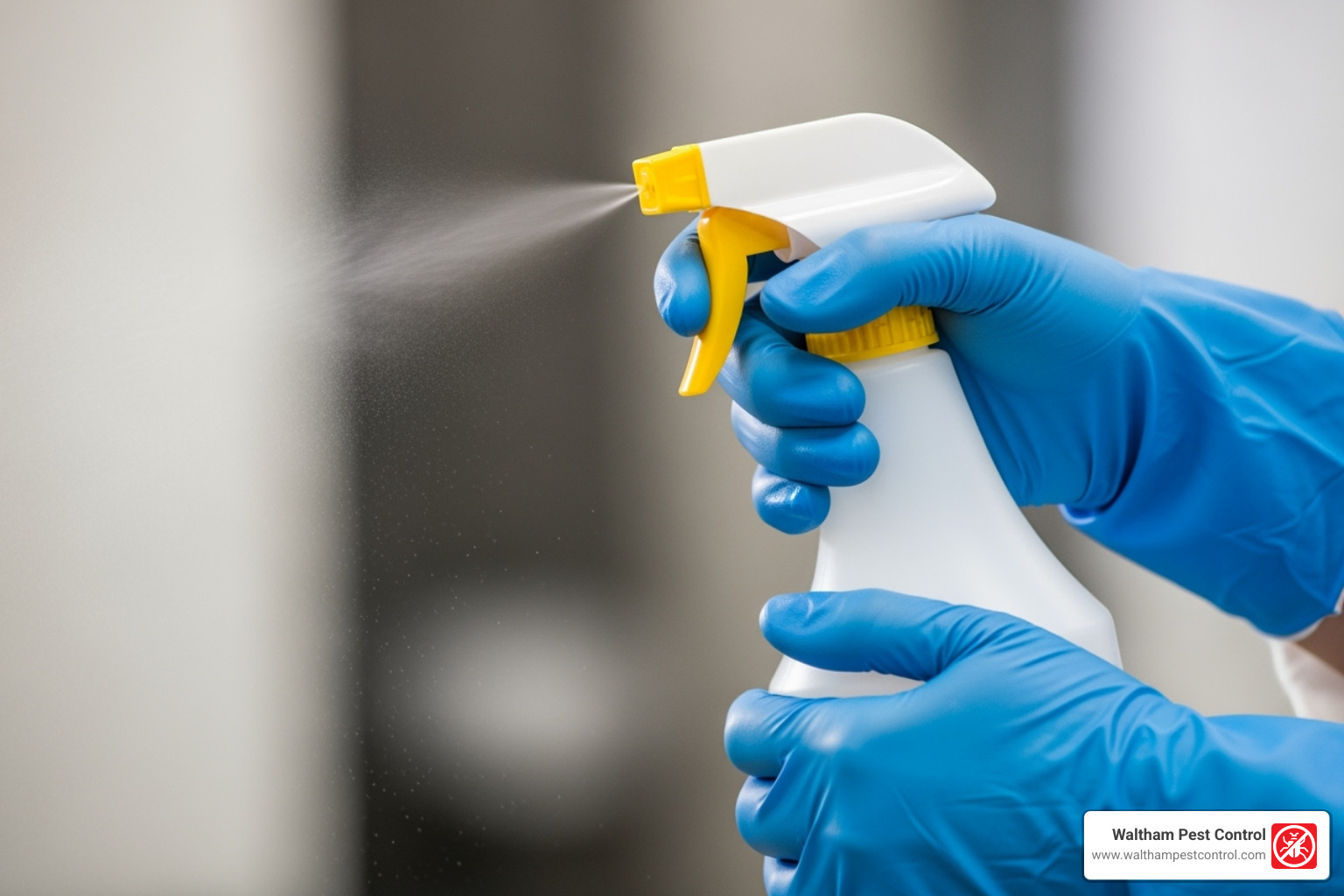
- Protective Gear: It’s wise to wear chemical-resistant gloves. Professionals may use additional gear like long sleeves and eye protection based on product instructions.
- Spill Cleanup: Clean up spills immediately with paper towels, then wash the area with soap and water.
- Disposal: Never reuse or refill empty containers. Follow local regulations for disposal; often, empty containers can be wrapped and placed in household garbage. Never pour unused product down any drain.
- Environmental Care: Many ant sprays are toxic to birds, fish, and bees. Avoid spraying during rain or near blooming flowers to prevent runoff and protect pollinators.
An Integrated Approach to Long-Term Ant Control
While ant spray indoor and outdoor products are effective, long-term success requires a broader strategy known as Integrated Pest Management (IPM). IPM combines sanitation, exclusion (blocking entry points), and the smart use of products to manage ant populations safely and effectively.
If you’re facing a persistent problem, understanding the full scope of an Ant Infestation In Home is the first step toward a lasting solution.
Combining Sprays with Professional Baits and Dusts
For maximum impact, sprays should be used with other tools like professional baits and dusts. Sprays provide immediate knockdown and create barriers, but they primarily target foraging ants. To eliminate the entire colony, you need to reach the nest.
- Ant Baits: These contain a slow-acting poison mixed with a food source. Ants carry the bait back to the nest, sharing it with the colony and the queen. This “transfer effect” is key to total colony elimination. Since ant food preferences can change, using a variety of baits (e.g., liquid and granular) can increase success. Learn more in our guide to Ant Bait Station Indoor.
- Ant Dusts: These fine powders are applied in hidden areas like wall voids and cracks where ants travel or nest. Ants pick up the dust and carry it back to the colony, providing long-lasting control in hard-to-reach spots.
A professional can apply these combined methods safely and effectively for the best long-term results.
Essential Home Maintenance and Sanitation Tips
Good sanitation is non-negotiable for ant control. By removing food, water, and shelter, you make your home far less attractive to ants.
- Cut Off Food: Clean under and behind appliances to remove grease and crumbs. Store all food in airtight containers. Clean up spills immediately, and empty and clean pet food bowls nightly. Keep garbage cans clean and tightly sealed.
- Eliminate Water: Fix leaky pipes and faucets. Dry out sinks and tubs after use. Empty the drip tray under your refrigerator.
- Block Entry Points (Exclusion): Seal cracks and gaps around windows, doors, and baseboards with caulk. Use copper mesh or sealant to close holes where pipes and wires enter the house.
- Maintain Your Yard: Trim trees and shrubs so they don’t touch your home. Rake mulch and leaves away from the foundation. Keep gutters clean and clear away yard debris.
These habits make your chemical treatments more effective and help prevent future infestations.
Frequently Asked Questions about Ant Sprays
It’s normal to have questions when dealing with ants. Here are answers to some common inquiries about ant spray indoor and outdoor products.
How long does ant spray last after application?
The longevity of an ant spray depends on the product and where it’s applied.
- Indoors: On nonporous surfaces and away from the elements, some residual sprays can last for months, with some products offering protection for up to 12 months.
- Outdoors: The lifespan is shorter due to sunlight and rain. Ingredients like permethrin may break down in UV light and last only a couple of weeks. Rain can wash away treatments.
Always check the product label for reapplication instructions.
Can I use an outdoor ant spray inside my house?
Generally, no. You should only use a product indoors if the label explicitly states it is for both indoor and outdoor use. Outdoor sprays may have stronger chemical concentrations or additives that are not safe for enclosed spaces. They can release fumes or leave residues that are unsafe for people and pets. Using a product contrary to its label is not only risky but also illegal.
Why do I sometimes see more ants after spraying?
This can be alarming, but it’s often a sign that the treatment is working, especially if you used a non-repellent spray or bait.
- Non-Repellent Sprays: These are designed to be undetectable. Ants walk through the product and carry it back to the nest. The initial increase in activity may be more ants becoming contaminated before the colony collapses.
- Ant Baits: Baits are designed to attract ants. A surge of ants around a bait station means they have found the food source and are taking it back to the colony, which is exactly the goal for total elimination.
This temporary increase in ant traffic is often a positive sign that the product is spreading throughout the colony.
When to Call a Professional for Your Ant Problem
While DIY ant spray indoor and outdoor products can handle minor issues, some situations require professional help. It’s time to call an expert if you experience:
- Persistent Infestations: Ants that keep returning despite your best efforts.
- Large Colonies: Seeing numerous, consistent trails of ants inside your home.
- Uncertainty of Ant Type: Different ants require different treatments. Proper identification is key.
- Structural Pests: If you suspect Carpenter Ants, which can damage the wood in your home, professional intervention is critical.
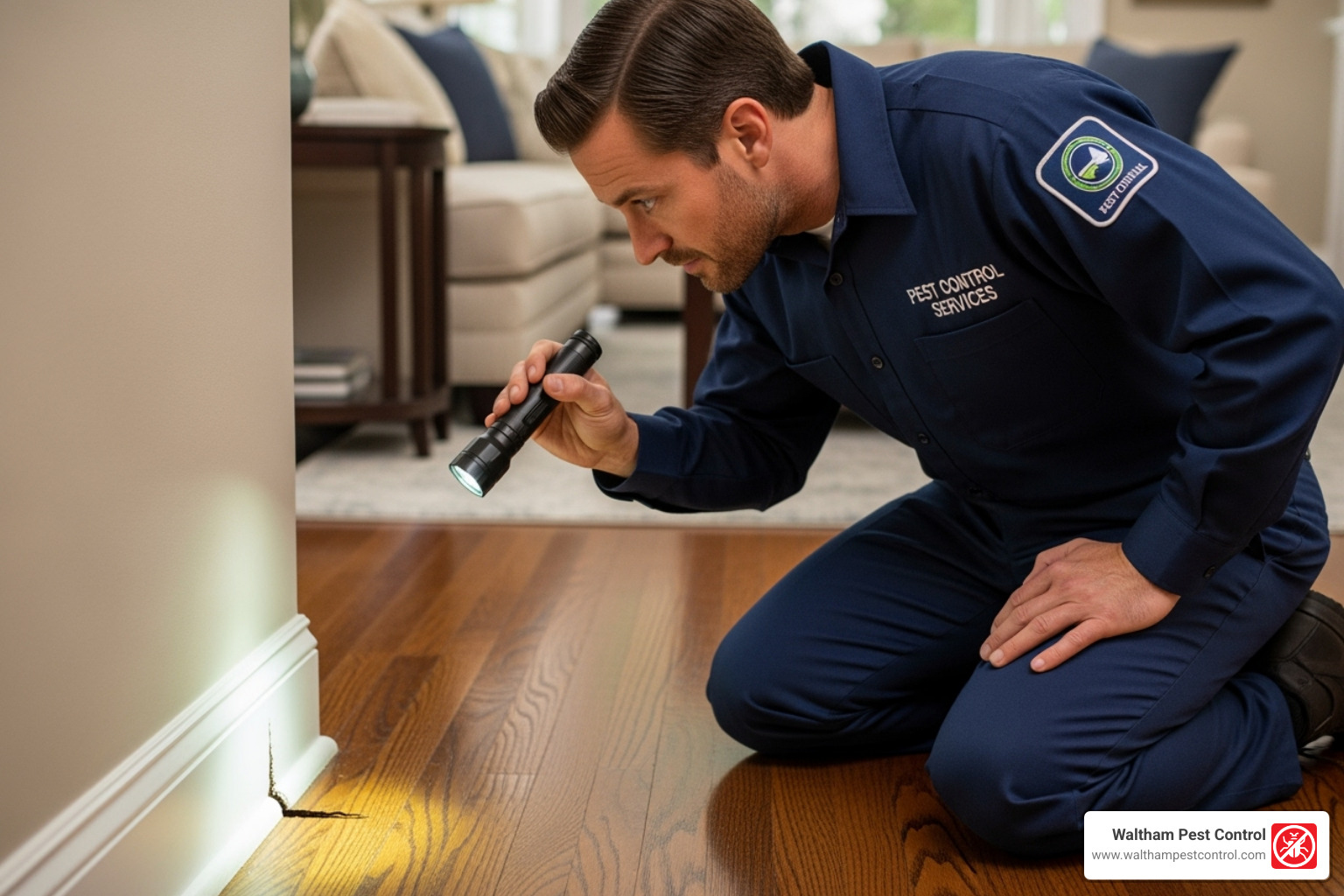
At Waltham Pest Control, our licensed and insured technicians have over 40 years of experience serving Eastern Massachusetts. We understand ant behavior, use professional-grade products, and implement Integrated Pest Management (IPM) strategies for complete and guaranteed colony elimination. Don’t let ants take over your home.
For comprehensive ant control in Eastern Massachusetts, consult with our licensed experts. Get professional help with house ants today or learn more about specific threats like Carpenter Ants.
