

Exterminating carpenter ants in house: 3 Easy Steps
Why Exterminating Carpenter Ants in House is Critical for Your Home
Exterminating carpenter ants in house requires immediate action because these wood-destroying insects can cause serious structural damage to your home. Unlike termites that eat wood, carpenter ants excavate it to create their nests, leaving behind smooth galleries that weaken your home’s framework.
Here’s what you need to know about carpenter ant extermination:
Quick Action Steps:
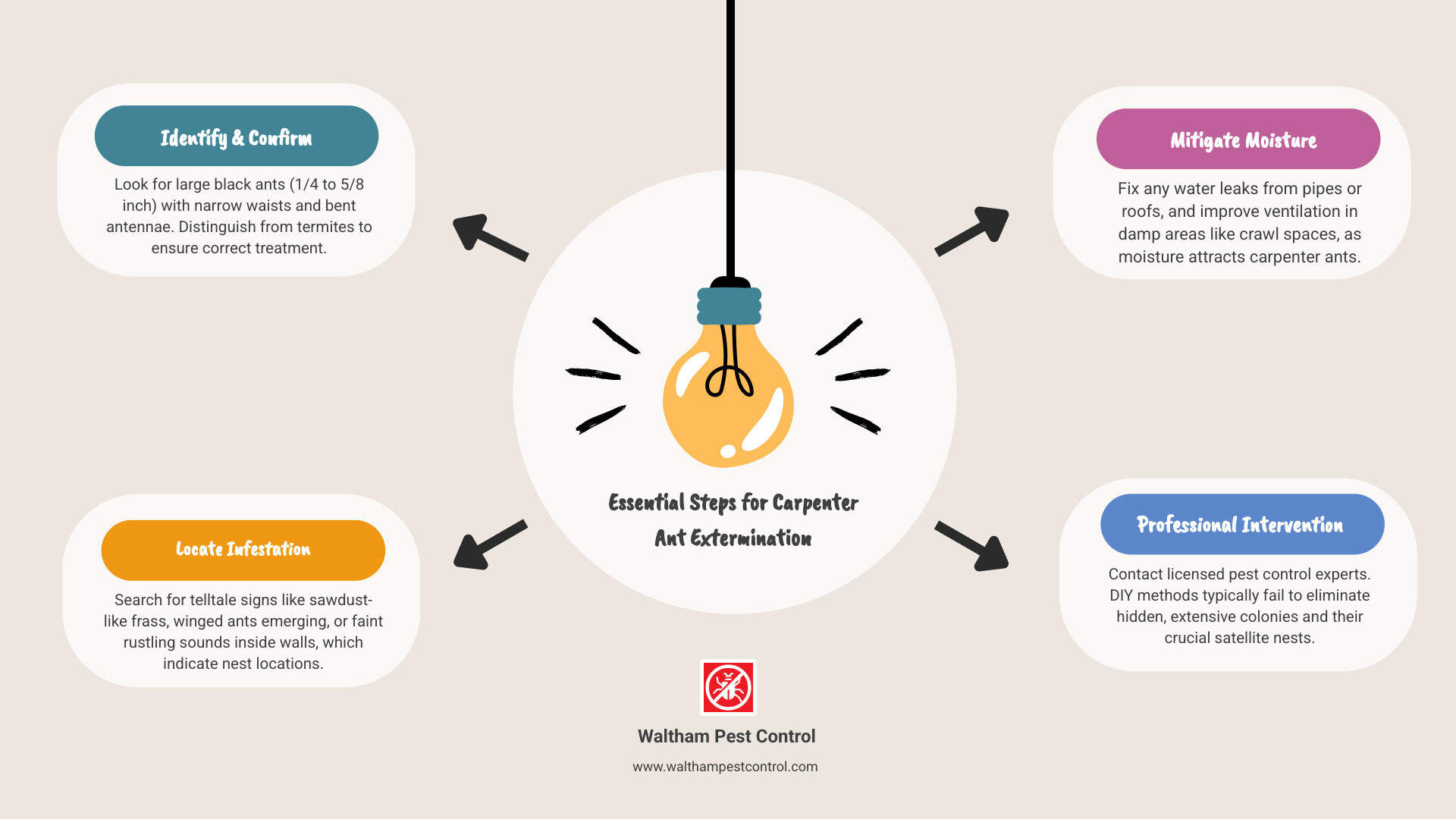
- Identify the pest – Look for large black ants (1/4 to 5/8 inch) with narrow waists
- Locate the nest – Follow ant trails and listen for rustling sounds in walls
- Address moisture issues – Fix leaks and improve ventilation in damp areas
- Call professionals – DIY methods often fail because they don’t eliminate hidden colonies
Key Warning Signs:
- Piles of sawdust-like material (frass) near wooden structures
- Winged ants emerging from walls or ceilings
- Faint rustling sounds inside walls
- Large black ants in kitchen or bathroom areas
The challenge with carpenter ants is that only about 10% of the colony forages at any given time, meaning the ants you see represent a much larger hidden problem. A mature colony can contain 10,000 to 50,000 individuals, with satellite nests scattered throughout your home’s structure.
As Waltham Pest Control, President & CEO of Waltham Pest Control with over 40 years of experience, I’ve seen how quickly carpenter ant damage can escalate when homeowners delay exterminating carpenter ants in house. Professional intervention is crucial because these pests create complex networks of tunnels that require specialized tools and treatments to eliminate completely.
Basic exterminating carpenter ants in house terms:
Identifying Carpenter Ants and Spotting an Infestation
To effectively begin exterminating carpenter ants in house, you must first confirm they are the culprits. Misidentification leads to ineffective treatments and continued damage.
How to Identify a Carpenter Ant
Carpenter ants are among the largest ants in North America, with workers ranging from 1/4 to 5/8 inch long and swarmers reaching nearly an inch. They are often black but can also be reddish-black, red, or brown.
Here’s what to look for:
- Size: Generally larger than most common household ants, from 3.4 to 13 mm.
- Color: Most commonly black, but some species can be red, brown, or a combination.
- Body Shape: They have a distinctly narrow, pinched waist (a single node between the thorax and abdomen). Their thorax is evenly rounded when viewed from the side.
- Antennae: Carpenter ants have bent or \”elbowed\” antennae.
- Wings: Winged carpenter ants (\”swarmers\”) have two pairs of wings. The front pair is noticeably longer than the back pair.
The Hidden Dangers: What Attracts Carpenter Ants and the Damage They Cause
Understanding what draws carpenter ants to your home, and the extent of the damage they can inflict, is crucial for effective prevention and extermination. These aren’t just annoying pests; they’re a genuine threat to your home’s integrity, acting like tiny, uninvited demolition crews.
What Attracts Carpenter Ants to Your Home?
Carpenter ants are particular about their nesting sites, always on the lookout for the perfect spot to build their thriving colonies. Their preferences often align perfectly with common household conditions, making your home an attractive target:
First and foremost, moisture is the biggest draw. Carpenter ants absolutely love damp environments. Why? Because they need humidity for their eggs to develop, and moisture softens wood, making it much easier for them to excavate. This is why you’ll often find them nesting in damp or decaying wood. While they can eventually tunnel into sound wood, they much prefer wood that’s already compromised by water.
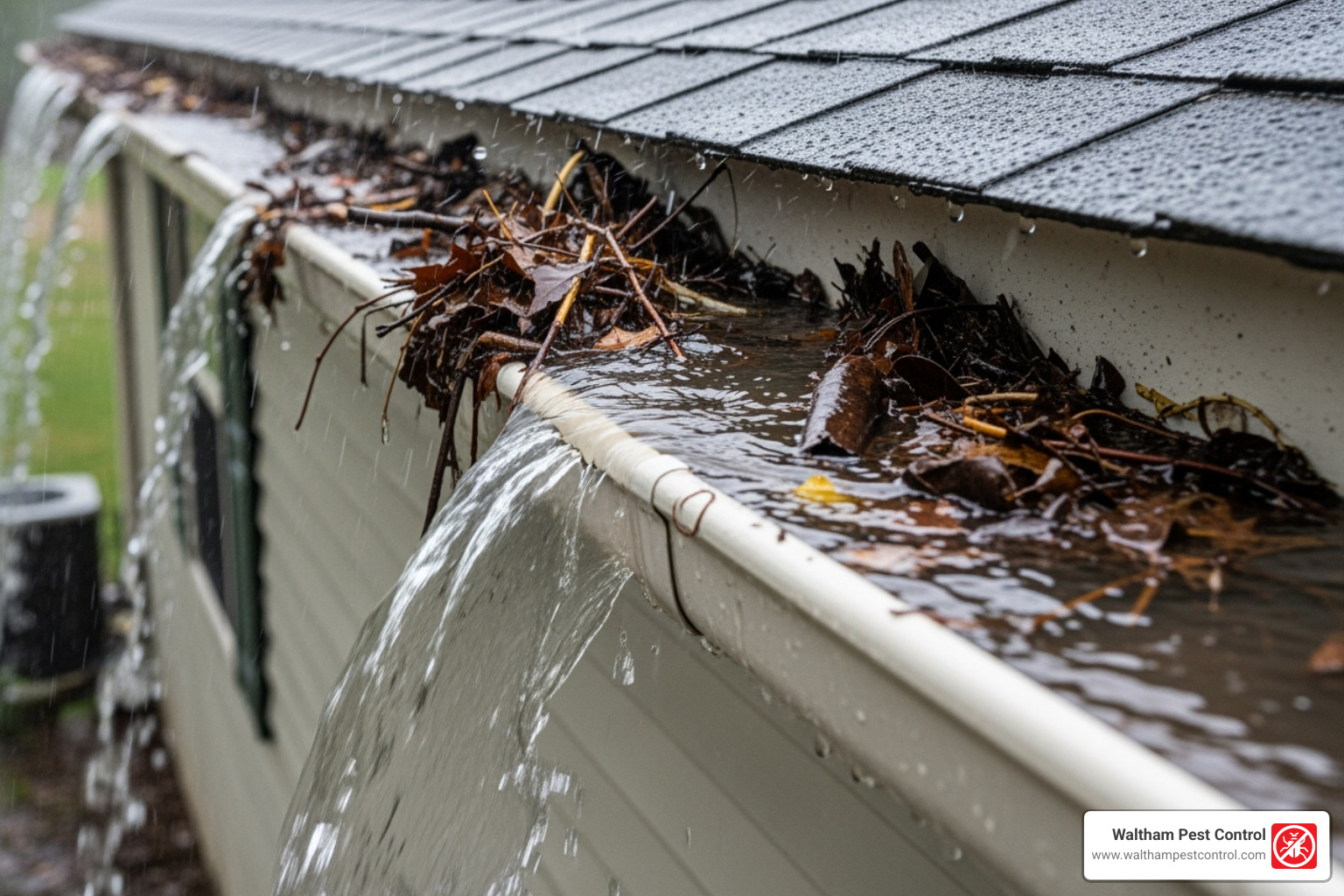
This love for moisture means problems like water leaks from pipes or roofs, or even clogged gutters that overflow and keep wood constantly wet, create an ideal welcome mat for these ants. Similarly, poor ventilation in basements, attics, or crawl spaces can lead to accumulated moisture and damp wood, inviting them right in.
Beyond moisture, carpenter ants also appreciate easy access and a good meal. Tree branches or shrubs touching the house act as natural “highways,” providing direct routes from outdoor nests into your home. And if you have firewood stacked against the foundation, beware! Firewood can harbor existing colonies or offer perfect new nesting sites, allowing ants to easily migrate indoors.
While they don’t eat wood, carpenter ants are omnivores and will forage for food. They’re attracted to sweets (like honeydew from aphids) and other insects. Unsealed food containers, pet food, or even crumbs can draw them into your living spaces, making them more likely to find a damp spot to call home.
The Structural Damage They Cause
Here’s the crucial difference: unlike termites that actually eat wood for nutrition, carpenter ants simply excavate it. They’re like tiny carpenters, but instead of building, they’re hollowing out your home! They chew through wood, creating intricate networks of tunnels and galleries to establish their nests. It’s truly like they’re building an ant-sized apartment complex right within your walls.
As they work, they use their powerful mandibles to chew away, pushing out the debris — a coarse, sawdust-like material known as frass — through small “kickout” holes. These galleries are typically clean and smooth, almost “sandpapered” in appearance. Over time, as more and more wood is hollowed out, the structural integrity of vital components like beams, floor joists, wall studs, and subflooring can be severely compromised. This can lead to serious issues such as sagging floors, bulging walls, or even roof damage.
A significant challenge when it comes to exterminating carpenter ants in house is understanding their colony structure. Carpenter ants usually have a main “parent” colony outdoors, often hidden in a rotting tree stump or log. But as the colony grows (which can take several years, with queens living up to 25 years and colonies reaching tens of thousands of individuals!), they establish “satellite” colonies indoors. These satellite nests contain workers, older larvae, and pupae, but typically not the queen or eggs. They are often found in drier wood than the parent nest. To completely get rid of them, you need to find and eliminate both the satellite and parent colonies.
The potential for long-term damage is immense because carpenter ant infestations often go unnoticed in their early stages. The destruction only becomes obvious when it’s already significant. If left untreated, a long-term infestation can lead to extensive and incredibly costly structural repairs. We’ve seen homes in communities like Lexington, Concord, and Andover that required substantial renovation due to unchecked carpenter ant activity.
It’s critical to act quickly if you suspect an infestation. While they don’t spread disease, the structural damage they cause can be catastrophic. If you’re concerned about Carpenter Ants in Bed or anywhere else in your home, it’s a clear sign that it’s time to call in the experts.
The Professional Approach to Exterminating Carpenter Ants in House
When you’re facing a carpenter ant infestation, it’s natural to feel overwhelmed. These aren’t just your average picnic ants; their complex nesting habits and the potential for serious structural damage mean they won’t just “go away on their own.” Tackling them effectively requires a strategic and comprehensive approach, which is precisely what professional pest control offers.
Step 1: Thorough Inspection and Assessment
We believe the most crucial step in exterminating carpenter ants in house is a meticulous inspection. Think of our licensed technicians as detectives, carefully searching for every clue these hidden pests leave behind. It’s not just about finding ants; it’s about understanding their entire operation.
Our expert team will start on a detailed search, aiming to:
- Locate the main nest and satellite nests. This is the ultimate goal! While the main nest is often found outdoors in a rotting tree stump or log, satellite nests can be cleverly hidden deep within your home’s walls, ceilings, or even insulation. We’ll follow any ant trails we find, listen intently for telltale rustling sounds, and look for those tell-tale piles of frass to pinpoint their exact locations.
- Identify ant trails and entry points. Carpenter ants are creatures of habit, creating invisible scent trails for their colony members to follow. By observing these trails, especially in the quiet of the night when they are most active, we can often trace them directly to their entry points into your home and right back to their hidden nests.
- Assess moisture problems. Carpenter ants are drawn to moisture like a magnet! We’ll thoroughly inspect any areas prone to dampness, such as basements, attics, crawl spaces, and spots around plumbing or leaky roofs. Addressing these moisture issues isn’t just about getting rid of ants; it’s vital for long-term prevention.
- Use specialized tools. Sometimes, finding those deeply hidden nests requires more than just a keen eye. We often use advanced tools like moisture meters to detect hidden dampness, borescopes (tiny cameras that can snake into wall voids), or even infrared cameras to detect hidden activity without causing unnecessary damage to your home.
Only about 10% of the ants are out foraging at any given time. This means that seeing just a few ants could actually indicate a massive, hidden colony thriving out of sight. That’s why “the first step is to locate the nest,” and our experienced team is perfectly equipped to do just that.
Step 2: Customized Treatment for Exterminating Carpenter Ants in House
Once we’ve thoroughly inspected your home, identified the extent of the infestation, and pinpointed those elusive nests, we’ll implement a custom treatment plan designed for maximum effectiveness. We don’t just spray randomly; we apply precise, targeted solutions.
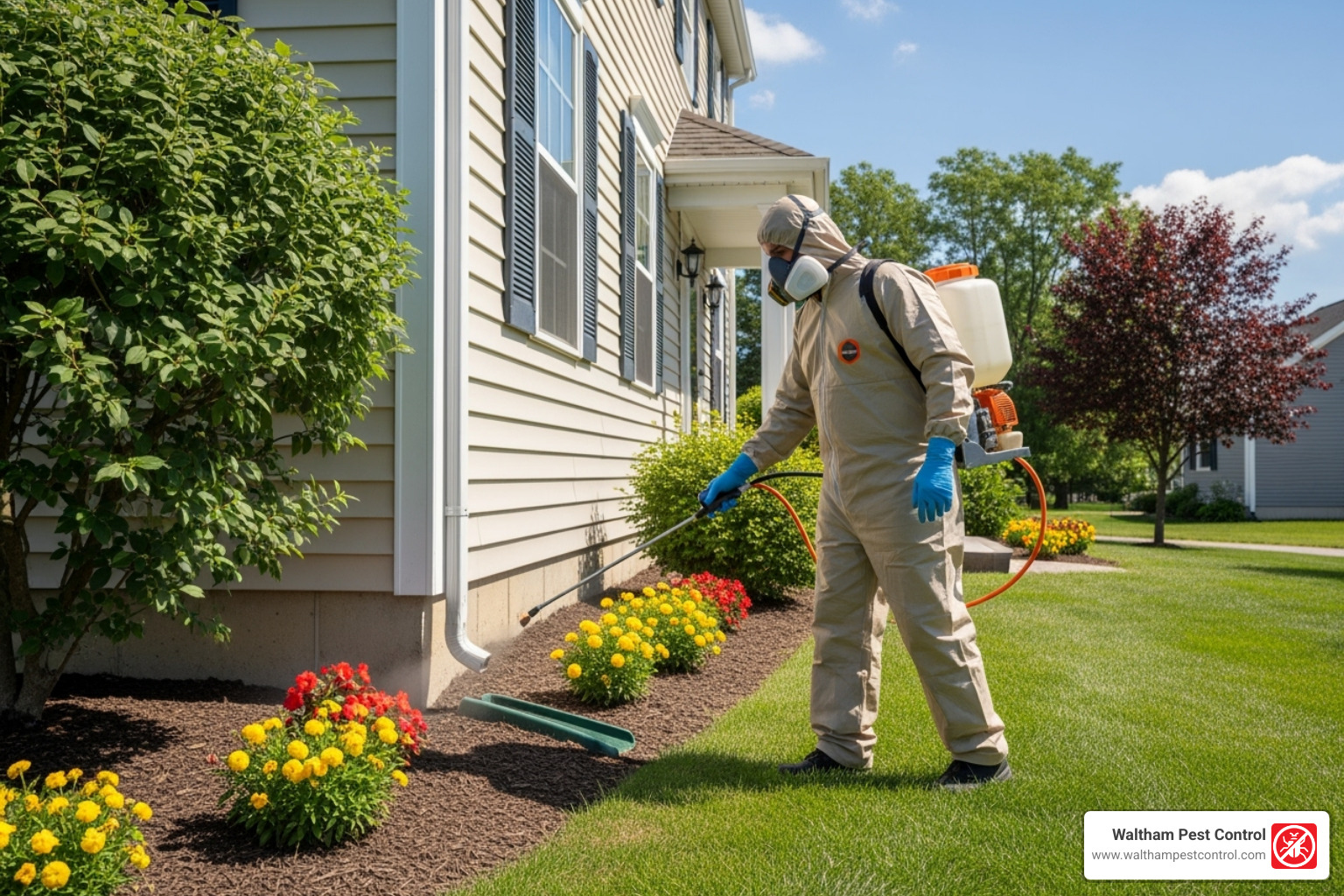
Our professional treatment methods typically include:
- Targeted insecticide application. We use high-grade insecticides, available in dusts, foams, and liquids, applied directly into the identified nests, galleries, and entry points. This ensures the treatment reaches the very heart of the problem. Dust materials, for instance, are incredibly effective for reaching those hidden colonies deep within wall voids.
- Non-repellent insecticides for a transfer effect. Many over-the-counter products act as repellents, which can actually make your problem worse! They often scatter the ants, forcing them to establish new satellite nests in different, sometimes even harder-to-reach, areas of your home. We, however, use specialized non-repellent insecticides that ants simply can’t detect. They walk right through it, pick it up on their bodies, and unknowingly carry it back to the colony. Then, they transfer the active ingredient to other ants, including the queen, through contact and trophallaxis (the sharing of food). This “transfer effect” is incredibly powerful for eliminating the entire colony from within.
- Strategic baiting systems with slow-acting baits. While carpenter ants can be a bit “finicky” about baits, when they do accept them, baits are highly effective. We use specialized, slow-acting baits that allow foraging ants plenty of time to carry the toxicant back to the nest and share it with the queen and other colony members before any effects are seen. This ensures that the entire colony is eliminated.
- Direct nest removal and treatment. Where it’s possible and practical, we may physically remove accessible nests and then treat the area thoroughly to ensure no stragglers remain.
Our comprehensive approach ensures that we’re not just killing the ants you see but are truly exterminating carpenter ants in house by eliminating the source of the problem, whether it’s a main colony outdoors or satellite nests indoors. For truly effective House Ants Exterminator services, this level of precision is absolutely essential.
Step 3: Why DIY Methods Often Fall Short
We completely understand the urge to tackle pest problems yourself. It feels good to be proactive! However, when it comes to carpenter ants, DIY solutions often fall frustratingly short, leading to ongoing headaches and continued damage to your home.
Here’s a closer look at why those well-intentioned DIY efforts often miss the mark:
- Difficulty locating all hidden nests. Carpenter ants are masters of concealment. Their nests can be tucked deep within walls, under floors, or even high up in your attic. Without specialized tools and the experience to interpret subtle signs, it’s incredibly difficult for a homeowner to find every single parent and satellite colony. If you miss even one, the infestation will stubbornly persist.
- Store-bought products often act as repellents. As we mentioned, many readily available sprays and dusts are designed to repel pests. While they might kill the ants you see, they often cause the remaining ants to scatter and establish new nests in different, sometimes harder-to-reach, areas of your home. What started as a contained problem can quickly become a widespread nightmare.
- Risk of incomplete extermination. For an ant colony, the queen is everything. If she and enough workers survive your DIY efforts, the colony will simply rebuild and continue to grow. A mature queen can live for up to 25 years and lay hundreds of eggs a day, so simply killing foraging ants won’t solve the core problem.
- Misidentification of the pest. As we discussed earlier, carpenter ants can easily be confused with termites or other ant species. Using the wrong treatment for the wrong pest is not only ineffective but can also be a significant waste of your time and money.
- Safety concerns. Applying insecticides without proper knowledge of application techniques, safety precautions, or product limitations can pose hazards to your family, your beloved pets, and the environment. Professionals are trained to use these products safely and effectively.
For best results, professional pest control is truly recommended. We have the experience, the specialized tools, and access to effective, professional-grade products needed to ensure complete eradication. Waltham Pest Control has been proudly serving communities like Burlington, Acton, and Framingham for over 40 years, and our commitment to quality ensures we get the job done right, the first time. For a deeper dive into why professional help is often superior, we invite you to check out our insights on DIY vs Professional Pest Control.
Long-Term Prevention: Keeping Your Home Ant-Free
So, we’ve talked all about finding and exterminating carpenter ants in house. But what happens after the ants are gone? That’s where prevention comes in! Think of it as creating a “No Vacancy” sign for future ant visitors. Our goal is to make your home as unappealing as possible to these wood-loving pests, protecting your peace of mind and your property for the long haul.
Moisture Control and Wood Repair
Since moisture is like a five-star resort for carpenter ants, controlling it is truly your first and best defense. They just love damp, soft wood!
First, be vigilant about fixing all water leaks promptly. That means checking your plumbing, looking for drips from roofs, and inspecting the exterior of your home. Even tiny drips can create enough dampness to roll out the welcome mat for ants. Pay special attention around sinks, dishwashers, and washing machines.
Next, consider improving ventilation in damp areas. Basements, crawl spaces, and attics often get stuffy and hold onto moisture. Adding a dehumidifier or boosting your current ventilation system can make a huge difference in keeping these spaces nice and dry.
If carpenter ants have already made themselves at home in wood softened by water, it’s really important to replace any water-damaged or rotting wood. This isn’t just about removing their current playground; it’s about making sure your home’s structure is strong and healthy again.
And don’t forget your gutters! Keeping gutters and downspouts clear and functional is a simple but powerful step. Clogged gutters can overflow, soaking your roofline and foundation – prime spots for ants to set up shop. Make sure they direct water far away from your home’s base.
Sealing Entry Points and Managing Your Landscape
Once you’ve tackled moisture, it’s time to think about physical barriers and how your yard invites (or deters) pests. We want to make it tough for ants to get inside.
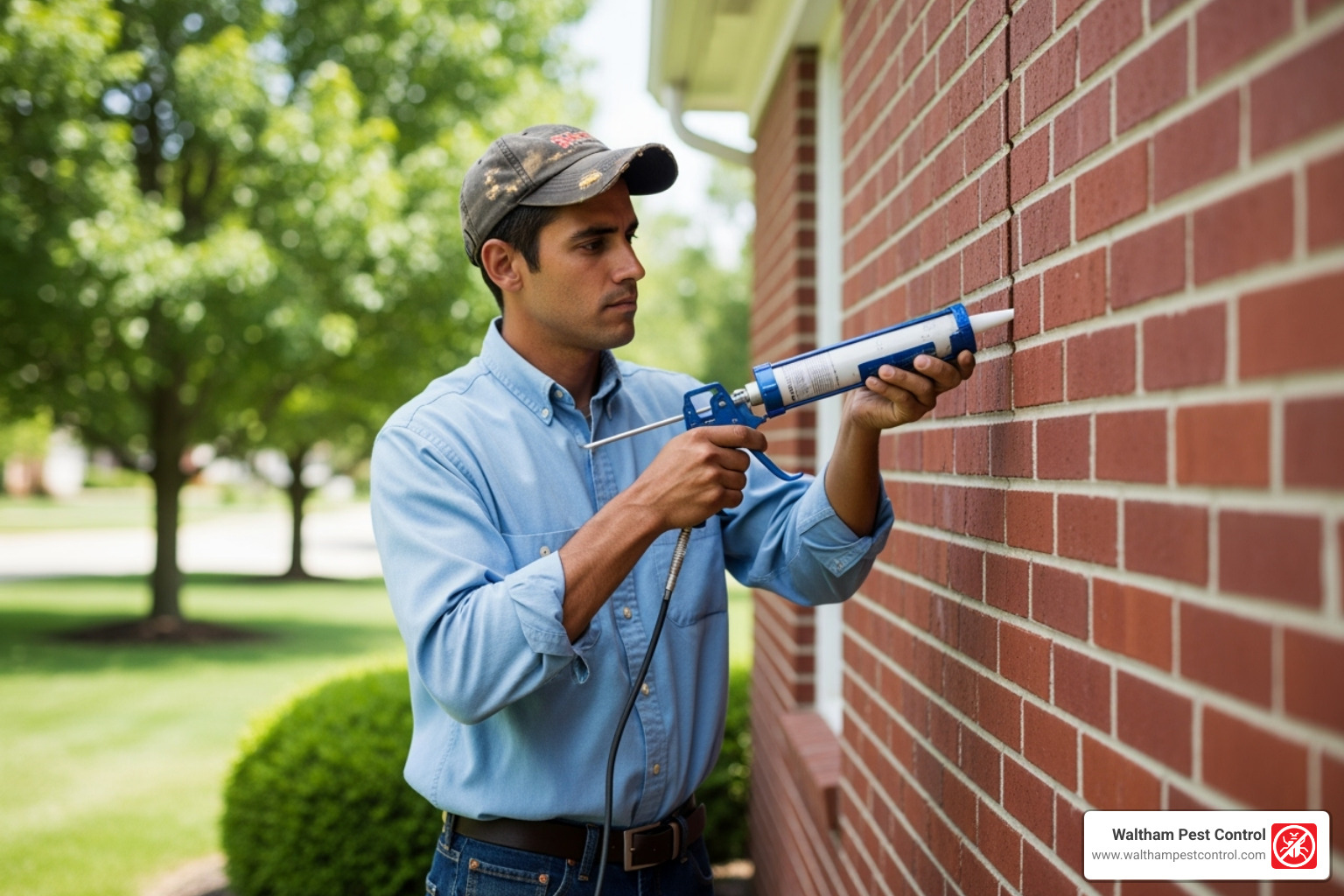
Start by sealing cracks in the foundation of your home. Give it a good once-over and use a quality caulk or sealant on any gaps or openings you find. These little cracks are like open doors for ants.
Then, move to your windows and doors. Caulking gaps around windows, doors, and utility lines (where pipes or wires come into your house) is super important. Ants can squeeze through surprisingly tiny spaces!
Your landscaping also plays a big role. Make sure you’re trimming tree branches and shrubs so they don’t touch the house. These branches are like personal bridges for carpenter ants, giving them an easy bypass right onto your roof or siding. Keep everything neatly trimmed away.
Finally, think about your firewood. Firewood piles are often hiding places for ant colonies. Always store firewood off the ground and away from the home – ideally at least 20 feet away on a raised platform. This keeps potential nests far from your foundation.
Sanitation and Food Storage
While carpenter ants aren’t eating your wood, they still need food! That’s why good kitchen and pantry habits are a simple, yet effective, part of keeping them away.
Make sure you’re storing food in airtight containers. This goes for all your pantry items, especially tempting sweets and starches. If they can’t smell it, they’re less likely to go looking for it.
It’s also crucial to be quick about cleaning up crumbs and spills immediately. Don’t leave any tempting morsels on your countertops, floors, or even in pet bowls.
Speaking of pets, remember to secure pet food in sealed containers and clean pet food bowls regularly. Ants love pet food as much as we love a good meal!
Overall, just maintaining a clean kitchen environment is a huge deterrent. Regularly wiping down surfaces, sweeping, and mopping helps eliminate those invisible trails and tempting smells that draw ants in.
By consistently applying these straightforward prevention tips, you’re doing so much more than just deterring carpenter ants. You’re actually protecting your home from a whole host of other pests too! It’s all about creating a living space that’s simply not on their “favorite places to visit” list. For even more helpful ideas on keeping your home pest-free, be sure to explore our guide on the Best Thing for Ants in the House.
Frequently Asked Questions about Carpenter Ant Control
It’s completely natural to have a lot of questions when you’re facing a pest problem like carpenter ants. Many homeowners reach out to us with similar concerns, wondering about the process, the timeline, and what to expect. We’re here to answer some of the most common questions we hear about exterminating carpenter ants in house.
How much does professional carpenter ant extermination cost?
We understand that cost is a big consideration for any home repair or service. When it comes to professional carpenter ant extermination, the price can vary quite a bit. Think of it like this: every home and every infestation is unique! Factors like how severe the infestation is, the overall size of your property, the number of nests (both the main one outside and any satellite nests inside), and the complexity of the treatment needed all play a role. A typical one-time treatment might fall in a broad range, from around $300 to over $1500 for those really extensive infestations with multiple hidden nests. Just a friendly note: this range is an average based on general industry data, and it’s definitely not a direct quote for Waltham Pest Control. We always prefer to do a thorough inspection first so we can give you a personalized, accurate estimate for your specific situation.
How long does it take to get rid of a carpenter ant colony?
This is another excellent question, and the timeline really depends on the strategy we employ and how stubborn the ants are!
If we’re using slow-acting baiting methods, which are designed for the ants to carry the treatment back to their entire colony, including the queen, it can take anywhere from several weeks to a few months to achieve complete eradication. This method requires a bit more patience, but it’s incredibly effective because it targets the whole system from within. The goal is to eliminate the entire colony, not just the ants you see.
For direct professional treatments, where our technicians can pinpoint and treat the nests directly with targeted insecticides, you might see significant results much faster, sometimes within just a few days. However, even with direct treatments, follow-up visits are absolutely crucial. Carpenter ants are notoriously tricky, and we want to ensure every last satellite nest is destroyed and that there’s no chance of them making a comeback. Our ultimate goal is always complete and lasting eradication, giving you peace of mind.
Do carpenter ants go away on their own?
We wish we could say yes, but unfortunately, the answer is a firm no. Once a carpenter ant colony has established itself in your home, they are there to stay and grow. They won’t just pack up their bags and leave. If left untreated, the colony will continue to expand, excavating more and more wood within your home’s structure. This means the damage to your valuable property will only get worse over time, potentially becoming incredibly costly to repair down the road. Ignoring a carpenter ant problem won’t make it disappear; it will only lead to a larger, more entrenched, and much more difficult infestation to manage in the future. That’s why taking prompt action is always the best course for your home and your wallet!
Protect Your Home with Professional Ant Control
Finding carpenter ants in your home can feel like a real punch to the gut. It’s a serious issue, no doubt, because these little excavators pose a genuine threat to your home’s structural integrity. You’ve already taken a great first step by learning about their habits and how they operate. But as we’ve seen, getting rid of them for good isn’t as simple as just squashing the ants you see. Effective exterminating carpenter ants in house means tackling the entire colony, and that includes those sneaky, hidden satellite nests that are so good at staying out of sight.
For true peace of mind – and to ensure the problem is handled correctly from start to finish – trusting a licensed and experienced team is truly your best course of action. Think of it as bringing in the cavalry when the battle gets tough!
Here at Waltham Pest Control, we’ve spent over 40 years becoming experts in pest management. We have the know-how and the tools to not only eliminate carpenter ant infestations but also to help you set up those crucial preventative measures to protect your property for years to come. We proudly serve homeowners across Eastern Massachusetts, including cities like Boston, Cambridge, Newton, and many towns throughout Middlesex, Essex, and Norfolk Counties. Our commitment to quality and effective solutions is at the heart of everything we do.
Don’t let carpenter ants chew away at your peace of mind (or your home!). When you’re ready to take back your space, reach out to us. Contact Waltham Pest Control today for our expert Professional Pest Control Services. We’re here to help!
