

Raccoons Tearing Up Yard: 7 Proven Ways to Stop Damage 2025
Why Raccoons Target Your Lawn (And How to Stop Them)
Raccoons tearing up yard damage is one of the most frustrating wildlife problems homeowners face, especially during spring and fall when these masked bandits can destroy an entire lawn overnight.
Quick Solutions for Raccoon Yard Damage:
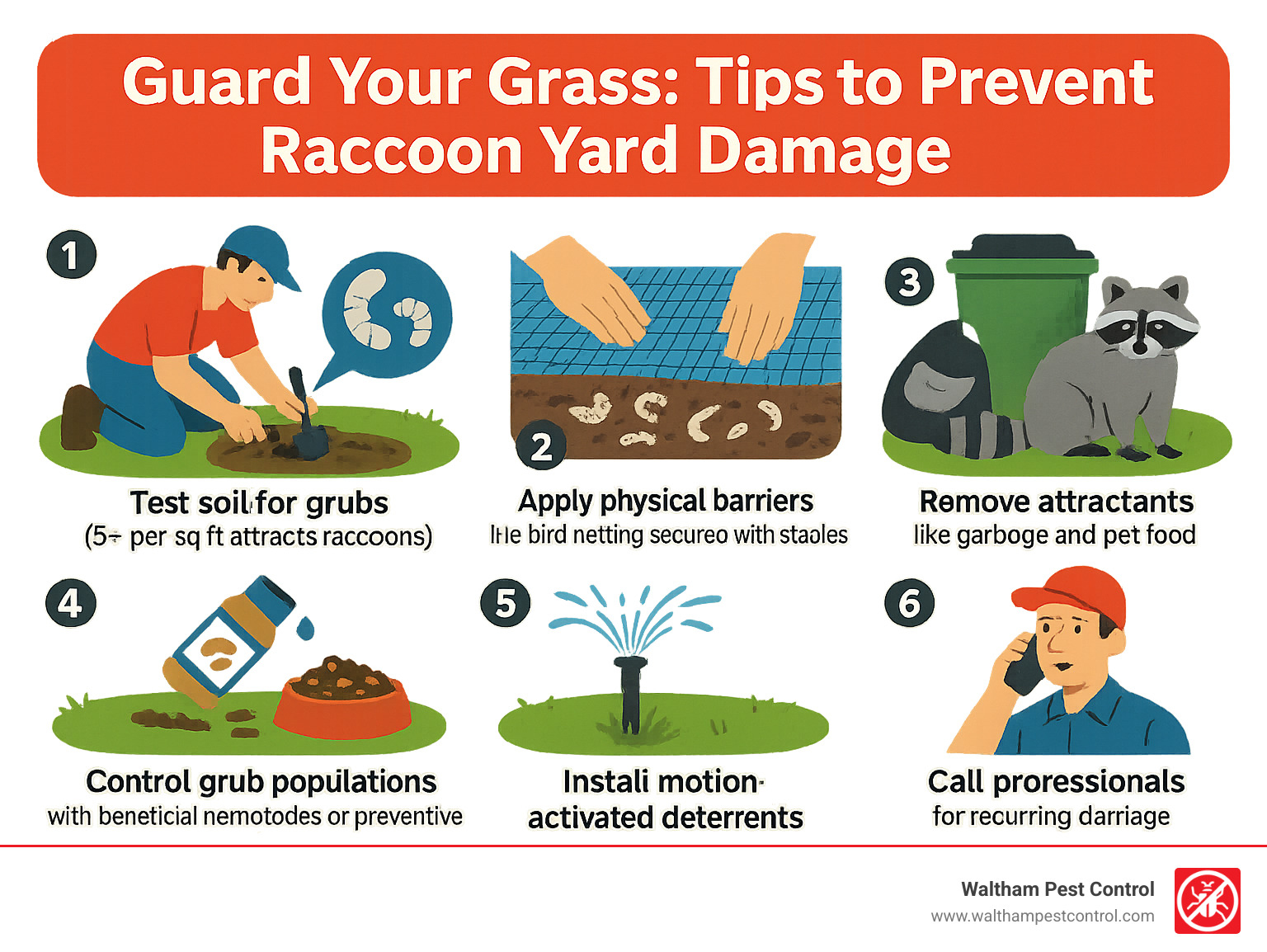
– Root Cause: Raccoons dig for grubs and earthworms in your soil
– Immediate Action: Replace flipped sod, water deeply, apply temporary netting
– Prevention: Control grub populations with nematodes or preventive treatments
– Physical Barriers: Install bird netting or chicken wire secured with landscape staples
– Long-term: Remove food sources, seal garbage, consider professional exclusion
Just 5 grubs per square foot is enough to attract raccoons to your lawn. While healthy turf can handle up to 20 grubs per square foot without showing damage, raccoons will tear up your grass for far fewer pests.
The damage happens fast, typically between 1-4 AM when these nocturnal foragers roll back sod like carpet to access protein-rich grubs underneath.
Spring and fall are peak seasons for yard damage because grubs are most active, raccoons need to build fat reserves, and soil moisture makes digging easier.
I’m Waltham Pest Control, President & CEO of Waltham Pest Control, and over my 40+ years in pest management across Eastern Massachusetts, I’ve helped countless homeowners stop raccoons tearing up yard damage through integrated pest management solutions.
Simple guide to raccoons tearing up yard terms:
– are raccoons dangerous
– raccoon under deck
– raccoon in chimney
Raccoons Tearing Up Yard: Understanding the Problem
When you wake up to find your lawn looking like someone unrolled a carpet overnight, you’re likely dealing with raccoons tearing up yard damage. These masked bandits aren’t vandalizing your property for fun—they’re following their sensitive noses to an underground buffet.
Raccoons can detect the scent of white grubs and earthworms buried several inches beneath your turf. Think of it like having a metal detector calibrated for protein-packed soil insects.
Why Do They Dig?
The driving force is simple: high-protein grubs are like energy bars for raccoons. These underground larvae, especially from Japanese beetles and June beetles, are loaded with fats and proteins raccoons desperately need.
Moisture-rich soil makes digging easier and signals where the juiciest earthworms hang out. This isn’t random snacking—it’s serious fat-building behavior. Raccoons must pack on weight during spring and summer to survive winter.
Key Signs It’s Raccoons, Not Skunks or Moles
The telltale sign is flipped turf—large sections of sod rolled back like carpet. You’ll find paw prints that look like tiny human handprints with five distinct fingers. These four-inch tracks are usually visible in soft soil around damaged areas.
Look for scat latrines nearby—raccoons often establish communal bathroom areas close to feeding spots.
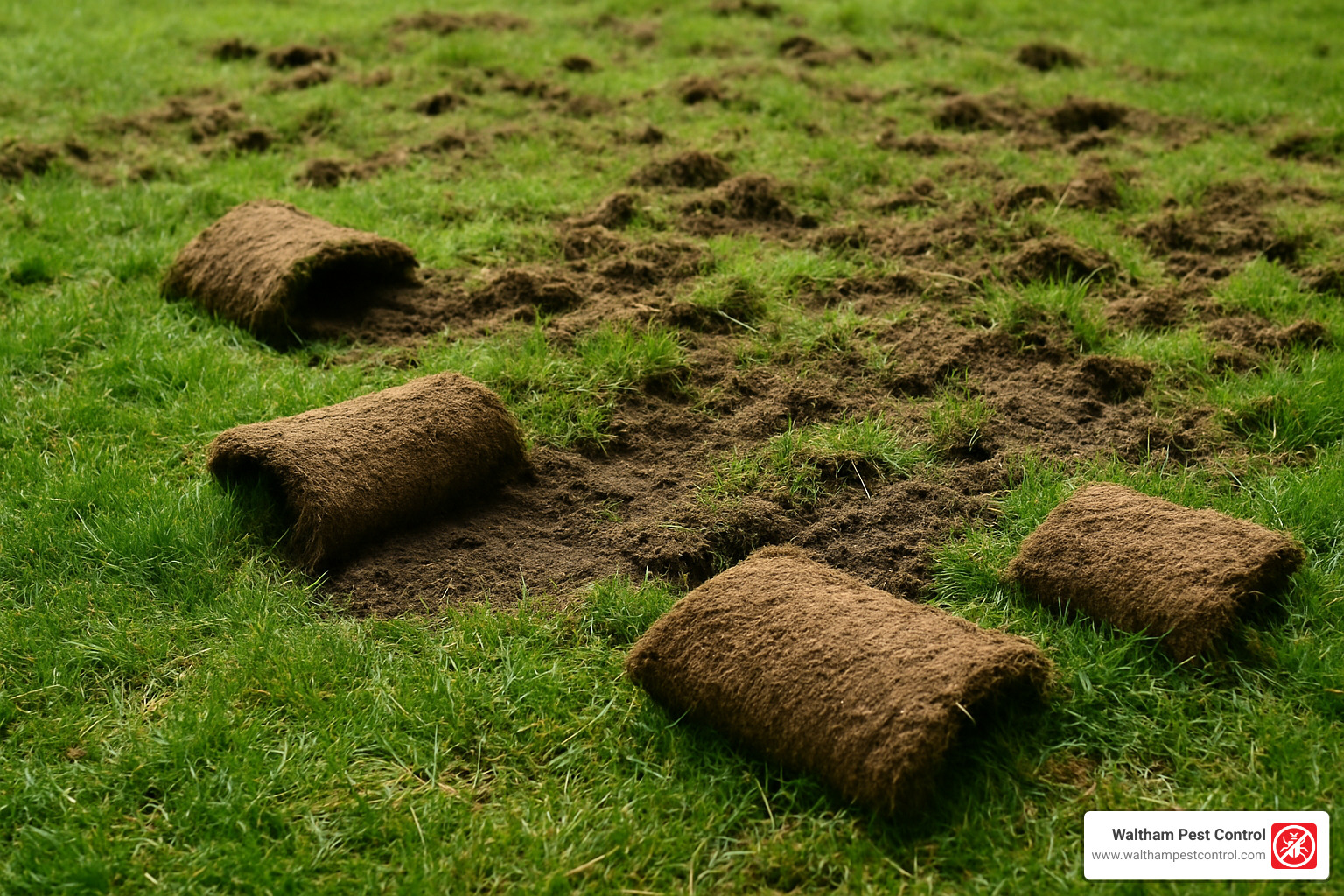
This “rolled-back” sod pattern is your smoking gun. Skunks create small, cone-shaped holes. Moles leave raised tunnels and dirt mounds. Only raccoons have the dexterity to peel back large lawn sections.
When & Where You’ll See Damage
Raccoons do their worst work during peak nighttime hours, typically between 1–4 AM.
Spring thaw marks peak damage season. As soil becomes workable after winter, hungry raccoons emerge ready to make up for months of limited food access.
Late summer through fall brings the second wave as grubs reach their largest, most nutritious size, and raccoons prepare for winter.
Damp, shady spots get hit first and hardest. These areas retain moisture longer, supporting larger earthworm populations and making soil easier to dig.
Detect & Diagnose: Are Grubs Lurking Beneath Your Lawn?
Your lawn might look perfectly healthy while secretly harboring enough grubs to turn it into a raccoon buffet. Just 5 grubs per square foot will attract raccoons, even though your turf can handle up to 20 grubs per square foot without showing visible damage.
This creates a frustrating situation where you wake up to raccoons tearing up yard damage on what appeared to be a perfectly healthy lawn.
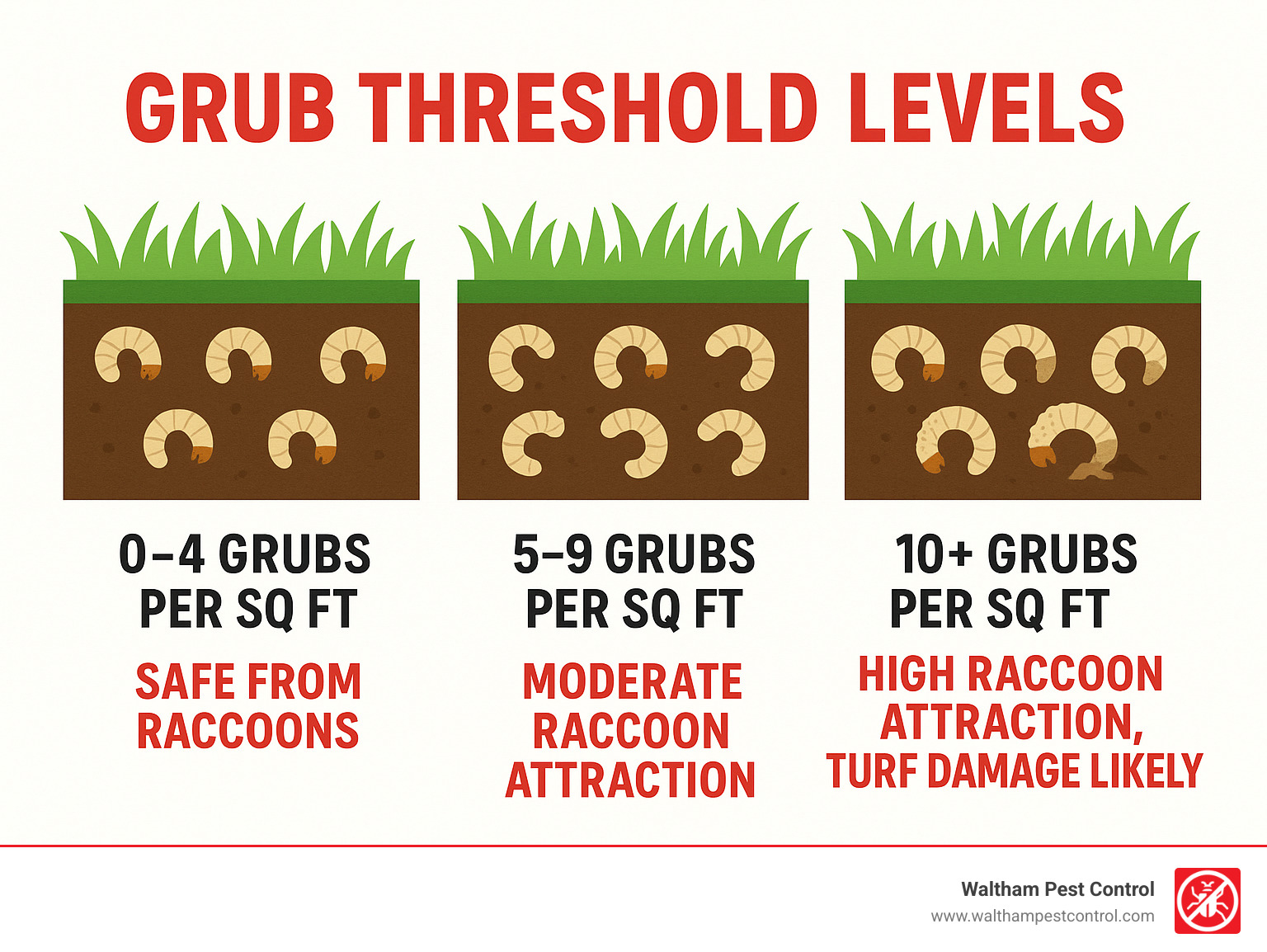
Scientific research on white grubs shows these C-shaped larvae spend most of their lives feeding on grass roots, making them easy targets for raccoons’ sensitive paws.
Simple DIY Grub Check
Gather a sharp spade, measuring tape, and small container for counting. Choose test spots in both damaged and untouched areas.
Cut out a 1-foot by 1-foot section of turf, digging down about 6-8 inches deep. Look for white, C-shaped grubs with brown heads that are typically half an inch to an inch long.
Count every grub you find and check soil moisture. If you’re finding 5 or more grubs per square foot in multiple test areas, you’ve solved the mystery of your nightly nightmare.
Tech Tools to Confirm the Culprit
Trail cameras provide smoking gun evidence. Set up an infrared model 3-4 feet high, angled downward toward damaged areas.
Footprint identification is reliable—rake smooth soil near damaged areas before bed, then check for prints in the morning. Raccoon prints are 4 inches long and look like tiny human handprints with 5 distinct toes.
A UV flashlight can reveal hidden clues, as raccoon urine and droppings glow under UV light, helping identify travel patterns.
Immediate Damage Control: First 24 Hours After an Attack
Finding your lawn torn up by raccoons tearing up yard damage can feel overwhelming, but don’t panic. Most of your grass can be saved if you act quickly. Those flipped pieces of sod aren’t dead yet—they’re just displaced.
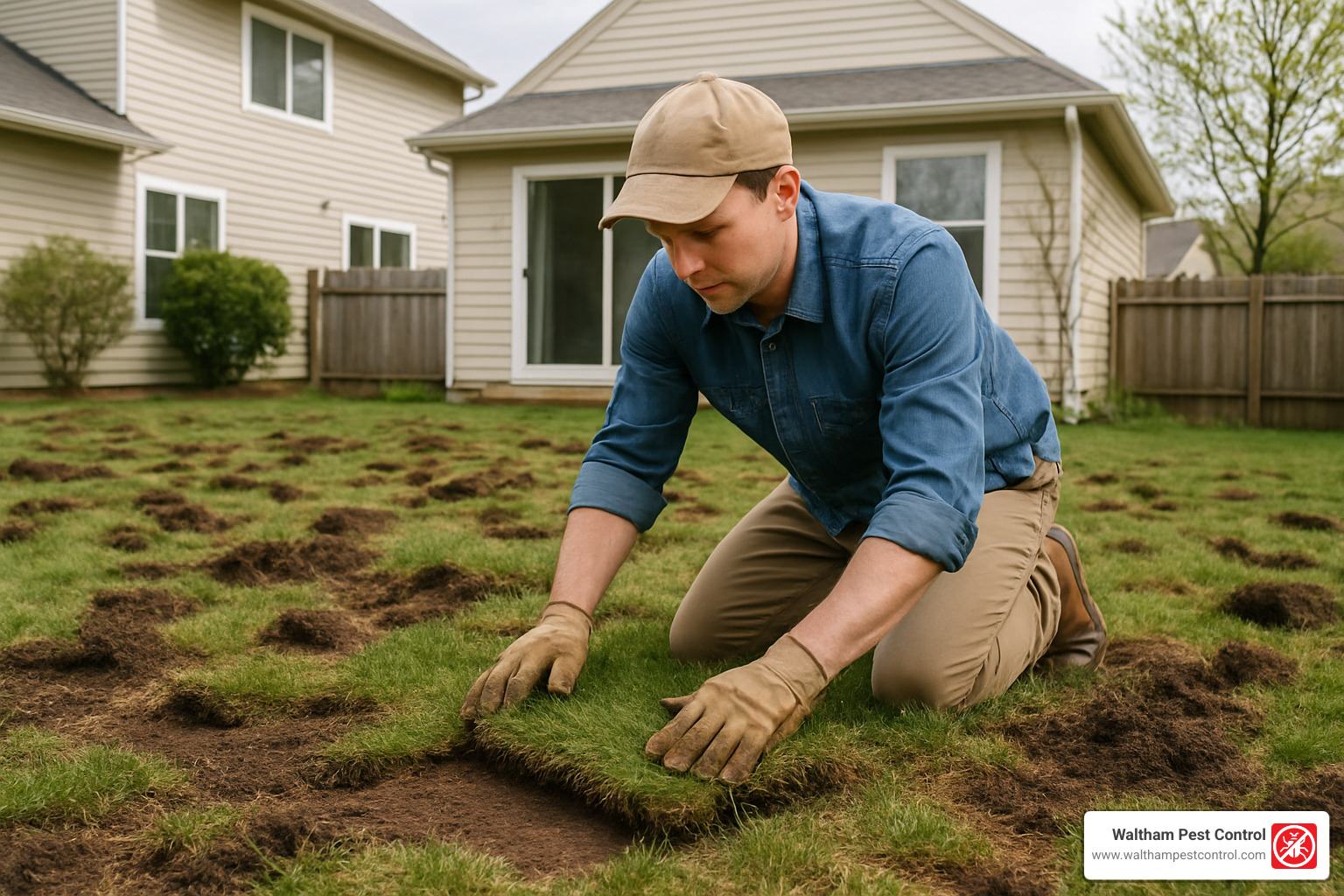
Grass roots can survive being exposed to air for about 24 hours before they start dying. After that window closes, you’re looking at dead patches that need reseeding.
Emergency Steps
Your first priority is getting grass back in contact with soil. Walk around and flip each piece of displaced sod back into its original spot. Press each piece down firmly with your hands or feet.
Water everything thoroughly as soon as you’ve replaced the sod. The roots need moisture to recover. A root-stimulating fertilizer mixed into your watering can give the grass an extra boost.
Temporary protection is crucial. Lay bird netting or chicken wire over repaired areas and secure with landscape staples every few feet. Mark treated areas with stakes and bright tape so family members and pets avoid walking on recovering grass.
Health & Legal Precautions
Raccoons aren’t just garden pests—they’re potential health hazards. Always wear gloves when handling displaced sod or cleaning around damaged areas.
Raccoon droppings are particularly dangerous because they can contain roundworm eggs that cause serious illness in humans. If you see droppings during cleanup, spray the area with disinfectant, let it sit, then carefully remove everything with disposable materials.
Wash hands thoroughly after cleanup work and disinfect any tools used. Raccoons are one of the most common rabies carriers in Massachusetts.
Massachusetts has legal considerations when dealing with raccoons. These animals are protected wildlife, meaning you can’t just trap and relocate them without proper licensing. If you’re dealing with recurring damage, call professionals who understand both wildlife laws and effective control methods.
Long-Term Prevention Playbook
Successfully stopping raccoons tearing up yard damage requires creating a comprehensive defense system that makes your lawn less attractive and less accessible to these persistent foragers.
Physical Barriers & Netting That Work
Bird netting remains the gold standard because it’s affordable, effective, and doesn’t harm animals. Use 1/4-inch mesh plastic netting and cover the entire damaged area plus a two-foot buffer zone. Secure with landscape staples every 2-3 feet.
Chicken wire offers another solid option for smaller areas. Lay 1-inch mesh galvanized wire directly on soil surface and pin down with 4-inch landscape staples. Remove chicken wire before grass grows through it (usually 2-3 weeks), while bird netting can stay longer.
Barriers work by breaking the reward cycle. Raccoons will test your barriers repeatedly for about two weeks before typically giving up.
For complex layouts or recurring problems, our exclusion services can design custom barrier solutions.
Integrated Grub Management (Natural & Chemical)
Beneficial nematodes offer an organic approach. The species Heterorhabditis bacteriophora works particularly well against white grubs that attract raccoons.
Apply nematodes in late summer when young grub larvae are most vulnerable. Keep soil moist before and after application, as nematodes need moisture to survive.
Milky spore disease provides longer-term biological solution, though it requires patience. This bacteria specifically targets Japanese beetle grubs and takes 2-3 years to establish but provides 15-20 years of control.
The timing calendar is crucial: Late May through July for preventive treatments, August through September for curative treatments against existing grubs.
For detailed guidance on nematode applications, proper timing and soil conditions determine success.
Repellents, Sprinklers & Ultrasonic Gadgets—Do They Help?
Motion-activated sprinklers can provide temporary relief by startling raccoons. They’re moderately effective as part of a broader strategy, but raccoons adapt quickly.
Ultrasonic devices are essentially worthless. Research consistently shows they simply don’t work—raccoons appear completely unaffected by high-frequency sounds.
Scent repellents fall somewhere in the middle. Castor oil sprays show moderate effectiveness but require frequent reapplication.
Effectiveness rates: Physical barriers achieve 85-95% success, motion sprinklers provide 40-60% effectiveness, scent repellents manage 20-40% success, and ultrasonic devices barely register at 0-10%.
Trapping, Relocating & Legal Considerations
In Massachusetts, wildlife trapping requires proper licensing. Relocation can spread diseases to new areas and often separates mothers from dependent young.
Professional trapping makes sense when dealing with recurring damage despite other measures, multiple raccoons, or evidence of denning on your property.
For legal and effective trapping and relocating raccoons, professional services ensure compliance with Massachusetts wildlife laws while keeping your family safe.
Special Scenarios & Common Mistakes
Even well-intentioned homeowners can make mistakes that actually make raccoons tearing up yard problems worse.
Mistakes to Avoid When Raccoons Are Tearing Up Yard
The biggest mistake is timing grub treatments wrong. Homeowners often panic in late October when raccoons are most active, rushing to apply grub control products. But mature grubs are nearly impossible to kill at this stage. The window for effective grub control is narrow—late May through July for preventive treatments, and August through early September for curative ones.
Removing barriers too early is another common error. Raccoons are persistent and have excellent memories. Remove netting after just a few days, and they’ll be back the same night. Keep barriers in place for at least two weeks.
Loose netting installation defeats the entire purpose. Raccoons are incredibly dexterous and will exploit any gap they find. Think of it like childproofing—if there’s a way in, they’ll find it.
Many homeowners focus on their lawn while ignoring obvious attractants elsewhere. Unsecured garbage cans, pet food left outside overnight, and scattered bird feeder seeds all contribute to the problem.
The most dangerous mistake is attempting direct confrontation with raccoons. These animals can carry rabies and will defend themselves aggressively when cornered.
When to Call a Pro
Recurring damage despite multiple prevention attempts is the clearest sign you need professional help. If you’ve tried grub control, installed barriers, removed attractants, and those masked bandits keep returning, there’s likely something you’re missing.
Large-scale destruction covering more than 500 square feet suggests you’re dealing with multiple raccoons or a family group.
The situation becomes more serious when you find evidence of raccoons denning in your attic, shed, or under your deck. At this point, you have residents, not just visitors.
Health concerns about droppings or direct contact should always trigger a call to professionals. Raccoon waste can contain dangerous parasites, and proper cleanup requires specific protocols and safety equipment.
At Waltham Pest Control, we’ve helped thousands of Eastern Massachusetts homeowners solve their raccoon problems safely and effectively.
Frequently Asked Questions about Raccoons Tearing Up Yard
How long until raccoons stop returning after food removal?
The honest answer? It depends on how thoroughly you’ve eliminated their food source. Raccoons tearing up yard damage typically continues for about one week after their buffet becomes unavailable, but don’t expect them to give up immediately.
These masked bandits have incredible memories—they’ll remember your lawn as a successful foraging spot and may return seasonally to check if conditions have changed. If you’ve only installed barriers but left 5+ grubs per square foot in the soil, raccoons may persist for months, testing your defenses repeatedly.
The key factors that determine how quickly they move on include grub population levels (the main draw), alternative food sources like unsecured garbage or pet food, and your persistence with barriers. Some particularly stubborn raccoons will test physical barriers night after night before finally accepting defeat.
Research shows that “raccoons will continue to return to a food site until it is no longer worth the energy.” This means you need to make your lawn both inaccessible and unrewarding. Complete success requires removing the grubs through beneficial nematodes or preventive treatments, not just blocking access temporarily.
Is grub control always necessary to halt yard damage?
Not always, but it’s your best bet for long-term peace of mind. Whether you need grub control depends on what’s actually happening beneath your lawn’s surface.
Grub control becomes essential when soil sampling reveals the magic number—5 or more grubs per square foot. At this threshold, you’re essentially running an all-night diner for raccoons. If damage keeps recurring in the same spots, spans large areas, or involves multiple raccoons, you’ve got a grub problem that barriers alone won’t solve.
However, barriers might work solo in certain situations. If your grub count hovers in the borderline range of 3-5 per square foot, or if damage is limited to small areas of vulnerable new sod, physical barriers combined with removing other attractants might do the trick.
The reality is that most successful prevention combines both approaches. As one expert put it: “Preventing raccoon damage hinges on controlling white grubs before fall—their preferred food source.” Think of barriers as your short-term defense while grub control provides the long-term solution.
New sod creates a special vulnerability because it’s easier to lift, but once established turf develops stronger roots, raccoons may move on to easier targets—assuming you haven’t left them a grub feast underneath.
Are motion-sprinklers or ultrasonic devices more effective?
If you’re choosing between these two options, motion-activated sprinklers win hands down—though that’s not saying much. Think of it as choosing the better of two mediocre solutions.
Motion sprinklers can reduce raccoon activity by 40-60% for about 2-4 weeks before these clever animals figure out the pattern. They work by creating a physical startle response that mimics predator presence, and they have the bonus of watering your lawn during dry spells. The unpredictable activation keeps raccoons guessing, at least temporarily.
Ultrasonic devices, on the other hand, are essentially expensive paperweights when it comes to raccoons tearing up yard problems. Field reports consistently show near-zero effectiveness, with users reporting that “raccoons appear completely unaffected.” Research backs this up—these devices simply don’t work on raccoons, who seem to ignore the high-frequency sounds entirely.
The problem with both approaches is that they don’t address the real issue: those protein-rich grubs calling to raccoons like a dinner bell. Raccoons are incredibly intelligent and adaptable. They’ll quickly learn that your sprinkler is just an annoying shower, not a real threat.
Rather than relying on gadgets, focus your energy and budget on grub control and physical barriers. These methods actually work because they remove the food source and block access—something no electronic device can accomplish.
Conclusion
When you wake up to find raccoons tearing up yard damage, it feels overwhelming—but this is absolutely a solvable problem. After helping thousands of Eastern Massachusetts homeowners deal with this exact issue over the past four decades, success comes down to understanding what’s really happening beneath your lawn.
Those masked bandits aren’t randomly destroying your grass—they’re following their noses to grubs living in your soil. Just 5 grubs per square foot is enough to turn your lawn into their favorite late-night restaurant. Once you control that food source and protect your turf behind barriers, the problem stops.
The most effective approach combines immediate action with long-term thinking. Replace flipped sod within 24 hours, get protective netting down right away, then tackle the underlying grub population with beneficial nematodes or preventive treatments. Skip the gadgets—motion sprinklers might work for a few weeks, but raccoons are smart enough to figure them out quickly.
Timing matters more than most people realize. Spring prevention beats fall panic every time. Apply grub treatments in late May through July when you’re targeting eggs and young larvae, not mature grubs that are nearly impossible to control by October.
I’ve seen too many homeowners make the same mistakes—loose netting that raccoons easily bypass, late-season treatments that waste money, and dangerous DIY approaches that put families at risk. These are wild animals that can carry rabies and other diseases. There’s no shame in calling for professional help, especially when Massachusetts wildlife laws require proper licensing for trapping and relocation.
Your lawn can absolutely recover from this damage. Healthy, well-established turf is naturally more resistant to digging. Combining proper lawn care with targeted pest management creates a defense system that works year after year.
At Waltham Pest Control, we’ve been protecting lawns across Eastern Massachusetts since the 1980s—from Burlington to Cambridge, Newton to Lexington, and everywhere in between. We understand that every yard tells a different story, which is why our integrated approach addresses your specific situation.
The bottom line? Raccoons tearing up yard damage stops when you remove their motivation to dig. Control the grubs, protect the recovering turf, eliminate other food sources like accessible garbage, and stay consistent with your prevention strategy.
For comprehensive wildlife removal services and ongoing support that keeps your lawn beautiful season after season, our licensed team is here to help. With over 40 years of experience serving Eastern Massachusetts communities, we’re your neighbors’ trusted choice for maintaining raccoon-free lawns.
Don’t let these nocturnal troublemakers win. Take action with proven strategies, and enjoy the satisfaction of watching your lawn thrive without unwanted midnight visitors.
