

Get Rid of Raccoons in Yard: 10 Proven Ways for 2025
Understanding the Raccoon Problem
If you need to get rid of raccoons in yard quickly, here are the most effective methods:
- Remove all food sources – secure trash cans, bring in pet food, clean up fallen fruit
- Eliminate water sources – cover pools/ponds, fix leaky faucets
- Block access to shelter – seal under decks, close off crawl spaces
- Use deterrents – motion-activated lights, sprinklers, predator urine
- Apply repellents – peppermint oil, cayenne pepper, or ammonia-soaked rags
Raccoons are intelligent, adaptable creatures that have thrived alongside human expansion. While their masked faces might seem cute, these nocturnal visitors can quickly become destructive nuisances when they decide your yard is their new buffet and playground.
Raccoons visit residential properties for three simple reasons: food, water, and shelter. They’re opportunistic omnivores with dexterous paws that can pry open garbage cans, open up simple latches, and manipulate objects with surprising skill. Their problem-solving abilities and persistence make them challenging to deter once they’ve finded your yard offers easy meals.
If you’ve spotted overturned trash cans, mysterious holes in your lawn, or hand-shaped tracks around your property, you’re likely dealing with raccoon visitors. Left unchecked, these masked bandits can damage landscaping, contaminate areas with droppings, and potentially carry diseases like rabies and roundworm.
I’m Waltham Pest Control, President of Waltham Pest Control with over 40 years of experience helping Massachusetts homeowners get rid of raccoons in yard situations through effective, humane control methods that address the root causes of wildlife intrusions.
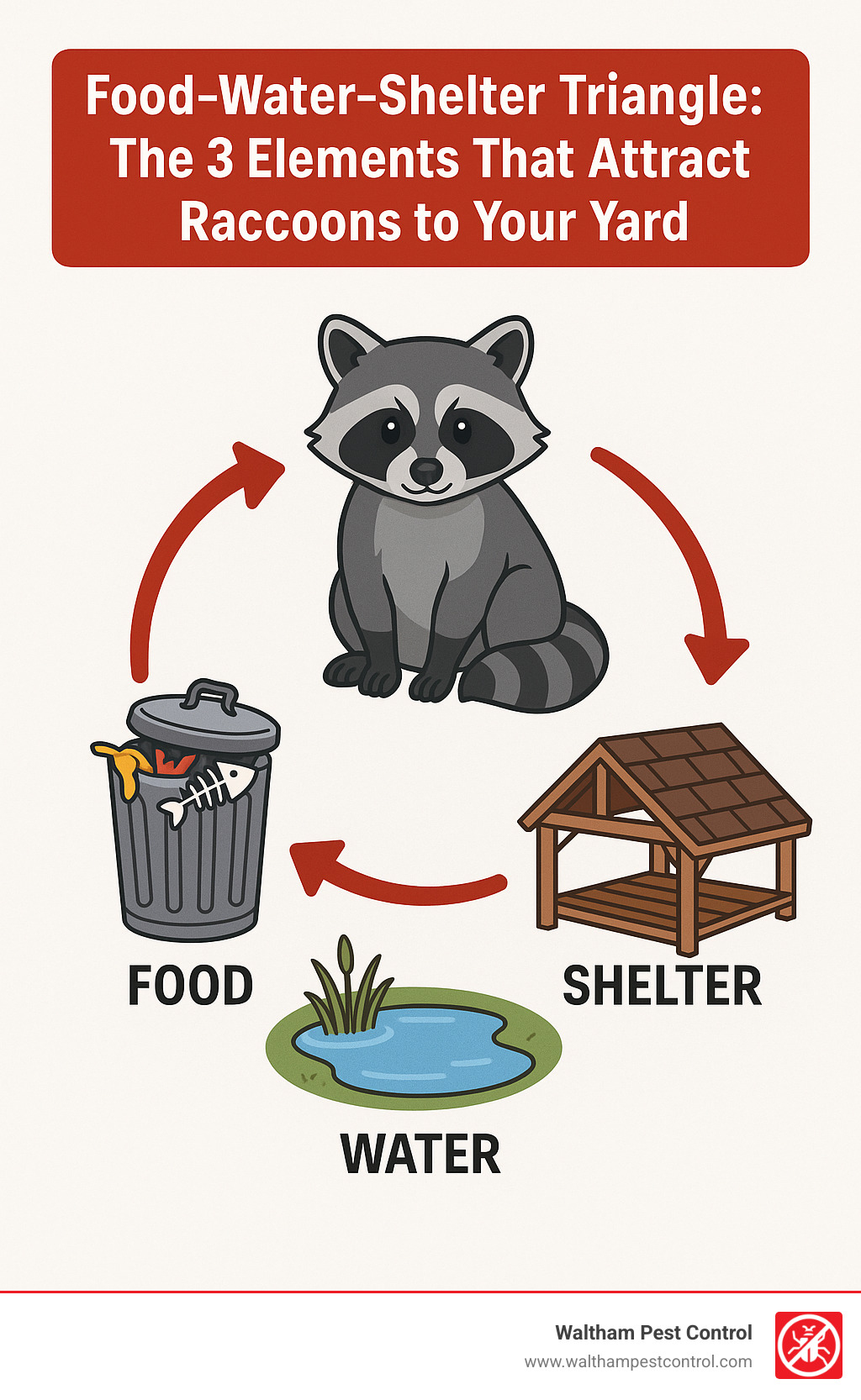
Get rid of raccoons in yard terms to remember:
– are raccoons dangerous
– raccoon in chimney
– professional raccoon latrine removal
Why Raccoons Target Your Property
Ever wonder why those masked visitors keep coming back to your yard? Raccoons thrive in almost every corner of Eastern Massachusetts—from busy urban centers to quiet suburbs and rural areas. Unlike many wildlife species that retreat as humans expand, raccoons have actually increased their numbers alongside our growing communities, thanks to their remarkable adaptability.
These clever creatures don’t randomly choose your property—they visit with very specific goals in mind. Understanding what attracts them is your first step toward keeping them away.
Food Sources
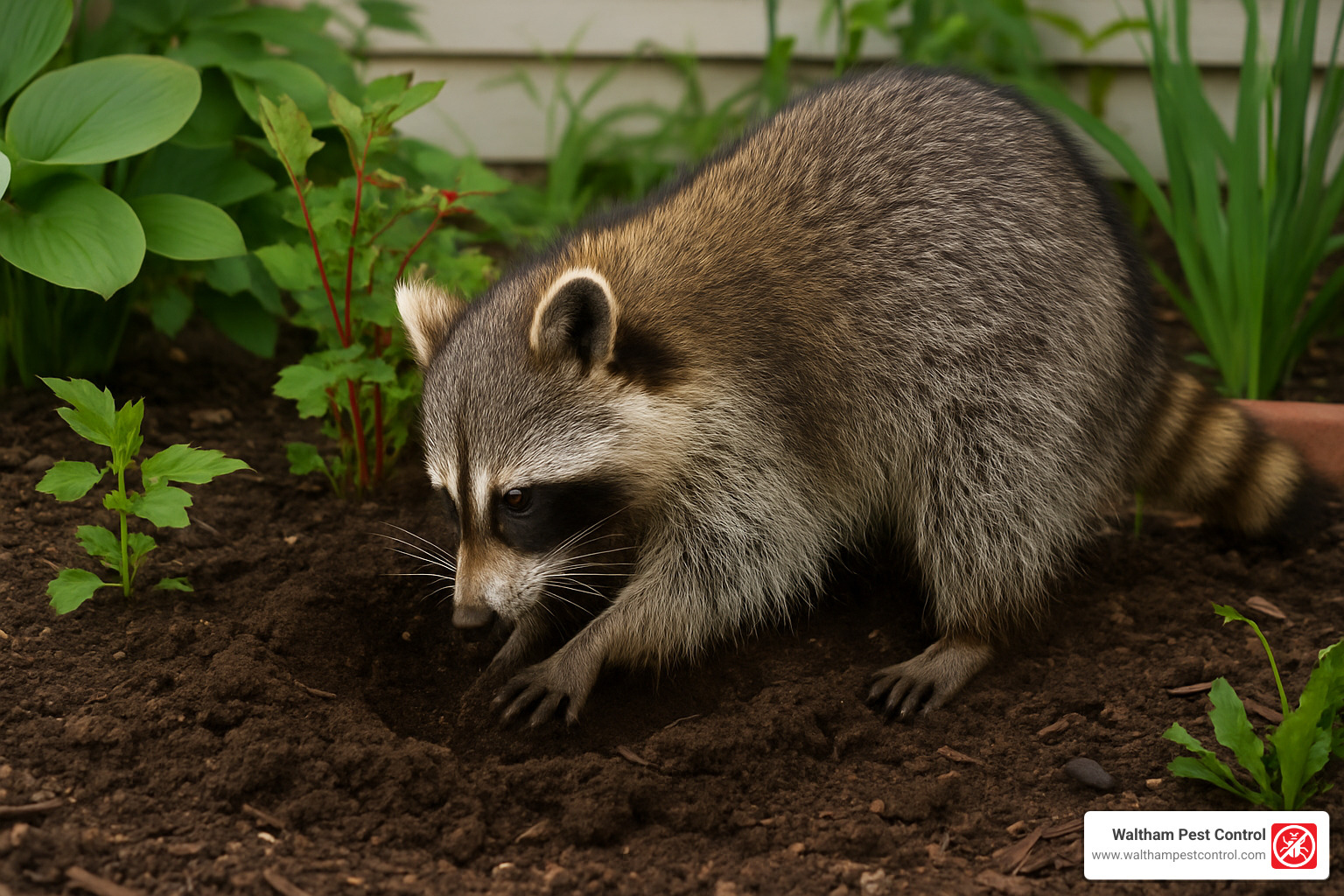
When it comes to dining, raccoons aren’t picky eaters. These true omnivores enjoy a buffet that your property might be unwittingly providing. They’ll happily feast on fruits and vegetables from your garden, nuts and berries from your landscape, and insects and grubs living in your lawn. They won’t pass up small animals like frogs or birds, and they especially love human food waste in garbage cans and pet food left outdoors.
What makes raccoons particularly challenging is their intelligence. With between 438 and 512 million neurons in their brains—more than cats and approaching dogs in problem-solving ability—they can remember food locations and how to access them for up to three years! Their exceptional sense of smell can detect food from surprising distances, making your property a destination if there’s even a hint of an easy meal.
According to research from the Centers for Disease Control and Prevention (CDC), raccoons are highly adaptable omnivores whose foraging behavior is primarily driven by opportunistic feeding patterns. Their nocturnal habits and remarkable dexterity make them particularly successful at exploiting human environments.
Water Sources
Raccoons need regular access to water, not just for drinking but also for their curious habit of “washing” food. In fact, their scientific name, Procyon lotor, literally means “washing with hands.” Your property might be providing water through birdbaths, garden ponds, swimming pools, pet water bowls, leaky outdoor faucets, or even just puddles and drainage areas.
This washing behavior makes water features particularly attractive to raccoons, who will often return night after night once they’ve finded a reliable water source.
Shelter Spots
By day, raccoons need safe, warm places to rest, and by breeding season, mothers need secure dens to raise their young. In Massachusetts, raccoons commonly seek shelter under decks and porches, inside attics and crawl spaces, in hollow trees, abandoned burrows, woodpiles, chimneys, and even between walls.
A property with easy access to shelter becomes especially attractive during harsh New England winters when raccoons seek warmth, and during spring when mother raccoons need a safe place for their kits.
Seasonal Behavior
Raccoon activity follows predictable patterns throughout the year:
During winter, raccoons don’t truly hibernate but become less active, focusing on finding warm shelter to conserve energy.
Come spring (March–April), female raccoons give birth and become more protective and desperate for food to support nursing.
In summer, curious young raccoons begin exploring alongside their mothers, often leading to more visible activity around your property.
Fall (September–October) brings the peak conflict period when juvenile raccoons are forced out by their mothers and desperately seek new territories—often leading them straight to your yard.
Common Attractants You Didn’t Realize
Beyond obvious food sources like garbage, several common yard features might be sending raccoons an unintended invitation:
- Bird Seed: Those bird feeders you enjoy are like raccoon magnets. These nimble climbers can scale almost anything and will empty feeders nightly if given the chance.
- Fallen Fruit: That apple tree in your yard? Even a few forgotten fruits can attract raccoons from surprising distances. They can smell ripening fruit and will return regularly during harvest season.
- Compost: Your eco-friendly compost pile, especially if it contains food scraps, emits odors that raccoons can detect from far away.
- Fish Ponds: Those beautiful koi and ornamental fish ponds serve as both drinking spots and all-you-can-eat buffets for raccoons, who are surprisingly skilled fishers.
What Problems Can Raccoons Cause?
When raccoons make themselves at home on your property, they bring a host of issues that can range from annoying to potentially dangerous:
- Lawn Damage: Waking up to find cone-shaped holes across your lawn is a telltale sign of raccoons hunting for grubs. They can destroy large sections of turf overnight, undoing months of lawn care in hours.
- Tipped Trash: Those dexterous paws can open many garbage cans, creating messy yard waste that not only requires cleanup but also attracts other pests.
- Structural Damage: Need to get rid of raccoons in yard before they move in? Good thinking, because raccoons can tear through roof shingles, vents, and soffits to gain access to attics, causing expensive damage that often runs into thousands of dollars.
- Disease Risks: Raccoon droppings can contain Baylisascaris procyonis (raccoon roundworm), a dangerous parasite that can cause serious illness in humans. Wildlife experts estimate approximately 70% of raccoon feces are infected with this roundworm, making prompt cleanup essential.
- Aggression: While generally not aggressive toward humans, mother raccoons with young can become defensive if they feel threatened, potentially posing a risk to family members and pets.
Understanding why raccoons visit is your first step toward effective prevention. By addressing the food, water, and shelter that attract them, you’ll be well on your way to reclaiming your yard from these masked visitors.
Detecting an Infestation Early
Spotting raccoon activity before it becomes a full-blown problem can save you headaches and property damage. The sooner you notice these masked visitors, the faster you can take action to get rid of raccoons in yard areas before they establish regular feeding routes.
Distinctive Tracks
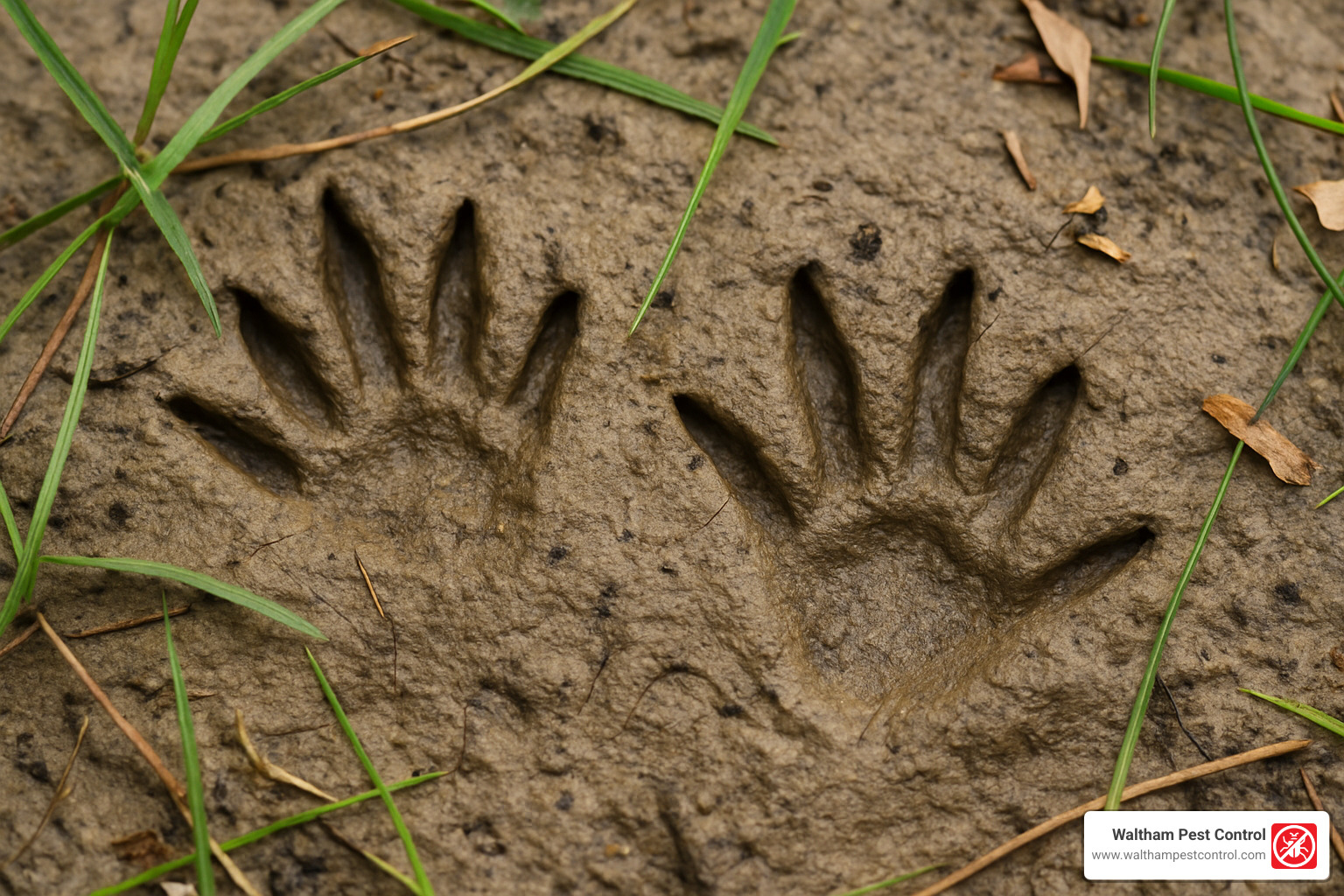
You don’t need to be a wildlife expert to identify raccoon footprints. Their tracks look remarkably like tiny human handprints – a distinctive five-fingered pattern that’s hard to mistake for any other backyard visitor. These prints typically measure about 2-3 inches wide and show the entire foot, unlike many animals that walk on their toes.
After a rainy night, check muddy areas around your property, especially near water sources or garden beds. Those little hand-shaped impressions are your first clue that raccoons have been exploring your yard under the cover of darkness.
Droppings and Latrines
Raccoon droppings tell a revealing story about your nighttime visitors. Unlike random animal waste, raccoons create designated bathroom areas called “latrines” where they repeatedly return. These droppings are distinctive – dark, cylindrical, and typically 2-3 inches long with about a ¾ inch diameter.
If you spot droppings containing visible seeds or berry remnants in concentrated areas, especially on liftd surfaces like roof edges or large tree branches, you’re likely dealing with raccoons. Be cautious around these areas, as raccoon feces can contain parasites harmful to humans. When in doubt, it’s safest to have these areas professionally cleaned.
Nighttime Activity
Since raccoons are creatures of the night, their activities peak when you’re likely asleep. Listen for telltale sounds after dark – scratching, climbing, or thumping noises coming from your roof, attic, or yard. Your pets might also alert you to raccoon presence by suddenly barking or acting agitated at night with no obvious cause.
A simple nighttime investigation with a flashlight might catch these nocturnal explorers in action. Raccoon eyes reflect light with a distinctive yellowish-green glow that’s easy to spot from a distance.
Property Damage
The morning after a raccoon visit often reveals their handiwork. Overturned garbage cans with trash strategically scattered (they’re looking for the good stuff!) is a classic sign. Look for torn screens on vents or windows, cone-shaped holes in your lawn about 3-5 inches wide (their signature grub-hunting technique), and damaged garden produce – raccoons are particularly fond of corn and melons, which will show distinctive bite marks.
If you have a pond, check for disturbed areas and take inventory of your fish – raccoons are skilled fishermen who won’t hesitate to help themselves to your koi.
DIY Yard Inspection Checklist
Taking a proactive approach with regular inspections can help you stay ahead of raccoon problems. Here’s how to conduct a thorough check of your property:
During daylight hours, inspect your lawn for freshly dug holes, check corners and liftd areas for droppings, and examine trash cans for pry marks. Look closely at your home’s exterior for potential entry points – torn screens, damaged vents, or loose roof shingles that could provide access to your attic or crawl spaces.
After dark, grab a flashlight and quietly tour your yard, listening for rustling or vocal sounds. Scan trees, bird feeders, and garden areas for movement. The nighttime inspection often reveals activity you’d never notice during the day.
For more detective work, try sprinkling flour or cornstarch around suspected entry points to capture footprints, or place a thin layer of sand in areas where you suspect activity. If you’re tech-savvy, a motion-activated trail camera can provide conclusive evidence of your nighttime visitors.
| Normal Yard Mess | Raccoon Evidence |
|---|---|
| Random scattered trash | Methodical emptying of containers |
| Small, random holes from pets | Cone-shaped holes in patterns |
| Bird droppings (small, white-capped) | Tubular, dark droppings in concentrated areas |
| Wind-damaged containers | Containers with pry marks on edges |
| Random noises throughout day | Consistent noises during night hours |
Knowing what you’re looking for makes all the difference in early detection. The sooner you spot raccoon activity, the easier it will be to get rid of raccoons in yard spaces before they decide your property is their permanent buffet and playground.
How to Get Rid of Raccoons in Yard: Step-By-Step Plan
Once you’ve confirmed those masked bandits are visiting your property, it’s time to take action with a comprehensive plan to get rid of raccoons in yard areas. The key is addressing all three factors that make your home appealing to these clever creatures.
Step 1: Eliminate Food Sources
The fastest way to send raccoons packing is to remove their dinner invitations. These opportunistic eaters won’t stick around if the buffet closes!
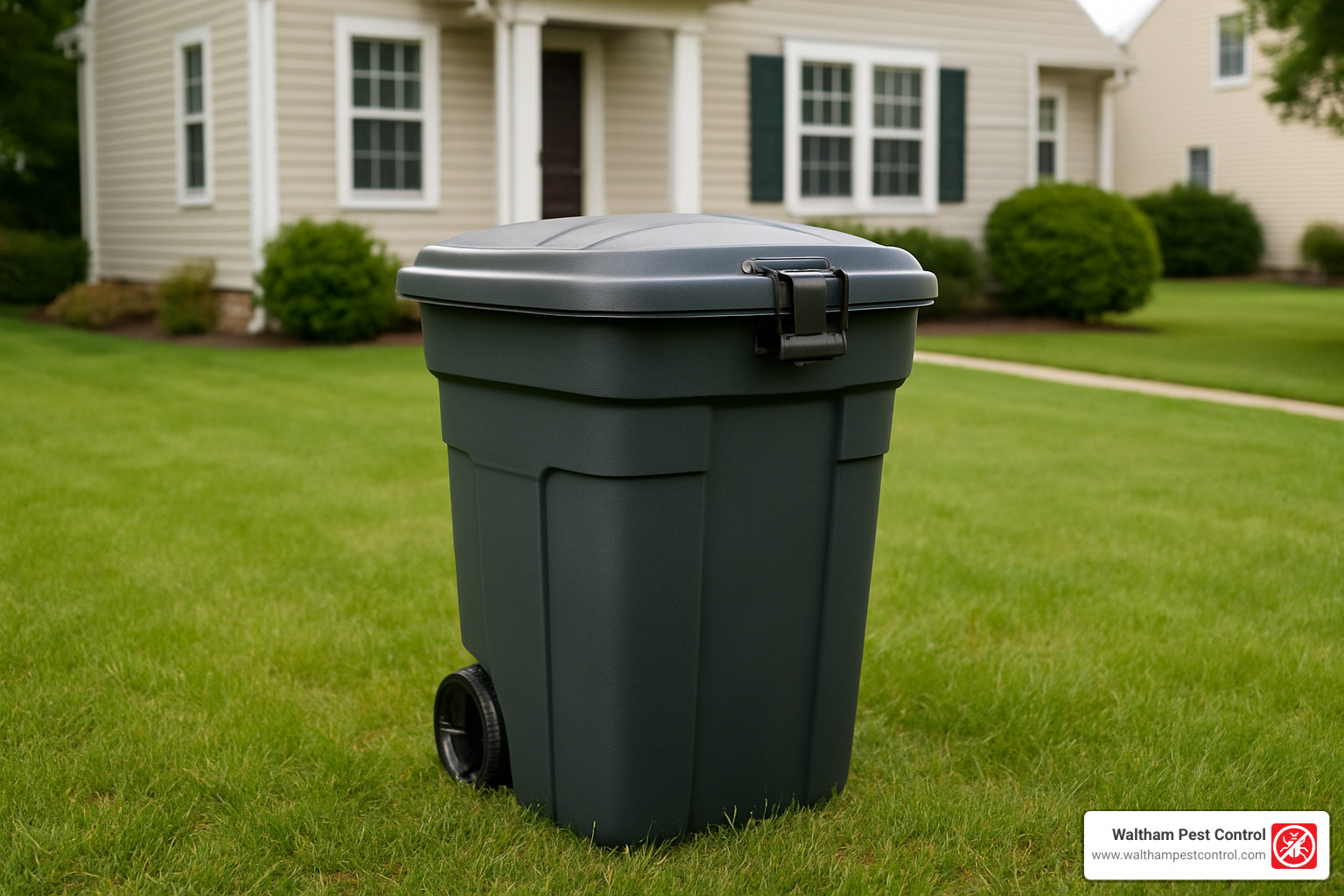
Secure Trash Cans by using wildlife-proof containers with locking lids. A simple bungee cord criss-crossed over the top works wonders for standard cans. For particularly persistent raccoons, consider storing cans in a locked shed or garage until collection day. Double-bagging especially smelly waste helps minimize attractive odors, and regular cleaning with ammonia-based cleaners removes lingering scents.
Remove Pet Food from outdoor areas each evening. Those kibble bowls might as well be flashing neon “EAT HERE” signs to hungry raccoons. Feed pets indoors when possible, or pick up bowls immediately after mealtime. Store pet food in sealed metal containers that curious paws can’t pry open.
Protect Gardens by installing hardware cloth fencing that extends at least 6 inches underground (raccoons are excellent diggers). Harvest ripe fruits and vegetables promptly and make daily rounds to pick up fallen fruit. An electric fence with wires at 6 and 12 inches off the ground can be remarkably effective for persistent raiders.
Manage Bird Feeders by bringing them in at night or installing raccoon baffles on poles. Keep areas under feeders clean of fallen seed, which creates a ground-level raccoon snack bar. Consider native plantings that naturally attract birds without the need for seeds.
Treat for Grubs in your lawn to eliminate another favorite raccoon food. Those cone-shaped holes appearing overnight are telltale signs of raccoons digging for grubs. Maintaining a healthy lawn naturally deters grub infestations, and beneficial nematodes offer an eco-friendly control option.
Step 2: Remove Water Sources
Raccoons need water not just for drinking, but also for their curious habit of “washing” food. Eliminating easy access to water helps get rid of raccoons in yard environments.
Fix leaky outdoor faucets and hoses that create puddles. Empty kiddie pools, buckets, and containers after use. Ensure proper drainage around foundations and clean gutters regularly to prevent water accumulation.
For ornamental ponds, consider covering them with mesh at night or installing motion-activated sprinklers nearby. Adding a fountain or aerator keeps water moving, making it less appealing to raccoons. Don’t forget to bring in pet water bowls at dusk or place them where wildlife can’t reach them.
Step 3: Eliminate Shelter Options
Raccoons seek safe, cozy spots to rest during the day and raise their young. Making your property less accommodating for denning is essential.
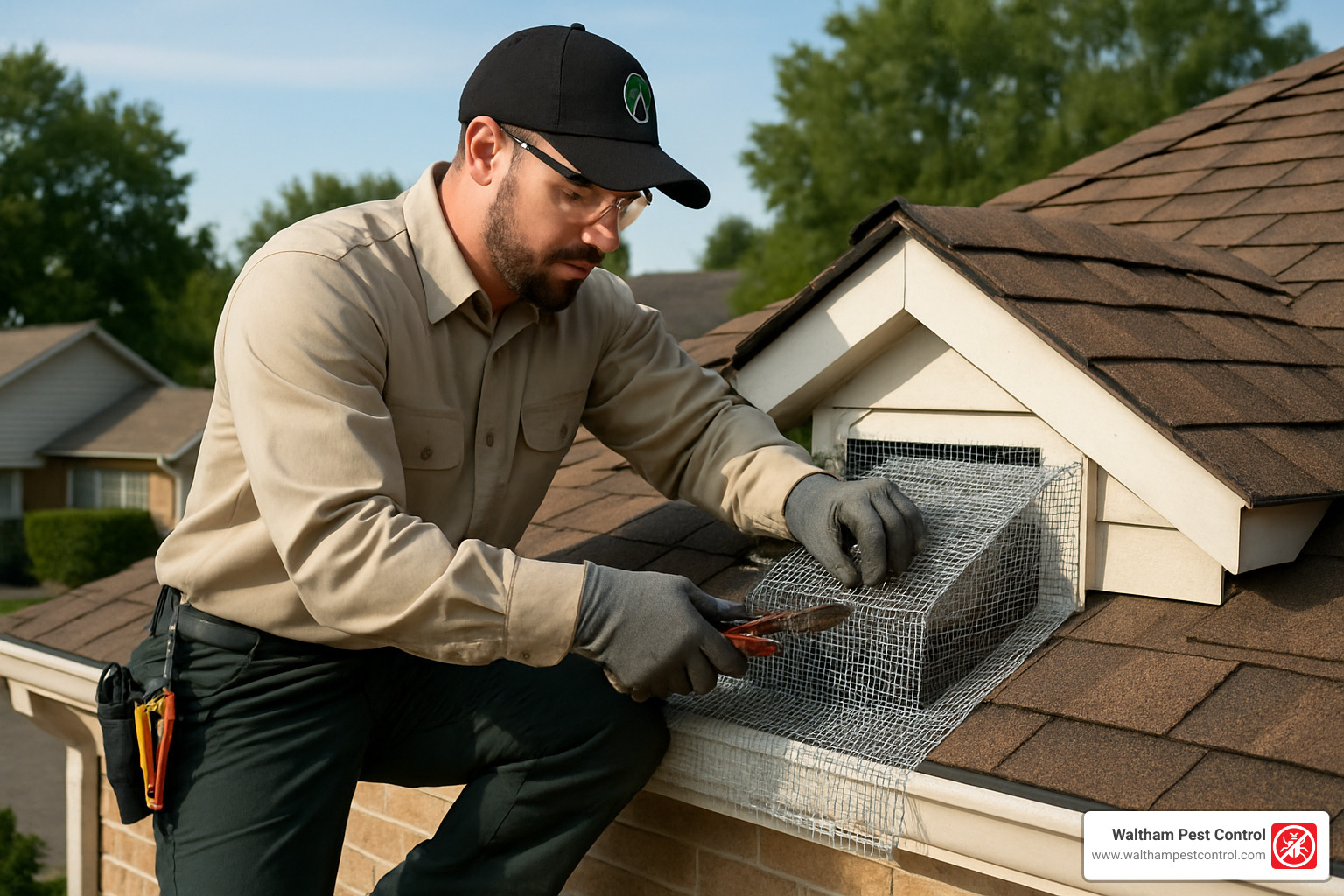
Seal Entry Points around your home, paying special attention to crawl spaces, chimneys, vents, and rooflines. Use hardware cloth for durability—raccoons can tear through plastic or light-gauge screens with their strong paws. Block access under decks and porches with buried hardware cloth installed in an L-shape to prevent digging underneath.
Modify Landscaping by trimming tree branches that provide roof access (maintain at least 8 feet of clearance). Remove brush piles and debris that offer hiding spots. Keep woodpiles liftd and away from structures. Thin dense shrubbery near the house that could provide daytime shelter.
Step 4: Deploy Active Deterrents
For stubborn raccoons that haven’t gotten the message, active deterrents can help convince them your yard is not a welcoming place.
Motion-Activated Devices like the Orbit Yard Enforcer sprinkler create surprising bursts of water when raccoons approach. Motion-sensing lights flood dark areas with sudden brightness, disrupting nocturnal feeding. Mr. Beams Motion Lights work well at key entry points. While ultrasonic repellers have mixed reviews, they’re worth trying for some situations.
Sensory Deterrents like predator urine (coyote or fox) create the impression that dangerous predators are nearby. Sprinkle cayenne pepper around gardens and entry points—raccoons’ sensitive paws and grooming habits make this particularly effective. Commercial raccoon repellent granules or sprays can provide temporary relief in targeted areas.
Sound and Light combinations often work better than either alone. A radio tuned to a talk station near denning areas simulates human presence, while bright lights in attics or under decks make these spaces less appealing for daytime rest.
Primary Deterrents That Work Fast to “get rid of raccoons in yard”
When you need quick results, focus on these proven methods:
Trash Can Security is your first priority. Invest in raccoon-proof latches or use heavy-duty bungee cords in an X-pattern across lids. For particularly clever raccoons, drill holes in can lids and use rope to secure them to the handles. Indoor storage until collection day is the most effective solution.
Predator Presence created with commercially available predator urine creates a powerful psychological deterrent. Apply around your property’s perimeter, focusing on entry points and near food sources. Remember to reapply after rain or every 5-7 days to maintain effectiveness.
Hot Pepper Deterrents work wonderfully because raccoons’ sensitive paws and grooming habits make them particularly vulnerable to the irritation. Mix cayenne pepper with water and a few drops of dish soap, then spray around gardens, trash areas, and entry points. Reapply after rain or irrigation.
Motion-Activated Sprinklers deliver a harmless but startling burst of water that teaches raccoons your yard is not a safe zone. Position them at known entry points and adjust sensitivity to avoid false triggers. Moving them periodically prevents the clever raccoons from learning to avoid them.
Bright Lights and Sound combinations disrupt nocturnal feeding patterns. Motion-activated flood lights paired with a battery-powered radio near denning areas creates an uncomfortable environment that encourages relocation.
Long-Term Yard Hardening to “get rid of raccoons in yard”
For lasting protection against these persistent visitors, implement these structural changes:
Perimeter Protection using hardware cloth barriers around decks, sheds, and vulnerable structures creates a physical barrier raccoons can’t breach. Bury the barrier at least 6-8 inches deep in an L-shape pointing outward to prevent digging underneath. Choose heavy-gauge welded wire that stands up to determined paws.
Garden Fortification requires welded wire fencing at least 4 feet high with 12 inches buried underground or an L-shaped footer. Adding an electric wire at the top and 6 inches off the ground creates a double deterrent. Some gardeners report success with cucumber borders, as many raccoons seem to dislike the plants.
Structural Maintenance should include annual roof and exterior inspections. Repair any damaged vents, screens, or soffits immediately. Install chimney caps and roof vent guards to block access to these favorite entry points. Raccoons can squeeze through openings as small as 3.5 inches—much smaller than most people realize!
Tree Management is essential since trees often provide highway access to your roof. Trim branches to maintain at least 8 feet of clearance from structures. Install metal bands around tree trunks to prevent climbing. For fruit trees, maintain regular pruning and prompt harvesting, with daily cleanup of fallen fruit.
Habitat Modification creates a less appealing environment by removing rock piles, brush, and debris that provide shelter. Keep grass cut short near structures and eliminate dense ground cover near buildings. Creating open spaces between wooded areas and your home removes the protected pathways raccoons prefer.
For more detailed information about how to get rid of raccoons in yard environments, visit our comprehensive guide on How to Get Rid of Raccoons.
Safe Removal & Professional Help
When your prevention efforts haven’t succeeded or raccoons have already made themselves at home on your property, it’s time to consider safe removal options. This becomes especially important when these clever critters have moved into your actual home structure.
Humane Trapping Considerations
If you’re thinking about trapping raccoons yourself, there are several important factors to keep in mind. First, you’ll need an appropriately sized trap—at least 12×12×32 inches for adult raccoons. These aren’t small animals, and they need proper space even in a temporary trap.
Always opt for solid-wall or heavy-gauge steel traps that can withstand a raccoon’s strength and determination. Once set, check your traps at least twice daily—morning and evening. Leaving a trapped animal longer isn’t just inhumane; it can lead to injury or death from stress, exposure, or dehydration.
In Massachusetts, trapping and relocating wildlife isn’t something you can legally do without proper licensing. And even if you could, relocating mother raccoons may orphan their babies, creating an even bigger problem.
Eviction Techniques
For raccoons that have taken up residence in your attic or other structures, gentle persuasion can sometimes work before resorting to trapping:
Bright lights in attic spaces can disturb their preference for dark, quiet spaces. Couple this with a loud radio tuned to a talk station (raccoons dislike human voices) for a one-two punch that makes your attic far less appealing.
Specialized eviction fluid, which mimics male raccoon scent, can be particularly effective during baby season when mother raccoons want to protect their young from potentially threatening males.
Never seal entry points until you’re absolutely certain all raccoons have vacated the premises. One-way doors can be effective, but only after confirming no babies are present—otherwise, you’ll separate families and create both a humane issue and a potential odor problem from trapped, deceased young.
Baby Season Caution
Spring and summer (typically March through August) bring special challenges when dealing with raccoon removal. During this baby season, mother raccoons become noticeably more protective and potentially aggressive when they perceive threats to their young.
Sealing entry points during this time can have tragic consequences if babies are trapped inside. They’ll die from starvation, creating not only a heartbreaking situation but also significant odor problems and contamination risks for you.
If you find a raccoon family has taken up residence, patience is key. Wait until the babies are mobile before attempting eviction—and honestly, this is one situation where professional help isn’t just convenient; it’s strongly recommended for both humane and practical reasons.
Professional Removal Services
While we always encourage prevention first, sometimes professional intervention becomes necessary. According to industry data gathered from internet averages (not our specific pricing), general raccoon removal typically ranges between $335 to $600. However, removing an entire family from an attic can cost up to $1,500, especially when factoring in cleanup and exclusion work.
Professional wildlife removal includes much more than just removing the animals. A comprehensive service should provide:
Humane trapping and removal that respects wildlife while effectively solving your problem. Thorough identification of all entry points ensures you’re addressing the complete situation, not just the symptoms. Proper exclusion work prevents re-entry, while damage assessment and repair recommendations help you understand the full scope of what needs attention.
Professional services also include sanitization of contaminated areas to address health risks, followed by follow-up inspections to ensure the problem is truly resolved.
When to Call the Experts
While some raccoon situations can be handled with DIY methods, certain scenarios call for immediate professional intervention:
Raccoons in the Attic require specialized knowledge and techniques. Families in attics often include babies hidden in insulation or wall voids that DIY methods might miss. Plus, the structural damage and contamination usually need professional remediation to properly restore your home’s safety and integrity.
If you spot aggressive or sick animals—raccoons showing unusual daytime activity, displaying aggression or lack of fear, visible injuries, or abnormal behavior like staggering, disorientation, or excessive salivation—it’s time to call in professionals who are trained to handle potentially dangerous situations.
When facing repeated yard returns despite your best prevention efforts, or when multiple raccoons regularly visit your property, professional assessment can identify the attractants you might be missing. Professionals can also address nearby dens that remain consistently active.
Structural damage like torn roof vents, damaged chimney caps, holes in exterior walls, or contaminated insulation all warrant professional attention to ensure proper repairs and future prevention.
For specialized assistance with raccoon problems, explore our Raccoon Trapping Services or learn more about Professional Raccoon Removal.
Health & Legal Considerations
When dealing with raccoons, both health and legal factors deserve serious attention:
From a health perspective, raccoons can carry several concerning diseases. Rabies is perhaps the most well-known—while uncommon, raccoons are primary carriers in the Eastern US. Less familiar but equally concerning is Baylisascaris procyonis, a raccoon roundworm that can cause serious neurological disease in humans when eggs from contaminated feces are accidentally ingested.
Leptospirosis, a bacterial infection spread through urine, can affect both humans and pets, while distemper, though not transmissible to humans, poses a serious threat to unvaccinated dogs.
The legal landscape around raccoon control is equally important to steer properly. Massachusetts wildlife regulations place specific restrictions on trapping and relocation activities. Proper permits may be required for wildlife control, and certain methods may be prohibited in residential areas. All wildlife management must comply with humane treatment laws.
Be wary of chemical solutions—mothballs are illegal for outdoor use in many areas and pose significant health risks. Ammonia can be dangerous in enclosed spaces, and even commercial repellents must be used strictly according to label instructions. Many DIY remedies can inadvertently harm non-target wildlife or pets.
Speaking of pets, their protection should be a priority when dealing with raccoons. Keep vaccinations current (especially rabies), supervise outdoor time during active raccoon periods, check for ticks after outdoor activities (raccoons can carry tick-borne diseases), and never allow pets to interact with wildlife.
By understanding both the health risks and legal requirements involved in raccoon control, you’ll be better equipped to handle the situation safely, legally, and effectively—whether you choose to get rid of raccoons in yard areas yourself or call in professional help.
Keeping Raccoons Away for Good
After successfully removing raccoons from your property, maintaining a raccoon-free yard requires ongoing vigilance and maintenance. The battle isn’t won with a single victory—these intelligent creatures will keep testing your defenses if given the opportunity.
Structural Protection
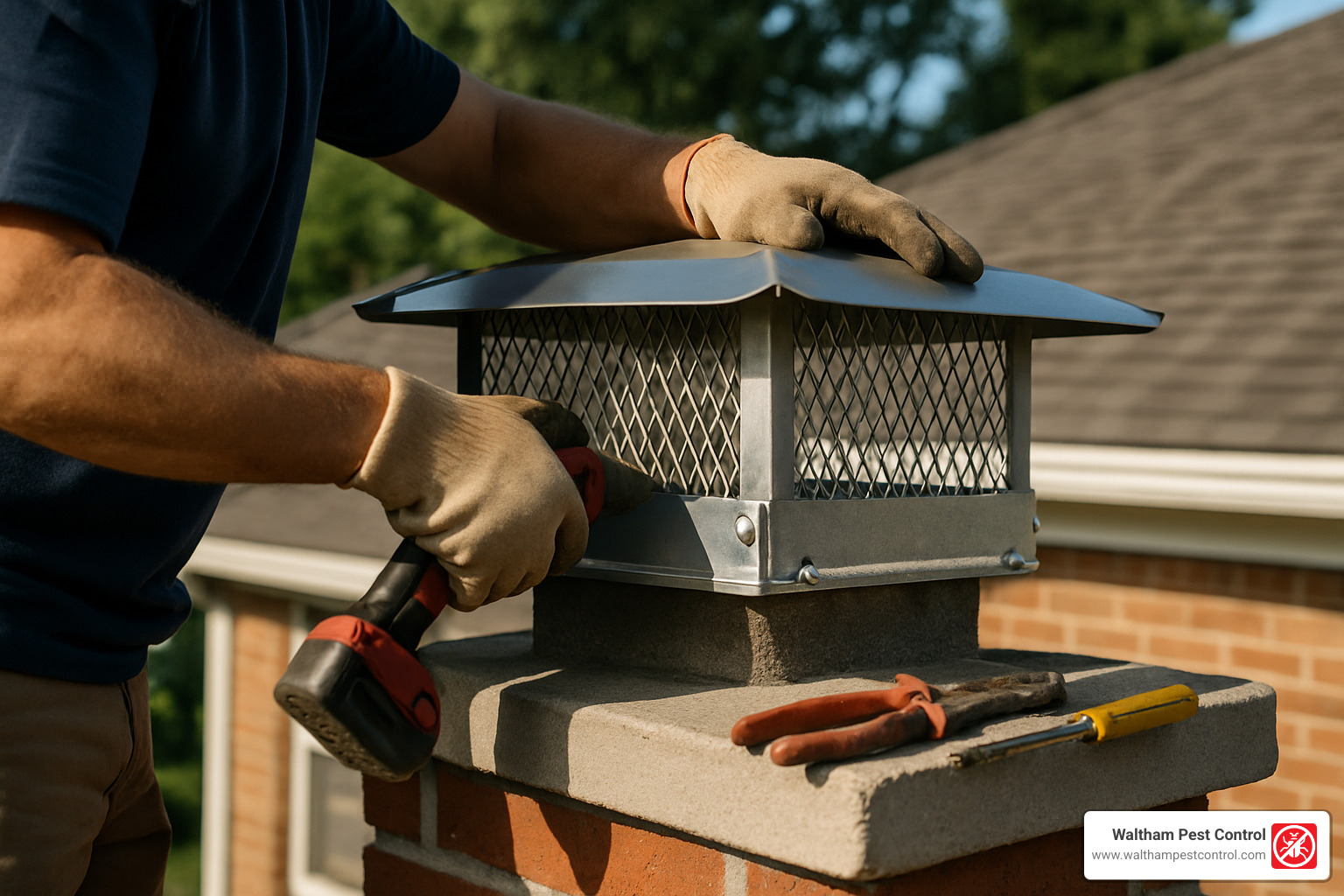
Your home’s exterior is your first line of defense against determined raccoons. Chimney caps are essential protection—install heavy-gauge metal caps that can withstand both raccoon tampering and strong New England winds. Make a habit of inspecting these caps annually, as winter storms can loosen even well-installed hardware.
Vent screens often serve as raccoon welcome mats if not properly secured. Cover all roof, attic, and crawl space vents with ¼-inch hardware cloth—this specific size is crucial as raccoons can squeeze through surprisingly small openings. Skip the staples and use screws instead; raccoons can easily pull out staples with their dexterous paws.
When it comes to entry point sealing, think like a raccoon. These animals can squeeze through any opening larger than 3.5 inches in diameter. Pay special attention to areas where utilities enter your home—these are often overlooked weak points. Use durable materials that can withstand determined gnawing and clawing: metal flashing, hardware cloth, or concrete all provide excellent protection.
After evicting unwanted guests, one-way doors are your best friends. These clever devices allow raccoons to exit but prevent re-entry. Leave them in place for at least a full week before permanent sealing to ensure all animals have departed. I’ve seen too many homeowners rush this step only to find the hard way that baby raccoons were still inside.
Ongoing Deterrent Maintenance
The most effective raccoon prevention strategy is one that evolves. These intelligent animals quickly adapt to static deterrents, so regular maintenance and occasional repositioning are essential to get rid of raccoons in yard environments permanently.
Electric fencing requires monthly check-ups—inspect connections, clear away vegetation that might short the circuit, and test voltage regularly. If you’re using solar chargers, replace batteries according to the manufacturer’s schedule, typically twice yearly.
With repellent applications, consistency is key. Mark your calendar for regular reapplication every 2-3 weeks, and always reapply after heavy rain. I recommend rotating between different repellent types to prevent habituation. Focus your efforts on perimeter areas and known entry points rather than blanketing your entire property.
Your motion-activated devices need attention too. Test sensors monthly, clean the lenses on motion detectors to ensure proper functioning, and replace batteries before they fail completely. One of the most effective tricks is to reposition these devices occasionally—raccoons are creatures of habit and will learn to avoid static deterrent locations.
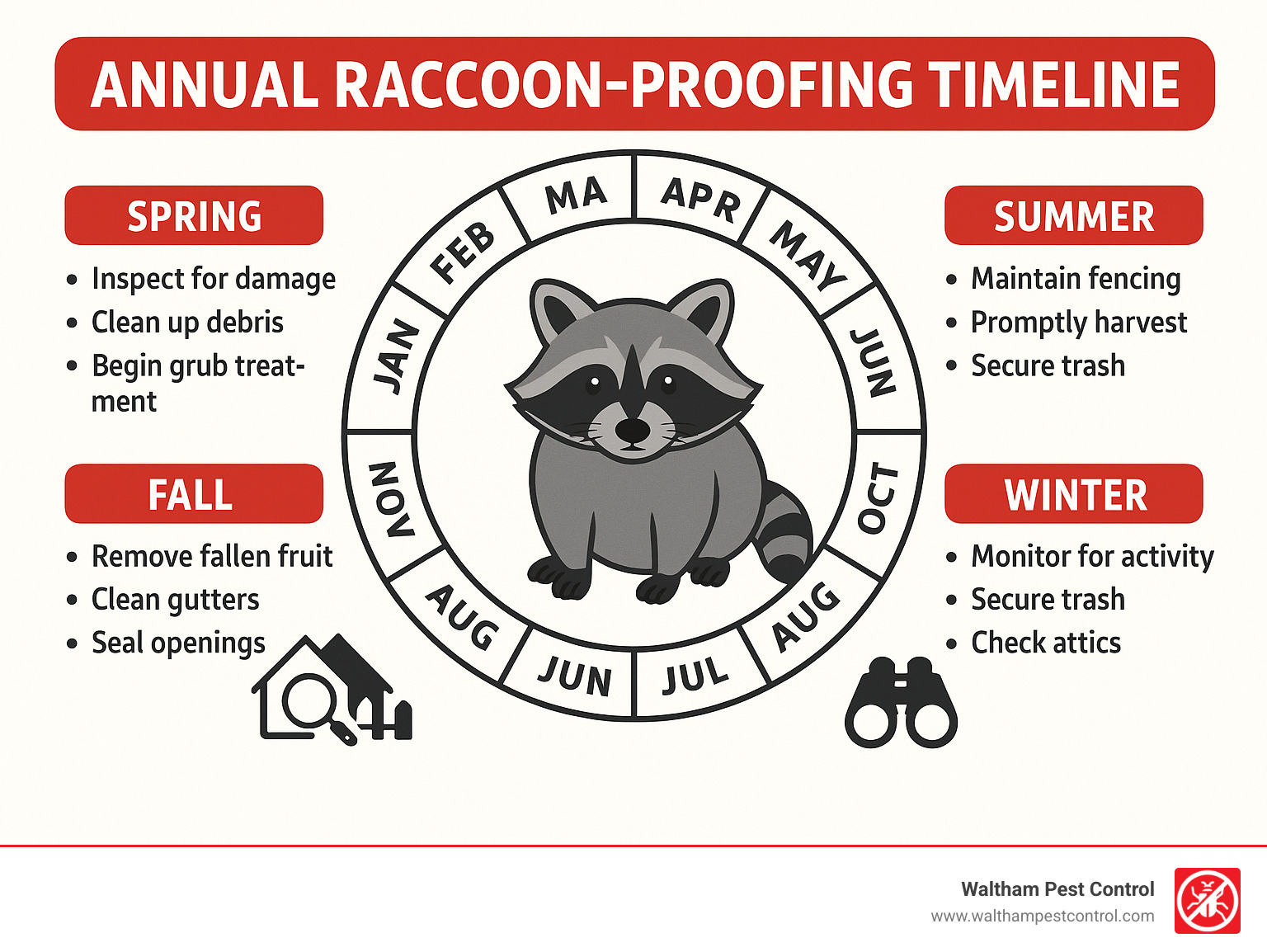
Seasonal Maintenance Calendar
Massachusetts weather creates distinct seasonal challenges in raccoon prevention. Adapting your approach throughout the year will strengthen your defenses.
In Spring (March-May), raccoon activity increases dramatically as mother raccoons seek denning sites for their young. This is the time to inspect and repair any winter damage to structures, clean up debris that accumulated during winter months, and begin grub treatments to prevent the lawn damage that attracts foraging raccoons.
During Summer (June-August), garden bounty becomes a major raccoon attractant. Maintain garden fencing vigilantly, harvest fruits and vegetables promptly, and be extra diligent about trash security during outdoor entertaining season. This is also the perfect time to trim tree branches that have grown near your roof or structures during the spring growth spurt.
As Fall (September-November) arrives, raccoons begin preparing for winter by increasing their foraging. Remove fallen fruit daily, clean gutters to prevent water accumulation that attracts thirsty raccoons, and seal any new openings before winter denning season begins. This is your last chance for effective grub treatments before the ground freezes.
In Winter (December-February), while raccoon activity generally decreases, these adaptable creatures are actively seeking warm shelter. Monitor for signs of raccoons attempting to enter structures, keep holiday trash secured despite seasonal increases, and check attics and crawl spaces periodically for evidence of unwanted guests.
Landscape Management
The way you manage your landscape can either invite raccoons or encourage them to move along. Creating an environment that feels exposed and uncomfortable to these typically cautious creatures is an effective long-term strategy to get rid of raccoons in yard situations.
Maintain open areas between wooded zones and your home—raccoons prefer to travel along covered routes where they feel protected. Keeping grass trimmed short, especially near structures, eliminates hiding spots and makes raccoons feel vulnerable to predators.
Regular removal of brush piles and debris eliminates potential denning sites. Consider thinning dense shrubbery near your home that provides perfect raccoon hiding places. Some gardeners have success with raccoon-resistant plantings like cucumber plants as garden borders—many raccoons dislike the prickly texture on their sensitive paws.
Successful raccoon prevention isn’t a one-time event but an ongoing relationship with your property. By staying vigilant and adapting your approach seasonally, you’ll create an environment that encourages these clever creatures to seek easier opportunities elsewhere. For more comprehensive guidance on maintaining a raccoon-free property, explore our resources on humane raccoon control.
Frequently Asked Questions about Raccoon Control
Why do raccoons keep tipping my trash even after I secure the lid?
If you’ve ever gone outside in the morning to find your “secured” trash can tipped over with garbage strewn across your yard—again—you’re experiencing just how clever these masked bandits really are.
Raccoons have incredible memories that can recall successful food sources for up to three years! Once they’ve enjoyed a midnight snack from your trash, they’ll return night after night, determined to overcome whatever obstacles you’ve placed in their way. Their hand-like paws can manipulate simple latches, and their surprising strength lets them topple even heavy containers.
For truly raccoon-proof trash management, you’ll need to get more strategic. Use wildlife-resistant cans with built-in locking mechanisms rather than standard bins. Secure lids with multiple bungee cords arranged in an X-pattern—a single cord is child’s play for these problem-solvers. Some homeowners find success by placing heavy objects like cinder blocks on top of their lids.
The most effective solution? Store your cans in a secured shed or garage until collection day. For especially smelly waste like seafood scraps, consider freezing it until garbage day to reduce the enticing odors. And don’t forget to clean your bins regularly with ammonia-based cleaners to eliminate lingering food smells that might attract raccoons from blocks away.
Are motion-activated sprinklers safe for pets and plants?
Good news—motion-activated sprinklers offer an effective, humane deterrent that’s generally safe for both your four-legged family members and your garden. These clever devices deliver a surprising but harmless burst of water that startles raccoons without causing any real harm to them or your yard’s other inhabitants.
For your pets’ comfort, position sprinklers away from their regular paths and resting areas. You might want to deactivate the system during times when Fido typically needs his backyard breaks. Start with lower water pressure settings and observe how your pets react—most quickly learn to avoid the sprinkler zones without much stress.
Your garden will likely appreciate the extra sprinkles of water. Just be thoughtful about placement—avoid directing strong sprays at delicate flowers or newly planted seedlings. If you have shade-loving plants that prefer drier conditions, adjust positioning to minimize overwatering these areas. Many homeowners find they need to make seasonal adjustments, reducing frequency during cooler, wetter months.
Products like the Orbit Yard Enforcer allow you to customize sensitivity, spray duration, and coverage area, helping you find the perfect balance between effective raccoon deterrence and keeping peace with pets and plants alike.
Is it legal to trap and relocate raccoons in Massachusetts?
When it comes to handling raccoon problems in Massachusetts, it’s crucial to understand the legal boundaries. The short answer? Trapping and relocating raccoons is heavily regulated and generally not permitted for average homeowners.
Massachusetts wildlife regulations require a valid trapping license before you can legally trap raccoons. Even more importantly, relocation of captured wildlife is generally prohibited by state law. The regulations specify that nuisance wildlife can only be released on the property where it was captured—which defeats the purpose for most homeowners trying to solve a raccoon problem.
These restrictions exist for good reasons. Relocated raccoons often struggle to survive in unfamiliar territories where they don’t know food sources, shelter options, or existing territorial boundaries with other raccoons. Relocation can also inadvertently spread diseases to new wildlife populations. Perhaps most importantly, simply moving raccoons doesn’t address what attracted them to your property in the first place.
If you’re facing raccoon issues in Massachusetts, your legally compliant options include focusing on prevention and exclusion methods to make your property less attractive, hiring a licensed wildlife control professional who understands the regulations, or—with proper permits—trapping and releasing on your own property (though this rarely solves the underlying problem).
At Waltham Pest Control, we prioritize legal, humane solutions that comply with all Massachusetts regulations while effectively resolving raccoon conflicts for the long term. Our approaches focus on exclusion, habitat modification, and other techniques that address the root causes of raccoon problems rather than just temporarily removing the animals.
Conclusion
The battle against backyard bandits isn’t won overnight. Successfully managing raccoon problems requires understanding and addressing why these clever creatures find your property so irresistible in the first place. By focusing on their three primary needs—food, water, and shelter—you can transform your yard from a raccoon resort into a space they’d rather skip.
These masked visitors are nothing if not persistent. They’ve evolved alongside human development, becoming experts at exploiting our habits and habitats. That’s why a single deterrent rarely solves the problem completely. Instead, your success depends on a multi-layered approach:
First, eliminate food sources by securing trash cans, promptly removing pet food, and protecting garden areas. Next, manage water access by covering pools, fixing leaky faucets, and bringing in pet water bowls at night. Then, block potential shelters by sealing crawl spaces, installing chimney caps, and trimming tree branches that provide roof access.
For added protection, deploy active deterrents like motion-activated lights and sprinklers around your property. The key is consistency—raccoons have impressive memories and will return to test your defenses if they’ve found food before.
Maintaining your raccoon-free yard is an ongoing commitment. These intelligent animals can remember successful feeding locations for up to three years, so your prevention efforts must continue even after the immediate problem seems resolved. Regular property inspections and prompt repairs of any new entry points will help keep your defenses strong.
For Eastern Massachusetts homeowners facing particularly challenging raccoon situations, professional assistance might be necessary. At Waltham Pest Control, we’ve spent over four decades helping residents throughout Burlington, Boston, Cambridge and surrounding communities with effective, humane wildlife solutions. Our licensed technicians understand raccoon behavior and can implement comprehensive strategies custom to your specific situation.
The most successful approach to get rid of raccoons in yard areas balances effective deterrence with respect for these remarkable animals. By following the guidance in this article, you can create a raccoon-free zone around your home while coexisting responsibly with the wildlife that shares our Massachusetts communities.
For more information about humane and effective raccoon management strategies, visit our resource on humane raccoon control or reach out to our wildlife specialists for a personalized consultation.
