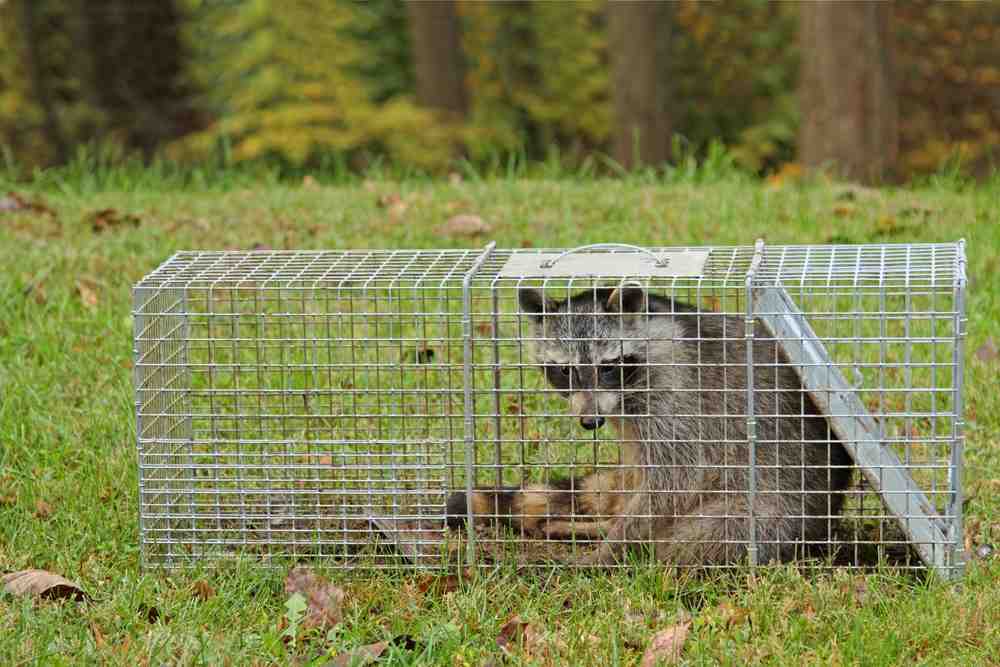

Trapping and Relocating Raccoons: Top 5 Humane Tips

Trapping and relocating raccoons can seem like a straightforward solution for those dealing with raccoon infestations, but there’s more to it than just catching and moving these clever creatures. Here’s a quick overview for those eager to find solutions:
- Understand raccoon behaviors: Nocturnal, territorial, omnivorous, adaptable
- Human-wildlife coexistence: Maintain a safe distance, avoid feeding
- Legal requirements: Know your state’s regulations, obtain necessary permits
Raccoons, known for their adorable faces and nighttime antics, are a common sight in Massachusetts. Their adaptability allows them to thrive in diverse environments, often bringing them too close for comfort to human homes and businesses. They are highly territorial, and their diet includes a mix of fruits, nuts, insects, and sometimes even waste, which makes urban areas quite attractive to them.
Coexisting with raccoons involves understanding their behavior and ensuring that your home or business doesn’t inadvertently attract them. While they may be cute, feeding them or providing easy access to shelter or food can lead to unwanted encounters. To maintain harmony, it’s crucial to follow legal guidelines for their relocation and engage in humane practices.
As Waltham Pest Control, the President & CEO of Waltham Pest Control, I bring over 40 years of experience in pest management. Our team informs on legal aspects and humane practices involving trapping and relocating raccoons. We aim for a positive outcome for both people and wildlife.
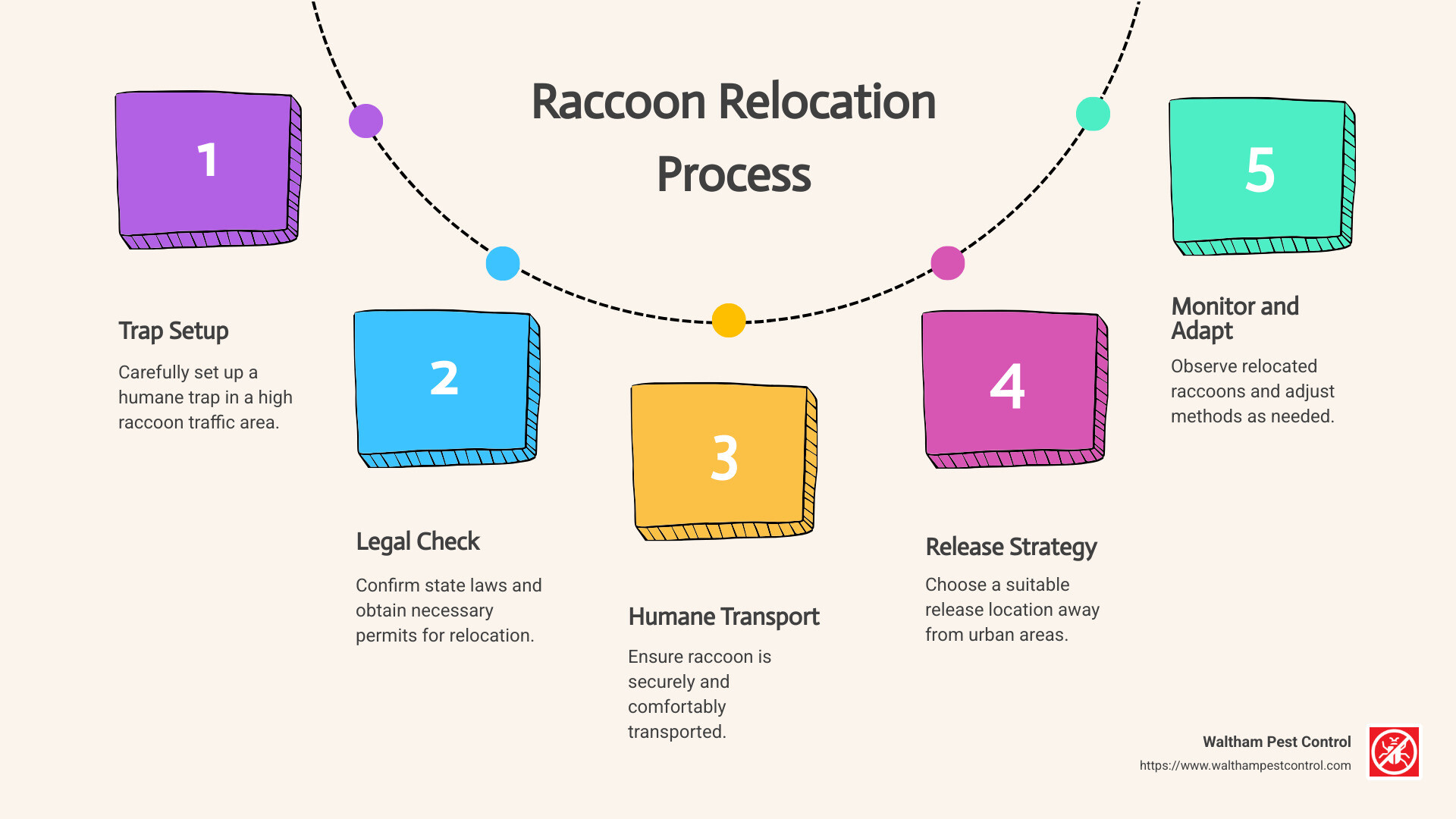
Simple trapping and relocating raccoons word guide:
– are raccoons dangerous
– professional raccoon removal
– raccoon in chimney
Legal Considerations
When it comes to trapping and relocating raccoons, understanding legal considerations is crucial. In Massachusetts, as in many states, there are specific laws governing how you can handle these animals.
State Laws
State laws often dictate whether you can relocate raccoons and, if so, how far you can move them. In some states, it’s illegal to transport raccoons due to their status as Rabies Vector Species (RVS). This means they could potentially carry rabies, posing a public health risk if relocated without proper precautions. It’s essential to check the local regulations to ensure compliance.
Rabies Vector Species
Raccoons are considered Rabies Vector Species, which impacts the laws around their relocation. This classification means that moving them without authorization can contribute to the spread of rabies, a serious disease. Because of this, many states require that captured raccoons be released on-site or humanely euthanized.
On-Site Euthanasia
While it may sound harsh, on-site euthanasia is sometimes mandated by law when relocation isn’t an option. This is primarily to prevent the spread of diseases like rabies. These measures are in place to protect both human and wildlife populations.
Public Lands
Relocating raccoons to public lands, such as parks or state forests, is often prohibited. This is because it can introduce a potential problem animal to a new environment, disrupting local ecosystems and possibly spreading disease. Many professional wildlife operators have agreements with private landowners for relocation purposes, ensuring that any movement of raccoons is done legally and ethically.
Understanding these legal considerations helps ensure that any actions taken are responsible and in line with state regulations. By adhering to the law, you can help protect both the raccoons and the community.
Next, we’ll explore the humane perspectives on trapping and relocating raccoons, focusing on the impact on their survival and potential alternatives.
Humane Perspectives on Trapping and Relocating Raccoons
Trapping and relocating raccoons is often seen as a humane way to deal with nuisance animals. However, it’s a complex issue with several factors to consider.
Temporary Solution
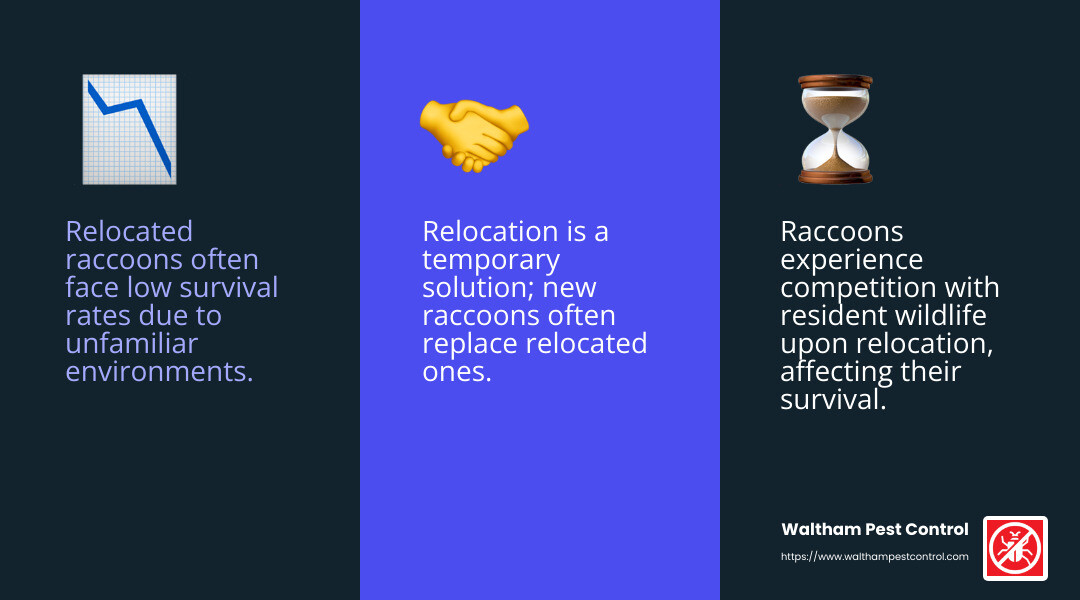
Relocating raccoons may seem like a quick fix, but it’s often only a temporary solution. Raccoons are territorial animals. When one is removed, another may soon take its place. This cycle can continue indefinitely, leading to ongoing issues.
Survival Rates
Relocated raccoons face many challenges. Studies show that their survival rates can be low. They have to find new food sources, shelter, and sometimes even new mates. This is especially difficult in unfamiliar territory and can lead to increased mortality.
Territory Competition
When raccoons are moved to a new area, they may encounter competition from resident wildlife. This can lead to conflicts as they struggle to establish their place in the pecking order. Such competition can further decrease their chances of survival.
Orphaned Kits
One of the most concerning aspects of relocation is the risk of orphaning young raccoons, or kits. If a mother raccoon is trapped and moved during the breeding season, her kits may be left behind. Without their mother, these young raccoons are unlikely to survive.
In the next section, we’ll look at effective alternatives to trapping and relocating raccoons that address these humane concerns while promoting coexistence.
Effective Alternatives to Trapping and Relocating
While trapping and relocating raccoons might seem like a straightforward solution, there are more effective and humane alternatives. These methods focus on preventing issues before they start and ensuring raccoons and humans can coexist peacefully.
Preventative Tactics
Preventing raccoon problems begins with making your property less attractive to these curious creatures. Here are some simple steps:
- Secure Your Trash: Use raccoon-proof garbage cans or fasten lids tightly. Raccoons are crafty and can easily access unsecured trash.
- Remove Food Sources: Avoid leaving pet food outside overnight and clean up fallen fruits from trees. Without easy meals, raccoons are less likely to linger.
- Eliminate Shelter: Close off access to sheds, garages, and attics. Raccoons often seek shelter in these cozy spots.
Exclusion Methods
Exclusion techniques are about keeping raccoons out of specific areas. Some effective strategies include:
- Seal Entry Points: Inspect your home for gaps and holes where raccoons could enter. Use materials like steel wool or hardware cloth to seal these openings.
- Install Fencing: A sturdy fence around gardens or yards can deter raccoons. Make sure it’s at least 3 feet high and buried a foot underground to prevent digging.
Habitat Modification
Changing the environment around your home can discourage raccoons from settling in. Consider these modifications:
- Trim Trees: Raccoons are excellent climbers. Keep tree branches at least 3 feet away from your roof to prevent access.
- Reduce Brush Piles: Piles of brush or wood can provide shelter for raccoons. Clearing these can make your property less inviting.
Humane Pest Control
Sometimes, professional help is the best option. Humane pest control services can provide solutions custom to your specific situation. They focus on:
- Non-lethal Methods: These include using deterrents and repellents that are safe for both animals and humans.
- Expert Advice: Professionals can offer guidance on long-term strategies to keep raccoons at bay, ensuring your property remains raccoon-free.
By using these alternatives, you can address raccoon issues in a way that is both effective and humane. This approach not only resolves immediate problems but also fosters a peaceful coexistence with wildlife.
In the following section, we’ll explore how to safely trap and relocate raccoons when necessary, ensuring their well-being and compliance with legal guidelines.
How to Safely Trap and Relocate Raccoons
When it becomes necessary to trap and relocate raccoons, ensuring their safety and following legal guidelines is crucial. Here’s how to do it right.
Distance Guidelines
Relocating a raccoon requires careful planning. To prevent them from returning, it’s advised to move the raccoon at least five miles away from the capture site, although ten miles is preferable. This distance helps reduce the likelihood of the raccoon finding its way back to the original location.
Handling Precautions
Safety is paramount when dealing with wild animals. Here are some key precautions:
- Use Humane Traps: Choose traps that minimize stress and injury to the animal. Regularly check traps to avoid prolonged confinement, which can lead to dehydration and stress.
- Avoid Direct Contact: When handling the cage, keep fingers away from the bars. Raccoons are unlikely to attack unless provoked, but it’s best to avoid the risk.
- Provide Water: If a raccoon has been trapped for an extended period, offer water through a hose or similar method to prevent dehydration.
Release Strategies
Releasing the raccoon safely is as important as trapping it. Follow these steps:
- Choose the Right Time: Release the raccoon during daylight hours when it’s less active. This reduces the chance of immediate danger from predators.
- Open Space: Ensure the release area is open and allows the raccoon to escape quickly. Avoid releasing in confined spaces where the animal might feel cornered.
- Step Back: Once the cage is open, step back to give the raccoon space. It will likely dash away quickly, seeking safety.
Relocation Areas
Selecting an appropriate relocation area is crucial for the raccoon’s survival. Here are some considerations:
- Avoid Public Lands: Many states prohibit releasing wildlife on public lands. Check local regulations to ensure compliance.
- Natural Habitats: Ideally, choose a location with natural resources like water sources and shelter. However, raccoons relocated to unfamiliar territories may face competition and lower survival rates.
- Avoid Urban Areas: Releasing raccoons in urban or suburban settings might lead to the same issues they caused initially.
By following these guidelines, you can ensure that raccoons are relocated safely and humanely, minimizing stress on the animal and adhering to legal requirements. This method not only addresses immediate concerns but also respects the delicate balance of local ecosystems.
In the next section, we’ll address common questions about the legality and effectiveness of raccoon relocation.
Frequently Asked Questions about Trapping and Relocating Raccoons
Is it legal to relocate raccoons in my state?
The legality of relocating raccoons varies by state, and know the specific laws in your area. In many states, transporting and releasing raccoons is illegal due to their status as Rabies Vector Species (RVS). This classification is in place to prevent the spread of rabies and other diseases. Some states require that raccoons be released exactly where they were caught, or euthanized humanely on-site. To find the rules applicable to your state, check with local wildlife authorities or your state’s fish and wildlife department.
What is the survival rate of relocated raccoons?
Relocating raccoons might seem like a humane solution, but the survival rates are concerning. Studies suggest that more than 50% of relocated raccoons do not survive beyond the first two months. This high mortality rate is due to several factors, including competition with established raccoons for territory, food scarcity, and the challenge of adapting to a new environment. Without their familiar territory and resources, relocated raccoons face significant survival problems.
How far should I relocate a trapped raccoon?
If relocation is legal and necessary, it’s crucial to move the raccoon a significant distance from the capture site. Experts recommend a minimum of five miles, with ten miles being preferable. This distance helps ensure that the raccoon does not return to its original territory. However, relocating too far can increase the difficulty for the raccoon to adapt and survive in a new environment. Always prioritize the raccoon’s well-being and adhere to legal guidelines when considering relocation.
In the next section, we will explore effective alternatives to trapping and relocating raccoons, focusing on preventative measures and humane pest control methods.
Conclusion
At Waltham Pest Control, we understand that dealing with raccoons can be a challenge. But these animals are a natural part of our environment. Our approach emphasizes humane solutions that prioritize both animal welfare and human safety.
Relocating raccoons might seem like a quick fix, but it often leads to more problems than it solves. High mortality rates among relocated raccoons highlight the need for alternative strategies. Instead of moving them, we focus on coexistence strategies. This means using methods that prevent conflicts without harming the animals.
Preventative tactics are key. By securing garbage, sealing entry points, and modifying habitats, we can reduce the chances of unwanted raccoon visits. These steps not only protect your property but also help raccoons stay in their natural habitats where they thrive.
Our team at Waltham Pest Control is committed to providing effective and humane pest control solutions. With over 40 years of experience in Eastern Massachusetts, we offer licensed and insured services that are both cost-effective and environmentally friendly. If you’re dealing with raccoon issues, let us help you find a solution that respects both your space and the wildlife around you.
For more information on our humane raccoon control services, visit our Humane Raccoon Control page.
By working together, we can create a harmonious environment where humans and wildlife coexist peacefully.