

How far do hornets travel from their nest: Surprising 2025
Understanding Hornet Travel: A Quick Overview
When you ask yourself, how far do hornets travel from their nest, you’re touching on a key aspect of their behavior. Understanding their range is crucial for homeowners, especially if you live in areas like Eastern Massachusetts. This knowledge helps you protect your property and family.
Here’s a quick answer:
- European hornets and bald-faced hornets can travel up to 5 miles from their nest.
- They typically forage for food and resources within hundreds of yards to 1-2 miles of their home.
- This distance changes based on how much food is available and where their nest is built.
- Interestingly, European hornets are known to fly at night, which can extend their foraging range.
Knowing these travel patterns helps you understand potential risks and why hornets might be on your property even if you don’t see a nest nearby.
I’m Waltham Pest Control, President & CEO of Waltham Pest Control. With over 40 years of experience, my team and I deeply understand pest behaviors like how far do hornets travel from their nest, which is vital for effective and safe pest control solutions.
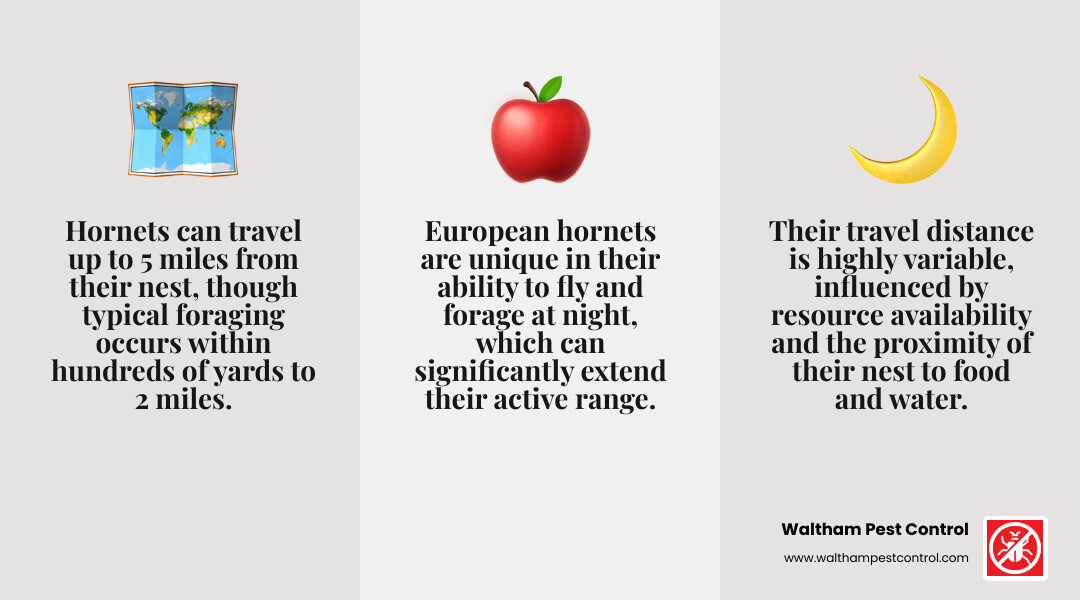
Quick look at how far do hornets travel from their nest:
The Surprising Answer to: How Far Do Hornets Travel From Their Nest?
When we start asking how far do hornets travel from their nest, many people picture them buzzing just a few yards away. But here’s the surprising truth: it’s not a simple, fixed number! Their travel distance is incredibly variable, shifting and changing based on what they need and what’s available. While you might typically see them foraging within hundreds of yards of their home, these industrious insects can venture much, much further. Some sources even suggest they can travel up to a mile, and for certain species like European hornets and bald-faced hornets, they’ve been observed covering distances as great as five miles in search of resources. That’s quite a commute for a tiny insect, isn’t it?
To put that into perspective, it’s pretty impressive for an insect. While hornets generally prioritize closer food sources to save energy, their ability to cover such ground is a testament to their survival instincts. For comparison, even honey bees, famous for their foraging flights, often work within a 1-2 mile radius, similar to hornets. However, some honey bees have been recorded flying even further when absolutely necessary. So, while a hornet’s average day might involve shorter trips, they’re certainly capable of going the distance if their colony demands it.
It’s the worker hornets who are the real road warriors here. They’re the tireless providers, constantly out scouting for protein to feed the hungry larvae back at the nest and sugary delights to fuel the adult hornets. The sheer needs of a growing hornet colony truly dictate their travel plans. Imagine a busy colony with hundreds, or even up to a thousand workers!
That’s a lot of mouths to feed, pushing these workers to expand their search radius when local resources start to dwindle. Understanding these incredible travel patterns is a huge part of managing potential encounters around your home. If you’re curious about the science behind insect foraging, there’s fascinating research out there, like what you can find from Penn State Extension.
Factors That Influence a Hornet’s Journey
Many different elements come into play when determining how far do hornets travel from their nest. It’s not just about how far they can fly, but rather how far they need to fly to keep the colony thriving.

The biggest driving force is often food and water sources. If there’s an easy buffet of their favorite treats and plenty of water right near the nest, hornets won’t bother flying far. Why would they? But if those resources become scarce, or if the local supply runs dry, they’ll happily venture further afield to find what they need. Think of it like us driving a little further for a specific grocery item if our local store is out.
Then there are seasonal changes that play a big role. As summer turns to fall, hornet colonies reach their peak size, meaning there are more hungry mouths than ever. This increased demand, combined with natural food sources starting to dwindle, often means hornets have to travel greater distances. Plus, warmer springs can lead to earlier nest establishment and larger colonies, setting the stage for more extensive foraging later in the year.
The colony size itself is a major factor. A small, brand-new colony in the spring doesn’t have nearly as many hungry larvae or adults to feed. But as the queen lays more eggs and the worker population explodes, the demand for food skyrockets. This rapid growth directly pushes workers to forage over a much wider area.
Even weather conditions can affect their commute. Heavy rain or strong winds can make flying difficult, effectively shortening their daily range. They’re much more efficient and active foragers when the conditions are calm and warm. And while less common, if hornets encounter a lot of predation pressure around a particular food source, they might choose to fly further to find a safer, quieter spot to gather food. All these variables help us understand their behavior and why you might see them where you do.
How far do European hornets travel from their nest for food?
European hornets (Vespa crabro), the main species you’ll find here in Eastern Massachusetts, aren’t picky eaters, and their varied diet is a big reason why they’ll travel as far as necessary to keep their colony fed.
They absolutely love sap from trees. You might even notice them “girdling” or stripping bark from branches to get to the sweet, sugary sap underneath. This is a primary source of quick energy for the adults. But they’re also formidable hunters, preying on a wide range of insects, including flies, caterpillars, grasshoppers, and even larger insects like cicadas. They’ll chew up their insect prey to feed to their larvae, who then produce a sugary liquid that the adults drink in return – a neat little exchange! This makes them natural pest controllers in some ways, but it also means they can sometimes prey on beneficial insects, like honey bees.
Later in the season, you’ll often find them drawn to fallen fruit. Sweet, decaying fruit is like an all-you-can-eat buffet for them, which is why you might see them congregating under fruit trees or around orchards. Like their bee cousins, they’ll also sip nectar from flowers to get their sugar fix.
Essentially, their foraging is a delicate balance between needing protein (for the growing larvae) and sugar (for the adult hornets to power their flights and daily activities). If protein is plentiful right near the nest, they might not need to go far. But if sweet, sugary treats like sap or fallen fruit are scarce, or if their insect prey is hard to come by, they will absolutely extend their search radius.
This constant quest for resources is key to truly understanding how far do hornets travel from their nest to find their daily meals. And if you’re ever curious about the differences between hornets and other stinging insects, we have a helpful guide on Understanding Hornets, Wasps, and Bees for Safe Removal.
Common Hornet Nesting Sites and Their Impact on Foraging
Where hornets decide to build their homes plays a huge role in determining how far do hornets travel from their nest. Think of it this way: if you lived next door to your favorite restaurant, you probably wouldn’t drive across town for dinner every night. Hornets operate on the same principle of convenience.
These resourceful insects are remarkably adaptable when it comes to real estate choices. They’ll set up shop in both urban neighborhoods and rural countryside throughout Eastern Massachusetts. The key factor? They want protection from weather and predators, plus easy access to food and water.
If your property has flowering gardens, fruit trees, or sits near wooded areas, you’re essentially offering hornets a prime location with a built-in buffet. This proximity to resources means they won’t need to venture far, but it also means you’re more likely to encounter them regularly.
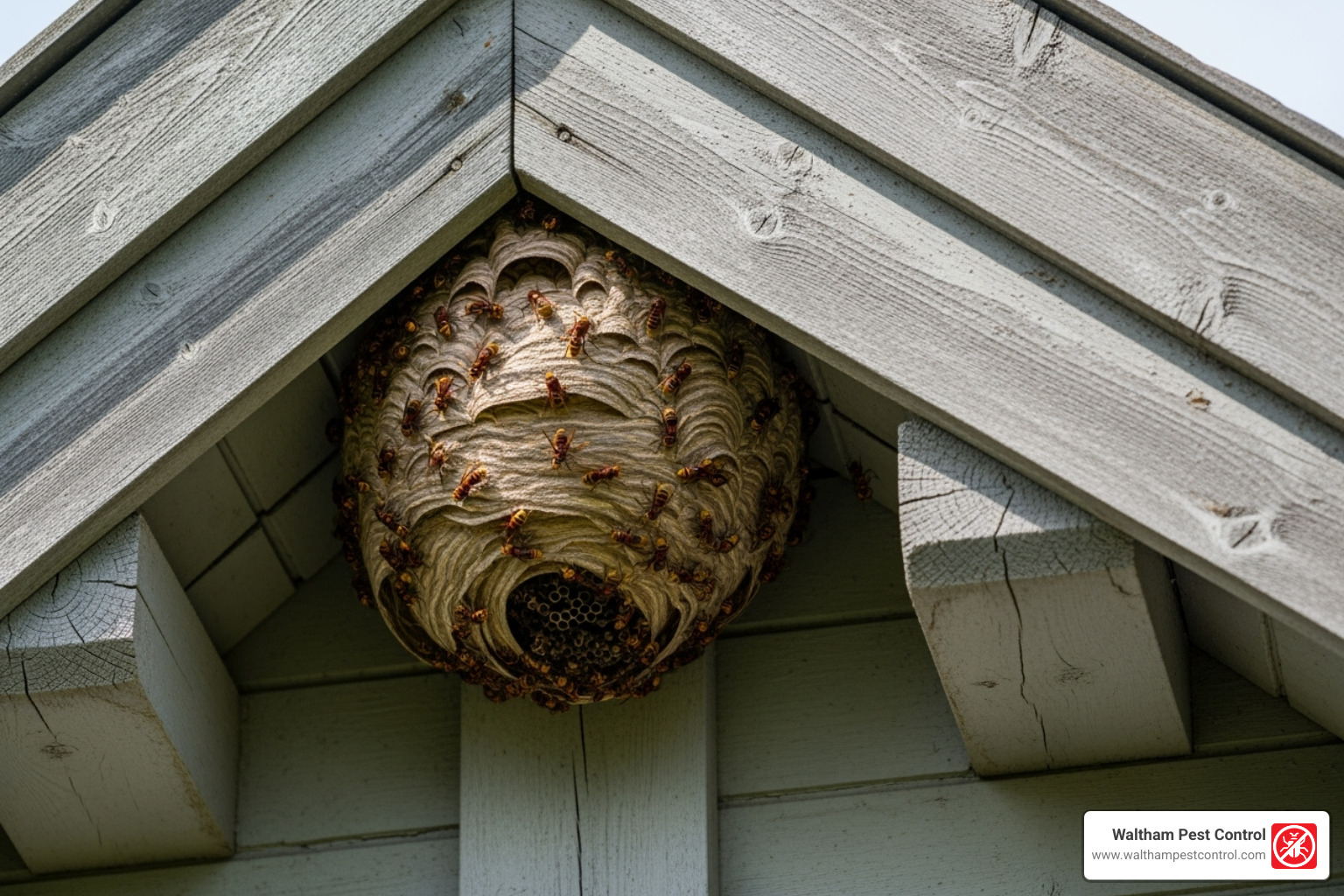
In urban settings, hornets get creative with man-made structures, while rural areas offer more natural hideaways. The difference in environment doesn’t change their basic needs, but it does influence their behavior patterns and foraging distances.
If you suspect a nest anywhere on or near your property, resist the urge to investigate closely. Professional assessment is always the safest approach. Our team at Waltham Pest Control specializes in Hornet and Wasp Nest Removal Services.
Aerial Nests: High-Risk and Highly Visible
Some hornet nests are impossible to miss. These aerial masterpieces, particularly those built by bald-faced hornets, hang like gray paper lanterns from trees, eaves, and other liftd spots. Despite their name, bald-faced hornets are actually a type of yellowjacket, but their impressive nest-building skills earn them plenty of respect.
These architectural wonders are crafted from chewed wood fibers mixed with saliva, creating that distinctive papery appearance. The result often looks like a large football or teardrop hanging from a branch.
You’ll commonly find these aerial nests tucked into trees and shrubs where dense foliage provides natural camouflage. Eaves and overhangs of homes offer perfect shelter from rain and wind. Sheds and attics provide the quiet, undisturbed environment hornets prefer, while barns and outbuildings offer spacious, rarely visited locations.
The growth rate of these nests can be startling. What seems like a small nest one week can appear to have grown “overnight” into a substantial structure. In warmer climates, some bald-faced hornet nests reach impressive dimensions – up to 2-3 feet long and 20 inches wide.
The visibility of aerial nests is both a blessing and a curse. While they’re easier to spot and avoid, they’re also home to some of the most aggressive hornets you’ll encounter. Bald-faced hornets take nest defense seriously, and their aerial fortresses are well-guarded. For these particular challenges, we offer specialized Bald-Faced Hornet Nest Removal services.
Hidden Nests: The Dangers in Walls and Underground
Not all hornets advertise their presence with visible nests. Many species, particularly European hornets, prefer the “stealth approach” – building their homes in concealed locations that can catch homeowners completely off guard.
These hidden nests present a unique danger because findy usually happens by accident. Imagine trimming hedges near a wall void, moving firewood with a hidden nest, or simply walking across your yard over an underground colony. The element of surprise works in the hornets’ favor, not yours.
Wall voids are particularly popular with European hornets. They’ll slip through surprisingly small cracks and establish colonies inside hollow wall spaces. You might hear a subtle buzzing or humming sound emanating from within your walls – that’s often your first clue.
Hollow trees and logs provide natural cavities that hornets find irresistible. Chimneys that aren’t regularly used offer dark, protected spaces perfect for nest building. Attics and roof spaces appeal to hornets for the same reasons they like wall voids – privacy and protection.
Here’s something interesting: abandoned beehives are like move-in ready homes for European hornets. They’ll take over the existing structure, saving themselves construction time. Underground burrows are favored by ground-nesting species (often mistaken for hornets due to their intimidating size). These subterranean nests might only be visible as entrance holes in sandy soil or under vegetation.
The real danger with hidden nests lies in accidental encounters. Hornets are naturally protective of their homes, and when you unknowingly disturb a nest, their defensive response can be swift and painful. Multiple stings are common in these surprise meetings.
If you suspect an underground nest or any hidden colony, don’t attempt investigation yourself. Our team is fully equipped for Hornet Nest in the Ground Removal and other challenging locations.
Why Hornet Travel Patterns Matter for Your Safety
Understanding how far do hornets travel from their nest isn’t just fascinating science—it’s crucial information that can keep you and your family safe. When hornets can travel miles from their home base, it means you could encounter these stinging insects almost anywhere, even if there’s no visible nest on your property.
Here’s what makes this particularly concerning: hornets are naturally defensive creatures, especially when they feel threatened. Unlike honey bees that die after stinging once, hornets have smooth stingers that allow them to deliver multiple painful stings. A single angry hornet can sting you several times, and if you accidentally disturb a nest, you might face an aggressive swarm.
The pain from a hornet sting comes from venom containing acetylcholine, which causes immediate, intense discomfort. While most people can handle a single sting (though it’s certainly unpleasant), multiple stings can lead to more serious reactions. For those with allergic reactions to insect venom, even one sting can trigger life-threatening anaphylactic shock, requiring immediate emergency medical care.

Severe reactions can include nausea, fever, vomiting, headache, fainting, diarrhea, and convulsions. This is why knowing their travel patterns and behavior is so important for prevention and safety.
Are European Hornets Active at Night?
Here’s something that surprises many homeowners: European hornets are active at night. While most wasps call it quits when the sun goes down, European hornets continue their foraging activities well into the evening hours. This nocturnal behavior significantly extends their effective foraging range and increases the chances of unexpected encounters.
Their nighttime activity often leads to some rather alarming situations. You might hear them banging on windows repeatedly, drawn to the lights inside your home. They’re also commonly found buzzing around outdoor light fixtures, porch lights, and any other illuminated areas. This attraction to lights can bring them much closer to human activity areas than you might expect.
Imagine stepping out onto your lit porch in the evening and encountering a large European hornet that’s traveled from a nest potentially miles away. This unique hornet behavior means their effective range extends beyond just daylight hours, creating an increased risk of encounters when you least expect them.
For more detailed information about this fascinating and somewhat concerning behavior, check out our article: Are Hornets Active at Night?
How far do hornets travel from their nest and what does it mean for prevention?
When you realize that how far do hornets travel from their nest can be measured in miles, it changes how you think about prevention. You can’t just look for a nest in your immediate yard and assume you’re safe. Hornets from a colony a mile or more away could still be regular visitors to your property.
The key to effective prevention is making your property as unattractive as possible to these long-distance foragers. Sealing cracks and holes around your home’s foundation, siding, and utility entry points prevents hornets from finding cozy spots to build new nests. Don’t forget to repair screens on windows and doors—these small barriers can make a big difference.
Managing trash and compost properly is crucial since hornets are drawn to decaying organic matter and sugary residues. Keep those garbage cans tightly sealed and clean them regularly to eliminate lingering odors. If you compost, make sure your pile is well-managed and covered.
Removing fallen fruit from under your trees is especially important during late summer and fall when hornets are most active. That overripe apple or pear that seems harmless to you is like a neon sign advertising “free sugar” to hungry hornets.
Limiting attractants during outdoor activities can prevent unwanted visitors during your barbecues and gatherings. Keep food and drinks covered, clean up thoroughly afterward, and avoid leaving pet food outside for extended periods.
Finally, consider changing your outdoor lighting to yellow bulbs, which are less attractive to insects, including those night-flying European hornets.
While these prevention steps can significantly reduce hornet activity around your home, it’s important to understand their limitations. These measures work best as preventative strategies, but if you already have an active nest nearby—especially a large one in a high-traffic area—these steps alone won’t solve your problem. For active infestations, professional removal is recommended for both safety and effectiveness.
Professional Hornet Control: The Safest Solution
When you understand how far do hornets travel from their nest and witness their aggressive nature firsthand, the appeal of DIY removal quickly fades. After four decades of experience at Waltham Pest Control, we’ve seen too many homeowners learn this lesson the hard way.
The reality is that attempting to remove a hornet nest yourself puts you at serious risk. Multiple stings are almost guaranteed when you disturb a nest without proper protective gear. Hornets can sting repeatedly, and a single encounter could result in dozens of painful stings from an angry colony defending their home.
For anyone with allergic reactions to insect venom, the stakes are even higher. Even if you’ve never had an allergic reaction before, multiple stings can sometimes trigger severe responses or sensitize you for future encounters. What starts as a weekend project can quickly become a medical emergency.
Incomplete nest removal is another common problem we see with DIY attempts. Without the right knowledge and tools, many homeowners remove only the visible portion of the nest or fail to eliminate the queen. This often makes the remaining hornets more aggressive and can lead to the colony rebuilding elsewhere on your property.
Professional pest control brings expertise that makes all the difference. Our licensed and insured technicians understand hornet behavior patterns, know where to find even the most hidden nests, and use specialized protective equipment that keeps everyone safe during the removal process.
We also use targeted treatments specifically designed to eliminate entire colonies, including the queen. This comprehensive approach ensures the problem is fully resolved, not just temporarily disrupted.
What is the Average Cost of Hornet Nest Removal?
The cost of professional hornet nest removal varies significantly based on several factors. These are average costs based on internet data and not actual costs for Waltham Pest Control. Our pricing is customized to each specific situation after a thorough assessment.
Here’s a table comparing factors that affect professional removal cost:
| Factor | Description | Impact on Cost |
|---|---|---|
| Nest Location | Easily accessible nests cost less than those in walls, attics, or underground | Low to High |
| Nest Size | Larger, established colonies require more treatment and time | Medium to High |
| Accessibility | Height, confined spaces, and structural barriers increase complexity | Medium to High |
| Species of Hornet | Different species require different approaches and safety measures | Low to Medium |
| Time of Season | Peak season (late summer/early fall) may affect pricing | Low to Medium |
Based on internet research, average cost ranges typically fall between $150 on the low end and $750 or more on the high end, depending on these factors. However, these are general estimates, and actual costs can vary significantly based on your specific situation.
Many professional services, including ours, offer guaranteed results and follow-up visits if needed. This peace of mind, combined with the safety benefits, makes professional removal a wise investment for most homeowners.
For more detailed information about why Massachusetts residents should choose professional removal, you can read about Why Rely on Professionals for Hornet Nest Removal. You can also learn more about our specific pricing considerations at Cost to Remove Hornets Nest.
