
Get Rid of Raccoons on Roof: Critical 3 Steps 2025
Why Raccoons on Your Roof Are More Than Just a Nuisance
If you need to get rid of raccoons on roof, here are the key steps professionals recommend:
- Identify access points – Check tree branches, downspouts, and damaged areas
- Remove attractants – Secure garbage, pet food, and bird feeders
- Install barriers – Use metal flashing, trim branches 6-8 feet from roof
- Professional removal – Humane trapping and exclusion by licensed experts
- Seal entry points – Close gaps with steel mesh after removal
- Clean and repair – Sanitize contaminated areas and fix damage
That scratching and thumping you hear at night is more than an annoyance—it’s a warning sign. Raccoons are excellent climbers whose occasional roof visits can quickly escalate into torn shingles, damaged vents, and costly attic invasions.
These masked bandits cause significant structural damage and create serious health risks. Their feces can contain raccoon roundworm eggs, which are dangerous to humans, and a small entry hole can lead to major water leaks and expensive repairs. As nocturnal animals, raccoons use their keen sense of smell to find weak spots like damp wood, ripping and chewing their way into your attic.
I’m Waltham Pest Control, President & CEO of Waltham Pest Control, with over 40 years of experience helping Eastern Massachusetts homeowners get rid of raccoons on roof situations safely and effectively. Our licensed professionals understand raccoon behavior and use proven methods to protect your property from these intelligent urban wildlife invaders.
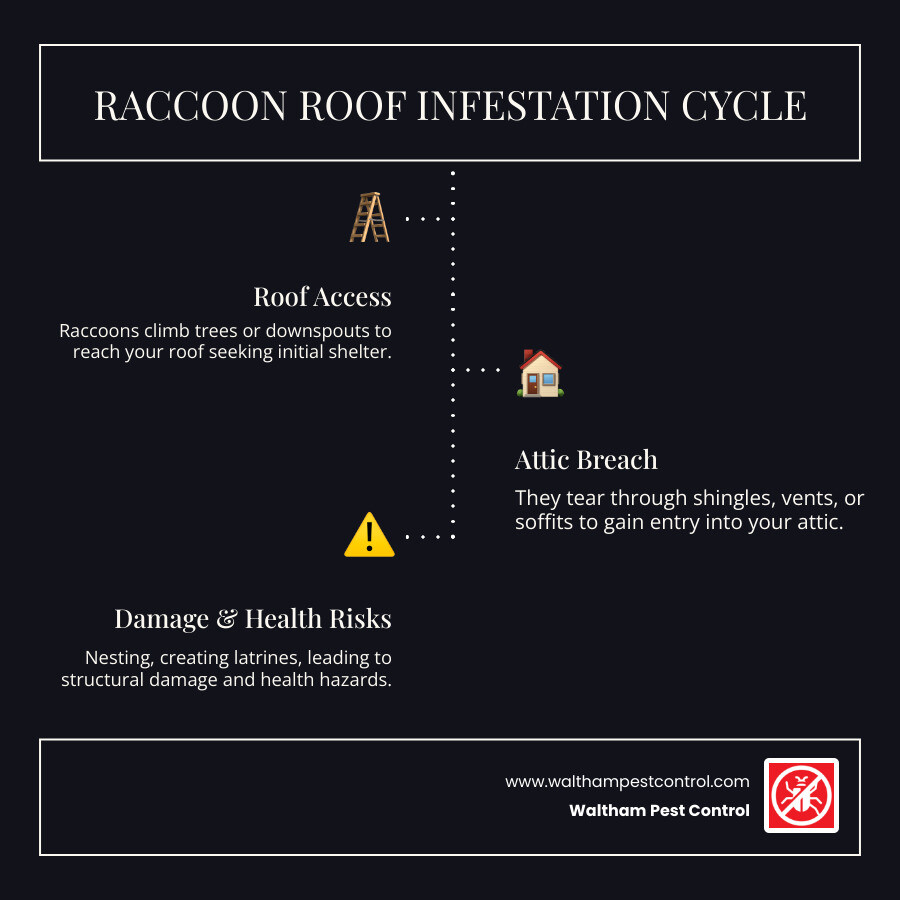
Get rid of raccoons on roof vocab to learn:
Signs of Raccoons on Your Roof and in Your Attic
Recognizing the early warning signs of raccoons is crucial to preventing a minor nuisance from becoming a major headache. These bold animals leave plenty of evidence, and knowing what to look for can help you act before they become permanent residents in your attic.
The Telltale Clues on Your Rooftop
Be alert for these signs of raccoon activity on your roof:
- Nocturnal Noises: Loud thumping, scratching, or chattering sounds at night are classic indicators.
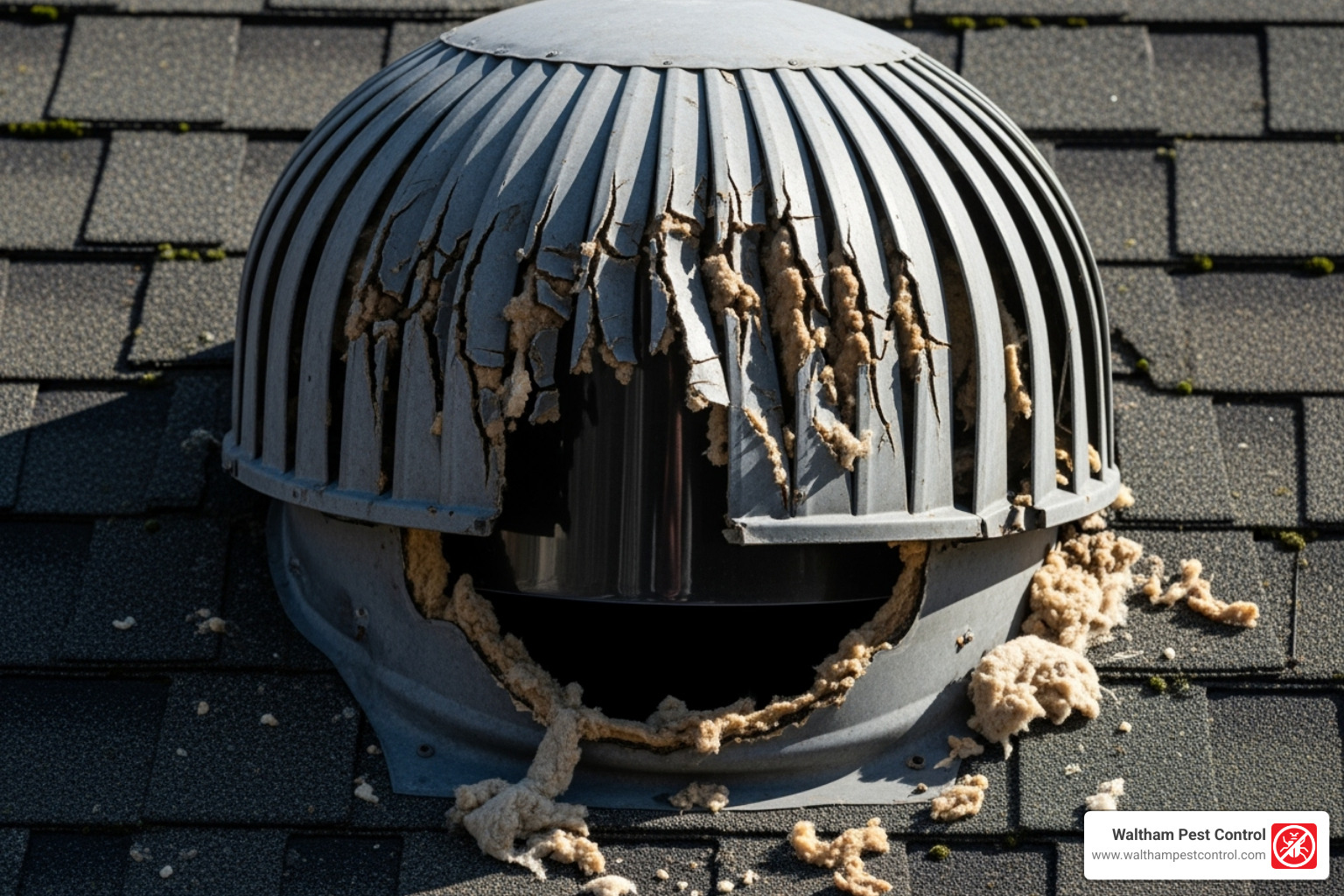
- Physical Damage: Look for torn shingles, damaged roof vents, and claw marks on downspouts or siding. Raccoons use their sharp claws and strength to exploit weak spots.
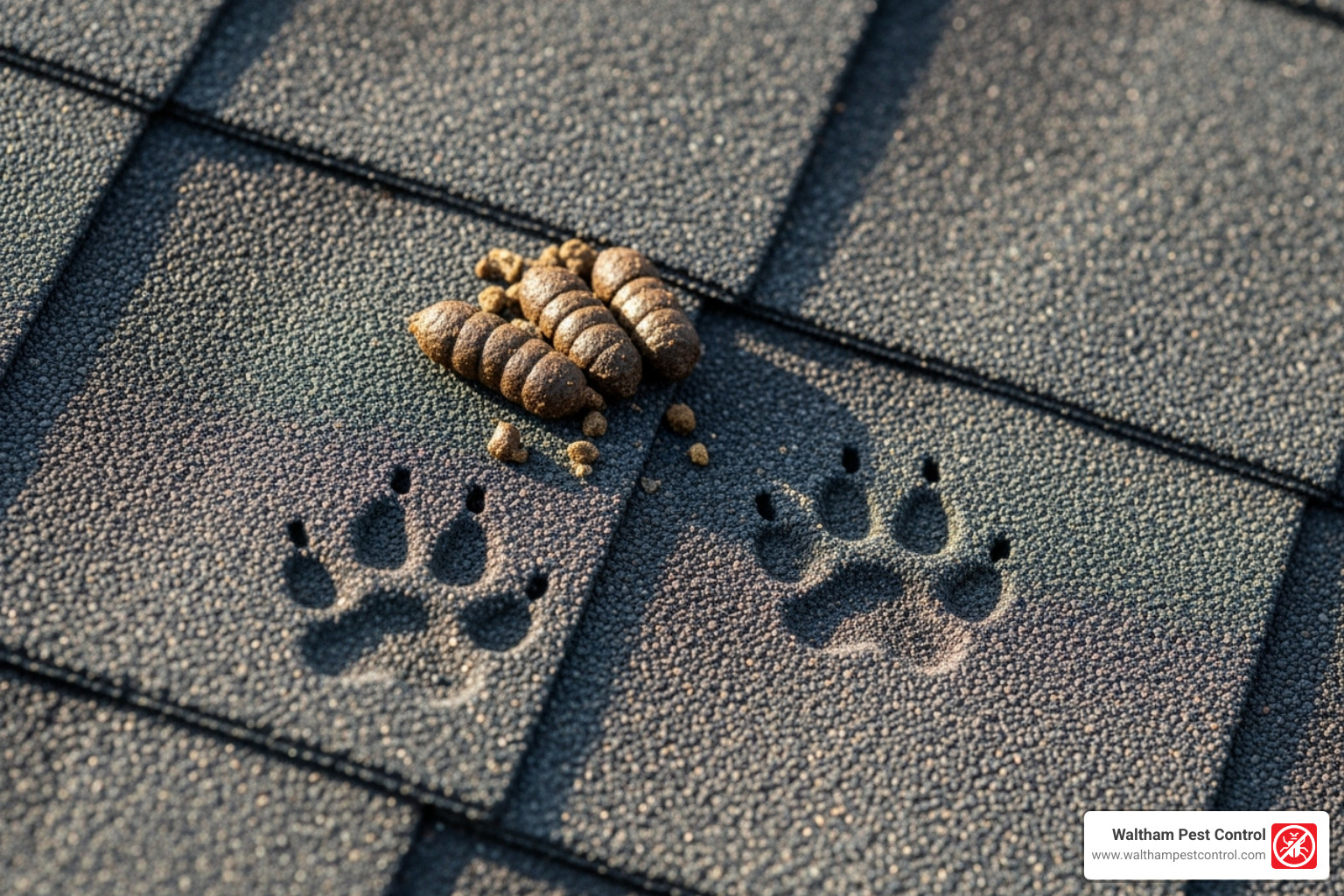
- Latrines: Raccoons often use a specific area on a roof or in a gutter as a communal toilet. Their droppings are 3-5 inches long and may contain undigested seeds or berries.
Damage and Dangers: What’s at Stake?
A raccoon on the roof can quickly lead to thousands of dollars in damage and serious safety issues.
- Structural Damage: Raccoons can weigh up to 30 pounds and will rip off shingles, tear through soffits, and destroy vents to find shelter, especially females looking to nest.
- Water Leaks: Even a small hole can allow water to enter, causing mold, rotting wood, and extensive damage to ceilings and walls.
- Fire Hazards: Once in an attic, raccoons often chew on electrical wiring, creating a serious risk of house fires.
- Insulation Damage: They will tear, flatten, and contaminate attic insulation with urine and feces, destroying its energy efficiency and creating health hazards.
For more details on the risks, see our articles on Are Raccoons Dangerous and our Professional Raccoon Latrine Removal services.
Associated Health Risks from Raccoon Presence
Property damage is costly, but the health risks are even more serious. Raccoons carry diseases and parasites that threaten your family and pets.
- Raccoon Roundworm: Raccoon feces often contain raccoon roundworm (Baylisascaris) eggs. If ingested, these microscopic parasites can cause severe neurological damage or even death. The eggs can become airborne in enclosed spaces like attics.
- Leptospirosis: This bacterial disease, spread through raccoon urine, can contaminate surfaces and cause severe illness in humans and pets.
- Rabies: As a primary rabies vector, any raccoon acting strangely should be avoided and reported to professionals immediately.
- Other Parasites: Raccoons can also carry fleas, ticks, and other diseases like Giardia and Salmonella.
Due to these risks, never attempt to clean up raccoon waste yourself. Professionals are equipped to handle contaminated materials safely, following CDC recommendations for cleanup.
How to Get Rid of Raccoons on Your Roof: A Step-by-Step Guide
Effective raccoon removal is a complex process requiring a strategic, multi-step approach. Attempting a quick DIY fix often fails and can worsen the problem. This guide outlines the professional method for safe and effective raccoon removal that addresses both the immediate issue and future prevention.
Step 1: Professional Inspection and Identification
A successful removal begins with a thorough professional inspection to understand the full scope of the problem.
- Identify Access Points: Technicians carefully inspect your property for all potential entryways, including overhanging tree branches, downspouts, chimneys, and any damage to soffits, fascia, or roof vents.
- Assess the Infestation: We determine if you have occasional visitors or an established den in your attic, which dictates the removal strategy.
- Check for Young: This is a critical step. Around 96% of raccoons in attics are females with babies. Removing a mother without her young is inhumane and creates bigger problems, as she will cause more damage trying to return, and the orphaned babies will die in your home.
For comprehensive assistance, explore our Raccoon Removal Services.
Step 2: Humane Removal and Exclusion
Once the situation is assessed, we use humane strategies to remove the animals and prevent their return.
- Humane Trapping & One-Way Doors: We use professional-grade live traps or specialized one-way doors that allow raccoons to exit your home but not re-enter. These methods are highly effective and humane, but we never use a one-way door if babies are present, as they would be trapped inside.
- Handling Mothers and Babies: If a mother and her young are present, we never separate them. Instead, we use deterrents to encourage the mother to relocate her family on her own.
- Seal Entry Points: After confirming all raccoons are gone, we seal all entry points with durable, chew-proof materials like 16-gauge galvanized steel mesh to prevent re-entry.
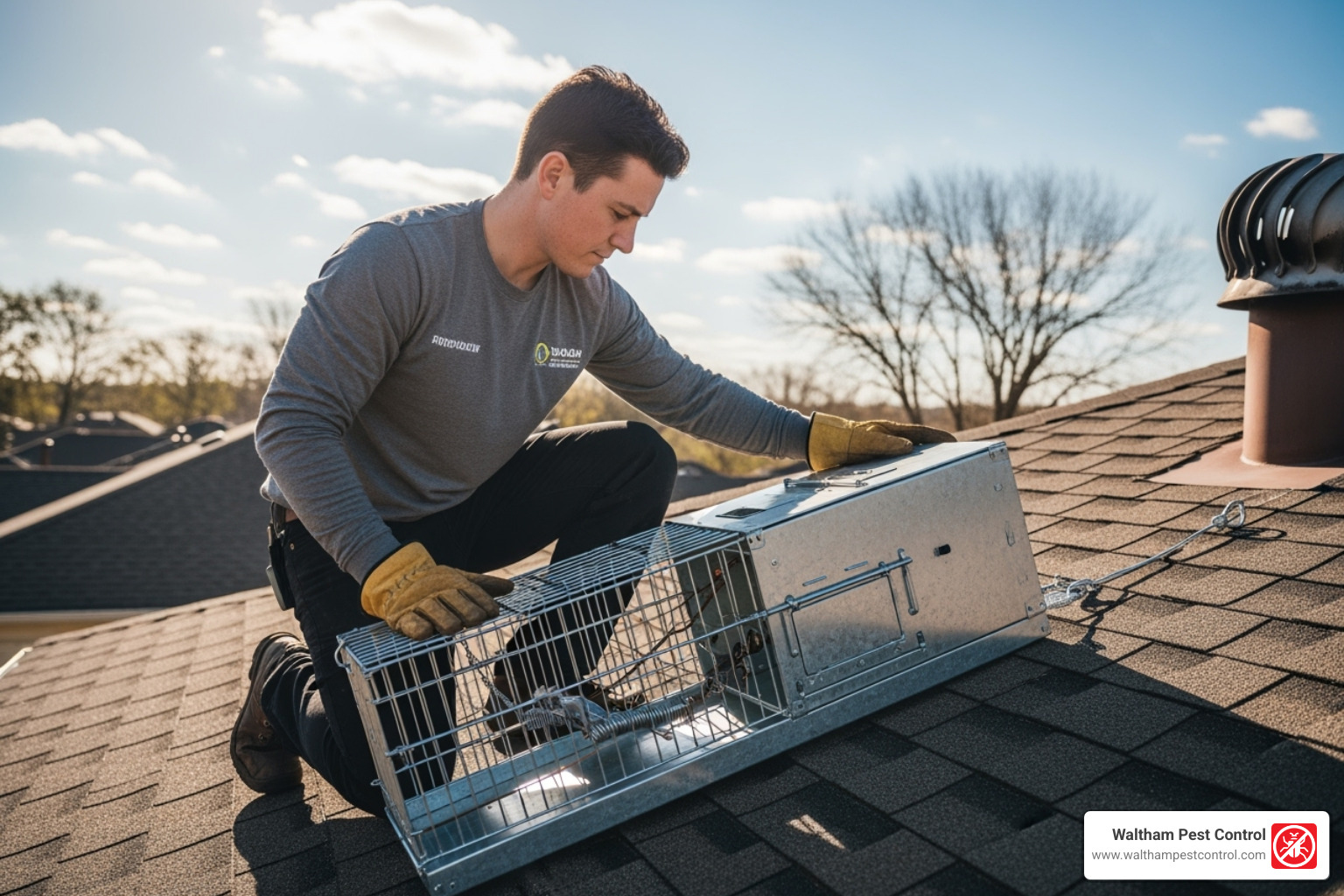
Learn more about our humane approach at Trapping and Relocating Raccoons.
Step 3: Cleanup and Damage Repair
Removing the raccoons is only half the battle. The final step is addressing the aftermath to ensure your home is safe and secure.
- Sanitize Latrine Sites: We safely remove hazardous raccoon feces and decontaminate the areas to eliminate dangerous parasites, bacteria, and odors.
- Repair Damage: This includes removing and replacing contaminated insulation, repairing chewed electrical wires to eliminate fire hazards, and fixing all holes in your roof and vents to prevent water leaks and future infestations.
This comprehensive cleanup and repair phase is critical. For details, visit our page on Trapping Raccoons in Attic.
Preventing Future Raccoon Roof Parties
After removing raccoons, prevention is the most effective long-term solution to ensure they don’t return. By making your property less attractive and accessible, you can avoid future invasions. This section provides actionable steps to protect your home.
Making Your Roof Less Accessible
Raccoons are resourceful climbers, but you can deter them with the right modifications to your home’s exterior.
- Trim tree branches at least 6-8 feet away from your roofline to remove their favorite access highway.
- Install metal flashing around corners to create a slippery surface they can’t grip.
- Use downspout guards or anti-climb spikes to make vertical pipes less scalable.
- Install a sturdy metal chimney cap to block what looks like a perfect den.
- Regularly inspect and reinforce soffits and vents with steel mesh to close off potential weak spots.
Eliminating Raccoon Attractants
Raccoons are drawn to your property by the promise of food. Removing these attractants is a critical step.
- Secure your garbage cans with locking lids or store them in a garage until collection day.
- Bring pet food indoors every night. Lingering scents will attract raccoons.
- Clean up fallen fruit from your yard regularly.
- Remove bird feeders, or use wildlife-proof designs and clean up scattered seeds daily, as they are major raccoon magnets.
By taking these preventative steps, you put up a “no vacancy” sign for raccoons. For more strategies, check out our guide on How to Get Rid of Raccoons.
When to Call a Professional for Raccoon Removal
While DIY prevention is valuable, raccoon removal involves serious risks and is best left to professionals. Knowing when to call for expert help is critical for a safe, legal, and successful outcome.
Why DIY Methods to Get Rid of Raccoons on the Roof Often Fail
Amateur attempts at raccoon removal often waste money and make the problem worse.
- Ineffective Repellents: Store-bought repellents like mothballs, ammonia, or ultrasonic devices rarely work. Raccoons are intelligent and quickly adapt, ignoring them to get to a safe shelter.
- Dangers of Handling Wildlife: A cornered raccoon will bite or scratch to defend itself, posing a risk of injury and disease transmission, including rabies.
- Improper Trap Use: Effective trapping requires knowledge of proper trap types, placement, and baiting. It is also dangerous to handle traps on a roof without safety equipment.
- Legal Issues: In Massachusetts, it is illegal for unlicensed individuals to trap and relocate raccoons. This is to prevent the spread of diseases like rabies.
- Risk of Separating Families: The most common DIY mistake is trapping a mother raccoon while her babies are left to die in your attic or walls. This is inhumane and leads to horrible odors and a frantic mother causing even more damage to get back to them.
For more on this topic, visit our Humane Raccoon Control page.
The Professional Advantage
Calling a professional wildlife control service is the safest and most cost-effective solution in the long run.
- Licensed and Insured: Our technicians at Waltham Pest Control are licensed and insured to handle wildlife legally and safely throughout Eastern Massachusetts.
- Experience and Expertise: With over 40 years of experience, we understand raccoon behavior, can identify all entry points, and know how to handle situations involving babies.
- Proper Equipment: We use professional-grade traps, exclusion materials, and personal protective equipment (PPE) to ensure the job is done safely and effectively.
- Guaranteed Results: We don’t just remove the raccoons; we secure your home against future invasions and guarantee our work.
- Knowledge of Local Laws: We are experts in Massachusetts wildlife regulations, ensuring all actions are compliant and humane.
Frequently Asked Questions about Getting Raccoons Off Your Roof
Here are answers to the most common questions we receive about raccoon removal.
How much does it cost to get rid of raccoons on a roof?
The cost varies widely depending on the complexity of the situation. Factors include the severity of the infestation, the location of the raccoons (roof vs. attic), and the extent of any damage requiring repair.
Based on internet data from various sources, homeowners typically see costs ranging from a few hundred dollars for basic removal to several thousand dollars when extensive repairs are needed. Some report initial removal costs around $300-500 per raccoon, while comprehensive cleanup and repairs can reach $5,000-15,000 in severe cases. These are average costs based on general internet data and are not actual costs for Waltham Pest Control; we provide a custom quote after a thorough inspection.
Are there any humane ways to get rid of raccoons on the roof?
Yes, absolutely. Humane methods are the core of professional wildlife control.
- Exclusion: The most humane approach is using one-way doors that let raccoons leave but not re-enter.
- Live Trapping: When trapping is necessary, professionals use live traps and have protocols to reunite mothers with their young so the family can relocate together.
- Prevention: The most humane method of all is making your property unappealing so raccoons choose to live elsewhere.
The Humane Society offers guidance on choosing a humane wildlife control company.
Can raccoons cause serious damage to a roof?
Yes, the damage can be extensive and costly. Their sharp claws and strength allow them to tear through shingles, wood, and vents to access attics. This initial damage can lead to significant secondary problems.
- Water Damage: Openings created by raccoons lead to leaks, causing rotted wood, ceiling stains, and mold.
- Structural Issues: Their acidic latrines can degrade roofing materials over time.
- Fire Hazards: Once inside an attic, they often chew on electrical wiring.
Addressing a raccoon problem quickly is the best way to prevent a minor issue from turning into thousands of dollars in repairs.
Secure Your Home from Raccoons Today
Hearing scratching at night or seeing damaged shingles means a raccoon on your roof is threatening your property and health. These intelligent creatures are not just visiting; they are looking for a permanent home in your attic. The damage they cause—from creating fire hazards by chewing wires to causing water leaks and spreading disease—can quickly escalate into thousands of dollars in repairs.
Acting quickly at the first sign of trouble is key. The longer you wait, the more difficult and expensive the problem becomes, especially since most attic raccoons are mothers with babies.
Don’t let raccoons take over your home. For guaranteed and humane raccoon control in Eastern Massachusetts, trust the licensed and experienced professionals at Waltham Pest Control. With over 40 years of service, we know how to get rid of raccoons on roof situations safely, effectively, and permanently. Our team understands raccoon behavior, uses proper safety equipment, and follows all Massachusetts wildlife laws. We don’t just remove the raccoons; we secure your home against future invasions.
Contact us today for an inspection and a customized solution to restore your peace of mind. Your roof should be protecting you, not housing raccoons.
