
Trapping Raccoons in Attic: 7 Essential Humane Methods
Dealing with Unwanted Attic Guests: The Raccoon Problem
If you’re facing a trapping raccoons in attic situation, here’s what you need to know:
| Quick Guide to Raccoon Removal | Key Details |
|---|---|
| Signs of infestation | Scratching noises, heavy footsteps, droppings, visible damage |
| Why they’re there | Seeking shelter, warmth, and a safe place to have babies (80% of attic cases) |
| Safe removal | Never trap inside the attic; use cage traps at entry points |
| Professional help | Recommended for mother raccoons with babies |
| After removal | Seal all entry points and decontaminate the space |
Trapping raccoons in attic spaces requires careful planning and consideration for both your safety and the animal’s welfare. These masked bandits aren’t just nuisance visitors – they can cause extensive damage to insulation, wiring, and HVAC systems while creating potential fire hazards and health risks through their droppings and urine.
Finding a raccoon family in your attic might feel overwhelming, but with the right approach, you can safely and humanely remove these unwanted guests. Most attic infestations involve a mother raccoon with 3-5 babies, which adds complexity to the removal process.
I’m Waltham Pest Control, President of Waltham Pest Control, with over 40 years of experience handling wildlife removal including numerous trapping raccoons in attic situations across Eastern Massachusetts. My team and I have developed effective, humane methods to safely remove raccoons while preventing their return.
Quick trapping raccoons in attic definitions:
Understanding Raccoon Behavior and Why They Choose Your Attic
Ever wondered why that masked bandit chose your attic over all the other cozy spots in the neighborhood? Understanding raccoon behavior is the first step to successfully addressing your unwanted houseguest situation.
Raccoons are fascinating creatures – intelligent, adaptable, and surprisingly resourceful. These nocturnal explorers have thrived alongside human development, often preferring our urban and suburban landscapes to rural settings. They’ve learned that human neighborhoods offer an abundance of resources, from easily accessible food to perfect shelter opportunities.
Those distinctive nighttime noises in your ceiling aren’t random – they’re following natural patterns. Raccoons are primarily active after dark, which is why most homeowners first notice strange sounds when they’re trying to sleep. With their remarkably dexterous front paws (think tiny hands rather than animal paws), raccoons can manipulate objects with surprising skill – opening latches, unscrewing containers, and unfortunately, finding ways into your home.
“Wouldn’t you hide your babies somewhere good if you wanted to keep them safe? That’s what this raccoon is doing,” as one wildlife expert perfectly explains. This maternal instinct drives about 80% of attic invasions we handle. Mother raccoons are incredibly dedicated parents, seeking the safest, warmest spots to raise their young.
Here in Eastern Massachusetts – from Burlington to Cambridge to Lexington – we see clear seasonal patterns in raccoon activity. Female raccoons typically give birth between February and May, and they’re instinctively drawn to attics during this time. Your warm, quiet attic space offers the perfect nursery:
Security from predators – no natural enemies can reach them in your attic
Protection from harsh weather – especially important during our New England winters and rainy springs
Easy access to food and water – suburban neighborhoods offer plenty of resources
Undisturbed space for nesting – perfect for raising sensitive young kits
Size matters when dealing with these creatures. Northern raccoons like those in Massachusetts can weigh up to 50 pounds (though 20-30 pounds is more typical), while southern raccoons generally top out around 20 pounds. This regional size difference is important to consider when selecting appropriate traps for removal.
The urbanization of areas like Woburn, Waltham, and Arlington has dramatically reduced natural den sites for wildlife. As we’ve built homes and businesses, we’ve inadvertently created perfect alternative habitats. Your attic, with its secluded and protected environment, represents prime real estate to a mother raccoon looking for a safe place to raise her family.
You can learn more about how raccoons have adapted to urban environments in this fascinating overview of raccoon behavior and adaptations.
Signs of Raccoon Infestation in Your Attic
Spotting a raccoon problem early can save you thousands in damage and potential health risks. Unlike the subtle signs of smaller pests, raccoons leave distinctive calling cards that are hard to miss – if you know what to look for.
Those bumps in the night aren’t your imagination. Raccoons create unmistakable noises that many homeowners describe as “sounding like a person walking around upstairs.” These hefty creatures (remember, they can weigh up to 50 pounds!) make heavy, thumping footsteps as they move about. You might also hear scratching, scurrying, or even vocal sounds including chittering, purring, or the distinctive crying of baby raccoons – which sometimes sounds eerily like a bird or even a human baby.
One of our Cambridge clients shared: “We kept hearing what sounded like someone walking around upstairs, but only at night. When we finally investigated with flashlights, we found a section of insulation completely torn apart and raccoon droppings scattered throughout.” This experience is incredibly common among our customers.
Visual evidence tells the full story. When inspecting your attic, look for large, dark droppings about 2-3 inches long, often concentrated in specific “latrine” areas. Raccoons are surprisingly tidy and typically designate specific bathroom spots. You’ll also notice torn or displaced insulation, visible entry points around the roofline (typically 4-6 inches in diameter), and nesting materials gathered in corners. Raccoon tracks in dust resemble tiny human handprints – a telltale sign of these dexterous creatures.
Timing offers important clues. Raccoon activity follows predictable patterns. You’ll hear them primarily at night, with periods of quiet during daylight hours. Spring brings increased activity, often indicating the presence of baby raccoons. These kits become mobile after 6-8 weeks but typically stay with mom for about 12 weeks before venturing out on their own.
Other indicators of a trapping raccoons in attic situation include:
- Stains on ceiling or walls from urine seepage
- Foul, ammonia-like odors from waste
- Chewed electrical wires (a serious fire hazard)
- Flattened insulation creating paths or “runways”
- Outdoor debris (leaves, twigs) brought in for nesting
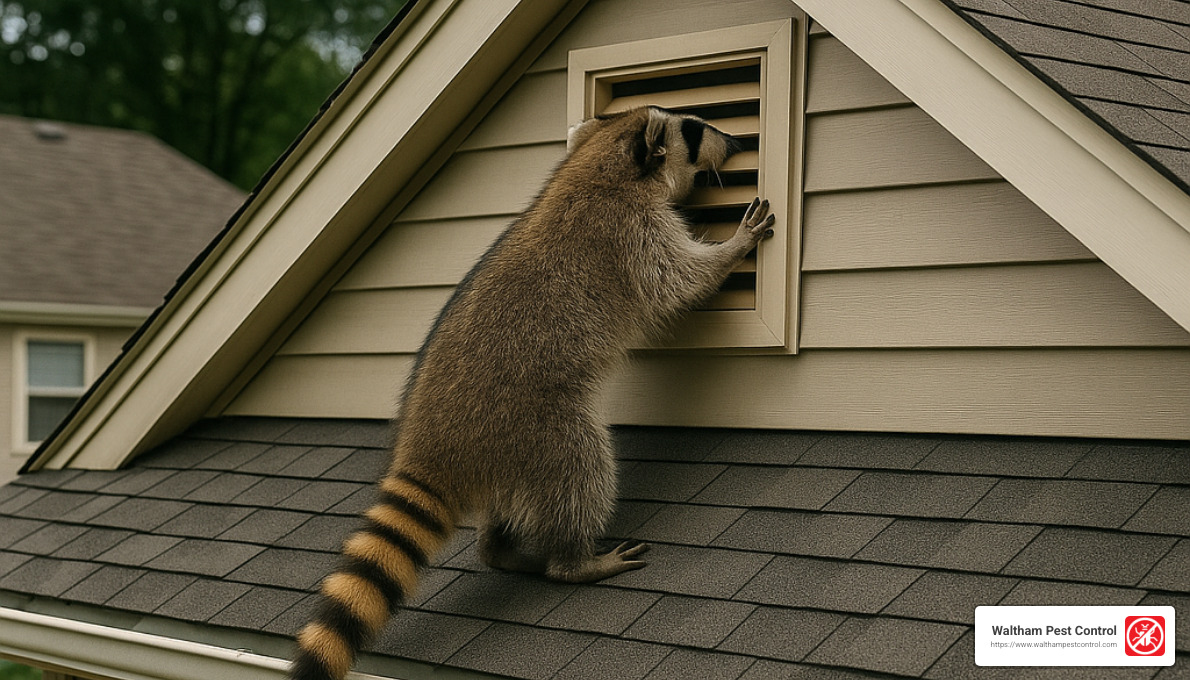
Throughout Middlesex County, we’ve found raccoons commonly enter homes through damaged roof vents, soffit intersections, loose fascia boards, uncapped chimneys, and areas where tree branches provide easy access to the roofline. These clever creatures don’t need much of an opening – just a small vulnerable spot they can work to enlarge.
If you’re noticing these signs, don’t wait. Check out our Wildlife Removal Near Me service for professional assessment throughout Eastern Massachusetts.
Health and Property Risks of Raccoons in Attics
Those cute masked faces might look adorable in nature documentaries, but raccoons in your attic pose serious risks to both your family’s health and your home’s structural integrity.
Health concerns should never be underestimated. Raccoons carry several diseases that can affect humans and pets, with rabies being the most well-known. While human rabies cases are rare, raccoons remain one of the primary carriers of this fatal disease in the United States.
Perhaps even more concerning is raccoon roundworm (Baylisascaris procyonis), a dangerous parasite shed in raccoon droppings. According to the CDC’s information on Raccoon Roundworms, these microscopic eggs can survive in the environment for years. If accidentally ingested – which can happen more easily than you might think, especially with children – these parasites can cause severe neurological damage, vision loss, and in rare cases, death.
As one of our wildlife experts with over 20 years of experience warns: “Raccoon droppings should never be handled without proper protective equipment. The microscopic eggs of raccoon roundworm can become airborne when the droppings dry out, creating an invisible but serious health hazard.”
Beyond these major concerns, raccoons can also spread leptospirosis through their urine (causing symptoms ranging from mild flu-like illness to severe organ damage), as well as giardia and salmonella through their droppings.
The damage to your home can be extensive and expensive. Raccoons aren’t just passing through – they’re remodeling your attic to suit their needs, with no regard for your property:
Electrical system damage is perhaps the most dangerous consequence. Raccoons frequently chew on wiring, creating serious fire hazards. Wildlife-damaged wiring contributes to thousands of house fires each year.
Insulation destruction is virtually guaranteed with raccoons. They tear it up for nesting material and thoroughly contaminate it with urine and feces. This not only reduces your home’s energy efficiency but typically requires complete replacement of affected areas.
HVAC systems suffer when raccoons damage ductwork, compromising your heating and cooling efficiency and potentially allowing contaminated air to circulate throughout your home.
Structural damage occurs as these determined animals tear through shingles, roof decking, fascia boards, and soffits to gain or expand entry points. These openings then allow water to enter during rainstorms, causing secondary water damage.
Secondary pest issues often follow raccoon infestations. Their nests frequently harbor fleas, ticks, and mites that can spread throughout your home, creating additional pest problems.
A recent case in Arlington highlighted just how costly these invasions can become. A family who delayed calling for professional help after hearing suspicious noises ended up with over $8,000 in damage to their electrical system and insulation. The longer raccoons remain, the worse the situation becomes.
Early intervention is absolutely essential to minimizing both health hazards and restoration costs. If you suspect raccoons have taken up residence in your attic, professional Raccoon Exterminator services can safely address the problem before it escalates.
Legal Considerations Before Trapping Raccoons in Attic
Before you grab that trap and head up to your attic, let’s take a moment to talk about the legal side of raccoon removal in Massachusetts. Trust me, understanding these regulations now can save you a major headache (and possibly a fine) later!
Massachusetts takes wildlife protection seriously, and raccoons fall under specific regulations that every homeowner should know about. These furry bandits might be troublesome guests, but they’re still protected under state law.
When I visit homes in Lexington or Cambridge for trapping raccoons in attic situations, I often hear clients say, “I had no idea I needed a license!” That’s right – in Massachusetts, you typically need a valid trapping license to legally trap raccoons. Without proper licensing, your DIY removal efforts could actually land you in legal trouble.
Timing matters too. Our state restricts raccoon trapping to specific seasons, usually during winter months. If you’re dealing with a raccoon problem outside these designated periods, you’ll need special permits for nuisance wildlife removal. This is where professional services really become valuable.
One surprising regulation that catches many homeowners off guard involves relocation. You might think simply moving the raccoon to a wooded area miles away solves the problem, but Massachusetts law actually prohibits relocating raccoons without proper authorization. This restriction helps prevent disease spread, particularly rabies, between different regions.
“The laws aren’t designed to make your life difficult,” I explain to clients. “They’re there to protect both wildlife and public health.” This becomes especially important when dealing with mother raccoons and their babies.
Speaking of babies, Massachusetts provides additional protections for female raccoons with dependent young. Removing a mother while leaving her babies behind isn’t just heartbreaking – it may violate state wildlife protection laws. In my 40+ years of wildlife removal experience, I’ve seen too many DIY attempts create exactly this situation.
Humane treatment requirements are another important consideration. State regulations mandate checking traps at least once every 24 hours and using appropriate trap types that won’t cause unnecessary suffering. For someone with a busy work schedule, this regular checking requirement can be challenging to meet.
Beyond state laws, your local town or city might have additional requirements. In communities throughout Eastern Massachusetts:
- Some municipalities require special permits for wildlife trapping even on private property
- Local health departments may have specific protocols for handling potential rabies vectors
- Certain towns have noise ordinances affecting when trapping can be conducted
One Waltham homeowner shared their experience: “I had no idea our town required a special permit until animal control showed up at my door. Wish I’d called professionals from the start!”
At Waltham Pest Control, we maintain all necessary licensing and permits to legally conduct wildlife removal throughout Eastern Massachusetts. Our technicians stay current on all regulations to ensure our raccoon removal services comply with both state laws and local ordinances.
If you’re uncertain about the legal requirements in your specific location, our Animal Trapper Near Me service can provide guidance custom to your community’s regulations. We’re here to help you steer these waters while ensuring both your family and the wildlife are protected.
When to Call Professional Wildlife Removal Services
Let’s be honest – there’s something appealing about handling a problem yourself. But when it comes to trapping raccoons in attic spaces, there are several situations where calling in the professionals isn’t just helpful—it’s essential.
In my four decades serving communities from Boston to Lowell, I’ve seen countless DIY raccoon removal attempts go sideways. Here’s when you should definitely pick up the phone instead of the trap:
When babies are involved. About 80% of the attic raccoon situations we handle involve a mother with her young ones. This dramatically complicates the removal process. Mother raccoons are fiercely protective (and I have the scars to prove it!), and separating families creates both ethical and practical problems.
One wildlife removal expert I work with puts it bluntly: “If you catch a female with swollen nipples, her babies are trapped inside! This is terrible.” The babies will slowly starve, creating both a heartbreaking situation and an awful odor problem. Our technicians are trained to identify nursing mothers and safely manage the removal of entire raccoon families.
When you’ve got multiple raccoons or recurring problems. I recently helped a family in Winchester who had been battling the same raccoon issues for three years. They’d try DIY methods, think they’d solved it, only to hear those familiar scratching sounds a few months later. Turns out, they had multiple generations of raccoons using different entry points! These complex situations require systematic approaches that typical DIY methods rarely address.
When there’s already significant damage. Raccoons are surprisingly destructive. They can chew through electrical wiring (creating serious fire hazards), damage HVAC systems, contaminate insulation, and compromise structural elements. When this damage is present, professional wildlife removal services include proper assessment and can coordinate with restoration specialists to ensure your home is safely repaired.
When disease is a concern. If you’ve spotted raccoon latrines (their communal bathroom areas) or suspect disease presence, professional handling becomes crucial. Our technicians use specialized equipment including HEPA filtration masks, protective suits, and proper sanitization methods to safely address contaminated areas. Raccoon roundworm is no joke – the CDC considers it a serious health risk, particularly for children.
When the raccoons are in hard-to-reach places. Raccoons often access parts of attics that are difficult or dangerous for homeowners to reach safely. Cathedral ceilings, areas requiring extensive ladder work, tight crawlspaces, or spaces requiring roof access all present safety hazards. Our teams come equipped with proper safety equipment and training for these challenging areas.
When DIY attempts have failed. A client in Lexington shared her experience: “We tried setting our own trap for weeks with no success. When we finally called Waltham Pest Control, they had the raccoon family safely removed in two days and identified three entry points we hadn’t even noticed.” Failed attempts often make raccoons wary and more difficult to remove later.
I remember one particularly stubborn raccoon in a Belmont attic that had evaded the homeowner’s traps for weeks. When we arrived, we finded she had five babies tucked away in a corner that was nearly inaccessible. Safely removing this family required specialized equipment and techniques that simply weren’t available to the average homeowner.
For comprehensive, humane, and effective raccoon removal, our Professional Raccoon Removal service provides expert assistance throughout Eastern Massachusetts. We handle the complex situations so you don’t have to.
Humane Methods for Trapping Raccoons in Attic
When it comes to dealing with those masked bandits in your attic, humane removal should always be the priority. At Waltham Pest Control, we’ve spent decades perfecting gentle yet effective approaches to trapping raccoons in attic situations throughout Eastern Massachusetts. These intelligent creatures may be unwelcome guests, but they deserve ethical treatment during the removal process.
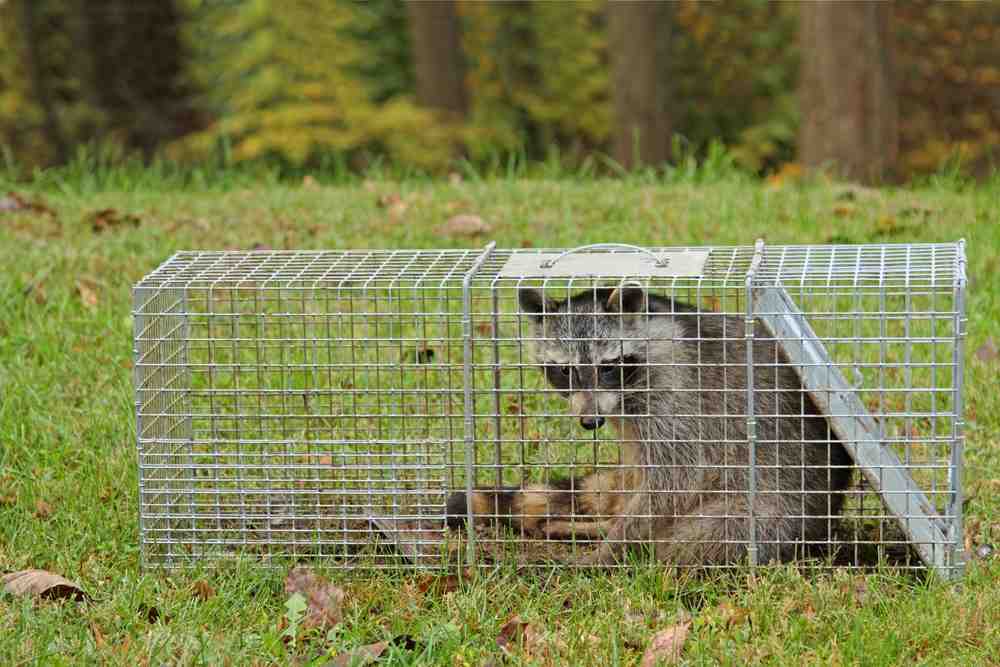
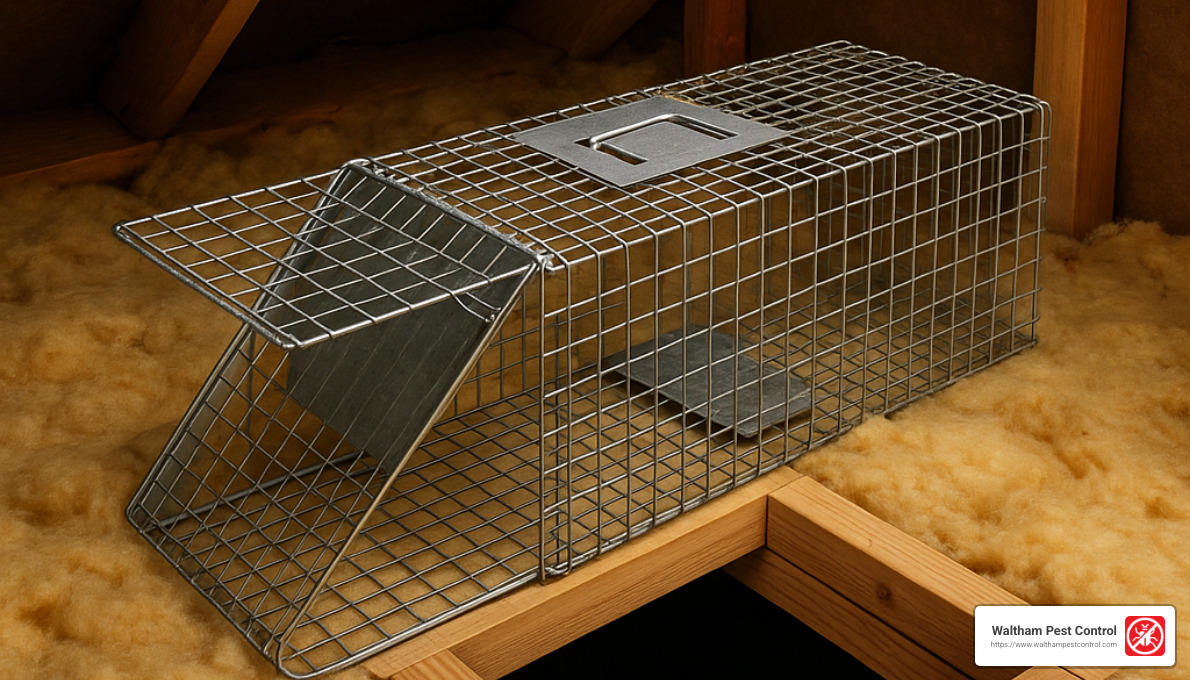
The most effective humane removal method is using properly-sized live cage traps. These traps need to be substantial – at least 12″x12″x32″ – because Massachusetts raccoons can be surprisingly large, sometimes exceeding 30 pounds! Using an undersized trap is not only ineffective but potentially harmful to the animal. Our professional-grade traps feature secure one-way doors that close gently but firmly once the raccoon enters, allowing for safe capture and transportation.
“I’ve been removing wildlife for over 20 years, and I’ve never had a raccoon break through one of my properly installed exclusion plates,” shares one of our senior technicians. These one-way exclusion doors represent another excellent humane option, especially in situations where traditional trapping proves challenging. The beauty of exclusion doors is their simplicity – raccoons can exit but cannot re-enter. This approach works particularly well with mother raccoons who will naturally relocate their young if they find they can’t return to the nest. The entire process typically takes just 3-7 days to complete, with no direct handling required.
For newly established raccoon dens, sometimes deterrents can solve the problem before trapping becomes necessary. Specialized raccoon eviction fluids mimic the scent of male raccoons, which can threaten babies and prompt a mother to relocate her family. As one wildlife rehabilitator we work with often says, “A bright, noisy attic is not a comfort zone. Flooding the attic with light AND adding a radio playing as loud as you can before the neighbors complain will remove two of the three reasons why mom animal chose the spot.”
One of our most successful specialized techniques is the force-through trap setup. This precision approach ensures you’re capturing the actual problem raccoon rather than another animal passing by:
- We carefully seal all potential exit points except one
- A trap is mounted directly over the remaining exit
- When the raccoon leaves, it must pass through the trap
“We remove the right raccoon from your attic with Force-Through SetUps,” explains Peter, our company president. This targeted approach avoids catching non-target animals and ensures the specific troublemaker is removed.
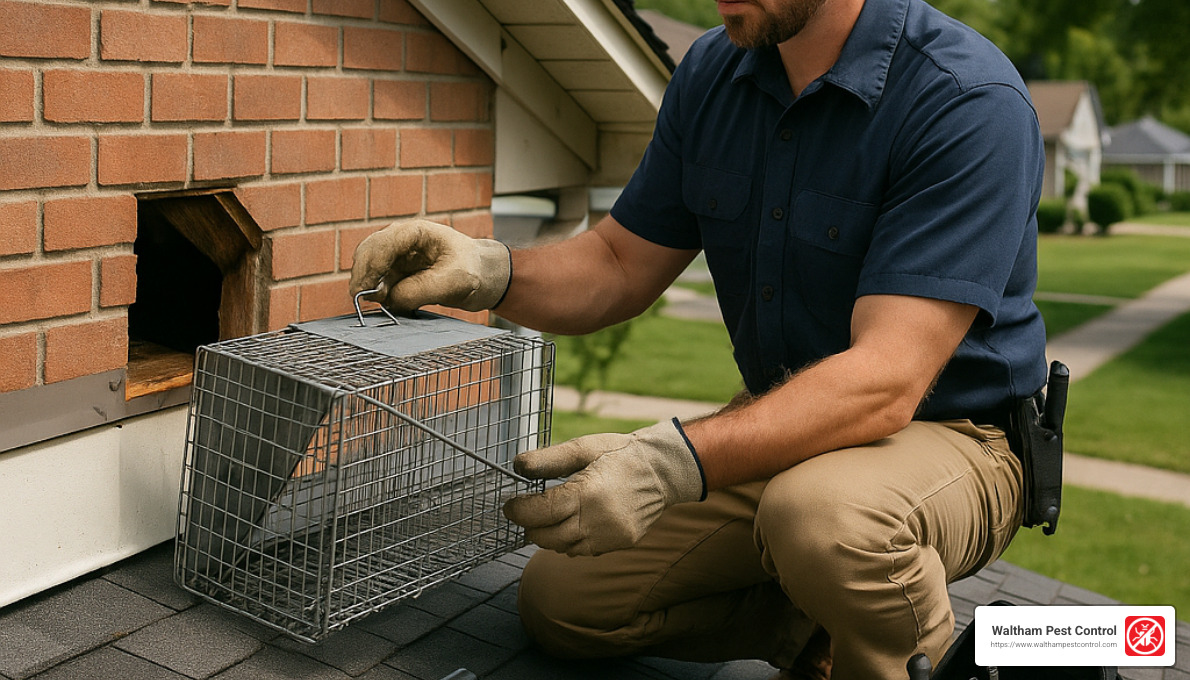
Strategic placement is absolutely critical for safe and effective trapping. Never place traps inside the attic itself – raccoons rarely enter traps in attics, making this approach frustrating and ineffective. Instead, position traps at entry/exit points or on the roof near access areas. We always secure traps properly to prevent tipping or falling, particularly important when working at heights.
Throughout Burlington, Lexington, and surrounding communities, we’ve refined these humane approaches to ensure both effectiveness and animal welfare. For comprehensive wildlife management that respects both your home and the animals, our Wildlife Control Services provide custom solutions for your specific situation.
Preparing for Raccoon Trapping: Essential Equipment and Safety Precautions
Before you even think about setting a trap for that raccoon in your attic, proper preparation is essential for both your safety and successful removal. After four decades of handling wildlife situations across Eastern Massachusetts, we’ve learned what works—and what can go dangerously wrong.
First, let’s talk about the equipment you’ll need. A proper steel cage trap is non-negotiable—and size matters significantly. Your trap should measure at least 12″×12″×32″ and be sturdy enough to contain an adult raccoon, which in Massachusetts can tip the scales at 20-50 pounds. The trap needs a reliable trigger mechanism with appropriate tension and a secure door latch that prevents escape.
Protective gear is absolutely vital. Many homeowners underestimate the health risks associated with raccoon removal. At minimum, you’ll need a HEPA filter mask (N95 or better) to protect against airborne pathogens, thick puncture-resistant gloves, long-sleeved clothing, eye protection, and disposable booties if you’ll be entering contaminated areas.
For safe handling, a long pole (at least 6 feet) allows you to manage the trap from a safe distance. Trap covers help reduce stress on captured animals, and if relocation is legally permitted in your area, you’ll need a secure transportation container. Don’t forget about cleaning supplies—commercial-grade disinfectants effective against raccoon-borne pathogens, disposable cleaning materials, and sealed bags for contaminated items.
Rounding out your equipment list should be a strong flashlight or headlamp, a sturdy ladder for safe attic access, and a camera or smartphone to document entry points and damage for insurance purposes.
Now for the serious part—safety precautions. I can’t emphasize this enough: raccoons may look adorable, but they can be extremely dangerous when cornered. As one wildlife expert bluntly warns: “Raccoons look very cute, however they can be vicious (especially when trapped and threatened) and will try to rip your face apart.”
This isn’t exaggeration. Just last month, a Woburn homeowner attempted to remove a raccoon without proper protective equipment and suffered a serious bite requiring medical attention and rabies post-exposure treatment—a painful, expensive, and completely avoidable situation.
Always maintain these critical safety practices:
- Never handle a trapped raccoon directly or place your hands near the cage
- Always maintain a safe distance when checking traps
- Never place your face near a trap, even if the raccoon appears calm
- Always wear appropriate protective gear when working in areas with raccoon waste
- Never attempt to trap if you’re not confident in your ability to safely handle the situation
The health hazards are significant. Raccoon roundworm eggs in feces can remain viable for years and become airborne when droppings dry out. Bites or scratches can transmit rabies and other diseases. Even the nesting areas may harbor secondary pests like fleas and ticks that carry their own health risks.
When preparing your trap, take time to stabilize it on a flat surface to prevent tipping. If placing it in liftd locations, secure it properly. Always test the trigger mechanism before setting, position the trap to minimize exposure to extreme weather, and cover the bottom with newspaper to collect waste and make cleanup easier.
Remember—your safety should always be the priority when dealing with wildlife, especially species known to carry diseases transmissible to humans. This is why many homeowners throughout Middlesex County ultimately choose our professional services at Waltham Pest Control.
Step-by-Step Guide to Setting Up Effective Raccoon Traps
Setting up a raccoon trap isn’t just about putting out a cage with some bait. There’s a science to trapping raccoons in attic situations effectively and humanely. After countless raccoon removals across Eastern Massachusetts, from Boston’s suburbs to communities like Arlington and Cambridge, we’ve refined this process to a precise art.
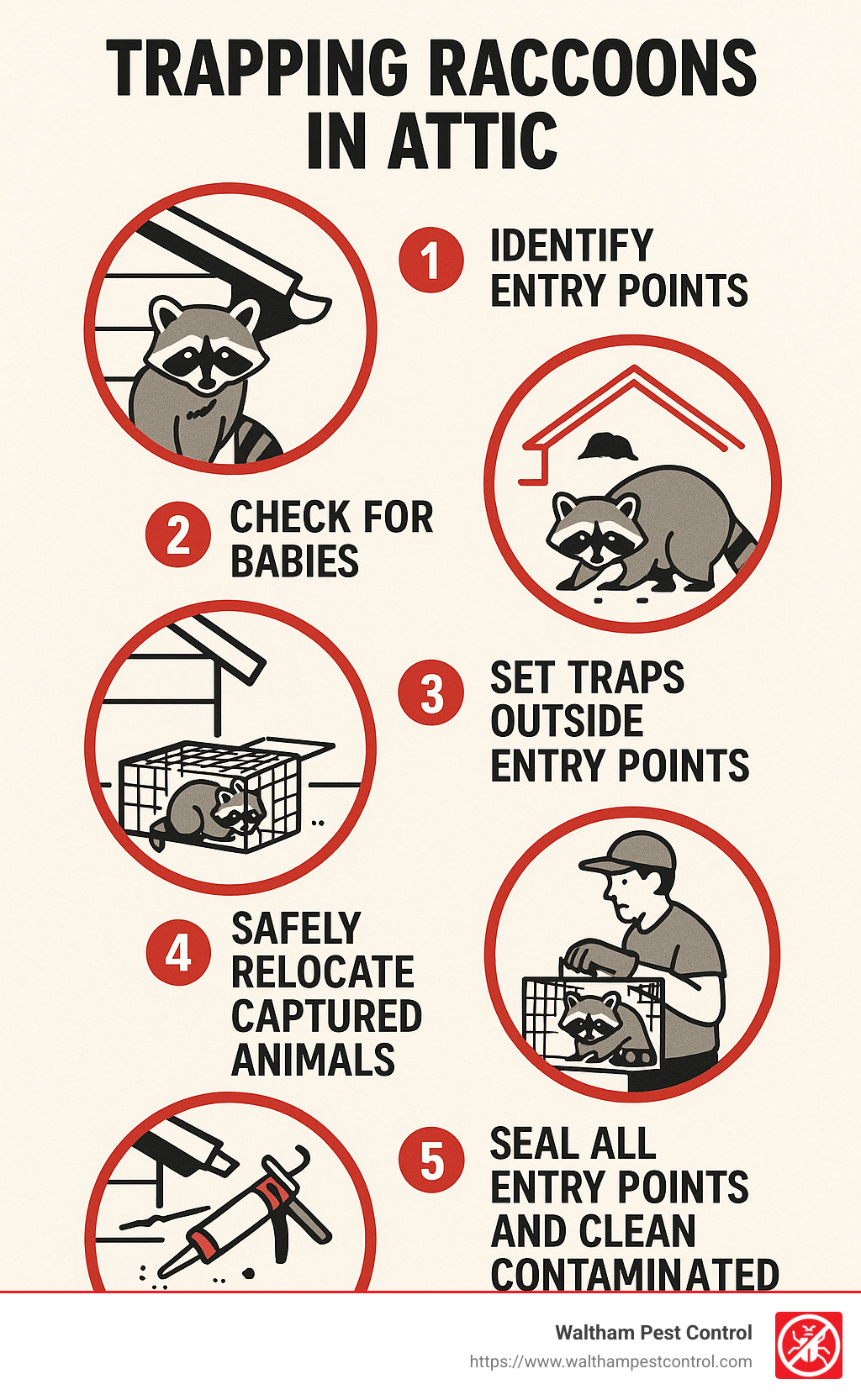
Let’s start with the most critical first step—identifying all entry and exit points. Before setting any traps, you need a comprehensive understanding of how raccoons are accessing your home. Examine your entire roofline carefully, paying special attention to soffits, vents, and fascia boards. Look for damaged areas approximately 4-6 inches in diameter (raccoons don’t need much space to squeeze through), and watch for telltale signs like rub marks, tracks, or tufts of fur at potential entry points.
Don’t forget to check areas where tree branches come close to the roof—these serve as natural highways for raccoons. Loose or damaged roof vents are also common entry points. This thorough inspection is absolutely essential because raccoons often create multiple access points. Just last month in Cambridge, we finded a mother raccoon had created three separate entrances to an attic, which would have made single-point trapping completely ineffective.
Before proceeding, you must determine if babies are present. This completely changes your approach. Listen carefully for the distinctive chattering or crying sounds baby raccoons make, especially during daytime hours. Consider the season—babies are most common from February through August in our region. Look for nesting materials gathered in one area of the attic, and note if the raccoon is active during daylight hours, as nursing mothers often are. Baby raccoons become mobile at around 6-8 weeks but typically don’t leave the attic with their mother until they’re about 12 weeks old.
Now for strategic trap placement—this can make or break your success. The most effective locations are directly mounted over or near the primary entry/exit point, along established raccoon pathways on the roof, or at the base of commonly used climbing routes like trees or downspouts. One piece of advice I always emphasize: never set a trap inside the attic itself. As one of our wildlife removal experts puts it, “Raccoons simply will not enter a trap inside the attic.” They’re too cautious in their denning space.
Once you’ve selected the location, proper positioning is crucial. Ensure the trap sits flat and doesn’t wobble, which might spook the raccoon. Secure the trap to prevent it from being tipped over—raccoons are surprisingly strong and clever. If you’re mounting a trap on the roof, use appropriate anchoring to prevent dangerous falls. Always position the trap so the door won’t be obstructed when triggered, and place it in a shaded area if possible to prevent an animal from overheating on warm days.
For bait selection, we’ve found marshmallows to be surprisingly effective—they’re highly attractive to raccoons but don’t typically lure cats or other non-target animals. White bread, sweet corn, and peanut butter-coated pinecones (secured inside the trap) also work well. Avoid meat-based baits as they can attract neighborhood cats, skunks, or other unwanted visitors.
Your bait placement strategy matters too. Place most of the bait behind the trigger plate, with a small trail leading into the trap. Ensure the bait is positioned so the raccoon must fully enter the trap to reach it, which increases the likelihood of triggering the door mechanism.
When setting the trap, ensure the trigger mechanism is properly adjusted—not too sensitive (causing premature closure) or too rigid (failing to trigger). Test the door closing mechanism before leaving, making sure the locking mechanism engages fully when the trap is triggered. Placing newspaper underneath the trap makes cleanup easier and can help you monitor for droppings or other signs.
Finally, establish a consistent monitoring schedule. Humane trapping requires frequent checking—at least twice daily, morning and evening. Never leave traps unattended for more than 12 hours, especially in extreme weather. Have a plan in place for immediate response when a raccoon is caught.
A client in Arlington recently shared: “Following Waltham Pest Control’s detailed instructions, we checked our trap every few hours. When we finally caught the raccoon, their team arrived within an hour to safely remove it, which gave us great peace of mind.”
Handling Raccoon Families: Special Considerations for Mothers and Babies
When you find a family of raccoons has taken up residence in your attic, the situation requires extra care and compassion. About 80% of the trapping raccoons in attic cases we handle at Waltham Pest Control involve a mother with her babies (kits), which creates a whole different level of complexity.
After four decades of helping homeowners throughout Eastern Massachusetts, I’ve seen how important it is to handle these family situations with special consideration. Let me share what we’ve learned about safely managing raccoon families in your home.
How to Tell If You’re Dealing With Baby Raccoons
Listen carefully when you suspect raccoons in your attic. Baby raccoons make distinctive sounds – a sort of chirping or whining that’s quite different from adult raccoons. These sounds often intensify when they’re hungry or when their mother returns to the nest.
“The first time I heard baby raccoons, I thought there were birds trapped in my attic,” one Lexington homeowner told us. “It wasn’t until our technician pointed it out that I realized what I was hearing.”
Another telltale sign is raccoon activity during daylight hours. While raccoons are typically nocturnal, nursing mothers often venture out during the day to find extra food for their growing babies. If you’re seeing a raccoon coming and going in broad daylight, there’s a good chance she has kits nearby.
The season also provides important clues. In Massachusetts, raccoon baby season typically runs from February through August, with the peak in spring. Finding a raccoon in your attic during these months significantly increases the likelihood you’re dealing with a family situation.
Understanding Baby Raccoon Development
Baby raccoons develop through distinct stages, and knowing where they are in their development cycle helps determine the best removal approach:
When they’re newborn to 4 weeks old, raccoon kits are completely helpless with closed eyes and very limited movement. By 4-6 weeks, their eyes open and they begin limited mobility within the nest. The 6-8 week mark is when they become more mobile but still stay close to home.
Between 8-12 weeks, they start following mom on short trips, and after 12 weeks, they’re regularly leaving the attic with their mother to learn survival skills. This development timeline is crucial for planning humane removal strategies.
Humane Options for Removing Raccoon Families
When we encounter a raccoon family at Waltham Pest Control, we typically consider three main approaches, depending on the specific situation:
The first is our two-step removal process, where we carefully locate and remove the babies first, placing them in a warm, secure container. We then use these babies (safely contained, of course) to lure the protective mother into a trap. Once mom is captured, we reunite the family before relocation. This method is often the quickest solution when immediate removal is necessary.
For less urgent situations, we sometimes recommend the patience approach. This involves waiting until the babies are old enough to follow their mother (around 10-12 weeks) and then installing one-way exclusion doors that allow them to exit but prevent re-entry. While this takes longer, it can be less stressful for the animals.
Our third option is the eviction method, where we apply specialized eviction fluid near the den and create uncomfortable conditions with light and sound. We then monitor carefully to ensure the mother relocates all her babies before sealing entry points. This can be effective when used correctly, but requires careful timing and monitoring.
I remember a particularly touching case in Burlington where a family finded a mother raccoon had given birth to five kits in their attic. Our technician carefully gathered the babies in a heated container and used them to attract the mother. “Within hours,” he reported, “we had safely captured her and were able to reunite the family before relocation. The look of relief on both the homeowner’s and the mother raccoon’s faces was something special.”
Why Keeping Raccoon Families Together Matters
Beyond the obvious compassion factor, there are practical reasons for keeping raccoon families together. Orphaned baby raccoons have poor survival rates even with professional wildlife rehabilitation. Mother raccoons become extremely stressed and may behave aggressively if separated from their young. And in many jurisdictions, humane treatment of wildlife families is legally required.
The Risks of Improper Handling
I always caution homeowners about the risks of DIY approaches with raccoon families. Even young raccoon kits can bite and scratch when frightened. Mother raccoons are fiercely protective and can become aggressive when they perceive a threat to their babies.
Improper removal techniques can lead to mothers abandoning some babies while trying to relocate others, or causing additional damage to your home as they desperately try to reach trapped babies. I’ve seen desperate mother raccoons tear through new roofing materials in attempts to reunite with their young.
Important Safety Reminder
When dealing with raccoon families, always prioritize safety – both yours and the animals’. Never handle baby raccoons without proper protection, and remember that even tiny kits can carry parasites or diseases. The mother’s protective instincts make her particularly dangerous when her babies are involved.
For most homeowners, the safest and most humane approach is to call professionals with experience in family relocations. At Waltham Pest Control, we’ve developed specialized techniques for these sensitive situations that prioritize keeping families together while effectively removing them from your home.
Post-Removal: Securing Your Attic Against Future Raccoon Invasions
Once you’ve successfully evicted your unwanted attic guests, the real work begins – making sure they don’t come back for a reunion tour! At Waltham Pest Control, we’ve learned through decades of experience that thorough exclusion work is the absolute most critical step in preventing future raccoon problems in homes throughout Eastern Massachusetts.
Think of it this way: removing the raccoons without securing your home is like locking your car but leaving all the windows down. Those clever masked bandits will find their way back in if given half a chance!
Finding and sealing ALL entry points is essential for long-term protection. Raccoons are remarkably persistent and surprisingly strong – they can tear through weakened materials with relative ease to regain access to a familiar denning site. During our inspections across communities like Cambridge, Arlington, and Lexington, we commonly find multiple entry points that homeowners never even noticed.
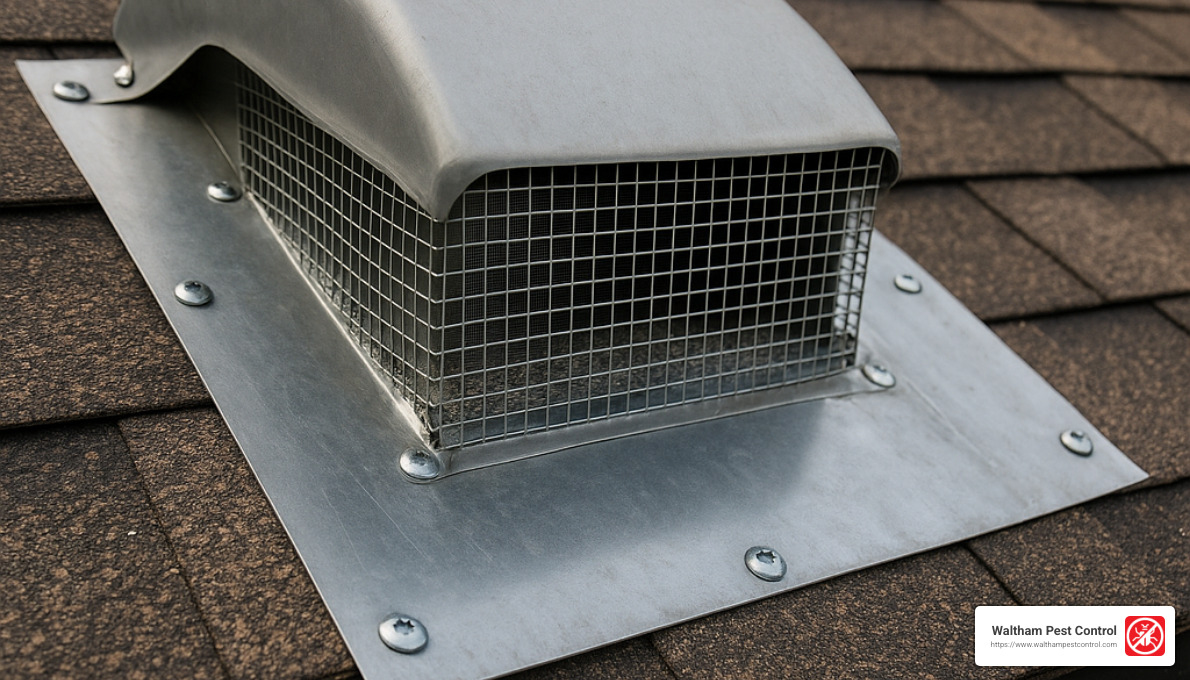
The most vulnerable areas include damaged roof vents, gaps in soffits and fascia boards, loose shingles, uncapped chimneys, and spaces around utility line entrances. Each of these requires specific attention and appropriate materials for proper sealing.
When it comes to materials, not all options provide equal protection. Heavy gauge steel mesh (specifically ¼-inch hardware cloth) is our go-to choice for covering larger openings. For other repairs, we rely on metal flashing, galvanized steel screening, and commercial-grade exterior sealants that can withstand both weather and determined raccoons.
“I have never had a raccoon break through one of my exclusion plates,” notes one of our senior wildlife removal professionals. This highlights just how effective proper materials and installation techniques can be when done correctly.
The quality of workmanship makes all the difference in exclusion effectiveness. We secure all materials with proper fasteners (screws provide much better holding power than nails), overlap seams to eliminate potential gaps, and extend materials at least 3 inches beyond original openings. For irregular openings, we create custom-fitted barriers that conform perfectly to the space.
Beyond the obvious entry points, a thorough structural inspection should examine your entire roof system. We check for weakened roof decking that could be easily damaged, inspect all roof vents to ensure they’re properly secured, examine chimney caps for raccoon-proofing, and assess all roof-wall intersections for potential vulnerabilities. We also look for water damage that might weaken structural elements, making them easier targets for determined raccoons.
Your landscaping can play a significant role in raccoon access. Trimming tree branches to maintain at least a 10-foot clearance from your roofline dramatically reduces the “raccoon highway” to your attic. Similarly, removing lattice or trellises that provide climbing access, installing barriers on downspouts, and removing vines growing on exterior walls all help create a raccoon-resistant perimeter.
One often overlooked aspect of prevention is eliminating attractants around your property. A homeowner in Cambridge shared this experience with us: “After Waltham Pest Control removed the raccoons and sealed our attic, they pointed out that our unsecured compost bin near the house was likely what attracted them in the first place. Moving it away from the house and getting a locking lid has kept raccoons away from our property entirely.”
Other common attractants include unsecured garbage cans, outdoor pet food (especially at night), and bird feeders placed too close to the house. Even fruit trees with unpicked fruit can draw raccoons to your property, increasing the chances they’ll explore your home for potential den sites.
While some homeowners attempt DIY exclusion, professional services offer several significant advantages. Our technicians are trained to spot less obvious entry points that amateurs might miss, and we have access to commercial-grade materials not readily available to consumers. Perhaps most importantly, we bring years of experience with raccoon behavior patterns and common entry strategies, allowing us to anticipate and prevent problems before they occur.
At Waltham Pest Control, we’re so confident in our exclusion work that it comes with a guarantee – if raccoons return through our repairs, we’ll address the issue at no additional cost. That’s the kind of peace of mind that lets you sleep soundly, without wondering what might be scurrying around in your attic tonight!
Cleaning and Decontaminating Your Attic After Raccoon Removal
Once your raccoon tenants have vacated the premises, you’re faced with an essential but often overlooked challenge – dealing with the messy, potentially hazardous aftermath they’ve left behind. This isn’t just about getting rid of unpleasant odors (though that’s certainly important); it’s about protecting your family’s health.
Raccoon waste harbors dangerous pathogens, including raccoon roundworm eggs that can remain viable for years. These microscopic eggs can become airborne when dried droppings are disturbed, creating serious health risks if proper cleaning protocols aren’t followed. This is why professional decontamination is so important.
Before any cleaning begins, proper preparation is essential. We always start by improving ventilation – opening attic windows when possible and using fans to increase air circulation. This helps reduce airborne contaminants and creates a safer working environment.
Protective equipment is non-negotiable for this type of cleanup. Our technicians wear HEPA filter respirator masks (N95 or better), disposable coveralls, eye protection, heavy-duty gloves, and disposable booties. This might seem excessive, but when dealing with potentially dangerous pathogens, it’s simply not worth taking chances.
We also establish containment areas to prevent spreading contamination to living spaces and set up clean zones for equipment and material staging. These precautions help ensure that the cleanup process doesn’t inadvertently create new problems in your home.
The first phase of cleanup involves removing all contaminated materials. Raccoons typically soil insulation extensively, creating both odor problems and health hazards. Our technicians carefully identify all affected insulation – looking for staining, odors, and raccoon latrines (areas where they repeatedly defecate) – and remove it with specialized equipment to minimize dust creation.
All contaminated materials are double-bagged in heavy-duty plastic bags and disposed of according to local regulations for biological waste. This isn’t material you want in your regular household trash!
A particularly challenging aspect of cleanup involves raccoon latrines. These concentrated areas of droppings require special handling techniques and are treated as biohazardous material. We use appropriate tools to avoid direct contact and employ specific disinfection protocols for these high-risk areas.
We also thoroughly check for and remove all nesting materials, which might be hidden in corners, between joists, or in eave spaces. These nests can harbor secondary pests like fleas and ticks, creating additional health concerns if not properly addressed.
After removing all contaminated materials, we move to the sanitization phase. This begins with HEPA vacuuming of all surfaces to remove dust, dander, and particulate matter. We then wipe down structural elements with appropriate disinfectants, paying special attention to areas with visible staining.
For disinfection, we use commercial-grade products specifically effective against raccoon pathogens, ensuring proper dwell time according to product specifications. These professional-grade disinfectants provide a level of protection that household cleaners simply can’t match.
Odor treatment is often necessary even after thorough cleaning. We apply enzymatic cleaners to break down organic matter causing odors and, for persistent odor issues, may recommend professional ozone treatment. In severe cases, we apply odor-sealing primers to surfaces to permanently encapsulate any remaining odor sources.
The final phase involves restoring your attic to a safe, functional condition. This typically includes installing new insulation to the proper R-value for your climate zone. Many homeowners take this opportunity to upgrade to higher-quality insulation for improved energy efficiency – making the best of an unfortunate situation!
We also address any structural damage raccoons may have caused. This might include repairing damaged wood, electrical components, or HVAC elements, as well as addressing any water damage that occurred due to openings created by the raccoons.
A homeowner in Arlington perfectly summarized the change our services provide: “After removing a raccoon family that had been living in our attic for months, the Waltham Pest Control team completely transformed our disgusting, contaminated attic. They removed all the soiled insulation, sanitized everything, and installed new insulation. The difference was incredible – no more odors and our heating bills went down too!”
For professional attic restoration and Professional Raccoon Latrine Removal, our experienced technicians provide thorough, health-conscious services throughout Eastern Massachusetts. We take the risks seriously so you don’t have to worry about them.
Frequently Asked Questions about Trapping Raccoons in Attics
How long does it typically take to trap a raccoon in the attic?
When homeowners find raccoons in their attic, one of their first questions is always about the timeline. The truth is, there’s no one-size-fits-all answer – successful trapping can take anywhere from a single night to several weeks.
For straightforward situations with a single raccoon and perfect trap placement, you might see success within 1-3 days. However, when dealing with a mother and her babies (which represents about 80% of attic cases), expect the process to take 3-7 days to ensure the entire family is safely removed.
The timeline can stretch considerably longer with particularly cautious raccoons. As I’ve seen countless times across Eastern Massachusetts, some raccoons seem to have a sixth sense about traps. One Lexington homeowner told me they’d been trying unsuccessfully for almost a month before calling our team!
Several factors influence how quickly you’ll see results. Seasonal patterns play a significant role – spring trapping often takes longer as protective mother raccoons are naturally more cautious, while winter hunger might drive raccoons into traps more readily. Previous failed trapping attempts can create “trap-shy” raccoons that become dramatically more difficult to capture.
Strategic trap placement makes an enormous difference too. A client in Woburn shared their experience: “We tried trapping on our own for nearly three weeks with no success. The Waltham Pest Control technician repositioned the trap at what they identified as the primary entry point, and they caught the raccoon that same night.”
Weather conditions, available food sources, and even the individual raccoon’s personality all influence the timeline. The key is patience and consistent monitoring – rushing the process rarely leads to success.
Can I trap and relocate raccoons myself, or should I hire a professional?
While DIY raccoon trapping might seem like a money-saving approach, there are serious considerations that often make professional services the wiser choice.
First, there’s the legal aspect. In Massachusetts, trapping and relocating wildlife typically requires proper licensing. Many homeowners don’t realize they could be breaking the law by attempting DIY relocation. As one wildlife expert bluntly puts it: “If you’re not licensed to trap and remove or relocate animals in your state, which you are probably not, it’s illegal for you to trap and remove raccoons yourself.”
Then there’s the safety factor. Despite their adorable appearance, raccoons can be surprisingly dangerous when cornered. A wildlife removal specialist offers this stark warning: “Raccoons look very cute, however they can be vicious (especially when trapped and threatened) and will try to rip your face apart.” This isn’t just dramatic language – we’ve seen the unfortunate results of improper handling.
Equipment needs for proper trapping aren’t trivial either. You’ll need appropriately sized traps (at least 12″×12″×32″), protective gear including thick gloves and HEPA masks, and proper handling tools. Most homeowners don’t have these specialized items on hand.
Professional wildlife technicians bring significantly higher success rates due to their experience with trap placement and baiting techniques. What might take a homeowner weeks of trial and error often takes our technicians just a day or two.
Professional services are particularly recommended when:
- Babies are present (which is the case in about 80% of attic situations)
- Raccoons have created multiple entry points
- Previous DIY attempts have already failed
- Significant property damage has occurred
- Health concerns are a priority due to contamination
At Waltham Pest Control, we bring over 40 years of experience in Eastern Massachusetts, with specialized knowledge of local raccoon behavior patterns and legal requirements. Our comprehensive approach includes not just removal but also exclusion work and attic restoration.
What should I do if I trap a mother raccoon but her babies are still in the attic?
This scenario is one of the most challenging and ethically concerning situations in raccoon management. If you’ve trapped a mother raccoon but suspect her babies remain in your attic, immediate action is essential.
First, confirm the babies’ presence by listening carefully for their distinctive crying sounds, which often resemble bird chirps. Search common nesting areas like corners, spaces between joists, or near chimneys. Look for gathered nesting materials like shredded insulation, leaves, or paper. Baby raccoons are typically found in the warmest, most secluded parts of the attic.
Once located, these tiny raccoons need careful handling. They should be placed in a warm, secure container – a small pet carrier works well, ideally with a hot water bottle wrapped in a towel to maintain their body temperature. Young raccoons can’t regulate their body temperature well, so keeping them warm is critical.
Reuniting a mother with her babies is both the humane approach and the most effective solution. If you’ve already trapped the mother, you’ll need to transport the entire family together. If you’re still trying to trap the mother, the babies can actually help – their sounds will naturally draw her to the trap.
However, this delicate situation strongly warrants professional help because:
Baby raccoons require careful handling to avoid injury or stress. Their small size makes them fragile, and improper handling can lead to injuries or abandonment by the mother.
The reunification process requires specific expertise to ensure the family stays together. A wildlife removal professional explains: “Using baby raccoons as ‘live bait’ to trap the mother raccoon is an effective technique, but it requires careful setup with trap dividers and barriers.”
There are also legal considerations to keep in mind. In Massachusetts, wildlife regulations often provide additional protections for mothers with dependent young. Separating them may violate state wildlife protection laws.
A Burlington client shared their experience: “When we realized there were baby raccoons in our attic after trapping what turned out to be the mother, we panicked. The Waltham Pest Control technician arrived quickly, found all four babies tucked in a corner, and set up a special trap that safely reunited the family before relocating them together.”
For expert assistance with these sensitive situations, our Humane Raccoon Control service provides comprehensive solutions throughout Eastern Massachusetts.
Conclusion
Dealing with raccoons in your attic requires a balanced approach that considers both effective removal and humane treatment of these intelligent animals. Throughout Eastern Massachusetts, from Boston to Lowell and across Middlesex County, homeowners face similar challenges when confronted with these unwanted attic guests.
When it comes to trapping raccoons in attic spaces, timing is everything. The longer these masked bandits remain in your home, the more extensive the damage becomes and the more complex the removal process grows. Those scratching sounds you hear at night aren’t just annoying – they’re warning signs of potentially serious damage happening to your insulation, wiring, and structural elements.
I’ve seen how understanding raccoon behavior dramatically improves removal outcomes. Recognizing that about 80% of attic infestations involve mother raccoons with babies helps inform proper removal strategies. This knowledge isn’t just interesting – it’s practical information that can save you significant headaches and ensure you’re approaching the problem humanely.
Safety should always be your top priority when dealing with wildlife. I’ll never forget the homeowner in Lexington who attempted a DIY removal and ended up needing medical attention after a frightened raccoon lashed out. As one wildlife expert bluntly warned, raccoons “can try to rip your face apart” when threatened. This isn’t meant to scare you, but rather to emphasize the importance of proper handling techniques and protective equipment.
Massachusetts wildlife regulations exist for good reasons – to protect both animals and people. Proper licensing for trapping and relocating raccoons isn’t just a technicality; it’s an important legal requirement with potential penalties for violations. These laws ensure that wildlife is treated humanely and that disease transmission is minimized.
While DIY approaches might seem cost-effective initially, professional services offer significant advantages that often make them the better investment. At Waltham Pest Control, we’ve spent over 40 years refining our approach to wildlife management throughout Eastern Massachusetts. Our comprehensive raccoon control services include thorough inspections, humane trapping, special protocols for mothers with babies, complete exclusion work, attic cleaning, and preventative recommendations.
A client in Cambridge recently told us: “After struggling with raccoons in our attic for months and trying various DIY solutions, we finally called Waltham Pest Control. Their team not only removed the raccoon family safely but also identified and sealed entry points we didn’t even know existed. The peace of mind was well worth the investment.”
Whether you’re in Burlington, Lexington, Woburn, or anywhere in our Eastern Massachusetts service area, our team is ready to provide expert assistance with your raccoon problems. When those nighttime scratching sounds start keeping you awake, humane, effective solutions are just a phone call away.
For more information about our Humane Raccoon Control services, visit our website or call our team directly.