

Carpenter Ants in Bed: 7 Shocking Dangers in 2025
Why Carpenter Ants in Your Bed Are More Serious Than You Think
Carpenter ants in bed aren’t just an irritating sight— they usually point to a hidden nest in nearby wood that can quietly spread through your walls and furniture.
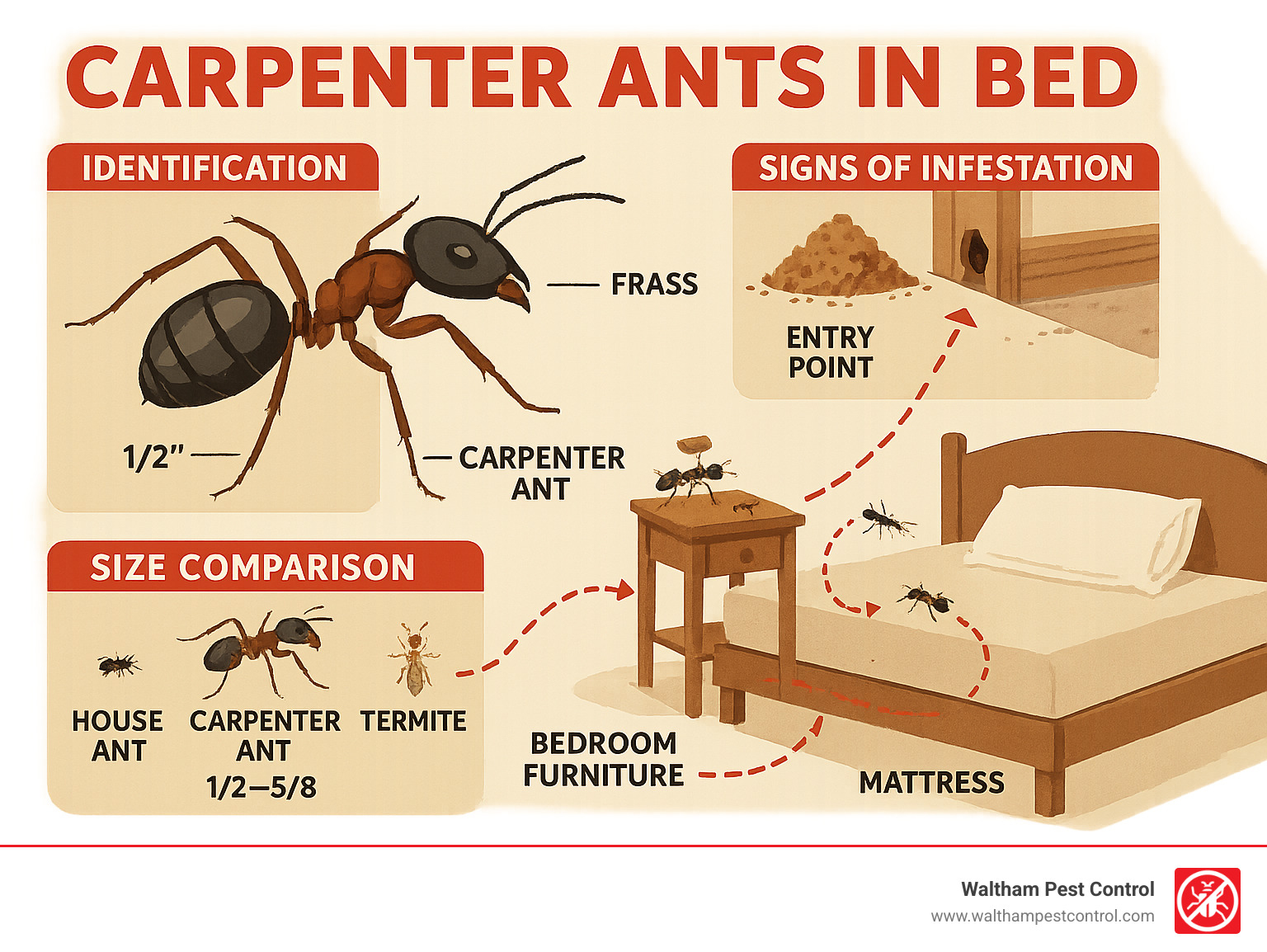
Quick identification checklist for carpenter ants in bed:
– Size: ½ to ⅝ inch long (far bigger than common kitchen ants)
– Color: Black, dark brown, or reddish-brown
– Activity: Most active after sunset
– Numbers: Seeing 25+ ants a day means a nest is close
– Damage signs: Sawdust-like “frass” piles under wooden items
Carpenter ants don’t eat wood; they hollow it out to live in. A single colony can house 10,000–20,000 workers and send foragers up to 300 feet. When those foragers reach your sheets, a satellite nest could already be inside your bed frame, window trim, or wall void.
I’m Waltham Pest Control. After 40+ years with Waltham Pest Control, I’ve seen early detection save homeowners thousands of dollars and many sleepless nights.
Easy carpenter ants in bed glossary:
– big red ants in house
– large ants in kitchen
– large red ants in house
What Makes Carpenter Ants Different?
When you first spot carpenter ants in bed, you’ll immediately notice something different about these intruders. At ½ to ⅝ inch long, they’re absolute giants compared to the tiny sugar ants you might shoo away from your kitchen counter.
Size isn’t their only distinguishing feature. Carpenter ants have a distinctly narrow waist that creates clear body segments. Their color can vary dramatically – from jet black to dark reddish-brown, and some species sport a striking combination with reddish heads and black abdomens.
Here’s where things get really interesting: carpenter ants don’t actually eat wood. This is probably the biggest misconception homeowners have. Unlike their wood-munching termite cousins, carpenter ants excavate wood to create smooth, clean tunnels and galleries for their nests. They’re basically tiny carpenters (hence the name) who chew through wood and then kick out the debris as fine sawdust-like material called frass.
The colony structure of carpenter ants is truly impressive. A mature colony can house anywhere from 10,000 to 20,000 workers, with some monster colonies exceeding 50,000 individuals. They’re smart enough to establish satellite nests away from their main colony, which is often how they end up making themselves at home in your bedroom furniture or walls.
Carpenter ants are confirmed night owls. They’re most active between sunset and midnight, which explains those mysterious rustling sounds you hear in your walls at night. These dedicated foragers can travel up to 300 feet from their nest – that’s roughly the length of a football field – just to find food and water.
For more detailed information about carpenter ant behavior and biology, check out our comprehensive guide on carpenter ants.
Carpenter Ants vs. Termites vs. Bed Bugs
Many homeowners find themselves playing detective when they find unexpected bedroom visitors. The good news? Each of these common pests has distinct characteristics that make identification straightforward once you know what to look for.
| Feature | Carpenter Ants | Termites | Bed Bugs |
|---|---|---|---|
| Size | ½ to ⅝ inch | ¼ to ½ inch | ¼ to ⅜ inch |
| Color | Black, dark brown, reddish | Pale, cream-colored | Brown to reddish-brown |
| Body Shape | Narrow waist, segmented | Thick waist, uniform | Oval, flat |
| Wings | Front wings larger than back (swarmers only) | Equal-sized wings | No wings |
| Diet | Proteins, sugars, moisture | Wood cellulose | Human blood |
| Damage | Clean, smooth tunnels in wood | Rough, muddy galleries | Bite marks on skin |
| Activity | Nighttime foraging | Day and night | Nighttime feeding |
The easiest way to distinguish carpenter ants is by their narrow waist and bent antennae – they look like they’ve been pinched in the middle. Termites have thick waists and straight antennae, while bed bugs are much smaller, flatter, and designed specifically to squeeze into mattress seams.
Why You Might Find Carpenter Ants in Bed
Finding carpenter ants in bed can be unsettling, but these insects aren’t randomly wandering into your bedroom. They’re following specific attractants that your sleeping space might unknowingly be providing.
The most common culprit is moisture. Carpenter ants need water to survive, and even small amounts can sustain an entire foraging trail. Your bedroom might be offering hidden water sources through condensation on pipes running through walls, leaky windows with poor weathersealing, or that humidifier you use for better sleep. Water-damaged wood in bed frames becomes particularly attractive because it’s both a moisture source and perfect for excavation.
Food crumbs from late-night snacking create another powerful draw. Even tiny crumbs invisible to your eyes can attract scout ants, who then leave pheromone trails for their colony mates to follow. Spilled drinks on nightstands, pet food bowls, and even body oils on sheets and pillows can serve as food sources for these omnivorous insects.
Perhaps most concerning is when carpenter ants in bed indicate a nearby colony. These ants can forage up to 300 feet from their nest, so finding them in your bedroom often means there’s a colony within that range. This could be a satellite nest tucked away in your wall voids, the main colony in a nearby tree, or a nest established in water-damaged wood around windows or doors.
Weather changes also drive carpenter ants indoors. During storms or extreme temperatures, they seek shelter and your bedroom might become their temporary refuge. They’re remarkably good at finding entry points through gaps around windows, foundation cracks, or utility line penetrations.
For more scientific information about indoor carpenter ant behavior, visit this research on indoor carpenter ant nests.
Top 5 Attractants for Carpenter Ants in Bed
Through our decades of experience in Eastern Massachusetts, we’ve identified the most common reasons homeowners find carpenter ants in bed:
- Food crumbs and spills – Even microscopic food particles can trigger a foraging response
- Moisture from leaky windows – Poor caulking creates both entry points and water sources
- Warm electronics and humidifiers – These create ideal microclimates with heat and moisture
- Water-damaged bed frames – Softened wood becomes perfect for nest excavation
- Spilled beverages – That bedside water glass can establish an entire ant highway
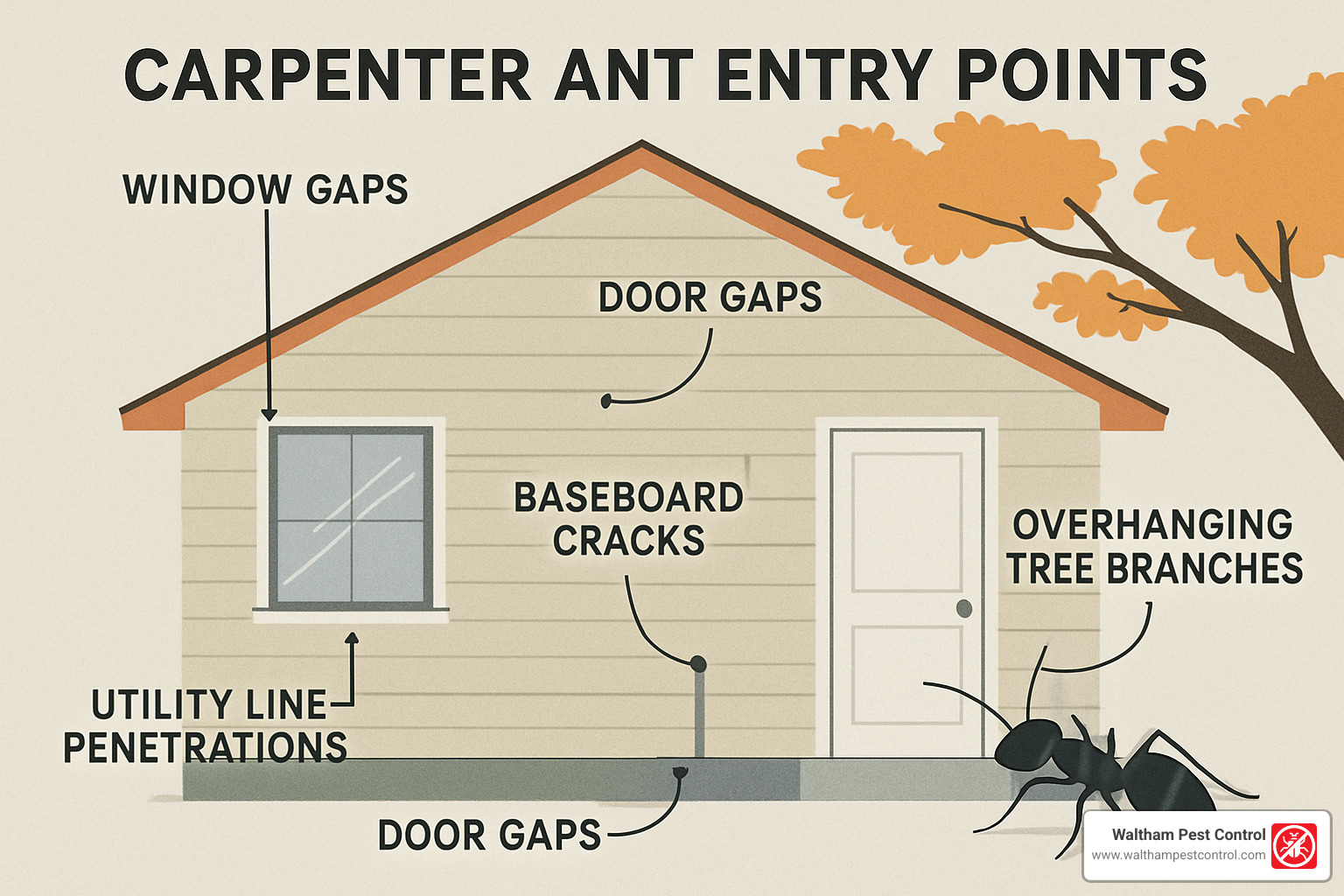
Common Entry Routes for Carpenter Ants in Bed
Understanding how carpenter ants reach your bedroom helps with both identification and prevention. These resourceful insects excel at finding the tiniest entry points.
Window and door gaps serve as the most common highways. Poor weatherstripping or foundation settling creates small openings that might seem insignificant to you but are superhighways for ants.
Baseboard cracks develop naturally as houses settle over time. These seemingly minor cracks often connect directly to wall voids where ants travel unseen throughout your home’s structure.
Utility line penetrations around electrical outlets, cable connections, and plumbing often have gaps that weren’t properly sealed during construction. These penetrations frequently lead directly to wall spaces where carpenter ants establish their travel routes.
Overhanging tree branches act as bridges, allowing carpenter ants to access your home’s exterior and then search for entry points near bedroom windows.
Spotting an Infestation Early
Few things ruin a night’s rest faster than finding ants on your pillow, but carpenter ants in bed leave clear evidence if you know where to look.
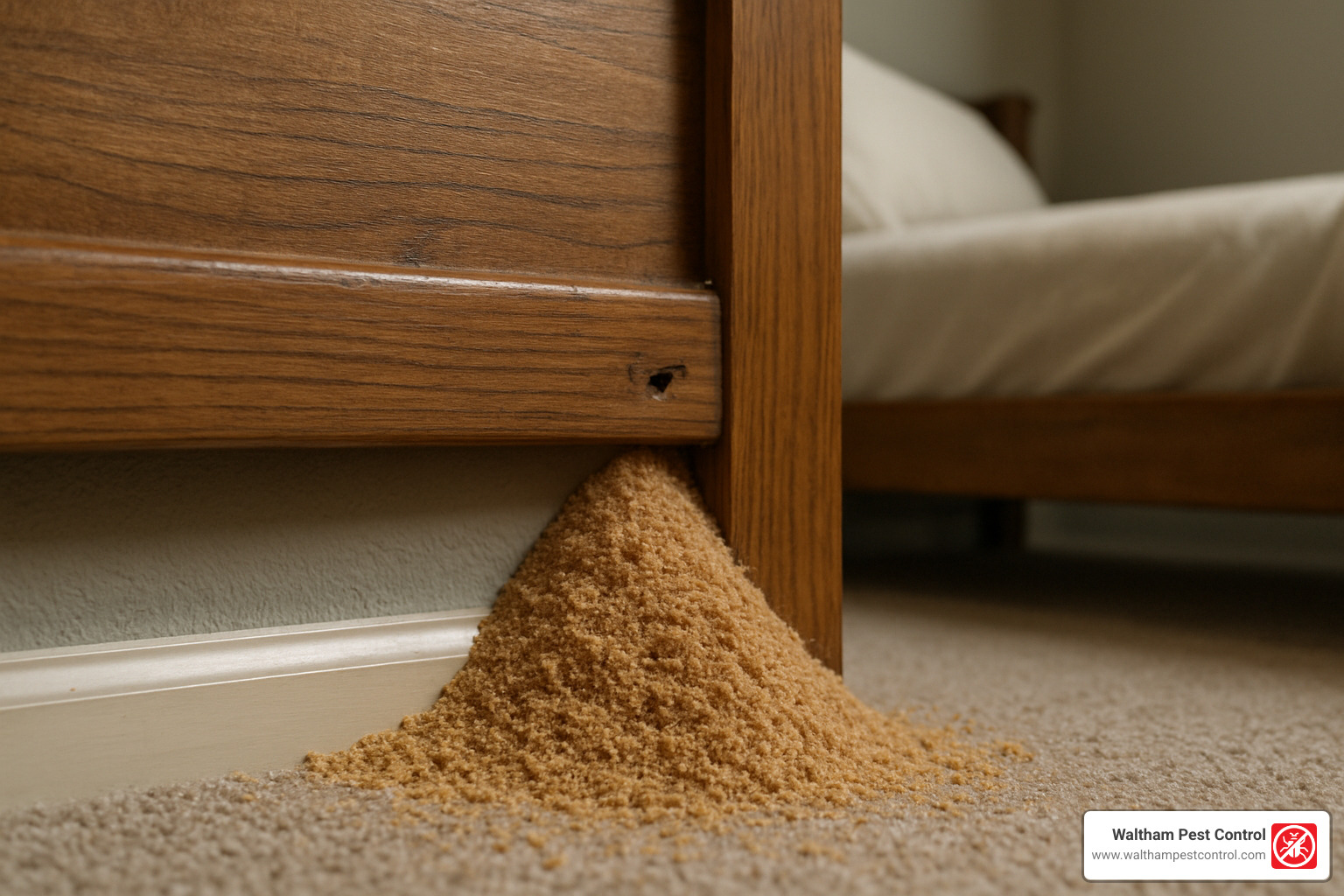
Frass piles – coarse, sawdust-like debris mixed with insect parts – are the biggest giveaway. Check under bed frames, along baseboards, and around window sills.
Nighttime noises: Carpenter ants are nocturnal. Put your ear to the wall after lights-out; faint scratching often means workers are tunneling.
The 25-ant rule: Seeing two dozen or more ants per day in one room almost always signals a nearby nest.
Swarmers indoors (large winged ants) in spring or early summer confirm a mature colony is close.
Flashlight test: After dark, sweep a light along baseboards and window trim; ants caught in the beam reveal their trails.
Checking Bed Frames & Furniture
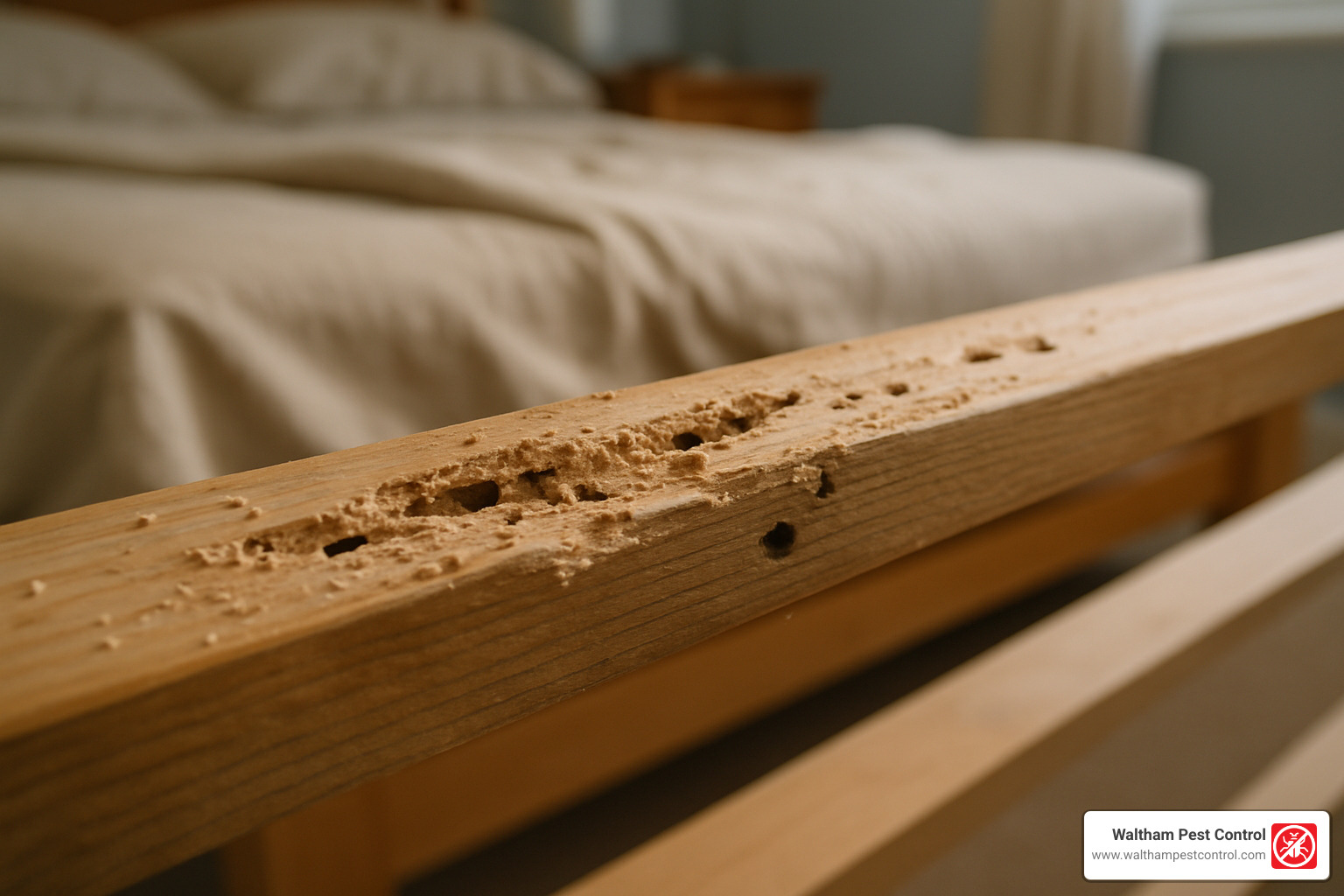
- Press on wooden parts; soft or spongy spots suggest hidden galleries.
- Look for ⅛-inch “kick-out” holes on the underside where ants eject frass.
- Follow repeated ant paths—pheromone highways—to see where they enter and exit furniture.
Risks & Damage Inside the Bedroom
When you find carpenter ants in bed, you’re looking at more than just unwelcome nighttime visitors. These industrious insects can cause serious problems that affect both your wallet and your well-being.
The structural damage starts small but grows fast. Carpenter ants don’t eat wood like termites, but they’re incredibly efficient at hollowing it out. They create smooth, clean galleries that weaken wooden bed frames, flooring joists, and wall studs. I’ve seen beautiful hardwood bed frames reduced to hollow shells, and bedroom floors that felt spongy underfoot because carpenter ants had been busy in the support beams below.
Your bedroom furniture is particularly vulnerable because carpenter ants prefer wood that’s already been softened by moisture. That antique dresser near the window or the wooden nightstand that got splashed during last winter’s leak? They’re prime real estate for these ants. The damage often happens out of sight – inside drawer joints, along the back panels, or in the legs of furniture where you won’t notice until it’s extensive.
Getting bitten is no joke either. Carpenter ants have powerful mandibles designed for chewing through wood, and they’re not shy about using them when they feel threatened. The bite itself is painful – like being pinched by tiny pliers – but it’s the formic acid they inject that really stings. This acid causes a burning sensation and can trigger allergic reactions in sensitive individuals.
The financial impact can be staggering. Based on internet research, homeowners typically face repair costs ranging from $200 for minor furniture damage to $6,000 or more for extensive structural repairs, with severe cases reaching three times that amount. These are average costs based on internet data and don’t reflect actual pricing from Waltham Pest Control, but they illustrate why early intervention is so important.
For comprehensive information about carpenter ant behavior in homes, check out this scientific research on carpenter ants in homes.
Are Carpenter Ant Bites Dangerous?
Most carpenter ant bites aren’t dangerous, but they’re definitely memorable. The pain level is significantly higher than your typical ant bite because these ants are built for heavy-duty work. When they clamp down with those mandibles and inject formic acid, you’ll know it immediately.
If you do get bitten, here’s what to do. Clean the area thoroughly with soap and water, then apply a cold compress to reduce swelling. The burning sensation usually peaks within the first hour and then gradually subsides. Resist the urge to scratch – scratching can lead to secondary infections that are worse than the original bite.
Watch for warning signs that require medical attention. While most bites heal without problems, you should seek help if you experience severe pain that doesn’t improve after a few hours, signs of allergic reaction like widespread rash or difficulty breathing, or symptoms of infection like increased redness, warmth, or pus around the bite area.
The good news? Most people recover completely from carpenter ant bites within a few days. But honestly, the real solution is preventing the bites in the first place by addressing the carpenter ants in bed problem at its source.
Professional Removal and Prevention
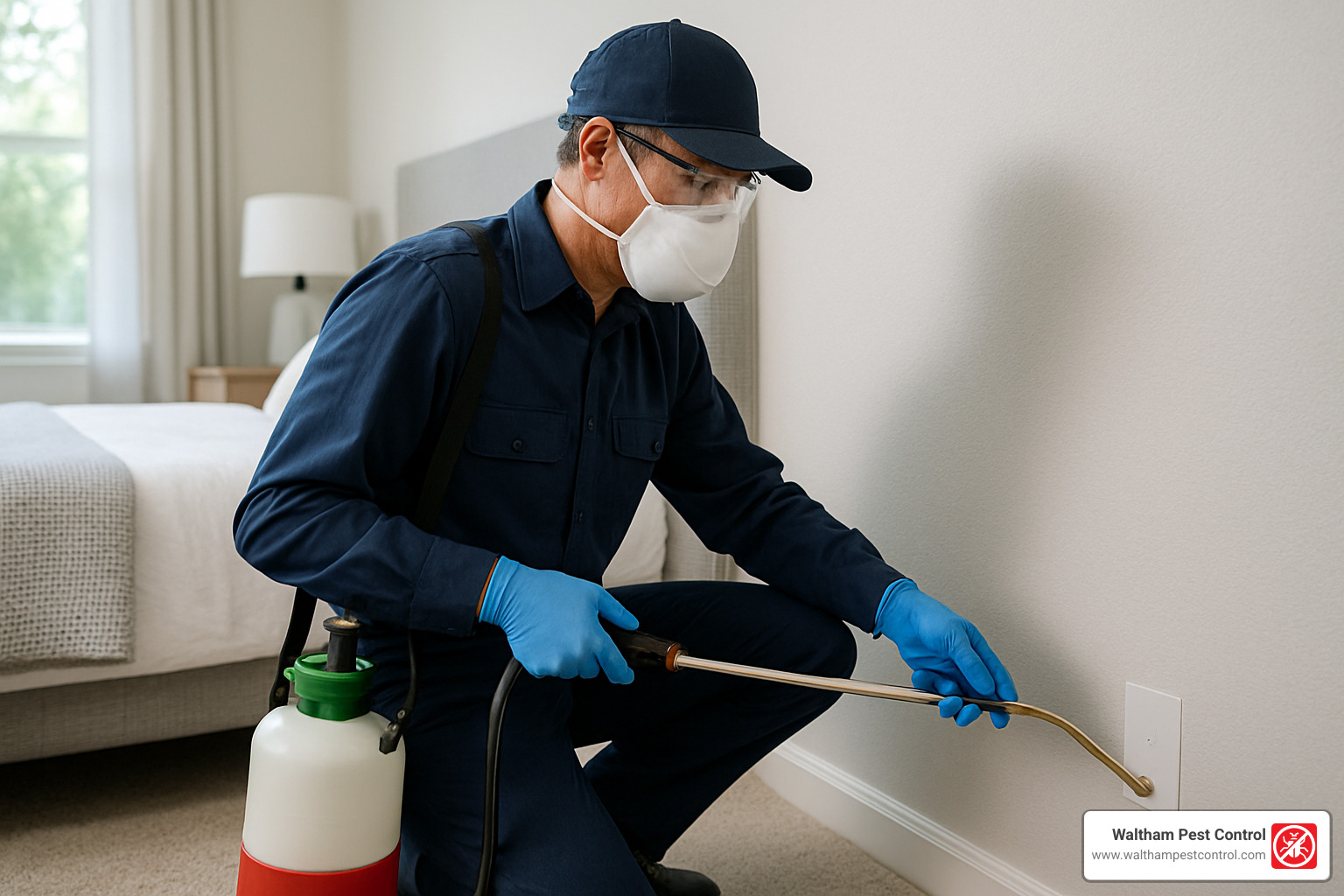
When you’re dealing with carpenter ants in bed, trying to tackle the problem yourself often feels like playing whack-a-mole. You might kill the ants you see, but the colony keeps sending more scouts. That’s why professional treatment makes such a difference – we don’t just treat the symptoms, we eliminate the entire problem.
At Waltham Pest Control, we’ve spent over 40 years perfecting our integrated pest management approach for carpenter ants in bed infestations. It’s not just about spraying chemicals and hoping for the best. We dig deeper to understand why the ants chose your bedroom in the first place.
Our comprehensive treatment process starts with a thorough inspection. We’re looking for more than just the ants you’ve seen – we’re tracking down every nest, satellite colony, and entry point. Those rustling sounds in your walls? We know exactly what to look for behind them.
Targeted baiting systems are often our most effective tool. These aren’t the ant baits you buy at the hardware store. We use professional-grade protein and sugar-based baits that carpenter ants find irresistible. The beauty of baiting is that worker ants carry the treatment back to the nest, eventually reaching the queen and larvae.
Non-repellent spray treatments complement our baiting strategy perfectly. Unlike traditional sprays that ants can smell and avoid, these treatments use active ingredients like fipronil that are completely undetectable to ants. They walk through treated areas, pick up the material on their bodies, and spread it throughout the colony during their normal grooming behavior.
Sealing and caulking is where we prevent future problems. We identify every crack around your bedroom windows, gaps in baseboards, and utility penetrations that could serve as ant highways. Using appropriate materials for long-term durability, we close off these entry points permanently.
Based on internet data, professional carpenter ant treatment typically costs between $250 and $1,500, depending on the severity of infestation and size of the property. These are average costs based on internet research and don’t reflect actual pricing from Waltham Pest Control.
For more information about our comprehensive approach, visit our page on how to exterminate carpenter ants in house.
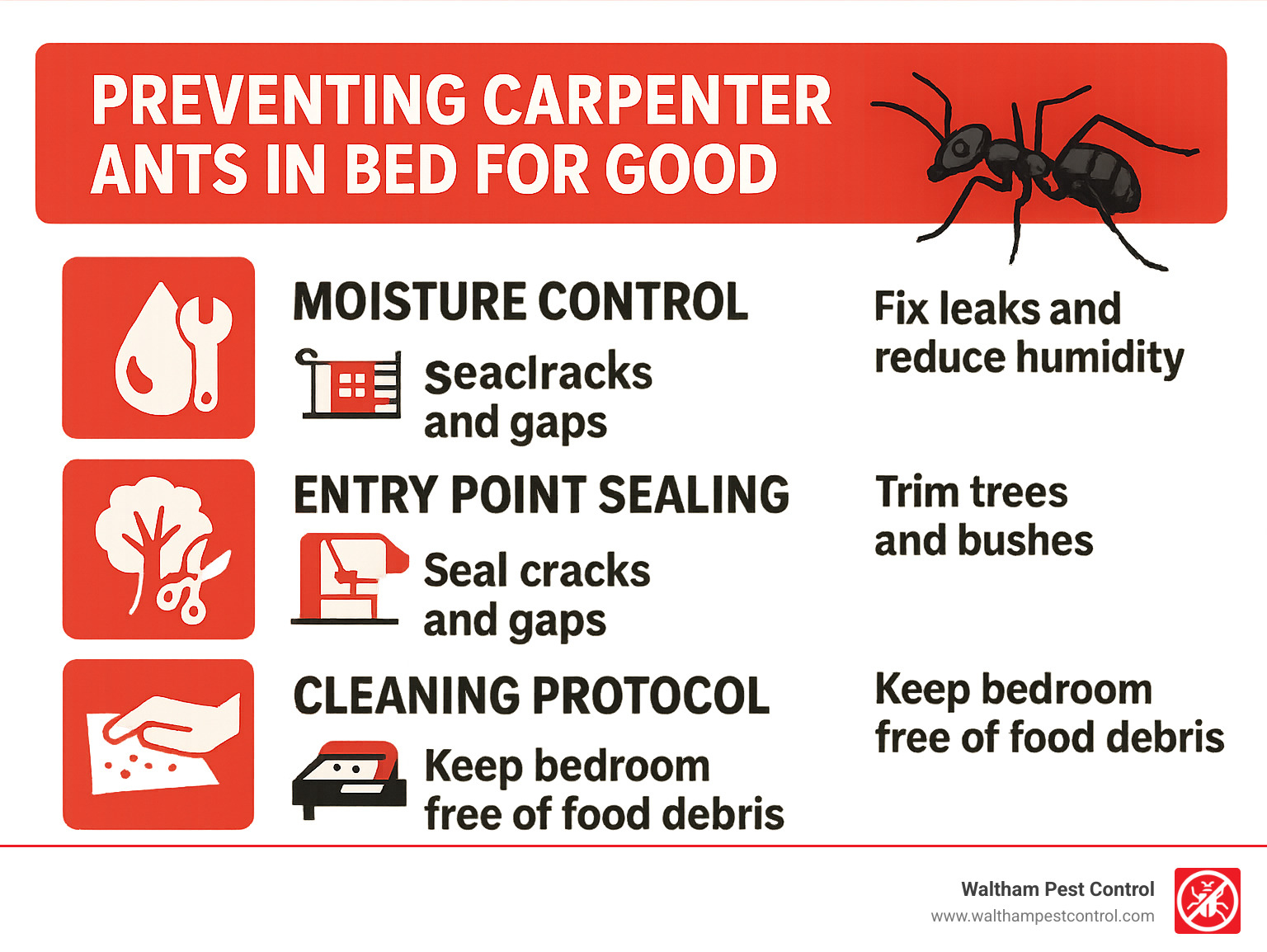
Long-term prevention requires addressing the conditions that made your bedroom attractive to carpenter ants in the first place. Fix all moisture sources promptly – that dripping faucet in the adjacent bathroom or poor caulking around bedroom windows. Maintain proper ventilation throughout your home to prevent humidity buildup. Store firewood and lumber away from your house foundation, and trim tree branches that could serve as ant highways to your bedroom windows.
Preventing Carpenter Ants in Bed for Good
Prevention truly is worth a pound of cure when it comes to carpenter ants in bed. Once you’ve experienced the stress of finding these large ants crawling across your pillow, you’ll do anything to avoid a repeat performance.
Fix leaks immediately – this can’t be overstated. Even minor moisture sources like poorly caulked windows or small plumbing leaks in adjacent bathrooms create the conditions carpenter ants need to establish satellite colonies.
Clean nightly by establishing a simple routine of removing all food and drink from your bedroom before sleep. Even small crumbs invisible to your eye can attract scout ants and establish the pheromone trails that lead entire colonies to your bed.
Store snacks outside the bedroom entirely. If you absolutely must have water nearby, use a covered container and check regularly for spills. Carpenter ants need very little moisture to survive – just a few drops per day can sustain several ants.
Trim vegetation so that tree branches and shrubs stay at least six feet away from your bedroom windows. This eliminates the natural highways that carpenter ants use to access your home’s exterior.
For comprehensive ant prevention services, learn more about our ant pest control company services.
Frequently Asked Questions about Carpenter Ants in Bed

After four decades of helping Eastern Massachusetts homeowners deal with carpenter ants in bed, I’ve heard just about every question imaginable. The good news? Most concerns have straightforward answers that can put your mind at ease and help you take the right action.
The most common worry we hear is whether those ants crawling across the pillow mean there’s a nest inside the mattress itself. Here’s some relief: carpenter ants don’t nest in mattresses or soft materials. They need wood to excavate their galleries, so if you’re seeing carpenter ants in bed, they’re either foraging for food and moisture or nesting in nearby wooden structures like your bed frame or wall voids.
How can I tell if carpenter ants are nesting near my bed?
The telltale signs of nearby nesting activity are usually pretty obvious once you know what to look for. Consistent ant trails leading to or from your bed area are the biggest red flag – these insects are creatures of habit and will use the same routes repeatedly when they’ve established a foraging pattern.
Frass piles are another dead giveaway. These sawdust-like debris piles appear near wooden furniture where ants are actively excavating. Unlike regular sawdust, frass often contains insect body parts and has a slightly coarser texture.
Pay attention to nighttime sounds too. Those mysterious rustling noises in your walls, especially between sunset and midnight, could be hundreds of carpenter ants busy at work.
Check your wooden bed frame for soft or spongy spots and small round kick-out holes about 1/8 inch in diameter. These holes are where ants eject frass from their tunnels, and they’re often found on undersides of furniture where they’re less noticeable.
The 25-ant rule we mentioned earlier applies here too – if you’re consistently seeing this many ants per day in your bedroom, there’s almost certainly a satellite nest within 300 feet of your bed.
How long does it take to eliminate a bedroom infestation?
This is probably the question we get asked most often, and I understand why – nobody wants to share their bed with uninvited guests any longer than necessary. The honest answer depends on several factors, but I can give you realistic expectations based on our experience.
Professional treatment typically shows noticeable results within the first week or two. You’ll see fewer ants, and the trails will start to disappear. However, complete elimination usually takes 4 to 8 weeks because we’re not just killing the ants you see – we’re eliminating entire colonies, including the queen and larvae back at the main nest.
Colony size makes a big difference. A small satellite colony with a few hundred ants resolves much faster than a mature colony with 15,000 workers. Multiple satellite nests also extend the timeline, as each nest needs to be addressed.
When should I call a pest-control professional?
Some homeowners try to tough it out with store-bought sprays, but there are clear warning signs that indicate you need professional help right away. More than 25 carpenter ants per day in your bedroom is a definite call-the-pros situation – this level of activity almost always indicates an established infestation.
Winged swarmers appearing indoors, especially in spring and early summer, mean you have a mature colony nearby that’s ready to reproduce. These reproductive ants don’t just show up randomly – they emerge from well-established nests.
Any signs of structural damage or soft spots in wooden furniture warrant immediate professional attention. Carpenter ants can cause thousands of dollars in damage if left unchecked, and early intervention saves both money and your home’s structural integrity.
The bottom line? Early professional intervention prevents extensive damage and actually reduces treatment costs. We’ve seen too many cases where homeowners waited months trying DIY solutions, only to end up with more extensive damage and higher repair bills.
Conclusion
Finding carpenter ants in bed can feel like finding unwelcome houseguests who’ve been secretly damaging your home while you sleep. But now you know these impressive ½-inch insects aren’t just random visitors – they’re telling you something important about your home’s condition.
These nocturnal giants are drawn to your bedroom for specific reasons: moisture from leaky windows, food crumbs from late-night snacking, or worst of all, the perfect nesting conditions in water-damaged wooden furniture. When you spot that telltale frass (sawdust-like debris) under your bed frame or hear rustling in the walls at night, you’re witnessing the early stages of what could become serious structural damage.
Early identification saves everything. Remember the warning signs we’ve covered: seeing 25 or more ants daily, finding frass piles, hearing wall sounds after dark, and spotting those unmistakable large, dark ants with their narrow waists. The sooner you act, the less damage they’ll cause to your wooden furniture and home structure.
While carpenter ant bites are painful (thanks to that formic acid injection), the real threat isn’t to your skin – it’s to your wallet. These industrious insects can cause damage ranging from a few hundred to several thousand dollars in repairs. More importantly, they can turn your peaceful bedroom sanctuary into a source of anxiety and sleepless nights.
Professional treatment offers the most reliable path back to peaceful sleep. Carpenter ants in bed require more than surface-level solutions – they need comprehensive treatment that eliminates entire colonies, seals entry points, and addresses the moisture and food sources that attracted them in the first place.
At Waltham Pest Control, we’ve spent four decades helping Eastern Massachusetts families reclaim their bedrooms from these wood-excavating invaders. Our integrated approach doesn’t just kill the ants you see – it eliminates the colonies you don’t see and prevents future infestations.
Your bedroom should be a place of rest, not worry. Don’t let carpenter ants in bed steal another night’s sleep or threaten your home’s structural integrity. Professional identification, treatment, and prevention restore both your peace of mind and your property’s safety.
Ready to sleep soundly again? Contact our experienced team at Waltham Pest Control for comprehensive ant control solutions that protect your home and your family’s comfort.
