

The Unwelcome Red Invaders
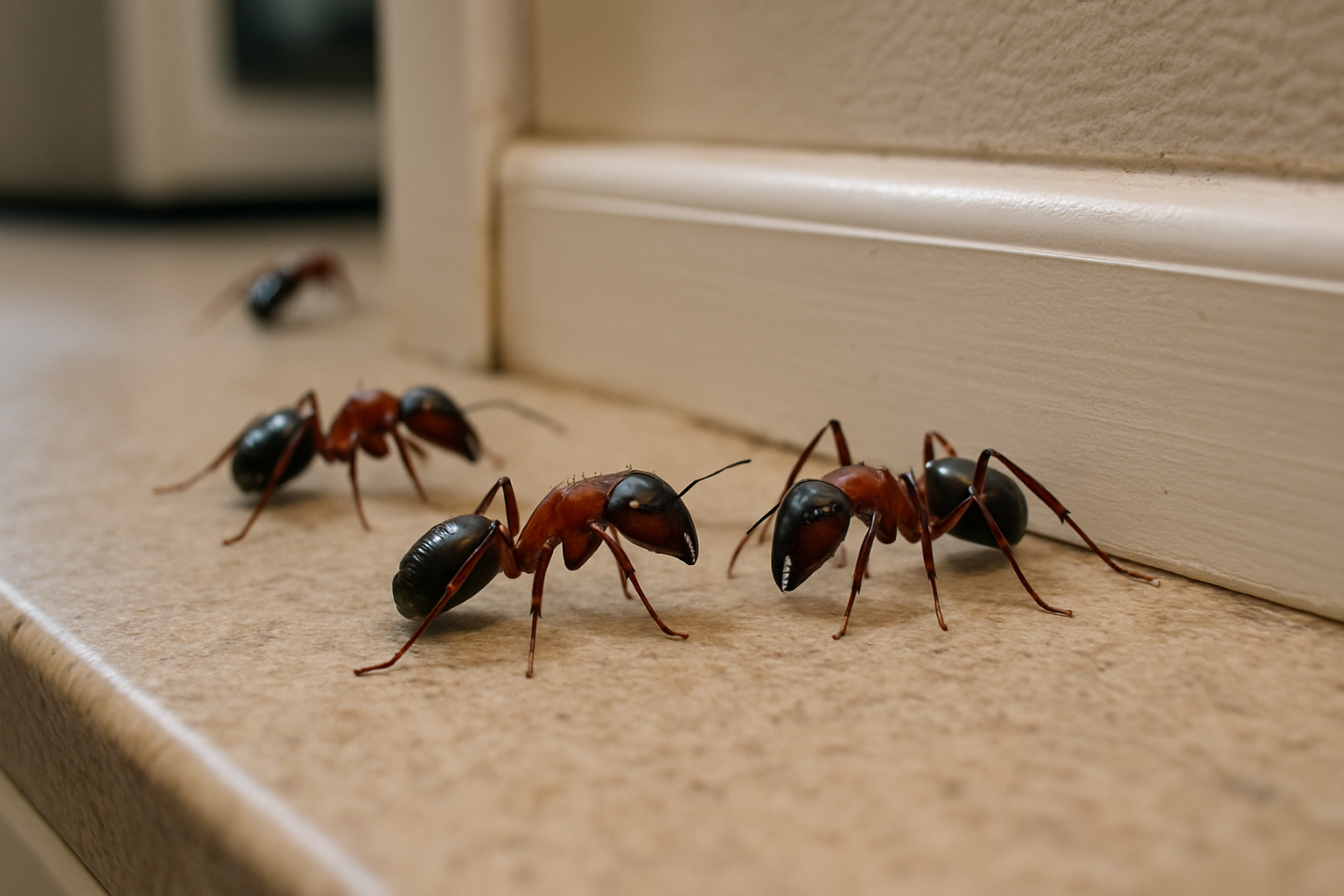
Finding big red ants in house situations can turn a peaceful Massachusetts home into a battleground overnight. These aren’t your average tiny kitchen ants—they’re substantial invaders that demand serious attention.
If you’re frantically searching for answers after spotting these crimson intruders, here’s what you need to know at a glance:
| Quick Facts About Big Red Ants | What To Do |
|---|---|
| Most likely carpenter ants or fire ants | Identify the species first |
| Can cause structural damage (carpenter) or painful stings (fire) | Seal entry points around your home |
| Attracted to food, moisture, and nesting sites | Store food properly and fix moisture issues |
| Often more visible in spring and summer | Use ant baits for immediate control |
| Can indicate larger colony nearby | Professional treatment recommended for infestations |
When you find big red ants in your house, you’re dealing with more than just uninvited dinner guests. These persistent pests typically enter homes with a mission: finding food, water, or shelter—especially when outdoor conditions become too hot, cold, or wet for their liking.
While spotting a lone scout ant might not be cause for panic, seeing multiple large red ants indoors often signals that a colony has established itself either within your walls or somewhere close by. This isn’t something to ignore or put off addressing.
What makes big red ants particularly concerning is their potential impact. Unlike their smaller black cousins that might occasionally wander in for crumbs, carpenter ants can silently chew through wooden structures, compromising your home’s integrity. Fire ants, on the other hand, defend their territory aggressively with painful stings that can cause serious reactions in some people.
I’m Waltham Pest Control, President of Waltham Pest Control, and I’ve spent over four decades helping Massachusetts homeowners reclaim their spaces from big red ant in house situations. The sight of these insects often causes immediate stress for homeowners, and rightfully so. Our experienced technicians are specialists at identifying exactly which species has invaded your home and creating targeted treatment plans that eliminate them completely—not just temporarily driving them into hiding.
Identifying Big Red Ants in Your Home
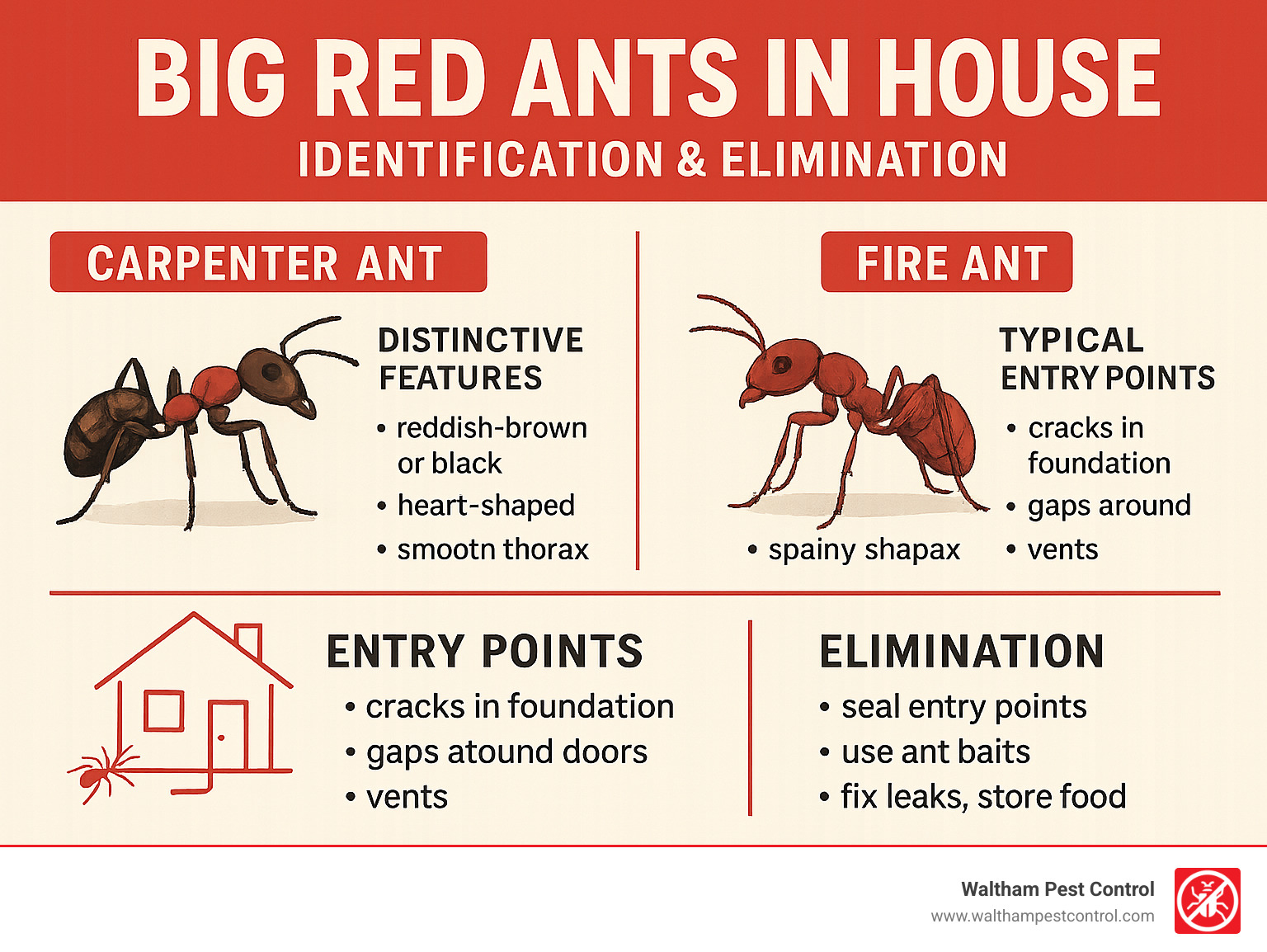
Before you can effectively eliminate an ant problem, you need to know exactly what you’re dealing with. In Massachusetts homes, there are primarily two types of big red ants in house you might encounter: carpenter ants and fire ants. Proper identification is your first step toward getting rid of these unwelcome guests.
Carpenter Ants
Carpenter ants are large ants, typically measuring between 1/4 to 1/2 inch in length. They’re usually black with reddish or dark brown coloration, giving them that distinctive “red ant” appearance many homeowners describe when they call us in a panic.
“Carpenter ants are among the most destructive pests we encounter in Eastern Massachusetts homes,” notes our senior technician. “Unlike termites, they don’t eat wood, but they excavate it to build their nests, which can cause significant structural damage over time.”
You can spot carpenter ants by their large size (they’re the biggest ant species in Massachusetts), their red and black coloration, and their smooth, rounded body profile. One colony will have workers of varying sizes, which is another helpful identification clue.
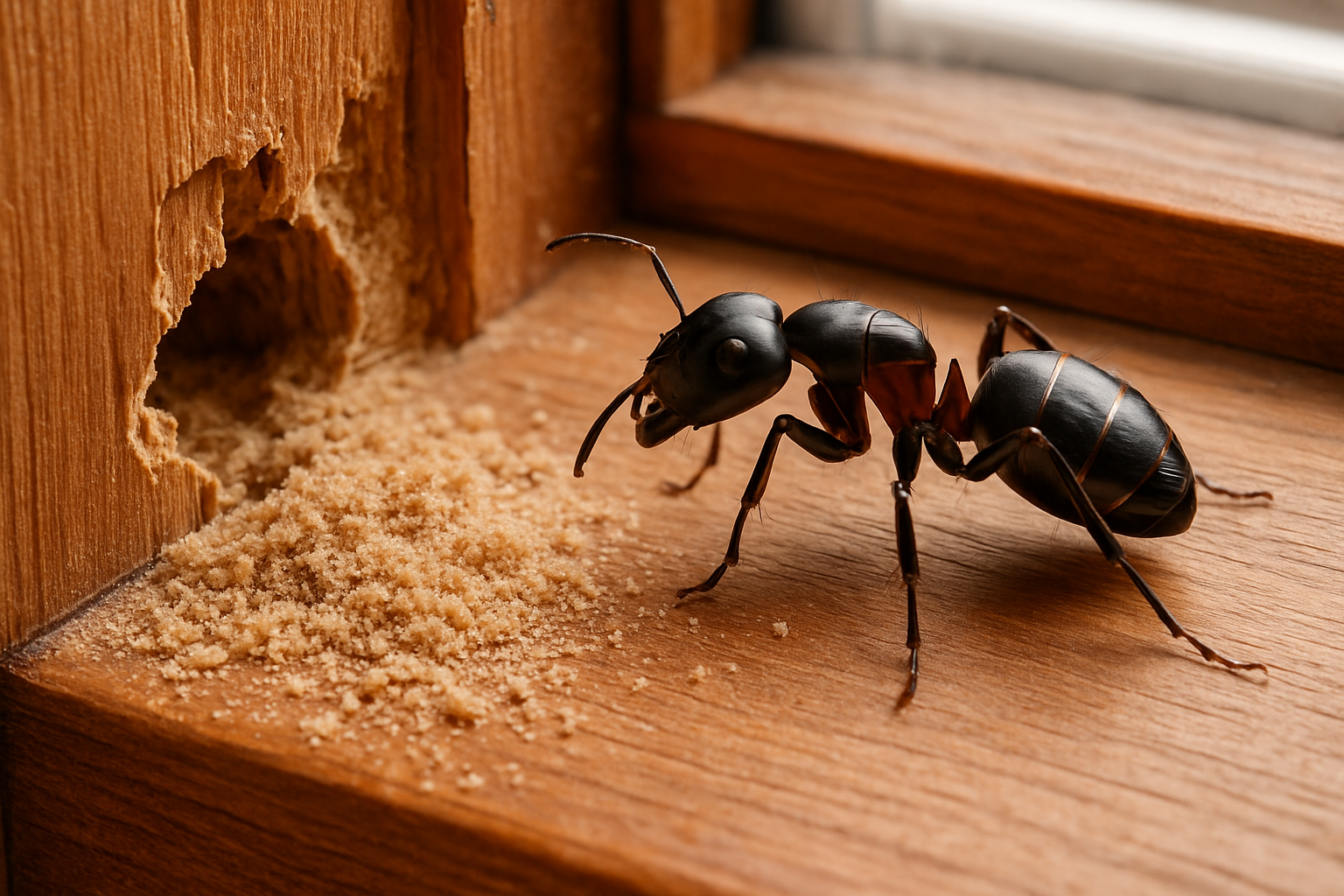
If you notice small piles of wood shavings that resemble sawdust near windowsills, door frames, or other wooden structures, this is a telltale sign of carpenter ant activity. We call this “frass,” and it’s essentially their construction debris. They’re particularly attracted to moisture-damaged wood, making areas with water leaks prime targets for infestation.
Fire Ants
Red imported fire ants are less common in Massachusetts than in southern states, but their range has been expanding northward with climate change. These big red ants in house situations are smaller than carpenter ant problems (about 1/8 to 1/4 inch) but don’t let their size fool you—they’re known for their aggressive behavior and painful stings.
You’ll recognize fire ants by their reddish-brown to reddish-black coloration and their uniform size within a colony. Unlike the relatively peaceful carpenter ants, fire ants are downright hostile when disturbed. Outside, they build distinctive mounded dirt nests that can be spotted in yards.
“When a fire ant mound is disturbed, they’ll swarm out aggressively and can deliver multiple painful stings,” explains our Burlington-based pest control expert. “This defensive behavior makes them particularly problematic around homes with children or pets. The stings burn—hence the name ‘fire’ ants—and can develop into pustules that take days to heal.”
While both types of big red ants can be a nuisance, they require different treatment approaches. Carpenter ants need structural treatments focusing on wood protection, while fire ants require careful elimination of the entire colony to prevent reinfestation. This is why proper identification is so crucial before treatment begins.
Why Are Big Red Ants Invading Your Home?
Have you ever wondered why those big red ants in house problems seem to happen so suddenly? One day your home is ant-free, and the next you’re spotting these unwelcome guests marching across your kitchen counter. There’s actually a method to their madness, and understanding what attracts these pests is the first step to keeping them out.
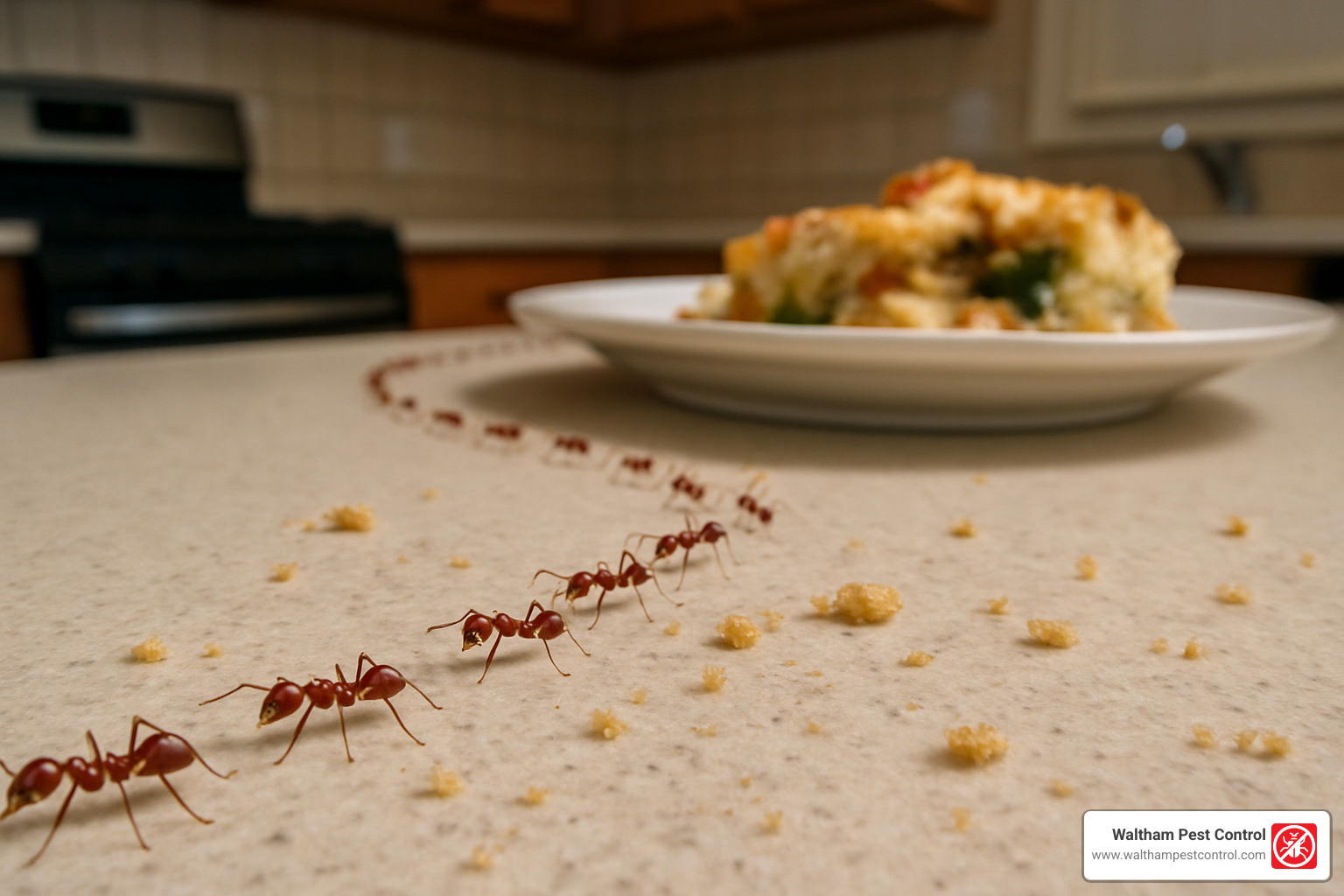
Food sources are the number one reason ants come calling. Just like us, they’re simply looking for their next meal! Those cookie crumbs under the toaster or that splash of maple syrup on the counter might seem insignificant to you, but to hungry ants, they’re like a flashing “restaurant open” sign. Red ants particularly love sweets, proteins, and greasy foods – basically everything in your pantry that tastes good to you will likely appeal to them too.
Moisture issues in your home act like a guide for big red ants. This is especially true for carpenter ants, who are naturally drawn to damp environments. That slow drip under your sink or the consistently humid basement creates ideal conditions for these pests to thrive. As one of our technicians often says, “Fix the moisture, and you’re halfway to fixing the ant problem.”
Nesting sites are another major attraction for carpenter ants in particular. These industrious insects aren’t called “carpenters” for nothing – they excavate wood to create their homes. They’re particularly fond of already damaged or moist wood, which is why you’ll often find them setting up shop around bathroom fixtures, window frames, roof eaves, or deck supports. A small water leak inside a wall can create the perfect hidden apartment complex for a thriving ant colony.
The weather outside can also drive ants indoors. During extreme weather conditions like heavy spring rains or summer drought, ants may seek the shelter and stable environment your home provides. This explains why many Massachusetts homeowners notice increased ant activity during seasonal transitions.
“I remember a family in Winchester who couldn’t figure out why carpenter ants appeared every April like clockwork,” shares our pest control expert. “Turns out, the spring thaw was causing minor flooding near their foundation, driving a nearby colony to seek higher ground – right into their kitchen. Once we treated the perimeter and helped them improve drainage, their annual visitors stopped coming.”
Understanding these attraction factors doesn’t just satisfy curiosity – it gives you practical insights into how to make your home less appealing to these six-legged invaders. By addressing these root causes, you’ll be well on your way to an ant-free home.
Preventing Big Red Ant Infestations
Keeping those big red ants in house problems from starting is always easier than battling an established colony. After helping thousands of Massachusetts homeowners over the years, I’ve found these prevention strategies really do make a difference:
Sealing Entry Points
These determined little invaders can squeeze through openings smaller than you’d believe possible. One of our most effective solutions is using high-quality silicone-based caulk to seal cracks around windows, doors, and your home’s foundation.
“I remember a frustrated homeowner in Arlington who kept seeing carpenter ants despite multiple treatments,” shares our technician Mark. “The culprit? A tiny gap where the cable line entered the house that was serving as their personal highway inside.”
Don’t forget to check for gaps around outdoor faucets and electrical outlets too. Weather stripping around doors and windows not only keeps ants out but improves your energy efficiency as well. Those damaged screens on windows and vents? They’re practically rolling out the welcome mat for pests.
Reducing Moisture
Moisture is like a flashing neon “vacancy” sign for carpenter ants especially. They love water-damaged wood and damp environments.
Fix those leaky pipes and dripping faucets promptly—what seems like a minor annoyance to you is actually prime real estate for ants. Ensure your attics, crawl spaces, and basements have proper ventilation to prevent the humid conditions ants adore. For naturally damp areas, a dehumidifier can make a huge difference.
Your gutters and downspouts play a crucial role too by directing water away from your foundation. When we inspect homes with recurring ant problems, poor drainage around the foundation is often a key culprit.
Proper Food Storage
The scout ants are always on patrol, looking for their next meal to report back to the colony about.
Airtight containers are your first line of defense, especially for sweets, grains, and pet food that ants find irresistible. Those little crumbs and spills might seem insignificant to us, but they’re a feast for an ant colony—clean them up right away.
Taking out garbage regularly and using sealed trash containers prevents the smells that attract foraging ants. And though your pets might give you those sad eyes, don’t leave their food out overnight—it’s a prime target for nocturnal ant visitors.
Landscaping Tips
Your yard creates either a barrier or a bridge for ants trying to reach your home. Creating what we call a “dry zone” around your foundation can significantly reduce your risk of infestation.
Keep tree branches and shrubs trimmed so they don’t touch your house—these create natural highways for ants to travel directly to your home. Store firewood, lumber, and yard debris at least 20 feet from your home, as these make perfect nesting sites.
“The landscaping choices around your foundation are often overlooked, but they’re incredibly important,” explains our Waltham-based pest expert Sarah. “I recommend maintaining at least a 6-inch gap between soil and wooden portions of your home to break that direct access route.”
Don’t forget those gutters! Regular cleaning prevents water accumulation that attracts moisture-loving ants. And while that old stump might seem harmless, decaying wood in your yard is like hanging a “perfect ant home” sign for carpenter ants specifically.
By taking these preventative steps, you’ll dramatically reduce your chances of finding those unwelcome big red ants in house situations that so many of our clients call us about each spring and summer.
Effective Methods to Remove Big Red Ants from Your Home
When big red ants have already established themselves in your home, swift action is needed. Despite your best prevention efforts, these persistent pests can be challenging to eliminate completely without the right approach.
Using Ant Baits
Ant baits are often your best first line of defense against an infestation because they work with the ants’ natural behavior rather than against it.
“I always tell homeowners that patience is key with baiting,” shares our senior technician. “It seems counterintuitive, but you actually want to see more ants initially as they carry the bait back to their colony.”
Effective baiting starts with choosing the right formulation. Carpenter ants typically prefer protein-based baits, while many other species are attracted to sweet formulations. Place your baits strategically along ant trails and near entry points, but keep them safely away from curious children and pets.
For outdoor colonies, a broadcast application using a push spreader can create a protective barrier around your home. Products containing insect growth regulators (IGRs) are particularly effective as they prevent ant larvae from developing properly, eventually causing the entire colony to collapse.
Insecticides and Sprays
When you need more immediate control of big red ants in house, properly applied insecticides can provide faster results. Residual sprays applied around your home’s perimeter create a defensive barrier that keeps new ants from entering.
For carpenter ants nesting in wall voids, specialized dust formulations can reach deep into their galleries. Non-repellent insecticides are particularly clever solutions since they allow ants to walk through treated areas unaware, then spread the chemical to nestmates back in the colony.
“Safety first,” reminds our Burlington technician. “Always carefully follow label instructions when using any pesticide, and take appropriate precautions to protect family members and pets during and after application.”
Natural Remedies
If you prefer to start with gentler approaches, several natural options can help manage minor big red ant problems.
A simple solution of white vinegar and water (mixed 50/50) can disrupt ant trails and serve as a temporary deterrent. Many homeowners have success using essential oils like peppermint, tea tree, or citrus, which contain compounds that ants find repellent.
Diatomaceous earth, when applied in dry areas where ants travel, can damage their exoskeletons and cause dehydration. For outdoor fire ant mounds, carefully poured boiling water can eliminate surface ants, though it rarely reaches the queen deep below.
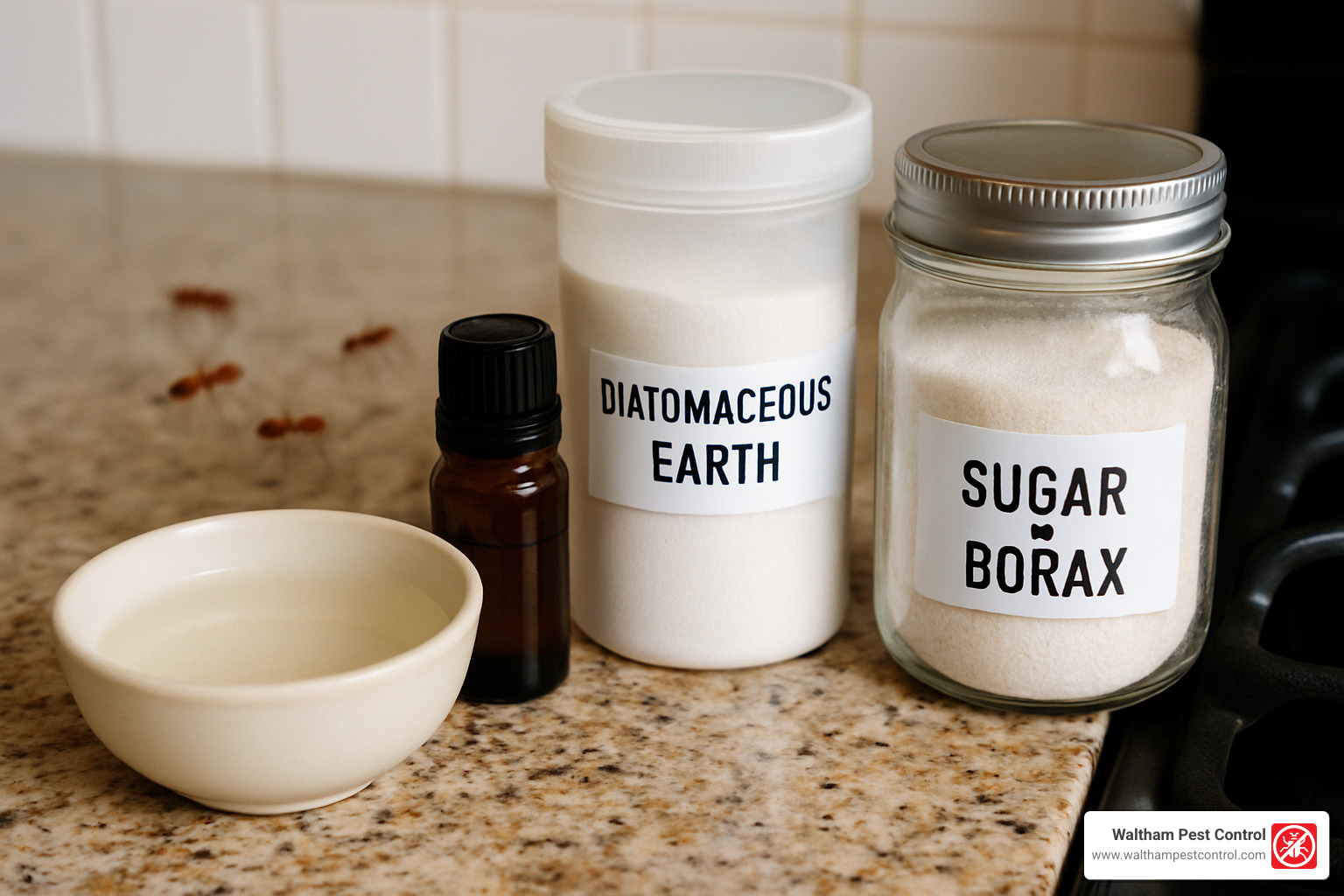
“I had a client in Lexington who swore by her homemade borax and sugar water solution,” shares our ant specialist. “It worked well for her kitchen counter scouts, but when we found the carpenter ant nest in her bathroom wall, she realized why the problem never completely went away.”
While natural remedies can help with minor infestations, they typically don’t penetrate deeply enough to eliminate established colonies. They’re most effective when used as part of a comprehensive approach or for maintenance after professional treatment.
Professional Pest Control
For established colonies, particularly carpenter ants that may be causing structural damage, professional intervention often provides the most thorough and lasting solution.
At Waltham Pest Control, we’ve refined our approach over 40 years of tackling big red ants in house throughout Eastern Massachusetts. Our comprehensive method starts with a thorough inspection to identify exactly what species you’re dealing with and to locate hidden nests that DIY methods often miss.
“What homeowners don’t realize is that the ants they see represent only about 10% of the actual colony,” explains our senior technician. “The rest, including the all-important queen, are hidden away in nests inside walls, under floors, or in roof eaves—all places that require specialized equipment and expertise to treat effectively.”
Our professional treatments include targeted applications using professional-grade products not available to consumers, identification and correction of conditions attracting ants, and preventive perimeter treatments to create a protective barrier around your home.
When carpenter ants have established multiple satellite colonies throughout a home, which is common in established infestations, our systematic approach ensures we find and eliminate every nest. We also provide follow-up visits to confirm complete elimination and prevent re-infestation.
The peace of mind that comes from knowing your home is truly ant-free—and protected from the structural damage these pests can cause—makes professional treatment the wisest choice for many Massachusetts homeowners.
Frequently Asked Questions about Big Red Ants in House
Why am I finding big red ants in my house?
Finding big red ants in house is frustrating, but understanding why they’ve chosen your home can help solve the problem. These unwelcome guests typically appear for very specific reasons:
Most commonly, they’re attracted to food sources in your kitchen or dining areas. Those cookie crumbs, sticky spills, or even pet food left out overnight are like ringing a dinner bell for hungry ants. They’re particularly drawn to sweets, proteins, and anything with a bit of grease.
Moisture is another major attractant, especially for carpenter ants. That slow drip under your sink or the damp wood in your bathroom might be creating the perfect environment for these pests. As one of our technicians often says, “Where there’s moisture, there’s usually carpenter ants nearby.”
Many homeowners don’t realize that big red ants are also searching for comfortable nesting sites. Carpenter ants particularly love setting up shop in moist or damaged wood, quietly excavating their galleries while you’re unaware of their presence.
Sometimes, it’s simply about seeking shelter. During Massachusetts’ heavy spring rains or summer dry spells, ants often make their way indoors looking for more hospitable conditions.
Those ants marching across your counter are just the scouts. For every ant you see, there could be hundreds more in a colony nearby, either inside your walls or close to your foundation.
How to get rid of big red ants?
Eliminating big red ants in house requires a strategic approach rather than just squashing the ones you see. Here’s what works:
First, proper identification is crucial. Carpenter ants require different treatment approaches than fire ants, so knowing your enemy is step one. Our technicians are trained to identify specific species and their nesting habits.
Next, you’ll need to eliminate what’s attracting them. Store food in airtight containers, clean up spills promptly, and fix those moisture issues that might be drawing them in. Think of this as cutting off their supply lines.
Ant baits can be remarkably effective when used correctly. The worker ants carry the bait back to the colony, eventually reaching the queen and immature ants. Be patient with this approach—it works slowly but can eliminate the entire colony when done right.
For more immediate results, targeted insecticide applications around entry points and active areas can help. Just be careful not to spray near baits, as this can deter ants from taking the poison back to their nest.
Sealing cracks, gaps around windows, doors, and utility entries prevents reinfestation once you’ve gotten the current population under control. A good silicone caulk works wonders for these small openings.
For carpenter ants specifically, locating and treating the nest is crucial but often difficult without professional help. These ants typically nest in wall voids, roof eaves, or other hard-to-reach areas of your home.
“Many DIY treatments just scatter the colony temporarily,” explains our senior technician. “They’ll often relocate to another part of your home, giving you the impression the problem is solved when it’s actually just moved.”
Are red ants in the house good or bad?
Let’s be honest—finding big red ants in house is never a welcome sight. From a practical standpoint, these insects can cause various problems that go beyond mere annoyance.
Carpenter ants, with their wood-excavating habits, can cause significant structural damage over time. Unlike termites, they don’t eat the wood, but they carve out extensive galleries that can weaken beams, studs, and other wooden structural elements. We recently helped a family in Winchester who finded carpenter ants had been silently damaging their home for years, requiring extensive repairs that could have been avoided with earlier intervention.
Fire ants, though less common in Massachusetts, pose different risks. Their painful stings can cause serious reactions, especially for those with allergies or sensitivities. They’re particularly problematic in homes with young children or pets who might accidentally disturb a nest.
Both types can contaminate food sources as they march across countertops and into pantries. While they don’t typically spread disease like some other pests, no one wants ants crawling through their breakfast cereal.
Perhaps most importantly, the presence of big red ants often signals underlying issues with your home. They’re like nature’s warning system, indicating moisture problems, wood damage, or maintenance issues that need addressing.
“I always tell homeowners that ants are actually showing you where your home needs attention,” says our Burlington-based technician. “Fix what’s attracting them, and you’re not just solving an ant problem—you’re preventing potentially costly home repairs down the road.”
For more information about ant species common in Massachusetts, you can visit the University of Massachusetts Extension pest management resources, which provides excellent identification guides and general information about ant behavior.
If you’re dealing with persistent ant issues, our team at Waltham Pest Control can provide a thorough inspection and targeted treatment plan specifically designed for your situation. With over 40 years of experience handling big red ants in house throughout Eastern Massachusetts, we know exactly what works for our local ant species.
Conclusion
Dealing with big red ants in house can be challenging, but with the right approach, you can reclaim your home from these unwelcome invaders. From proper identification to effective treatment strategies, taking prompt action is key to preventing damage and ensuring your family’s comfort.
At Waltham Pest Control, we’ve been helping Eastern Massachusetts homeowners solve ant problems for over 40 years. Our experienced technicians serve communities throughout Middlesex County, Essex County, Norfolk County, and the Merrimack Valley, including Burlington, Lexington, Cambridge, Boston, and surrounding areas.
If you’re dealing with persistent big red ants or want to ensure your home is protected, contact us for a thorough inspection. Our licensed professionals will identify the specific ant species, locate nesting sites, and implement an effective treatment plan custom to your home’s unique needs.
When it comes to carpenter ants especially, early intervention can prevent costly structural damage. Don’t wait until a minor ant problem becomes a major infestation—contact Waltham Pest Control today for peace of mind and a ant-free home.