
Ant Spray Outdoor Around House: 2025 Solved!
Why Outdoor Ant Sprays Are Your First Line of Defense
Ant spray outdoor around house is often the most effective way to stop ants before they become an indoor problem. Instead of waiting for ants to invade your kitchen or pantry, creating a protective barrier around your home’s perimeter can eliminate colonies at their source and prevent new infestations from taking hold.
Quick Guide to Outdoor Ant Sprays:
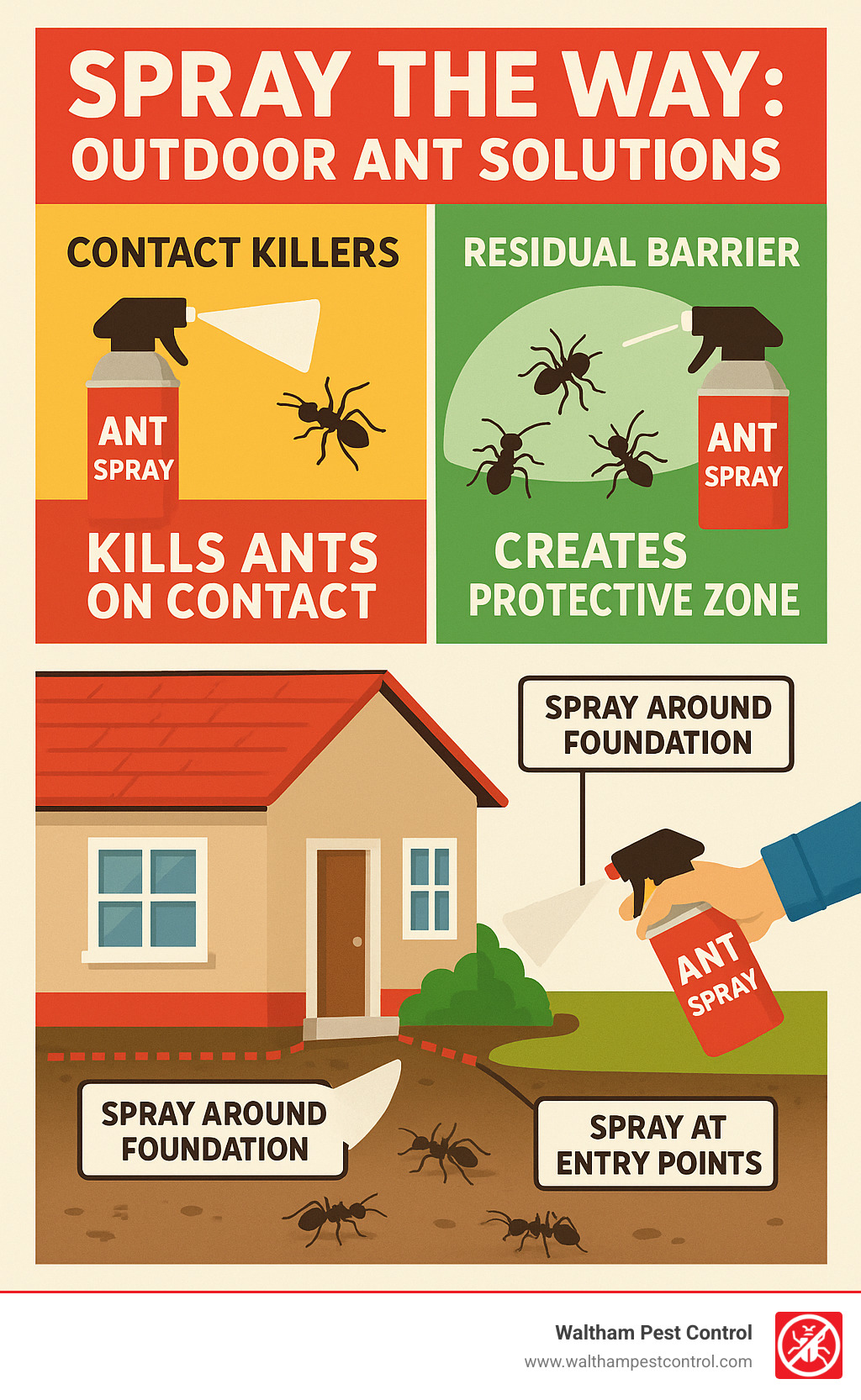
- Contact Killers: Kill ants immediately on contact but don’t affect the colony
- Residual Sprays: Create lasting barriers that protect for 3-6 months
- Non-Repellent Formulas: Ants can’t detect them, so they carry poison back to the nest
- Application Zone: Spray 1 foot up foundation walls and 1 foot out on ground
- Best Results: Combine with baits and seal entry points for complete control
When you see ants crawling across your floor or marching through your pantry, you probably don’t want to wait for an exterminator to show up. Outdoor ant sprays work by targeting the source – the colonies where worker ants travel back and forth seeking food and water for their nests.
The key is understanding that different sprays work in different ways. Some kill on contact but won’t eliminate the entire colony. Others use a “transfer effect” where ants unknowingly carry poison back to their nests, eventually reaching the queen and eliminating the entire population.
Safety and effectiveness depend on proper application. The most effective approach involves creating a barrier that extends one foot up your foundation walls and one foot out on the ground around your home’s perimeter. You’ll also want to treat specific entry points like window frames, door openings, and utility connections.
I’m Waltham Pest Control, President & CEO of Waltham Pest Control, and over my 40+ years in the pest control industry, I’ve seen how proper ant spray outdoor around house application can make the difference between temporary relief and long-term protection. The key is combining the right products with proven application techniques to create an effective barrier system.
Common ant spray outdoor around house vocab:
Understanding Outdoor Ant Sprays and How They Work
Think of ant spray outdoor around house treatments as different tools for different jobs. Understanding which one to use is key to lasting protection.
Outdoor ant sprays fall into three main categories:
- Contact Killers: These provide an immediate response, knocking down ants on the spot. They’re great for clearing a visible trail fast but won’t solve the long-term problem because they don’t affect the colony.
- Residual Sprays: These are the workhorses, creating an invisible barrier around your home that keeps working for months. Any ant that crosses the treated area picks up the active ingredient and eventually dies, offering protection for up to six months.
- Non-Repellent Insecticides: These are the stealthiest option. Ants can’t detect them, so they walk through the treated area, unknowingly picking up the poison and carrying it back to the nest.
This leads to the “Transfer Effect,” a crucial concept in professional ant control. Worker ants share the insecticide with their colony mates through grooming and feeding. Eventually, it reaches the queen. When she dies, the colony collapses. This is the difference between true colony elimination and simply repelling ants.
Most sprays work by disrupting the ant’s nervous system, causing paralysis and death. Contact killers act immediately, while residual and non-repellent formulas work more slowly, allowing time for the transfer effect to occur.
If you’re curious about professional-grade solutions, check out our guide on what pest control companies use for ants.
Key Ingredients to Look For
When shopping for ant spray outdoor around house products, a few key ingredients do most of the work.
Pyrethroids are synthetic compounds that are highly effective against ants. Common types include bifenthrin, cyfluthrin, and deltamethrin. They work by disrupting an ant’s nervous system. Cyfluthrin is particularly effective against carpenter ants and provides up to three months of protection. These are the backbone of most residual sprays.
For those who prefer gentler options, essential oils like peppermint oil, lemongrass oil, and geraniol work by suffocating ants. They also act as natural repellents, creating scent barriers that ants avoid.
Natural and Eco-Friendly Options
Many homeowners prefer effective ant control without synthetic chemicals. Plant-based formulas have become surprisingly effective.
These botanical oils work through suffocation rather than nerve disruption. They also have strong repellent properties, as most ants dislike the smell and will avoid treated areas. While this means you may need to reapply them more frequently than synthetic options, you get the peace of mind of using biodegradable solutions that break down naturally.
Natural sprays are excellent for maintaining barriers and deterring new ant activity, especially when combined with other control methods.
For more information on environmentally friendly approaches, explore our guide to natural ant deterrents.
Your Guide to Using Ant Spray Outdoor Around House
Getting the best results from your ant spray outdoor around house treatment is all about correct application. Think of it like painting: proper technique is essential for an effective ant barrier.
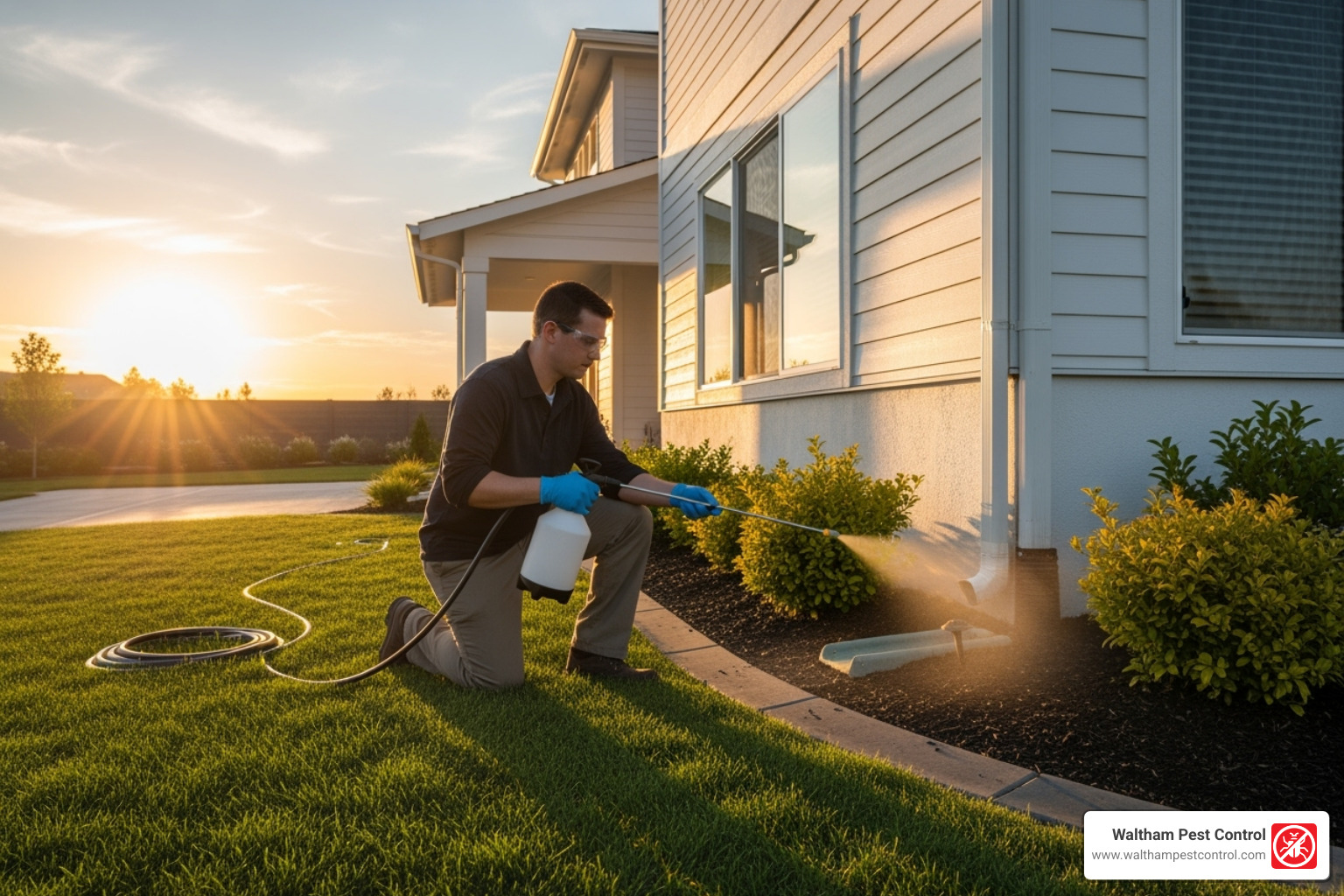
Before you start, read the product label thoroughly for specific instructions and safety precautions. Next, prepare your treatment area by clearing away any debris, leaves, or clutter from your home’s foundation. This ensures your barrier will be continuous and effective.
The key to success is creating a protective perimeter. Use the “1-foot up and 1-foot out rule” by spraying one foot up your foundation wall and one foot out onto the ground. This creates a barrier that ants can’t avoid when approaching your home.
Pay special attention to entry points like window frames, door thresholds, and where utilities enter your home. If you see active ant trails, spray them directly for immediate results. When you find ant nests in pavement cracks or mounds in your yard, drench them thoroughly to penetrate the colony.
Avoid broadcasting spray across your entire lawn unless the product is specifically designed for it. Focusing on the perimeter and problem areas is more effective and environmentally responsible. After application, let everything dry completely before allowing family and pets back into the area.
How to Apply Ant Spray Outdoor Around House Effectively
The perimeter band approach (one-foot-up, one-foot-out) is your secret weapon for long-lasting control. It creates an invisible wall that delivers a lethal dose to any ant that crosses.
Treating ant trails directly offers immediate satisfaction, but the real victory comes when your barrier catches the ants you don’t see. When you find ant nests, especially fire ant mounds, spray them thoroughly to ensure the product reaches the queen.
One common mistake is broadcast spraying the entire lawn, which wastes product and can harm beneficial insects. Stick to the perimeter and specific problem spots. Finally, allowing the product to dry is crucial for both safety and effectiveness, as it lets the active ingredients bond to the treated surfaces.
How Long Do Sprays Last and When to Reapply?
Most quality outdoor ant sprays provide protection for about three months, though some can last up to six months. Weather plays a huge role; heavy rain can wash away the product, while intense sunlight can break it down faster. Always check the forecast before application.
Reapplication frequency depends on the product and local conditions. Follow the label instructions for your specific product. Consistent reapplication according to the manufacturer’s guidelines is more effective than waiting for ants to reappear. Maintaining an effective barrier is an ongoing process, not a one-time fix.
Safety First: Precautions for People, Pets, and the Planet
When using ant spray outdoor around house products, safety is paramount. These sprays are designed to be lethal to insects, so we must handle them with respect to protect our families, pets, and the environment.
Before you begin, read the Safety Data Sheet. This document contains crucial information on potential hazards and emergency procedures.
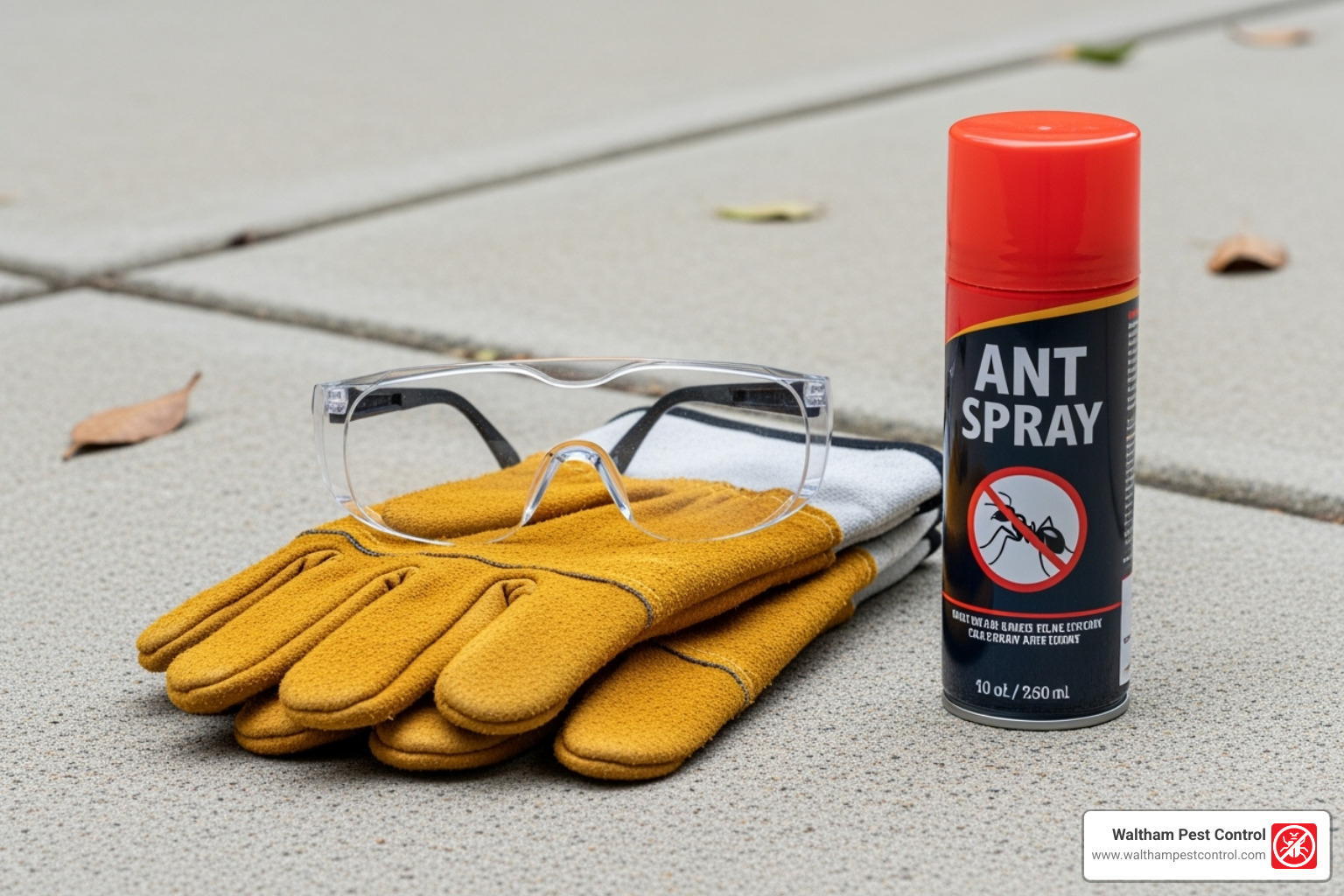
Personal Protective Equipment (PPE) is essential. At a minimum, wear gloves and safety glasses to protect against accidental splashes. For stronger products, long sleeves and pants are also recommended.
If you get spray on your skin or in your eyes, wash immediately with soap and water. If irritation persists, contact a doctor. Keep these products away from your mouth and food preparation areas.
Store products properly in their original containers in a cool, dry place, out of reach of children and pets. For disposal, check your local regulations for hazardous waste. Never pour chemicals down drains or storm sewers.
Keeping Children and Pets Safe
Our children and pets require extra protection. They are more vulnerable to pesticides and may not know to avoid treated areas.
Keep everyone inside during application. After spraying, wait for the product to dry completely before letting children or pets back into the yard. This usually takes a few hours.
For extra peace of mind, consider pet-safe formulas made with plant-based ingredients like essential oils. These are generally safer for families while still being effective against ants.
Clean up any spills immediately. If you are using ant baits in addition to sprays, place them where children and pets cannot reach them, or use resistant bait stations.
For more strategies on managing ant problems safely, our guide on dealing with ant infestation offers additional insights.
Environmental Considerations
Responsible use of ant spray outdoor around house means considering the broader ecosystem.
Protect bees and other pollinators by avoiding spraying flowering plants or areas with visible pollinator activity. If you must spray nearby, do so in the evening when these beneficial insects are less active.
Do not apply sprays if rain is expected within 24-48 hours. Runoff can carry pesticides into storm drains and local waterways, harming aquatic life.
Keep sprays away from edible plants, including vegetable gardens and fruit trees. Use different, food-safe strategies for these areas. When possible, choose biodegradable products that break down naturally and don’t persist in the environment.
Advanced Ant Control: Targeting Specific Ants and Using an Integrated Approach
Not all ants are the same. After four decades in pest control, I’ve learned that the tiny black ant in your kitchen requires a different strategy than the carpenter ant in your deck. Identifying the specific species is key to permanent victory.
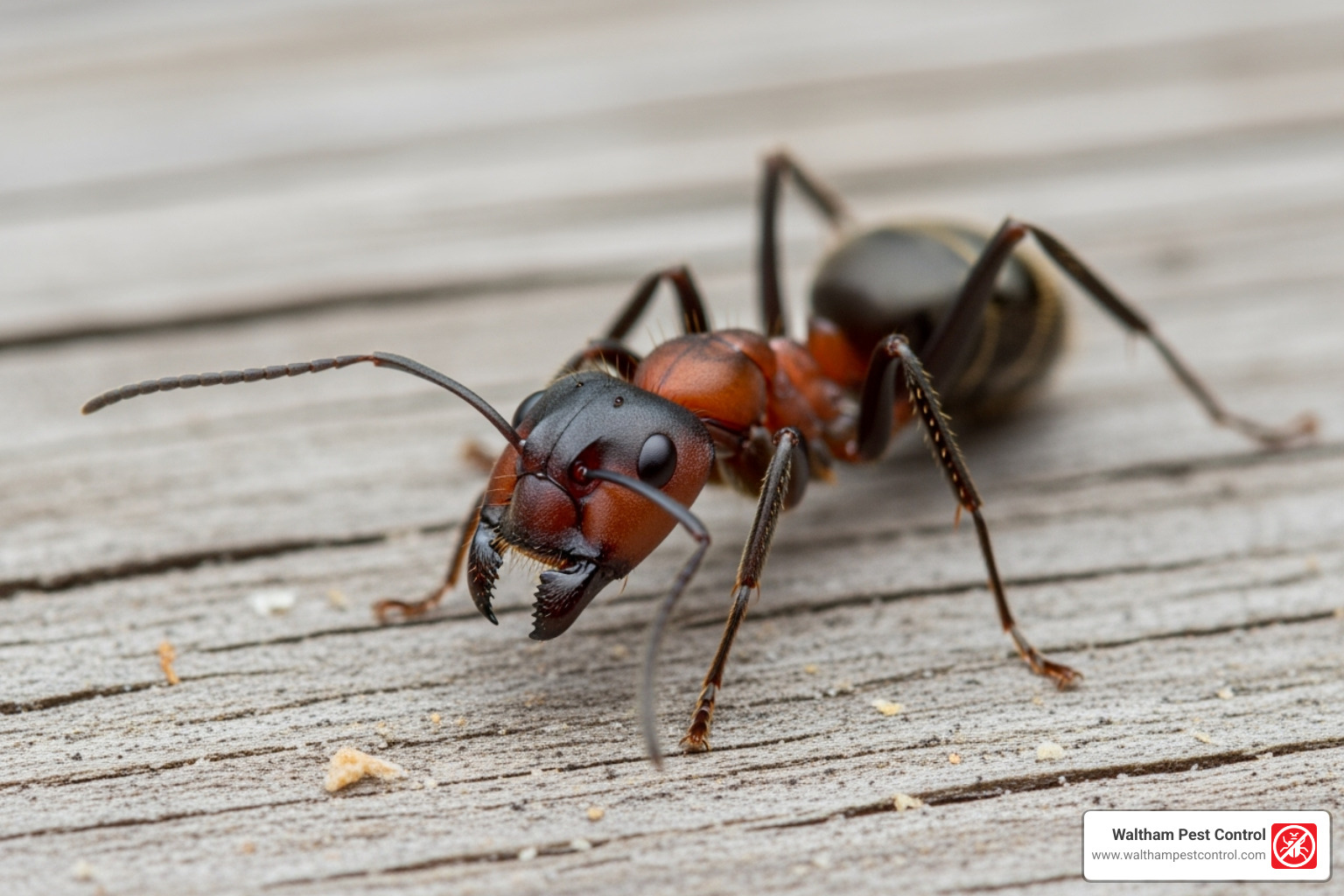
Different ant species have unique behaviors and preferences. Some seek sugar, while others prefer proteins. Carpenter ants tunnel through wood, fire ants build painful mounds, and pavement ants nest in driveway cracks. Each requires a targeted approach. For a look at common invaders, see our guide on house ants.
Best Outdoor Ant Sprays for Specific Types of Ants
Carpenter ants are a serious threat, as these wood-destroying pests can cause structural damage. Your ant spray outdoor around house strategy must be aggressive. Products with cyfluthrin are effective, killing on contact and ingestion. Apply these to wooden surfaces, especially near firewood piles or where wood touches your house. For more on this topic, read our guide on protecting your home from structural damage.
Fire ants are known for their aggressive nature and painful stings. For fire ant control, look for sprays containing acephate, which can eliminate colonies when applied directly to mounds. The key is to drench the mound to ensure the product reaches the queen deep inside.
Pavement ants are persistent invaders that nest under sidewalks and patios, often entering homes through tiny cracks. Focus your spray application on cracks and crevices along paved surfaces and where concrete meets your foundation to create a residual barrier.
Combining Sprays with Other Control Methods
While sprays are powerful, the most effective strategy is Integrated Pest Management (IPM), which combines multiple methods for long-term success.
Baits and sprays work together perfectly. Sprays create an immediate protective barrier, while baits contain a slow-acting poison that worker ants carry back to the colony, eventually killing the queen. This dual approach provides immediate relief and a long-term solution. For indoor issues, indoor ant bait stations are highly effective.
Sealing entry points is a crucial, often overlooked step. Use caulk and sealants to block cracks around windows, gaps under doors, and openings for utility lines. If you can slide a credit card through a gap, an ant can get through.
Removing food and water sources makes your home less attractive. Clean up spills, store food in sealed containers, don’t leave pet food out, and fix leaky pipes. A key part of prevention is ensuring ants aren’t drawn to your home in the first place.
Frequently Asked Questions about Outdoor Ant Sprays
After 40+ years of helping homeowners in Eastern Massachusetts, I’ve heard every question imaginable about ant spray outdoor around house treatments. Here are the most common ones.
Will an outdoor spray eliminate the entire ant colony?
The answer depends on the spray. Contact killers only eliminate the ants you spray directly, offering immediate relief but leaving the colony and queen untouched. Non-repellent sprays are more effective, as ants carry the poison back to the nest via the “transfer effect,” which can eventually destroy the colony. However, baits are often the best bet for total colony elimination, as they are designed to be carried back as food for the queen.
A combined approach is best: use sprays for an immediate barrier and baits to destroy the source.
How much does professional outdoor ant treatment cost?
Professional ant treatment costs vary based on the infestation’s severity, property size, and ant type. Based on internet data we’ve reviewed, average costs for exterior ant services can range from around $195 for basic treatments up to $600 or more for comprehensive plans. Severe infestations on large properties can cost more.
Please note: These are average costs based on general internet data and are not actual prices for Waltham Pest Control services. Actual prices are determined after an assessment of your specific situation.
Professional treatment often saves money long-term compared to repeatedly buying DIY products that only offer temporary relief.
When should I call a professional for an ant problem?
While DIY methods can work, calling a professional is the smartest move in several situations:
- Persistent infestations: If you’ve tried multiple products and the ants keep returning, you’re likely dealing with a large, established colony that requires professional-grade treatment.
- Large or multiple colonies: If you see ant trails in multiple areas or several mounds, DIY solutions are often overwhelmed.
- Wood-destroying ants: Pests like carpenter ants require immediate professional attention because they can cause serious structural damage to your home. Their nests are often hidden where DIY treatments can’t reach.
- Guaranteed, long-term solutions: Professionals have access to advanced products and decades of experience to provide a guaranteed solution.
At Waltham Pest Control, we can help you determine if your situation is manageable with DIY methods or if professional intervention will save you time, money, and frustration.
Conclusion
Creating a protective barrier with an ant spray outdoor around house is a smart investment in your home’s comfort. Understanding the difference between contact killers and long-lasting residual barriers helps you choose the right product for your situation.
Safe and effective application is key. Remember the 1-foot up and 1-foot out rule for your foundation and target entry points around windows and doors. The best results come from an integrated approach: sprays create an immediate barrier, baits eliminate the colony from within, and sealing entry points prevents future invasions.
Even the best sprays break down over time due to weather, so follow reapplication schedules. Most products offer 3-6 months of protection.
While DIY solutions can be effective, persistent infestations, large colonies, or destructive carpenter ants all warrant expert attention. Professionals can provide a more robust and lasting solution.
At Waltham Pest Control, we have over 40 years of experience with the unique challenges of ant control in Eastern Massachusetts. We use professional-grade products and proven techniques to protect your home.
Your home should be a sanctuary, not an ant battleground. For comprehensive ant management that provides lasting peace of mind, contact us for professional residential pest control. We’re here to help you reclaim your space for good.
Like us on Facebook!
