

Black ant and red ant: 1 Essential Guide
More Than Just a Color Difference
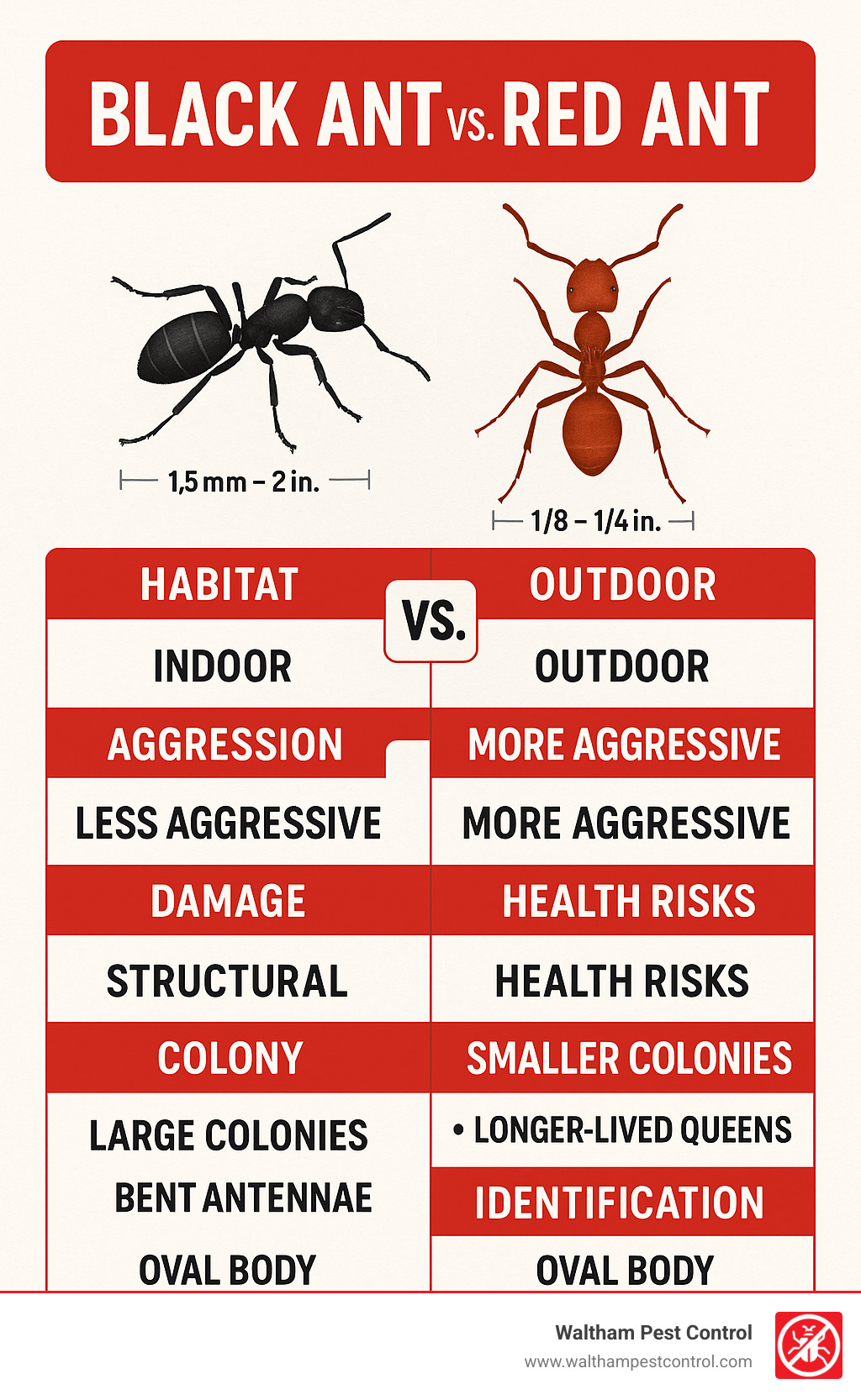
When you spot ants, understanding the difference between black ant and red ant species can save you time, money, and painful encounters. While color is a starting point, it doesn’t tell the whole story. Some “red” ants are reddish-brown, and many “black” ants can be dark brown or have reddish parts. The real distinction lies in their behavior and the risks they pose.
Key Differences at a Glance:
- Black Ants: Generally less aggressive, often found indoors, and can cause structural damage (e.g., carpenter ants).
- Red Ants: Typically more aggressive, prefer outdoor spaces, and can deliver painful, venomous stings.
- Threat Level: Red ants pose immediate health risks, while black ants can create long-term property damage.
For Massachusetts homeowners, this distinction is critical. Red fire ants are known for aggressive swarming and painful stings. Black ants, while less dangerous to people, include species like carpenter ants that cause thousands in structural damage by excavating wood for their nests.
I’m Waltham Pest Control, President & CEO of Waltham Pest Control. With over 40+ years in the industry, I’ve seen how misidentification leads to costly mistakes. Understanding these differences is the first step toward protecting your Eastern Massachusetts property.
Black ant and red ant word guide:
Appearance and Identification: Who’s Who in the Ant World?
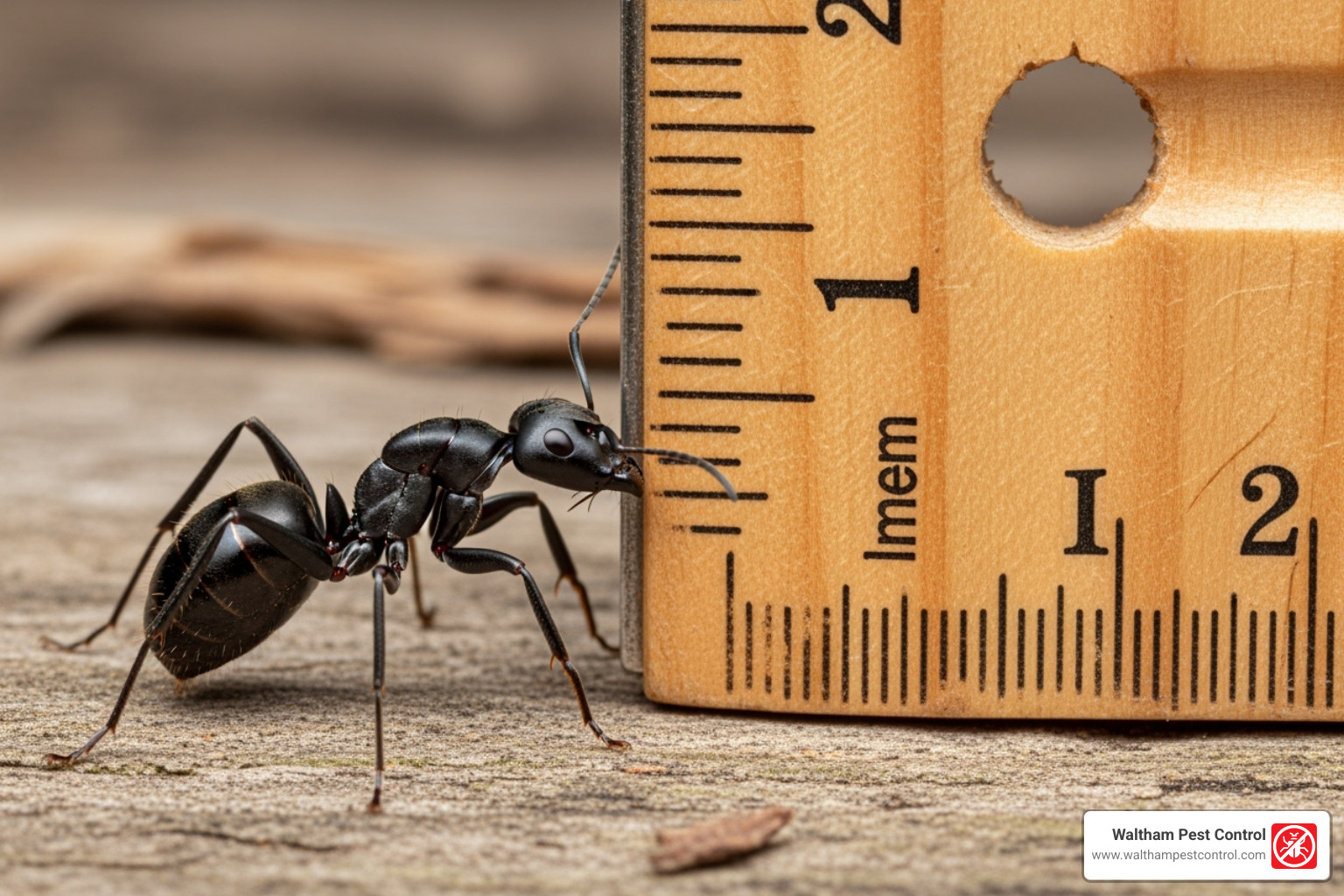
Looks can be deceiving when identifying a black ant and red ant problem. While all ants have a head, thorax, and abdomen, the real clues are in the shape of their waist (petiole) and their antennae. For example, carpenter ants have a single, curved segment on their back and 12-segmented antennae, but can be black, red, or a combination of both.
Here’s a guide to help identify ants in your Eastern Massachusetts home:
| Feature | Black Ants (General) | Red Ants (General, often Fire Ants) |
|---|---|---|
| Color | Primarily black, dark brown; some with reddish parts | Reddish-brown to reddish-black; some bright red |
| Size | Highly varied: 1.5 mm to over 1/2 inch | Typically 1/8-inch to 1/4-inch long (fire ants) |
| Antennae | Often “elbowed”; 12 segments (carpenter ants) | Often “elbowed”; 10 segments for fire ants |
| Stinger | Generally no external stinger; may bite | Prominent stinger present; deliver painful stings |
Common Black Ant Species
The black ant family is diverse, and proper identification is key to effective control.
- Carpenter ants are large (1/4 to 1/2 inch) and don’t eat wood but excavate it to build smooth tunnels for their nests, causing serious structural damage. If you see large ants in kitchen areas, especially near damp wood, it could be them. You can find more info about carpenter ants on our site.
- Pavement ants (about 1/8 inch) are dark brown to black and nest under sidewalks and foundations. They are a nuisance pest, marching indoors for food but not causing structural damage.
- Little black ants are tiny (1/16 inch) and shiny black. They love sweets and grease and form long trails across countertops, especially in summer.
- Odorous house ants are small, dark ants that release a rotten coconut smell when crushed. They are drawn to sugary foods and nest in moist areas.
Common Red Ant Species
The term “red ant” often brings to mind painful stings, and for good reason.
- Fire ants (1/8 to 1/4 inch) are reddish-brown and aggressively defend their territory with stings that cause a lasting burning sensation and itchy pustules.
- European fire ants, an invasive species in the Northeast, are reddish-brown and deliver a painful sting, though it’s typically less severe than their southern relatives.
- Pharaoh ants are tiny (1/16 inch), yellowish to reddish-brown ants that are extremely difficult to eliminate. They nest in warm, inaccessible places and are known to spread pathogens. If you’re dealing with little red ants in the house, they might be the culprit.
While color is a starting point for black ant and red ant identification, the specific species determines the risk and the right treatment plan. For a broader understanding of these creatures, you might want to explore an overview of arthropods.
Habitat, Diet, and Colony Life
Understanding where a black ant and red ant lives and what it eats is key to lasting control. Ant colonies are complex societies, sometimes housing millions of individuals. At the center is the queen ant, who lays eggs to sustain the population, while sterile female worker ants handle foraging, building, and defense. Every ant undergoes complete metamorphosis (egg, larva, pupa, adult), a process that can take months and explains why infestations don’t vanish overnight.
The dining and housing preferences of ants tell us where to find them. Most black ant species are opportunistic. Pavement ants nest under driveways, while little black ants use wall voids. Carpenter ants are a major concern as they are drawn to moist or damaged wood to excavate their nests. Indoors, these kitchen pests seek out sweets, pet food, and greasy spills. Seeing Large Ants In Kitchen often means carpenter ants have found both food and shelter in your home.
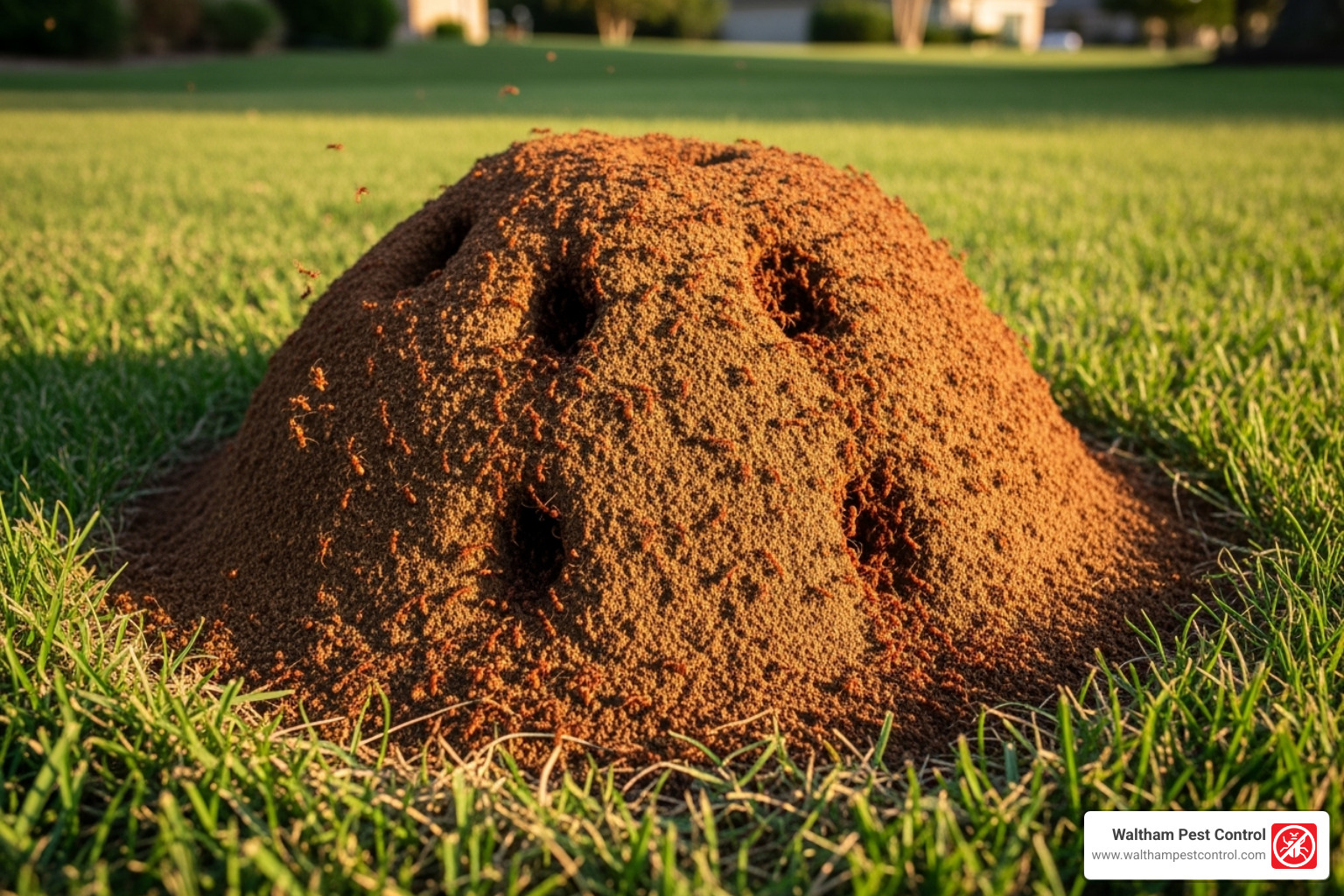
Red ant habitat is typically outdoors. Fire ants prefer sunny, open spaces like lawns, building distinctive dome-shaped mounds. Their omnivorous diet includes seeds, insects, and even small animals.
Ant colonies start with a parent colony founded by a queen. As it grows, it may establish satellite colonies—secondary nests with workers and larvae but no queen. Carpenter ants often establish these satellite nests inside your walls or attic. While worker ants live for only a few weeks or months, the queen can live for years, sometimes over a decade, constantly producing more ants. This is why spraying only the workers you see is ineffective. To solve an ant problem, the entire colony system, especially the queen, must be eliminated. Dealing With Ant Infestation requires a comprehensive approach that targets the colony at its source.
The Great Black Ant and Red Ant Divide: Behavior and Risks
The behavior of a black ant and red ant, especially when threatened, is their most defining difference. All ants defend their colony, but their methods and intensity vary dramatically, directly impacting the risks to you and your property.
Black ants are generally non-aggressive. Species like pavement ants and odorous house ants are primarily nuisance pests. They may bite if cornered, but the pinch is usually unnoticeable and involves no venom. Their real issue is persistence—contaminating food and marching in endless trails through your home.
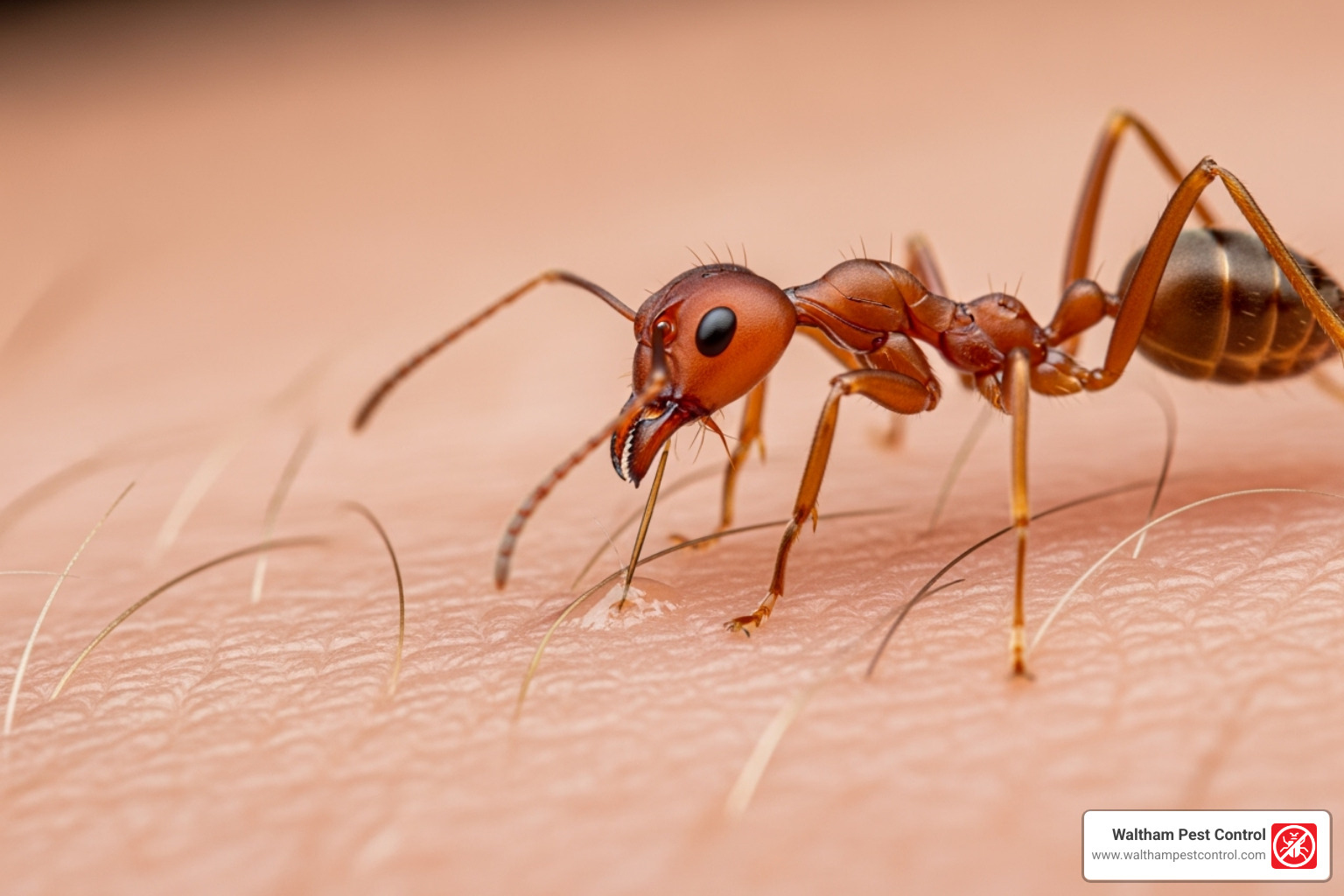
Red ants, particularly fire ants, are the opposite. They are incredibly territorial and launch coordinated swarm attacks if their mound is disturbed. A fire ant will bite to anchor itself, then pivot and sting repeatedly, injecting venom with each strike. This aggression allows them to outcompete native ant species and dominate their territory.
Damage, Bites, and Stings: The Real Dangers of a black ant and red ant
The threats from these ants fall into two categories: property damage versus health risks.
The “silent threat” comes from black carpenter ants. They don’t sting, but they cause significant structural damage by excavating smooth tunnels and galleries in your home’s wooden structures, including support beams, wall studs, and floor joists. Over time, this can weaken your home’s integrity, leading to thousands in repairs. This is why Carpenter Ants Protecting Your Home From Structural Damage is so critical.
Red fire ants pose immediate health risks. Their stings cause an intense burning sensation, followed by itchy, white pustules within 24-48 hours. Scratching these can lead to infection. The main danger is from multiple stings during a swarm attack, which can trigger systemic reactions. For those with severe allergies, this can lead to anaphylactic shock, a life-threatening condition requiring immediate medical attention. Stinging insects send over 500,000 people to emergency rooms annually, highlighting the seriousness of these encounters.
When Worlds Collide: Can Black and Red Ants Coexist?
In nature, the relationship between black ant and red ant species is rarely peaceful. It’s a constant battle for resources like food, water, and prime nesting sites. When foraging trails of different colonies cross, it often leads to all-out ant war.
Aggressive species like red fire ants are notorious for displacing native black ant populations. Their coordinated attacks and painful stings give them a major advantage in this interspecies competition. They don’t just win battles; they often eliminate entire competing colonies from their territory.
This constant external conflict is why you might find different ant species on your property. A carpenter ant colony on your deck might clash with fire ants in the lawn. While the carpenter ant is larger, it’s often no match for the fire ants’ numbers and aggression. This pressure can drive the losing species to seek refuge in the one place they might agree on: your house. For homeowners, having both types of ants signals an ongoing territorial dispute that could easily spill indoors.
“Frank had fighting in the jar that day, but I can remember other bug fights we staged later on: one stag beetle against a hundred red ants, one centipede against three spiders, red ants against black ants. They won’t fight unless you keep shaking the jar.” You can read A passage from Kurt Vonnegut’s “Cat’s Cradle” for the full context.
Effective Ant Control: Why Professional Help Matters
When facing a black ant and red ant invasion, grabbing a can of ant spray is a common but ineffective reaction. The ants you see are only 2-5% of the colony. The queen remains safe in the nest, continuously laying eggs, which is why the ants always return.
Waltham Pest Control uses Integrated Pest Management (IPM), a comprehensive strategy that targets the entire colony. It begins with a thorough inspection to identify the species, locate nests, and understand behavior patterns before implementing targeted treatment methods. This approach solves the root of the problem, rather than just chasing visible ants. For comprehensive outdoor strategies, our Ant Control Outside House services target colonies at their source.
Addressing Black Ant Infestations
Controlling black ants, especially carpenter ants, requires a professional approach. We conduct detective work to find all entry points, which can be tiny cracks in the foundation or gaps around utility lines. We also help identify and remove hidden food sources that attract them. A key challenge is locating satellite nests, which species like odorous house ants and carpenter ants establish inside walls, under floors, or in attics. Treating these hidden colonies requires experience and specialized equipment, sometimes involving drilling small holes to apply materials directly into the nest.
Managing Red Ant Mounds
Dealing with red fire ants can be dangerous. Attempting to treat a mound yourself can trigger a swarm attack, resulting in hundreds of painful stings and posing a serious risk to anyone with allergies.
Our technicians use strict safety precautions and professional mound treatments that homeowners can’t access. We use targeted applications that penetrate deep into the mound to eliminate the queen and her brood. We also employ professional-grade baiting strategies. These slow-acting baits are carried back by workers and shared throughout the colony, ensuring its complete elimination. If you’re curious about What Waltham Pest Control Uses For Ants, strategic baiting is one of our most effective tools. We also provide advice on long-term prevention to make your property less attractive to new colonies.
Conclusion: Choosing the Right Defense for Your Home
Understanding the difference between black ant and red ant species is crucial for protecting your home and family. The key takeaway is simple: black ants like carpenter ants pose a long-term threat to your property’s structure, while red ants like fire ants present an immediate health risk with their painful, venomous stings.
Correct identification is your first line of defense. A seemingly harmless ant could be a scout for a destructive carpenter ant colony in your walls or an aggressive fire ant from a mound in your yard. This is why proactive pest management from Waltham Pest Control is essential. The right approach for a tiny pharaoh ant is completely different from that for a large carpenter ant.
Here in Eastern Massachusetts, from Concord to Waltham, I’ve seen how DIY methods fail against complex infestations. Lasting ant control requires professional expertise that targets the entire colony.
At Waltham Pest Control, our licensed technicians have the experience to correctly identify the species, find hidden nests, and use targeted strategies that work. We don’t just spray; we solve the root of your ant problem.
Don’t let these invaders take over your home. Whether you face structural threats from carpenter ants or safety concerns from red ants, help from Waltham Pest Control is essential. Contact us today for a professional pest inspection and reclaim your home.
