

Sugar Ant Infestation: Top 3 Tips for Control
Understanding the Sugar Ant Problem in Your Home
A sugar ant infestation can quickly turn your peaceful home into a busy highway of tiny invaders. Here’s what you need to know:
Key Signs of Sugar Ant Infestation:
- Live ant trails – Lines of small ants moving between cracks and food sources
- Kitchen activity – Ants around sinks, counters, and food storage areas
- Sweet attractions – Ants drawn to spills, crumbs, and sugary substances
- Entry points – Ants emerging from cracks, crevices, or gaps around pipes
- Persistent presence – Ants returning even after cleaning
Common “Sugar Ant” Species:
- Odorous house ants (2.5-3mm, black/brown, “rotten coconut” smell when crushed)
- Pavement ants (2.5-4mm, dark brown/black)
- Pharaoh ants (2mm, yellow/light brown)
The term “sugar ant” isn’t actually a specific species – it’s a common name used for any small ant attracted to sweet foods. These persistent pests can contaminate food, leave pheromone trails, and establish colonies in wall voids or under flooring.
Why They Invade:
Sugar ants enter homes searching for three basic needs: food (especially sweets and proteins), water (from leaks or damp areas), and shelter (warm, hidden spaces to nest).
I’m Waltham Pest Control, and in my 40+ years as President of Waltham Pest Control, I’ve helped thousands of Eastern Massachusetts homeowners resolve sugar ant infestations through proven integrated pest management strategies. Understanding the specific species and their behavior is crucial for effective, long-term control.
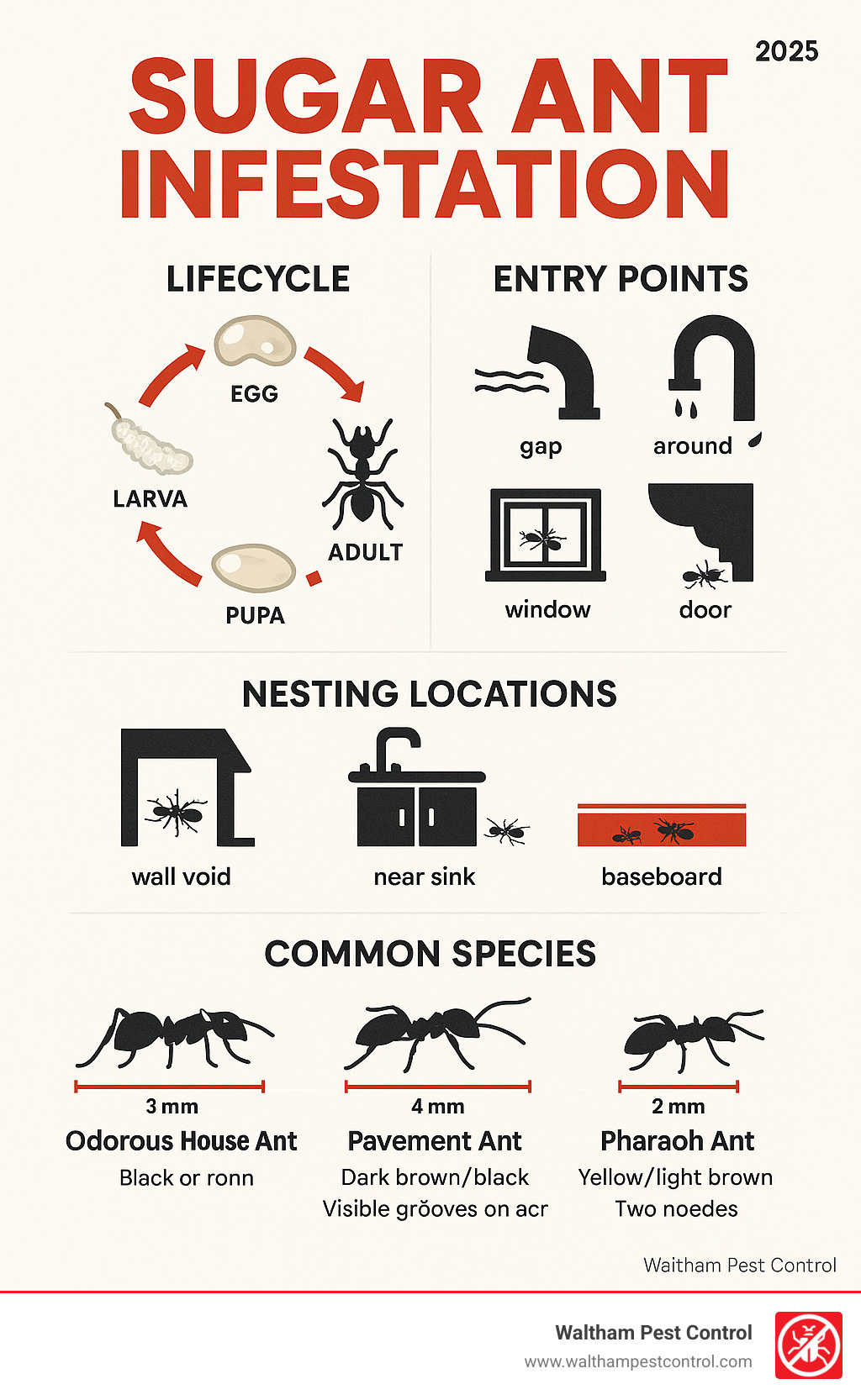
Key sugar ant infestation vocabulary:
What Are Sugar Ants and Why Are They in My House?
Here’s the thing about “sugar ants” – they’re not actually a single species at all! This common term is really just what most of us call any small ant that shows up uninvited to raid our kitchens and pantries. Think of it as a nickname for several different ant species that all share one annoying trait: they absolutely love sweet, sugary foods.
But here’s where it gets interesting – these little invaders aren’t only after your sugar bowl. Many of these ants are actually quite the food connoisseurs, happily munching on proteins, fats, and greasy foods too, especially as the seasons change and their nutritional needs shift.
In our Eastern Massachusetts area, the most common culprits behind a sugar ant infestation include the odorous house ant, which is probably the champion of home invasions around here. These tiny guys are typically 2.5-3mm long, ranging from black to brown, and here’s their calling card – when you accidentally squish one, they release a smell that’s been described as “rotten coconut.” Not exactly pleasant!
Then we have pavement ants, which are slightly bigger at 2.5-4mm and tend to be dark brown to black. Pharaoh ants are the tiny yellow troublemakers at just 2mm long, and they’re particularly persistent once they move in.
The fascinating (and frustrating) thing about these ants is how organized they are. Scout ants venture out to explore your home, and when one finds your spilled juice or pet food bowl, it leaves behind a pheromone trail – basically a chemical breadcrumb path that tells all its buddies exactly where to find the good stuff. That’s why you see them marching in perfect single-file lines across your countertops.
When it comes to setting up house, these ants are surprisingly adaptable. They love to nest in wall voids, under flooring, or behind baseboards where it’s warm and undisturbed. Outside, they typically build their colonies in soil, under rocks, or in wood piles. For comprehensive strategies on dealing with these persistent invaders, check out our House Ant Control guide.
Are Sugar Ants Dangerous?
The good news? Sugar ants are mostly just a nuisance pest rather than a serious threat. They won’t cause structural damage to your home like some other ant species, and they’re generally pretty mild-mannered little creatures.
Their main offense is food contamination. These persistent foragers can chew through paper, cardboard, and even thin plastic containers to reach food, potentially contaminating whatever they touch as they trek across your surfaces.
Many homeowners ask us, “Do sugar ants bite?” While sugar ants can bite if they feel threatened, these bites are typically very mild with minimal pain. They don’t sting, and allergic reactions are quite rare. Most people barely notice if they get nipped by one of these tiny ants.
The real issue isn’t physical harm – it’s the “ick factor” of finding ants in your cereal box or trailing across your kitchen counter.
What Attracts Sugar Ants to a Home?
Sugar ants don’t just randomly appear in your home – they’re there for very specific reasons. Like all living creatures, they need three basic things: food, water, and shelter. Unfortunately, our homes are like five-star resorts for these tiny guests.
Food is the big draw, and yes, they do love their sweets. Sugary spills from soda or juice, honey drips, candy crumbs, or even fruit peels in the trash can send out a dinner bell call to nearby colonies. But don’t let the name fool you – these ants are opportunistic eaters who also go crazy for meats and grease. That pet food bowl left out overnight? It’s like a buffet invitation.
Water sources are equally important. Leaky pipes under the sink, damp areas around the bathroom, or even condensation on your cold water pipes can provide all the hydration a colony needs. Even the smallest drip becomes a major attraction.
Finally, there’s shelter. Our climate-controlled homes offer perfect nesting spots in wall voids, under flooring, or near warm appliances like water heaters. These cozy hideaways protect them from weather changes while keeping them close to food and water sources.
The combination of readily available food, water, and comfortable shelter makes your home incredibly appealing to these industrious little invaders.
Understanding the Signs of a Sugar Ant Infestation
The telltale signs of a sugar ant infestation often start small but quickly become impossible to ignore. The most obvious indicator is spotting live ants marching purposefully across your surfaces, but understanding their behavior patterns will help you tackle the problem more effectively.
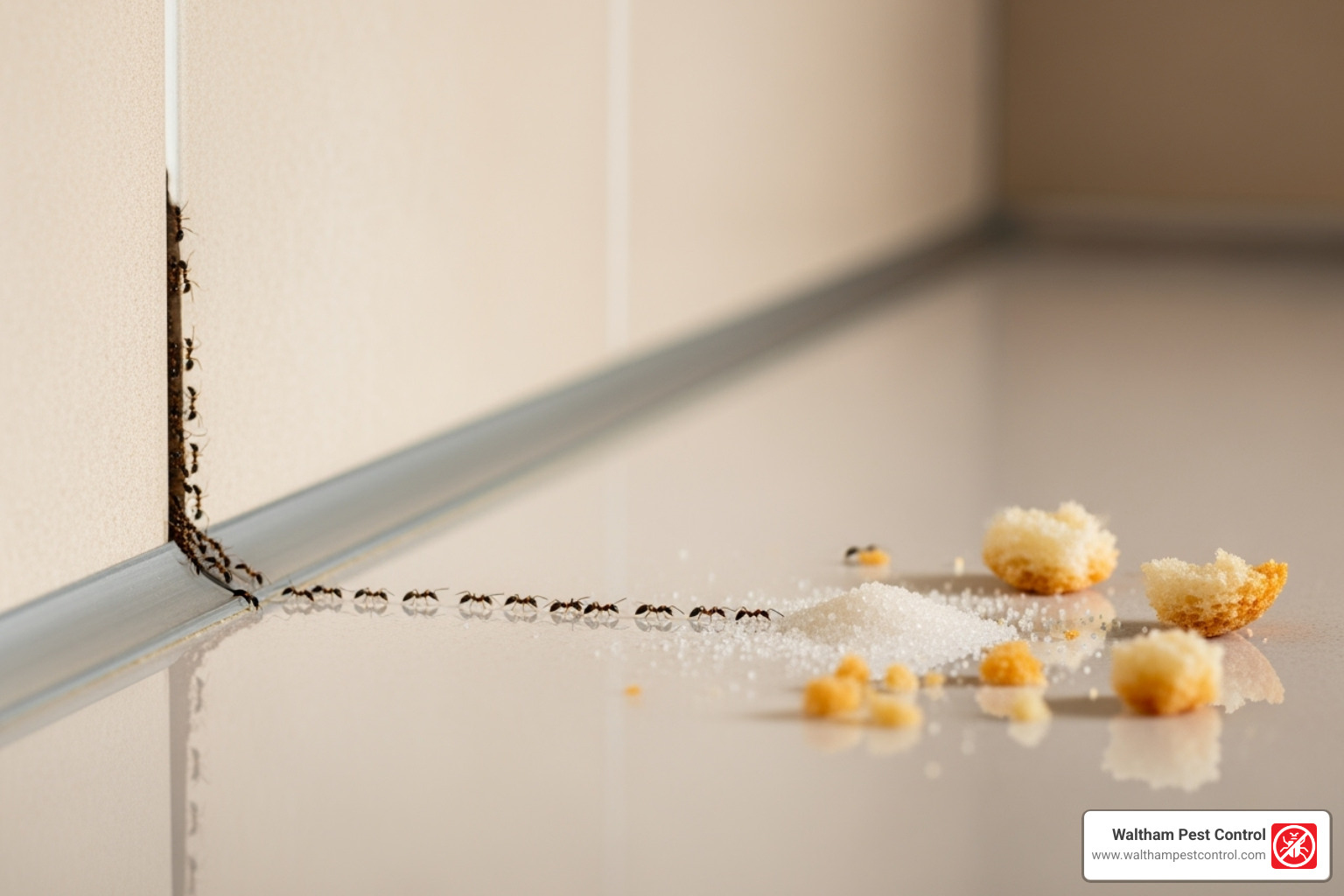
Foraging trails are perhaps the most distinctive sign of an active infestation. These aren’t random ants wandering around – they’re following invisible highways. When a scout ant finds something appealing in your home, it leaves behind a chemical scent trail called a pheromone. This acts like a GPS system, guiding other worker ants directly to the food source and back to the nest. You’ll notice these trails as steady streams of ants moving in both directions along the same path.
The kitchen is almost always the epicenter of a sugar ant infestation. These persistent little foragers are drawn to countertops where food prep happens, especially around the sink where water and food particles collect. They’ll investigate your pantry for any containers that aren’t completely sealed, and they’re surprisingly good at finding crumbs that have fallen behind appliances like toasters and microwaves. Even your garbage bin becomes a prime target, particularly if it contains sticky residues or isn’t emptied regularly.
Don’t overlook your bathroom when checking for signs of activity. While it might seem like an odd place for “sugar” ants, these insects need water to survive. They’ll congregate around sinks, investigate areas behind toilets where small leaks might occur, and even show interest in toothpaste or mouthwash spills. Any source of moisture becomes attractive real estate for them.
Outdoor activity around your home can also signal potential indoor problems. Many sugar ant species maintain outdoor nests while sending foraging parties into your house. You might notice them engaged in aphid farming – a fascinating behavior where ants protect aphids on your plants in exchange for honeydew, a sweet substance the aphids produce. If you see ants tending to aphids near your home’s exterior, they’re already close enough to find indoor food sources.
What Causes a Sugar Ant Infestation?
Every sugar ant infestation begins the same way: with curious scout ants on a mission to find food and water for their colony. These tiny explorers are incredibly thorough, investigating every possible entry point within hundreds of feet of their nest.
Your home offers numerous entry points that seem insignificant to us but are superhighways for ants. They’ll squeeze through cracks and crevices in foundations, exploit gaps around pipes where plumbing enters your home, and find their way through unsealed windows or worn weather stripping. Even gaps around pipes under your kitchen sink can become major thoroughfares for these persistent invaders.
Weather changes play a huge role in triggering infestations. Heavy rain can flood outdoor ant colonies, sending entire populations scrambling for higher, drier ground – often right into our homes. Conversely, warm weather in spring and summer naturally increases their activity levels, making them more likely to find and exploit indoor food sources.
Sometimes the problem isn’t just outdoor ants visiting – it’s a colony that has actually moved indoors to escape harsh weather conditions, leading to year-round activity even during colder months.
Sugar Ants vs. Other Common Household Ants
Not all small black ants are created equal, and proper identification is crucial for effective treatment. Here’s how common “sugar ants” compare to Carpenter Ants, which are often confused due to their similar dark coloring:
| Characteristic | Sugar Ants (Odorous House Ants) | Carpenter Ants |
|---|---|---|
| Size | Small, 2.5-3mm | Large, 7-12mm (major workers) |
| Color | Black to brown | Primarily black |
| Diet | Sweet foods, proteins, fats | Honeydew, insects, human foods |
| Nesting Habits | Wall voids, under flooring, soil nests | Moist or decaying wood |
| Damage Potential | Nuisance, food contamination | Structural damage to wood |
| Smell When Crushed | “Rotten coconut” odor | No distinct smell |
The distinction matters because Carpenter Ants pose a much more serious threat to your home’s structure. While sugar ants are primarily a nuisance that contaminates food, Carpenter Ants actually excavate galleries in wood, potentially compromising your home’s integrity over time. If you’re dealing with larger ants or suspect wood damage, you’ll want to check out our Carpenter Ants page for more specific information.
Understanding these differences helps ensure you’re using the right treatment approach for your specific ant problem.
Effective Sugar Ant Control and Prevention Strategies
When you’re facing a sugar ant infestation, it’s tempting to reach for the nearest can of bug spray and start blasting away. But here’s the thing – that approach is like playing whack-a-mole with an endless supply of moles. You might kill a few ants, but you’re not solving the real problem.
After four decades in the pest control business, I’ve learned that successful ant control requires a thoughtful strategy. We call it Integrated Pest Management (IPM), and it’s all about understanding your enemy, cutting off their supply lines, and targeting the source of the problem – the entire colony.
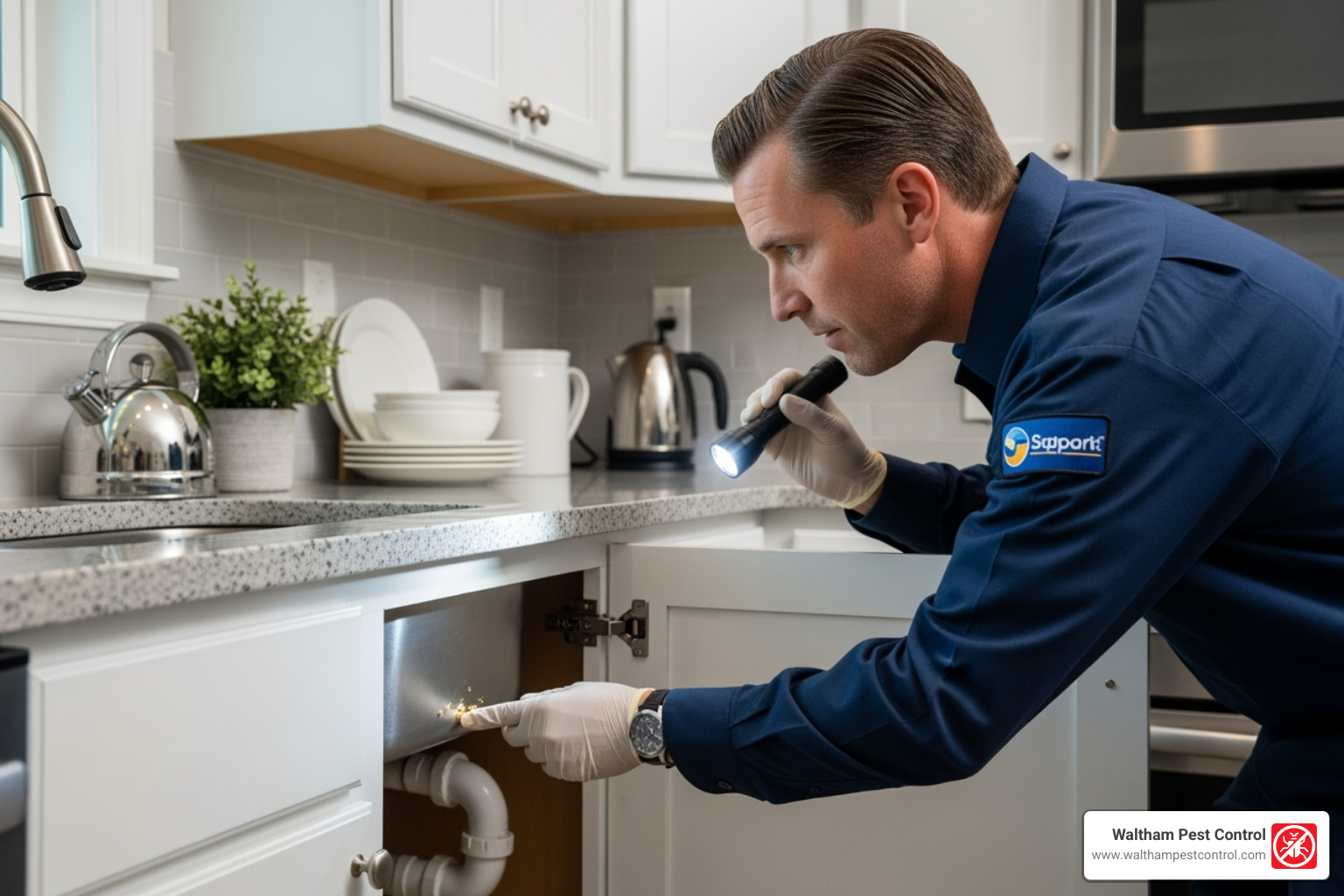
The key to long-term success is colony elimination. Those worker ants marching across your counter? They’re just the tip of the iceberg. The real action is happening back at the nest, where the queen is busy laying eggs and expanding her empire. Simply spraying the workers you see is like cutting the heads off a hydra – more will just keep coming.
Even worse, many common spray treatments can actually make your sugar ant infestation worse. When you use repellent sprays on certain species like odorous house ants, you can cause the colony to “bud” or split apart. Suddenly, instead of one colony to deal with, you’ve got multiple queens setting up shop in different areas of your home.
Step 1: Prevention and Sanitation
The best offense is a good defense, and that’s especially true when it comes to sugar ants. Think of your home as a fortress – you want to eliminate anything that might attract invaders and seal up the entry points they use to get inside.
Cleanliness is your first line of defense. Sugar ants are incredibly good at finding even the tiniest food sources. That sticky spot where your coffee mug sat this morning? That’s like a neon sign advertising “free food here!” Wipe down counters and floors after every meal, making sure to get into those corners where crumbs love to hide. Address spills immediately – especially sugary ones like juice or soda. Even a few drops can attract scouts from hundreds of feet away.
Don’t forget about your appliances. Clean your microwave, toaster, and oven regularly to remove food particles and grease splatters. I’ve seen entire ant highways leading to a single crumb stuck under a toaster. Regular mopping and vacuuming will catch those hidden food sources that you might miss during daily cleaning.
Food storage makes a huge difference. Store all food in airtight containers – those flimsy cardboard boxes and paper packages are no match for determined ants. Invest in some good quality plastic containers with tight-fitting lids for items like sugar, cereal, crackers, and pet food. Speaking of pet food, don’t leave it out for extended periods. Feed your furry friends at specific times and clean up any leftovers promptly.
Your trash cans can be ant magnets too. Empty indoor bins daily, especially those containing food waste. Make sure your outdoor garbage cans have tight-fitting lids and keep them a good distance from your home’s entrances.
Water sources are just as important as food. Fix any leaky pipes or faucets as soon as you notice them – even a tiny drip can support an entire colony. Don’t leave sinks full of dirty dishes overnight, and wipe down damp areas in bathrooms and kitchens. If you have condensation on pipes, consider insulating them to eliminate this water source.
The final piece of the prevention puzzle is sealing entry points. Inspect your home for cracks and crevices around windows, doors, baseboards, and anywhere pipes or wires enter your home. Use silicone caulk to seal these openings – it’s a small investment that can save you a lot of headaches later. Check that your door sweeps fit properly and that window screens are in good repair.
Some folks swear by natural deterrents like wiping surfaces with white vinegar mixed with water, or placing bay leaves in pantries. These can help disrupt scent trails and may deter scouts, but remember – they’re deterrents, not solutions for an established sugar ant infestation.
Step 2: When to Call a Professional for a Sugar Ant Infestation
I get it – nobody wants to admit defeat to an army of tiny invaders. But sometimes, despite your best efforts with cleaning and sealing, those ants just keep coming back. That’s when you know it’s time to call in the professionals.
DIY methods have their limits, and understanding those limits can save you time, money, and frustration. Many over-the-counter ant sprays are actually repellents designed to kill ants on contact. While they might make you feel like you’re winning the battle, they often miss the war entirely – the colony remains intact and active.
Here’s where it gets tricky with budding ants like odorous house ants. When you use repellent sprays on these species, you’re essentially telling the colony “this area isn’t safe anymore.” Their response? The colony fractures, with multiple queens breaking off to establish new nests throughout your home. What started as one problem becomes several, and your sugar ant infestation actually gets worse.
You should call us when you’ve tried basic sanitation and prevention but the ants keep returning. Persistent infestations are a clear sign that there’s a well-established colony hidden somewhere in your home, likely in a place you can’t easily access or treat yourself.
Proper species identification is crucial for effective treatment. Different ant species respond to different baits and control methods. What works for one type might be completely ineffective – or even counterproductive – for another. Our licensed technicians have the training and experience to accurately identify which species you’re dealing with and choose the most effective treatment approach.
Large-scale problems or infestations that have spread to multiple areas of your home typically indicate extensive colony networks. These situations require professional tools and expertise to locate all the nests and eliminate them completely. Hidden nests in wall voids, under flooring, or in other inaccessible areas are particularly challenging for homeowners to address on their own.
At Waltham Pest Control, we’ve been serving Eastern Massachusetts for over 40 years, and we’ve seen every type of sugar ant infestation imaginable. Our approach focuses on strategic baiting rather than spraying. We use baits that worker ants carry back to their nests, where they’re shared with the entire colony, including the queen. This method takes a little longer to show results, but it provides a complete, long-lasting solution.
We don’t just treat the symptoms – we solve the problem. Our licensed and insured technicians will assess your specific situation, identify the ant species, locate entry points and nesting sites, and implement a customized treatment plan designed to eliminate the entire colony. For more information about our comprehensive ant control services, visit our Ant Exterminators Near Me page.
Frequently Asked Questions about Sugar Ant Problems
Over my 40+ years helping Eastern Massachusetts homeowners, I’ve heard the same questions countless times. Let me share the answers that matter most when you’re dealing with these persistent little invaders.
Where do sugar ants typically build their nests?
These adaptable creatures are surprisingly clever when it comes to choosing real estate. Outdoors, they’re drawn to protected spots where moisture and warmth create ideal conditions. You’ll often find their colonies nestled in soil, tucked under rocks or logs, hidden in woodpiles, or thriving in mulch beds around your foundation. Those small dirt mounds you might notice in your yard? That’s likely a nest entrance.
Indoors is where things get tricky. Sugar ants seek out the warm, moist, and undisturbed areas that every home provides in abundance. I’ve found colonies thriving in wall voids, behind baseboards, under flooring, and even in insulation. They’re particularly fond of spots near water heaters, around plumbing where condensation provides moisture, or in those forgotten corners of basements and closets.
What makes a sugar ant infestation especially challenging is their ability to establish satellite colonies. This means they might have multiple nesting sites throughout your home, all connected by their invisible pheromone highways.
Will sugar ants go away on their own?
I wish I could give you better news, but the honest answer is almost certainly not. While you might see a temporary reduction if you clean up an obvious food source, an established sugar ant infestation won’t simply disappear.
Here’s why: these colonies operate like well-organized cities. Scout ants are constantly exploring, and once they’ve finded your home offers food, water, and shelter, they’re invested. The colony will keep sending out workers, and with a queen continuously laying eggs, the population will actually grow over time.
Simply wiping up the ants you can see won’t solve the problem. In fact, using repellent sprays can backfire spectacularly with certain species. Some sugar ants will respond to threats by “budding” – splitting their colony and creating multiple new nests with different queens. Suddenly, you’ve got several sugar ant infestations instead of one.
The colony needs to be eliminated at its source, including the queen, for the problem to truly resolve.
How much does professional sugar ant extermination cost?
The investment in professional treatment varies significantly based on several factors. The severity of your sugar ant infestation, the size of your property, the specific ant species involved, and the treatment methods required all influence the final cost.
Some infestations are straightforward – a single colony with clear entry points. Others involve multiple nests, extensive trails, or require specialized baiting strategies for particular ant species. Follow-up visits might be necessary to ensure complete colony elimination.
What I can tell you is that we provide licensed, insured, and cost-effective solutions custom specifically to your situation. Every sugar ant infestation is unique, and our approach reflects that reality.
Secure Your Home from Sugar Ants Today

The sight of that clean, organized kitchen above doesn’t have to be just a dream. With the right approach, you can transform your sugar ant infestation nightmare back into the peaceful, pest-free home you deserve.
Throughout this guide, we’ve walked through the essential strategies for prevention: keeping surfaces spotless, storing food in airtight containers, eliminating water sources, and sealing those tiny cracks where ants love to sneak through. These simple but powerful steps form your strongest defense against future invasions.
But here’s the reality we’ve learned after four decades in the pest control business – sometimes prevention isn’t enough. When you’re dealing with a persistent sugar ant infestation that keeps returning despite your best efforts, or when you’re seeing trails of ants throughout multiple rooms, that’s when professional intervention becomes essential.
At Waltham Pest Control, we’ve been helping Eastern Massachusetts families reclaim their homes from sugar ants since 1984. Our service area spans from Acton to Andover, Burlington to Cambridge, Framingham to Lexington, Lowell to Newton, Peabody to Waltham, and dozens of communities in between. What sets us apart isn’t just our experience – it’s our commitment to quality solutions that actually work long-term.
Our licensed and insured technicians understand that every sugar ant infestation is unique. We don’t just spray and hope for the best. Instead, we identify the specific ant species you’re dealing with, locate their hidden nests, and implement targeted treatments designed to eliminate the entire colony, including the queen.
Don’t spend another day watching ants march across your countertops or worry about contaminated food. Take that first step toward getting your home back.
Contact us for a free pest inspection and let our experienced team show you what 40 years of expertise can do for your peace of mind.
