

Large Ants in Kitchen: 5 Powerful Solutions for 2025 Success
Meet Your Unwanted Kitchen Guests: Large Ants
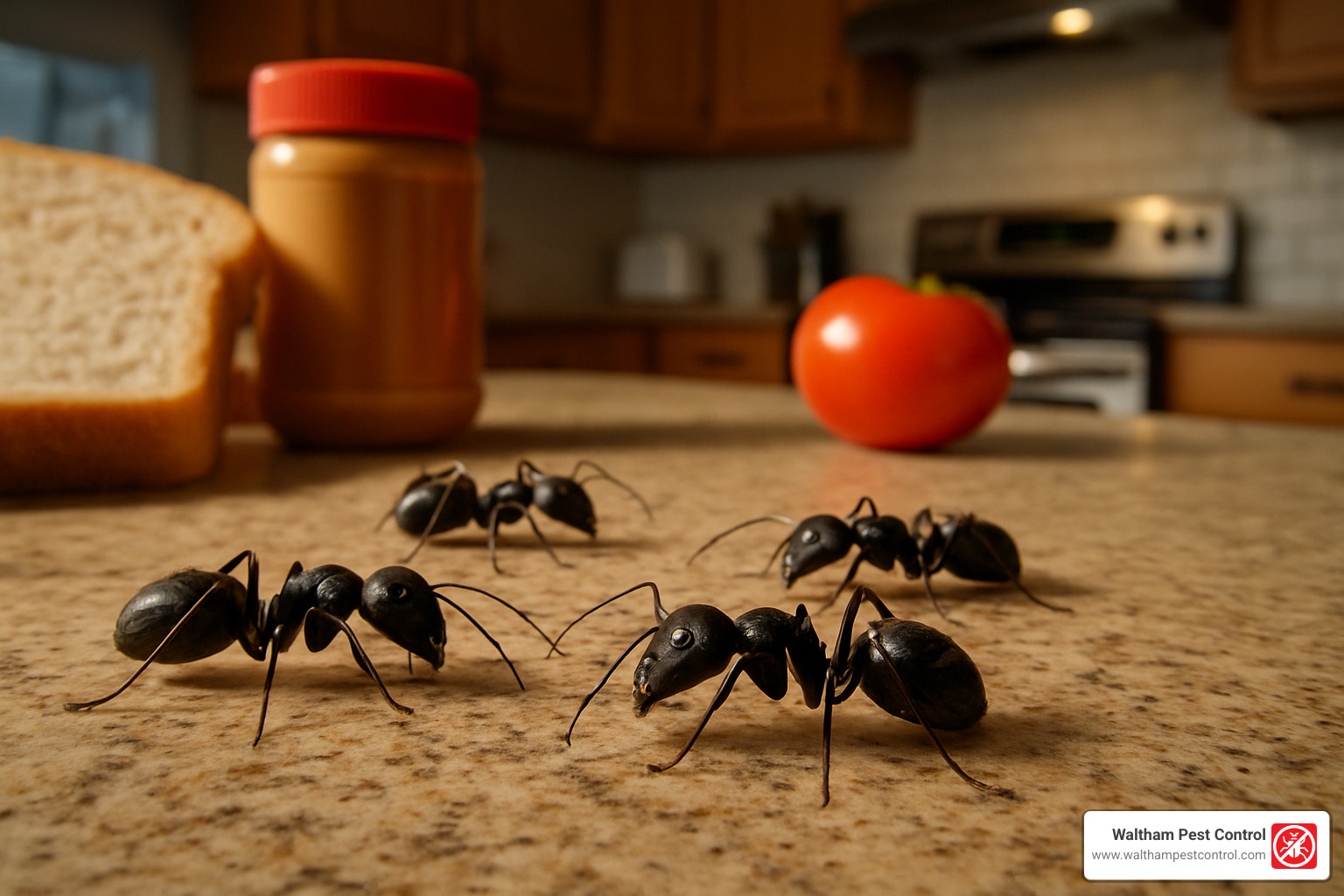
Large ants in kitchen spaces are one of the most common and frustrating pest problems homeowners face. When you spot these unwelcome visitors marching across your countertops, you need quick solutions.
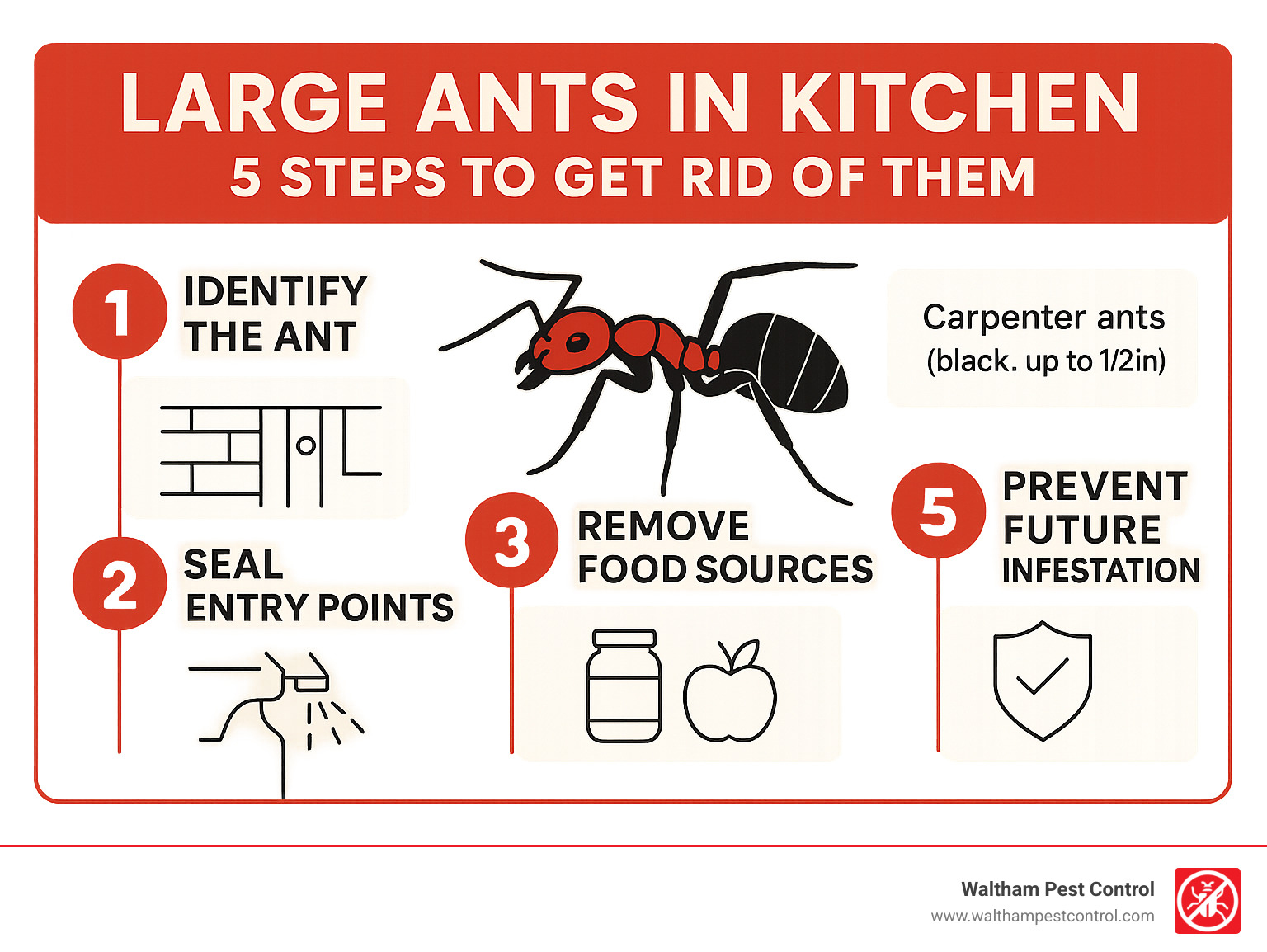
Quick Guide to Handling Large Ants in Your Kitchen:
- Identify the ant type: Carpenter ants (black, up to ½ inch) are most common
- Remove food sources: Clean spills immediately, store food in sealed containers
- Eliminate moisture: Fix leaky pipes, reduce humidity
- Create barriers: Seal entry points around windows, doors, and pipes
- Consider professional help: For persistent infestations
Large ants, particularly carpenter ants, are attracted to kitchens because they offer the perfect combination of food, water, and potential nesting sites. Unlike their smaller cousins, these substantial insects can measure up to ½ inch long and may indicate a more serious infestation that requires prompt attention.
What makes kitchen ant invasions particularly troublesome is their persistence. Once they’ve found a reliable food source, they’ll create pheromone trails that lead the entire colony right to your food storage areas.
I’m Waltham Pest Control, President of Waltham Pest Control with over 40 years of experience handling large ants in kitchen environments throughout Eastern Massachusetts. I’ve personally overseen thousands of ant infestations and developed effective, integrated pest management strategies to eliminate them permanently.
Explore more about large ants in kitchen:
– big red ants in house
– carpenter ants outside house
Identifying Large Ants in the Kitchen
Spotting large ants in kitchen spaces can be alarming, but knowing exactly what you’re dealing with is the first step toward solving the problem. In Massachusetts homes, the primary culprit behind these kitchen invasions is typically the carpenter ant (Camponotus pennsylvanicus).
Carpenter Ant Characteristics:
- Size: 1/4 to 1/2 inch long (queens can be larger)
- Color: Usually black, though some species have reddish or yellowish coloration
- Body: Segmented with a narrow waist and bent antennae
- Behavior: Most active at night, often seen foraging along established trails

You might be wondering if you’re dealing with carpenter ants or another species. One of our most experienced technicians at Waltham Pest Control offers this helpful tip: “Look for small piles of what looks like sawdust near wooden structures in your home. We call this ‘frass,’ and it’s a dead giveaway that carpenter ants are excavating tunnels nearby.”
Unlike termites, carpenter ants don’t actually eat wood. Instead, they carve out elaborate galleries inside it to create their nests. While they prefer wood that’s already damp or starting to decay, they’re perfectly capable of damaging structurally sound wood too.
In our four decades serving Burlington and neighboring Massachusetts communities, we’ve finded carpenter ant colonies hiding in all sorts of places in kitchens. They’re particularly fond of wall voids near moisture sources like dishwashers and sinks. Areas with previous water damage are especially attractive to these persistent pests.
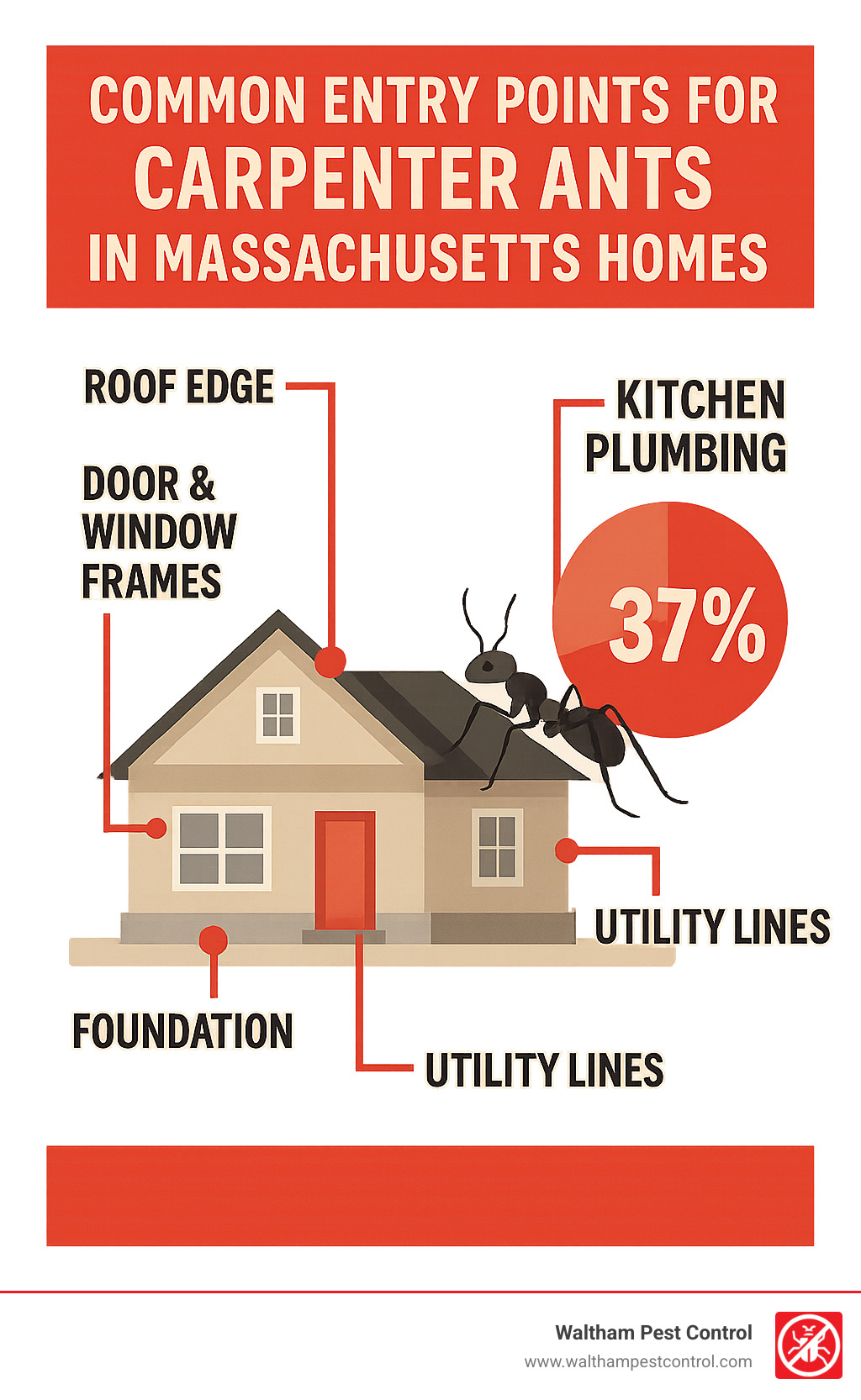
These large black ants are masters of finding their way into your home. They can squeeze through the tiniest cracks around window frames, door thresholds, or utility penetrations. Once inside, they establish satellite colonies that can grow rapidly if left unchecked.
If you’re seeing large ants in kitchen areas regularly, especially at night, there’s a good chance you’re dealing with carpenter ants. Taking quick action can prevent them from establishing larger colonies that might cause structural damage to your home.
For more detailed information about carpenter ant identification, you can visit the University of Minnesota Extension’s carpenter ant page, which provides excellent scientific resources on identifying these common household pests.
Why Large Ants Invade Kitchens
Finding large ants in kitchen spaces isn’t just an annoying coincidence—these smart little invaders are there for very specific reasons. Understanding their motivation can help you stop them in their tracks.
1. Abundant Food Sources
Your kitchen is essentially an all-you-can-eat buffet for carpenter ants. Those toast crumbs you missed during cleanup? That splash of maple syrup on the counter? Pure ant paradise. Carpenter ants are particularly drawn to sweet foods, though they’re not picky eaters—they’ll happily feast on proteins and fats too. Even the tiniest food particles can send chemical signals that attract foraging ants from surprising distances.
2. Reliable Water Access
Just like us, ants need water to survive, and kitchens offer this precious resource in abundance. Your sink area and drains provide obvious water sources, but ants are clever enough to find moisture in less obvious places too. That small dishwasher leak you haven’t noticed yet? The condensation forming under your refrigerator? Your pet’s water bowl? All perfect drinking fountains for thirsty ants.
3. Potential Nesting Sites
The hidden spaces in your kitchen make for ideal carpenter ant real estate. These industrious insects love setting up home in wall voids near plumbing, where moisture might have caused slight wood damage. The narrow spaces between cabinets, behind baseboards, and around moldings offer protected corridors for ant colonies to thrive unseen.
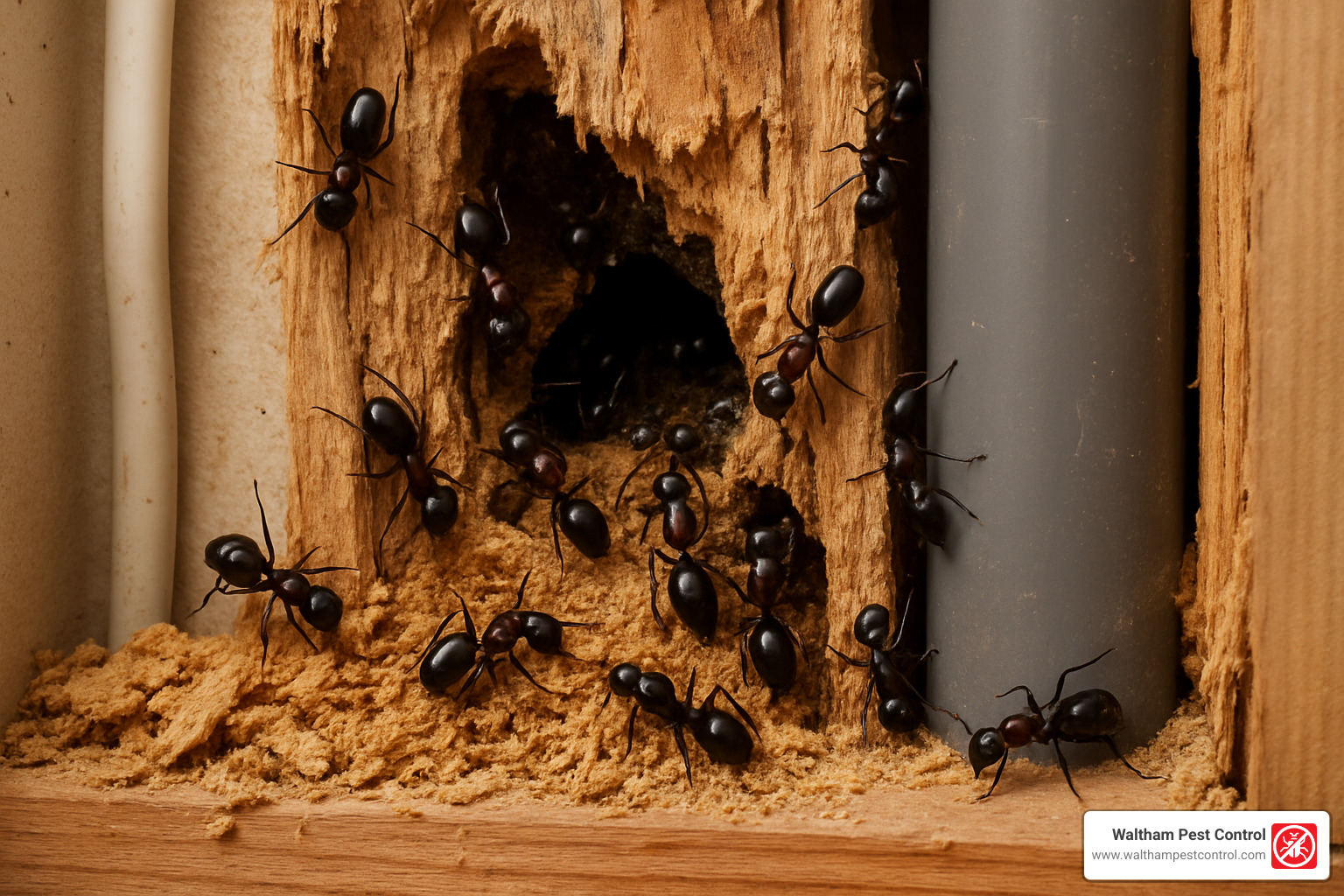
“In Middlesex County homes, we often find that carpenter ant problems begin outdoors but move inside through utility lines, tree branches touching the house, or cracks in the foundation,” notes our Waltham Pest Control technician. “Once inside, they’re drawn to kitchens because of the ideal conditions.”
What makes carpenter ants particularly troublesome is their ability to establish satellite colonies. The main colony might be in a tree outside, but a satellite group can set up shop right behind your kitchen wall, creating a convenient hub for foraging. This is why you might suddenly notice large ants in kitchen areas even when you’ve been diligent about cleanliness.
The seasonal patterns in Massachusetts also affect ant behavior. During our cold winters, ants seeking warmth are naturally drawn to the cozy temperatures of your kitchen. Once spring arrives, they may establish more permanent indoor colonies if conditions are favorable.
Preventing Large Ants in the Kitchen
Let’s face it—nobody wants to share their kitchen with uninvited six-legged guests. When it comes to large ants in kitchen spaces, prevention truly is worth a pound of cure. After decades of helping Massachusetts homeowners, we’ve finded that keeping these pests out is much easier than evicting them once they’ve settled in.
Seal Entry Points
Carpenter ants are surprisingly resourceful when it comes to finding ways into your home. Even the tiniest crack can become their personal highway directly to your kitchen. Take a weekend afternoon to inspect your kitchen thoroughly, paying special attention to gaps around windows and door frames where weatherstripping might have worn down.
“Most homeowners are shocked when I show them how ants are entering through utility line openings that seemed perfectly sealed,” shares our senior technician. “These clever insects can squeeze through openings as small as 1/16 of an inch—about the thickness of a credit card.”
Be particularly vigilant about spaces around pipes under sinks and where cabinets meet walls. A good silicone caulk can work wonders for these smaller gaps, while expanding foam insulation handles larger openings effectively.
Eliminate Food Sources
Your kitchen is essentially a five-star restaurant to hungry carpenter ants. The smallest crumbs between counter cracks or that splash of maple syrup behind the toaster can sustain an entire colony for days.
Make your kitchen less appealing by developing a few simple habits: wipe counters immediately after food prep, store pantry items in airtight containers (especially sweets and grains), and take out garbage before bedtime. Don’t forget to rinse recyclables thoroughly—that residual soda in cans is basically ant nectar.
Pet owners should be particularly careful about cleaning food bowls after meals rather than leaving them out. That forgotten kibble is a protein-packed feast for carpenter ants.
Reduce Moisture
If there’s one thing carpenter ants love more than your forgotten cookie crumbs, it’s moisture. These ants are naturally drawn to damp environments, making water management crucial in ant prevention.
Fix leaky pipes promptly—even minor drips create the perfect humid conditions ants seek. Ensure proper ventilation in under-sink cabinets by keeping them uncluttered and consider using moisture-absorbing products in particularly damp areas. For homes in humid areas of Massachusetts like those near the coast, a dehumidifier might be worth considering.
Water damage is a carpenter ant magnet, so address any moisture issues immediately. That water stain on your ceiling isn’t just an eyesore—it’s potentially a welcome sign for carpenter ants.
Maintain Exterior Defenses
Creating a protective barrier around your home is your first line of defense against large ants in kitchen invasions. Start by trimming tree branches that touch or overhang your house—these serve as natural bridges for ants to bypass all your ground-level precautions.
Keep firewood liftd and away from your home’s exterior—stacked wood is a prime nesting site for carpenter ants before they move indoors. Many of our Burlington clients have found success with creating a gravel or stone barrier around their foundation, as ants are less likely to cross these uncomfortable surfaces.
For persistent problems, professional barrier treatments applied seasonally can create an invisible shield that keeps ants from approaching your home altogether.
“In our experience serving communities like Lexington, Arlington, and Bedford, regular maintenance is key,” says our operations manager. “Many homeowners don’t realize that small issues like a minor leak under the kitchen sink can create perfect conditions for carpenter ants within just a few weeks.”
Consistency is crucial when preventing carpenter ants. The most effective approach combines all these strategies rather than relying on just one method. A little preventative effort today saves a lot of headache—and expense—tomorrow.
Effective Solutions for Large Ants in the Kitchen
When prevention efforts fall short and you’re already facing an invasion of large ants in kitchen areas, it’s time to take action. Don’t worry—you’re not alone in this battle, and there are several effective approaches to reclaim your kitchen.
Locate the Nest
Finding the source is your first step toward victory. Carpenter ants are clever about hiding their main colonies, but with some detective work, you can track them down:
- Follow ant trails back to their source when activity is highest (usually at night)
- Look for small piles of wood shavings (frass) near wooden structures—this is a telltale sign
- Pay special attention to damp areas near kitchen plumbing
- Check wall voids, especially near water sources
“Many homeowners make the mistake of just spraying the ants they see,” says our head technician. “That’s like trimming the branches while ignoring the roots—the colony will simply send more workers.”
Bait Treatments
Baits work on a brilliant principle—let the ants do the work for you! Worker ants carry the poison back to the colony, eventually reaching the queen and the entire nest:
Choose baits specifically designed for carpenter ants (they have different food preferences than smaller ant species). Place these strategically along observed ant trails, but keep them safely away from curious children and pets. Patience is key here—it might take several days or even weeks to see results as the poison works its way through the colony.
Direct Treatment Options
Sometimes a more immediate approach is needed, especially when you’ve located a nest or when baits aren’t producing results fast enough:
Dust applications work wonderfully for wall voids where ants are nesting. Targeted sprays can create effective barriers at entry points. Many professionals prefer using non-repellent insecticides that ants can’t detect—they walk through these treatments and unwittingly carry them back to the colony.

Professional Pest Control
For established carpenter ant infestations, professional help often provides the most efficient path to resolution. Here’s why:
Our trained technicians at Waltham Pest Control bring specialized knowledge and equipment to locate hidden nests—including satellite colonies that homeowners frequently miss. We have access to professional-grade products that aren’t available on retail shelves, and we implement integrated pest management approaches that address the root causes of infestations.
“What separates a temporary fix from a permanent solution is understanding carpenter ant biology,” explains our senior technician. “These ants often establish satellite colonies, so treating just one visible area rarely solves the problem completely.”
Throughout Newton, Cambridge, and all of Eastern Massachusetts, we’ve helped countless homeowners eliminate carpenter ant problems for good. Our comprehensive approach doesn’t just kill the ants you see today—it prevents them from returning tomorrow.
When dealing with large ants in kitchen spaces, the goal isn’t just to eliminate current ants but to create conditions that keep them from returning. That’s the difference between a quick fix and a lasting solution.
Frequently Asked Questions about Large Ants in the Kitchen
Do carpenter ants cause structural damage?
Yes, carpenter ants can absolutely cause significant structural damage over time. Unlike termites that actually eat wood, carpenter ants excavate it to create their nesting galleries—essentially carving out tunnels and chambers for their colony to live in.
“In my 25 years inspecting homes across Essex County and the Merrimack Valley, I’ve seen some jaw-dropping carpenter ant damage,” shares our senior technician. “In one Andover home, these persistent pests had hollowed out nearly an entire support beam near the kitchen sink where a slow leak had gone unnoticed.”
The concerning thing about carpenter ant damage is its sneaky progression. It typically develops slowly—often taking years to become severe—but that timeline accelerates dramatically in areas with existing moisture problems. This is particularly true in older homes throughout Eastern Massachusetts, where original wood framing may already be compromised.
The good news? Regular inspections by qualified professionals can catch carpenter ant activity before serious structural issues develop. Our team at Waltham Pest Control specializes in early detection.
How can I tell if I have a carpenter ant infestation?
Spotting a carpenter ant problem early can save you thousands in potential repairs. Keep an eye out for these revealing signs of carpenter ant activity:
Nocturnal visitors – Carpenter ants are primarily night owls. If you’re seeing large ants in kitchen areas mainly after dark—especially between midnight and 2 AM—that strongly suggests carpenter ants rather than other species.
Wood debris – Finding small piles of sawdust-like material (called frass) near wooden structures is a major red flag. This isn’t actually sawdust, but the wood particles ants remove as they excavate their galleries.
Subtle sounds – When your home is quiet at night, you might actually hear faint rustling sounds within walls where large colonies are active.
Winged visitors – Seeing winged ants emerging indoors, especially during spring, often indicates a mature colony nearby.
Hollow wood – Tap on wooden areas near your kitchen; if they sound hollow when they shouldn’t, carpenter ants may have been at work.
Established trails – Carpenter ants are creatures of habit, creating visible highways along baseboards, counters, or between food sources and their nest.
“One homeowner in Winchester called us after noticing just a few large ants near her dishwasher,” our technician recalls. “When we investigated, we finded an extensive colony had established itself in the wall cavity behind her sink. Her attention to that small detail potentially saved thousands in future repairs.”
Are DIY solutions effective for large ants?
When it comes to tackling large ants in kitchen spaces, DIY solutions can work for minor problems, but they come with significant limitations worth understanding.
DIY treatments can be effective when you’re dealing with a very small, localized problem that’s just beginning. They’re typically less expensive initially and allow you to take immediate action while waiting for professional help. For a few random scout ants, simple solutions like cleaning thoroughly and removing food sources might be enough.
However, carpenter ant colonies are complex systems that often outsmart basic treatments. Most DIY approaches only address the visible ants—the proverbial tip of the iceberg—while missing the queen and majority of the colony hidden within your walls. Even more concerning, improper product application can actually make the problem worse by causing the colony to splinter and relocate deeper into your home’s structure.
Another challenge is that carpenter ants frequently establish satellite colonies. You might successfully treat one area while completely missing three other nests elsewhere in your kitchen walls.
“I can’t count how many times we’ve been called to homes in Woburn, Winchester, and Burlington where homeowners have been battling carpenter ants for months with store-bought products,” our lead technician explains. “By the time we arrive, the ants have often established multiple colonies throughout the structure, making elimination much more challenging than it would have been initially.”
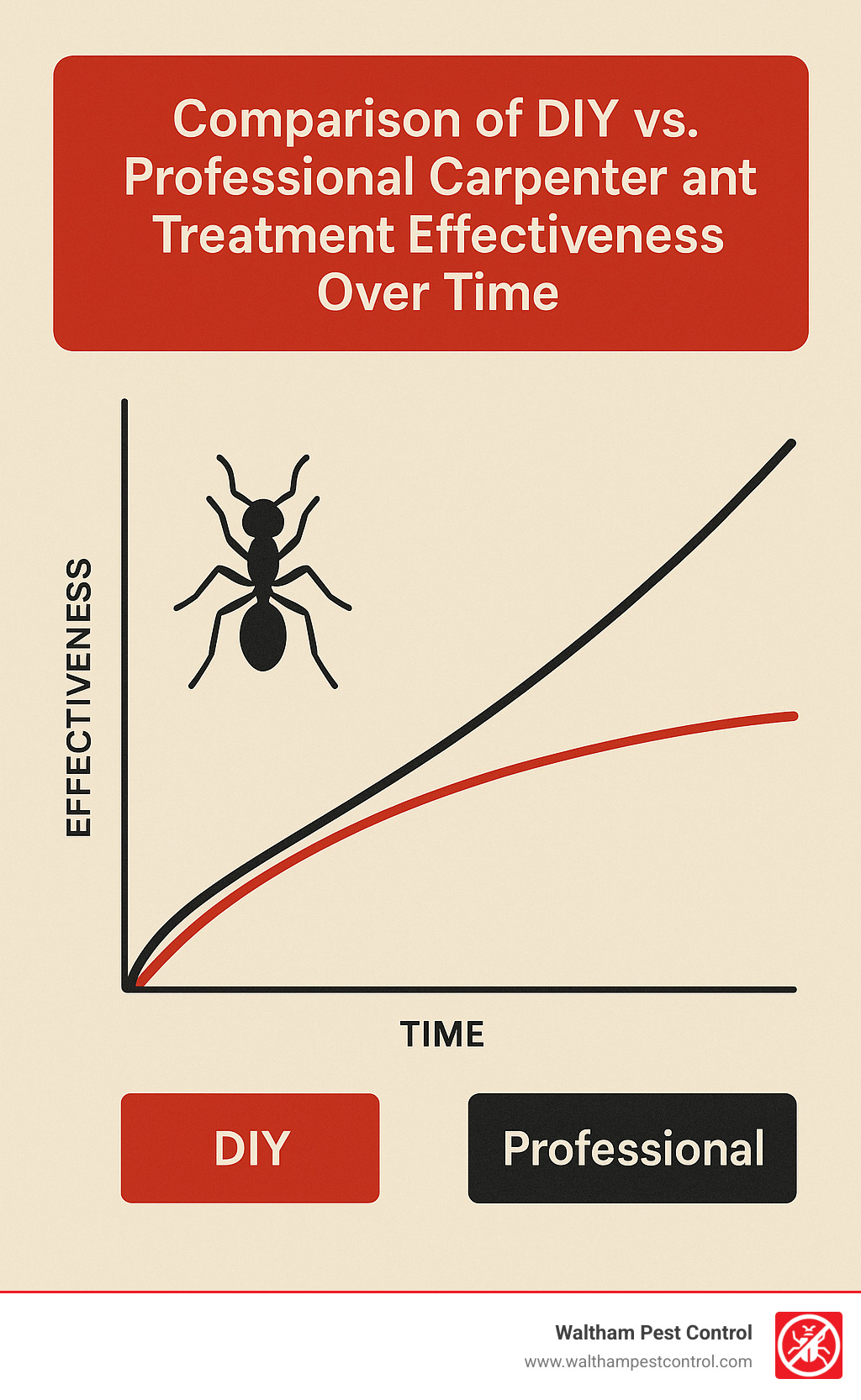
For persistent carpenter ant issues, professional treatment typically provides more thorough and lasting results, thanks to advanced detection methods, professional-grade products, and comprehensive treatment strategies that address the entire infestation, not just the symptoms.
Conclusion
Dealing with large ants in kitchen areas isn’t just annoying—it’s a challenge that requires thoughtful strategy and sometimes professional expertise. After helping thousands of Massachusetts homeowners over our four decades in business, we’ve learned that carpenter ants are among the most persistent kitchen invaders you’ll face.
Think of your ant strategy as a three-part approach. First, identify exactly what you’re dealing with. Those large black ants marching across your counter at night are likely carpenter ants, and they need specific treatment methods. Second, prevention is truly your best defense—controlling moisture and eliminating food sources can make your kitchen far less appealing to these unwanted guests. Finally, effective treatment means targeting the main colony, not just the scouts you see wandering around your sugar bowl.
What I’ve noticed over the years is that many homeowners underestimate just how established a carpenter ant colony can become. By the time you’re regularly spotting large ants in kitchen spaces, there’s often a significant nest nearby—possibly even inside your walls or cabinets.
At Waltham Pest Control, we take pride in offering solutions that actually last. Our licensed technicians don’t just spray and walk away; we investigate thoroughly to find the source of your problem and develop a custom treatment plan that addresses your specific situation. And we do it all with an environmentally responsible approach that keeps your family safe.
Carpenter ants can cause real structural damage over time. If you’re in Middlesex County, Essex County, or anywhere in our Eastern Massachusetts service area and dealing with persistent large ants in kitchen spaces, don’t wait until they’ve hollowed out your cabinetry. Our team is ready to help you take back your kitchen with a thorough inspection and effective treatment plan.
From Acton to Weymouth and all communities in between, we bring the local expertise and personalized service you need to say goodbye to carpenter ants—not just temporarily, but for good. Because we believe every Massachusetts family deserves a kitchen that’s meant for cooking, not for hosting an ant colony.
