

Early stage signs of termites in ceiling: Top 5 Threats.
Why Recognizing Early Termite Activity Above Your Head Matters
Early stage signs of termites in ceiling spaces can save Massachusetts homeowners thousands of dollars in structural repairs. These silent destroyers work 24/7, often going undetected until significant damage occurs.
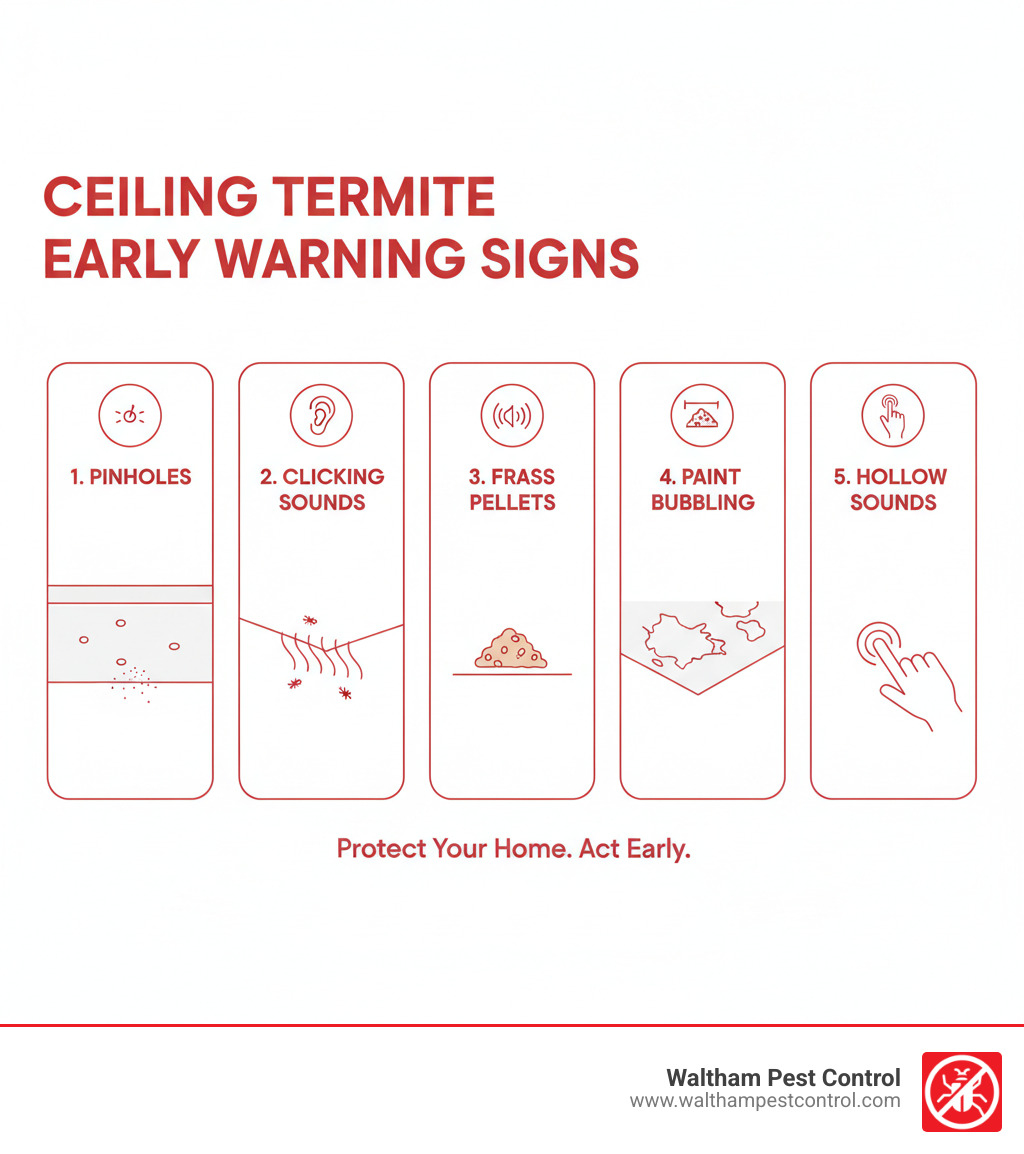
Quick Answer: Top 5 Early Stage Signs of Termites in Ceiling:
- Small pinholes in drywall or wood surfaces
- Faint clicking sounds from above, especially at night
- Small piles of wood-colored pellets (frass) on floors below
- Bubbling or peeling paint without water damage
- Hollow sounds when tapping ceiling areas
You might think termites only attack ground-level wood, but drywood termites can enter through roof vents and attic spaces, while subterranean termites use mud tubes to reach ceiling joists. The damage happens slowly at first – termites can hollow out drywall and structural wood within just a few months of settling in.
Termites cause over $5 billion in damage annually, and most homeowners insurance doesn’t cover the repairs. Unlike water damage that shows obvious wet spots, termite damage often mimics moisture issues with subtle discoloration and paint problems.
The key is catching these signs early. What looks like minor ceiling damage today could mean major structural repairs tomorrow.
I’m Waltham Pest Control, President & CEO of Waltham Pest Control, and in my 40+ years of experience, I’ve seen how early stage signs of termites in ceiling areas often get overlooked until it’s too late. Recognizing these warning signals can be the difference between a simple treatment and a costly renovation project.
Common early stage signs of termites in ceiling vocab:
- can termites fly
- dead termites
- termite swarming season
Decoding the Damage: Visual Early Stage Signs of Termites in Ceiling
Early stage signs of termites in ceiling areas often disguise themselves as everyday household issues, which is what makes these pests so tricky. They are excellent at flying under the radar until the damage becomes serious.
Faint Lines, Bubbling Paint, and Discoloration
Termites leave behind subtle visual clues that many homeowners mistake for water damage or normal house settling.
You might first notice bubbling or peeling paint that appears without an obvious leak. Termites release moisture as they eat through drywall and wood, which can cause paint to bubble and peel.
Unexplained cracks are another red flag. While houses settle, new or expanding cracks—especially those forming maze-like patterns—deserve a closer look. These could signal that termites are compromising the wooden structure behind your drywall.
As the damage progresses, your ceiling may start to sag or droop slightly, a clear sign that the structural wood has been significantly weakened. Damaged drywall that looks warped, discolored, or has tiny pinholes scattered across it also indicates these silent destroyers are at work.
The tricky part is that these signs can look remarkably similar to water damage, but without the telltale dampness or musty smell. It’s crucial to investigate further when something doesn’t seem right.
For comprehensive help identifying and addressing structural pest concerns, learn more about Waltham Pest Control’s residential pest control services.
What to Look For: Termite Droppings (Frass) and Discarded Wings
If you’re dealing with drywood termites, they’ll leave behind unmistakable evidence.
Termite droppings, called frass, are one of the most reliable early stage signs of termites in ceiling infestations. Unlike subterranean termites, drywood termites push their droppings out of their tunnels through tiny kick-out holes.
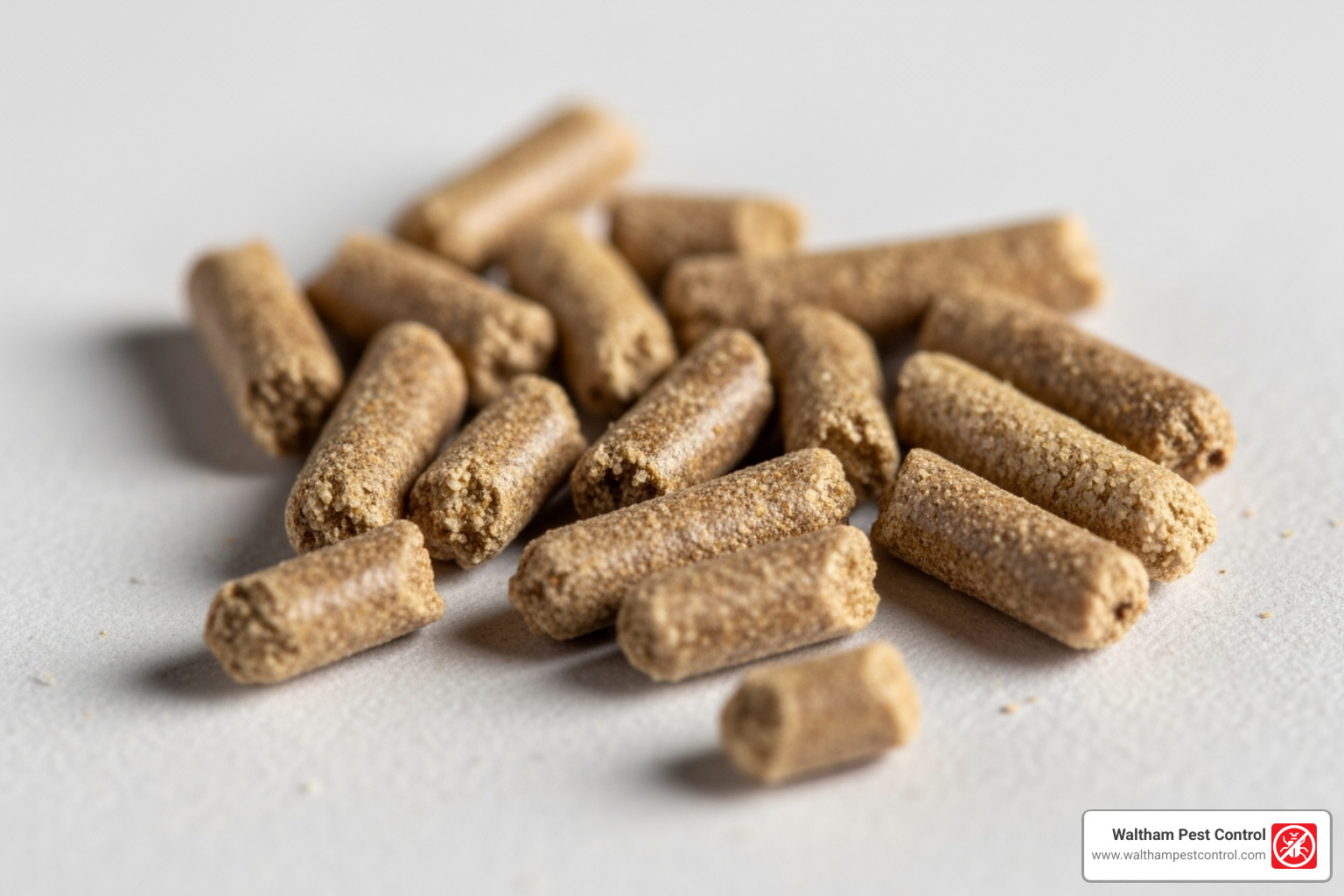
Frass looks like tiny, six-sided pellets resembling fine sawdust or coffee grounds. Unlike irregular sawdust, frass is uniform and granular. You’ll typically find these small piles on floors, window sills, or furniture directly below the infested ceiling area.
Don’t confuse frass with regular sawdust. Its distinctive six-sided shape sets it apart.
The other telltale sign comes during swarming season: discarded wings. Termite swarmers are winged reproductives that leave their colonies to start new ones. After they mate, they shed their wings.
These delicate, translucent wings often pile up near window sills and light fixtures. A helpful tip: termite wings are all the same size, distinguishing them from flying ant wings, which vary in size. Finding these wings means a termite colony is nearby and trying to expand.
Beyond the Obvious: Mud Tubes and Pinholes
Subterranean termites leave their own unique signature. These underground dwellers construct protective highways to reach their food source, which could be your ceiling joists.
Termite mud tubes are made of soil, wood, and termite saliva. These pencil-sized tubes protect termites from predators and dry air as they travel from their underground colony. You’ll typically spot them on foundation walls, but the real concern is seeing them extending up walls toward the ceiling.
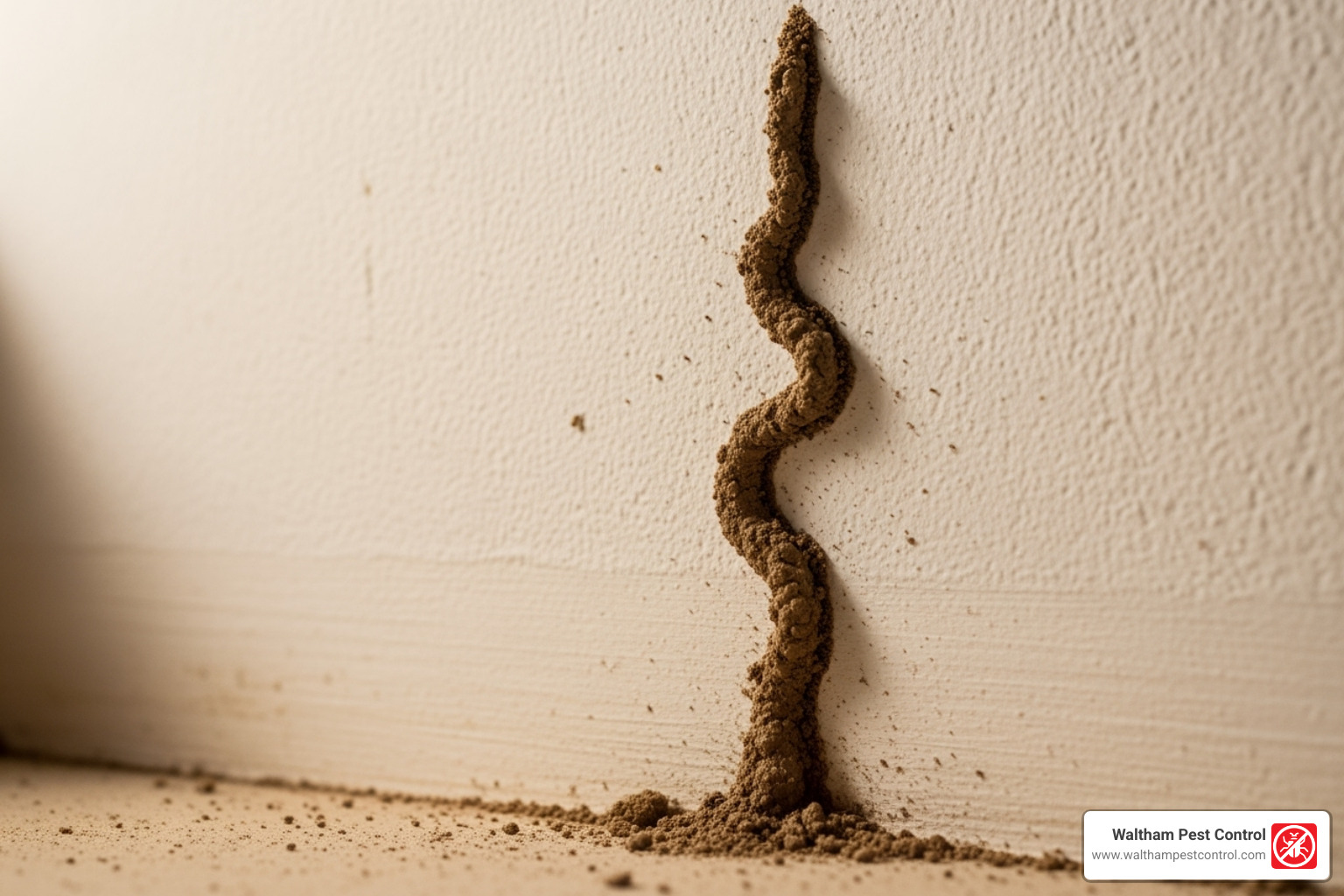
Finding mud tubes climbing your walls is a clear sign that subterranean termites are actively foraging in your home, having built hidden pathways from their colony to your ceiling.
Another subtle sign is pin-sized holes scattered across your drywall or wooden ceiling. These are entry or exit points where termites have chewed through the surface. Since drywall paper contains cellulose, they’ll tunnel right through it, leaving these minute holes behind.
You might notice a small amount of dirt or frass around these pinholes. These seemingly insignificant imperfections are crucial warning signs that termites are working just beneath the surface.
These early stage signs of termites in ceiling areas might seem minor, but they’re your early warning system. Catching them now could save you from major structural repairs down the road.
The Sounds of Destruction: Can You Hear Termites in Your Ceiling?
Most people think of termites as completely silent pests, but that’s not entirely true. While they’ve earned their reputation as “silent destroyers,” termites actually do make sounds – you just need to know what to listen for. These auditory clues can be some of the most reliable early stage signs of termites in ceiling areas, especially when you catch them early.
The Quiet Clicking and Headbanging Noises
Here’s something that might surprise you: termites are actually quite chatty, in their own way. The most common sound you’ll hear from an active termite colony is a soft clicking or tapping noise. It’s not random – this is how they communicate with each other, particularly when danger is near.
When soldier termites sense a threat or disturbance, they literally bang their heads against the tunnel walls to warn the rest of the colony. Yes, you read that right – headbanging signals are a real thing in the termite world! These rhythmic clicks are surprisingly audible if you know when and where to listen. The sounds are most noticeable during nighttime hours when your home is quiet and ambient noise is minimal.
But soldiers aren’t the only noisy ones. Worker termites, busy eating their way through your ceiling’s wooden structures, create their own subtle soundtrack. You might hear soft gnawing sounds or a gentle rustling as hundreds of tiny jaws work around the clock. While these worker termites eating sounds are much fainter than the clicking, they’re another clear sign that termites are actively feeding inside your ceiling.
The key is knowing that these faint sounds and clicking from walls aren’t just your house settling – they could be colony communication happening right above your head. For professional help identifying and addressing these warning signs, check out more info about termite inspections from Waltham Pest Control.
How to Listen for Termite Activity
Detecting termite sounds requires patience and the right approach. First, you’ll need a quiet environment – turn off TVs, fans, air conditioners, and any other appliances that create background noise. The best time for this detective work is late at night or early morning when your house is naturally at its quietest.
Once you’ve created silence, try pressing your ear directly against the ceiling where you suspect activity. Some homeowners even use the stethoscope method – borrowing a stethoscope to amplify these faint sounds, just like a doctor listening to your heartbeat. Move slowly across the ceiling surface, listening carefully for any unusual clicking, rustling, or gnawing sounds.
Tapping on the ceiling is another effective technique. Use a screwdriver handle or small hammer to gently tap different areas. Healthy wood and drywall produce a solid, consistent thud. But if termites have been busy hollowing out the area, you’ll hear distinct hollow sounds instead – almost like tapping on an empty cardboard box.
When wood has been compromised by termite activity, it often produces a papery sound when tapped. In more advanced cases, your gentle tapping might even cause crumbling debris or frass to fall from small cracks or holes – a sure sign that termites have been hard at work above your head.
Regular sound checks during your home maintenance routine can help you catch these silent destroyers before they cause major structural damage.
Ceiling Invaders: Identifying the Termite Type
Not all termites are created equal, and when it comes to early stage signs of termites in ceiling areas, knowing which type you’re dealing with makes all the difference. It’s like being a detective – the clues they leave behind tell a very specific story about how they got there and what they’re planning to do next.
Drywood termites are the ceiling specialists. These guys are basically the freelancers of the termite world – they don’t need a ground-based headquarters like their subterranean cousins. Instead, they fly right into your attic through roof vents, small cracks, or windows during swarming season and set up shop directly in your wooden ceiling beams and roof trusses.
What makes drywood termites particularly sneaky is that they’re perfectly happy living in dry wood with very little moisture. Their entire colony exists within the wood they’re eating, which means they can establish themselves in your ceiling without any connection to the ground. The telltale sign? Those distinctive six-sided frass pellets that they kick out through tiny holes – it’s like they’re leaving you a calling card.
Subterranean termites in your ceiling tell a different story entirely. If you find these moisture-loving insects above your head, it means they’ve been busy for quite some time. These termites live underground and need constant contact with soil moisture, so finding them in your ceiling is actually a sign of a mature, well-established colony that has built an extensive highway system to reach your wooden structures.
They construct pencil-sized mud tubes as their protected pathways, starting from their underground colony and extending up through your foundation, walls, and eventually into ceiling areas. Think of these tubes as their private subway system – they protect the termites from dry air and predators while they commute to their food source.
| Feature | Drywood Termites in Ceilings | Subterranean Termites in Ceilings |
|---|---|---|
| Signs | Frass (pellets), kick-out holes, discarded wings | Mud tubes, damaged wood with mud/soil, discarded wings |
| Evidence | Small piles of six-sided pellets, tiny holes in wood | Pencil-sized mud tunnels on surfaces or within wood |
| Colony Location | Entirely within the infested wood (e.g., ceiling beams) | Primarily underground, but forage widely |
| Moisture Needs | Low moisture, can thrive in dry wood | High moisture, require soil contact |
| Entry Point | Swarmers fly in through vents, cracks, windows | Travel up from ground via mud tubes, cracks in foundation |
| Damage Type | Smoothly excavated galleries, no mud inside wood | Wood galleries packed with mud, often follow wood grain |
The type of damage these termites cause is distinctly different too. Drywood termites create smooth, clean galleries within the wood – they’re meticulous workers who keep their tunnels tidy. Subterranean termites, on the other hand, pack their tunnels with mud and soil, creating a messier but equally destructive network of galleries that typically follow the wood’s natural grain.
Understanding which termite type you’re dealing with isn’t just academic curiosity – it directly impacts treatment strategies and helps predict how extensive the infestation might be. If you’re seeing early stage signs of termites in ceiling areas but aren’t sure which type you’re dealing with, professional identification is crucial for effective treatment.
For comprehensive information about termite identification and treatment options, more info about termites is available on our website.
The Risks of Waiting and When to Call a Professional
When you spot the first early stage signs of termites in ceiling areas, it’s tempting to wait. But termites work around the clock, and what seems like a minor sign is often just the tip of the iceberg.
Structural Damage and Repair Costs
The scariest part about a ceiling termite infestation is what’s happening behind the scenes. Your ceiling is held up by a network of wooden beams, joists, and trusses that termites consider an all-you-can-eat buffet.

A sagging or collapsing ceiling is a real risk when termites weaken your home’s structural integrity.
The financial reality is equally sobering. Termites cause over $5 billion in damage annually in the U.S., and most homeowner’s insurance policies won’t cover it. Insurance companies consider termite damage preventable, leaving you to cover the repair costs.
Those repairs aren’t cheap. Average ceiling termite repair can range from $1,000 to over $10,000, with some severe cases exceeding $30,000. Note: Repair costs can vary widely based on the extent of the damage. Contact Waltham Pest Control for an accurate assessment. The difference between catching the problem early versus waiting can be tens of thousands of dollars.
Why Professional Intervention is Key
While DIY is great for many projects, a termite infestation requires professional help. DIY limitations are significant; store-bought sprays won’t eliminate a hidden colony of potentially hundreds of thousands of members.
Misidentification risks are another major concern. Using the wrong treatment for the specific termite type is ineffective and allows the infestation to grow.
Then there’s the incomplete eradication problem. Termite colonies are extensive and hidden. If even a small section is missed, they will rebuild.
Our licensed technicians at Waltham Pest Control bring 40+ years of experience dealing with Eastern Massachusetts termite problems. We know how local termites behave, where they hide, and how to eliminate them completely.
We use specialized equipment unavailable to homeowners, like thermal imaging cameras to detect heat signatures from colonies through walls and moisture meters to find the damp conditions that attract them. These tools let us see problems invisible to the naked eye.
Our approach follows environmentally sensitive pesticides and IPM principles outlined by the EPA. We create comprehensive treatment plans that eliminate current infestations and prevent future ones. You can learn more about our commitment to responsible pest control through Waltham Pest Control’s IPM program.
When dealing with structural damage to your home, professional intervention isn’t just recommended—it’s essential for protecting your biggest investment.
Frequently Asked Questions about Termites in Ceilings
Here are the questions we hear most often from worried homeowners who’ve spotted something suspicious on their ceiling.
How can you tell the difference between termite damage and water damage on a ceiling?
Early stage signs of termites in ceiling areas can look almost identical to water damage, as both can cause bubbling paint, discoloration, and sagging. The key difference is moisture.
Water damage usually feels damp or soft and often has a musty smell. You’ll typically see staining that spreads from a central leak source.
Termite damage, on the other hand, stays dry to the touch. Instead of a musty smell, you might notice a faint, papery odor. The real giveaways for termites are the presence of frass (tiny, wood-colored pellets), mud tubes, and a distinctive hollow sound without any wetness when you tap the area.
How fast can termites cause significant damage to a ceiling?
The speed of damage depends on the colony size, termite species, and environmental conditions. A mature colony can consume about a pound of wood per day.
Initial damage can happen within months of an infestation starting. Significant structural issues typically develop within 1-2 years if left untreated. This timeline highlights the importance of early detection.
Are termites in the ceiling a sign of a new or an old infestation?
It depends on the termite species.
Drywood termites can start a new colony directly in your attic, flying in through vents or small gaps. Finding them could mean a relatively new infestation, though they may have been present for several months to a couple of years before being noticed.
Subterranean termites in the ceiling almost always indicate a mature, established colony. These termites live underground and must build an extensive network of mud tubes to travel up from the ground into your ceiling. This journey takes time.
Discarded wings signal a new colony attempt, regardless of the termite type. Finding wings near windows or lights is your cue to call a professional.
Whether you’re dealing with new tenants or long-term residents, termites in your ceiling need immediate attention to prevent the damage from getting worse.
Protect Your Home from Silent Destroyers
Looking back at everything we’ve explored today, the early stage signs of termites in ceiling areas paint a clear picture: these tiny destroyers are more cunning than most homeowners realize. They leave behind a trail of clues – from the subtle visual damage like bubbling paint and mysterious pinholes, to the quiet auditory signals of clicking and gnawing sounds that most people miss entirely.
What makes termites particularly dangerous is how they disguise their destruction. That slight discoloration you noticed last month? It might not be water damage after all. Those tiny wood-colored pellets appearing on your floor? They’re not sawdust from a home project – they’re frass, telling you drywood termites have made themselves at home above your head.
Regular home inspections are your best defense against these silent invaders. Make it a habit to look up at your ceilings, especially in quieter areas like attics or guest rooms. Run your hands along surfaces, listen for unusual sounds during quiet moments, and never brush off something that seems “a little off.” Trust your instincts – they’re often right.
The reality is that termite damage gets expensive fast, and most homeowners insurance won’t cover the repairs. What starts as a few hundred dollars in treatment can quickly become thousands in structural repairs if you wait. Early detection isn’t just smart – it’s essential for protecting both your home and your wallet.
At Waltham Pest Control, we’ve been helping Eastern Massachusetts homeowners win the battle against termites for over 40 years. We know these pests inside and out, and more importantly, we understand the unique challenges our local climate and building styles present. Our licensed team uses specialized equipment like thermal imaging and moisture meters to find problems you can’t see with the naked eye.
Proactive measures today prevent major headaches tomorrow. Don’t let these silent destroyers work in the shadows any longer. For a comprehensive evaluation and the peace of mind that comes with knowing exactly what’s happening in your home, schedule a professional termite inspection today. Your ceiling – and your budget – will thank you.
