

Termite Swarming Season Alert 2025
Understanding Termite Swarming Season in Massachusetts
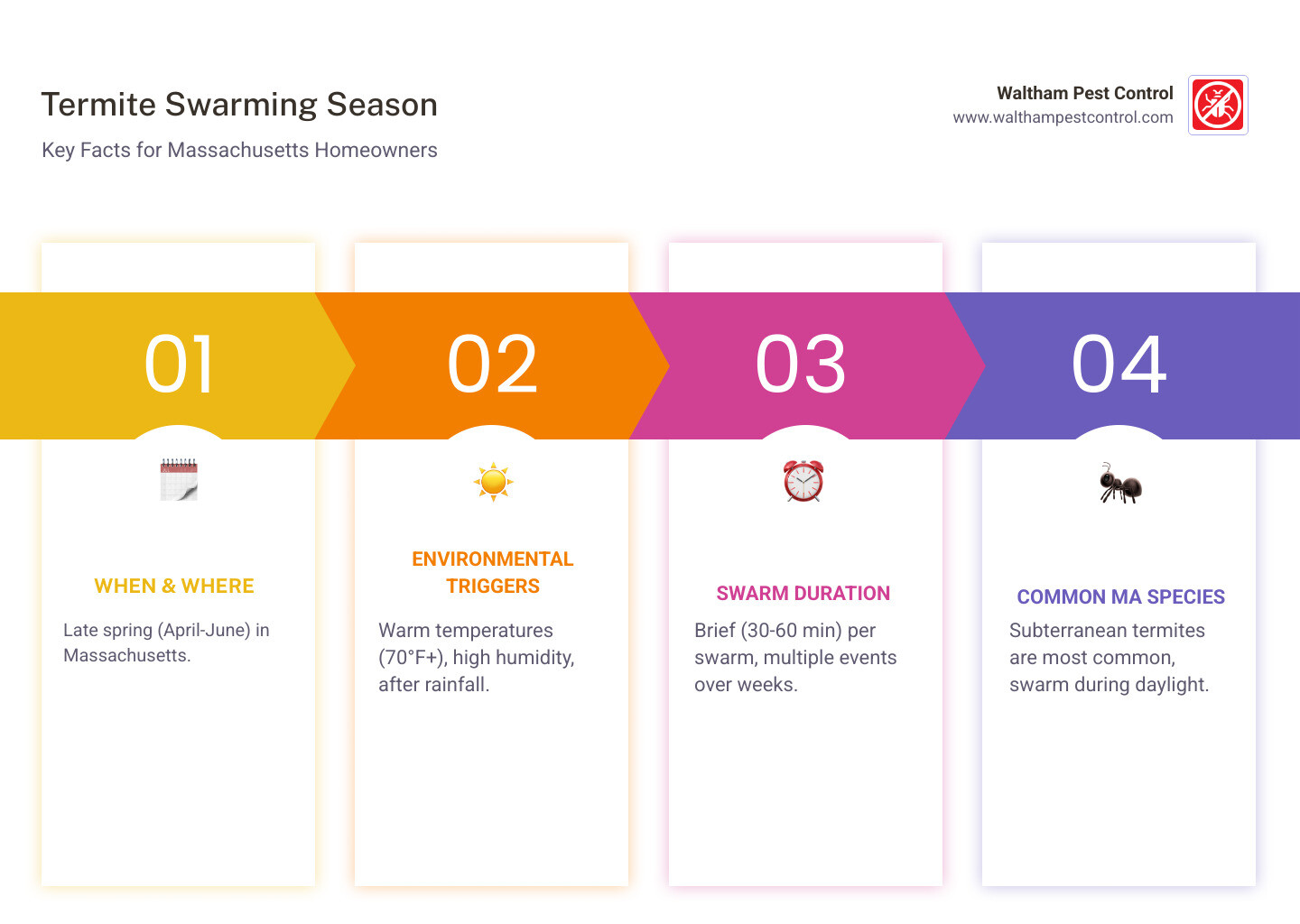
Termite swarming season is when mature termite colonies release winged reproductive termites, called swarmers, to establish new colonies. Here’s what Massachusetts homeowners need to know:
Key Facts:
- When: Late spring (April-June) in Massachusetts
- Triggers: Warm temperatures (70°F+), high humidity, after rainfall
- Duration: 30-60 minutes per swarm, multiple swarms over weeks
- Species: Subterranean termites most common, swarm during daylight hours
If you’ve spotted what looks like flying ants or found piles of discarded wings around your home after a spring rain, you might be witnessing termite swarmers. These winged insects emerge when their colony has matured and is ready to expand—a clear warning sign that termites may already be established on your property.
The sight of swarmers means a mature termite colony is nearby. Unlike worker termites that stay hidden, swarmers are visible proof that thousands of wood-eating insects are active in the area. Spring’s warm, humid conditions after rainfall create perfect swarming weather. Subterranean termites, the most common species in Massachusetts, typically swarm during the day, often confusing homeowners who mistake them for flying ants.
I’m Waltham Pest Control, President & CEO of Waltham Pest Control. In my 40+ years protecting Eastern Massachusetts homes, I’ve seen how termite swarming season catches homeowners off guard. Understanding when and why termites swarm is your first line of defense against costly structural damage.
Relevant articles related to termite swarming season:
What is a Termite Swarm and How Do I Identify It?
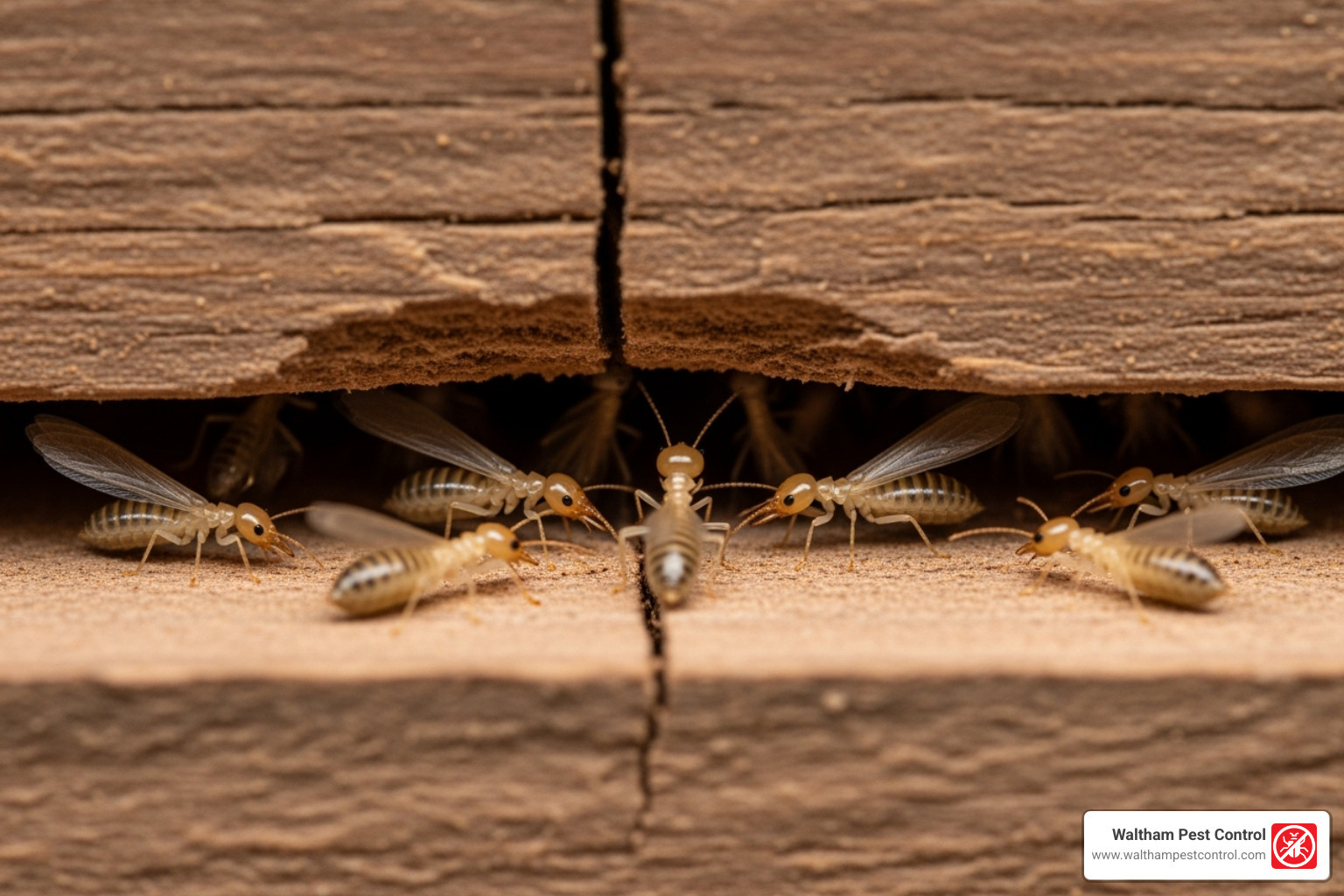
When a mature underground colony becomes crowded, it produces winged termites called alates or swarmers. Their sole purpose is to fly away, find a mate, and establish a new colony. A termite swarm is this mass flight of reproductive termites.
Swarmers only emerge from mature colonies that are several years old. While the swarmers themselves don’t cause damage, their presence is a red flag. It means thousands of worker termites have likely been feasting on your property nearby, possibly within your home’s structure.
When you see swarmers emerging from wooden structures, it’s a clear sign of an active colony. This is why understanding what these reproductive termites look like is crucial for protecting your home. If you’re dealing with these unwanted guests indoors, our guide on Termites in the House can help you understand what you’re up against.
Termite Swarmers vs. Flying Ants
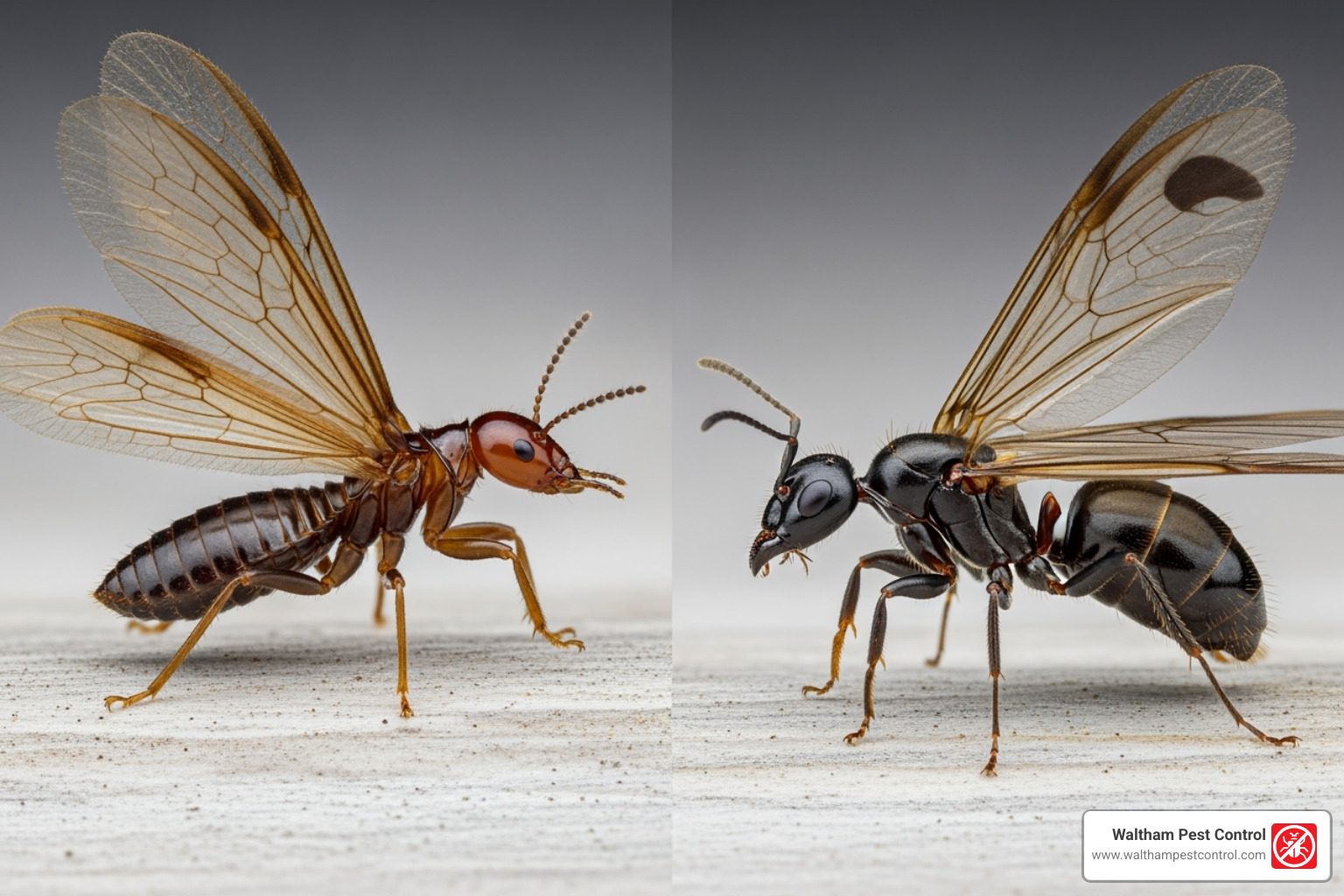
Every spring during termite swarming season, we get calls from homeowners asking, “Are these termites or ants?” It’s a critical question, as misidentification can lead to significant structural damage.
Once you know what to look for, telling them apart is simple. Termite swarmers have straight, beaded antennae, while flying ants have bent or elbowed antennae. Termites have thick, uniform waists, whereas flying ants have a distinctly pinched waist.
Finally, look at the wings. Termite swarmers have four wings of equal size and shape, which they shed soon after landing. Flying ants have two pairs of wings of different sizes—the front pair is longer than the back pair.
| Feature | Termite Swarmers | Flying Ants |
|---|---|---|
| Antennae | Straight and beaded | Elbowed (bent) |
| Waist | Broad, thick, and uniform | Pinched, narrow, and defined |
| Wings | Two pairs of equal size and length; often shed easily after landing | Two pairs of unequal size and length (front wings longer); remain attached longer |
| Body Shape | Straight, cylindrical | Segmented, with a distinct “waist” |
Other Telltale Signs of a Swarm
Even if you miss the swarm itself, termites leave behind clues.
Discarded wings are a primary sign. After their flight, swarmers shed their wings. You’ll often find small piles of these delicate, clear wings on windowsills, doorways, or in spider webs.
Light sources attract swarmers. If they emerge indoors, they will head toward windows or light fixtures. You may find clusters of live or dead swarmers in these areas, along with their wings.
Finding dead swarmers inside your home is a major concern. Indoor swarmers often die from dehydration. Finding them on your windowsills or floors strongly suggests the swarm originated from within your property, meaning the main colony is likely in your home’s structure.
If you spot any of these signs, try to collect a specimen for identification. A pest professional can confirm if you’re dealing with termites and recommend the next steps.
When is the Termite Swarming Season and What Triggers It?
Termite swarming season doesn’t happen randomly. These insects wait for a specific combination of environmental factors before taking flight.
Temperatures of 70°F or higher are a key trigger. Termites also need high humidity to prevent dehydration during their flight, as they typically live in moist soil or wood.
Post-rainfall events create ideal conditions by softening the ground, making it easier for new colonies to get established. Termites also prefer calm winds, as strong breezes can blow them off course.
Different species also have different timing preferences. Some swarm during the day, while others prefer the cover of night when fewer predators are around.
Massive swarms often appear on warm, humid days following spring rains because all these conditions have finally aligned, triggering multiple colonies in an area to swarm at once. For more detailed information about the specific timing of these events, check out our guide on When Do Termites Swarm?
What is the Timeline for the Termite Swarming Season?
Across most of the United States, termite swarming season runs from spring through early summer, roughly March through May. However, local climate patterns cause regional variations.
In warmer southern states, termites might start swarming as early as February. The consistently warm, humid conditions in places like Florida can even support year-round swarming.
Here in New England, we see a more predictable pattern. Our termite swarming season typically occurs in late spring, from April through June. This timing aligns with our climate, as spring temperatures rise to the 70°F mark and spring rains provide the necessary humidity.
Whether you’re in Burlington, Cambridge, or Newton, you can expect to see the most termite activity during this late spring window.
Swarming Behavior of Different Termite Species
Different termite species have their own swarming schedules and behaviors.
Subterranean termites are the most common species in Massachusetts. They prefer spring daytime swarms, usually emerging on warm, sunny days after a rain. Their swarms can be massive, with thousands of winged termites taking flight from a single colony.
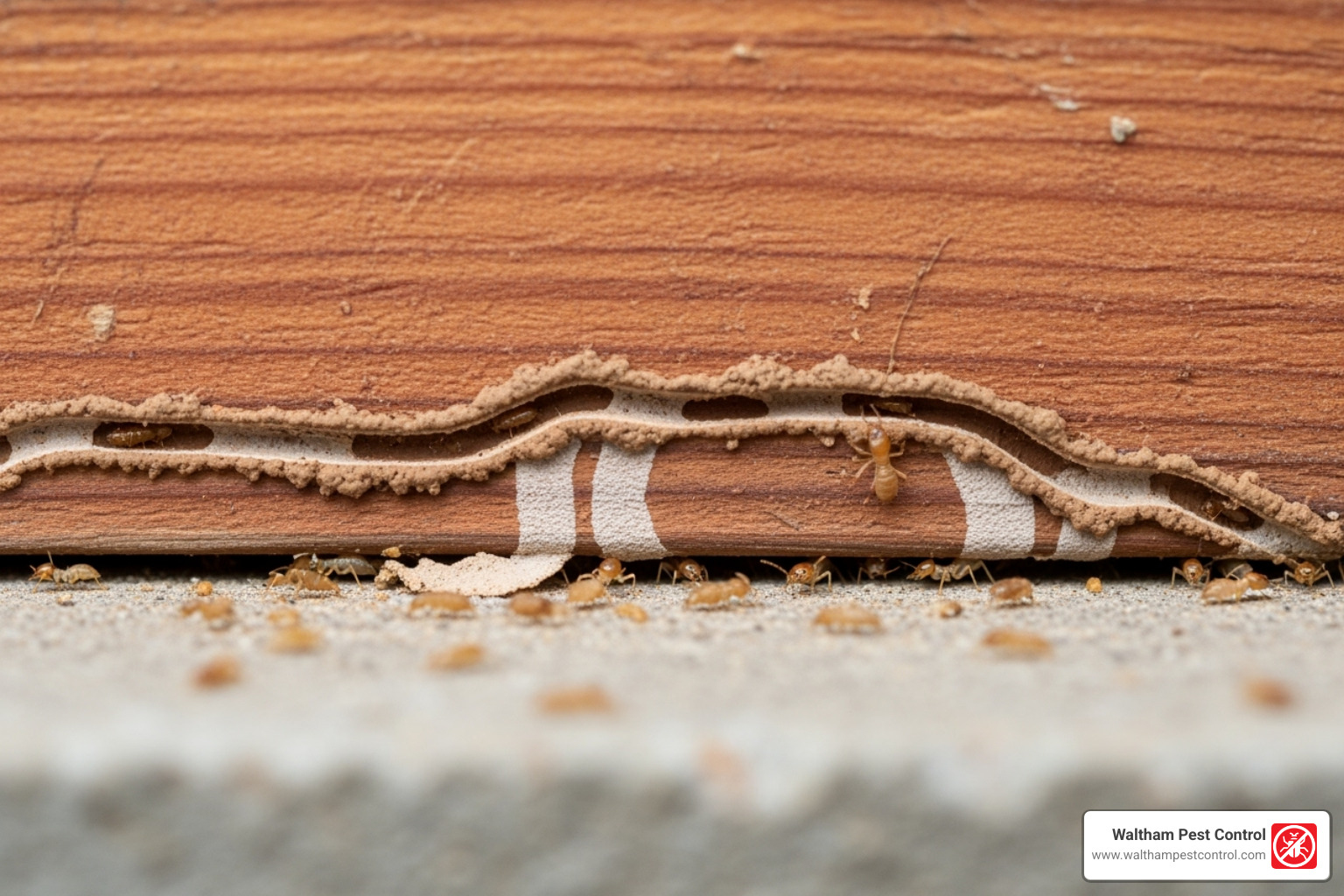
These termites build mud tubes to travel between their underground colonies and the wooden structures they eat. Seeing these tubes on your foundation is a sure sign of their presence.
Drywood termites have a different schedule, swarming in late summer and early fall (August-November). They live inside the wood they consume and don’t require soil contact. Their swarms are smaller and often occur at night, making them easy to miss.
Dampwood termites swarm during the summer months. These insects target wood with high moisture content, like rotting logs or areas with leaks. While less likely to infest a well-maintained home, their presence often signals a moisture problem that needs attention.
Found a Swarm? What It Means and What to Do Next
Finding a termite swarm in your home is an alarming findy, indicating a problem that has likely been developing for some time.
If you find termites swarming inside your house, it’s a strong sign of an active and well-established infestation. These swarmers emerged from a mature colony that has likely been feeding on your home’s wooden structures for years. When termites swarm indoors, they are drawn to light, so you’ll often find them clustered near windows and fixtures.
This findy requires immediate professional attention. The visible swarmers are only a fraction of the colony; thousands of worker termites are likely still hidden within your walls, causing damage. For comprehensive guidance, our article How Do I Get Rid of Termites in My House? provides essential information.
Key Signs of a Termite Infestation
While swarmers are dramatic evidence, termites are masters of staying hidden. Recognizing subtler signs can help you catch an infestation early.
- Mud tubes on your foundation are a reliable indicator of subterranean termites. These pencil-thin tunnels protect them as they travel from the soil to your home’s wood.
- Hollow-sounding wood can reveal termite damage. Tap wooden surfaces near the ground; damaged wood will sound hollow or papery.
- Bubbling or peeling paint can indicate moisture from termite activity beneath the surface, even with no other signs of water damage.
- Discarded wings on windowsills, doorways, and near light fixtures are a clear sign that a swarm has recently occurred.
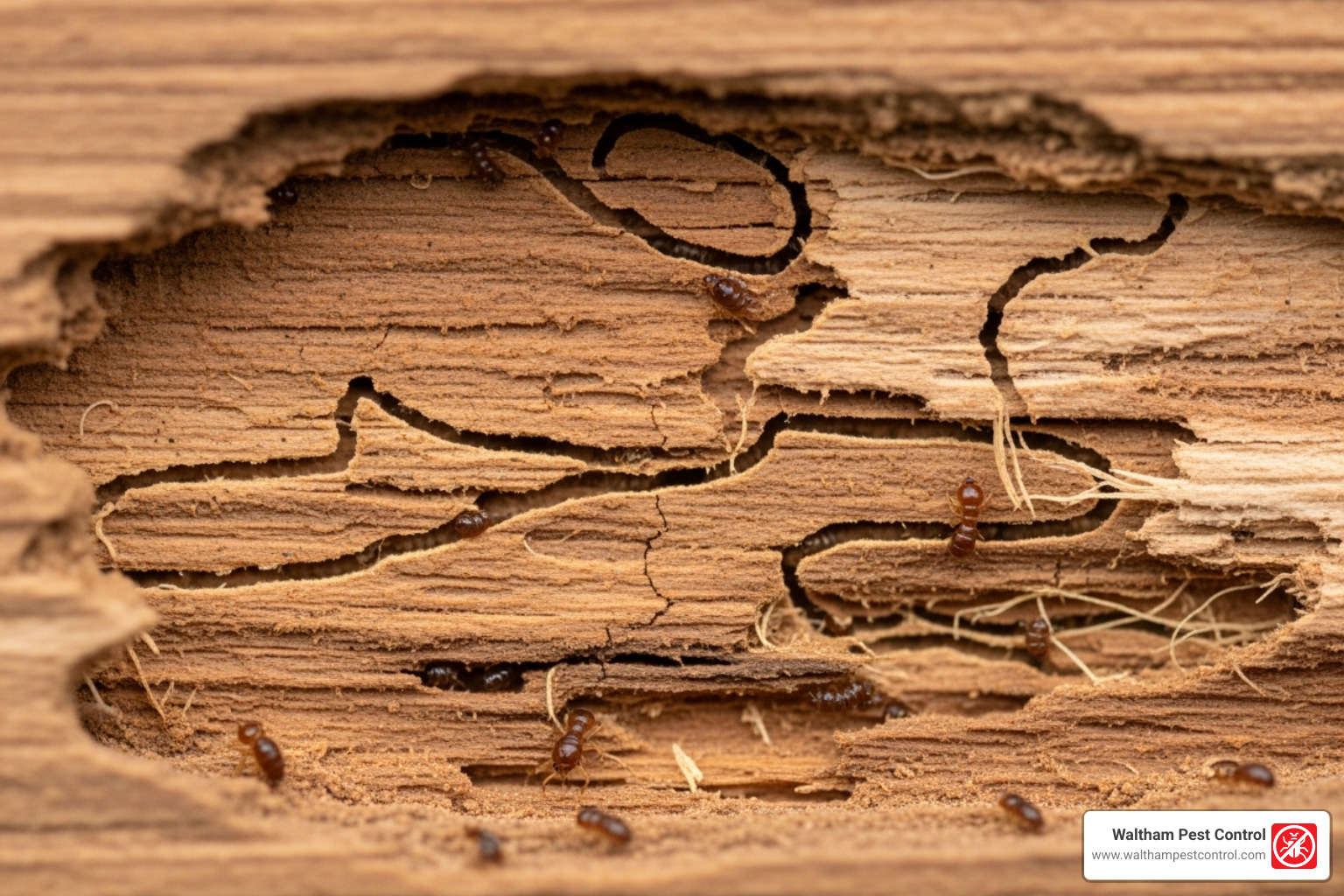
If you notice any of these signs, swift action can prevent extensive and costly repairs.
Immediate Actions for Homeowners
Finding termite activity can be overwhelming, but taking the right steps is key. Resist the urge to use bug spray, as it won’t solve the underlying problem.
- Collect a sample by capturing a few swarmers or their wings in a small container. This helps professionals confirm the species and plan treatment.
- Vacuum up swarmers to manage the immediate visual problem. This is a temporary fix and does not affect the colony.
- Avoid DIY sprays, as they are ineffective against established colonies and can scatter termites, making professional treatment more difficult.
- Schedule a professional inspection immediately. This is your most crucial step. Our licensed technicians at Waltham Pest Control will conduct a comprehensive evaluation to confirm the infestation and assess the damage. We provide thorough Termite Inspection and Treatment services for Eastern Massachusetts homeowners.
Professional Termite Control and Prevention
When you find termites during termite swarming season, your first instinct might be to use a DIY spray. However, termites are not a typical household pest that can be handled with a simple fix.
These destructive insects cause an estimated $5 billion in damage annually across the United States. This staggering figure represents countless homes where termites worked silently for years before the damage was noticed.
Professional help is vital because termites build complex tunnel systems and live in massive colonies, remaining hidden while weakening your home’s structure. Over-the-counter products may kill a few visible swarmers but won’t touch the colony living beneath your foundation or within your walls.
At Waltham Pest Control, we have over 40 years of experience protecting Eastern Massachusetts homes. Our licensed and insured team understands local termite species and the most effective elimination strategies for our New England climate.
Effective Professional Treatment Options
After a thorough inspection, we develop a customized treatment plan that targets the entire colony, not just the visible swarmers.
Liquid termiticide treatments create an invisible barrier around your home’s foundation. Termites pass through the treated zone and carry the termiticide back to the colony, leading to its elimination. Modern liquid treatments are long-lasting and provide protection for years.
Termite baiting systems use strategically placed monitoring stations. Foraging termites consume a slow-acting bait and share it with their colony, which disrupts their growth and eventually causes the colony to collapse.
Both methods comply with state regulations and oversight. Our trained technicians customize the approach based on your home’s specific conditions. Our comprehensive Termite Inspection and Treatment services address the infestation and the conditions that attracted termites.
Note on Pricing: Average termite treatment costs can range widely, from $500 to over $3,000, depending on the size of the infestation and the treatment method. These are average costs based on internet data and not actual costs for Waltham Pest Control.
Long-Term Termite Prevention Strategies
Eliminating an infestation is the first step. Long-term prevention is key to protecting your home for years to come.
- Moisture control is the top priority, as subterranean termites need water. Fix leaky pipes, improve ventilation in basements and crawl spaces, and ensure gutters direct water away from your foundation.
- Eliminating wood-to-soil contact removes termite access points. Store firewood on raised platforms away from your house and keep mulch at least six inches from exterior walls.
- Sealing foundation cracks and gaps around utility lines can block entry points.
- Regular professional inspections provide ongoing peace of mind by catching new activity early.
These strategies work best when combined with professional expertise. Learn more in our detailed Termite Prevention guide.
Frequently Asked Questions about the Termite Swarming Season
During termite swarming season, we receive many questions from concerned homeowners. Here are answers to the most common ones we hear from families across Eastern Massachusetts.
How long does a termite swarm last?
A single termite swarm is surprisingly brief, lasting only 30 to 60 minutes. However, a mature colony can produce multiple swarms over several days or weeks when weather conditions are right. Larger, more established colonies can produce more swarms, so seeing one means you should remain vigilant for others.
If I kill the swarmers, is the problem solved?
No, killing swarmers does not solve the problem. Swarmers are just the reproductive members sent out to start new colonies. The real damage is caused by the thousands of worker termites that remain hidden in your home’s structure, eating wood 24/7. When you eliminate swarmers, the main colony remains untouched and continues its destructive work.
Does seeing one swarmer mean I have an infestation?
One swarmer doesn’t guarantee an infestation inside your home, as it could have flown in from a neighboring property. However, it is a high-risk warning sign that requires immediate attention. The presence of even a single swarmer indicates that a mature termite colony is active in your immediate area, dramatically increasing your home’s risk.
A professional inspection is the smartest move when you spot a swarmer. Our technicians can determine if it’s an isolated incident or the first sign of a larger problem. Since termites are so good at staying hidden, it’s best not to wait for obvious damage to appear.
Conclusion: Protect Your Home This Swarming Season
Spring in Eastern Massachusetts brings warmer weather and, unfortunately, termite swarming season. The most important thing to remember is that swarming is nature’s warning system. Winged termites indicate a mature colony is established and causing damage nearby.
Identification is crucial during these spring months. Knowing the difference between termite swarmers and flying ants, and recognizing signs like discarded wings, is your first line of defense. Warm, humid days after spring rains create the perfect conditions for subterranean termites to swarm during the day.
The most important takeaway is that professional action is necessary when you find evidence of termites. DIY sprays are ineffective against the hidden worker termites that cause billions in damage nationwide. Only comprehensive professional treatment can eliminate entire colonies.
Vigilance during spring is your best defense. Watch for swarmers near windows, check your foundation for mud tubes, and don’t ignore other signs like hollow-sounding wood or bubbling paint.
At Waltham Pest Control, we have protected homes across Eastern Massachusetts for over four decades. Our licensed team understands how termites behave in our local climate and knows how to eliminate these pests before they cause extensive damage.
Don’t let termite swarming season catch you unprepared. Whether you’ve seen swarmers or just want peace of mind, our experts are here to help with a thorough inspection and a customized treatment plan to protect your home.
Ready to safeguard your property this spring? Contact us today about our comprehensive Termite Control Services and let our experience work for you.
