

Carpenter Ant Infestation in House: Top 5 Warning Signs
What Are Carpenter Ants and Why Are They a Threat?
A carpenter ant infestation in house can cause serious structural damage, making early detection crucial for Massachusetts homeowners. Unlike termites, these wood-destroying insects don’t eat wood; they excavate it to create nests, leaving behind smooth tunnels that can weaken your home’s framework.
Key Signs of Carpenter Ant Infestation:
- Large black ants (1/4 to 3/4 inch long) seen indoors
- Wood shavings (frass) near baseboards, windows, or doors
- Faint rustling sounds in walls or ceilings
- Smooth, clean galleries in damaged wood
- Winged ants emerging from walls or crevices
- Ant trails visible on your lawn or foundation
Carpenter ants are among the most common wood-damaging pests in New England. They establish parent nests outdoors and satellite nests inside your home. A mature colony can contain up to 100,000 ants and cause thousands of dollars in damage if left untreated.
The biggest threat comes from their preference for moisture-damaged wood, though they’ll also excavate sound lumber. Areas like bathrooms, kitchens, and basements are prime nesting sites.
I’m Waltham Pest Control, President & CEO of Waltham Pest Control. With over 40 years of experience, I’ve seen how early detection of a carpenter ant infestation in house saves homeowners from costly structural repairs. The key is to know the signs and act quickly.
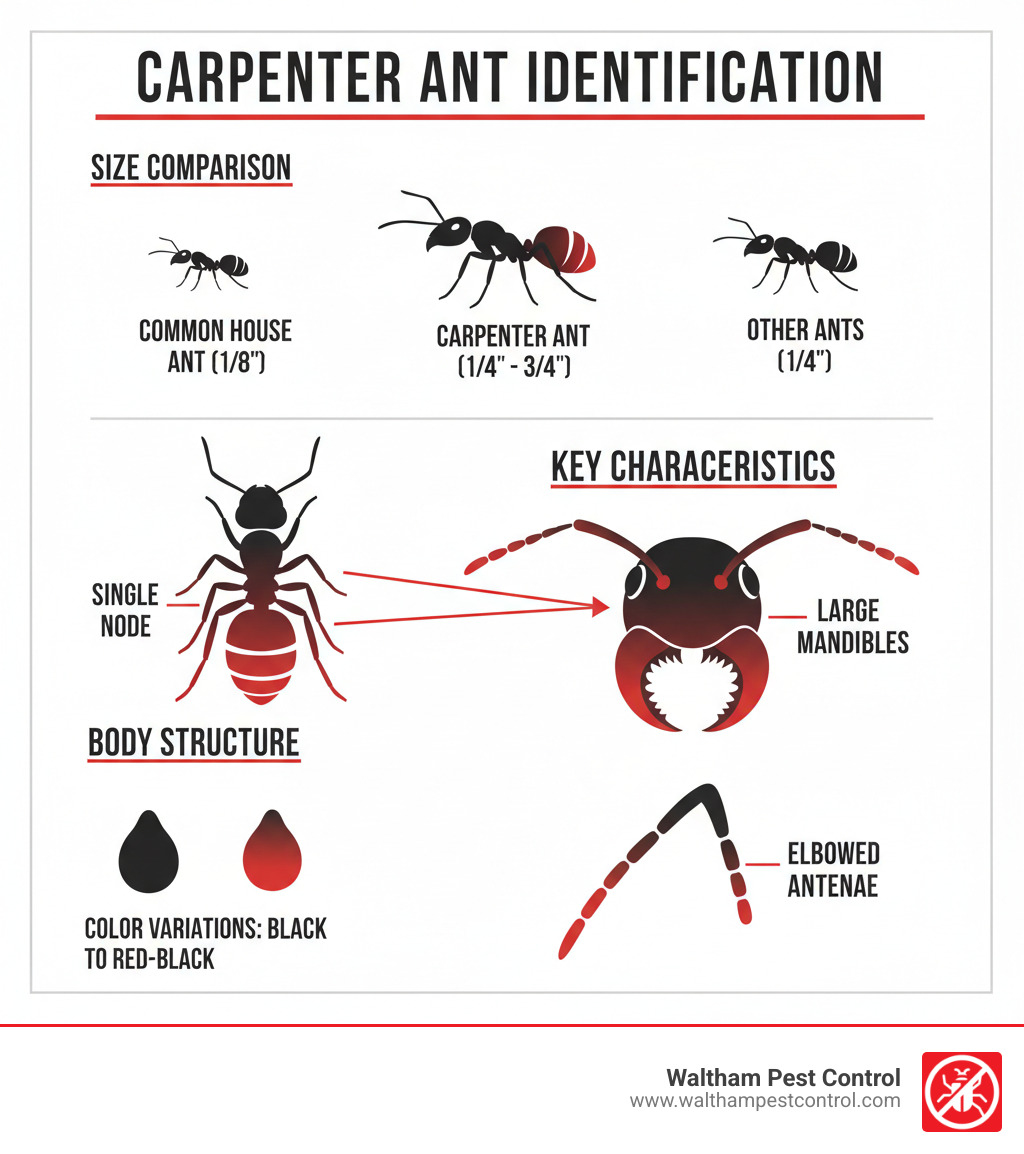
Carpenter ant infestation in house terms simplified:
Top 5 Signs of a Carpenter Ant Infestation in House
By the time you see obvious signs of a carpenter ant infestation in house, the insects have likely been working behind the scenes for months or even years. Fortunately, carpenter ants leave plenty of clues. Here are the five telltale signs that mean it’s time to call a pest control professional.
1. Spotting Large Ants (Workers and Swarmers)
The most straightforward sign is seeing the ants themselves. Carpenter ants are the giants of the ant world, measuring 1/4 to 3/4 inch long.
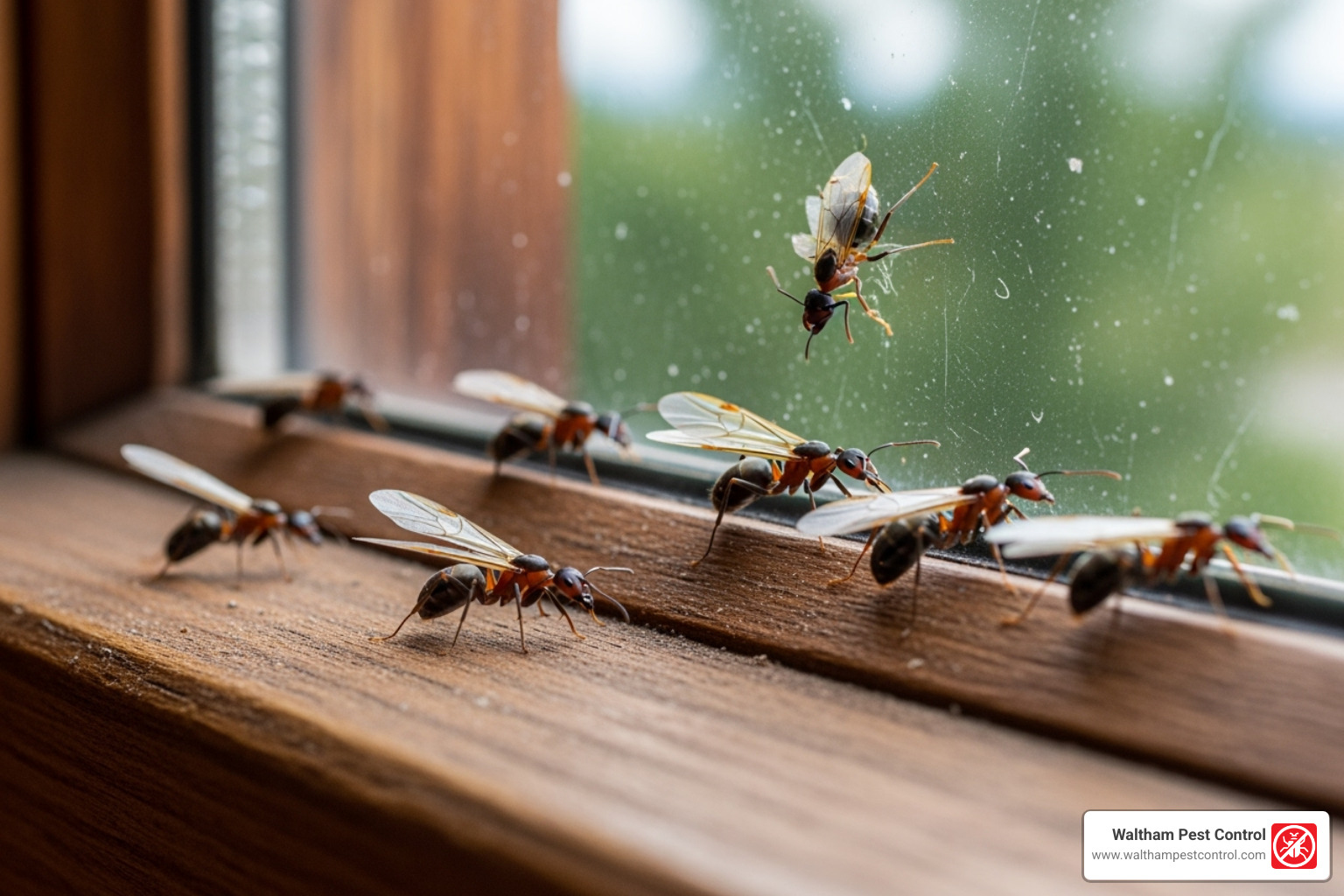
Worker ants are the ones you’ll typically see foraging for food. Most are black, though some species are red and black. If you consistently see these large ants indoors, take note.
Winged ants, or swarmers, are a more serious sign. These reproductive ants emerge from mature colonies, usually in spring, to start new nests. Seeing winged ants coming from cracks in walls or ceilings means you have an established colony that’s at least three to six years old.
A winter reality check: spotting any carpenter ant indoors during cold months is a smoking gun. Ants active in January or February are almost certainly living inside your home’s structure.
You can learn more about identifying these pests in our comprehensive guide on Carpenter Ants in House.
2. Finding Frass (Wood Shavings)
As carpenter ants excavate wood, they push out debris called frass through small “kickout holes.” This is your next big clue.
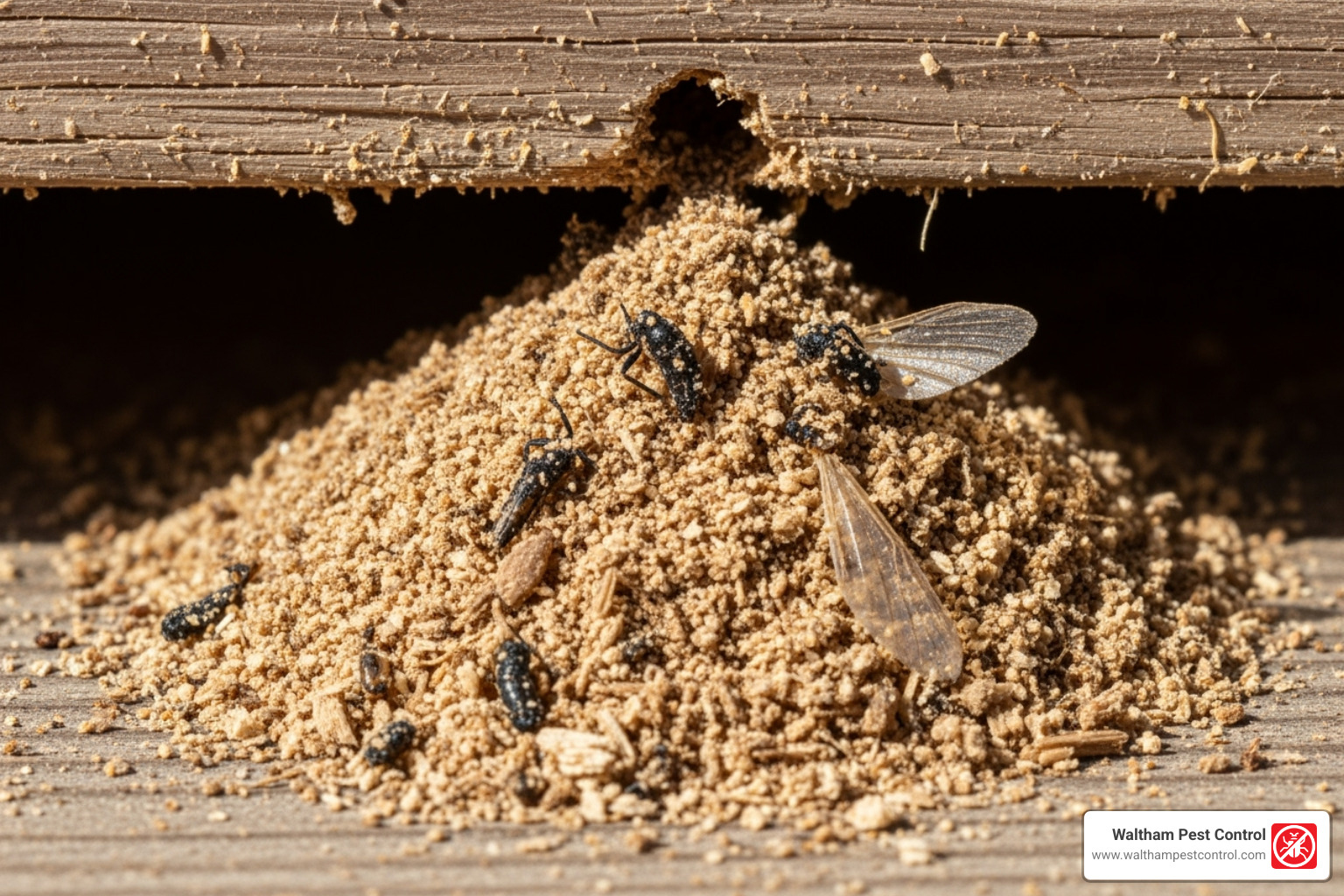
Frass looks like fine wood shavings, but it’s often mixed with insect body parts and bits of insulation. Unlike sawdust, it has a slightly gritty texture.
Check for these mysterious piles along baseboards, on window sills, under door jambs, and in crawl spaces. Finding frass where no woodworking has occurred is a strong sign of active tunneling nearby.
3. Hearing Faint Rustling Noises in Walls
Sometimes the best detective work happens with your ears. Carpenter ants are often nocturnal, and during quiet hours, you might hear the subtle sounds of their excavation.
Press your ear against a wall and listen for faint rustling sounds or light crunching noises. This is the sound of thousands of mandibles chewing through wood to expand their nest.
The sounds are most noticeable in wall voids, ceilings, and around wooden framework at night. If your walls are making these mysterious sounds, it’s time to take action.
4. Finding Damaged Wood with Smooth Galleries
When you uncover carpenter ant damage, it is unmistakable. They create smooth, clean tunnels that look as if they’ve been sanded, free of any mud or debris.
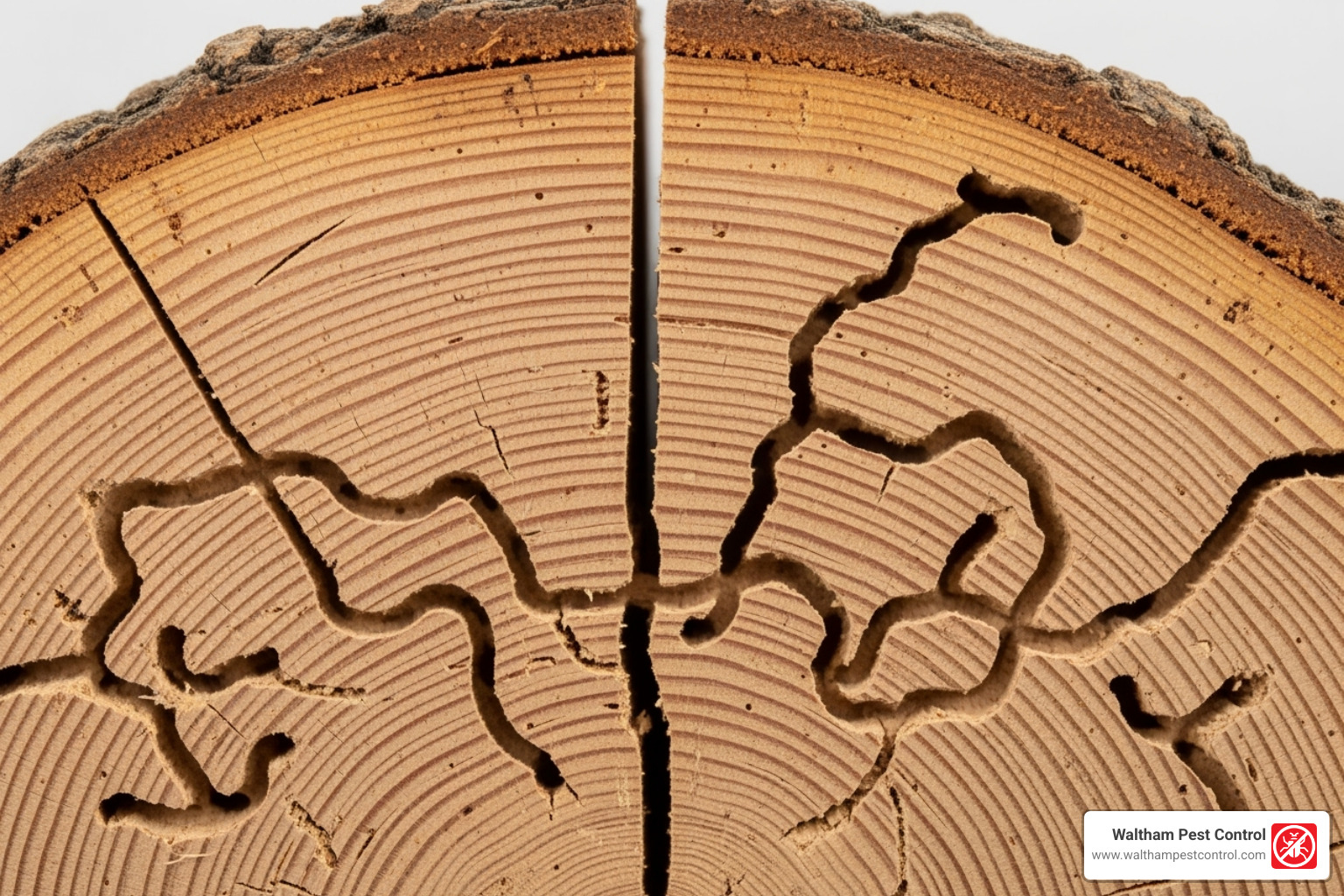
This sandpapered appearance sets their work apart from termite damage. Termites create irregular tunnels packed with mud and soil, while carpenter ant galleries are clean and empty. They don’t eat wood, they just excavate it for living space.
5. Witnessing Outdoor Ant Trails
A carpenter ant infestation in house often starts outside. The main colony may live in a tree stump or woodpile, with workers establishing foraging routes to your home.
These foraging trails can be seen on your lawn, foundation, or fences, especially in the evening. Following these ant highways can lead you to their outdoor nest.
Pay special attention to tree branches touching your house, as these act as bridges. A steady stream of ants on these paths suggests they’ve found a food source or nesting site inside your home. Foundation entry points around utility lines or cracks are also common access routes.
Understanding this outdoor connection is crucial, as treating only indoor nests rarely provides a long-term solution.
For more insights into carpenter ant outdoor behavior, visit our guide on Carpenter Ants Outside House.
Understanding Carpenter Ant Nests and Behavior
Now that we’ve covered the warning signs, let’s explore carpenter ant behavior. Understanding how they operate will help you protect your home from a carpenter ant infestation in house.
Where Do Carpenter Ants Build Their Nests?
Carpenter ants are picky about their real estate, seeking the perfect combination of moisture and wood. They establish two distinct types of nests.
Parent nests are the main headquarters where the queen lives and lays eggs. These are almost always located outdoors in moist, decaying wood like old tree stumps, rotting logs, or damp landscape timbers. Occasionally, they’ll nest in consistently damp wooden structures, like a porch with a leak.
Satellite nests are where your home becomes vulnerable. Worker ants establish these branch offices, carrying older larvae and pupae from the parent colony. The challenging news is that they can thrive in much drier conditions, making your home’s interior an attractive option.
Common indoor locations for satellite nests include:
- Bathrooms and kitchens: These areas offer moisture. Look under sinks, around dishwashers, or near any plumbing leaks.
- Basements and attics: Damp insulation, roof leaks, or poor ventilation create ideal conditions.
- Wall voids: These provide privacy and access to wooden studs.
- Window and door frames: Wood softened by condensation is a frequent target.
- Foam insulation: Ants can tunnel through foam panels for shelter.
If you’re noticing these large ants in your kitchen, our guide on Carpenter Ants in Kitchen offers targeted advice.
The Stages of a Carpenter Ant Infestation in House
A carpenter ant infestation in house develops slowly over several years. Understanding the stages helps with early detection, saving you from costly repairs.
Stage 1: Scout Ants. A few individual worker ants appear, searching for food, water, and nesting sites. Don’t dismiss these scouts; they can signal a nearby colony.
Stage 2: Satellite Nest Established. Once scouts find suitable conditions (especially damp wood), the colony expands indoors. You’ll start to see small piles of frass as the ants begin excavating.
Stage 3: Swarmers Emerge. It takes three to six years for a colony to mature and produce winged reproductives (swarmers). Seeing flying ants emerge from walls is a clear sign of a well-established, significant infestation.
Stage 4: Structural Damage. After years of quiet work, the damage becomes apparent. You might notice hollow-sounding wood, soft floors, or sticking doors and windows. The extensive tunneling can seriously compromise your home’s structural integrity.
A mature colony can house tens of thousands of ants, steadily weakening your home. Early intervention during stages 1 or 2 is key to preventing the extensive damage of stages 3 and 4. For more details, see our guide on Carpenter Ants: Protecting Your Home from Structural Damage.
Eliminating a Carpenter Ant Infestation: When to Call a Professional
When you find a carpenter ant infestation in house, your first instinct may be to try DIY methods. However, this strategy often backfires with complex pests like carpenter ants.
Why DIY Methods for a Carpenter Ant Infestation in House Often Fail
Carpenter ants are challenging opponents due to their complex living arrangements.
- Limited effectiveness of baits: Store-bought baits may not work on carpenter ants, which have multiple nests and changing diets. They rarely eliminate the queen and the entire colony.
- Killing foragers vs. the colony: Spraying visible ants only kills a fraction of the workers. The queen and thousands of other ants remain safe inside the walls, continuing to reproduce.
- Difficulty locating all nests: Finding every parent and satellite nest without professional training and equipment is nearly impossible.
- Risk of colony budding: Improper chemical use can cause the colony to feel threatened and split into multiple new nests, worsening the problem.
- False sense of security: A temporary decrease in ant activity can make you think the problem is solved, while the hidden colony continues to grow and cause damage.
While products like ant bait stations can be useful, they are most effective as part of a comprehensive professional strategy.
The Professional Approach to Carpenter Ant Control
Professional treatment is more effective and often more economical long-term, preventing costly structural damage.
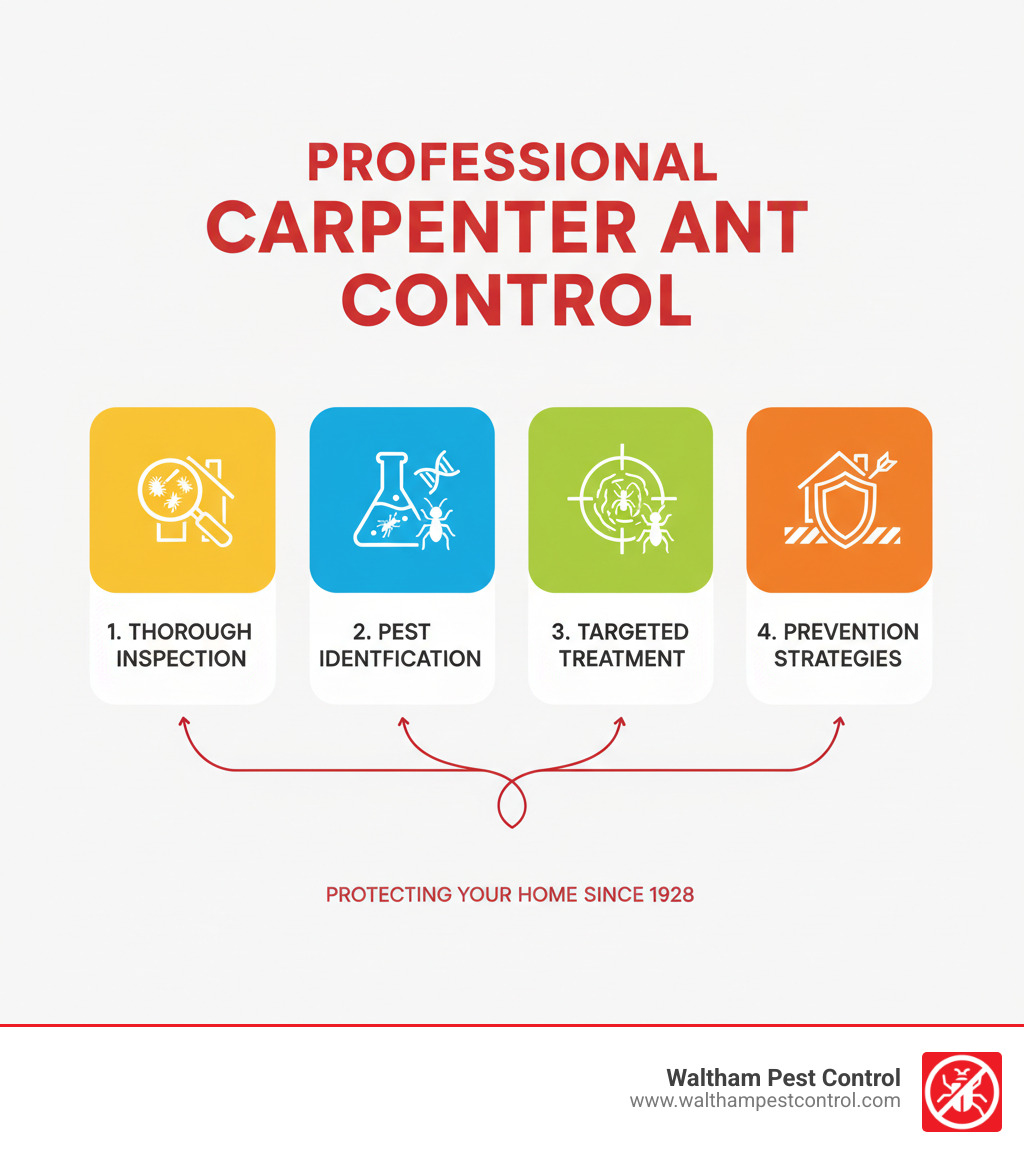
Our process includes:
- Thorough Inspection: We examine every potential hiding spot, from damp basements to foam insulation, using our training to spot subtle signs like tiny kickout holes or faint frass deposits.
- Locating Nests: We use specialized detection methods, moisture meters, and years of experience to locate both parent and satellite nests, which is the key to total elimination.
- Targeted Treatments: We use professional-grade products unavailable to consumers. Dusts are applied into wall voids to be carried back to the colony, while non-repellent sprays allow ants to unknowingly spread the treatment, ensuring it reaches the queen.
The investment for professional carpenter ant control varies based on infestation severity and property size. Based on industry data, homeowners might expect costs ranging from $250 to $1,500 or more for comprehensive treatment. Please note these are average costs based on general internet data and not specific pricing for Waltham Pest Control; we provide customized solutions for your unique situation.
We understand what pest control companies use for ants and how to apply these tools strategically for maximum effect.
The bottom line: a carpenter ant infestation in house is a serious problem that usually requires professional intervention to protect your home’s structural integrity.
How to Prevent Future Carpenter Ant Problems
Once you’ve dealt with a carpenter ant infestation in house, you’ll want to prevent it from happening again. Prevention focuses on removing the three things carpenter ants need: moisture, food, and access.
-
Moisture Control: This is your most powerful tool. Carpenter ants are drawn to damp wood. Fix all leaks promptly, from dripping faucets to leaky roofs. Improve drainage by cleaning gutters and ensuring the ground slopes away from your foundation. Ensure proper ventilation in attics, basements, and crawl spaces to reduce humidity.
-
Wood Management: Keep firewood stacked at least 20 feet from your house and off the ground. Bring in only what you need for immediate use. Remove or replace any decaying or water-damaged wood on your property, including old tree stumps, fence posts, and window sills.
-
Landscaping Maintenance: Trim tree branches and shrubs so they don’t touch your house, removing these easy access bridges for ants. Clear away leaf litter and mulch that sits directly against your foundation.
-
Seal Entry Points: Think like an ant and inspect your home’s exterior. Seal cracks in the foundation and gaps around utility lines, pipes, and vents with caulk or other appropriate sealants.
-
Sanitation: Remove food sources that attract foragers. Store food in airtight containers, clean up spills quickly, and use trash cans with tight-fitting lids. While carpenter ants excavate wood, they still need protein and sugar to eat.
These prevention steps are good home maintenance practices that protect your home’s value and create a healthier living environment. For more details, visit our guide on Carpenter Ants Treatment and Prevention.
Prevention is always easier and less expensive than dealing with an established carpenter ant infestation in house.
Frequently Asked Questions about Carpenter Ants
Here are answers to the most common questions I hear about a carpenter ant infestation in house.
How long does it take for carpenter ants to cause serious damage?
Unlike termites, carpenter ants work slowly. Minor damage can appear in months, but significant structural damage typically takes several years of an untreated infestation. A colony needs three to six years to mature and produce winged swarmers. By the time you see swarmers, the colony is well-established and may have already caused considerable damage. The longer an infestation is ignored, the more extensive and costly the repairs will be.
Do carpenter ants bite?
Yes, carpenter ants can bite if their nest is disturbed. They have large jaws and can deliver a painful pinch, but they do not sting and are not typically aggressive towards humans. Bites are not dangerous unless you have a rare allergic reaction. Their primary threat is to your home’s structure, not its inhabitants.
Are carpenter ants active all year in Massachusetts?
Outdoors, carpenter ants are most active from spring through fall and become dormant in winter. However, if they have a satellite nest inside your home, they can remain active year-round. Seeing large ants indoors during the colder months is a major red flag and a strong indicator of an active indoor infestation. Winter sightings are often more concerning than summer ones because they confirm the ants are living within your home’s structure.
Protect Your Home from Carpenter Ant Damage
A carpenter ant infestation in house is a serious threat that shouldn’t be ignored. These insects can work behind your walls for years, turning solid wood into hollow shells.
The signs we’ve discussed—large ants, sawdust piles (frass), and rustling sounds in walls—are red flags. They indicate that carpenter ants have likely moved in and are remodeling your home in ways you didn’t approve of.
Early detection is your best defense against these destructive pests. Catching an infestation early can save you thousands of dollars in structural repairs. Waiting until the damage is visible means a much more expensive and complicated situation.
While DIY sprays offer temporary relief, they rarely solve a carpenter ant problem. These insects are too well-hidden and organized for most over-the-counter treatments to be effective. Eliminating the parent and satellite nests requires professional expertise.
Here at Waltham Pest Control, we’ve been helping Eastern Massachusetts homeowners protect their biggest investment for over four decades. We’ve seen the costly damage that ignored carpenter ant problems can cause, and we know how to eliminate them for good.
Our approach is comprehensive. We find every nest, identify all access points, and create a treatment plan that addresses the root of the problem, not just the symptoms.
Don’t let carpenter ants turn your dream home into a nightmare repair project. If you’ve spotted any of the warning signs, or if you want peace of mind knowing your home is protected, we’re here to help. Contact us for a professional pest inspection and let our experienced team safeguard your home’s structural integrity. Taking action today can save you from major headaches tomorrow.
