

Big red black ant: Ultimate Guide 2025
Why Identifying Your Big Red Black Ant Matters
When you spot a big red black ant in your Massachusetts home, quick identification is crucial for protecting your property. Here’s what you’re likely seeing:
Most Common Big Red Black Ants:
- Carpenter Ant (Camponotus chromaiodes) – True ant that damages wood
- Velvet Ant (Dasymutilla occidentalis) – Actually a wingless wasp with painful sting
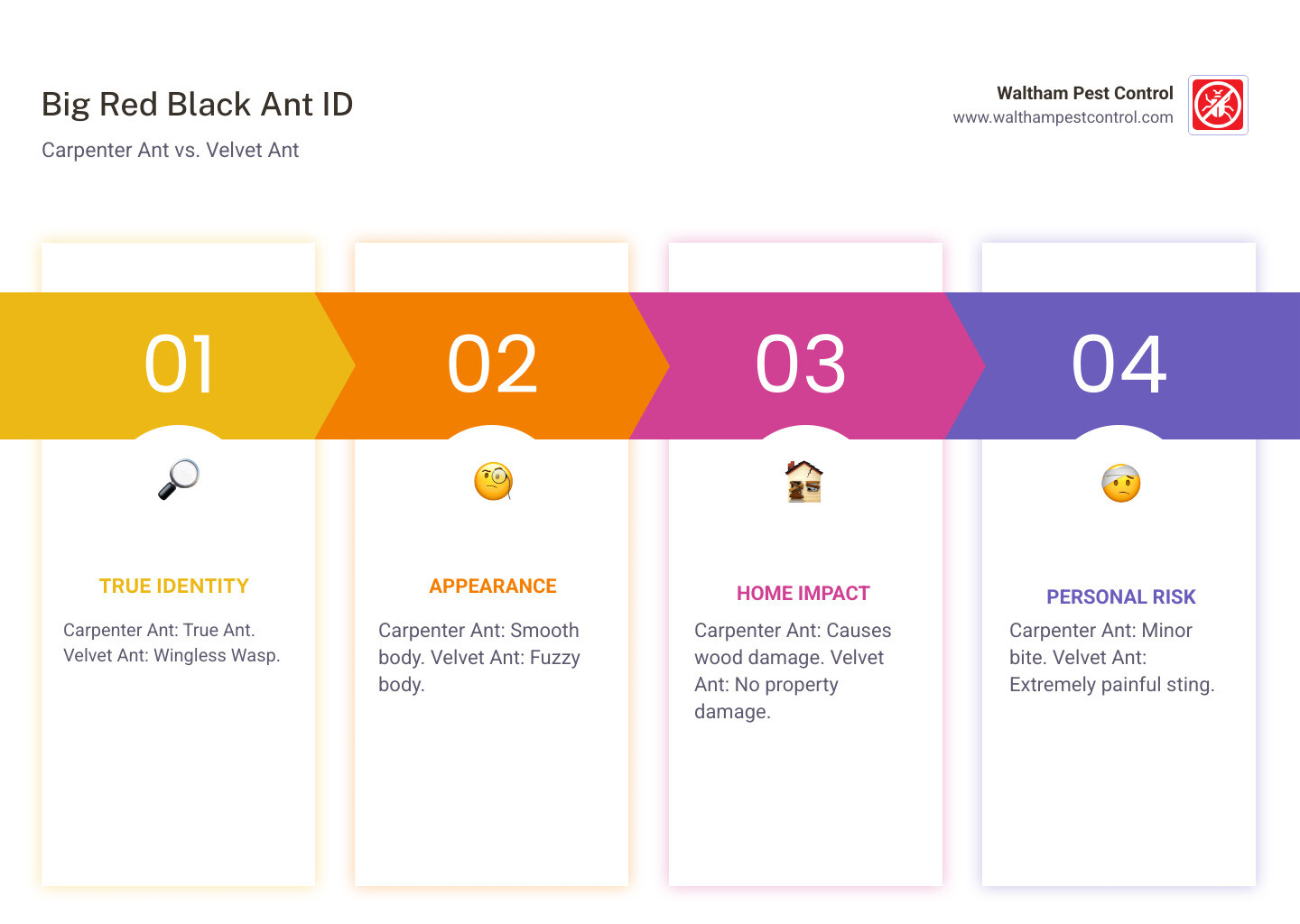
Key Differences at a Glance:
- Carpenter Ant: Smooth body, nests in wood, causes structural damage
- Velvet Ant: Fuzzy body, solitary wasp, delivers extremely painful sting
You’ve probably encountered one of these two species. The difference matters because carpenter ants can cause thousands of dollars in structural damage, while velvet ants deliver one of the most painful stings in North America.
Many homeowners mistake these insects for each other or assume they’re dealing with fire ants. This confusion can be costly. Carpenter ants hollow out wooden structures in your home, creating galleries that weaken support beams, walls, and floors. Meanwhile, velvet ants – despite their nickname “cow killer” – are actually beneficial insects that won’t harm your property.
The red and black coloration serves as nature’s warning system in both cases, but for different reasons. Carpenter ants use their size and colors to intimidate threats to their colonies, while velvet ants display bright warning colors to advertise their powerful defensive sting.
As Waltham Pest Control, President of Waltham Pest Control with over 40 years of experience in Eastern Massachusetts, I’ve helped countless homeowners correctly identify big red black ant species and address the real threats to their homes. Proper identification is always the first step in effective pest management.
Important big red black ant terms:
Is It a Carpenter Ant? Identifying the Wood-Destroying Pest
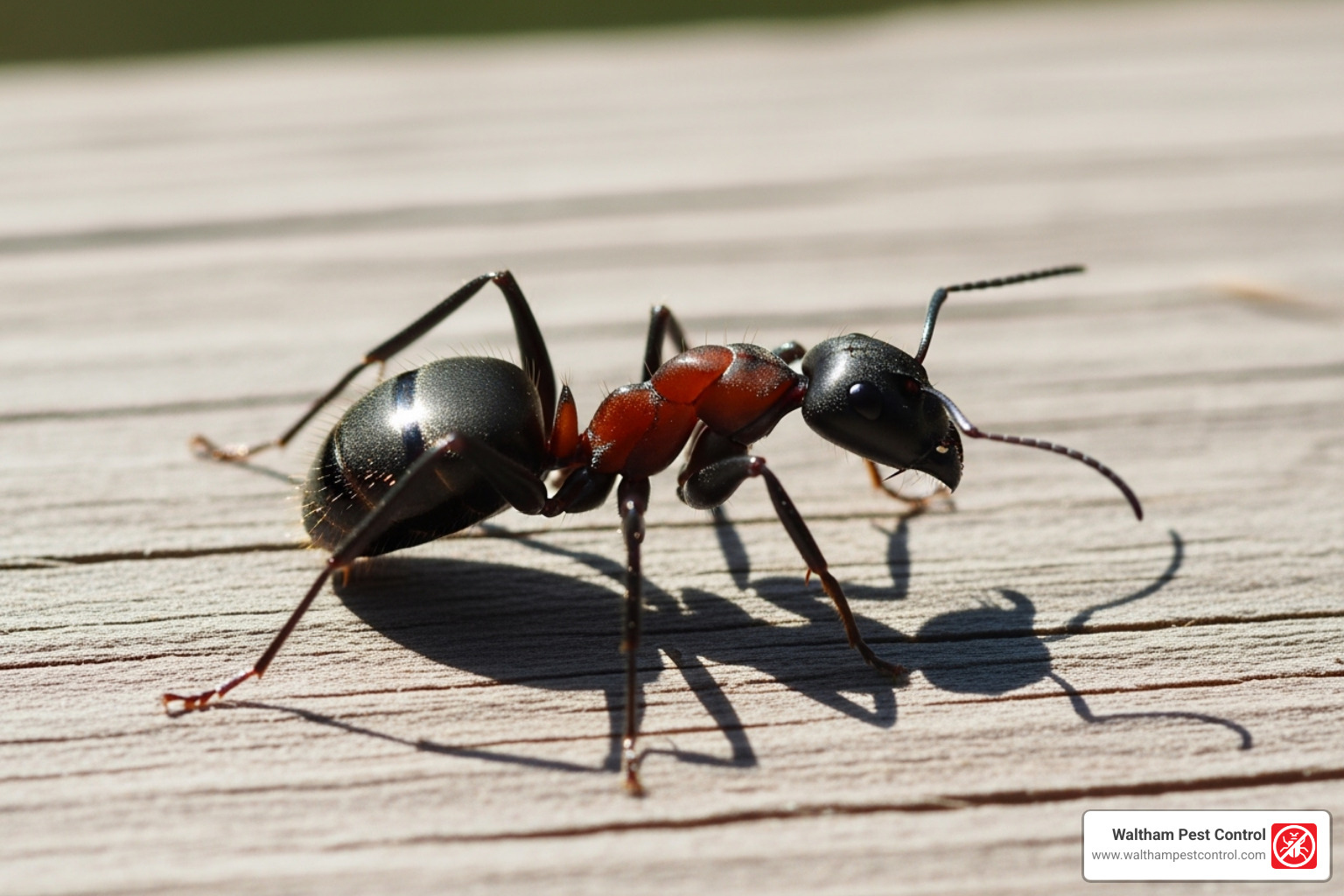
When we talk about a big red black ant that poses a threat to your home, we are almost certainly referring to a carpenter ant. These are the “wood ants” that can cause significant structural damage to your property. Understanding their characteristics, habits, and the signs of their presence is crucial for any homeowner in Eastern Massachusetts. Waltham Pest Control has been helping residents in communities like Burlington, Andover, and Lexington identify and eliminate these pests for decades. More information about these destructive insects can be found on our detailed page about Carpenter Ants.
Physical Characteristics of the Big Red Black Ant
Carpenter ants are among the largest ant species worldwide, which is why they often fit the description of a “big red black ant.” Their size can vary considerably, ranging from 7 to 20 mm in length. Worker ants typically measure between 5 to 10 mm, while the larger winged females, known as queens, can reach an impressive 20 mm.
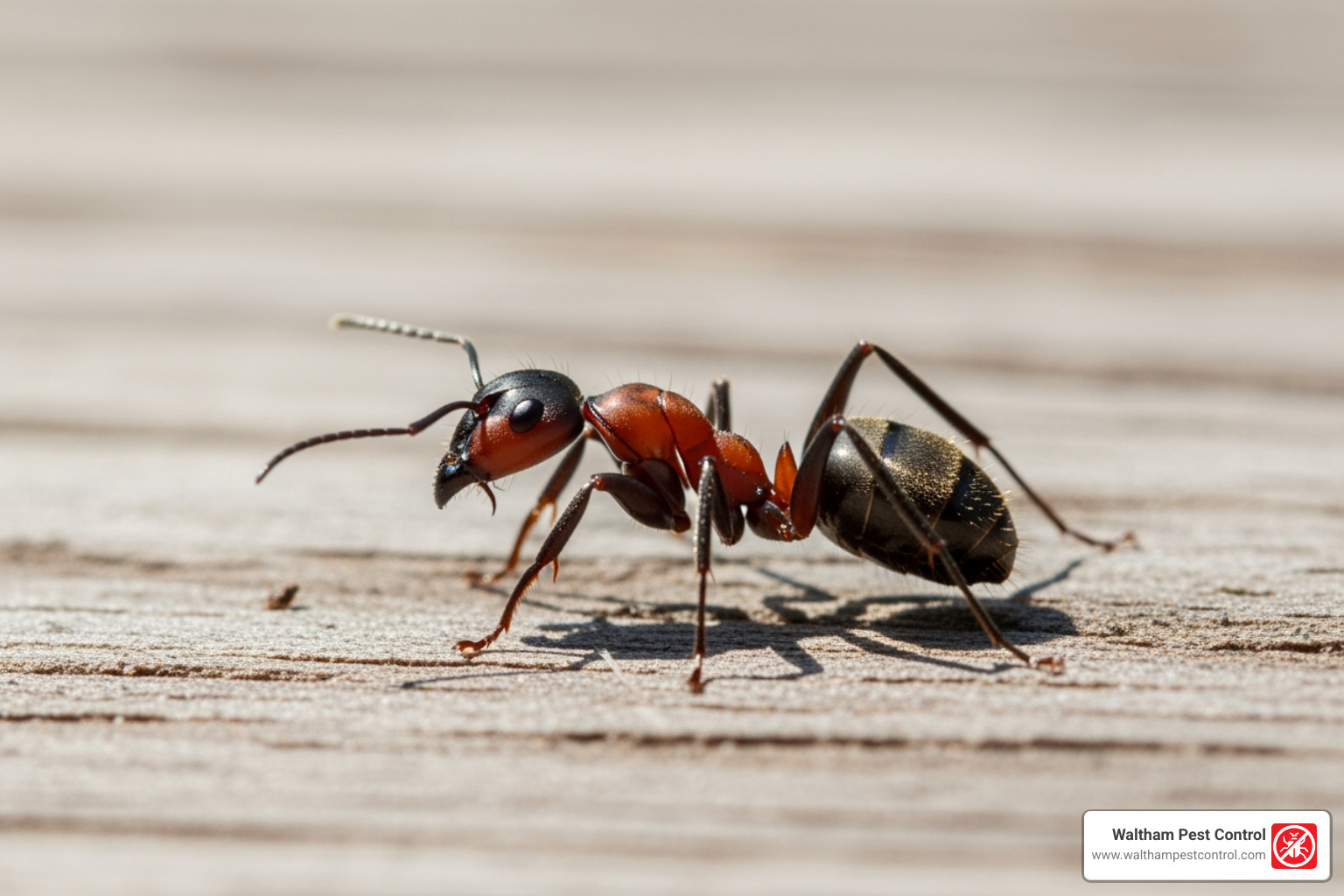
The defining physical characteristic of the red and black carpenter ant is its bicolored body. As their name suggests, they often have black abdomens with reddish-brown thoraxes and heads. For example, species like Camponotus novaboracensis (the red carpenter ant) have a red mid-section with the rest of the body being black. Similarly, Camponotus herculeanus can have a black body with a red mid-section and legs. The Ferruginous Carpenter Ant (Camponotus chromaiodes), also known as the Red Carpenter Ant, typically shows red tones mostly in the center of its body, with the head and the tip of the abdomen being black.
When observing these ants, pay close attention to their antennae. Carpenter ants possess 12-segmented antennae, often described as having a bullet-shaped terminal segment. Another key identifier is their waist, which features a single node (a distinct segment between the thorax and abdomen). Their thorax, the middle section of the body, is typically evenly convex, especially in common species like the Florida carpenter ant (Camponotus floridanus).
It’s also important to note the presence of winged forms. These “swarmers” are reproductive ants (males and new queens) that emerge from mature colonies, often during warmer months. While workers are wingless, these winged forms are a clear sign of an established colony, and their presence indoors indicates a potential infestation within your home.
Habitat and Behavior: Where They Live and What They Eat
Carpenter ants don’t eat wood; instead, they hollow it out to create intricate tunnel systems and nesting galleries for their colonies. This behavior is what makes them such a significant threat to homes. They prefer to establish their nests in moist or damaged wood, as it’s easier to excavate. Common nesting locations include attics, ceilings, windowsills, door frames, and areas around plumbing or electrical entries where moisture issues might be present. They can also be found in outdoor structures like woodpiles, rotting stumps, and trees.
A carpenter ant colony structure is quite complex. A parent colony, usually located outdoors in a tree or stump, typically houses a single queen, the brood (eggs, larvae, pupae), and about 2,000 workers. As the colony grows, they often establish satellite colonies. These satellite colonies are usually located indoors within your home, offering warmth, safety, and easy access to food sources. A key distinction is that satellite colonies do not have egg-laying queens, making them dependent on the parent colony for reproduction. However, if only a satellite colony is treated, the main colony will continue to thrive and can lead to re-infestation.
When it comes to their diet, carpenter ants are quite versatile omnivores. They primarily feed on sweets, such as honeydew produced by aphids, and various sugary household foods. They also readily consume other insects, both living and dead. Carpenter ants are predominantly nocturnal, meaning they are most active during the night. You might see them foraging along distinct trails, often emerging from cracks or crevices in walls, searching for food and water. This nocturnal activity is why you might not notice a significant presence during the day, even with a thriving colony.
Signs of a Carpenter Ant Infestation
Identifying a carpenter ant infestation early can save you from costly structural repairs. We’ve seen the damage these big red black ant colonies can inflict on homes throughout Middlesex and Essex Counties, from Acton to Amesbury.
One of the most tell-tale signs of their presence is the appearance of wood galleries. Unlike termites, which consume wood, carpenter ants create smooth, clean tunnels within the wood. These tunnels, or galleries, serve as their living space.
Another strong indicator is the presence of “frass.” This material looks like fine sawdust mixed with insect body parts and is often pushed out of their nesting galleries. You might find small, conical piles of frass below wooden beams, window sills, or other wooden structures. If you see this, it’s a strong sign that carpenter ants are actively excavating.
Sometimes, you might also hear faint rustling sounds coming from inside your walls or wooden structures, especially during quiet hours at night. This is the sound of the ants chewing and moving within their nests.
Finally, the appearance of winged ants indoors, particularly outside of typical warmer months, is a critical sign. These “swarmers” are the reproductive members of the colony. Their presence indicates that a mature carpenter ant colony is well-established, potentially within your home’s structure. If you see these winged individuals, especially in winter or early spring, it’s a clear signal that the colony has been active for some time. For more in-depth information about these signs, visit our page on Ant Infestation in Home.
Or Is It a “Cow Killer”? The Truth About Velvet Ants
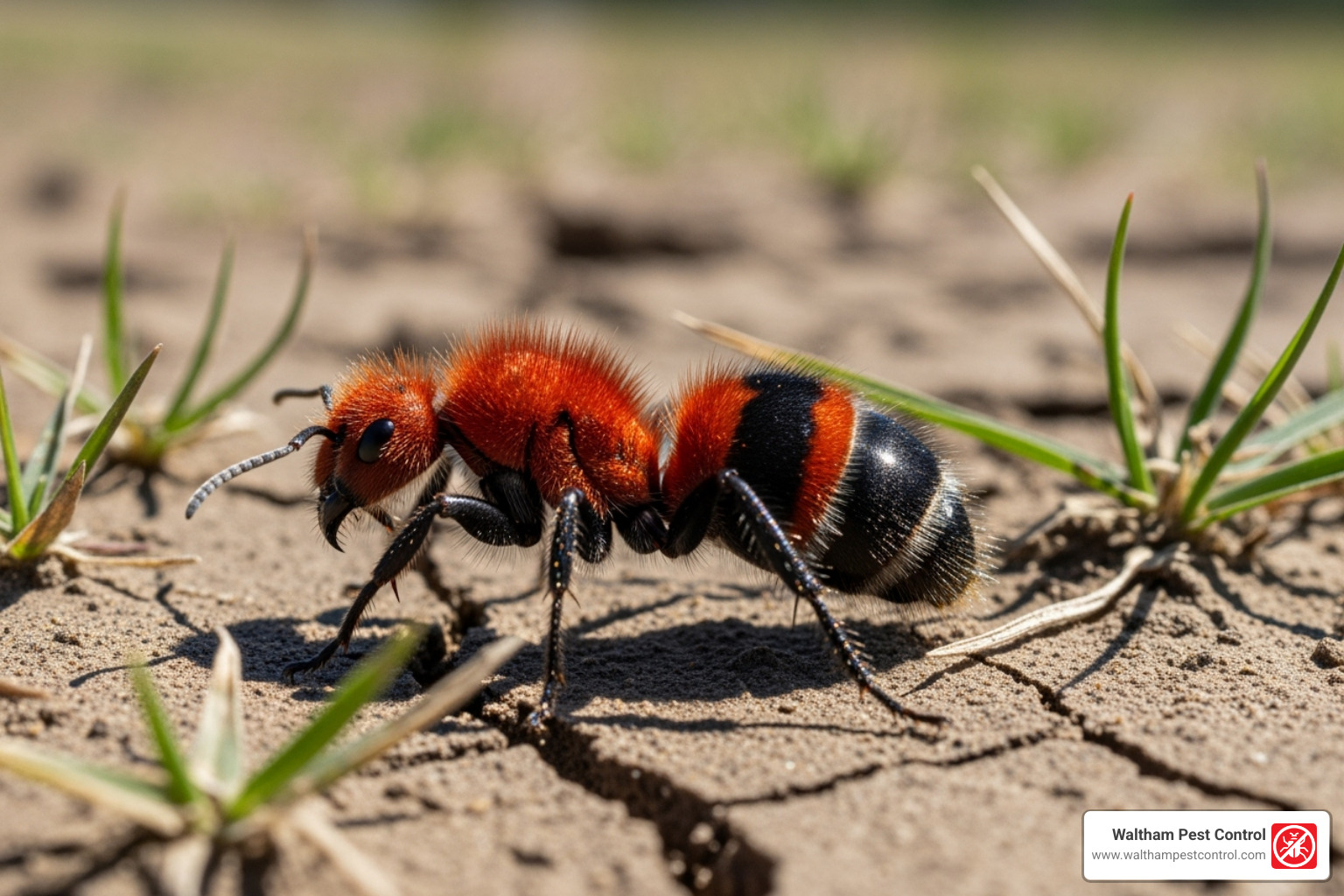
If you’ve spotted a fuzzy big red black ant scurrying across your Massachusetts lawn, you’re likely looking at nature’s most misleading insect. Meet the velvet ant – which isn’t actually an ant at all! This fascinating creature is a wingless wasp that’s mastered the art of disguise.
The most common species you’ll encounter in Eastern Massachusetts is Dasymutilla occidentalis, better known as the red velvet ant or the dramatically nicknamed “cow killer.” Before you panic about livestock casualties, let me put your mind at ease – no cows have ever been harmed by these insects. The name comes from something else entirely, which we’ll get to in a moment.
After four decades of pest control experience in communities from Burlington to Lexington, I’ve seen many homeowners mistake these solitary wasps for dangerous ants. Understanding what you’re really dealing with can save you unnecessary worry and help you appreciate one of nature’s more interesting insects.
Identifying the Velvet Ant (A Wasp in Disguise)
The velvet ant’s fuzzy appearance is its most distinctive feature. Unlike the smooth, hard bodies of carpenter ants, velvet ants are covered in dense, hair-like setae that give them an almost plush, carpet-like texture. This soft appearance is deceiving – underneath that fuzzy exterior lies a remarkably tough exoskeleton.
Their bright warning colors serve as nature’s danger signal. The vibrant red or orange body contrasted with black markings is a classic example of aposematism – basically, the insect world’s way of saying “stay away!” These colors aren’t just for show; they’re advertising the velvet ant’s powerful defensive capabilities.
Here’s where the ant mimicry gets interesting. The wingless females you see running around your yard look remarkably similar to oversized ants. They can reach up to 0.75 inches in length, with some females growing even larger. The winged males, however, tell a different story – they have dark, translucent wings and lack the infamous stinger that makes females so formidable.
The different body shape becomes apparent when you compare them side-by-side with carpenter ants. While carpenter ants have distinct body segments and that characteristic single-node waist, velvet ants appear more robust and compact. Their dense fur also makes them surprisingly durable – some people joke that they’re nearly indestructible!
The “Cow Killer” Sting: Fact vs. Fiction
Now for the truth behind that intimidating nickname. The velvet ant’s sting ranks as a Rating 3 on the Schmidt Pain Scale – that’s nearly the top of the scale for insect stings. Entomologist Justin Schmidt, who literally wrote the book on insect stings, describes it as “Explosive and long-lasting, you sound insane as you scream.”
Despite this dramatic description, the venom toxicity is relatively low for humans. The painful sting won’t cause lasting harm to most people, though it will certainly get your attention. Scientific research on the ‘Cow Killer’ sting confirms that while painful, these stings rarely cause serious medical issues.
The good news? Velvet ants deliver defensive stings only when threatened. They’re not aggressive by nature and would much rather run away than fight. The nickname origin comes purely from the intensity of pain – early settlers figured anything that hurt that much could probably take down a cow. Fortunately, that’s just colorful frontier exaggeration.
Velvet Ant Behavior and Why They’re Near Your Home
Understanding why velvet ants appear near your home requires knowing their unique lifestyle. These insects are solitary parasites – they don’t form colonies like carpenter ants or live in groups. Instead, female velvet ants lead independent lives with a very specific mission.
Female velvet ants seek out ground-nesting bee hosts where they lay their eggs on bee larvae or pupae. Their target hosts include cicada killers, ground-nesting bees, and other solitary wasps. The velvet ant larva then develops by consuming its host – it’s nature’s version of a hostile takeover.
You’ll typically spot them in areas with sandy soil habitat where their preferred hosts nest. They love warm, sunny locations like driveways, sandy gardens, and bare patches in your lawn. If you’re seeing velvet ants around your property, it actually indicates a healthy ecosystem with diverse ground-nesting insects.
Here’s the reassuring part: velvet ants pose no structural threat to your home. Unlike carpenter ants that excavate wood galleries, velvet ants have zero interest in your house’s structure. They don’t nest indoors, don’t chew wood, and don’t establish colonies in your walls.
In fact, they play a beneficial insect role by helping control populations of other ground-nesting insects. Think of them as nature’s pest control specialists – they’re actually on your side, even if their appearance might suggest otherwise.
Carpenter Ant vs. Velvet Ant: A Quick Comparison
This section will help you distinguish the big red black ant you’ve seen.
When you spot that big red black ant scurrying across your property, knowing exactly what you’re looking at can save you time, money, and potentially a lot of pain. The differences between carpenter ants and velvet ants are actually quite dramatic once you know what to look for.
The most obvious difference is texture. Run your eyes over the insect’s body – carpenter ants have that classic smooth, shiny ant appearance with clearly defined body segments and a pinched waist. Velvet ants, on the other hand, look like they’re wearing a fuzzy sweater. Their dense, hair-like covering gives them an almost plush appearance that’s unmistakable once you’ve seen it.
Size tells another part of the story. While both can be impressively large, carpenter ant workers typically range from 5-10mm, with their winged reproductives reaching up to 20mm. Female velvet ants can grow up to a full inch long – that’s genuinely big for what many people assume is an ant.
The identity confusion is understandable but important. Carpenter ants are true ants – social insects that work together in colonies. Velvet ants aren’t ants at all, despite their name. They’re actually solitary wasps, and this fundamental difference explains everything else about their behavior.
When it comes to the threat they pose, it’s almost opposite scenarios. Carpenter ants can cause thousands of dollars in structural damage by hollowing out the wooden framework of your home, but their bite is relatively minor – just a pinch with maybe some formic acid spray. Velvet ants pose zero threat to your house structure, but if you handle one carelessly, you’ll experience one of the most painful stings in the insect world.
| Feature | Carpenter Ant | Velvet Ant (Wasp) |
|---|---|---|
| Body Texture | Smooth, segmented | Fuzzy, dense hair covering |
| True Identity | Social ant, forms colonies | Solitary wasp, lives alone |
| Home Threat | Structural wood damage | No structural threat |
| Defensive Weapon | Mild bite with formic acid | Extremely painful sting (Pain Scale 3) |
| Nesting Behavior | Excavates wood galleries | Parasitic on ground-nesting bees |
The behavioral differences are equally telling. If you see multiple insects following the same path, especially at night, you’re looking at carpenter ants following their foraging trails. Velvet ants run around solo, often in an erratic pattern across sunny, sandy areas during the day.
Understanding these differences isn’t just academic – it directly impacts how you should respond. A carpenter ant sighting, especially indoors, calls for professional pest control to prevent structural damage. A velvet ant in your yard? Simply admire it from a respectful distance and let it go about its beneficial work controlling other ground-nesting insects.
How to Handle an Infestation of Big Red Black Ants
When you’ve determined that the big red black ant you’re seeing is indeed a carpenter ant, taking prompt action is essential. For homeowners in Eastern Massachusetts, from Billerica to Needham, we know how concerning a carpenter ant infestation can be. The key to effective management is professional treatment, as proper pest inspection and identification are the crucial first steps. For comprehensive strategies, you can also consult our general guide on Ant Control.
Why Professional Pest Control is Crucial for Carpenter Ants
Dealing with carpenter ants is incredibly difficult for homeowners to manage on their own. We’ve seen countless cases where DIY attempts only address the visible ants, leaving the hidden colony to continue its destructive work. Here’s why professional pest control is not just recommended, but often crucial:
- Locating Hidden Nests: Carpenter ants are masters of concealment. Their main colonies are often outdoors in trees or stumps, but their satellite colonies can be deeply hidden within your home’s walls, insulation, or even furniture. Our licensed and experienced technicians know where to look and have the tools to pinpoint these elusive nests.
- Ineffective DIY Sprays: Most over-the-counter ant sprays only kill the ants you see. They don’t reach the queen or the larvae deep within the colony, which means the problem will persist and likely re-emerge. Trying to eliminate them yourself can also cause the colony to scatter, creating multiple new satellite nests and making the problem even worse.
- Preventing Further Damage: Carpenter ants can cause serious structural damage. They burrow through support beams, walls, ceilings, and floors, weakening the integrity of your home. The longer an infestation goes untreated, the more extensive and costly the repairs become. We help prevent this by addressing the issue swiftly and effectively.
- Complete Colony Elimination: The only way to truly get rid of carpenter ants is to eliminate the entire colony, including the queen. This requires specialized knowledge and products. If you only kill the satellite colony without addressing the main colony, re-infestation is almost guaranteed. Our methods ensure complete eradication, providing lasting relief.
We understand the frustration and concern that comes with an ant problem. That’s why Waltham Pest Control offers licensed, insured, and cost-effective pest management solutions custom to the specific needs of homeowners in our service areas, including Medford, Stoneham, and Woburn. For more detailed insights into why professional help is necessary, read our article on dealing with ant infestation.
What to Do If You Find a Velvet Ant
If you’ve identified the big red black ant as a velvet ant, rest assured, it’s not a threat to your home’s structure. These fascinating insects are generally harmless to property and people, as long as they are not provoked.
Our best advice is simple: observe them from a distance. Their bright colors are a warning sign, so do not handle them. They are not aggressive and will only sting if they feel threatened, typically when stepped on or picked up. If you happen to find one inside your home, which is rare as they don’t seek shelter indoors, gently guide it outside using a piece of paper and a cup. Relocation is generally unnecessary as they are solitary and don’t form colonies that would establish inside your home. They are a natural part of the ecosystem, especially in areas with sandy soil like much of Eastern Massachusetts.
When to Call an Exterminator
Deciding when to call a professional pest control service like Waltham Pest Control is a crucial step in protecting your home and peace of mind. While we encourage homeowners to educate themselves, knowing when to bring in the experts is key.
You should definitely call an exterminator if you are:
- Seeing carpenter ants indoors consistently: A single scout ant might wander in, but if you’re regularly finding large red and black ants in your kitchen, bathroom, or other parts of your home, it’s a strong indication of an established presence.
- Finding frass or wood shavings: Piles of what looks like sawdust, often mixed with insect body parts, are a tell-tale sign of carpenter ant activity and damage. This is a critical indicator that warrants immediate professional attention.
- Finding winged swarmers inside: If you find big red black ant swarmers (winged reproductive ants) indoors, especially during the colder months, it means a mature colony is already nesting within your home’s structure. This is a serious sign that requires expert intervention.
- Uncertain about the pest: If you’re unsure whether it’s a carpenter ant or a velvet ant, or any other large ant species, it’s always best to have a professional identify it. Misidentification can lead to incorrect treatment or, worse, ignoring a serious problem. Our team in Eastern Massachusetts, serving areas from Cambridge to Dedham, is highly skilled in accurate identification.
- Seeking peace of mind: Even if you’ve only seen a few ants, the thought of structural damage can be stressful. Our comprehensive inspections and effective treatment plans provide the assurance that your home is protected.
Conclusion
When you spot a big red black ant scurrying across your floor or marching along your deck, you now know that identification is everything. The difference between a carpenter ant quietly hollowing out your home’s structure and a velvet ant just passing through your yard could mean the difference between thousands of dollars in repairs and simply admiring nature from a safe distance.
We’ve walked through the key differences together: carpenter ants with their smooth bodies and wood-destroying habits versus velvet ants with their fuzzy appearance and legendary sting. One threatens your wallet, the other threatens your pain threshold – but only if you try to handle it.
As we’ve served homeowners throughout Eastern Massachusetts for over four decades, from Burlington to Boston and everywhere in between, we’ve learned that big red black ant sightings cause real anxiety. That’s completely understandable. Nobody wants to find their home has become an all-you-can-excavate buffet for carpenter ants.
The good news? You don’t have to figure this out alone. Whether you’re dealing with mysterious sawdust piles under your windowsill, hearing faint scratching sounds in your walls, or you’ve spotted winged ants indoors during winter, professional identification takes the guesswork out of the equation.
Our licensed and insured team at Waltham Pest Control has seen it all across Middlesex, Essex, and Norfolk Counties. We know exactly what to look for, where these pests hide, and how to eliminate them completely. More importantly, we can give you the peace of mind that comes with knowing your home is protected.
Don’t let uncertainty turn a small problem into a big headache. If you’ve spotted a big red black ant and want to know exactly what you’re dealing with, get a professional pest inspection today. Your home – and your peace of mind – are worth it.
