

Big Carpenter Ant: 3 Essential Steps to Protect
Why Big Carpenter Ants Are a Serious Threat to Massachusetts Homes
Big carpenter ants are among the most destructive pests in Eastern Massachusetts, capable of causing significant structural damage to homes and buildings. These large, dark insects don’t eat wood like termites, but they excavate it to create extensive tunnel systems for their colonies.
Quick Facts About Big Carpenter Ants:
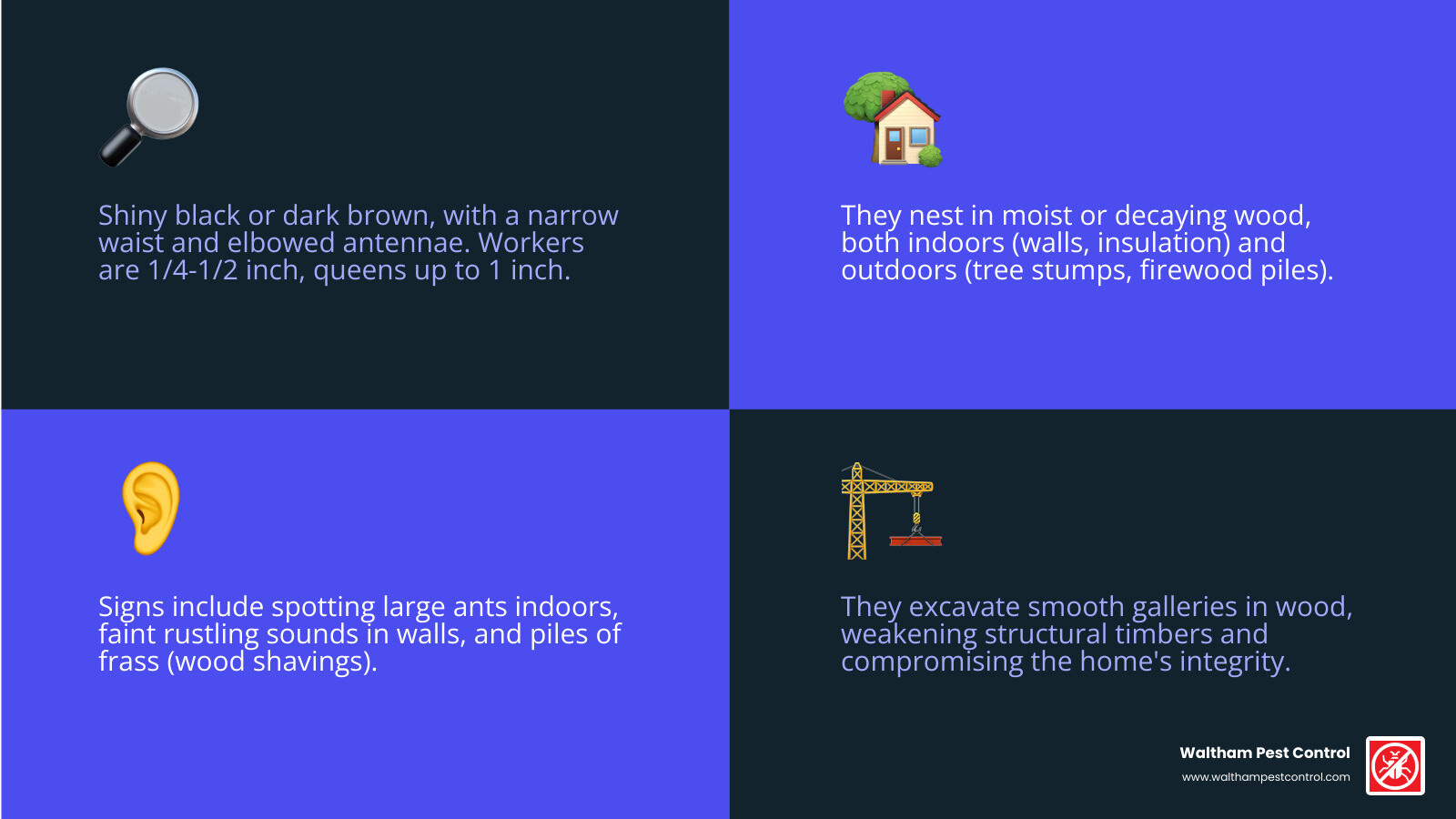
- Size: Workers range from 1/4 to 1/2 inch, queens up to 1 inch long
- Appearance: Shiny black or dark brown with a narrow waist
- Habitat: Nest in moist or decaying wood, both indoors and outdoors
- Damage: Create smooth galleries that weaken wooden structures
- Activity: Most active at night when temperatures exceed 50°F
- Colony Size: Can reach 50,000 or more ants in mature colonies
As the research shows, carpenter ants are the #1 wood-destroying pest in the Pacific Northwest and pose similar threats throughout New England. Unlike termites, these ants have a constricted waist and elbowed antennae, making proper identification crucial for effective treatment.
The presence of big carpenter ants often indicates underlying moisture problems in your home. They prefer to establish their parent colonies in damp, decaying wood but will extend their galleries into sound timber as the colony grows. This behavior can compromise the structural integrity of key support beams, window frames, and foundation elements.
I’m Waltham Pest Control, President & CEO of Waltham Pest Control, and in my 40+ years of experience in Eastern Massachusetts, I’ve seen how big carpenter ant infestations can escalate from minor nuisances to major structural threats when left untreated. Early identification and professional intervention are essential to protect your home’s value and safety.
Basic big carpenter ant glossary:
Identifying the Big Carpenter Ant: What to Look For
When it comes to identifying a big carpenter ant, size is certainly a key indicator. These are some of the largest ants you’ll encounter in North America. But size alone isn’t enough; we need to look closer at their distinct features to properly tell them apart from other insects, especially their wood-destroying counterparts, termites.
Key Physical Characteristics
Big carpenter ants (genus Camponotus) are truly impressive in their stature. Worker ants, the ones you’ll most commonly see foraging, typically measure between 1/4 and 1/2 inch in length. The queens, the colony’s reproductive backbone, are even larger, sometimes reaching up to 1 inch long. These large sizes make them quite conspicuous compared to many other ant species.
Their coloration can vary, but most commonly, you’ll find them to be dark shiny brown to black. Some species may also exhibit reddish-black hues. Regardless of color, they generally have a smooth, uniform appearance.
Beyond their size and color, several anatomical features help us identify a big carpenter ant:
- Constricted Waist: Perhaps the most defining characteristic is their distinctly constricted waist, which is a narrow segment connecting their thorax (middle body section) and abdomen (rear body section). This gives them a “cinched” look.
- Elbowed Antennae: Their antennae are bent or “elbowed” in the middle, resembling a small elbow.
- Three Body Segments: Like all insects, they have three clear body segments: a head, a thorax, and an abdomen.
- Polymorphic Workers: Within a single colony, you’ll observe workers of varying sizes. These are called minor, media, and major workers, each performing different tasks within the colony. This variation in size among workers is a hallmark of big carpenter ant colonies.
- Winged Reproductives (Swarmers): In the spring or early summer, you might encounter winged forms, known as swarmers or alates. These are the reproductive males and females that leave the parent colony to establish new ones. While they resemble workers in color and shape, they are larger, with queens reaching up to 3/4 inch and males slightly smaller.
Carpenter Ant vs. Termite: A Critical Distinction
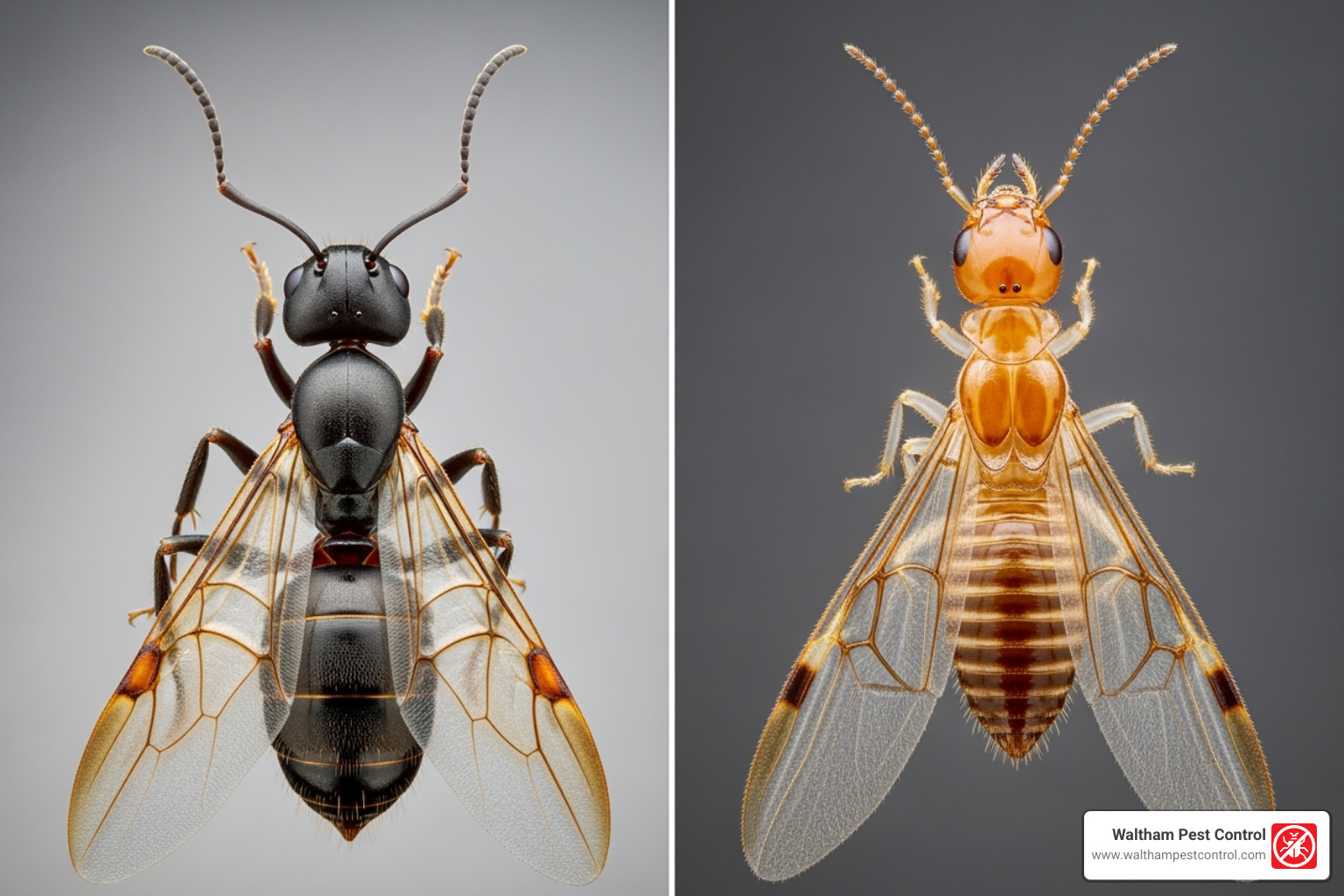
This is where keen observation really pays off. Both big carpenter ants and termites are wood-destroying pests, and both can produce winged swarmers, leading to frequent misidentifications. However, their physical differences are quite pronounced:
| Feature | Carpenter Ant | Termite |
|---|---|---|
| Antennae | Elbowed or bent | Straight, beaded, and not elbowed |
| Waist | Distinctly constricted, appearing “pinched” | Broad and uniform, not constricted |
| Wings | Front wings are longer than hind wings | Both front and hind wings are roughly equal in length |
| Color | Typically dark (black, reddish-black, dark brown) | Often pale, cream, or whitish (workers); dark (reproductives) |
| Wood Damage | Galleries are smooth, clean, and sandpapered in appearance, with no mud or soil. They excavate wood, but do not eat it. | Galleries are often mud-packed, rough, and ragged in appearance. They consume wood for cellulose. |
Understanding these distinctions is vital because the treatment methods for carpenter ants versus termites are entirely different. For more comprehensive information on termites, including how they operate and the damage they cause, we encourage you to visit our page on More info about termites.
Carpenter Ant Behavior and Habitat
Big carpenter ants are fascinating social insects with complex behaviors and specific habitat preferences that often bring them into conflict with human structures. Understanding where they live and what they do is crucial for effective management.
Where Do Carpenter Ants Build Their Nests?
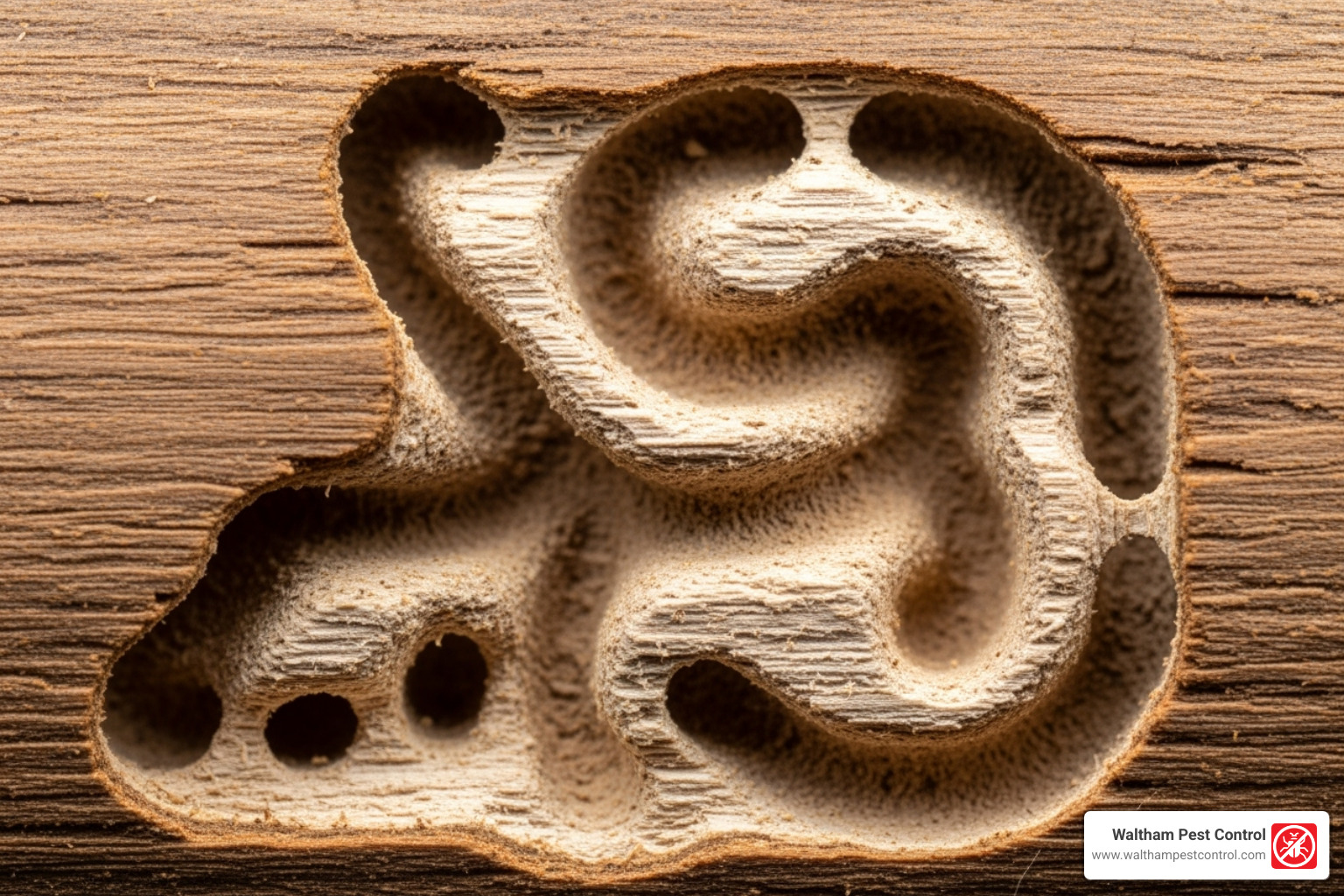
Big carpenter ants are notorious for nesting in wood, but it’s important to clarify: they don’t eat the wood. Instead, they excavate existing wood to create smooth tunnels and galleries where their colonies reside. Think of them as tiny, meticulous carpenters, carving out living spaces.
They have a particular fondness for moist or decaying wood because it’s easier to chew through. This preference often means that the presence of carpenter ants indicates an underlying moisture problem in your home or property.
Their colonies typically consist of a parent nest and one or more satellite nests:
- Parent Nests: These are the primary colonies where the queen, eggs, and young larvae are located. They require a consistent source of moisture to thrive, which is why they are almost always found in damp, decaying wood. Common outdoor locations for parent nests include:
- Dead or decaying trees, stumps, and logs
- Firewood piles stored directly on the ground or against a structure
- Rotting fence posts or utility poles
- Areas around leaky outdoor faucets or pipes
- Under decks or porches where wood stays consistently damp
- Satellite Nests: As a colony grows, workers will establish satellite nests. These nests do not contain the queen or eggs, only workers, mature larvae, and pupae. Satellite nests do not require the same level of moisture as parent nests, allowing them to be established in drier, sounder wood, often some distance from the parent colony. This is where they often become a problem for homeowners. Common indoor locations for satellite nests include:
- Wall voids, especially near plumbing leaks or moisture intrusion points
- Under insulation in attics, crawl spaces, or between ceiling joists
- Window and door frames that have experienced water damage
- Porch pillars, sills, girders, and joists
- Behind dishwashers, washing machines, or in bathrooms where moisture accumulates
- Hollow doors or structural timbers
- Areas around vents or where wires and pipes enter the house
- Any wood that has been softened by water damage, even if it’s no longer wet.
The big carpenter ant is active when average daily temperatures begin to rise above 45 to 50 degrees Fahrenheit. They are particularly active during the night, which is when you might observe them foraging. This nocturnal behavior can sometimes make it challenging to spot an infestation until it’s well-established.
If you’re seeing signs of carpenter ants inside your home, it’s crucial to understand their nesting habits. For a more detailed look at where these ants might be hiding in your house, we have a dedicated resource on More info about carpenter ants in houses.
What Do Carpenter Ants Eat?
A common misconception about big carpenter ants is that they eat wood. As we’ve clarified, they don’t! They simply excavate it to build their homes. So, what do they eat?
Carpenter ants are omnivores with a diverse diet, foraging for a wide variety of food sources. Their primary food sources include:
- Honeydew: This sugary liquid is secreted by aphids and other plant-sucking insects. Carpenter ants will often “farm” aphids, protecting them from predators in exchange for this sweet treat.
- Other Insects: They are predators and scavengers, feeding on both dead and living insects. This can include anything from small flies to other ants.
- Plant Juices and Secretions: They will consume sap from trees and other plant secretions.
- Human Food: Once they find their way into your home, they are opportunistic feeders and will readily consume many common household items. They have a particular fondness for:
- Sweets (sugars, syrups, honey, fruit, pastries)
- Fats (greasy foods, pet food)
- Proteins (meats, pet food)
Their diet is quite varied, and they are constantly foraging for these resources to feed their large colonies. This foraging behavior is often what brings them into contact with our homes. Interestingly, research has shown that carpenter ants have symbiotic bacteria (like Blochmannia) that aid in their nutrition, allowing them to extract maximum benefit from their diverse diet. You can learn more about their unique dietary needs and symbiotic relationships in this study on the Nutritional needs of carpenter ants.
Signs of an Infestation and Potential Damage
Detecting a big carpenter ant infestation early is paramount to preventing significant structural damage to your home. While these ants don’t eat wood, their tunneling activities can seriously compromise the integrity of wooden structures. Knowing what to look for can make all the difference.
Telltale Signs of a Big Carpenter Ant Infestation
It’s easy to dismiss a lone ant as an anomaly, but if you start noticing any of these signs, it’s time to pay attention:
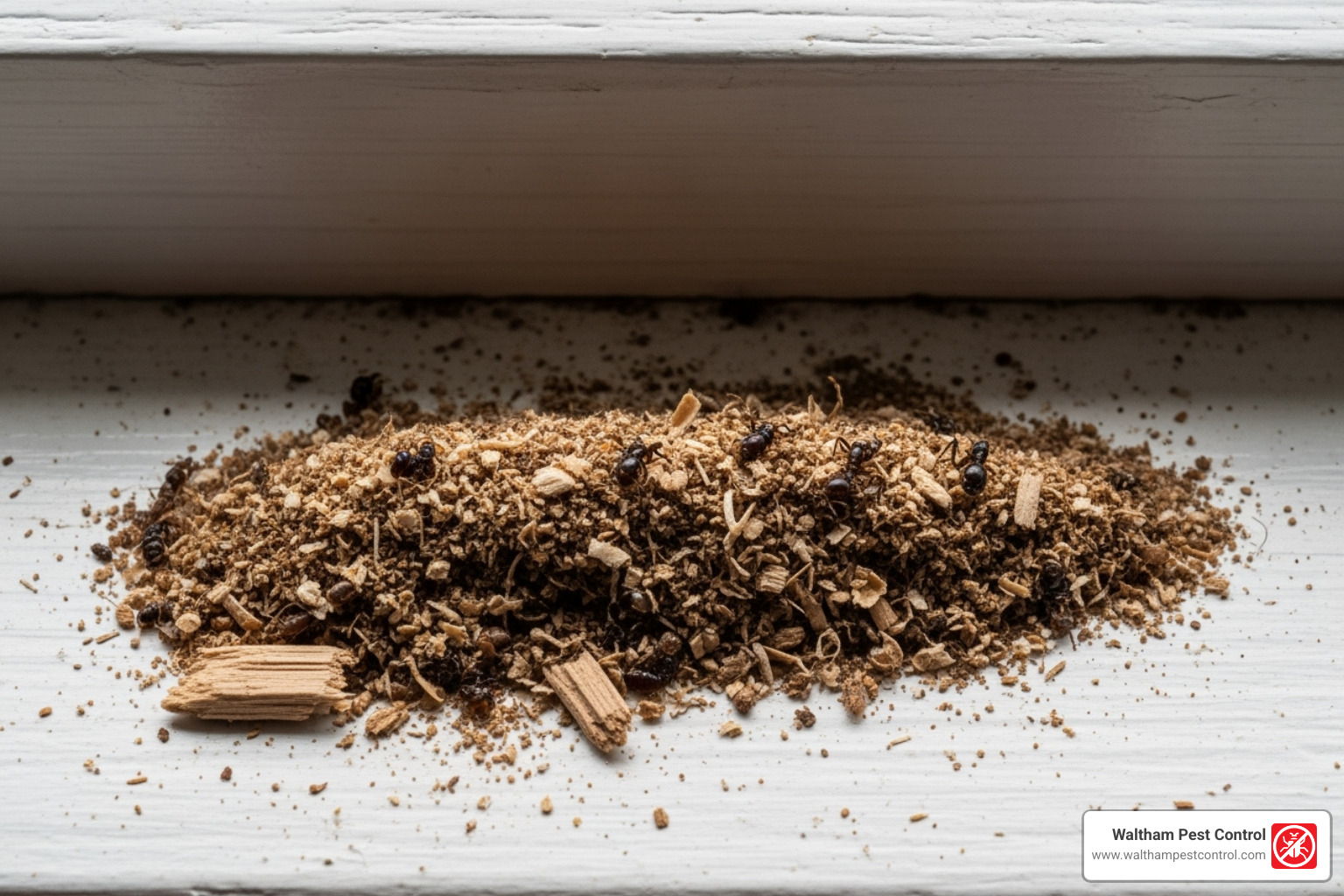
- Piles of Coarse Sawdust (Frass): This is one of the most definitive indicators. As carpenter ants excavate wood, they push out wood shavings, sawdust, and sometimes even dead insect parts or insulation fragments from their galleries. These piles, often described as looking like pencil shavings, accumulate near entry points of their nests, such as kick-out holes. You might find them along baseboards, beneath windowsills, or near doorframes.
- Spotting Large Ants Indoors: While a single foraging ant might just be a scout from an outdoor colony, consistently seeing large, dark ants, especially at night or in specific areas like bathrooms or kitchens, is a strong warning sign. The more frequently you see them, the higher the likelihood of an indoor nest.
- Hearing Sounds in Walls: Believe it or not, you might actually hear them! If you have a quiet home, especially at night, you might detect faint rustling, scratching, or crinkling sounds coming from within walls, ceilings, or wooden structures. This noise is the sound of the ants chewing and excavating wood.
- Finding Winged Swarmers Indoors: The appearance of winged reproductive ants (alates) inside your home, particularly in late spring or early summer, is a clear indication of a mature big carpenter ant colony nesting within your structure. These swarmers emerge to mate and establish new colonies. Finding them indoors, especially near windows (as they are attracted to light), means a nest is present.
- Finding Shed Wings: After their mating flight, winged reproductives shed their wings. Finding piles of discarded wings, often near windowsills, light fixtures, or vents, is another strong sign of an established indoor colony.
- Long Ant Trails on the Lawn: While not a direct sign of an indoor nest, observing long trails of big carpenter ants foraging across your lawn or driveway can indicate a strong outdoor colony nearby that could eventually send satellite nests or foragers into your home.
The Structural Damage They Cause
Unlike termites, which consume wood for cellulose, big carpenter ants simply excavate it. They create smooth, clean galleries within the wood, almost as if it’s been sandpapered. This distinction is important for identification but doesn’t lessen the severity of the damage.
As the colony grows, they expand these galleries, hollowing out more and more wood. While they prefer moist or decaying wood for their primary nests, they will extend their tunneling into sound, dry wood as the colony expands. Over time, this excavation weakens the structural integrity of the affected timbers. We’ve seen them compromise:
- Sills and Joists: Critical support structures in floors and foundations.
- Wall Studs: The framework behind your drywall.
- Window and Door Frames: Leading to warped frames and difficulty opening/closing.
- Porch and Deck Supports: Causing instability.
The extent of the damage depends on how long the infestation has gone unnoticed. Early detection is crucial. If left untreated, the continuous tunneling can lead to significant structural weakening, potentially causing costly repairs and even posing a safety risk. The damage is often concentrated in areas that have experienced moisture problems, as this is what initially attracts them. For more insights into how these pests can impact your home’s structure, refer to our guide on Carpenter Ants Protecting Your Home from Structural Damage.
Professional Control and Prevention Strategies
Dealing with a big carpenter ant infestation is not a task for the faint of heart, nor is it typically a DIY job. Their complex nesting habits, including the presence of multiple satellite colonies, make complete eradication challenging.
How to Get Rid of Carpenter Ants
The most crucial step in eliminating a carpenter ant infestation is locating all nests—both the primary parent colony and any satellite nests. This can be incredibly difficult, as nests might be hidden deep within wall voids, under floors, or in inaccessible areas of your home.
Once located, effective control involves:
- Direct Nest Treatment: Whenever possible, applying insecticides directly into the ant galleries is the most effective method. This often involves drilling small holes into infested wood or wall voids to inject dust formulations (like diatomaceous earth or boric acid) or liquid insecticides. These products are designed to reach the entire colony, including the queen.
- Baiting Systems: Baits are an excellent tool because foraging ants carry the toxic bait back to the colony, sharing it with other ants, including the queen and larvae. This leads to a domino effect that can eliminate the entire colony. Baits are particularly useful for reaching nests that are difficult to access directly.
- Targeted Insecticide Applications: Specific insecticide sprays or dusts can be applied to areas where ants are actively foraging, creating a barrier and helping to reduce the overall ant population. However, surface sprays alone are generally ineffective for eliminating the entire colony because they only kill the ants you see, not the hidden nest.
For serious infestations, we cannot overstate the importance of professional intervention. Our licensed and trained Pest Management Professionals at Waltham Pest Control have years of successful experience spotting the presence of carpenter ants, getting rid of carpenter ants, and protecting homes from re-infestation. We develop customized treatment plans based on a thorough inspection of your property, addressing both the current infestation and any conditions that might attract future pests. To learn more about our approach, visit How to Exterminate Carpenter Ants in House.
Preventing a Big Carpenter Ant Problem
Prevention is always the best defense when it comes to pests, and big carpenter ants are no exception. By taking proactive steps, you can significantly reduce the risk of these wood-destroying insects making themselves at home in your property:
- Moisture Control is Key: Since carpenter ants are drawn to damp, decaying wood, eliminating moisture sources is your number one priority.
- Repair any leaky pipes, faucets, or roofs immediately.
- Ensure proper drainage around your home’s foundation, so water flows away from the house.
- Maintain adequate ventilation in crawl spaces, attics, and basements to reduce humidity.
- Replace any water-damaged, decaying wood in or around your home.
- Trim Vegetation Away from Your Home: Keep trees, shrubs, and other plants trimmed so they don’t touch the siding or roof of your house. These can serve as “bridges” for ants to enter your home.
- Seal Cracks and Crevices: Inspect your home’s exterior and caulk any cracks or openings in the foundation, around windows and door frames, and where utility lines (pipes, wires) enter the house. Even small gaps can be entry points.
- Store Firewood Properly: Store firewood away from the house, preferably on a raised structure off the ground. Never bring firewood directly indoors unless you intend to burn it immediately, as it can harbor ants.
- Maintain Gutters: Keep gutters clean and free of debris to ensure proper water flow and prevent water from overflowing and saturating fascia boards or other wooden elements.
- Remove Debris and Old Stumps: Clear away any old tree stumps, logs, or wood debris from your yard, especially those close to your home. These are prime nesting sites for parent colonies.
- Use Pressure-Treated Wood: For any wooden structures that come into contact with the soil (e.g., deck posts, fence posts), use pressure-treated wood, which is more resistant to moisture and decay.
By implementing these preventative measures, you’re making your home less attractive and less accessible to big carpenter ants, helping to safeguard its structural integrity.
Frequently Asked Questions about Carpenter Ants
We receive many questions about big carpenter ants, and we’re happy to provide clear, straightforward answers based on our extensive experience and knowledge.
Are carpenter ants dangerous?
The good news is that big carpenter ants are not considered dangerous to humans in the same way that stinging insects like wasps or bees are. They do not sting. However, they can deliver a painful bite with their large jaws if they feel threatened or if their nest is disturbed. They also have the ability to spray formic acid from the tip of their abdomen, which can be irritating to the skin and eyes, especially if it gets into a fresh bite wound.
Their primary threat is not to human health, but to the structural integrity of your home. The damage they cause by excavating wood can weaken critical timbers over time, potentially leading to costly repairs. So, while they might not send you to the hospital, they can certainly cause a significant headache for your wallet and your home’s stability.
When are carpenter ants most active?
Big carpenter ants are creatures of habit, and their activity patterns are largely influenced by temperature and the colony’s life cycle.
- Seasonal Activity: You’ll typically see increased activity during the warmer months, from spring through summer and into early fall. They become consistently active when the average daily temperatures begin to rise above 45 to 50 degrees Fahrenheit. This is when they emerge from overwintering and begin their most intensive foraging and nesting activities.
- Daily Activity: Within their active season, they are primarily nocturnal. This means you are most likely to observe them foraging for food or engaging in nesting activities after dark. This is why a nighttime inspection with a flashlight can often reveal hidden trails or entry points that might be missed during the day.
- Swarming Season: In late spring or early summer, mature colonies produce winged reproductives (swarmers). These alates emerge from the nest for their “nuptial flight” to mate and establish new colonies. Seeing these winged ants indoors is a strong indicator of an established indoor nest.
Can you hear carpenter ants in your walls?
Yes, absolutely! It might sound like something out of a horror movie, but it’s entirely possible to hear big carpenter ants at work within your walls or wooden structures.
The sound is often described as a faint rustling, scratching, crinkling, or even a dry, papery sound. It’s the noise of the ants chewing and excavating wood as they expand their galleries. This sound is usually most audible in quiet environments, particularly at night when the house is still.
If you suspect carpenter ants and hear these subtle sounds, pressing your ear against the wall or using a stethoscope (or even an inverted water glass against the wall) can help you pinpoint the location of the nest. This auditory clue is a significant indicator of a hidden, active infestation and should prompt immediate investigation.
Protect Your Home from Carpenter Ants
Big carpenter ants are more than just a nuisance; they are a serious threat to the structural integrity of your home in Eastern Massachusetts. Their ability to tunnel extensively through wood, especially when attracted by moisture, can lead to significant and costly damage if left unaddressed. We’ve seen how an ignored carpenter ant problem can escalate from a few foraging ants to a full-blown structural crisis.
Early detection is key. If you’ve observed any of the signs we’ve discussed—frass, foraging ants, rustling sounds, or winged swarmers—it’s crucial to act promptly. Don’t underestimate these “big” problems; they demand a professional solution like the one our team provides.
With over 40 years of experience, our team at Waltham Pest Control brings licensed, insured, and cost-effective pest management solutions right to your doorstep. We understand the unique challenges that big carpenter ant infestations present in New England homes, and we’re committed to protecting your property. Our expertise allows us to accurately identify the scope of the problem, locate all nests, and implement targeted, effective treatments to eliminate the colony and prevent future re-infestations.
Your home is one of your most valuable assets. Let us help you protect it from the destructive power of big carpenter ants. Don’t wait for a small problem to become a monumental one.
Contact us for a professional pest inspection today, or visit our main site at www.walthampestcontrol.com to learn more about our comprehensive pest control services.
