

Best Way to Get Rid of Ants and Spiders: 7 Proven Solutions 2025
Why Massachusetts Homeowners Need Safe, Effective Pest Control Solutions
The best way to get rid of ants and spiders combines natural methods with targeted treatments that protect your family while eliminating unwanted pests. Here’s what works:
Top Natural Methods:
- Essential oils (peppermint, tea tree) sprayed at entry points
- Diatomaceous earth barriers around foundations
- Borax-sugar baits to eliminate entire ant colonies
- Vinegar solutions to disrupt pheromone trails
- Humane spider removal using jar-and-card technique
When to Call Professionals:
- Large infestations (3+ spiders daily or visible ant trails)
- Dangerous species identification needed
- Structural damage from carpenter ants
- Health concerns with children or pets
Spring brings increased pest activity as colonies expand and seek new food sources. Children exposed to indoor insecticides have a 47% higher risk of developing certain cancers, making natural solutions your safest first line of defense.
I’m Waltham Pest Control, and after 40+ years in pest control across Eastern Massachusetts, I’ve seen the best way to get rid of ants and spiders evolve toward safer, more effective integrated approaches.
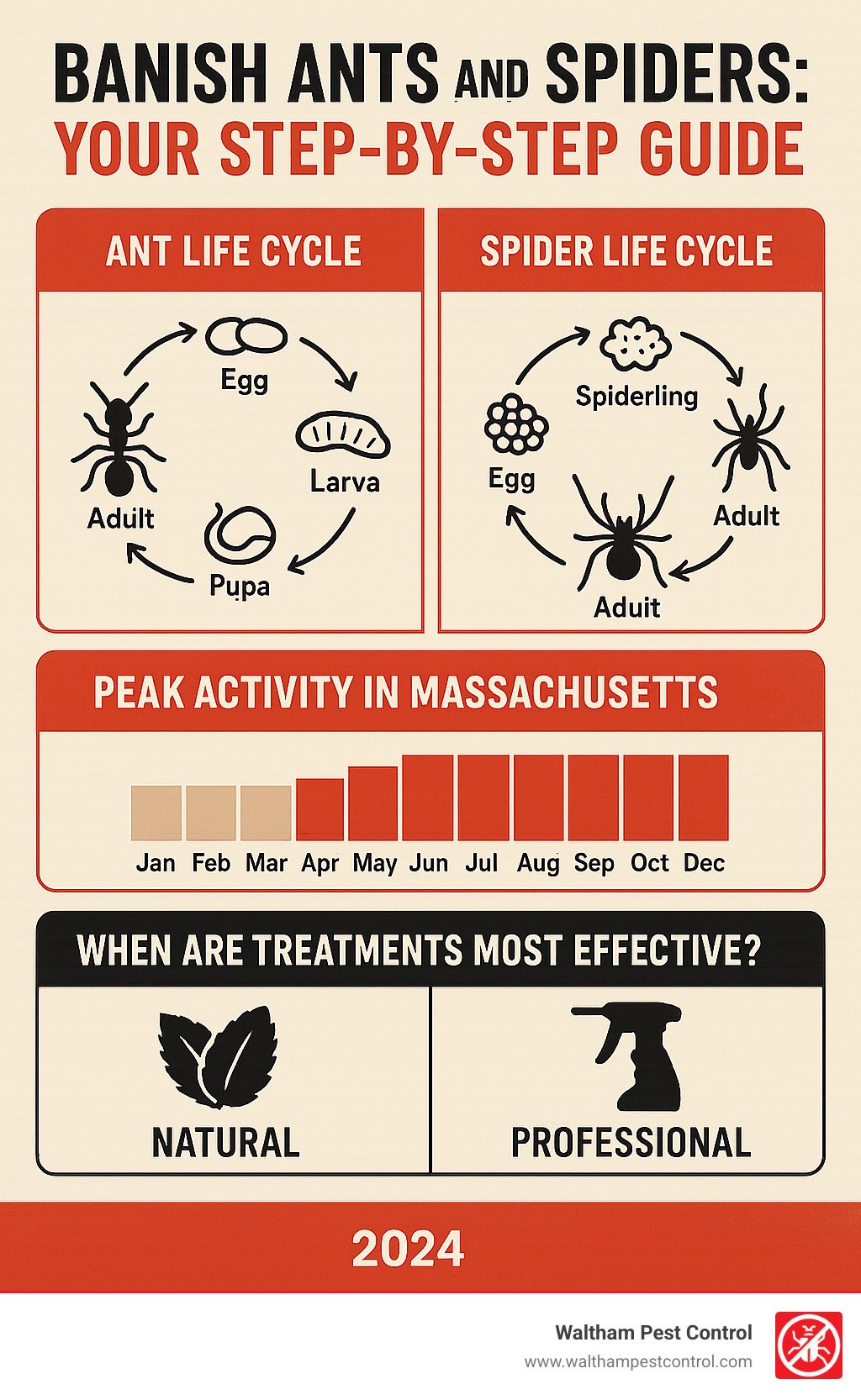
Best way to get rid of ants and spiders terms simplified:
Why Avoid Conventional Sprays & Go Natural First
Most commercial ant and spider sprays contain pyrethroids – synthetic chemicals that can disrupt your family’s neurological development and hormone systems. The EPA has classified bifenthrin, one of the most common pyrethroids, as a possible human carcinogen.
Piperonyl butoxide (PBO) is added to make pesticides more effective, but Duke University researchers found that children with higher PBO exposure showed increased behavioral problems and developmental delays.
Scientific research on indoor insecticide exposure from Harvard’s School of Public Health confirms serious health risks from indoor pesticide use, especially for children.
The smart approach? Start with non-toxic alternatives and Integrated Pest Management techniques.
Health Risks for Kids & Pets
Children exposed to insecticides inside their homes face a 47% higher risk of developing certain childhood cancers. Kids are vulnerable because their detoxification systems can’t handle chemical exposure like adults, plus they spend more time on floors where pesticide residues settle.
Your pets aren’t safe either. Dogs and cats absorb chemicals through their paw pads and ingest residues when grooming. We’ve seen pets develop respiratory problems after exposure to commercial sprays in poorly ventilated spaces.
Repelling vs Killing: Deciding the Best Way to Get Rid of Ants and Spiders
Most house spiders are actually beneficial – consuming hundreds of disease-carrying insects annually. For these allies, gentle relocation makes more sense than extermination.
Dangerous species like black widows or brown recluses require immediate removal for safety. The key is proper identification.
Ants present different challenges. Since they live in colonies, killing visible scouts provides only temporary relief. The best way to get rid of ants and spiders involves targeting entire ant colonies while using deterrents for beneficial spiders.
Best Way to Get Rid of Ants and Spiders Indoors: Step-By-Step
The best way to get rid of ants and spiders starts with understanding their behavior. Ants follow pheromone trails connecting nests to food sources, while spiders prefer quiet, undisturbed corners.
Success requires targeting the source, not just symptoms. Start by mapping ant trails and spider locations throughout your home.
Identify & Block Entry Points
Your home likely has more entry points than you realize. Focus on the foundation first – look for cracks where foundation meets walls. Check window and door frames, utility line entry points, and interior gaps around plumbing and electrical outlets.
Caulk works for hairline cracks, while larger openings need expanding foam or steel wool. This $30 investment delivers immediate results.
Target the Colony, Not Just Scouts
Killing visible ants while the queen lays 500 eggs daily won’t solve your problem. Borax-based baits work like a Trojan horse – worker ants carry the deadly mixture back to eliminate the entire colony.
Mix one part borax with three parts powdered sugar for sweet-loving species, or combine borax with peanut butter for protein-preferring ants. Place baits along established trails and resist cleaning for several days. Complete elimination takes 7-14 days.
For immediate relief, spray 3:1 vinegar-water solution on trails to disrupt pheromone highways.
Safe Spider Removal Techniques
Most spiders deserve relocation, not elimination. The jar-and-card method works perfectly – place a glass over the spider, slide cardboard underneath, flip and carry outside.
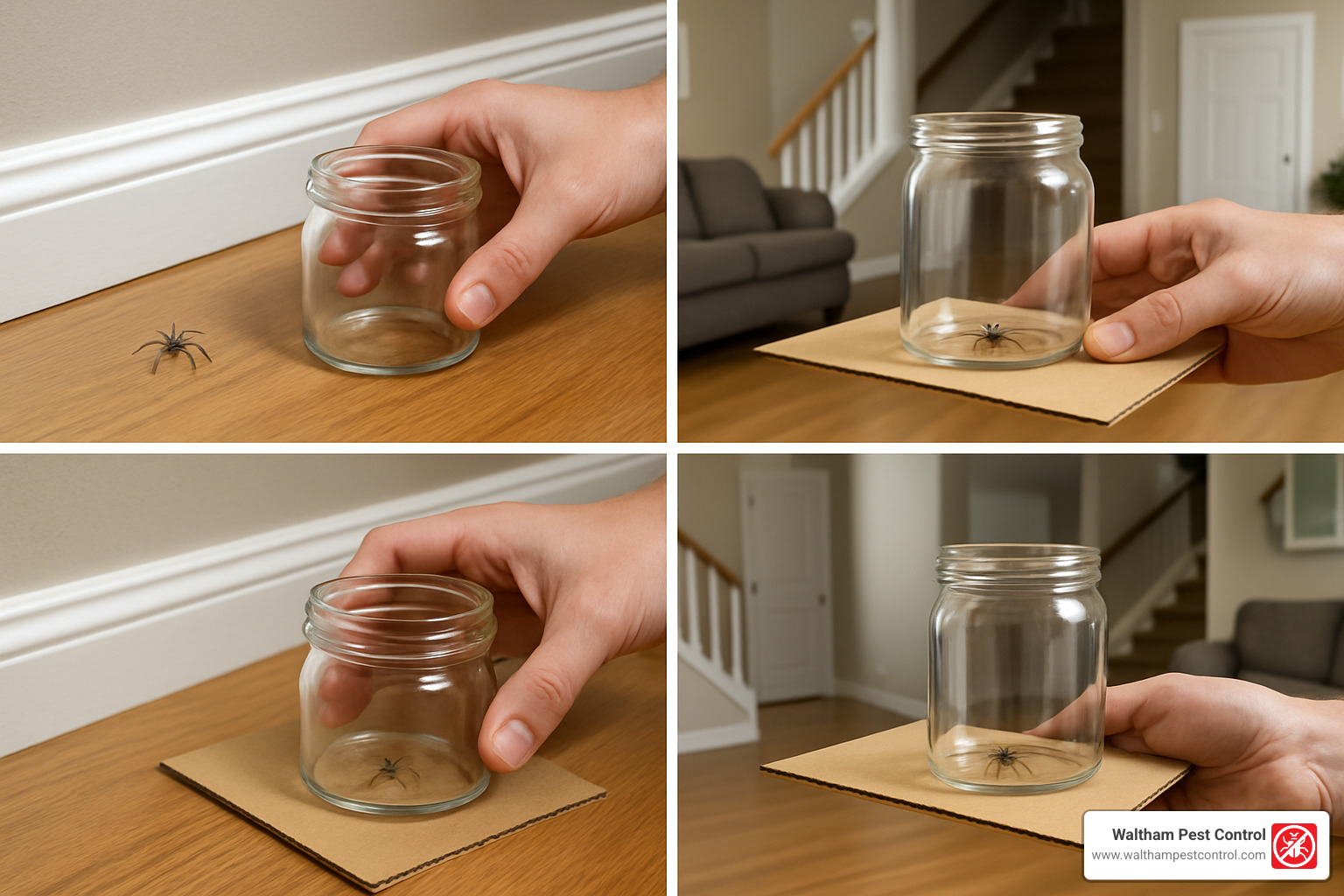
For hard-to-reach spots, use a low-suction handheld vacuum for gentle capture and outdoor release.
Essential oil deterrents create barriers spiders avoid. Mix 20 drops peppermint oil with 32 ounces water and spray around entry points.
Never handle potentially dangerous spiders yourself. Black widows and brown recluses require professional removal.
Reapplication Schedule
Essential oil sprays need refreshing every 3-4 days. Diatomaceous earth requires reapplication after cleaning or rain. Vinegar solutions need daily application during active infestations, then weekly maintenance. Borax baits should be replaced when consumed or after two weeks.
For comprehensive strategies, visit our Ants Exterminator and Pest: Spiders pages.
Outdoor Control & Yard-Smart Prevention
The best way to get rid of ants and spiders starts outside. Creating barriers around your property stops pests before they reach your door.
Diatomaceous earth creates an effective perimeter when sprinkled 2-3 feet wide around your foundation. Reapply after rain.
Peppermint plants near entry points smell great to humans but repel pests. Yellow lighting attracts fewer insects than bright white lights, reducing spider food sources.
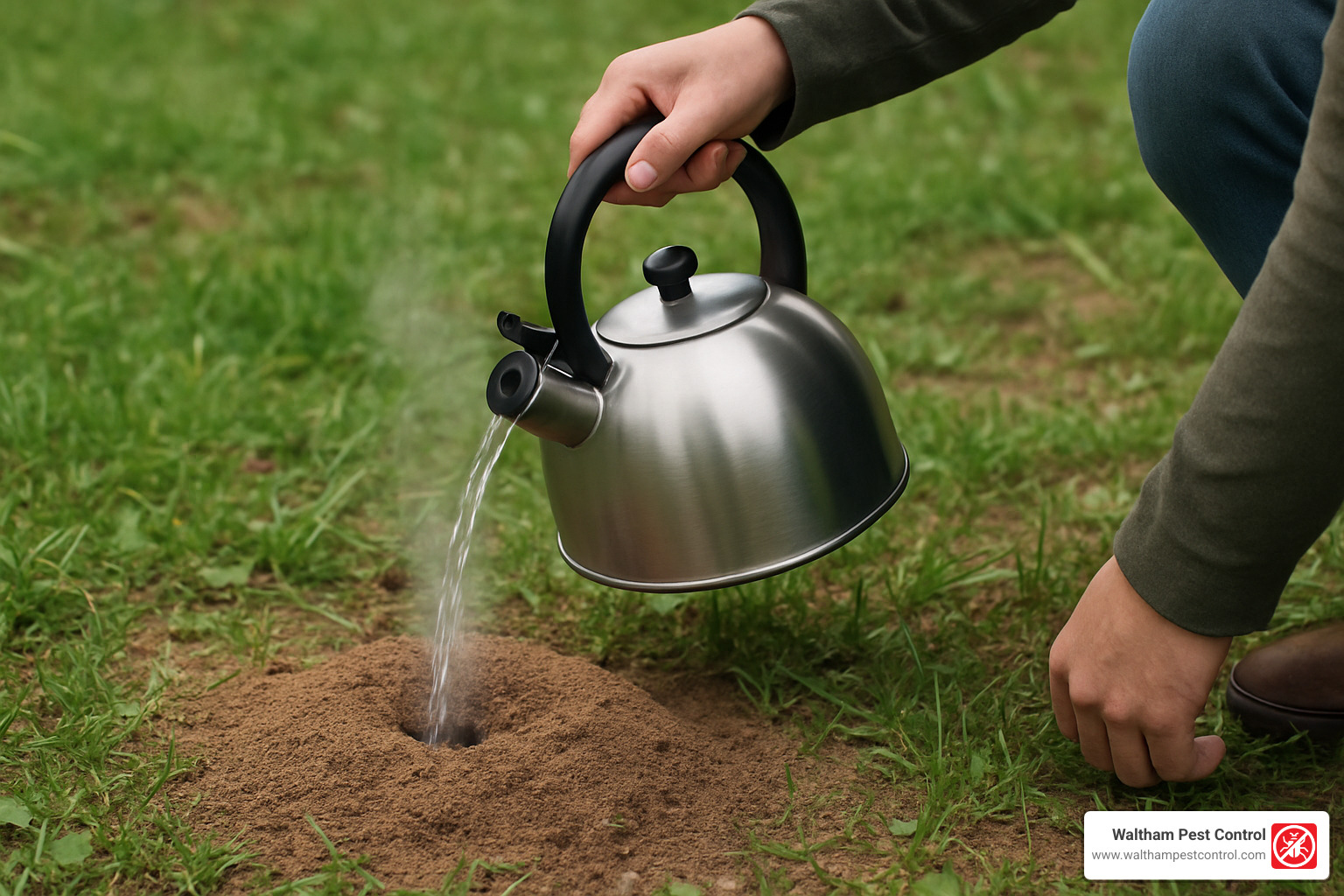
Boiling water poured directly into ant mounds delivers instant results. Saturate the soil to reach underground chambers.
For comprehensive outdoor management, check our Ant Control Outside House services.
Garden-Safe Methods
Neem oil disrupts pest reproduction without harming beneficial insects. Apply during early morning or evening when pollinators are less active.
Lavender, rosemary, and sage create natural pest-repelling borders while attracting beneficial predators. Scientific research on plant-based repellents confirms these herbs’ effectiveness.
Lawn & Structure Maintenance
Trim vegetation touching your home – maintain 2-foot clearance from foundation. Store firewood 20 feet from home and 6 inches off ground. Clean gutters regularly to eliminate standing water that attracts pests. Control foundation moisture through proper drainage.
Long-Term Home Maintenance & Cleaning Checklist
The best way to get rid of ants and spiders requires consistent maintenance. Small daily actions create environments where pests don’t want to live.
Daily habits make the biggest impact. Wipe counters with vinegar solution (equal parts vinegar and water) to remove food residues and scent trails. Transfer opened food packages to airtight containers immediately.
Weekly attention to forgotten spaces pays dividends. Vacuum corners and baseboards where spiders hide. Empty and rinse trash bins regularly – sticky residues attract ants.
Monthly deep-cleaning keeps you ahead of seasonal pest cycles. Focus on kitchen and pantry areas, vacuum storage spaces, and refresh diatomaceous earth barriers.
For comprehensive prevention, see our guide House Ants: How to Prevent Them and How to Treat Them.
Monitoring & Re-inspection Schedule
Monthly visual checks provide early warning. Walk around interior and exterior, documenting any activity. Seasonal inspections align with pest behavior – spring focuses on entry points, summer emphasizes moisture control, fall seals gaps before winter invasions.
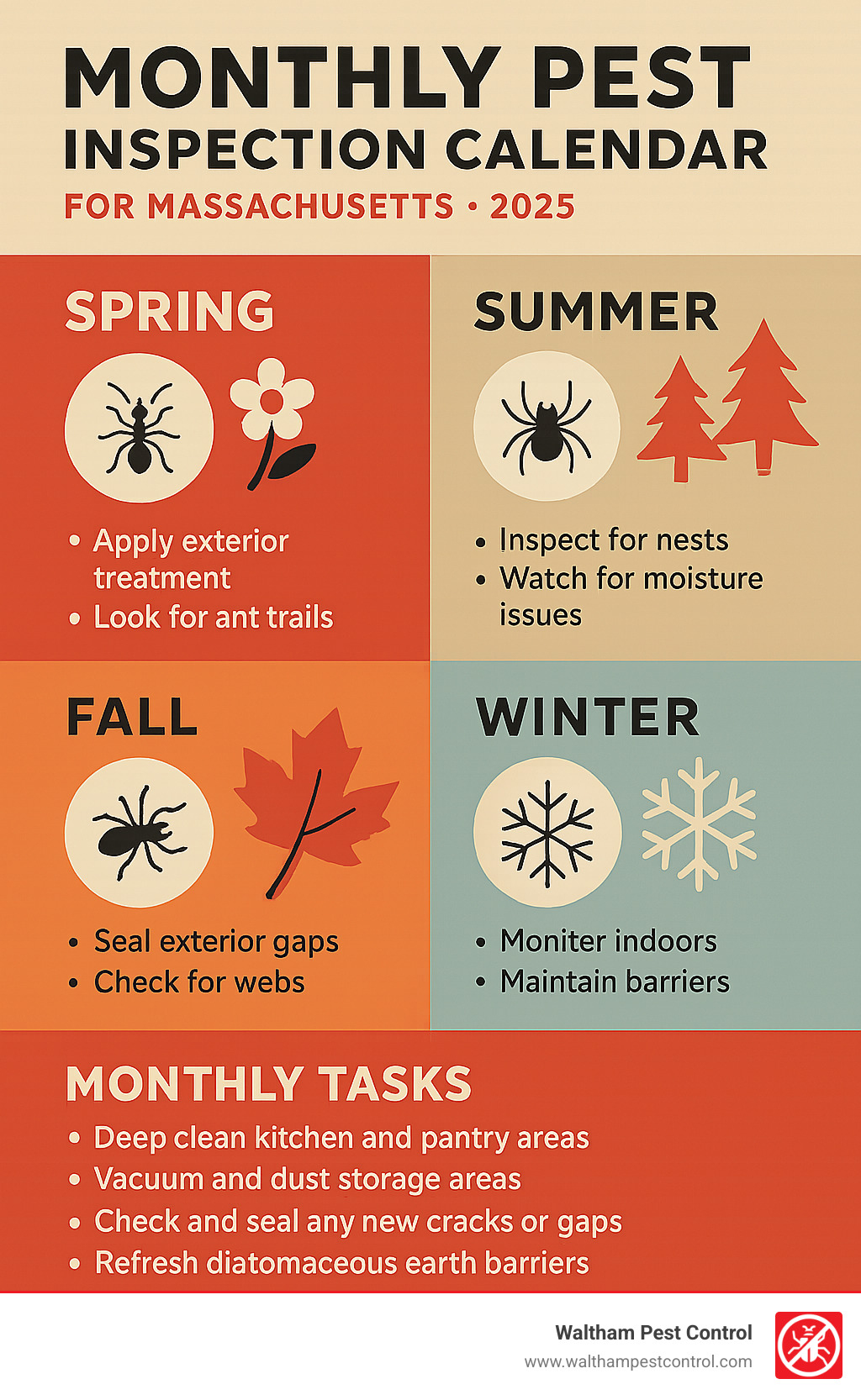
Keeping a simple pest log reveals patterns and guides treatment timing. Professional inspections complement your monitoring by catching issues you might miss.
When DIY Isn’t Enough: Professional Help & Average Costs
Sometimes natural methods aren’t sufficient for large or dangerous infestations. Knowing when to call professionals protects your family and prevents minor issues from becoming major problems.
Large infestations (3+ spiders daily or multiple ant trails despite treatment) indicate populations beyond DIY control. Dangerous spider identification, carpenter ant structural damage, and health concerns with sensitive family members warrant professional intervention.
Based on internet research across Eastern Massachusetts, average costs vary significantly. One-time treatments typically range from $300 to $1,200, while quarterly programs average $100 to $400 per visit. These represent general market estimates and don’t reflect our specific pricing.
| Treatment Type | DIY Cost Range | Professional Cost Range | Key Differences |
|---|---|---|---|
| Basic ant control | $20-50 | $300-900 | Complete colony elimination |
| Spider removal | $10-30 | $200-700 | Species identification |
| Quarterly maintenance | $15-40 | $100-400 | Professional monitoring |
| Emergency service | $5-15 | $400-1,200 | Immediate guaranteed results |
Our Comprehensive Pest Control services address complex infestations requiring integrated approaches. Professional treatment often proves more economical than repeated DIY attempts and provides guaranteed results with ongoing support.
Frequently Asked Questions about Ant & Spider Control
Do natural repellents really work?
Natural repellents absolutely work but require different application than synthetic pesticides. Essential oils like peppermint and tea tree contain compounds that disrupt insect navigation. The EPA classifies oil of lemon eucalyptus as a biopesticide due to proven repelling properties.
The difference is persistence – natural repellents need refreshing every few days versus weeks for synthetics. This allows better monitoring and strategy adjustment. Diatomaceous earth provides reliable physical control that pests can’t develop resistance to.
How can I tell if a spider is dangerous?
Black widows have shiny black bodies with red hourglass markings, preferring dark, undisturbed areas. Their bites cause severe pain requiring medical attention.
Brown recluses are light to dark brown with violin-shaped back markings and six eyes (not eight). They prefer warm, dry environments and their bites can cause tissue damage.
Everything else – house spiders, cellar spiders, garden spiders – may look intimidating but are beneficial pest controllers. When in doubt, capture safely and contact us for identification.
Will ants return after the colony is gone?
Ant colonies extend 2-3 feet underground and are remarkably resilient. Complete elimination is challenging, but proper treatment dramatically reduces re-infestation likelihood.
Success requires eliminating the queen while removing pheromone trails. Combined with environmental modifications – sealing entry points, controlling moisture, maintaining sanitation – most treated colonies don’t return to the same location. Ants are opportunistic and will establish where conditions are most favorable.
Conclusion
Finding the best way to get rid of ants and spiders doesn’t mean choosing between effectiveness and safety. Natural methods deliver outstanding results when applied consistently.
Eco-friendly pest control is smart pest control. Combining essential oil barriers with targeted baits and proper sanitation creates comprehensive defense systems protecting both home and family.
Yes, natural methods require patience, but families using these approaches often see better long-term results by addressing root causes, not just symptoms.
Regular maintenance makes all the difference. Monthly inspections and seasonal treatments prevent major infestations – it’s easier to seal cracks and refresh peppermint oil than deal with established colonies later.
Sometimes DIY methods reach their limits. Professional expertise becomes invaluable for dangerous spiders, structural damage, or persistent infestations. Starting with natural approaches builds foundations that make future professional treatments more effective.
For comprehensive, family-safe pest control solutions customized to your situation, visit our Home Pest Control Solutions page. Contact the experts at Waltham Pest Control today – we’re here to help you create a safe, comfortable home environment your family can truly enjoy.
