
Raccoon in Roof: 5 Crucial Steps to Help!
Why a Raccoon in Roof is a Serious Problem That Needs Immediate Action
A raccoon in roof is more than an annoyance; it’s a serious threat to your home’s structure and your family’s health. Here’s what you need to know:
Signs You Have a Raccoon Problem:
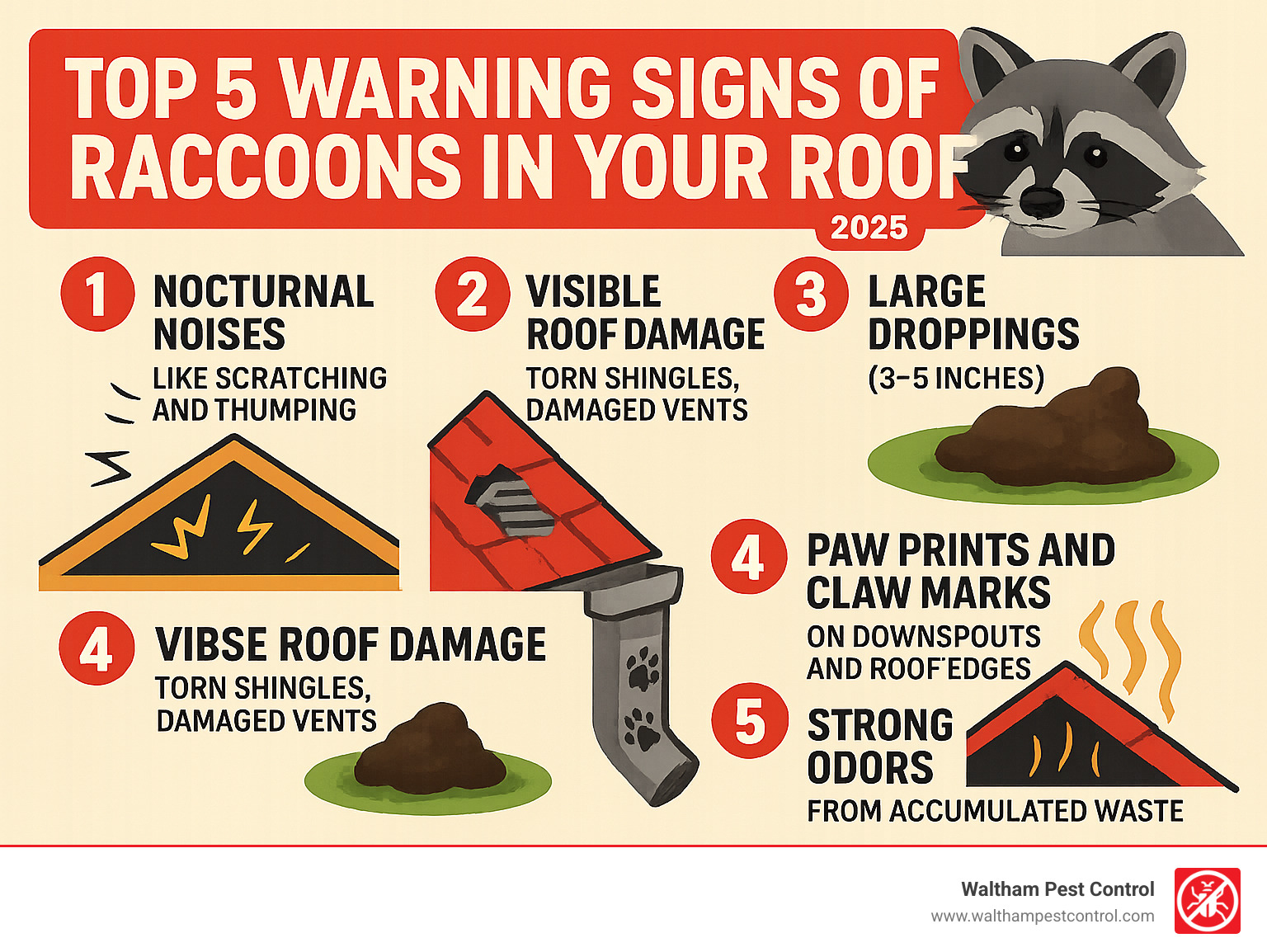
- Nocturnal scratching, thumping, or chittering sounds from your attic or ceiling
- Visible roof damage like torn shingles, damaged soffits, or holes in vents
- Large droppings (3-5 inches) on your roof or around your property
- Paw prints or claw marks on downspouts, trees, or roof edges
Immediate Health Risks:
- 80% of raccoon droppings contain roundworm eggs that can cause serious illness in humans
- Contaminated insulation and air ducts spread dangerous bacteria
- Structural damage from chewed wires creates fire hazards
What to Do:
- Don’t attempt DIY removal – mother raccoons are aggressive when protecting babies
- Call a licensed professional immediately for safe, humane removal
- Document damage for potential insurance claims
Delaying action allows raccoons to tear through roofing, destroy insulation, and create entry points for water damage and mold.
I’m Waltham Pest Control, President & CEO of Waltham Pest Control. In my 40+ years of experience, I’ve seen minor raccoon in roof problems escalate into thousands of dollars in damage due to delayed action. Acting fast is key to protecting your property and family.
Raccoon in roof terms to learn:
Signs of Raccoons and The Damage They Cause
When you have a raccoon in roof situation, the evidence is often hiding in plain sight. The damage these animals cause can escalate quickly from a minor annoyance to a major home repair nightmare.
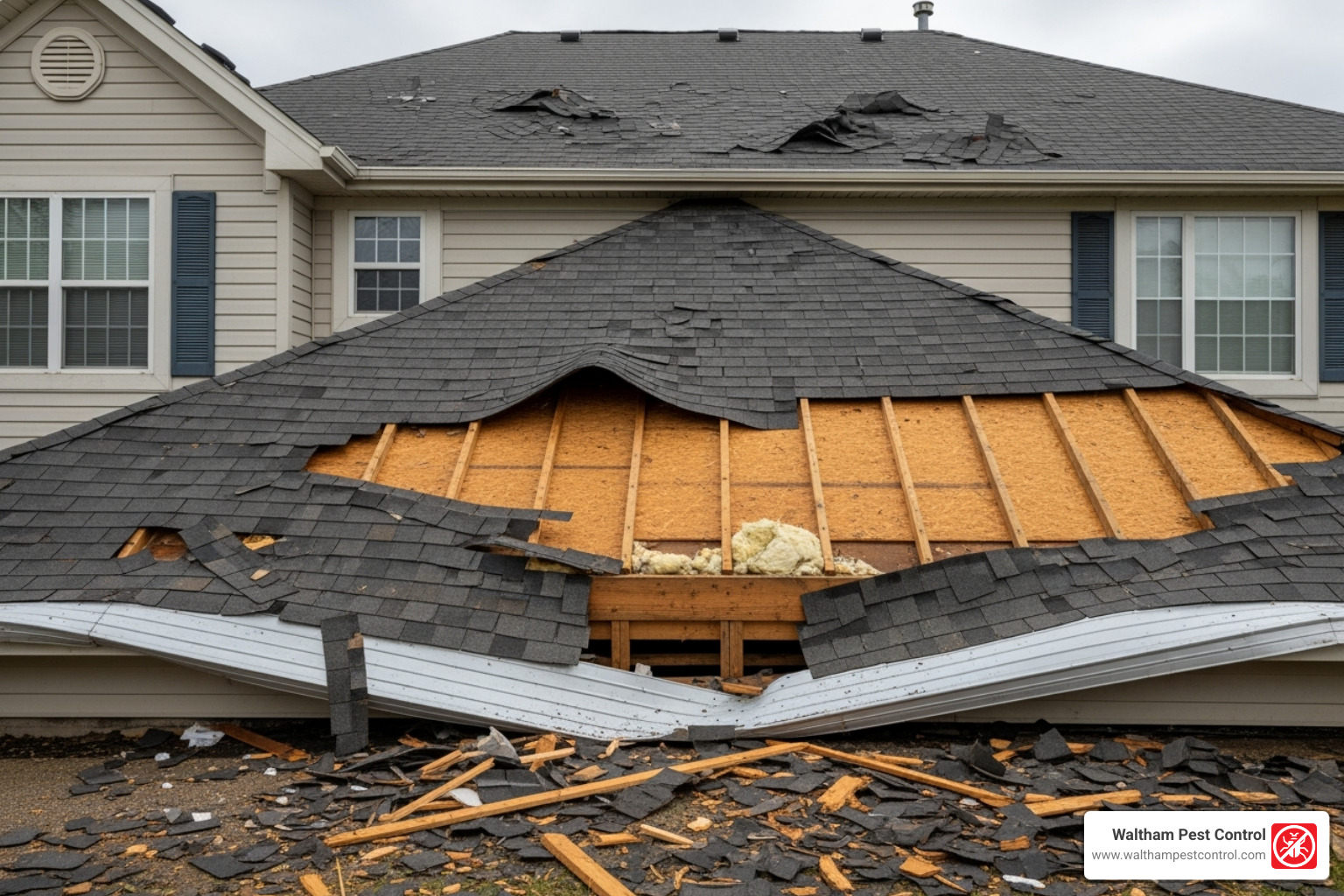
The first clue is often nighttime noise. Thumping sounds, scratching, and distinctive chittering or growling from your attic are classic signs of raccoon activity. But raccoons don’t just make noise; they tear your house apart. Look for damaged shingles, which their strong paws can easily rip. Torn fascia or soffits are another giveaway, as raccoons will enlarge these areas to create entry points.
Damaged roof vents are particularly common because they offer easy access to your attic. Female raccoons especially love these spots when looking for a secure place to raise their young. Once inside, you’ll likely find footprints on your roof—those distinctive, hand-like paw prints.
Perhaps the most concerning evidence is raccoon droppings, often found in communal “latrines.” These 3- to 5-inch droppings accumulate quickly, and their acidic waste damages roofing materials, creating both health and structural hazards. You might also notice strong odors from waste, electrical issues from chewed wires, or moisture stains on your ceiling from new holes in your roof.
The reality is that raccoons are incredibly destructive. They don’t just find entry points; they create them. Are Raccoons Dangerous? The answer is absolutely yes—both to your home and your health.
The Serious Health Risks from a Raccoon in Your Attic
Having raccoons in your attic is a serious health emergency. The dangers from raccoon feces alone require immediate action.
Here’s a sobering fact: 80% of raccoon droppings contain roundworm eggs. This parasite, raccoon roundworm (Baylisascaris procyonis), can cause severe illness in humans, including blindness or brain damage. The microscopic eggs are resilient and can survive in your attic for years.
Rabies is another major concern. Raccoons account for nearly 30% of wild animal rabies cases in the United States. A rabid raccoon doesn’t always show obvious symptoms, and their curious nature can bring them into close contact with humans and pets.
Other health risks include Leptospirosis, which spreads through urine and can cause kidney damage, and parasites like giardia. Bacteria from their waste can enter your home’s air circulation system through damaged ducts and contaminated insulation.
Beyond diseases, raccoons also carry fleas and ticks into your home. The contamination risk is significant, as their waste and urine soak into insulation, drywall, and HVAC systems, spreading pathogens. This requires professional biohazard cleanup to protect your family’s health. Every day you delay, these health risks multiply.
How Raccoons Access Your Roof and How to Prevent It
Understanding how these clever creatures get onto your roof is the first step in preventing a raccoon in roof problem. After four decades in pest control, I can tell you that raccoons are far more resourceful than most homeowners realize.
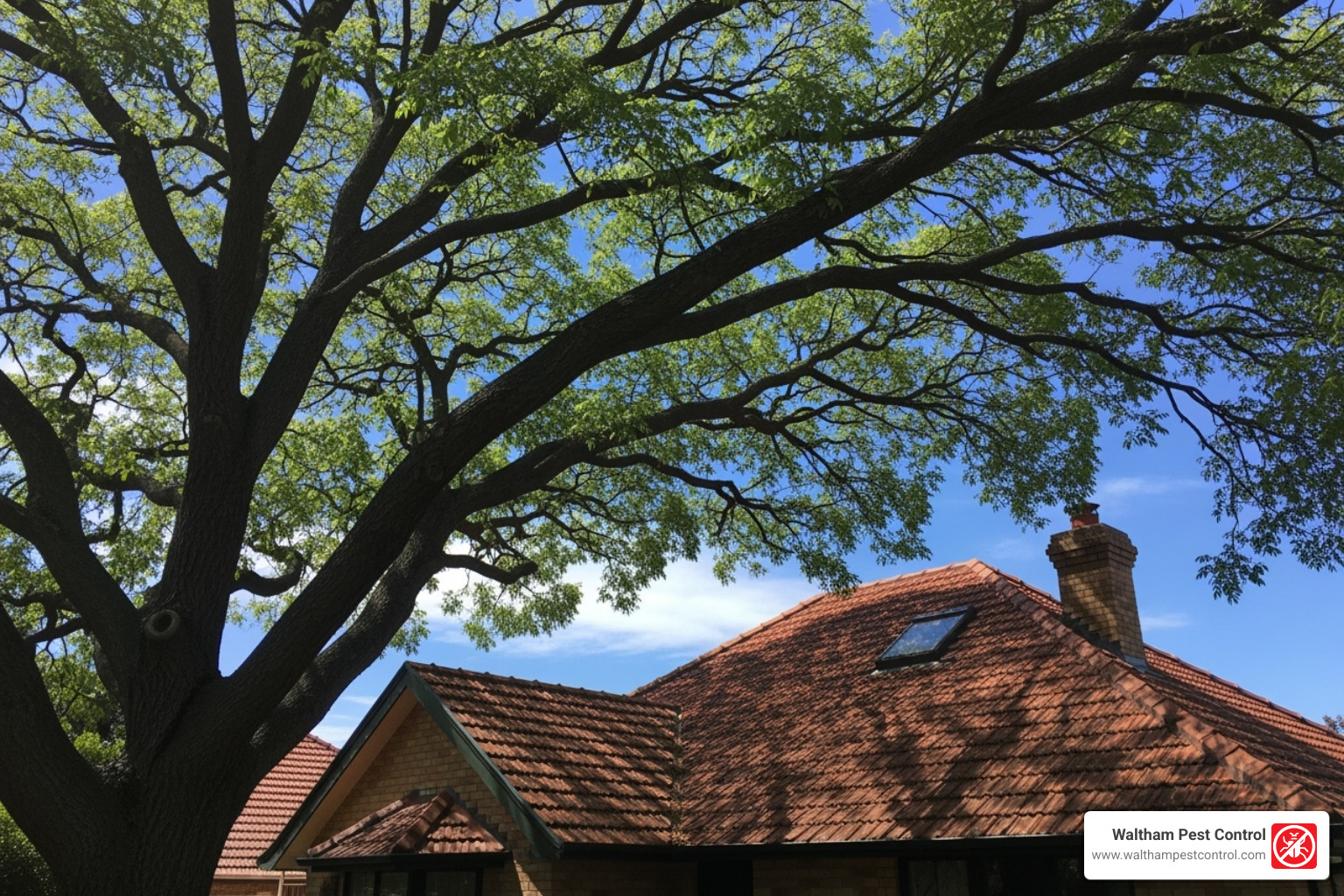
The most common route to your roof is overhanging tree branches. Raccoons use them as bridges to hop onto the roofline. But trees aren’t their only route. As excellent climbers, they can scale downspouts, brick walls, and wood siding with ease. Fences near your home can also serve as launching pads to reach lower sections of your roof.
Once on the roof, they seek entry points. Uncapped chimneys are an open invitation. Damaged roof vents are another favorite target, as their flimsy covers don’t stand a chance against determined paws. The real trouble starts when raccoons find gaps in your eaves or soffits. Any loose or damaged section becomes a potential doorway they will chew or pull apart to enlarge.
Once they’ve established access, the damage escalates quickly. These aren’t passive visitors; they actively modify your home’s structure.
Proactive Prevention: Keeping Raccoons Off Your Roof
Preventing a raccoon in roof problem is easier and cheaper than dealing with an infestation. Effective prevention focuses on eliminating access routes and attractions.
- Tree trimming is the top prevention method. Keep branches at least 6 to 8 feet from your roofline to eliminate their easiest pathway.
- Chimney caps are a game-changer. A sturdy, animal-proof metal cap blocks one of their favorite entry points.
- Securing your trash cans with tight-fitting, locking lids removes a major food source. Never leave trash bags out overnight.
- Remove other food sources like pet food left outside, bird feeders, and fallen fruit. If you feed pets outdoors, bring the bowls inside at night.
- Install metal flashing on corners and roof edges to make climbing more difficult.
- Conduct regular roof inspections to spot and seal potential entry points before raccoons find them. Seal gaps with durable materials like galvanized welded wire or quarter-inch hardware cloth.
Think like a raccoon: if an opening seems big enough for its head, a raccoon can likely squeeze its entire body through.
For homeowners dealing with other wildlife issues, we also offer comprehensive Bird Control services as part of our wildlife exclusion expertise.
Taking these proactive steps now can save you thousands of dollars and countless headaches down the road.
Your Guide to Dealing with a Raccoon in Roof
Once you’ve confirmed a raccoon in roof situation, your first instinct might be to handle it yourself. Please don’t. Raccoon removal is not a DIY project for several critical reasons.
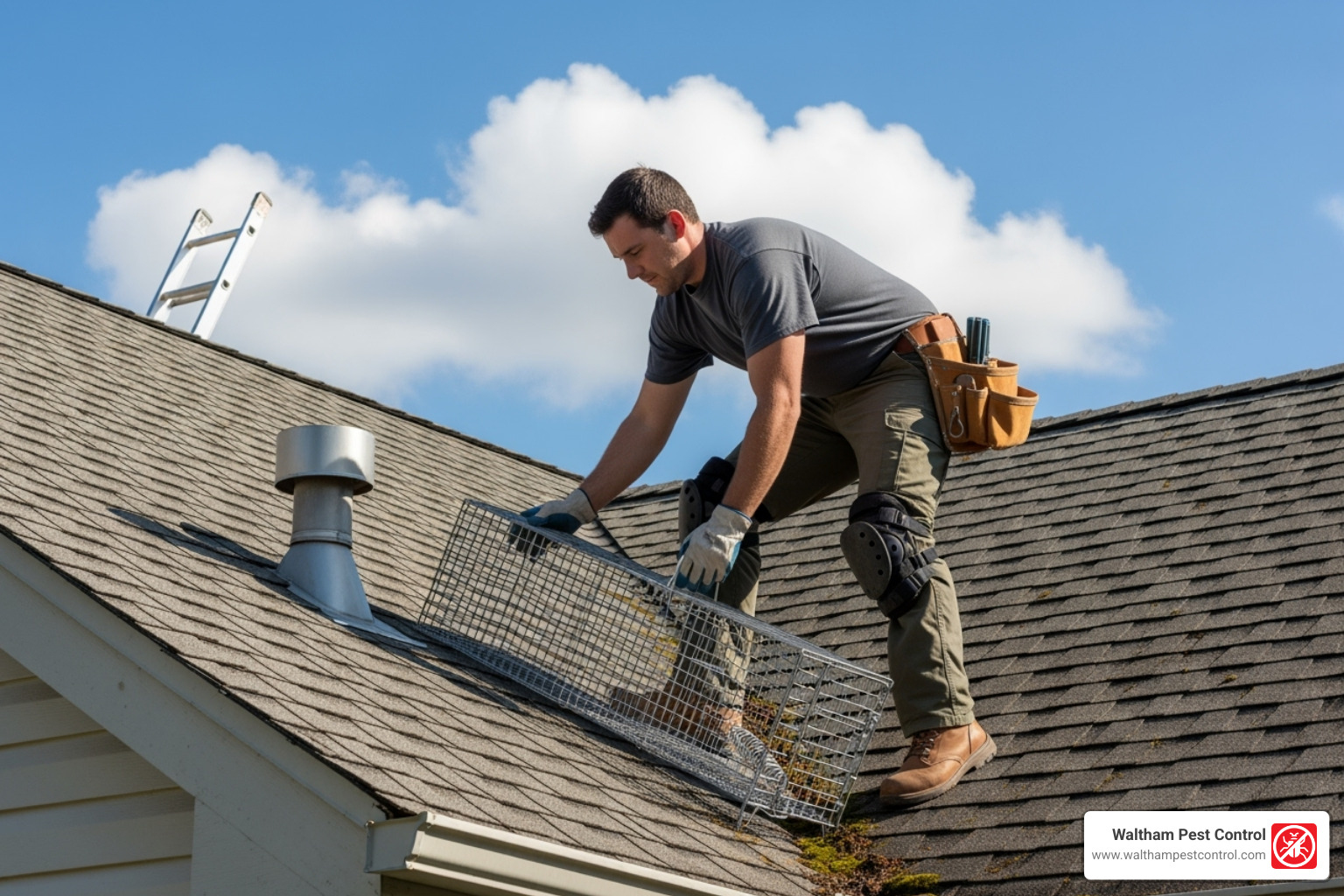
- Safety Risks: Raccoons are dangerous when cornered, especially a mother protecting her young. A bite or scratch puts you at risk for rabies, roundworm, and other serious diseases.
- Presence of Babies: From January through May, there’s a high chance a female raccoon has babies. Removing the mother alone will lead to starving young dying in your walls, creating terrible odors and more health hazards. Safely removing an entire family requires professional knowledge.
- Trapping Complexities: Raccoons are intelligent and can learn to avoid traps. Proper trap placement, anchoring on a roof, and frequent monitoring are essential for safety and humane treatment. Getting this wrong is both inhumane and potentially illegal.
- Legal Considerations: Massachusetts has strict laws for trapping wildlife. Without proper licenses, you can face significant fines. Relocating raccoons is often prohibited due to rabies concerns.
When to call a professional is simple: immediately. The longer you wait, the more damage occurs. At Waltham Pest Control, we have over 40 years of experience handling raccoon in roof situations safely and legally. For details, visit our Trapping Raccoons in Attic page.
Legal and Humane Removal of a Raccoon in Roof
Dealing with a raccoon in roof requires legal and humane methods. Massachusetts has specific wildlife removal regulations that require professional expertise.
- State Wildlife Laws: These regulations require proper licensing for anyone trapping raccoons. Our team maintains all necessary licenses for Eastern Massachusetts.
- Trapping Regulations: We use humane live traps that meet state standards, position them safely, and check them frequently to minimize stress on the animals, as legally required.
- Relocation Restrictions: Due to rabies concerns, Massachusetts often prohibits relocating trapped raccoons, meaning euthanasia may be legally mandated to protect public health.
- Humane Methods: Despite restrictions, humane methods are our priority. We work to keep families together and use exclusion techniques to encourage raccoons to leave voluntarily whenever possible.
Our goal is resolving your raccoon in roof problem while minimizing harm. For more on our ethical approach, visit our Humane Raccoon Control page.
After the Eviction: Cleanup, Repair, and Insurance
Successfully removing a raccoon in roof is just the first step. The cleanup, repair, and insurance process is equally critical and often more complex than homeowners expect.
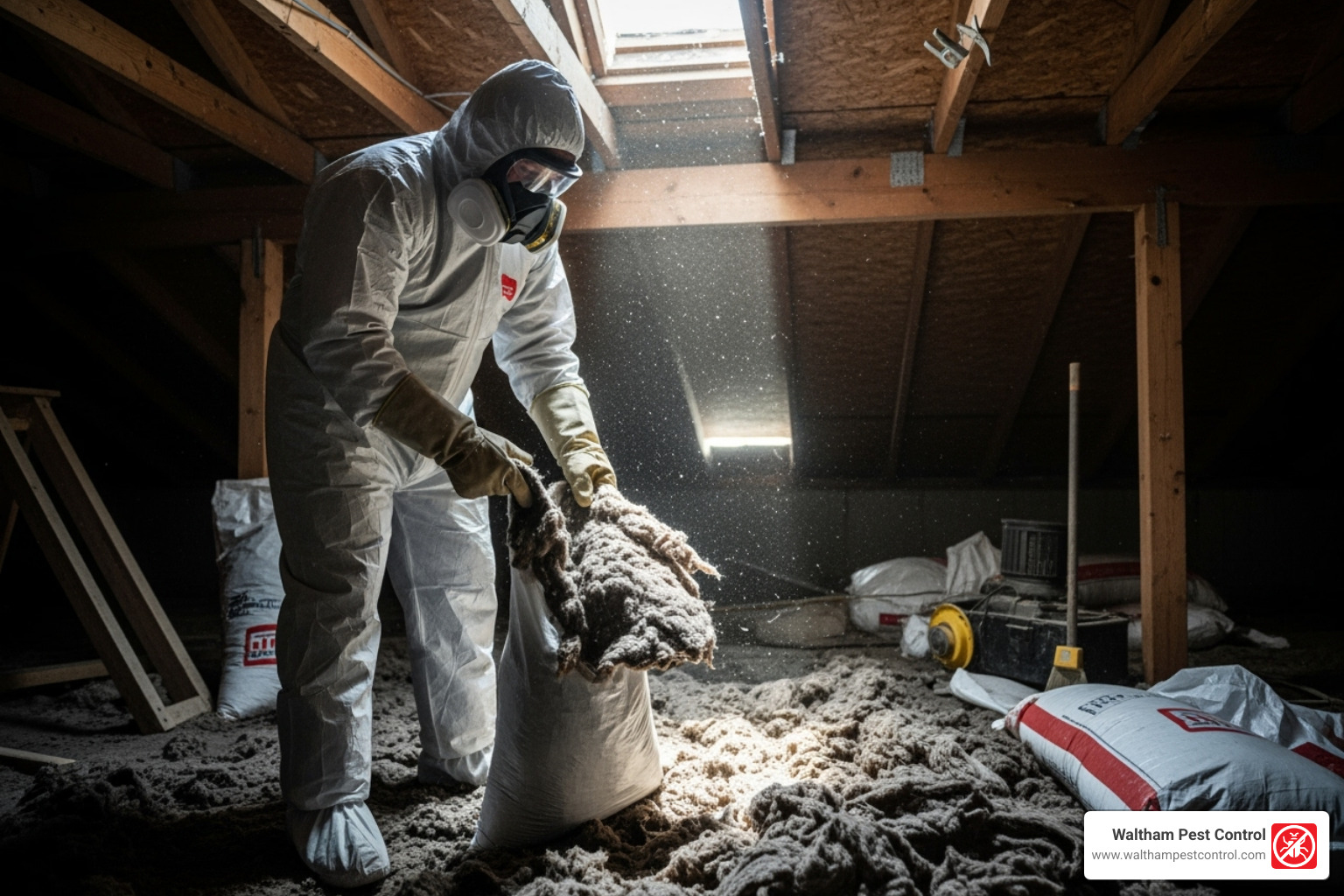
Raccoons leave behind significant contamination that requires professional biohazard cleanup—a task no homeowner should attempt. Our technicians use full protective gear, including respirators and gloves, because raccoon waste contains dangerous airborne pathogens.
Disposing of contaminated materials can be expensive. Raccoons destroy insulation with urine and droppings, creating toxic zones. All contaminated materials, including soiled wood, must be removed and disposed of as hazardous waste. After removal, the deodorizing and sanitizing phase is crucial to eliminate scent markers that attract other raccoons and to kill lingering bacteria and any fleas and ticks left behind.
Repairing structural damage from a raccoon in roof is often extensive. They tear through shingles, rip apart soffits, and demolish roof vents. Every entry point must be sealed with durable, animal-proof materials to prevent re-entry. One of the most dangerous issues is chewed electrical wires, which create serious fire hazards and require a qualified electrician. Water damage is another common consequence of holes in your roof, leading to potential mold and compromised structural integrity.
Will Homeowners Insurance Cover Raccoon Damage?
Will insurance cover raccoon in roof damage? It’s complicated and depends on your specific policy.
Most policies will cover structural damage from raccoons (e.g., a torn roof, chewed wires) because it’s considered sudden and accidental. This is often viewed differently than a general pest infestation.
However, there’s a distinction between damage coverage and removal costs. Your insurance might pay to repair the hole in your roof, but they probably won’t cover the cost of removing the raccoons. Some policies specifically exclude animal control services.
Documentation is absolutely critical for any claim. Take detailed photos and videos of all damage before cleanup begins. Keep all receipts from your pest control service and contractors.
Be aware of pest infestation clauses. Insurers may try to classify the issue as an excluded pest infestation, but raccoons are typically considered wildlife, which may be covered. Understand your policy and advocate for yourself if your claim is denied.
For related issues like a Raccoon in Chimney, similar insurance considerations apply.
Frequently Asked Questions about Raccoons on the Roof
When you’re dealing with a raccoon in roof problem, it’s natural to have questions. Here are the answers to the most common concerns homeowners have.
How much does professional raccoon removal cost?
The cost of professional raccoon removal varies because every raccoon in roof situation is unique. Factors affecting the price include your location, the number of raccoons, whether babies are present, and the extent of the damage.
This only covers the removal process and does not include the often substantial costs for cleanup and repairs like fixing insulation, wires, or roofing.
Every situation requires a proper inspection to provide accurate pricing.
Will raccoons leave the attic on their own?
Unfortunately, raccoons almost never leave an attic voluntarily once they’ve settled in. Your attic provides everything they need: warmth, safety from predators, and protection from the weather. A mother raccoon will not abandon her young.
DIY deterrents like loud music or ammonia-soaked rags rarely work on suburban raccoons, who have become accustomed to human activity. Professional intervention is almost always necessary for effective and humane removal. Waiting just gives them more time to cause damage.
What time of year are raccoons most likely to enter an attic?
Raccoon in roof problems spike dramatically during late winter and early spring—specifically from January through May. This period is raccoon mating and birthing season.
Female raccoons are highly motivated to find a secure nursery for their litters. Your attic is the ideal maternity ward: warm, dry, safe, and quiet. If you hear noises during these months, there’s a high probability you’re dealing with a mother and her babies. This makes the situation more complex and requires professional handling to ensure the entire family is removed humanely.
Secure Your Home from Raccoon Intrusion
A raccoon in roof is a genuine threat to your property and your family’s wellbeing. These clever animals leave a trail of destruction, actively reshaping your home to suit their needs.
The structural damage can be staggering, from torn shingles to chewed electrical wires that create fire hazards. The serious health risks are even more concerning. With dangers like roundworm in their droppings and the potential for rabies, the contamination can affect your home’s air quality and put your family at risk. You cannot afford to wait.
Attempting DIY removal is ineffective and dangerous. A mother raccoon protecting her young can be aggressive, and there are legal complexities around wildlife removal that require professional handling.
For over 40 years, Waltham Pest Control has helped families throughout Eastern Massachusetts with raccoon in roof problems. We serve communities across the region, from Acton and Arlington to Waltham and Woburn. Our team provides peace of mind by ensuring your home is safe, clean, and protected from future invasions.
Time is critical when dealing with a raccoon in roof. Every day you wait allows more damage to accumulate and increases the health risks. The longer raccoons remain, the more complex and costly the removal becomes.
Don’t let a raccoon problem spiral out of control. If you hear scratching sounds, notice roof damage, or detect strange odors from your attic, it’s time to act. Contact us for Humane Raccoon Control and let our experienced team restore safety and comfort to your home.
