

Indoor Ant Extermination: Say Goodbye 2025
Why Indoor Ant Problems Need Immediate Action
Indoor ant extermination is essential when these tiny invaders march into your Massachusetts home or business. Here’s what you need to know:
Quick Indoor Ant Extermination Steps:
- Identify the ant species – Different ants need different treatments
- Use targeted baits – Carb-based or protein-based depending on the species
- Apply non-repellent sprays – Won’t push ants away from treated areas
- Treat outdoor sources – Stop ants before they come inside
- Maintain prevention – Clean regularly and seal entry points
Ants don’t just appear randomly in your kitchen or office. They’re following invisible chemical trails left by scout ants who found food, water, or shelter in your space. Once these trails are established, hundreds or thousands of worker ants can follow.
The problem gets worse fast. What starts as a few ants near your coffee maker can become a major infestation within days. Massachusetts homes face particular challenges with common species like pavement ants, carpenter ants, and odorous house ants.
Quick action matters. The longer you wait, the stronger those chemical trails become and the harder it gets to eliminate the colony.
I’m Waltham Pest Control, and I’ve been handling indoor ant extermination cases across Eastern Massachusetts for over 40 years through Waltham Pest Control. I’ve seen how the right approach can solve even the most stubborn ant problems quickly and effectively.
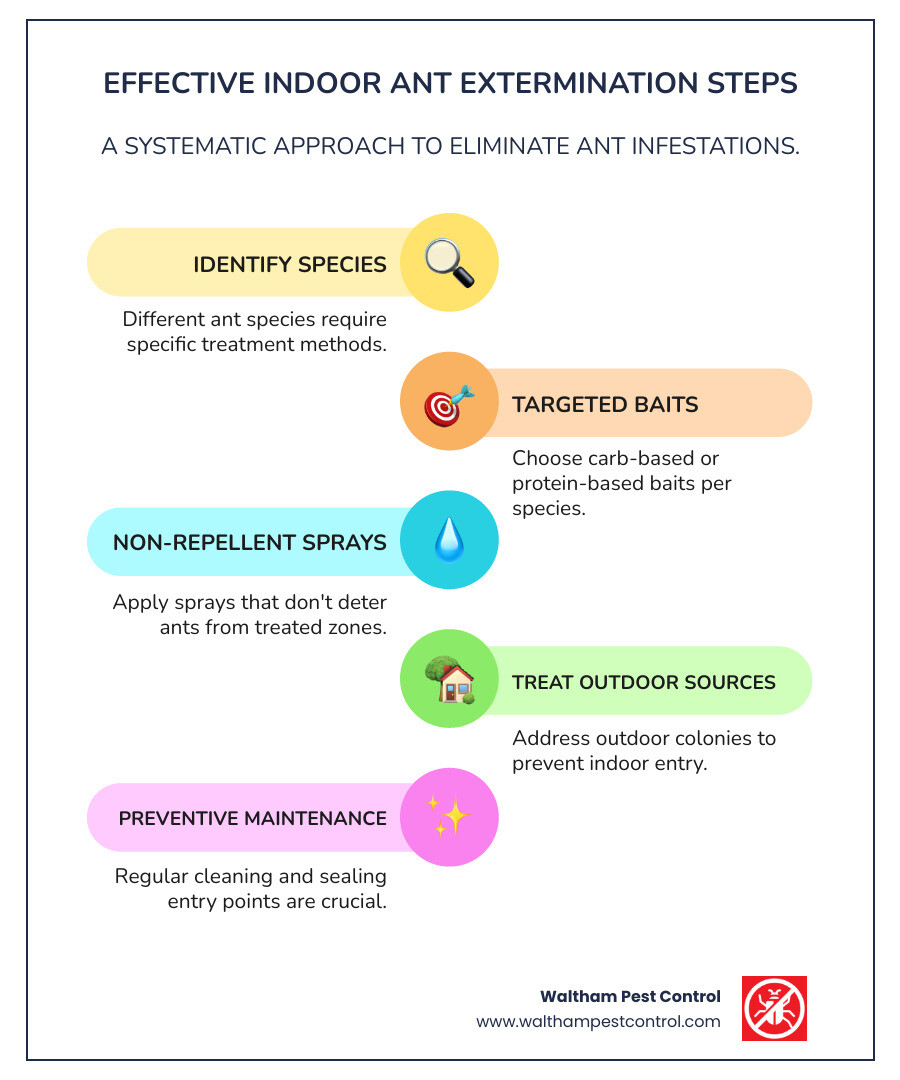
Indoor ant extermination vocab explained:
How to Identify an Ant Problem
Nobody wants to play detective in their own kitchen, but spotting an ant problem early makes indoor ant extermination so much easier. Think of it this way – catching a few scouts is way better than dealing with their entire extended family later!
The most obvious clue? Those telltale marching lines of ants along your baseboards, countertops, or trailing toward your pet’s food bowl. These aren’t random wanderers – they’re following invisible chemical highways that scout ants laid down after finding something delicious in your home.
But here’s where it gets interesting. Different ant species leave different calling cards. If you notice small piles of what looks like sawdust near wooden areas, you might be dealing with carpenter ants. These industrious insects don’t actually eat wood (that’s a common myth), but they do excavate it to build their cozy homes inside your walls.
Ant identification becomes crucial because what works for tiny pavement ants won’t necessarily work for those chunky carpenter ants. The good news? You don’t need to become an entomologist overnight, but knowing the basics helps.
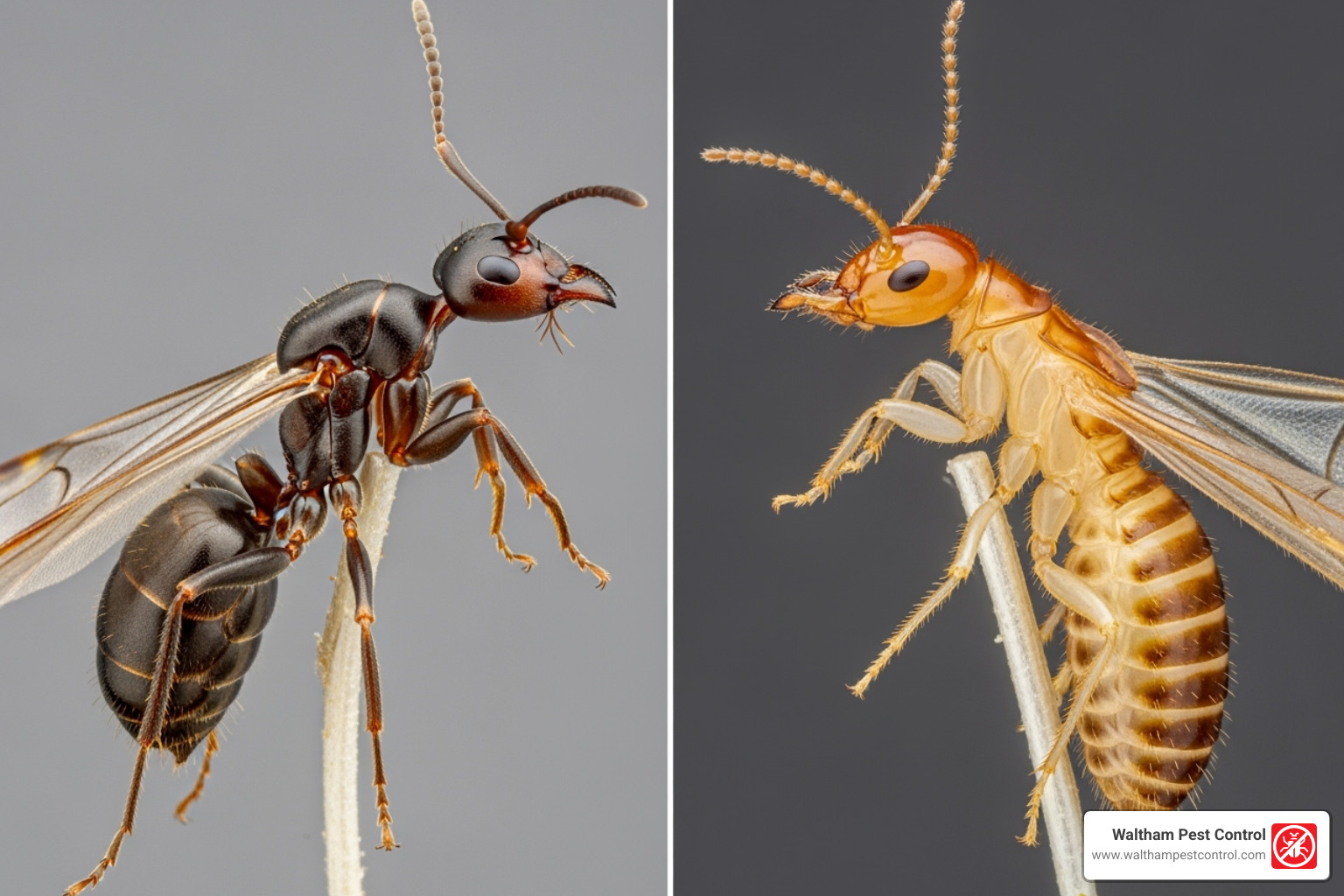
Here’s a quick reality check – are you sure you’re dealing with ants and not termites? It’s an honest mistake that happens more often than you’d think. Termites have straight antennae, thick waists, and wings that are all the same length. Ants sport those distinctive elbowed antennae, pinched waists that look like tiny hourglasses, and front wings longer than their back ones.
Ant activity tends to spike in areas where life happens – kitchens busy with crumb-dropping activity, bathrooms with their steady water supply, and basements that offer quiet nesting spots. You might catch them red-handed in your pantry or congregating around that drippy faucet you keep meaning to fix.
The household problems go beyond just the “ick factor.” Ants can contaminate your food, and carpenter ants can actually compromise your home’s structure over time. That’s why catching these early warning signs matters so much for successful indoor ant extermination.
Effective Indoor Ant Extermination Methods
Now that we’ve confirmed those little visitors are indeed ants, it’s time to show them the door! Indoor ant extermination requires a strategic approach that goes beyond just spraying the ants you can see. Think of it like dealing with an iceberg – those visible ants are just the tip, and the real colony lies hidden beneath.
The most successful indoor ant extermination combines targeted baits with non-repellent sprays. This one-two punch ensures we’re not just eliminating the workers marching across your counter, but actually reaching the queen and the entire colony back at home base. Natural remedies can play a supporting role, but they’re usually not powerful enough to handle an established infestation on their own.
The key is patience and persistence. Ants didn’t build Rome in a day, and we won’t eliminate their empire overnight either. But with the right methods, you’ll see results within days and complete elimination within a few weeks.
Using Ant Baits
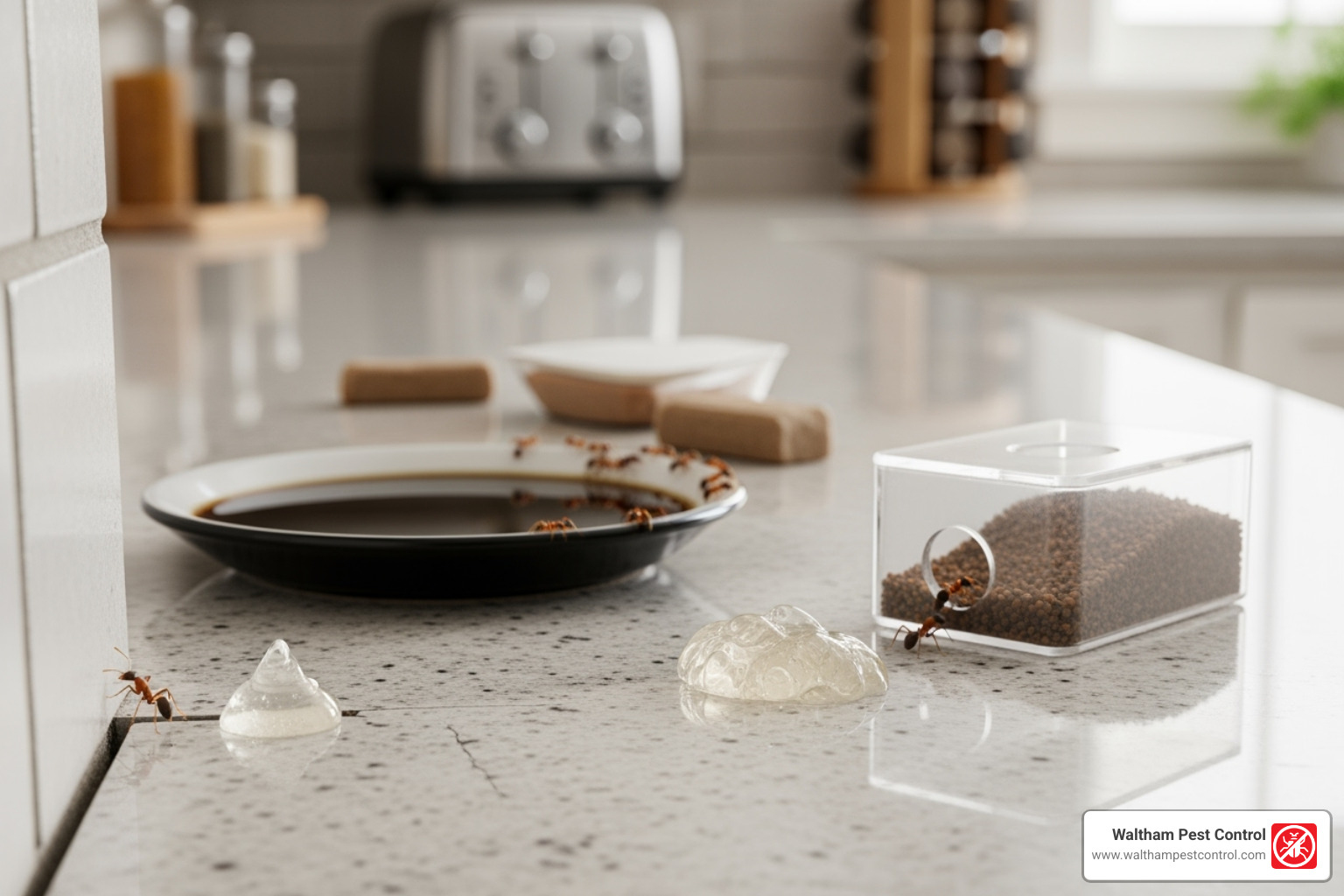
Ant baits are the secret weapon of indoor ant extermination. Picture this: you’re essentially setting up a buffet that the ants can’t resist, but the food is laced with a slow-acting ingredient that spells doom for the entire colony. It’s like a spy movie where the worker ants unknowingly carry the “poison” back to headquarters.
Here’s the brilliant part – baits work with ant behavior, not against it. When worker ants find the bait, they don’t just eat it themselves. They carry it back to share with their sisters, the larvae, and most importantly, the queen. This sharing behavior, called trophallaxis, is what makes baits so effective for complete colony elimination.
Carb-based baits are your go-to for most common household invaders. These sweet, syrupy gels are like candy to pavement ants and odorous house ants. You’ll often see them lined up like they’re at an all-you-can-eat dessert bar. Protein-based baits, on the other hand, appeal to colonies that need protein for developing their young or certain species with different dietary preferences.
Placement makes all the difference. We position baits along those invisible highways ants use – near baseboards, around entry points, and wherever you’ve spotted ant activity. Keep baits away from children and pets, even though they contain very small amounts of active ingredients. And here’s the hardest part – don’t panic when you initially see more ants! This means the bait is working and drawing them out.
Applying Non-Repellent Sprays
Traditional sprays used to work like invisible “Do Not Enter” signs that ants could detect and avoid. Modern non-repellent sprays are much smarter – they’re completely undetectable to ants, so the little guys walk right through treated areas without knowing it.
This creates what we call the “transfer effect.” Imagine ants as tiny, unwitting delivery workers. They pick up the treatment on their bodies and legs, then carry it back to the nest where it spreads to other colony members through normal social contact. It’s like a microscopic game of tag, except everyone who gets tagged eventually leaves the game permanently.
For effective indoor ant extermination, we focus these sprays on the ant superhighways – those cracks along baseboards, gaps around pipes, window frames, and door thresholds. These are the routes ants use to steer your home like a subway system.
Safety always comes first when applying any spray treatment. We ensure good ventilation and follow all label directions to protect your family and furry friends. The beauty of non-repellent sprays is that a little goes a long way when applied correctly.
Natural Remedies for Ants
While professional-grade treatments form the backbone of serious indoor ant extermination, natural remedies can serve as helpful allies in your ant-fighting arsenal. Think of them as the supporting actors rather than the stars of the show.
Diatomaceous earth works like microscopic broken glass to ants (though it’s safe for humans and pets when you use the food-grade version). When ants walk through this fine powder, it damages their protective outer shell, causing them to dry out. The catch? It only works when kept completely dry, so it’s not practical in all situations.
White vinegar acts like an eraser for ant trails. Mix equal parts vinegar and water to wipe down surfaces where ants have been marching. The strong smell disrupts those chemical breadcrumbs ants leave for each other. It’s more about breaking up their communication system than actually eliminating them.
Borax can be effective when mixed properly into homemade baits, but here’s where I urge caution. Getting the concentration right is tricky – too little won’t work, too much can be dangerous around kids and pets. Professional baits are formulated to hit that sweet spot of effectiveness and safety.
Natural ant repellents like peppermint oil, cinnamon, or coffee grounds can create temporary barriers. They’re like putting up “Road Closed” signs that ants prefer to avoid. While these won’t eliminate an established colony, they can help redirect ant traffic away from sensitive areas while your main treatments do the heavy lifting.
Outdoor Ant Control to Prevent Indoor Infestations
Think of indoor ant extermination as a two-front battle. While we’re busy tackling the ants inside your home, we also need to address their outdoor headquarters. Most of the ants marching through your kitchen actually live outside in your yard, under your driveway, or along your foundation.
The smart approach? Cut them off at the source. When we eliminate or control the outdoor colonies, we dramatically reduce the number of scout ants looking for indoor real estate. It’s much easier to keep ants out than to evict them once they’ve settled in.
Our outdoor strategy focuses on creating a protective barrier around your home and targeting the colonies where they actually live. This involves two main approaches: ant granules for long-term colony elimination and perimeter sprays for immediate protection.
Using Ant Granules
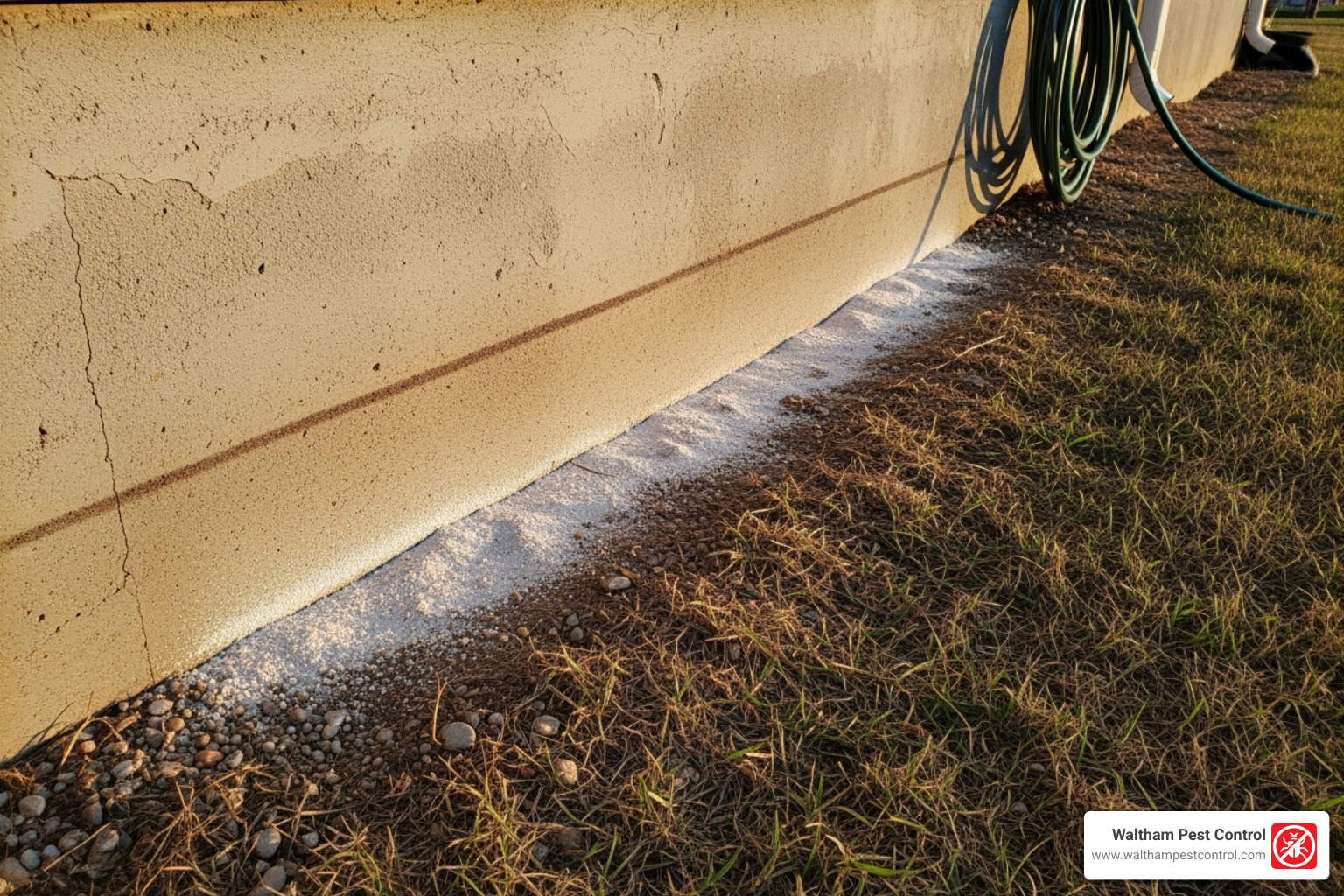
Ant granules work like outdoor buffets – but with a deadly twist. These specially formulated baits are designed to withstand weather conditions while remaining irresistible to foraging ants. Worker ants find the granules, carry them back to their nests, and share them with the entire colony, including the queen.
Application around your foundation is crucial for preventing indoor ant extermination needs. We scatter granules along walkways, around garden beds, and near any visible ant trails or mounds. The key is placing them where ants naturally forage, not randomly across your entire yard.
Timing matters with granule applications. We apply them to dry ground when rain isn’t expected for at least 24 hours. Some granules need light watering to activate, while others work best staying completely dry. Following the specific product instructions ensures maximum effectiveness.
The beauty of granules is their long-lasting protection. Unlike sprays that might wash away with the first heavy rain, quality granules continue working for weeks, providing ongoing colony elimination that prevents future indoor invasions.
Applying Perimeter Sprays
Perimeter sprays create an invisible shield around your home’s foundation. We use the same non-repellent technology outdoors that works so well inside – ants can’t detect the treatment, so they walk right through it and carry the active ingredient back to their colonies.
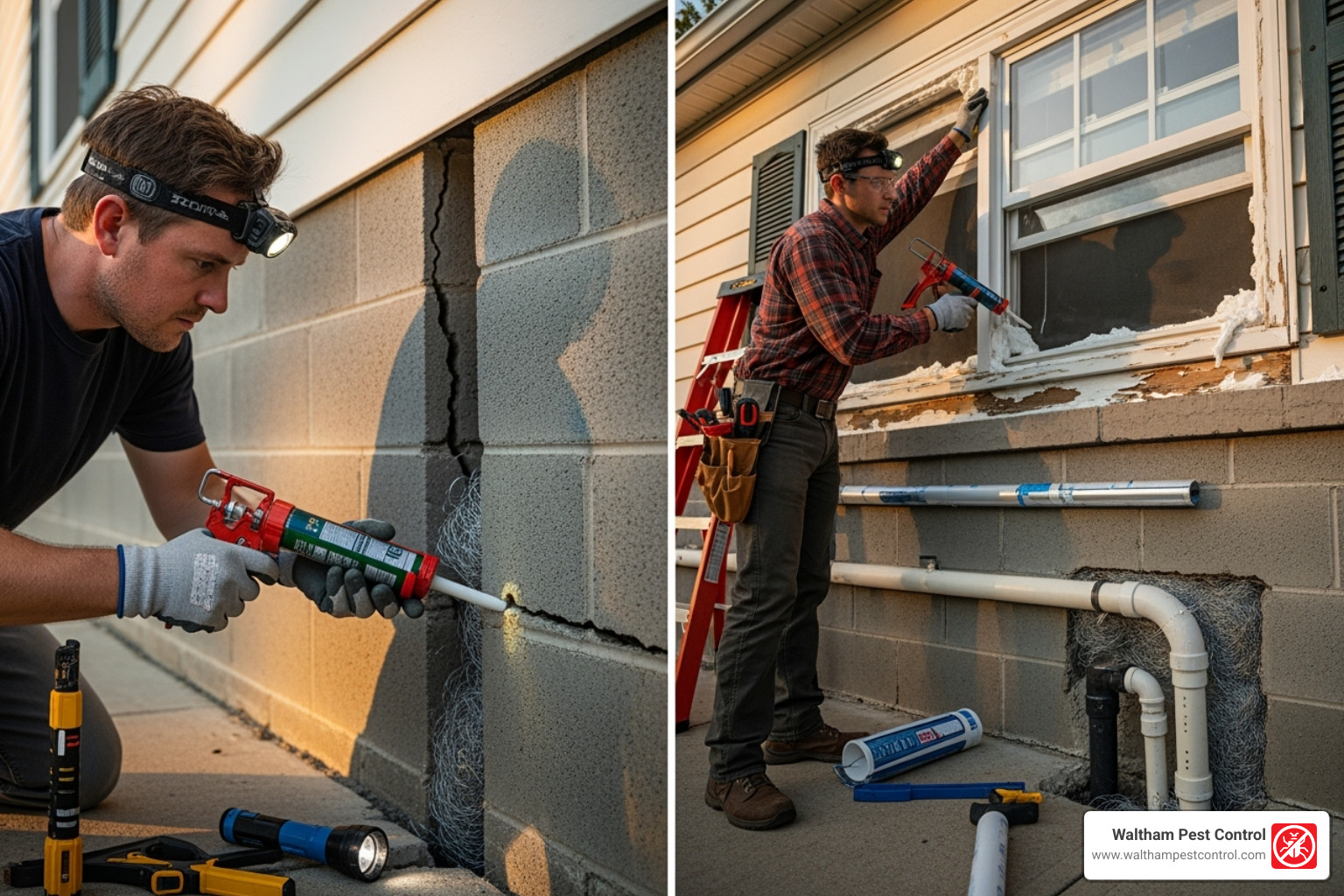
Foundation treatment is the cornerstone of outdoor ant prevention. We apply the spray several feet up your home’s exterior walls and several feet out from the foundation, creating a comprehensive barrier. Special attention goes to areas around windows, doors, and utility penetrations where ants commonly find entry points.
The transfer effect is particularly powerful outdoors. As treated ants return to their colonies, they unknowingly spread the active ingredient to other colony members. This creates a domino effect that can eliminate entire outdoor colonies without you ever seeing most of the ants.
Weather considerations play a role in application timing. We avoid treating right before heavy rain, but light moisture actually helps the spray penetrate soil and cracks where ants travel. The goal is creating a lasting barrier that continues working even after the spray has dried.
Regular perimeter treatments, especially in spring when ant activity peaks, provide the best defense against indoor invasions. It’s preventive maintenance that saves you from dealing with more extensive indoor ant extermination problems later.
Preventive Measures to Keep Ants Out
Extermination is one thing, but keeping ants out for good is another. At Waltham Pest Control, we believe in empowering our clients with knowledge on preventive maintenance. After all, an ounce of prevention is worth a pound of cure (or in this case, a whole lot of ant bait!). Implementing these measures significantly reduces the likelihood of future ant invasions, making your home less appealing to these tiny foragers.
Outdoor Cleaning Tips
Your outdoor environment plays a huge role in attracting or deterring ants. A clean, well-maintained yard acts as your first line of defense.
- Trim foliage: Keep tree branches, shrubs, and other plants trimmed back and away from your house. These can act as “ant bridges,” providing easy access points to your roof and siding.
- Clear mulch: While mulch is great for gardens, keep it several inches away from your home’s foundation. Mulch retains moisture and provides excellent harborage for ants.
- Clean trash bins: Regularly clean and tightly seal outdoor garbage cans. Food odors are an open invitation for ants (and other pests!).
- Maintain gutters: Ensure your gutters are clean and draining properly. Clogged gutters can lead to standing water and moisture issues near your foundation, creating ideal conditions for ants.
Indoor Cleaning Tips
Our homes are often ant magnets because of readily available food and water. By adopting a few simple indoor cleaning habits, you can make your home far less attractive.
- Deep clean appliances: Regularly clean under and behind appliances like refrigerators, stoves, and dishwashers. Crumbs and spills in these hidden spots are a feast for ants.
- Airtight containers: Store all food, especially sugary or carb-rich items, in sealed, airtight containers. This includes pet food!
- Clean garbage cans: Regularly empty and clean indoor garbage cans. Food residue is a major attractant.
- Dry out sinks: Don’t leave standing water in sinks or bathtubs. Even a few drops can be a water source for thirsty ants. Fix any leaky faucets promptly.
By combining professional indoor ant extermination with diligent preventive measures, we can help you achieve a truly ant-free home.
Frequently Asked Questions about Indoor Ant Extermination
After four decades of helping Massachusetts homeowners win the war against ants, I’ve heard just about every ant question you can imagine! Let me share answers to the most common concerns about indoor ant extermination that come up during our service calls.
How Much Does Indoor Ant Extermination Cost?
The cost of professional indoor ant extermination varies quite a bit depending on what we’re dealing with. A simple pavement ant problem in a small apartment requires much less work than carpenter ants that have been tunneling through your home’s structure for months.
Several factors influence the final cost: the ant species (carpenter ants need more intensive treatment than sugar ants), how severe the infestation has become, your home’s size, and whether we need one visit or multiple treatments to eliminate the colony completely.
Based on average internet data for pest control services nationwide, homeowners typically see costs ranging from around $150 for basic treatments up to $1,500 or more for severe infestations requiring specialized approaches. These are general industry averages from various sources, not Waltham Pest Control pricing.
We believe in providing cost-effective solutions custom to your specific situation. After thoroughly assessing your ant problem, we’ll explain exactly what’s needed and provide transparent pricing before any work begins.
What Are the Best Ant Killers for Indoors?
The “best” ant killer really depends on which ants have moved in and how they’re behaving. What works brilliantly for sugar-loving odorous house ants might be completely ignored by protein-seeking carpenter ants.
For professional indoor ant extermination, we use advanced formulations that aren’t available in stores. These professional-grade products are specifically designed for maximum effectiveness while maintaining safety standards for homes with children and pets.
While store-bought products are available, using the wrong one can make the problem worse. A simple repellent spray, for example, might scatter the colony into multiple new nests throughout your home. The key to success is matching the right treatment to your specific ant problem, which is why a professional approach is often the most effective. A properly chosen slow-acting bait, for instance, can eliminate the entire nest, including the queen.
How to Get Rid of Ants Permanently?
This is the million-dollar question! Everyone wants a permanent solution, and I completely understand why. Nobody enjoys playing whack-a-mole with ants every few months.
True permanent results require addressing the entire ant ecosystem around your home, not just the workers you see marching across your counter. Borax mixtures and boiling water treatments might give you temporary satisfaction, but they rarely solve the underlying problem. Homemade borax and sugar baits often aren’t formulated correctly – they either kill ants too quickly before they can share with the colony, or they’re not attractive enough to get eaten in the first place.
The most effective permanent approach to indoor ant extermination combines several strategies working together. Accurate identification ensures we’re using the right treatment for your specific ant species. Targeted treatments with professional baits and non-repellent sprays eliminate entire colonies, including queens hidden deep in walls or underground. Outdoor control stops new colonies from establishing around your home’s perimeter. Preventive measures like proper cleaning and sealing entry points make your home less attractive to future invaders.
For stubborn or recurring infestations, professional advice makes all the difference. We’ve seen every type of ant problem Eastern Massachusetts can throw at us, and we know which strategies provide lasting results versus quick fixes that leave you frustrated again in a few weeks.
Conclusion
Indoor ant extermination doesn’t have to feel like you’re fighting a losing battle against an endless army. The truth is, once you understand how ants think and what draws them to your home, you’ve already won half the fight.
We’ve walked through the complete journey together – from spotting those first telltale signs of ant activity to implementing targeted treatments that eliminate entire colonies, not just the workers you can see. Successful ant control is like a three-legged stool: indoor ant extermination methods, outdoor prevention, and ongoing maintenance all work together to keep your home ant-free.
The key insight? Most ant problems start outside and work their way in. By treating both sides of your home’s walls and maintaining good cleaning habits, you’re creating an environment that ants simply don’t want to call home.
At Waltham Pest Control, I’ve seen every type of ant situation imaginable over the past 40 years serving Eastern Massachusetts families and businesses. From tiny sugar ants marching across Cambridge kitchen counters to carpenter ants threatening Newton home foundations, each infestation tells a story – and more importantly, has a solution.
Based in Burlington, MA, we bring decades of experience to communities across Middlesex County, Essex County, Merrimack Valley, and Norfolk County. We’re licensed, insured, and committed to providing cost-effective solutions that actually work long-term, not just quick fixes that leave you dealing with the same problem next month.
Whether you’re in Acton dealing with your first ant problem or you’re a longtime Waltham resident who’s tried everything, don’t let these tiny invaders stress you out. Life’s too short to share your morning coffee with uninvited guests.
Ready to reclaim your space? Contact us today and let’s put our four decades of experience to work for you. Your ant-free home is just a phone call away.
