
Cost to exterminate ants in house: 7 Shocking 2025 Facts
The True Cost of Ant Invasions: What Homeowners Need to Know
If you’re facing an ant problem, understanding the cost to exterminate ants in house is likely your top priority. Here’s what you need to know:
| Ant Extermination Cost Factors | Typical Price Range |
|---|---|
| Average one-time treatment | $80-$500 |
| National average cost | $150 |
| Severe infestations | $800-$1,400 |
| Carpenter ant treatment | $250-$500 |
| Fire ant treatment | $100-$300 |
| Quarterly service (annual) | $400-$520 |
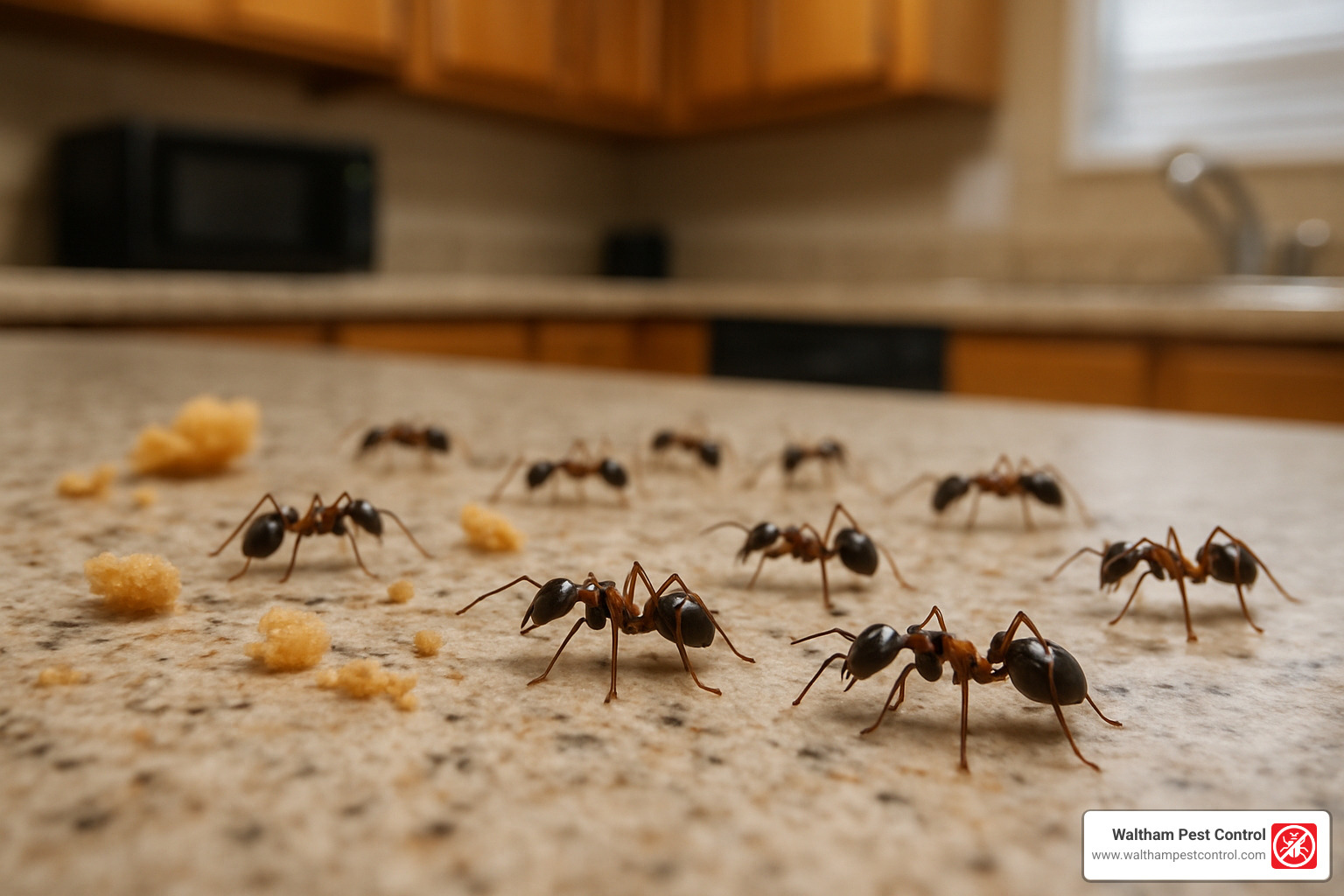
Finding tiny invaders marching across your kitchen counter can quickly turn from a minor annoyance into a major headache. When ants establish colonies in your home, they rarely leave without intervention. Whether they’re after the sweet residue from your morning coffee or seeking shelter from harsh weather, these persistent pests require targeted solutions that match both the species and the severity of your infestation.
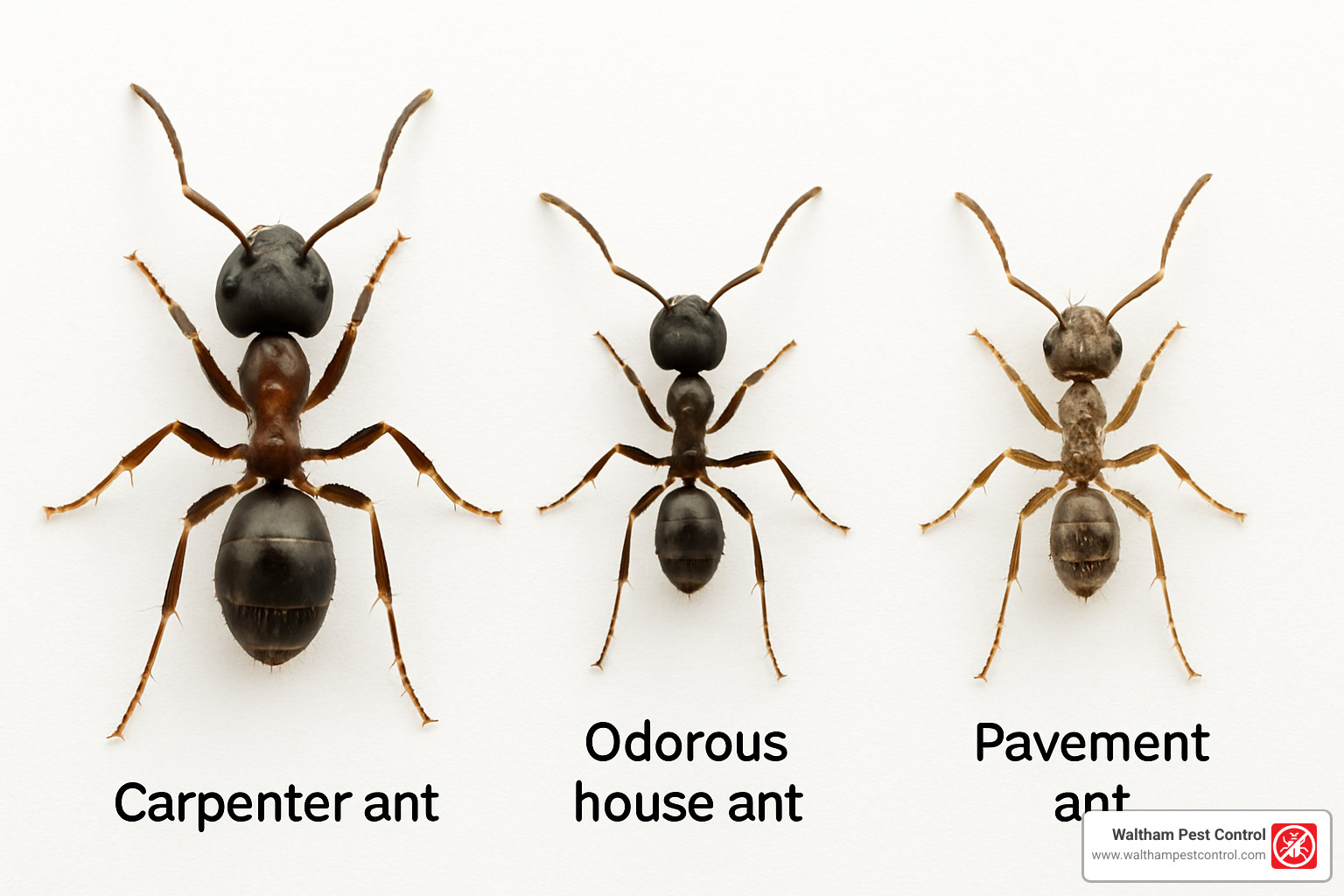
The cost to exterminate ants in house varies widely based on several factors, including the type of ant, size of your home, severity of infestation, and treatment methods required. While DIY solutions might seem cost-effective initially, they often fail to address the root of the problem – the colony itself.
As a homeowner, you’re not just paying for products; you’re investing in expertise, thoroughgoing elimination, and peace of mind.
I’m Waltham Pest Control, President of Waltham Pest Control with over 40 years of experience addressing the cost to exterminate ants in house throughout Eastern Massachusetts, where our integrated pest management approach has helped countless homeowners achieve lasting ant control while respecting their budgets.
Terms related to cost to exterminate ants in house:
– dealing with ant infestation
– how to exterminate carpenter ants in house
– pavement ant infestation
Quick Snapshot: Average Cost to Exterminate Ants in House
When those tiny invaders start marching through your home, understanding the cost to exterminate ants in house becomes a top priority. Nationwide, homeowners typically pay between $80 and $1,400 for professional ant control, with most falling in the $150 to $300 range for standard treatments. Why such a wide range? It all comes down to your unique situation – the size of your home, which ant species has moved in, and just how comfortable they’ve made themselves.
“Most families with a standard 2,000 square foot home can expect to pay somewhere in the $200 to $300 range for a typical one-time treatment,” according to industry data. But your final bill will largely depend on whether you’re looking for a quick fix or ongoing protection.
One-Time Treatment vs. Service Plans
Think of one-time treatments as the urgent care of pest control – they address your immediate ant emergency but don’t necessarily prevent future problems. These treatments typically include a thorough inspection, targeted application, and sometimes a follow-up to ensure the ants haven’t returned.
Service plans, on the other hand, are more like preventative healthcare:
| Service Type | Average Cost | Benefits |
|---|---|---|
| One-Time Treatment | $80-$500 | Immediate solution for isolated problems |
| Monthly Service | $70-$100/month | Continuous protection, especially in high-risk areas |
| Quarterly Service | $100-$130/quarter | Balanced approach for moderate issues |
| Annual Contract | $400-$520/year | Most cost-effective for long-term prevention |
Monthly professional services average around $70 to $100 per visit according to market research, which might seem steep at first glance. However, many of our Eastern Massachusetts customers find that regular maintenance actually saves money by preventing those middle-of-the-night emergency calls.
Why costs swing so widely
The cost to exterminate ants in house varies dramatically based on three key factors:
Home Size makes a significant difference – larger homes simply offer more real estate for ants to explore and colonize. A sprawling 5,000 square foot home might cost nearly twice as much to treat as a cozy 2,000 square foot property.
Ant Species determine the battle plan. Carpenter ants, which can literally chew through your home’s structure, typically require more intensive (and expensive) treatments than their sugar-loving cousins who are just after your spilled juice.
Treatment Intensity reflects how established the colony has become. A few scout ants might need just simple baiting, while a full-blown invasion could require wall injections, multiple treatments, and even structural repairs.
As Sarah from Lexington told us: “I tried saving money with store sprays when I spotted ants in my pantry. After spending nearly $100 on products that didn’t work, I called Waltham Pest Control. Their quarterly plan ended up being much more effective and actually cheaper in the long run.”
Reading estimates without sticker shock
Understanding how pest control quotes are structured helps avoid surprises:
The Initial Fee is typically the highest, ranging from $150 to $300, because it includes a comprehensive inspection and the most intensive treatment to knock back the initial population.
Follow-Up Visits generally cost less (about $40 to $70 each) as they focus on maintenance and addressing any remaining problem areas.
Bundled Discounts can offer significant savings. Many companies, including Waltham Pest Control, provide discounted rates for service plans. A quarterly plan might cost $400-$520 annually, saving you 15-25% compared to booking four separate treatments.
“Breaking down costs by treatment type, frequency, and severity gives homeowners a clearer picture for budgeting,” notes an industry specialist. At Waltham Pest Control, we pride ourselves on transparent, detailed estimates so you know exactly what you’re paying for – no surprises, just effective ant control that respects your budget while protecting your home.
Cost Factors That Move the Needle
When determining the cost to exterminate ants in house, several key factors can significantly impact the final price. Understanding these variables helps homeowners budget appropriately and avoid surprises.
Infestation severity and the cost to exterminate ants in house
The extent of your ant problem is perhaps the biggest factor in determining treatment costs. Think of it like a doctor’s visit – a minor check-up costs less than major surgery.
Minor infestations typically range from $150-$300 according to industry data. These are the situations where you’ve spotted a few ant trails in your kitchen or bathroom – annoying but contained. It’s like having a cold rather than pneumonia.
When ants appear throughout multiple rooms or when professionals suspect multiple colonies have made themselves at home, you’re looking at a moderate infestation. These middle-of-the-road problems generally cost between $300-$700 to resolve.
Severe infestations represent the highest cost tier, often ranging from $800-$1,400+. These are the situations that make homeowners lose sleep – large-scale invasions, especially involving carpenter ants, or colonies that have established deep within walls or foundations.
One Lexington homeowner we worked with initially spotted just a few carpenter ants near a window sill. “I thought it was just a scout or two,” she told us. “By the time I called for help, they had established a significant colony in my wall void, which required more extensive treatment. I wish I’d called at the first sign!”
Treatment frequency and the cost to exterminate ants in house
How often your home needs treatment directly impacts your overall investment. It’s similar to car maintenance – a one-time oil change costs less than a year’s worth of scheduled service, but may not provide the ongoing protection you need.
One-time treatments typically range from $200-$500. They address immediate concerns but offer limited long-term protection. They’re perfect for addressing sudden, isolated ant problems.
Monthly services provide continuous protection ideal for properties with persistent problems. According to industry figures, these average $70-$100 per visit (or $840-$1,200 annually).
Quarterly treatments strike that sweet spot between protection and cost-effectiveness, costing approximately $100-$130 per visit ($400-$520 annually). In Eastern Massachusetts, where seasonal changes bring different ant pressures throughout the year, many of our customers find quarterly service provides the optimal balance.
Annual contracts often include an initial treatment plus preventative measures, ranging from $300-$700 depending on home size and ant species.
Hidden or hard-to-reach nests = extra dollars
When ants decide to establish their colonies in challenging locations, your exterminator needs additional equipment, time, and expertise – all of which affect the bottom line.
Wall voids present particular challenges. Treating ants inside walls may require drilling small access holes and using specialized equipment to inject treatments, potentially adding $100-$250 to basic treatment costs. It’s like the difference between a simple dental cleaning and needing to drill deeper for a cavity.
Attic infestations combine difficult access and safety concerns, potentially increasing costs by $150-$300. Your technician might need to steer through tight spaces while wearing protective gear in potentially extreme temperatures.
Colonies under foundations represent some of the most challenging locations to treat, potentially adding $200-$400 to standard costs due to the specialized equipment and treatments required.
Sometimes, technicians need special equipment like thermal imaging to locate hidden nests, specialized drilling tools, or lifts for tall structures – each potentially adding $100-$300 to your total.
A Bedford customer recently shared: “We had carpenter ants in the wall behind our shower. The technician had to carefully remove a section of drywall to access the colony. While it added to the cost, watching him extract the massive colony made it clear why the additional work was necessary.”
Regional factors in Eastern Massachusetts
Living in Eastern Massachusetts brings specific considerations that affect ant control costs. Our region has its own unique pest profile that impacts treatment approaches and pricing.
Our humid summers create ideal conditions for ant activity, potentially requiring more frequent treatments than drier regions. When moisture levels rise, so does ant activity – particularly with moisture-loving species like carpenter ants.
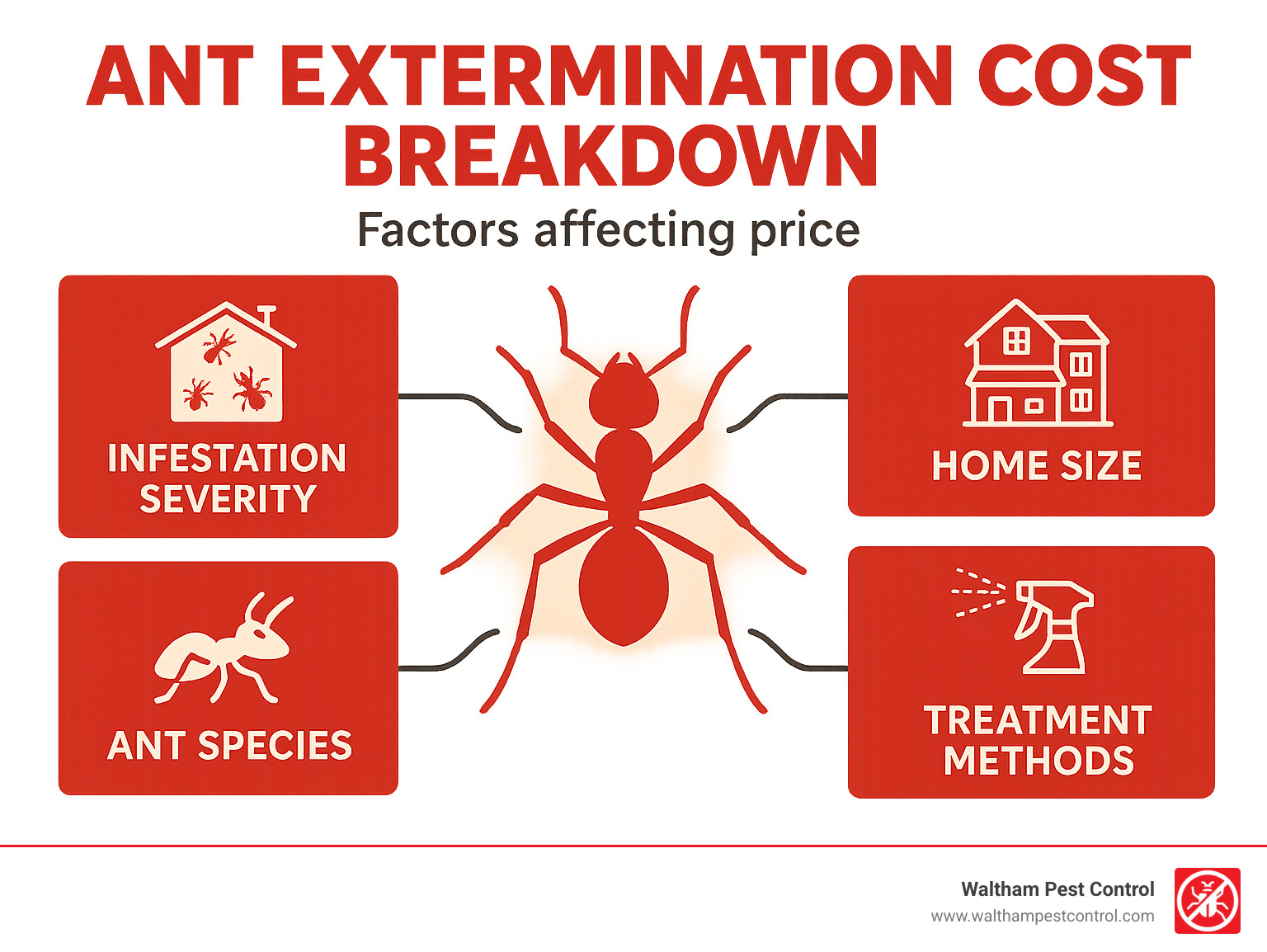
Eastern Massachusetts is home to several persistent ant species, including carpenter ants, pavement ants, and odorous house ants. Each requires specific treatment approaches, with carpenter ants typically commanding higher prices due to their potential for structural damage. Research from UC Riverside on Argentine ants shows how adaptable some species can be, requiring more sophisticated control methods.
Seasonal patterns also play a role in pricing. Many ant species in our region become more active in spring and summer, making these peak treatment seasons with potentially higher demand and costs. Winter treatments might be more affordable but less effective for certain species.
There are also noticeable urban vs. suburban differences in pricing. Properties in more densely populated areas of Boston, Cambridge, or Somerville may face different pricing structures than homes in less dense areas like Concord or Boxford, often due to travel time, parking considerations, and the interconnected nature of urban pest problems.
The good news? Local pest control companies like Waltham Pest Control understand these regional factors and can tailor solutions specifically for Eastern Massachusetts conditions, often resulting in more effective long-term control.
Price Breakdown by Ant Species & Treatment Method
Different ant species require different treatment approaches, directly impacting the cost to exterminate ants in house. Understanding these variations helps homeowners budget appropriately for their specific situation.
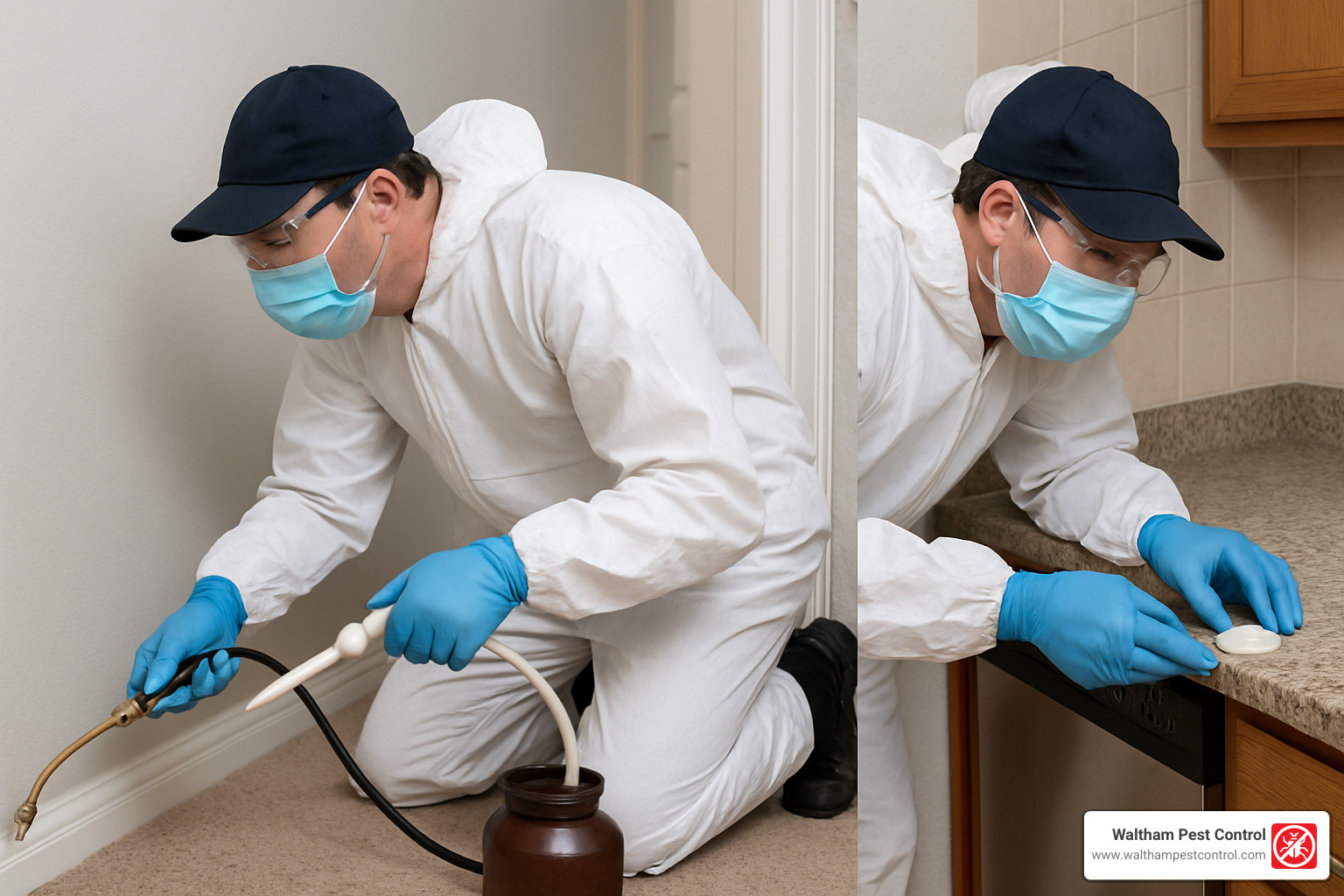
Carpenter ants: wood-chewers that hike your bill
Carpenter ants are the heavy hitters when it comes to treatment costs, typically running between $250 and $900. These impressive-looking black or red-and-black ants don’t actually eat your wood—they’re more like tiny excavators, carving galleries that can seriously compromise your home’s structure over time.
What makes carpenter ants so expensive to evict? For starters, they’re masters of hide-and-seek. They create multiple satellite colonies that can be tucked away in wall voids, attics, or even inside wooden beams. Finding and treating all these hideouts often requires specialized equipment and techniques.
I remember a Medford homeowner who called us after noticing small piles of what looked like sawdust near her baseboards. “I thought my kids had spilled something,” she told me. That “sawdust” was actually frass—the wood debris carpenter ants push out as they hollow out their tunnels. By the time we investigated, they’d established colonies in three different wall sections.
According to industry averages, “Carpenter ant extermination costs between $250 and $500,” though cases involving structural damage can push that figure significantly higher. The real value in professional treatment isn’t just killing visible ants—it’s locating and eliminating the hidden nests before serious damage occurs.
For more details on dealing with these wood-destroyers, check out our guide on How to Exterminate Carpenter Ants in House.
Fire ants & lawn mounds: lower indoor cost, higher outdoor urgency
Fire ant treatments typically fall in the $100 to $600 range, with costs varying based on whether you’re dealing with indoor stragglers or a yard full of angry mounds.
While less common in Massachusetts than in southern states, these notorious biters occasionally hitchhike their way to our region in landscaping materials or potted plants. Their painful stings aren’t just uncomfortable—they can be dangerous. CDC data shows about 5% of Americans experience allergic reactions to ant stings, with fire ants being particularly problematic.
Treating fire ant mounds outdoors typically involves specialized drenches costing about $5-$8 per mound, while yard-wide granular treatments might run $100-$300. Indoor treatments focusing on entry points usually cost $150-$300, according to industry standards.
A Newton customer once told me, “I didn’t even know what a fire ant was until I started gardening with mulch I ordered online. The first sting felt like someone had touched me with a lit match!” For situations like this, quick professional intervention is essential—especially for families with young children or pets.
Pharaoh ants and sugar ants: the kitchen invaders
Those tiny ants marching toward your cookie jar? They’re likely sugar ants or pharaoh ants, and treating them typically costs between $150 and $500. These minuscule kitchen invaders are attracted to sweet foods and are masters at finding even the smallest crumbs.
What makes these ants particularly frustrating is their colony structure. “Pharaoh and sugar ants $200–$250,” notes industry pricing data, but their multiple-queen colonies can make them surprisingly persistent. Traditional spray-and-pray approaches often fail because they don’t address the hidden colonies.
A Cambridge homeowner shared her experience: “I tried every store-bought spray and trap for months. They’d disappear for a few days, then come back stronger. The professional treatment finally broke the cycle by targeting the colonies I couldn’t see.”
Professional treatment for these species typically involves strategically placed bait stations, perimeter treatments, and crack-and-crevice applications in food preparation areas. This comprehensive approach costs more upfront but prevents the endless cycle of reappearance that DIY methods often create.
Odorous house ants and Argentine ants: the persistent colonizers
If you’ve ever crushed an ant and noticed a rotten coconut smell, you’ve met an odorous house ant. These and their cousins, Argentine ants, typically cost between $120 and $450 to treat professionally.
Both species present unique challenges. Argentine ants form super-colonies that can span entire neighborhoods, while odorous house ants quickly relocate their nests when disturbed. According to research from the University of California, Argentine ant colonies can contain thousands of queens and millions of workers, making them one of the most successful invasive species in North America.
“We thought we just had a few ants in our pantry,” a Belmont customer told me last summer. “Then our neighbor mentioned having the same problem, and so did the family across the street. Turns out we were all dealing with branches of the same massive Argentine ant colony.”
This interconnected colony structure is why neighborhood-wide infestations often require coordinated professional treatment rather than individual household approaches. The Scientific research on Argentine ants confirms that fragmented treatment often leads to reinfestation.
Treatment methods and their price points
The approach used to eliminate ants significantly impacts the overall cost. Baits and bait stations ($75-$200) work slowly but effectively, targeting the entire colony rather than just visible workers. They’re particularly effective for sugar ants and pharaoh ants.
Granular treatments ($100-$300) excel for outdoor applications, creating a protective zone around your property. They’re activated by moisture, making them ideal for lawn perimeters and garden beds where ants might establish colonies.
Perimeter sprays ($120-$400) create a defensive barrier around your home, preventing outdoor ants from becoming indoor problems. These typically need reapplication every 1-3 months, especially during peak ant season.
For extreme infestations, fumigation ($1,300-$4,000) provides a nuclear option. “Fumigation involves sealing the structure and introducing gas to eliminate pests in severe cases,” explains industry data. However, at Waltham Pest Control, we rarely recommend this approach for ant control—less invasive methods are typically effective when properly applied.
The best treatment method depends on your specific situation—the ant species, infestation severity, and property characteristics all play important roles in determining the most effective and economical approach. For comprehensive information about our customized ant control strategies, visit our Ants Control page.
Professional vs. DIY: Where Does Your Money Go?
Many homeowners facing an ant problem wonder whether to tackle it themselves or hire professionals. Understanding the true cost to exterminate ants in house means looking beyond just the initial price tag.
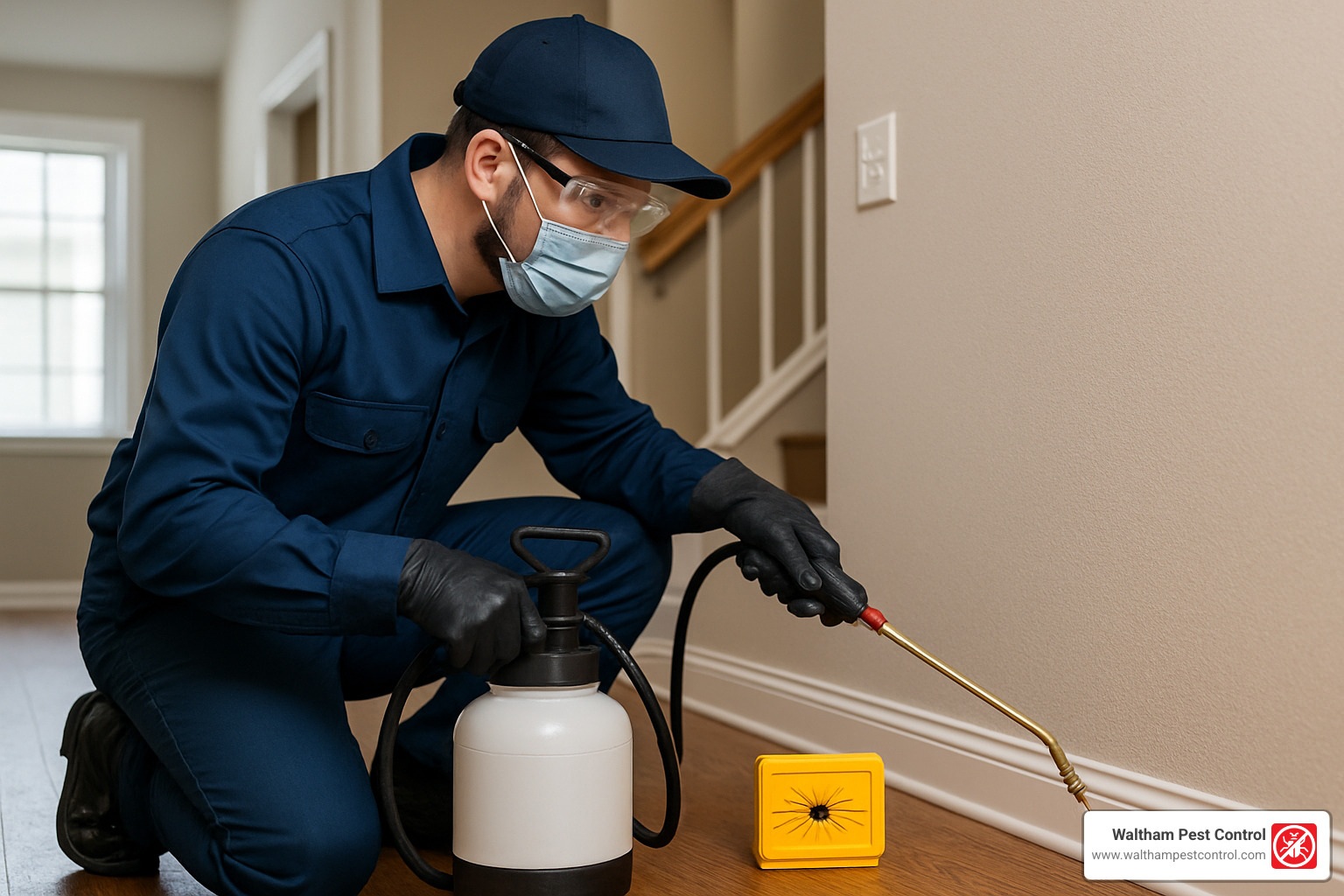
The real value of professional ant control
When you hire a professional ant exterminator, you’re not just paying for someone to spray chemicals. You’re investing in expertise that can save you time, money, and frustration in the long run.
Professional exterminators bring expert knowledge and identification skills to your home. They can tell the difference between pavement ants and carpenter ants at a glance—something that matters tremendously when planning treatment. As one Medford homeowner told us, “I thought I had sugar ants, but the technician identified them as carpenter ants that were actually damaging my window frames. That knowledge alone was worth the service call.”
Professionals also have access to commercial-grade products that simply work better than what you’ll find on store shelves. These formulations are often more concentrated and specifically designed for the target species. “The baits my technician used worked within days,” shared a Newton customer. “I had been using store-bought traps for weeks with little progress.”
Perhaps most valuable is the targeted application professionals provide. They know exactly where ants are likely hiding, how they’re entering your home, and the most effective placement for treatments. This precision means using less product while achieving better results.
Many professional services include warranty protection, giving you peace of mind that if the ants return within a specified period, so will the technician—at no additional cost. This safety net is something no DIY approach can match.
One Woburn homeowner put it perfectly: “After spending nearly $100 on various DIY ant products over three months with limited success, I finally called Waltham Pest Control. Their technician found a carpenter ant nest I never would have located on my own, hidden behind my bathroom wall. The professional treatment solved the problem completely.”
The DIY approach: costs and considerations
At first glance, the DIY route seems considerably cheaper. You might spend $5-$30 for ant baits, $5-$50 for traps, $10-$25 for spray insecticides, or $10-$40 for granular products. These individual items seem like bargains compared to professional service fees.
But here’s the reality many homeowners find: those costs multiply quickly. When the first product doesn’t work, you try another. Then another. Before you know it, you’ve spent significant money with disappointing results.
Beyond the direct financial costs, DIY approaches come with other expenses that don’t show up on your receipt. There’s the time spent researching ant species and appropriate treatments. There’s the frustration of seeing ants return despite your efforts. And there’s the potential risk of improper application—either using too much product (wasting money and potentially creating health hazards) or too little (rendering the treatment ineffective).
“I spent an entire Saturday crawling around my baseboards with ant spray,” admitted one Arlington resident. “Two weeks later, they were back in full force. That’s when I realized my time was worth something too.”
When a pro is worth every penny
Certain situations make professional intervention particularly valuable. If you’re dealing with carpenter ants, which can cause thousands of dollars in structural damage, professional expertise becomes an investment in protecting your home’s value. The same goes for recurring or persistent colonies that keep bouncing back despite your best DIY efforts.
Large or widespread infestations that have established multiple entry points throughout your home typically require the systematic approach that professionals provide. And homes with health concerns—young children, elderly residents, or individuals with respiratory conditions—benefit from precise application techniques that minimize chemical exposure while maximizing effectiveness.
A Cambridge customer shared: “After my daughter had an allergic reaction to fire ant stings in our backyard, I immediately called for professional help. The technician not only treated our yard but educated us about preventing future problems. The peace of mind was worth every penny.”
For information about our approach to cost-effective pest management, visit our Affordable Pest Control page.
Smart DIY for tiny invasions
Not every ant sighting requires professional intervention. For those truly minor invasions—a few scouts exploring your kitchen counter—some simple DIY approaches can be effective.
Vinegar solutions work well as both cleaners and deterrents. A simple 50/50 mix of white vinegar and water, sprayed along ant trails and entry points, can disrupt their chemical communication and send them packing. Boric acid, when properly applied away from pets and children, can eliminate small ant populations effectively.
For a natural approach, diatomaceous earth damages ants’ exoskeletons and can help control minor problems without harsh chemicals. Perhaps most important is sealing entry points—taking the time to caulk cracks, gaps around windows, doors, and utility entries can prevent ants from entering your home in the first place.
“The best DIY approach is actually prevention,” explains one of our technicians. “Clean all soda spills immediately, refrigerate leftover food promptly, and keep your counters wiped down. A clean kitchen is remarkably unattractive to ants.”
For most homeowners, the smartest approach is a balanced one: handle minor issues yourself, but recognize when it’s time to call in the professionals. Your time, home, and peace of mind are valuable—sometimes the true cost to exterminate ants in house is continuing to live with the problem.
Prevention Tips to Keep Future Costs Down
Preventing ant problems before they start is the most cost-effective strategy for managing the cost to exterminate ants in house. Implementing these preventative measures can save you hundreds of dollars in treatment costs.
Sanitation: the first line of defense
Your kitchen might as well be rolling out a welcome mat for ants if crumbs and spills are left unattended. I’ve seen countless homes where a simple change in cleaning habits dramatically reduced ant activity.
Clean up food spills immediately, especially sugary substances that act like ant magnets. That drop of juice or smear of jelly might seem insignificant to you, but it’s a feast for a hungry ant colony.
Store food in airtight containers, including pet food which is often overlooked. One Newton customer told me, “I never realized my cat’s food bowl was the source of my ant problem until your technician pointed it out. Simply elevating it and cleaning underneath daily made a huge difference.”
Empty garbage regularly and use sealed trash containers to eliminate those tempting food odors. Wiping down countertops daily with soap and water removes invisible food residue that ants can detect even when we can’t. As one pest control expert puts it, “To an ant, your countertop might look clean, but their sensitive antennae can detect food particles we can’t even see.”
Exclusion: keeping ants outside where they belong
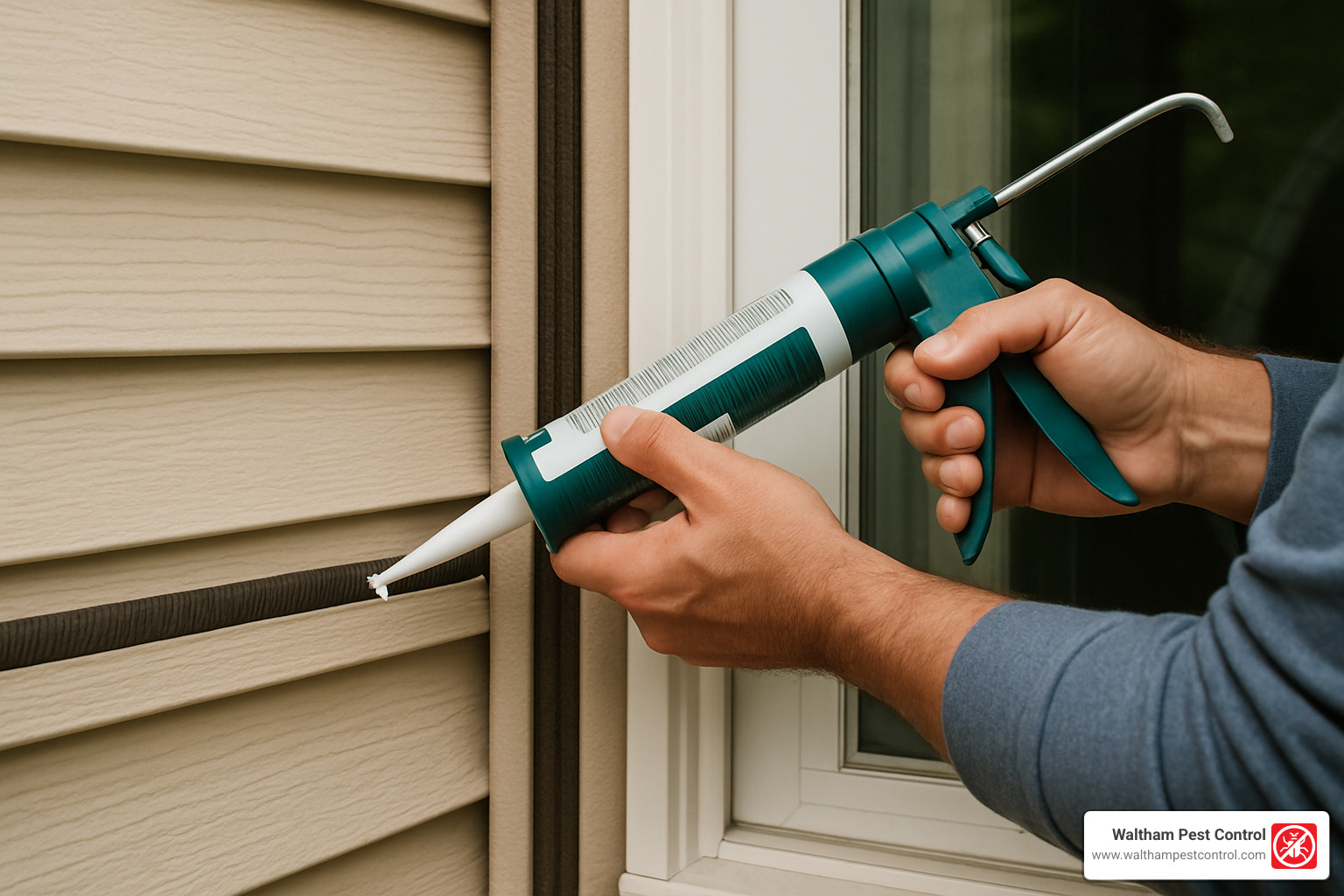
Think of your home as a fortress—every crack is a potential breach in your defenses. Sealing cracks and crevices around windows, doors, and foundations creates a physical barrier that keeps ants where they belong: outside.
Apply weather stripping around doors and windows, and don’t forget about the often-overlooked utility entry points. Those small openings where pipes, wires, and cables enter your home are like highways for ants.
A Lexington homeowner shared her experience: “After Waltham Pest Control treated my initial ant problem, they identified several entry points I never would have noticed—tiny gaps around my cable line and a small crack in my foundation. Sealing these areas has kept my home ant-free for over a year.”
Door sweeps on exterior doors are another simple yet effective barrier. They not only keep ants out but improve your home’s energy efficiency too—a win-win for your pest problems and utility bills.
Moisture control: eliminating the water ants need
Just like us, ants need water to survive. Fix leaky pipes and faucets promptly to eliminate these convenient water sources. That slow drip under your sink might seem minor, but it’s creating the perfect environment for ants to thrive.
Address any areas of standing water around your property and ensure proper drainage away from your foundation. Using dehumidifiers in damp basements or crawl spaces not only deters ants but also prevents mold and mildew issues.
“Repair leaks and remove damp wood around the home,” notes pest management research. This is particularly important for preventing carpenter ants, which are attracted to moisture-damaged wood. One Burlington customer finded this firsthand: “The carpenter ants in my bathroom weren’t random—they were drawn to the water-damaged wood behind my shower that I didn’t even know existed.”
Landscape management: creating a buffer zone
Your yard is the first battleground in ant prevention. Trim trees and shrubs so they don’t touch your house, as these create natural bridges for ants to access your home. I’ve seen countless homes where a simple pruning job eliminated an ant highway.
Keep mulch at least 6 inches away from your foundation—while it’s great for your plants, it’s also perfect ant real estate. Consider using ant-resistant plants near your home and maintain a dry, 12-18 inch gravel strip around your foundation as a deterrent zone.
“My technician suggested pulling back my mulch from the foundation and creating a gravel barrier,” shared a Woburn homeowner. “Such a simple change, but it’s made a noticeable difference in keeping ants away from my home’s perimeter.”
Regular inspections: catching problems early
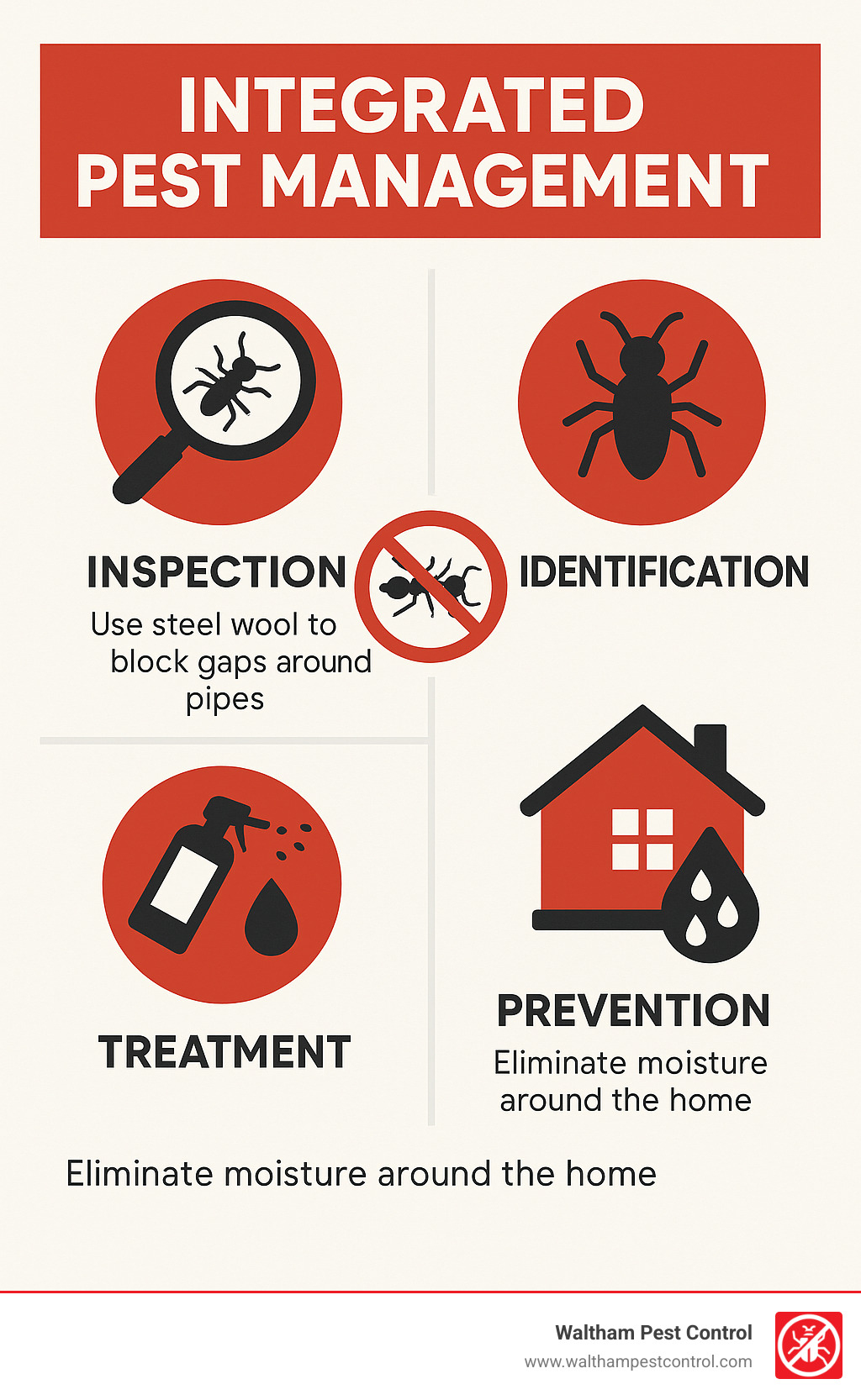
The early bird catches the worm—or in this case, the ant problem. Regular inspections can identify ant activity before it becomes a full-blown infestation. Check known entry points monthly and pay special attention to areas with previous ant activity.
Watch for ant trails, especially in spring and early summer when ant activity tends to increase in Eastern Massachusetts. Look for sawdust-like frass that indicates carpenter ants have moved in and are remodeling without your permission.
“Schedule routine professional inspections to catch issues early,” recommends industry data. At Waltham Pest Control, our quarterly inspection programs have helped countless Eastern Massachusetts homeowners identify and address potential ant problems before they require costly treatments. As one Cambridge customer put it, “The peace of mind from knowing experienced eyes are checking my home regularly is worth every penny of my service plan.”
Implementing these preventative measures creates a comprehensive defense system against ants. While it may require some initial effort, the savings on potential cost to exterminate ants in house make it a worthwhile investment. An ounce of prevention truly is worth a pound of cure—especially when it comes to ant control.
For more comprehensive information about preventing ant infestations, visit our guide on House Ants: How to Prevent Them and How to Treat Them.
Frequently Asked Questions about Ant Extermination Costs
How quickly will I see results after treatment?
That moment when you spot the first ant after treatment, you’re probably wondering, “Is this working?” Good news – most ant treatments begin showing noticeable results within 24-48 hours. But patience is key here.
Different ant species respond at different rates. Those pesky carpenter ants might take longer to disappear than the sugar ants raiding your pantry. And while you’ll likely see fewer ants within the first couple of days, complete elimination depends on your specific situation.
“Treatments typically begin working within 48 hours, though ants may persist for several weeks depending on infestation severity,” explains industry research. This is because treatment methods vary in speed – contact insecticides work quickly on visible ants, while baits work more slowly but are often more effective at eliminating the entire colony.
The severity of your infestation also plays a big role. A small kitchen invasion might clear up completely within days, while a multi-room infestation with established colonies could take 2-3 weeks for complete elimination. When colonies are tucked away deep in wall voids or under foundations, it takes time for the treatment to reach every ant.
At Waltham Pest Control, we typically check back with you 7-14 days after the initial treatment. This follow-up lets us see how things are progressing and apply additional treatment if needed. As one Newton customer told us, “I was worried when I still saw a few ants after a week, but my technician explained this was normal and part of the process. By the two-week mark, they were completely gone.”
Are eco-friendly or pet-safe products more expensive?
If you’ve got curious pets or little ones crawling around, you’re probably concerned about what’s being sprayed in your home. The good news? Eco-friendly options don’t necessarily mean breaking the bank.
When it comes to professional services, most eco-friendly treatments cost approximately the same as conventional options. The real value comes from working with technicians who know which green products actually work for specific ant species.
“Some eco-friendly methods made from botanical ingredients may be less effective, although better for your pet’s health,” notes industry research. However, this gap has narrowed significantly in recent years as green technology has improved.
For DIY solutions, you might pay about 10-30% more for eco-friendly products off the shelf, but many families find this premium worth the peace of mind.
One Arlington family shared their experience: “We were concerned about chemical treatments with our new baby and dog, but Waltham Pest Control offered eco-friendly options that eliminated our ant problem without compromising safety. The cost was comparable to conventional treatments.”
Popular eco-friendly approaches include diatomaceous earth applications, botanical oil-based products, properly placed boric acid baits, steam treatments for accessible nests, and non-toxic barrier products. Each has its place in a comprehensive green ant management strategy.
Does living in New England increase ant control pricing?
Living in Eastern Massachusetts definitely shapes your ant control experience – and yes, sometimes the cost to exterminate ants in house here differs from national averages.
Our distinct seasonal patterns create specific pressure points, particularly during spring and early summer when ant activity surges. This seasonality can affect pricing during these peak demand periods – just like how snow removal costs more during a blizzard than in July!
The regional ant species we battle are another factor. New England is particularly known for carpenter ant problems, which typically require more intensive (and therefore more expensive) treatment approaches than some other varieties.
Our region’s housing characteristics also play a role. As one Burlington resident explained: “Living in an 1890s home means we have more potential entry points and hiding places for ants. The carpenter ant treatment cost was higher than I expected, but the technician explained how our home’s construction required more extensive treatment.”
The charm of New England’s older housing stock in historic communities like Cambridge, Concord, and Boston often comes with unique structural features that can complicate treatment – from fieldstone foundations to post-and-beam construction.
Even our climate influences treatment approaches. Our humid summers and freezing winters create specific ant behavior patterns that require targeted solutions, sometimes affecting the overall treatment strategy and cost.
How long does ant extermination take to complete?
When ants have invaded your space, you want them gone yesterday. While we can’t quite work that fast, here’s what a typical timeline looks like:
The initial inspection usually takes between 30-60 minutes, depending on your home’s size and the complexity of your ant situation. This crucial step helps identify not just where ants are visible, but where their colonies might be hiding.
For the first treatment, plan on having a technician at your home for about 1-2 hours. This gives them enough time to thoroughly address all affected areas and potential entry points. Follow-up visits are typically quicker, usually 30-60 minutes each, as they focus on specific areas needing additional attention.
“Most ant infestations can be eliminated within a few weeks, depending on severity,” according to industry data. From first treatment to complete elimination, you’re typically looking at a 1-3 week process, with the most dramatic reduction happening in the first few days.
At Waltham Pest Control, we’re big believers in setting clear expectations. During our initial consultation, we’ll map out a timeline specific to your situation so you’ll know exactly what to expect – no surprises, just results.
Will my home insurance cover ant extermination costs?
When facing the cost to exterminate ants in house, many homeowners wonder if their insurance might help. The answer isn’t straightforward and depends largely on your specific policy and the type of damage involved.
Most standard homeowners insurance policies don’t cover routine ant extermination. Insurers typically view regular pest control as basic home maintenance – similar to lawn care or gutter cleaning – rather than an insurable event.
The exception? Carpenter ant damage might be partially covered, but there’s a catch. Some policies may cover the structural repairs necessitated by carpenter ants, but often not the extermination costs themselves. It’s a bit like how insurance might cover water damage from a burst pipe but not the plumber’s fee to fix the pipe.
In cases of sudden and accidental damage – say ants build a nest that causes electrical issues – some policies provide coverage. But this is the exception rather than the rule.
One Winchester homeowner shared: “After finding carpenter ants had damaged a support beam in my sunroom, I was relieved when insurance covered the structural repairs. However, I still had to pay for the actual ant treatment out of pocket.”
We recommend reviewing your specific insurance policy and having a conversation with your insurance agent about coverage details. At Waltham Pest Control, we can provide detailed documentation of ant damage when needed for insurance claims, helping you steer this sometimes confusing process.
Conclusion
When it comes to understanding the cost to exterminate ants in house, we’ve covered a lot of ground—from species-specific pricing to treatment options and prevention strategies. While those DIY ant traps might seem like a bargain at first glance, they often address only the symptom (visible ants) rather than the source (the hidden colony), potentially leading to a frustrating cycle of temporary relief followed by reinfestation.
For those of us in Eastern Massachusetts, our region presents unique ant challenges. Our older homes with their character-filled nooks and crannies provide perfect hiding spots for carpenter ants. Our distinct seasons create predictable waves of ant activity, especially during those humid summer months when pavement ants seem to appear overnight.
“I tried three different store-bought sprays before calling Waltham,” shared a Medford homeowner recently. “What I spent on ineffective products and wasted weekends could have paid for professional treatment twice over.”
This experience isn’t uncommon. Many homeowners find that the true value in professional ant control isn’t just immediate relief but the long-term protection that comes from properly targeting the colony and implementing preventative measures custom to your specific property.
At Waltham Pest Control, our four decades of experience throughout communities like Burlington, Cambridge, and Boston has taught us that effective ant management is as much about education as it is about treatment. We believe in empowering homeowners with the knowledge to prevent future problems while providing clear, transparent pricing for the services we deliver.
What makes professional ant control worth considering:
- Proper identification ensures the right treatment approach for your specific ant species
- Targeted colony elimination addresses the source, not just the symptoms
- Structural protection prevents costly damage, especially with carpenter ants
- Time savings lets you reclaim your weekends from endless DIY attempts
- Peace of mind knowing experts are handling potentially harmful products
Whether you’re dealing with a small kitchen invasion or facing a more serious structural threat from carpenter ants, our licensed and insured technicians provide solutions that respect both your budget and your home environment.
In ant control, as in many things, the cheapest option and the most cost-effective option are rarely the same. Investing in proper treatment now can prevent the higher costs—both financial and emotional—of dealing with recurring ant problems and potential structural damage down the road.
For more comprehensive information about our approach to ant prevention and management, visit our guide on House Ants: How to Prevent Them and How to Treat Them.
The most valuable outcome isn’t just an ant-free home today—it’s keeping it that way tomorrow.
