

carpenter bees treatment cost: 7 Shocking Factors for 2025
The True Cost of Dealing with Wood-Boring Invaders
If you’re seeking quick information about carpenter bees treatment cost, here’s what you need to know:
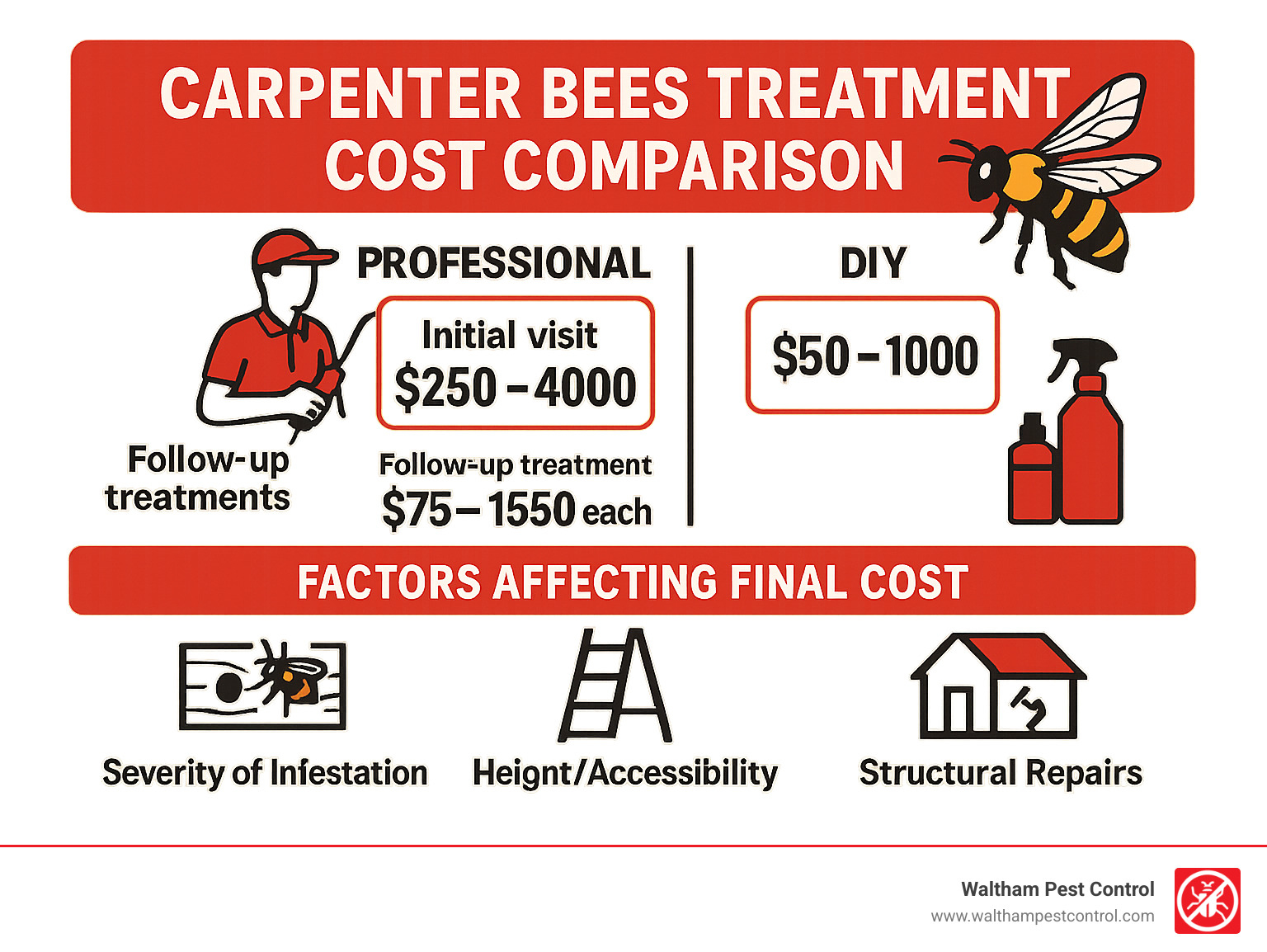
- Professional removal: $100-$2,500 (national average: $450)
- Initial visit: $250-$400 for inspection and treatment
- Follow-up visits: $75-$150 each
- DIY solutions: $50-$100 for store-bought products
- Cost factors: Infestation severity, hole count, height/accessibility, and structural damage
Carpenter bees treatment cost varies widely depending on the extent of the infestation and the degree of damage to your wooden structures. That perfectly maintained deck or wooden porch you’re proud of can quickly become prime real estate for these industrious wood-boring insects. As the weather warms in spring, carpenter bees emerge looking for nesting sites, and the anxiety of potential damage—and unexpected expenses—begins for homeowners across Massachusetts.
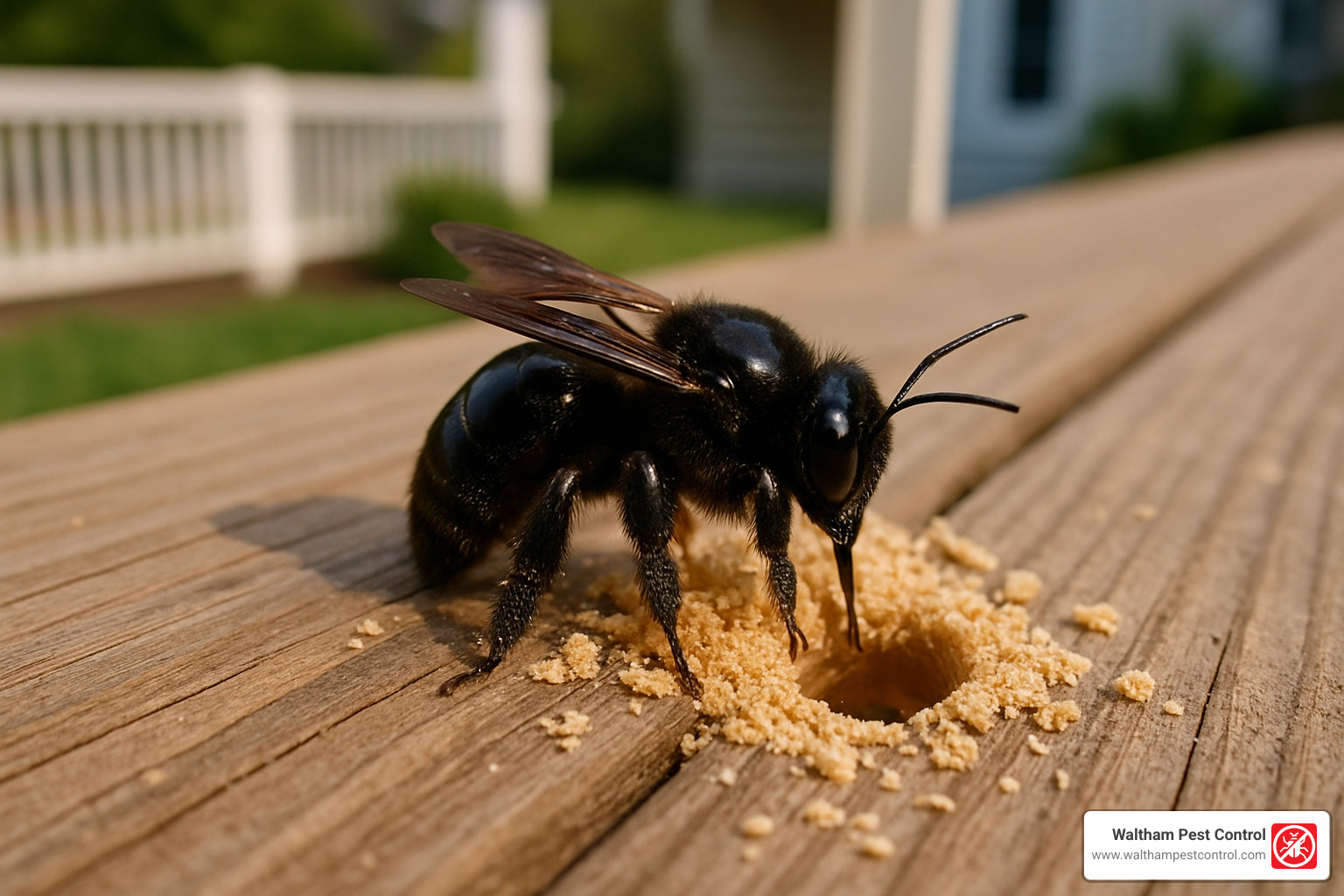
Unlike social honey bees or fuzzy bumble bees, carpenter bees are solitary insects that create perfectly round, dime-sized holes in wood to build their nesting galleries. While a single hole might seem insignificant, these tunnels can extend up to 10 feet over multiple seasons, seriously compromising the structural integrity of your deck, fascia, siding, or eaves.
I’m Waltham Pest Control, President of Waltham Pest Control, and I’ve personally overseen thousands of carpenter bees treatment cost assessments throughout Eastern Massachusetts over my 40-year career in pest management. From minor infestations requiring simple treatments to severe cases demanding extensive repairs, I’ve learned that understanding the true costs involved helps homeowners make informed decisions before damage escalates.
Handy carpenter bees treatment cost terms:
– carpenter bees sting treatment
– home treatment for carpenter bees
Meet the Carpenter Bee: Biology, Damage & Detection
Before we dive deeper into carpenter bees treatment cost, let’s get to know our buzzy adversaries. Unlike their social honey bee cousins who live in busy colonies, carpenter bees are the independent contractors of the bee world – solitary nesters who prefer to do their own thing.

These remarkable insects earned their name honestly. Using their powerful mandibles, female carpenter bees excavate perfect pencil-sized holes (about ½ inch in diameter) into wood. Though they don’t actually eat the wood as some believe, they’re master architects, creating elaborate tunnel systems for raising their young.
Once inside, mama bee creates a main tunnel that typically extends 1-2 inches straight into the wood before making a 90-degree turn and continuing parallel to the surface for several more inches. Within this gallery, she builds a series of cells, each stocked with a pollen-nectar mixture before laying a single egg and sealing it off – nature’s version of a fully-stocked nursery.
What many homeowners don’t realize is that carpenter bees are creatures of habit. They often return to the same nesting sites year after year, extending existing galleries rather than starting from scratch. Over time, these tunnels can stretch an astonishing 10 feet in length! As one of our veteran technicians with 15+ years of experience puts it: “I’ve seen cases where a homeowner spotted just two or three holes, decided it wasn’t worth addressing, and two years later we were replacing entire sections of fascia board that had been honeycombed from within.”
The evidence of their handiwork isn’t just limited to the holes. Look for piles of sawdust (technically called “frass”) beneath active boring sites – this fine wood powder is a telltale sign that carpenter bees are hard at work above. You might also notice dark staining on wooden surfaces from bee waste, which unfortunately can lead to mold growth and further damage.
The U.S. Forest Service has conducted extensive research on carpenter bee biology, documenting their fascinating life cycles and ecological importance as pollinators – despite the headaches they cause for homeowners!
Key Signs You Have a Carpenter Bee Problem
Catching a carpenter bee problem early can save you significantly on carpenter bees treatment cost. Here’s what to watch for:
Those perfect entrance holes are the most obvious sign – round, smooth-edged openings about the size of a dime in unpainted or weathered wood. Check the underside of eaves, fascia boards, decks, and outdoor furniture.
Fresh sawdust piles directly below boring sites are one of the earliest warning signs. If you see what looks like wood dust collecting on your patio or deck, look up – you’ll likely find the source.
Listen carefully and you might hear buzzing in the eaves – the sound of bees moving within their galleries. In spring, hovering males (which, thankfully, cannot sting) patrol nesting areas, often darting at anyone who approaches.
Tap on suspected areas – hollow-sounding wood suggests extensive internal tunneling. And keep an eye out for woodpecker damage too. These birds love feasting on carpenter bee larvae, and their pecking can actually cause more damage than the bees themselves!
How Carpenter Bees Differ From Honey & Bumble Bees
When calculating your potential carpenter bees treatment cost, proper identification is crucial. Carpenter bees are often mistaken for bumble bees, but there are key differences that even a novice can spot.
The most obvious difference is their shiny abdomen. While bumble bees sport fuzzy, yellow-striped bottoms, carpenter bees have sleek, hairless black abdomens that gleam in the sunlight. Think of bumble bees as wearing fuzzy sweaters while carpenter bees prefer a slick leather jacket.
Unlike honey bees that create elaborate hives with thousands of workers, carpenter bees have no hive structure. They’re the loners of the bee world, with each female creating her own nest and provisioning it herself.
Their tunnels are longer and more complex than anything other bees create. While honey bees build wax combs and bumble bees repurpose existing cavities, carpenter bees are true excavators, creating elaborate wooden galleries.
Perhaps most surprising is their lifespan of up to 3 years – significantly longer than many other bee species. This longevity means they have plenty of time to expand their damage in your home if left untreated.
Understanding these differences isn’t just about satisfying curiosity – it directly impacts the treatment approach and cost. After all, the solution for honey bees (often relocation) is entirely different from what’s needed for carpenter bees (usually treatment and wood repair).
Carpenter Bees Treatment Cost: National Averages & New England Realities
When homeowners across Eastern Massachusetts call us about carpenter bees treatment cost, they’re often taken aback by the wide range of prices they hear. It’s like shopping for a car – the sticker price is just the beginning of the conversation!
According to industry data, the national average for carpenter bee removal hovers around $450, but the actual range stretches from a modest $100 for minor infestations to a wallet-draining $2,500 for severe cases where extensive repairs are needed. That’s quite the spread, and for good reason.
Here in New England, we face unique challenges that affect these costs. Our charming historic homes (many built over a century ago) feature abundant wooden elements that carpenter bees find irresistible. Plus, our distinct seasons create a compressed treatment window when these wood-boring pests emerge in late spring, creating peak demand periods that can influence pricing.

I remember a Burlington homeowner who learned this lesson the hard way: “I spotted a few holes in my deck railing but figured it wasn’t urgent. Two months later, the damage had spread to my pergola and porch ceiling. What could have been a simple treatment turned into a much bigger expense because I waited.”
This perfectly illustrates why early intervention is so crucial when it comes to carpenter bees treatment cost – small problems have a nasty habit of becoming big, expensive ones if left untreated.
How Much Does Professional Carpenter Bee Treatment Cost?
Professional carpenter bee services typically structure their pricing in layers, much like the galleries these bees create in your wood. The initial visit for inspection and treatment generally falls between $250 and $400, depending on your property size and how severe the infestation is. Follow-up visits, which are often necessary to ensure complete eradication, typically add another $75 to $150 each.
Height is another major factor in carpenter bees treatment cost. Ground-level infestations are the most affordable to treat, while second-story issues will bump up the price. If you’ve got carpenter bees drilling away in your third-story eaves or dormers? Expect to pay a premium for the specialized equipment and safety measures required to reach those areas safely.
Timing matters too. Some companies offer early-season discounts to encourage preventative treatments before major damage occurs – a bit like the early bird special at your favorite restaurant. On the flip side, if you need emergency service during peak season when everyone else is calling too, you might face premium rates.
The silver lining? Most professional treatments come with guarantees – typically valid until the end of the current season or sometimes longer – so you won’t have to pay twice for the same problem. That peace of mind alone is worth considering when weighing your options.
Carpenter Bees Treatment Cost vs. DIY Expenses
For the handy homeowners among us, DIY carpenter bee control has an undeniable appeal. Store-bought insecticidal dusts and sprays typically cost between $20 and $50, while carpenter bee traps range from $20 to $60 each. Add in some wood putty for sealing holes, protective gear, and application tools, and your total DIY investment usually falls between $50 and $100.
But as with most things in life, the true carpenter bees treatment cost comparison isn’t just about the initial cash outlay. DIY treatments often fall short for several practical reasons:
Safety concerns should top your list – treating liftd areas means climbing ladders while handling chemicals, creating risks of falls and exposure. Plus, male carpenter bees may be harmless hoverers, but females pack a painful sting if they feel threatened.
Limited access is another reality check – homeowners typically can’t safely reach all infested areas, especially those second and third-story trouble spots.
Incomplete application happens frequently without professional equipment – it’s surprisingly difficult to ensure treatment penetrates the entire gallery system, which can extend far beyond the visible entrance hole.
Recurring problems are perhaps the biggest hidden cost – inadequate treatment often leads to reinfestation, requiring you to spend money on supplies again and again.
A Lexington homeowner summed it up perfectly: “I tried the DIY route first with some dust from the hardware store. I spent about $75 on supplies, but the bees came back worse the next year. When I finally called professionals, they found galleries extending much deeper than I’d realized. In hindsight, I would have saved money going professional from the start.”
While DIY might seem like a bargain initially, it often ends up costing more when you factor in repeated treatments and potential structural repairs from ongoing damage. Sometimes the cheapest option ends up being the most expensive in the long run.
7 Factors That Drive Your Final Bill
When homeowners call us asking about carpenter bees treatment cost, they’re often surprised by the range of prices they receive from different companies. Why such variation? Let’s pull back the curtain on what actually determines your final bill.
Think of carpenter bee treatment like auto repair – the same make and model might cost different amounts to fix depending on the damage extent, parts needed, and shop location. Your wooden structures are no different.
The severity of your infestation is perhaps the biggest cost driver. A few isolated holes in your deck railing might require minimal treatment, while dozens of holes scattered across your eaves, fascia boards, and pergola will demand more time, materials, and expertise – affecting your carpenter bees treatment cost accordingly.
Each entrance hole represents an individual gallery system needing treatment. I remember visiting a Wellesley home where what initially looked like “just a few holes” in the front porch ceiling revealed over 30 separate galleries once we conducted a thorough inspection around the entire property. More holes mean more work.
Height and accessibility play a major role too. Ground-level treatments are naturally less expensive than those requiring extension ladders, roof access, or lift equipment. Many companies (including ours) structure pricing by story, with second and third-floor infestations commanding higher rates due to additional safety considerations and equipment needs.
The total square footage of affected wood surfaces also matters. A modest Cape-style home with minimal wooden trim presents a different treatment scope than a sprawling Colonial with wooden siding, extensive trim work, and multiple outbuildings – all of which affect your carpenter bees treatment cost.
Regional factors come into play as well. Labor rates vary across Eastern Massachusetts, with services in areas like Newton, Cambridge, or downtown Boston typically commanding higher rates than those in surrounding communities. These regional economic differences get built into every quote you receive.
The scope of preventive work included makes a difference too. Comprehensive treatment should include sealing existing holes to prevent reuse. The number of holes needing this attention and the materials used (wood putty, caulk, or wooden plugs) will influence your total investment.
Finally, guarantee length and terms affect pricing. More extensive warranties typically come with higher upfront costs but may provide better long-term value. As one of our longtime customers in Arlington told me, “I’d rather pay a bit more knowing I won’t be nickeled-and-dimed if the problem persists.”
What’s Included in a Professional Service?
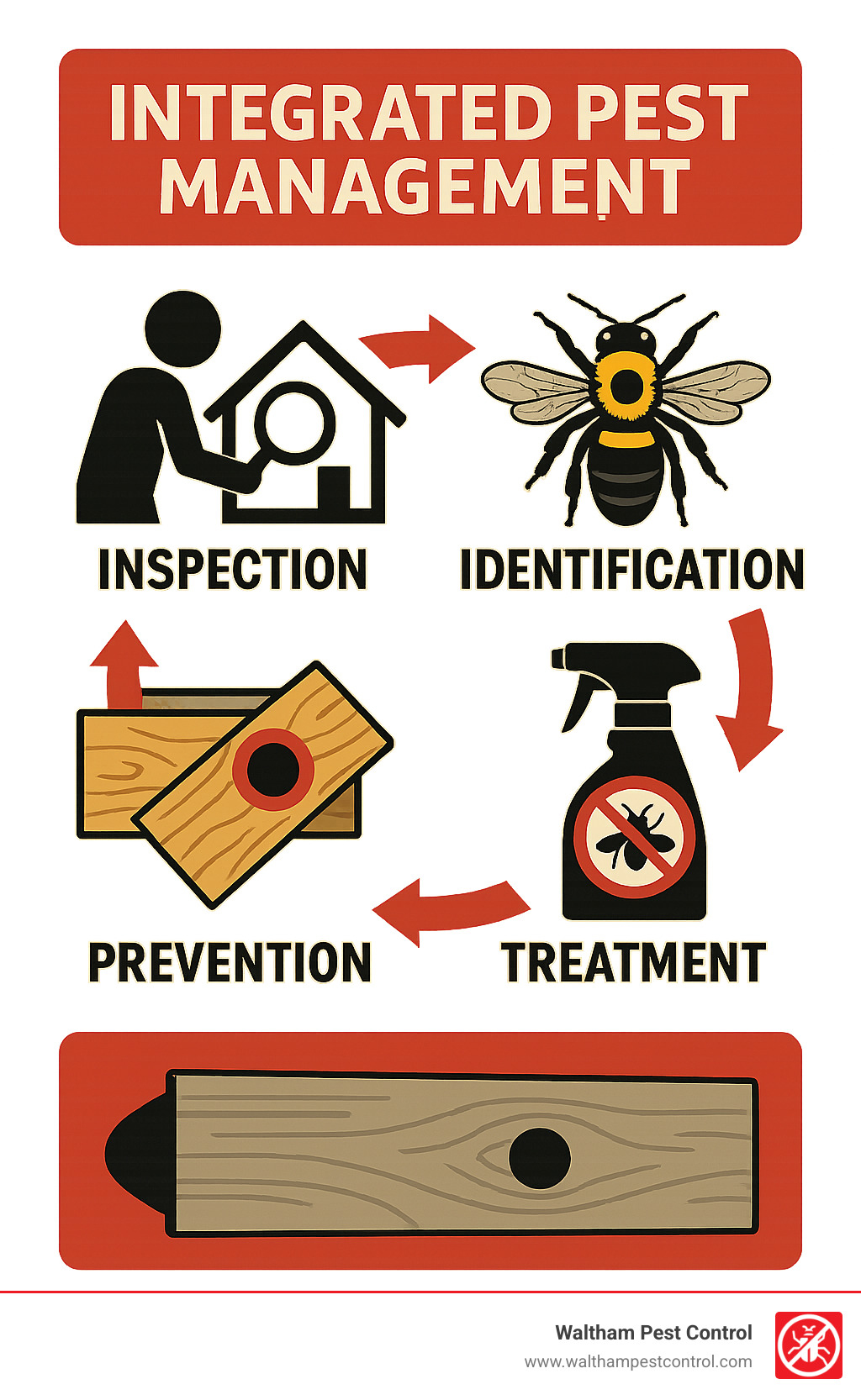
So what exactly should you expect when investing in professional carpenter bee control? A quality service includes several key components that justify the carpenter bees treatment cost.
First comes a thorough inspection. A qualified technician should examine your entire property, not just the areas where you’ve spotted activity. The professionals I train are taught to look for hidden galleries in areas homeowners often miss – like the underside of eaves, behind gutters, and wooden trim around windows and doors.
After identifying all active galleries, targeted treatment application follows. We typically use commercial-grade insecticidal dusts applied directly into active tunnels with specialized equipment that ensures the product reaches the deepest recesses of each gallery. These professional-grade products are designed to eliminate both adult bees and developing larvae.
Rather than just treating individual holes, a comprehensive approach includes treating entire wooden surfaces. This whole-board treatment creates an invisible barrier that affects carpenter bees when they attempt to create new galleries or return to existing ones – an important preventive step.
Gallery sealing is critical but often overlooked. After treatment, each hole should be properly sealed to prevent reuse. A properly trained technician knows that sealing holes too early actually traps bees inside, potentially driving them deeper into the wood or through interior walls. Timing matters!
Quality services always include at least one follow-up visit to assess treatment effectiveness. As a Marblehead client recently told me, “What impressed me most was that they actually came back to check their work without me having to call and complain.”
A written warranty or guarantee provides peace of mind. Professional companies stand behind their work with documentation specifying exactly what was done and what happens if the problem persists. Be wary of verbal promises that can’t be referenced later.
Finally, education is part of what you’re paying for. Professional technicians should explain why carpenter bees targeted your property and offer specific recommendations for preventing future problems through wood treatment, maintenance, or structural modifications based on Integrated Pest Management (IPM) principles.
When evaluating quotes, the lowest price isn’t always the best value. The true measure of carpenter bees treatment cost effectiveness is whether it solves your problem for good.
Preventing a Comeback: Investments That Save Money Long-Term
When you’re looking at your carpenter bees treatment cost, it’s smart to think beyond just getting rid of today’s problem. I’ve seen countless homeowners tackle an infestation only to face the same issue—and another bill—the following spring. The good news? A few strategic investments now can save you significant money down the road.
Think of it like this: treating carpenter bees without prevention is like patching a leaky roof without fixing the underlying issue. It might work for now, but you’re almost guaranteed to face the problem again.
Painting or staining your exposed wood is perhaps the simplest yet most effective preventive measure. Carpenter bees are incredibly picky about their homes—they strongly prefer bare, weathered wood, especially softwoods like pine, cedar, and fir. A fresh coat of quality exterior paint or stain creates a surface they’ll typically bypass in search of easier options. I’ve watched homeowners transform from annual carpenter bee victims to completely bee-free after properly treating their wooden structures.
Don’t forget to fill those old galleries properly! Even after treatment, existing holes should be sealed with wood putty, wooden dowels, or quality exterior caulk. Those perfectly drilled holes are like “vacancy” signs for next season’s bees if left open. This simple step can dramatically reduce future carpenter bees treatment cost.
For particularly vulnerable areas like fascia boards and eaves, consider vinyl or aluminum wrapping. While this requires a larger upfront investment, covering all three sides (front, underside, and back) creates a physical barrier that makes boring impossible. Many of our clients who’ve chosen this option haven’t needed carpenter bee services for years afterward.
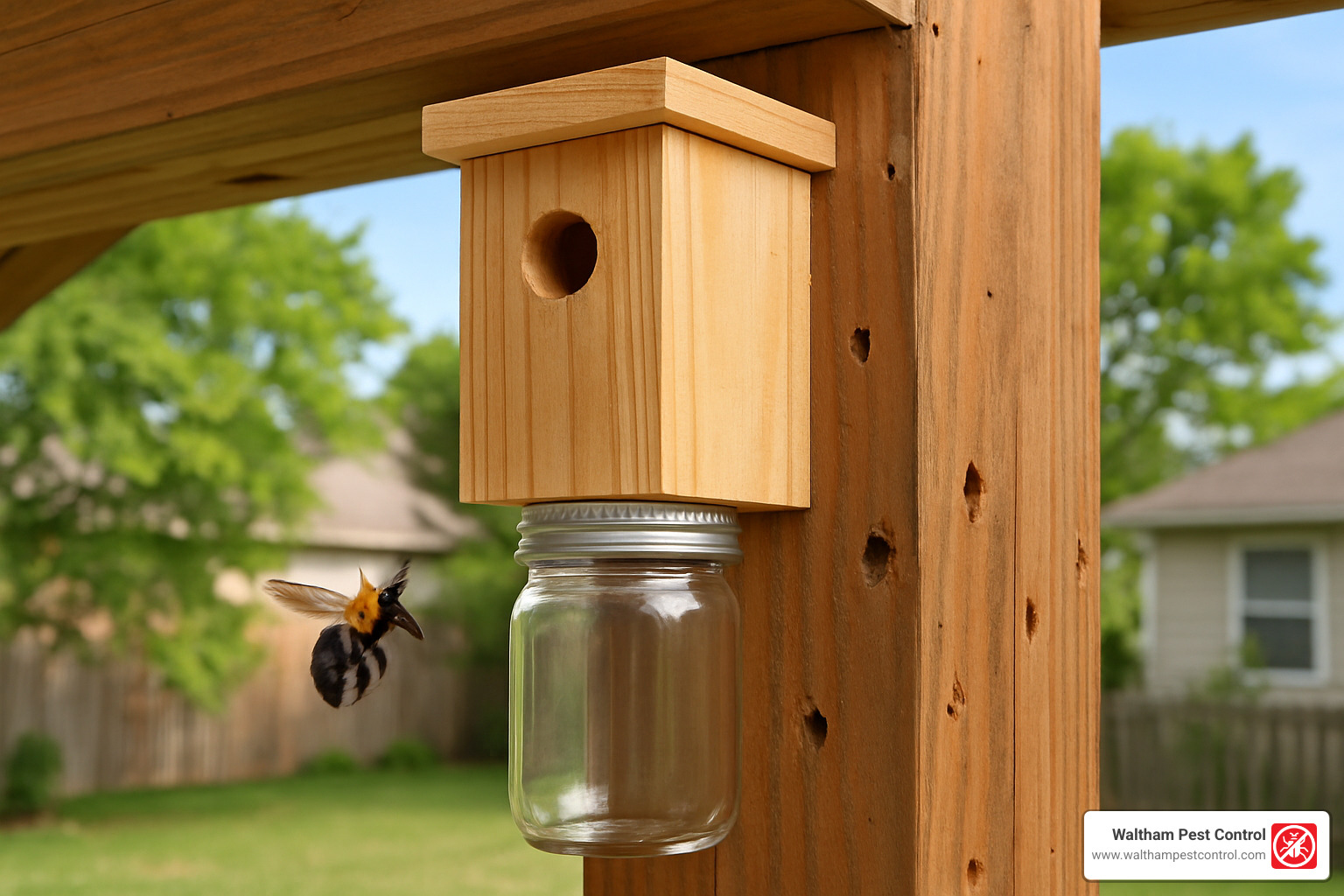
Here’s a creative approach that works surprisingly well: install bee hotels! These alternative nesting sites redirect carpenter bees away from your home’s wooden structures. Commercial bee hotels or DIY versions made from untreated wood blocks with pre-drilled holes serve as decoys while supporting these important pollinators. It’s a win-win solution that many environmentally-conscious homeowners appreciate.
Annual inspections might seem like an unnecessary expense, but they’re actually one of the most cost-effective preventative measures. Catching new carpenter bee activity before it becomes extensive can save hundreds in potential carpenter bees treatment cost. Many pest control professionals offer maintenance plans that include periodic inspections at a fraction of emergency treatment rates.
“One of our clients in Winchester had battled carpenter bees for years,” our senior technician told me recently. “After implementing a comprehensive prevention plan—painting all exposed wood, sealing old galleries, and installing vinyl wraps on fascia boards—they haven’t needed treatment in three years. Their initial investment saved them hundreds in potential ongoing costs.”
For residents in specific areas like Peabody who want more targeted information, our carpenter bee removal in Peabody page offers localized guidance.
Don’t forget about secondary woodpecker control! These birds love feasting on carpenter bee larvae and can actually cause more damage than the bees themselves as they peck into wood to reach the insects. Addressing both issues simultaneously provides more comprehensive protection for your home.
Does Insurance Ever Cover Carpenter Bee Damage?
“Will my insurance cover this?” It’s one of the most common questions I hear about carpenter bees treatment cost, and unfortunately, the answer is typically no. Most standard homeowners insurance policies specifically exclude damage caused by insects and pests, including our industrious carpenter bee friends.
Insurance companies generally view pest control as routine home maintenance—your responsibility rather than theirs. It’s similar to how they don’t cover regular lawn care or gutter cleaning. However, there are a few exceptions worth exploring:
Some insurance companies offer additional coverage for pest-related damage as optional riders to standard policies. These add-ons typically come with an extra premium but may cover carpenter bee removal and associated repairs under certain circumstances. If you live in an area where carpenter bees are prevalent, this might be worth discussing with your agent.
There’s also an interesting gray area around “resulting damage coverage.” While the direct damage from carpenter bees is usually excluded, some policies may cover secondary damage that results from an infestation. For example, if bee tunneling causes a structural beam to fail, resulting in roof damage, your policy might cover the roof repair even though it won’t cover the initial pest damage.
Documentation matters tremendously in these situations. If you find carpenter bee damage, take detailed photos and notes, even if you believe insurance won’t cover it. This evidence can prove invaluable if you decide to pursue a claim or if the damage leads to covered secondary issues.
I always recommend speaking directly with your insurance agent about your specific policy terms. In some cases, particularly for high-value homes with premium coverage, there may be provisions for pest-related claims that could offset your carpenter bees treatment cost.
The best insurance is prevention. Taking proactive steps to make your property less attractive to carpenter bees will almost always be more cost-effective than dealing with damage after it occurs—whether insurance helps with the bill or not.
Frequently Asked Questions About Carpenter Bee Treatment Costs (3 minute read)
Why do quotes vary so much between pest control companies?
When you’re gathering estimates for carpenter bees treatment cost, you might be surprised to see prices ranging from $200 to over $600 for what seems like the same service. This variation isn’t random—it typically reflects meaningful differences in what you’re actually getting.
Higher-priced services usually include premium treatment products that last longer and work more effectively. They often cover more comprehensive treatment of all wooden surfaces, not just the obvious problem areas. Many premium services also come with extended guarantee periods, giving you protection if the bees return.
I recently spoke with a homeowner in Arlington who shared her experience: “I was initially drawn to the lowest quote, but when I asked more questions, I finded the higher-priced option included a full-season guarantee and two follow-up visits. The cheaper company offered just a one-time treatment with no warranty. The difference suddenly made perfect sense.”
The experience level of technicians, quality of equipment, and even the company’s liability insurance coverage all factor into pricing. When evaluating quotes, look beyond the bottom line to understand exactly what’s included. That slightly higher initial investment often translates to better long-term value through more effective treatment and stronger guarantees.
Will carpenter bees return after one treatment?
This is perhaps the most common concern I hear from homeowners worried about ongoing carpenter bees treatment cost. The truth is that proper professional treatment should eliminate your current carpenter bee population, but whether new bees will be attracted to your property in future seasons depends on several factors.
Your risk of reinfestation increases if old galleries aren’t properly sealed, if wooden surfaces remain unpainted or untreated, or if your property has abundant suitable nesting wood. Even neighboring properties with untreated infestations can serve as a source of new carpenter bees.
Quality pest control services typically include a guarantee period—usually until the end of the current season or sometimes extending to the following spring. During this period, if carpenter bees return, you should receive retreatment at no additional cost.
A client in Wellesley recently told me, “After wasting money on DIY treatments year after year, I finally invested in professional service with a seasonal guarantee. When a few bees showed up again a month later, the company returned promptly at no charge. That peace of mind alone was worth the investment.”
The best approach combines effective treatment with preventive measures like painting exposed wood and sealing old galleries to minimize the likelihood of future infestations.
Is professional treatment worth it if I only see a few holes?
When homeowners see just two or three carpenter bee holes, they often wonder if the carpenter bees treatment cost is justified. This is a valid question, but those few visible holes can be deceiving in several important ways.
First, carpenter bee damage extends far beyond what you can see from the outside. Those small, perfect entrance holes typically lead to extensive internal tunneling—often running several inches or even feet inside the wood. What appears to be minor surface damage might actually be compromising your structure from within.
Second, carpenter bee populations can expand rapidly. Each female can create multiple tunnels for egg-laying, and their offspring frequently return to the same area to create additional galleries. That small problem you see today can multiply quickly by next season.
Third, carpenter bees prefer to extend existing galleries rather than creating entirely new ones each season. This compounds the structural damage over time, potentially leading to expensive repairs.
Finally, those innocent-looking bee holes can attract woodpeckers, which cause additional damage while hunting for bee larvae. The galleries may also provide entry points for other wood-destroying insects, compounding your pest problems.
A homeowner in Concord recently shared her experience: “I hesitated about paying for professional treatment because I only saw three holes in my porch ceiling. When the technician showed me how the galleries extended throughout the entire support beam, I was shocked. What looked like a minor issue was actually threatening my porch’s structural integrity. The professional treatment was absolutely worth every penny.”
For most homeowners, professional treatment provides value through thorough elimination, structural preservation, and peace of mind—even for seemingly minor infestations.
Conclusion
As we’ve journeyed through carpenter bees together, it’s clear that carpenter bees treatment cost involves much more than just the initial price tag. The true investment includes not just elimination, but the effectiveness of treatment, potential structural repairs, prevention measures, and that invaluable peace of mind that comes with knowing your home is protected.
I’ve seen this scenario play out countless times over the years: a homeowner notices a couple of small holes in their deck railing or porch ceiling and thinks, “I’ll get to that next month.” Fast forward to the following spring, and those few innocent-looking holes have multiplied, with extensive tunneling that compromises the structural integrity of their wooden elements. What might have been a straightforward treatment becomes a much costlier repair project.
Early intervention is truly your best financial strategy when it comes to carpenter bees. Think of it as catching a small leak before it floods your basement – a stitch in time really does save nine (or in this case, possibly hundreds or thousands of dollars).
When you’re weighing your options for carpenter bee control, keep these essential points in mind:
Professional treatments might seem more expensive upfront compared to DIY approaches, but they typically deliver more complete elimination and include guarantees that protect your investment. The peace of mind alone – knowing experts have thoroughly addressed the problem – is worth considering in your calculation.
The cost of doing nothing can far exceed the cost of treatment. Those industrious bees can cause thousands in structural damage if left to their own devices, turning minor repairs into major renovations.
Smart prevention strategies like painting exposed wood surfaces, properly sealing old galleries, and installing physical barriers provide excellent long-term protection and significantly reduce future expenses. These proactive measures are often the most cost-effective approach in the long run.
When reviewing quotes from different providers, look beyond just the bottom line. Consider what’s actually included – treatment scope, materials used, guarantee periods, and follow-up visits all impact the true value you’re receiving.
At Waltham Pest Control, we’ve been helping homeowners across Eastern Massachusetts tackle carpenter bee problems for more than four decades. Our licensed, insured technicians understand the unique challenges of New England homes and climate, delivering customized treatment solutions for each property’s specific needs. We’re committed to providing effective, lasting results that protect your home for the long term.
For more information about our specialized carpenter bee services and how we can help safeguard your property, visit our carpenter bee services page.
When it comes to carpenter bees, prompt attention isn’t just about maintaining your property’s curb appeal – it’s about protecting one of your most significant investments from unnecessary damage and expense. The right approach now can save you considerable headaches and costs down the road.
