
Wildlife Trapping and Removal: 4 Safe Steps
Understanding What Wildlife Trapping and Removal Really Involves
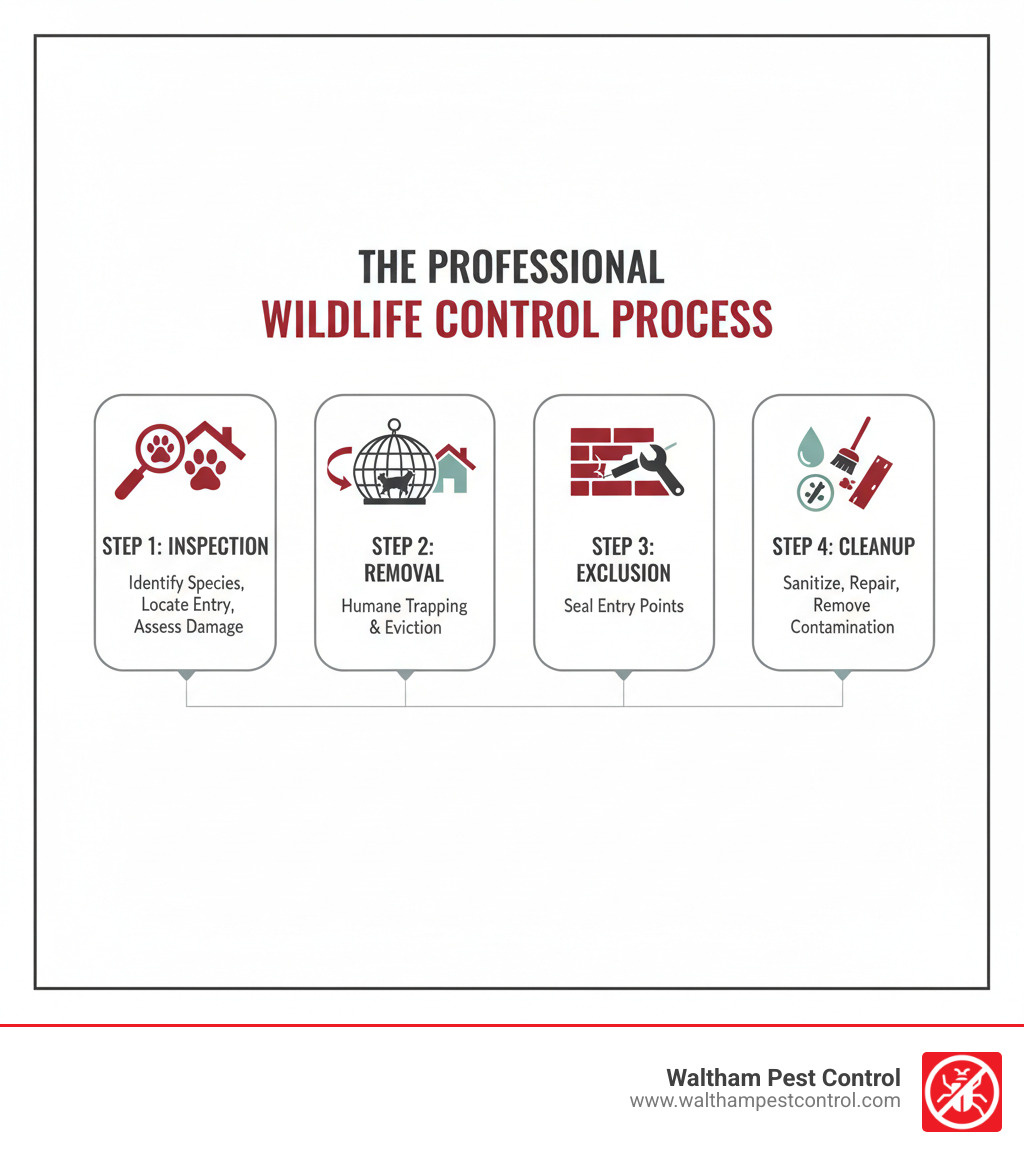
Wildlife trapping and removal is the professional process of capturing nuisance animals, relocating them safely, and securing your home to prevent their return. It involves four key steps:
- Inspection: A certified technician identifies the species, locates entry points, and assesses damage.
- Removal: Humane trapping or eviction using live traps, one-way doors, or exclusion devices.
- Exclusion: Sealing all entry points with durable materials to prevent re-entry.
- Cleanup: Sanitizing affected areas, repairing damage, and removing contaminated materials.
Wildlife conflicts are increasingly common as development encroaches on natural habitats. Homeowners frequently deal with raccoons in attics, bats in chimneys, and other unwanted animal intrusions.
The challenge isn’t just getting the animal out—it’s doing so safely, legally, and permanently.
Many homeowners attempt DIY removal only to face recurring problems, health risks from disease transmission, or legal issues with protected species. Professional wildlife control operators understand animal behavior, local regulations, and proven techniques that address both the immediate problem and its root causes.
I’m Waltham Pest Control, President & CEO of Waltham Pest Control. With over 40 years of experience in Eastern Massachusetts, my team has handled every wildlife scenario imaginable, from bat colonies in historic homes to skunks under suburban decks. We know what property owners can expect during the removal process.
Quick look at wildlife trapping and removal:
Signs of an Intruder: Identifying Your Unwanted Guest
A scratching sound at 2 AM, a strange smell, or a torn vent cover are all signs that you have an uninvited wildlife guest.
In Eastern Massachusetts, common culprits requiring wildlife trapping and removal include raccoons in attics, squirrels in walls, bats in chimneys, and skunks under decks. We also see opossums, rodents, and birds nesting in vents and soffits. Each species leaves unique signs, and identifying them is the first step toward reclaiming your space.
For comprehensive help identifying and addressing these issues, check out our wildlife control services.
Telltale Sounds and Smells
Your ears and nose often provide the first clues that you’re sharing your home. Listen for:
- Scratching and Scurrying: Squirrels are active during the day, while raccoons, mice, and rats are nocturnal. If you’re hearing activity after dark, that’s your clue.
- Loud Thumping: Heavy sounds in the attic or on the roof at night almost certainly indicate a raccoon. You may also hear whining or mewing sounds, which indicate young.
- Chirping or Squeaking: This often points to bats, especially if it’s coming from the attic or chimney, but can also be baby animals of many species.
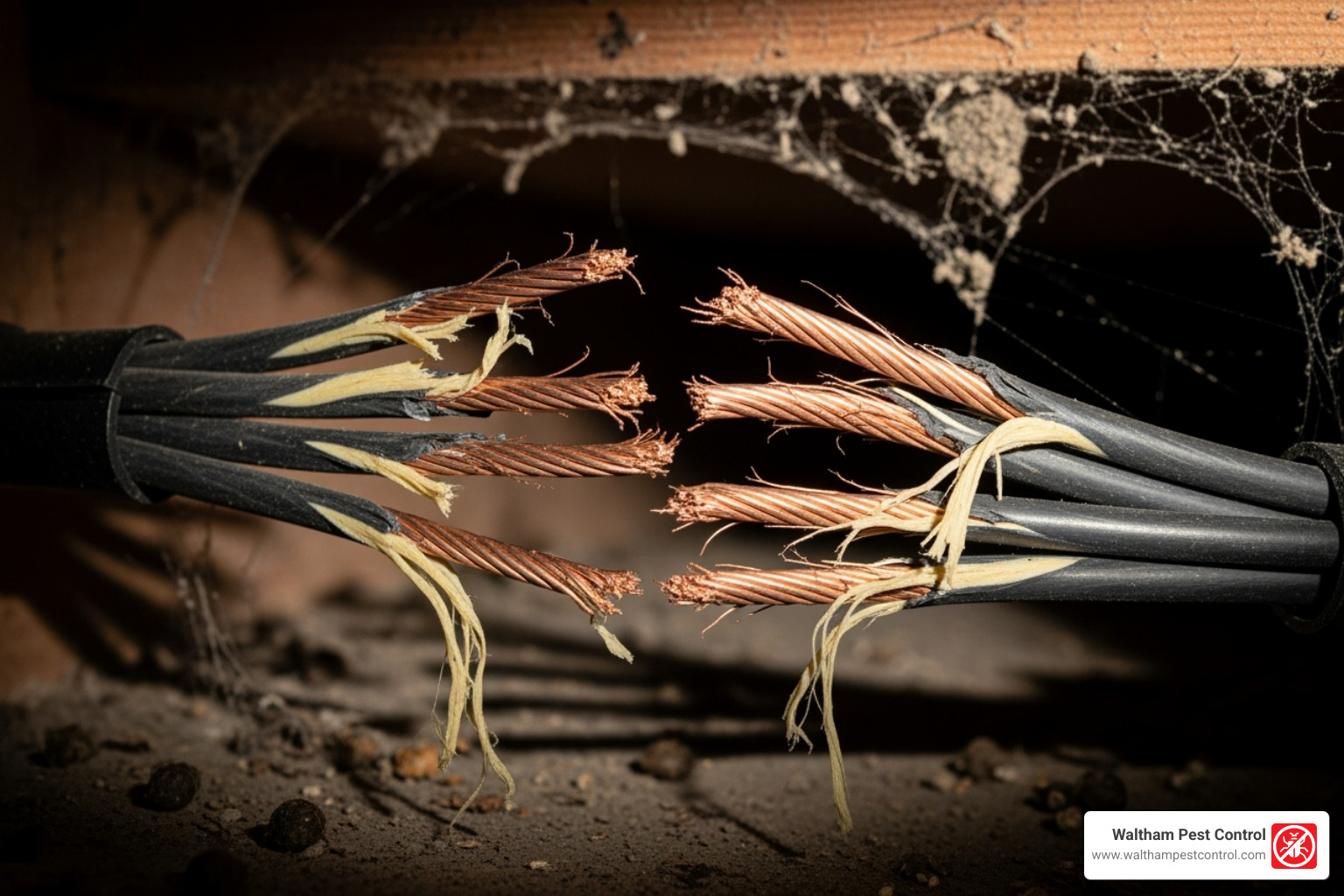
- Gnawing: Rodents or squirrels constantly chew on wood, wires, and pipes to file their teeth.
- Musty or Ammonia-like Odors: These smells are hallmarks of bat guano or animal urine and intensify in warm, humid weather.
If you’ve been hearing suspicious activity on your roof after dark, our guide on raccoons on roof at night can help you understand what’s happening up there.
Visual Evidence of Wildlife
Beyond sounds and smells, look for physical evidence that tells you who’s been visiting:
- Droppings (Scat): The size, shape, and contents help identify the species. Raccoons often create communal “latrines” on flat surfaces like roofs. Learn more about the health risks in our article on professional raccoon latrine removal.
- Nests: Animals build nests from shredded insulation, leaves, and twigs in safe places like attics, chimneys, and vents.
- Property Damage: Look for torn soffits, damaged roof vents, or chewed wires and wood. This damage is not just an annoyance; it can create fire hazards and structural issues.
- Greasy Rub Marks: Oily streaks appear on walls and beams along frequently used travel routes as animals squeeze through openings.
- Dug-up Lawns: Skunks, raccoons, and opossums dig for grubs, leaving cone-shaped holes in your yard. This can quickly turn a pristine lawn into a mess. For more on this specific issue, visit our page about raccoons tearing up yard.

If you’re noticing any combination of these signs, it’s time to call in professional help. The sooner you address a wildlife intrusion, the easier the wildlife trapping and removal process will be.
The Hidden Costs: Property Damage & Health Risks
Wildlife in your home brings destruction and danger. A minor intrusion can quickly escalate into thousands of dollars in repairs and serious health scares. Professional wildlife trapping and removal is about protecting your investment and your family’s wellbeing.
Dangers to Your Property
Wildlife can cause significant property damage faster than most people realize:
- Insulation Damage: Animals tear, compress, and contaminate insulation with waste, reducing its effectiveness and driving up energy costs.
- Fire Hazards: Rodents and squirrels chew on electrical wiring, creating a serious risk of house fires.
- Structural Damage: Raccoons and squirrels rip apart shingles, soffits, and vents, leading to water leaks, rotted wood, and mold.
- Blocked Vents: Nests in chimneys or dryer vents can cause carbon monoxide buildup and fire hazards.
- Yard Destruction: Skunks and raccoons dig up lawns and gardens searching for food. If you’re dealing with raccoons tearing up your yard, you know the frustration.
Health Risks Associated with Wildlife
The property damage is bad enough, but wildlife also poses serious health risks from the diseases and parasites they carry:
- Rabies: This fatal disease is carried by bats, raccoons, and skunks. Any direct contact requires immediate medical attention.
- Histoplasmosis: A serious respiratory illness caused by a fungus found in accumulated bat guano. This is why we offer professional raccoon latrine removal services to handle contaminated areas safely.
- Leptospirosis: A bacterial disease spread through animal urine that can cause severe flu-like symptoms and, in serious cases, kidney or liver damage.
- Parasites: Animals bring fleas, ticks, and mites into your home. Ticks can transmit serious illnesses like Lyme disease to people and pets.
- Salmonella: Rodent and bird droppings can contaminate surfaces and lead to food poisoning.
The combination of property damage and health hazards makes wildlife intrusion a genuine emergency that requires professional wildlife trapping and removal to resolve safely.
The Professional Wildlife Trapping and Removal Process
Our professional wildlife trapping and removal process is a systematic approach designed to solve your problem permanently and humanely. Here’s what to expect.
Step 1: Comprehensive Property Inspection
Every successful removal starts with a thorough inspection to identify the species, locate all entry points (not just the obvious ones), and assess the full extent of damage and contamination. Using tools like thermal cameras and borescopes, we find hidden nests and entryways that are not visible to the naked eye. This allows us to create a customized removal and repair plan custom to your specific situation.
Step 2: Humane Wildlife Trapping and Removal
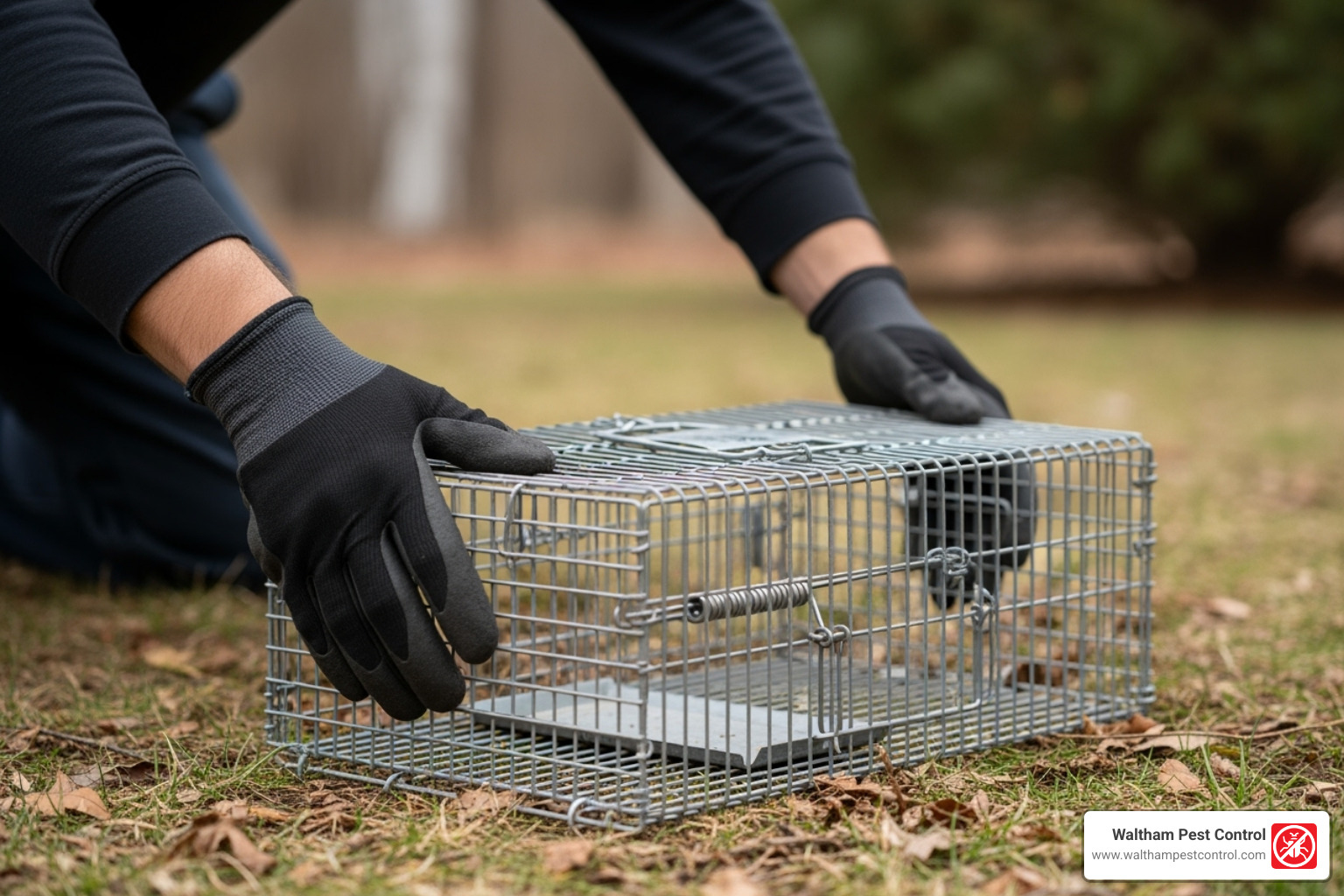
We are committed to humane and effective removal. Our methods include using live traps, which capture animals without injury, and one-way doors that allow animals to exit but not re-enter. These techniques minimize stress on the animal. We strictly adhere to all local, state, and federal regulations regarding wildlife handling, including guidelines from organizations like the Humane Wildlife Control Society.
Our comprehensive animal trapping services are custom to your specific situation, whether you’re dealing with one animal or an entire colony.
Step 3: Special Considerations for Challenging Wildlife
Certain animals require specialized knowledge and techniques that go beyond standard removal methods:
- Bat Removal: As a protected species, bat removal requires careful timing and exclusion devices to avoid maternity season (typically April 1st through August 31st in Massachusetts), when trapping flightless young inside is illegal and inhumane.
- Maternity Season Restrictions: For many species, including raccoons and squirrels, we must plan removals around breeding seasons to ensure we are not creating orphaned animals.
- Snake Identification and Handling: Proper identification is critical to ensure safe handling and removal, as approaches differ between venomous and non-venomous species.
- Skunk Spray Risk: We use specific techniques that minimize the risk of a skunk spraying, which can leave a lasting, potent odor on your property.
- Bird Nesting Issues: Many birds are protected by federal law, so nest removal must be timed correctly and followed by installing deterrents to prevent their return and the health hazards from their droppings.
- Rodent Control: Due to their rapid breeding and destructive chewing, rodent control requires a comprehensive approach combining trapping, exclusion, and sanitation to prevent re-infestation.
After the Eviction: Repair, Cleanup, and Prevention
Removing the animal is only half the battle. The final phase of wildlife trapping and removal involves repairing the damage and preventing future intrusions to protect your home and health.
Repairing Damage and Sanitizing the Area
The cleanup and repair phase is critical for restoring your home to a safe, healthy condition. This includes:
- Replacing soiled insulation that has been contaminated with urine and feces, which destroys its energy efficiency.
- Repairing chewed electrical wires to eliminate serious fire hazards.
- Deodorizing and disinfecting affected areas with professional-grade products to neutralize odors and kill dangerous pathogens like those causing histoplasmosis or leptospirosis.
- Sealing every entry point with durable, chew-proof materials like heavy-gauge screening, metal flashing, and concrete to prevent re-entry.
Our comprehensive animal removal services always include these critical repair and sanitation steps.
Proactive Prevention and Future-Proofing
Once your home is secure, proactive prevention is key. Simple maintenance can make your property less attractive to wildlife. This includes securing trash cans, trimming tree branches away from the roof, and ensuring all vents are screened. Removing attractants like pet food left outdoors or fallen fruit also makes a huge difference.
Here are our Top 5 Home Maintenance Tips to Prevent Wildlife Entry:
- Inspect your roof, fascia, and soffits regularly for damage or gaps that need repair.
- Install and maintain chimney caps and vent screens on all openings.
- Trim tree branches and shrubs away from your home’s exterior walls and roof.
- Secure all outdoor food sources including trash, pet food, bird feeders, and compost.
- Seal any cracks or holes in your foundation, siding, and exterior walls.
These steps are incredibly effective. We’ve been protecting homes in Eastern Massachusetts for over 40 years, and properties that follow these guidelines rarely need repeat visits. That’s our goal: to solve your problem once and for all.
Understanding the Rules: Legal & Ethical Considerations
Effective wildlife trapping and removal must be done legally and ethically. Wildlife control is heavily regulated to protect animals and public health, and navigating these rules requires professional expertise.
The Legality of Wildlife Trapping and Removal
Wildlife laws vary by state and municipality. In Massachusetts, where we operate, specific rules govern which animals can be trapped and what can be done with them.
- Protected Species: Many birds and all bat species are protected by law. Removing them often requires special permits from agencies like the U.S. Fish and Wildlife Agency and cannot be done during sensitive periods like maternity season.
- Relocation Rules: Transporting wildlife is often restricted to prevent the spread of diseases like rabies and to avoid moving a problem to someone else’s property.
- Humane Methods: If lethal control is necessary and legal, it must adhere to strict guidelines, such as those from the AVMA Guidelines for the Euthanasia of Animals. Unapproved methods are considered inhumane and illegal.
A professional service ensures all actions are compliant with the law, protecting you from potential fines and legal issues.
The Cost of Professional Wildlife Trapping and Removal
The cost of professional wildlife trapping and removal varies based on the type of animal, the extent of the infestation, access difficulty, and the amount of damage repair needed.
Based on national data gathered from various sources, here’s what property owners across the country typically encounter. These are average cost ranges and do not reflect specific pricing for Waltham Pest Control. Actual costs depend on your unique situation and can range from $200 for a simple trapping visit to over $5,000 for complex jobs involving bat colony exclusion and full attic restoration.
| Service Type | Average Cost Range (National) |
|---|---|
| Inspection Fees | $100 – $300 |
| Basic Trapping & Removal (per animal/visit) | $150 – $600 |
| Rodent (Mice/Rats) Exclusion & Removal | $300 – $1,000 |
| Squirrel Removal & Exclusion | $400 – $1,200 |
| Raccoon Removal & Exclusion | $500 – $1,500 |
| Skunk Removal & Exclusion | $400 – $1,200 |
| Opossum Removal & Exclusion | $350 – $1,100 |
| Bat Exclusion (Colony) | $1,000 – $5,000+ |
| Bird Exclusion (per entry point) | $300 – $900 |
| Snake Removal | $150 – $500 |
| Dead Animal Removal | $150 – $500 |
| Damage Repair & Cleanup (Attic restoration) | $500 – $5,000+ |
Emergency services and your location can also influence pricing. While professional services are an investment, they provide a permanent solution. DIY attempts often fail to address the root cause, leading to recurring problems and potentially higher costs in the long run.
Conclusion
Wildlife problems don’t solve themselves; they only get worse, more expensive, and more dangerous over time. The scratching in your walls or the damage to your roof are signs that require immediate action.
This guide has shown that professional wildlife trapping and removal is a comprehensive process involving inspection, humane removal, cleanup, and prevention. It’s the only way to address the property damage and health risks—from chewed wires and soiled insulation to diseases like rabies and histoplasmosis.
DIY methods rarely provide a long-term solution because they don’t address entry points or underlying issues. Professional wildlife control is about permanently solving the problem by understanding animal behavior, following all laws, and fortifying your home against future intrusions. It’s about protecting your investment and safeguarding your family’s well-being.
At Waltham Pest Control, we understand the stress of sharing your home with unwanted guests. We’re committed to resolving these issues with the professionalism and expertise they deserve.
Don’t wait until minor damage becomes major repairs. For expert and humane wildlife removal in Eastern Massachusetts, trust a team with over 40 years of experience to protect your home and family. Contact us for a professional pest inspection today!
