

When Do Termites Swarm? Top 3 Shocking Facts 2025
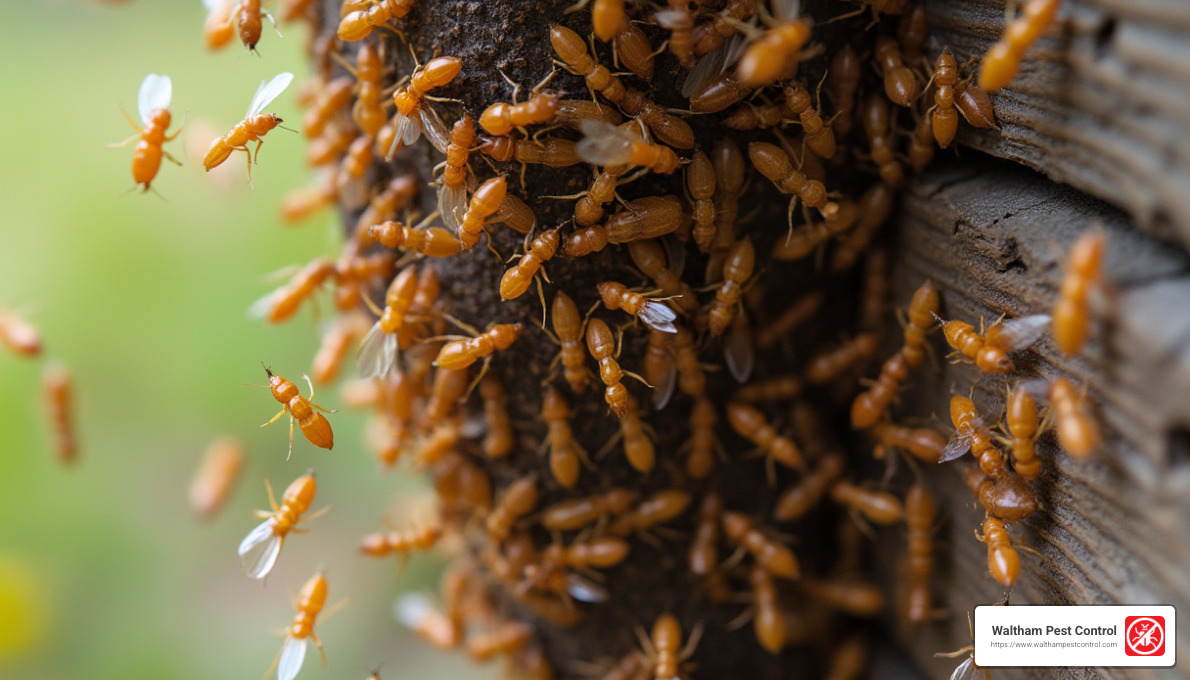
When do termites swarm? This common question is crucial for homeowners who want to stay ahead of potential infestations. Termites typically swarm during the warmer months of the year when they are ready to expand their colonies. Here’s a quick guide on when you might notice swarming activity:
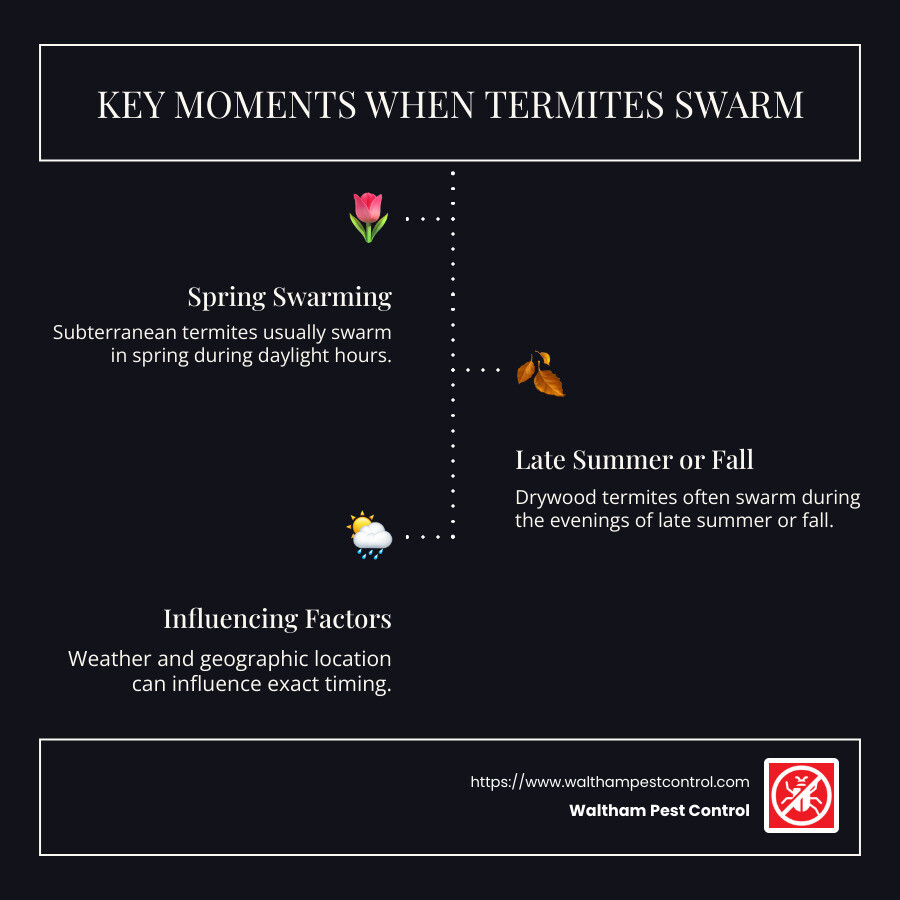
- Subterranean termites: Usually swarm in the spring during daylight hours, primarily from March to June.
- Drywood termites: Often swarm in the late summer or fall, mostly during the evenings.
- Weather and geographic location can influence the exact timing.
Termite swarming is a natural part of their lifecycle and a signal that termites are on the move, looking to multiply and establish new colonies near abundant food sources. During the swarming season, winged reproductive termites, known as alates, take flight to mate and find suitable locations to start new colonies. This swarming event can result in new infestations if not promptly addressed.
I am Waltham Pest Control, and with over 40 years of experience in pest control, I’ve observed countless swarming seasons and helped many homeowners understand when do termites swarm and how to protect their properties effectively.
Important when do termites swarm terms:
– are termites attracted to light
– can termites fly
– dead termites
What is a Termite Swarm?
A termite swarm is an essential phase in the life of termites. It’s when winged termites, called alates, leave their home colony to find new places to start colonies of their own. This swarming event is crucial for the reproduction and expansion of termite populations.
The Role of Alates
Alates are the star players in a termite swarm. They are the reproductive members of the termite colony, specifically bred to fly off, mate, and establish new colonies. Think of them as the pioneers of the termite world, setting off to explore and settle new territories.
Reproduction and Colony Expansion
During a swarm, alates pair up, shed their wings, and begin the process of creating a new home. The success of a swarm largely depends on environmental conditions. Warm temperatures and high humidity levels make for the perfect swarming conditions, allowing the termites to build their nests easily in damp soil.
Colony expansion is the ultimate goal. When a termite colony reaches a certain size, it produces alates to ensure its survival and growth. This means that if you see a swarm, there’s likely a thriving termite colony nearby.
Why Swarming Matters
For homeowners, spotting a termite swarm can be a warning sign of potential infestations. It indicates that a termite colony is mature and looking to expand, which could mean trouble for wooden structures in the vicinity.
Understanding the nature of termite swarms can help you take proactive measures to protect your home. By recognizing the signs early and contacting pest control professionals, you can prevent termites from establishing new colonies in your property.
In the next section, we’ll explore why termites swarm and what triggers this fascinating yet concerning behavior.
Why Do Termites Swarm?
Termites swarm as a natural part of their lifecycle, driven by the need to reproduce and expand their colonies. Swarming is triggered by several factors, including colony capacity, environmental conditions, and the innate drive to mate.
Colony Capacity
A termite colony swarms when it reaches a certain size. This is nature’s way of ensuring that the colony doesn’t become overcrowded. When the population grows large enough, the colony produces alates—winged termites ready to start new colonies.
The production of alates is a sign of a mature and thriving colony. If you see a swarm, it means there’s a well-established termite colony nearby that has reached its capacity and is ready to expand.
Reproduction
Reproduction is the primary goal of a termite swarm. Alates are specially developed for this purpose. Once they leave the colony, they take flight, pair up, and mate. After mating, they shed their wings and start a new colony, continuing the cycle of life.
Environmental Conditions
Swarming is highly dependent on environmental conditions. Termites wait for optimal weather to take flight. Warm temperatures, high humidity, and calm winds create the perfect scenario for a successful swarm.
These conditions help newly paired termites to establish their nests in moist soil, which is crucial for their survival. That’s why you often see swarms after a rain shower or on overcast days.
Mating
Mating is the culmination of the swarm. Once alates find a mate, they land, shed their wings, and begin the process of creating a new colony. This pairing is essential for the continuation of their species.
The mating process ensures genetic diversity and the spread of termite populations across different areas.
Understanding why termites swarm can help you recognize the signs of a potential infestation. By knowing what triggers swarming, you can better predict when termites might pose a risk to your property. In the next section, we’ll dig into when termites swarm and what times of year and day are most common for these events.
When Do Termites Swarm?
Understanding when termites swarm is crucial for homeowners. It helps in predicting potential infestations and taking timely actions to protect your property. Let’s break down the seasonal timing and the time of day when termite swarming is most likely to occur.
Seasonal Timing
Termite swarming is largely influenced by the seasons. In general, subterranean termites prefer to swarm in the spring and early summer. This is when the weather begins to warm up, creating ideal conditions for flight. These swarms usually follow a rain shower, as the moisture in the soil provides a suitable environment for new colonies to form.
In contrast, drywood termites have a different schedule. They tend to swarm in late summer or fall. This timing aligns with their unique nesting habits, as they don’t require contact with soil and are less dependent on moisture.
Geographic location also plays a role in swarming patterns. In the eastern United States, for instance, swarming can start as early as April for species like the Eastern subterranean termite. Meanwhile, in more southern regions, swarming might extend into November, especially for species like the light Southern subterranean termite.
Time of Day
The time of day can also affect termite swarming. Subterranean termites typically swarm during the daytime, often in the late morning or early afternoon. This is when the sun has warmed the ground, and the air is humid enough to support their flight.
On the other hand, drywood termites are more likely to swarm in the evening. This behavior helps them avoid predators and take advantage of cooler temperatures, which can be beneficial for their delicate wings.
Weather conditions are a significant trigger for swarming. Termites often wait for calm winds and high humidity. These conditions are perfect for their short flights and help ensure a successful start to new colonies. It’s common to see termite swarms right after rain showers when the air is moist, and the soil is soft.
By understanding the seasonal timing and time of day for termite swarming, you can better anticipate when these pests might become active. This knowledge is key to implementing effective prevention and control measures, which we’ll explore in the next sections.
Types of Termites and Their Swarming Habits
Termites are small but mighty pests, infamous for their ability to cause significant damage to homes and structures. Understanding their swarming habits is crucial for prevention and management. Let’s explore the swarming behaviors of the three main types of termites: subterranean, drywood, and dampwood.
Subterranean Termites
Subterranean termites are the most common termites in the U.S. They are known for building distinctive mud tubes, which protect them from dehydration and predators as they travel above ground. These termites typically swarm in the spring and early summer. They prefer to take flight during the daytime, often in the late morning or early afternoon, when the sun has warmed the ground and the air is humid. This timing is strategic, as it coincides with the optimal conditions for starting new colonies.
Drywood Termites
Unlike their subterranean counterparts, drywood termites nest directly in the wood they infest. They don’t need soil contact, making them more elusive. These termites usually swarm in late summer or fall, aligning with their preference for drier conditions. Drywood termite swarms occur in the evening, which helps them avoid predators and take advantage of cooler temperatures. This nocturnal activity can make them harder to detect, as they don’t leave behind telltale signs like mud tubes.
Dampwood Termites
Dampwood termites are less common compared to subterranean and drywood termites. They thrive in high-moisture environments and are typically found in decaying wood or areas with high humidity. Dampwood termites usually swarm during the summer months. Their preference for moisture-rich environments means they are often found in coastal or humid regions. Because they require such specific conditions, dampwood termites are not as widespread as the other types, but their presence can still indicate potential moisture problems in a home.
By understanding the swarming habits of these termite types, you can better anticipate potential infestations and take proactive measures to protect your home. In the next section, we’ll explore the signs of a termite infestation and how to spot them early.
Signs of a Termite Infestation
Recognizing the signs of a termite infestation early can save you a lot of trouble and expense. Termites are sneaky and often go unnoticed until significant damage has been done. Here are some key indicators that termites might be invading your home:
Termite Wings
One of the first signs of a termite infestation is discarded wings. Termite swarmers, or alates, shed their wings shortly after they land to start a new colony. You’ll often find these tiny, transparent wings near windowsills, doorways, or other entry points. The presence of these wings is a strong indication that termites are nearby and possibly inside your home.
Mud Tubes
Mud tubes are another telltale sign, especially for subterranean termites. These pencil-thin tunnels are constructed from soil and wood particles. Termites use them to travel between their nest and food sources while staying protected from predators and maintaining the right humidity levels. Check your home’s foundation, crawl spaces, and exterior walls for these tubes. If you find them, it’s time to act quickly.
Wood Damage
Termites are known for their appetite for wood, and they can cause extensive wood damage over time. Look for signs like hollow-sounding wood, blistered or uneven surfaces, and tiny holes. Subterranean termites often leave mud-lined tunnels in damaged wood, while drywood termites create smooth, clean galleries. This damage might not be visible at first, but tapping on wood surfaces and listening for hollow sounds can help identify affected areas.
Frass
Frass is the term for termite droppings, which resemble tiny wood-colored pellets. Drywood termites push these pellets out of their tunnels, creating small piles beneath infested wood. Finding frass is a clear sign of an active termite infestation. Check around baseboards, windows, and door frames for these droppings.
Identifying these signs early is crucial to preventing further damage. If you suspect a termite infestation, it’s best to contact a professional pest control service like Waltham Pest Control to assess the situation and recommend appropriate treatment options.
In the next section, we’ll discuss how to prevent termite swarms and protect your home from potential infestations.
How to Prevent Termite Swarms
Preventing termite swarms is all about making your home less attractive to these pesky insects. Here are some simple steps you can take to keep termites away:
Eliminate Moisture
Termites love moisture. Make sure your home stays dry by fixing any leaks in your plumbing or roof right away. Keep gutters clear to prevent water buildup and ensure that downspouts direct water away from your home’s foundation. If you have a basement or crawlspace, consider installing a dehumidifier to reduce humidity levels.
Store Firewood Properly
Firewood can be a magnet for termites. Store firewood at least 20 feet away from your home and keep it off the ground by stacking it on a raised platform. This helps prevent termites from using the woodpile as a bridge to your house. Also, try to use older wood first, as termites are more likely to infest wood that has been sitting for a long time.
Inspect Your Foundation
Regularly inspecting your home’s foundation can help catch potential termite issues early. Look for cracks and gaps that could serve as entry points for termites. Seal these openings with caulk or another appropriate sealant. Additionally, keep an eye out for mud tubes or damaged wood, which are signs that termites might already be present.
Weatherstripping
Proper weatherstripping around windows and doors not only keeps your home energy-efficient but also acts as a barrier against termites. Replace worn-out weatherstripping to ensure a snug fit. This helps keep termites from finding their way inside, especially during swarming season when they’re actively looking for new places to establish colonies.
By taking these preventive measures, you can reduce the risk of termite swarms and protect your home from potential infestations. However, if you suspect termites are already present, reach out to a professional pest control service like Waltham Pest Control for expert advice and solutions.
Next, we’ll explore what to do if you spot a termite swarm and how to address the issue effectively.
What to Do If You See a Termite Swarm
Spotting a termite swarm can be alarming, but taking the right steps quickly can help protect your home from damage. Here’s what you should do:
Immediate Actions
Confirm Termites
First, make sure you’re dealing with termites and not another insect like ants. Termites have straight, beaded antennae and wings that are all the same length. Ants, on the other hand, have elbowed antennae and different-sized wings. If you’re unsure, it’s best to consult a professional.
Collect Specimens
If you can, collect a few specimens in a small container. This can help pest control professionals identify the type of termite and determine the best course of action. Be careful not to disturb the swarm too much, as this can cause termites to spread further into your home.
Contact Pest Control
Call a pest control service like Waltham Pest Control as soon as possible. Swarming termites don’t necessarily mean an infestation, but it’s crucial to have a professional assess the situation. They can confirm whether you have a termite problem and recommend appropriate solutions.
Long-Term Solutions
Termite Inspection
A thorough inspection by a pest control expert can identify signs of termite activity, such as mud tubes or wood damage. This is a critical step in determining the extent of the issue and planning a treatment strategy.
Soil Treatment
One effective long-term solution is soil treatment with a liquid insecticide. This creates a barrier around your home that termites can’t cross. The treatment is applied to the soil next to your foundation and can help eliminate termites that come into contact with it.
Baiting Systems
Another option is to install a termite baiting system. These systems use bait stations placed around your property to attract termites. Once termites consume the bait, they carry it back to the colony, gradually eliminating the population. Baiting systems are a good preventative measure and can be used alongside soil treatments for maximum effectiveness.
By taking these steps, you can address a termite swarm quickly and effectively, reducing the risk of damage to your home. Next, we’ll answer some frequently asked questions about termite swarms to help you understand more about these pests and how to manage them.
Frequently Asked Questions about Termite Swarms
Do swarming termites mean infestation?
Seeing swarming termites can be a sign of an infestation, but it’s not always the case. Swarmers, or alates, are reproductive termites that leave the colony to start new ones. If you spot a swarm, it indicates a mature colony is nearby, either in your home or close to it. It’s crucial to have a professional inspection to determine if termites have settled in your property. This step can help prevent potential damage before it becomes severe.
What month are termites most active?
The activity of termites, especially when they swarm, varies by species and location. In Massachusetts, subterranean termites typically swarm during the spring months, especially on a warm day after rainfall. Drywood termites, on the other hand, are more likely to swarm in late summer or early fall. Weather conditions and local climate play significant roles in determining the exact timing of these swarms. If you notice termite activity during these periods, it’s wise to consult a pest control expert.
How do you stop termites swarming?
Preventing termite swarms involves proactive measures to make your home less inviting to these pests:
- Eliminate Moisture: Fix any leaks and ensure proper drainage around your home. Termites are attracted to moisture, so keeping your property dry can deter them.
- Store Firewood Properly: Keep woodpiles away from your home and off the ground to reduce the risk of attracting termites.
- Inspect Foundation: Regularly check your foundation for signs of termite activity, like mud tubes or damaged wood.
- Weatherstripping: Seal any gaps around windows and doors to prevent termites from entering your home.
Taking these steps can help minimize the chances of termites swarming near your home. For comprehensive protection, consider scheduling regular inspections with a pest control service like Waltham Pest Control, which can offer custom solutions for your specific needs.
Conclusion
At Waltham Pest Control, we understand the anxiety that comes with spotting a termite swarm near your home. Termites can cause significant damage if left unchecked, but with the right approach, you can protect your property effectively. Our team is dedicated to providing top-notch pest management solutions custom to your needs.
Termite Inspection: The first step in managing a termite problem is a thorough inspection. Our experienced technicians can identify signs of termite activity and assess the extent of any infestation. This crucial step helps in formulating a targeted treatment plan.
Pest Management Solutions: Once we’ve identified the problem, we offer a range of solutions to address it. From soil treatments that create a barrier around your home to baiting systems that target termite colonies directly, we have the expertise to tackle any termite issue. Our methods are designed to be both effective and environmentally responsible.
By choosing Waltham Pest Control, you’re not just getting a service; you’re gaining a partner in protecting your home. With over 40 years of experience serving Eastern Massachusetts, we pride ourselves on our commitment to quality and customer satisfaction.
For peace of mind and professional termite management, don’t hesitate to schedule a termite inspection with us. Let us help you safeguard your home from these destructive pests.
