

Best Termite Prevention: 5 Tips Revealed!
Why the Best Termite Prevention is Critical for Massachusetts Homeowners
Best termite prevention starts with understanding the devastating impact these tiny pests can have on your property. Every year, termites cause over $1 billion in structural damage across the United States, with property owners spending more than $2 billion annually to treat infestations and repair the destruction they leave behind.
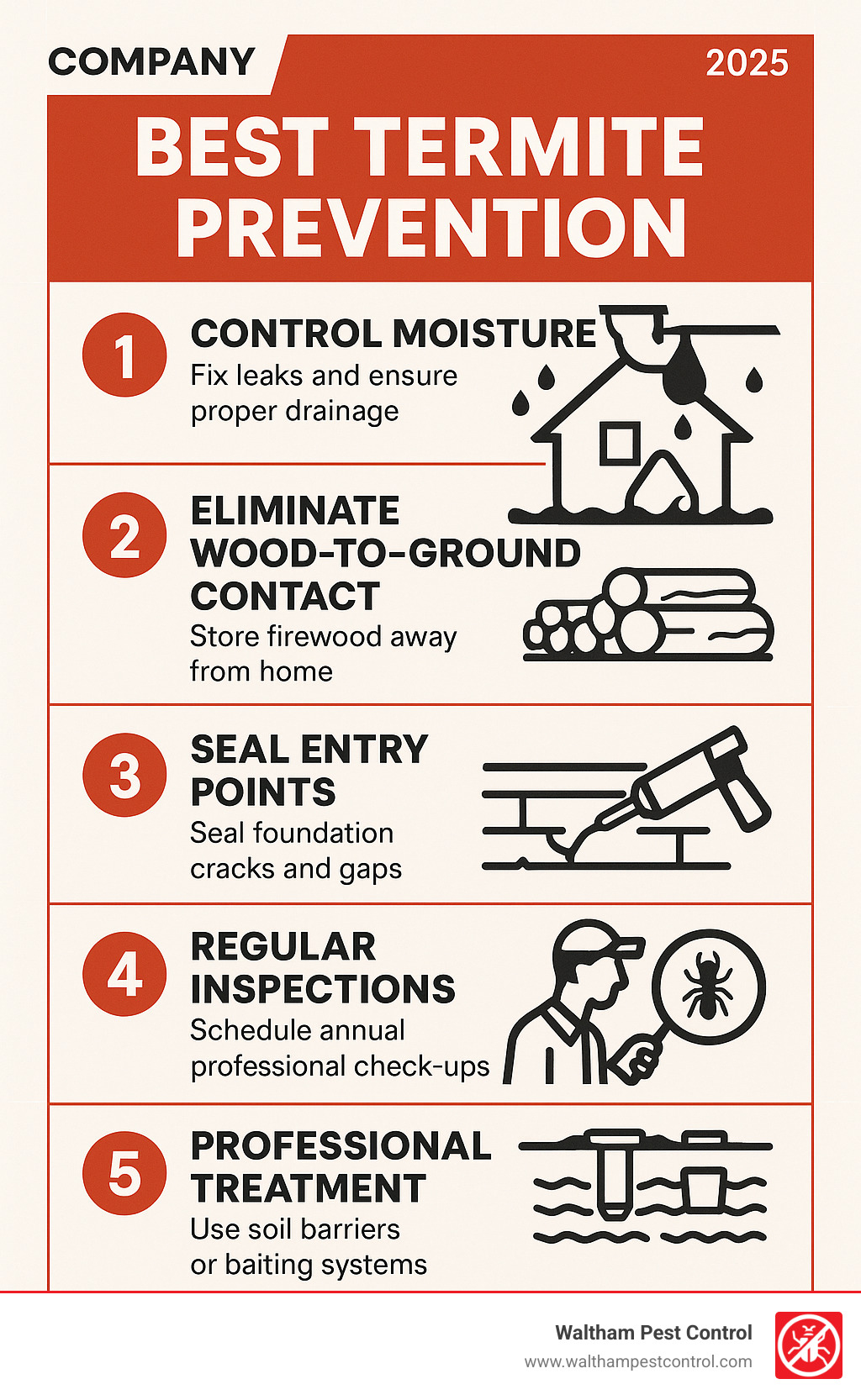
Quick Answer – The 5 Most Effective Termite Prevention Methods:
- Control Moisture – Fix leaks, clean gutters, ensure proper drainage
- Eliminate Wood-to-Ground Contact – Store firewood 20+ feet from home, manage mulch properly
- Seal Entry Points – Fill foundation cracks, gaps around utilities
- Regular Professional Inspections – Annual checkups to catch problems early
- Professional Treatment – Soil barriers, baiting systems, or wood treatments
The challenge with termites is that they often work silently for months or years before you notice any damage. By the time you see mud tubes, hollow-sounding wood, or discarded wings, a colony of up to 500,000 termites may already be feeding on your home’s structure.
Prevention is always more cost-effective than treatment and repair. A proactive approach combining proper home maintenance with professional monitoring can save you thousands of dollars in potential damage.
As Waltham Pest Control, President & CEO of Waltham Pest Control with over 40 years of experience in Eastern Massachusetts, I’ve seen how the best termite prevention strategies protect homes from costly infestations. Our integrated pest management approach has helped countless homeowners avoid the heartbreak and expense of termite damage through early detection and proven prevention methods.
Quick best termite prevention definitions:
Know Your Enemy: Identifying Termites and Early Warning Signs
To implement the best termite prevention, you must first know what you’re up against. Many homeowners confuse termites with flying ants, a critical mistake during swarming season.
Termites vs. Ants

Left: Winged Termite. Right: Winged Ant. Notice the differences in antennae, waist, and wing length.
Look for these key differences to tell them apart:
- Antennae: Termites have straight, beaded antennae. Ants have bent or “elbowed” antennae.
- Waist: Termites have a broad, undefined waist. Ants have a distinctly pinched waist.
- Wings: Termites have two pairs of wings that are equal in length. Ants have front wings that are noticeably longer than their back wings.
Common Termite Types in Massachusetts
- Subterranean Termites: The most destructive species in our area, particularly the Eastern Subterranean Termite. They live in large underground colonies and build mud tubes to travel from the soil to the wood in your home. They require moisture to survive.
- Drywood Termites: Less common here, these termites live directly inside dry wood like furniture or structural timbers and don’t need soil contact.
- Dampwood Termites: These termites infest wet, decaying wood. Their presence is a strong indicator of a significant moisture problem.
Signs of Infestation
Termites are stealthy, so knowing the warning signs is crucial for early detection.
- Mud tubes on foundation walls, joists, or other surfaces.
- Hollow-sounding wood when tapped, indicating the inside has been eaten.
- Discarded wings on windowsills or near doors after a swarm.
- Frass, which is termite droppings that look like tiny pellets of sawdust.
- Peeling paint that resembles water damage, but is caused by termites.
- Structural issues like sagging floors or doors and windows that stick.
If you spot any of these signs, contact a professional immediately. Early detection is key to minimizing damage.
More info about termite inspections
Your Home’s Defense Plan: Essential Preventative Maintenance
The best termite prevention starts at home with smart maintenance that makes your property unwelcoming to these pests. Think of it as building an invisible shield around your home that termites won’t cross.
Moisture Control: A Termite’s Worst Enemy
Water is a welcome mat for termites. Subterranean termites, common in Eastern Massachusetts, are biologically dependent on moisture and cannot survive without it. By controlling water, you attack their greatest vulnerability.
- Fix Leaks Promptly: A dripping faucet, a slow pipe leak, or a leaking AC unit creates a perfect damp environment for termites.
- Clean Gutters: Clogged gutters cause water to pool around your foundation. Clean them in the spring and fall to keep water flowing away from your home.
- Ensure Proper Drainage: Your yard should slope away from the foundation. Extend downspouts at least three feet from the house to prevent water accumulation.
- Manage Condensation: Direct AC condensation lines away from the foundation to eliminate persistent wet spots.
Eliminate Wood-to-Ground Contact
Termites view any wood touching the ground as a direct entrance to an all-you-can-eat buffet. Breaking this connection is essential.
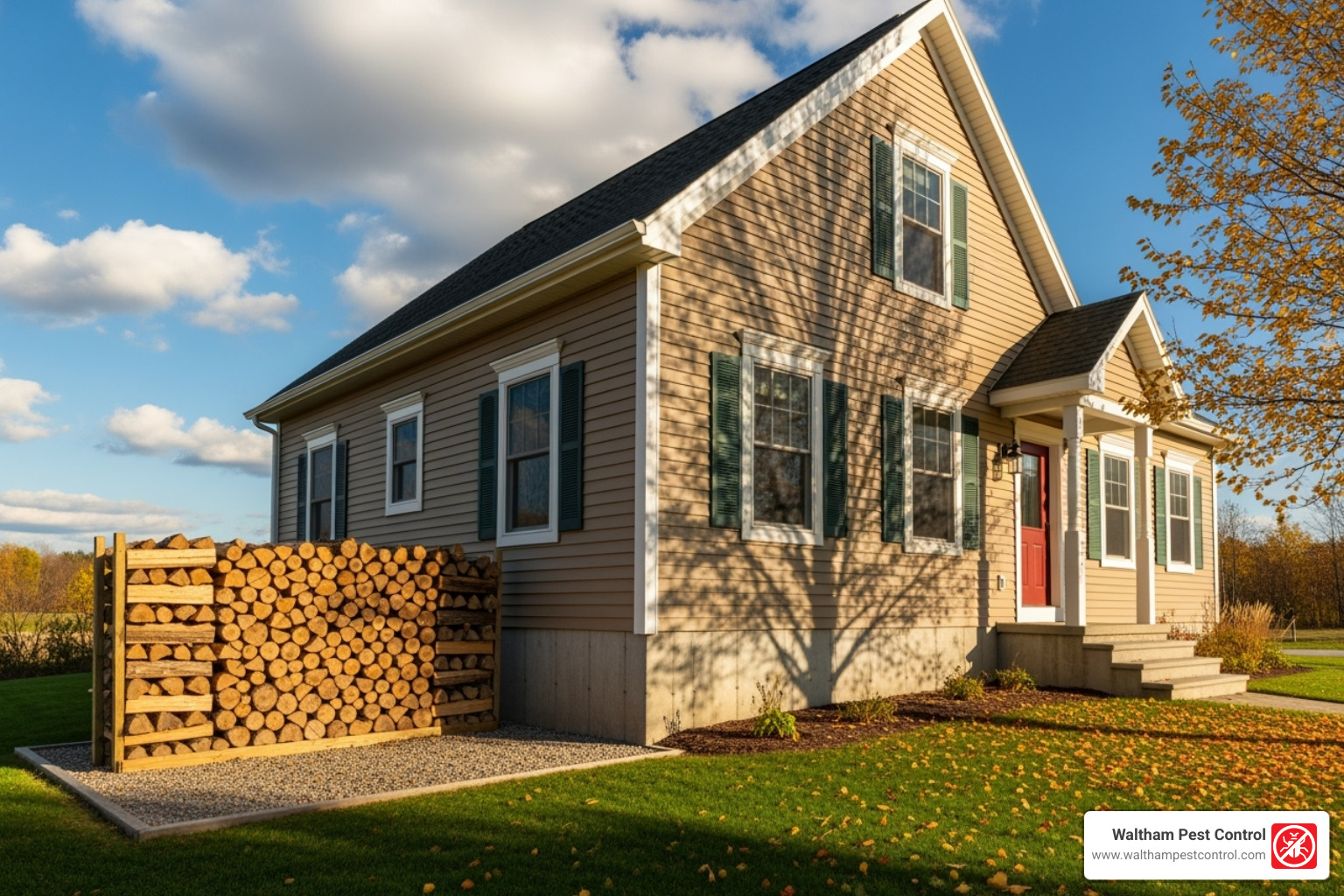
- Firewood Storage: Keep firewood at least 20 feet from your house and raise it at least 5 inches off the ground. Storing it against your porch is like building a termite bridge.
- Mulch Management: Keep mulch at least 15 inches from your foundation and no more than 2-3 inches deep. Consider gravel or rubber mulch near the house.
- Remove Tree Stumps: Dead stumps and their roots provide food and shelter for colonies that could eventually target your home.
- Wood Siding Clearance: Ensure wood siding, window frames, and door frames are at least 6 inches above the soil.
Seal Entry Points
Termites can squeeze through gaps as thin as a business card. Thorough sealing is a must.
- Foundation Cracks: Regularly inspect and seal any cracks in your foundation with concrete caulk or masonry sealant.
- Utility Line Gaps: Use caulk or expandable foam to seal gaps where pipes, cables, or wires enter your home.
- Vent Covers: Use fine steel mesh on foundation and attic vents to block entry while allowing airflow.
Termite Prevention: Protecting Your Home From Costly Damage
Professional Methods for Lasting Protection
While keeping up with home maintenance is essential, the best termite prevention often requires bringing in the experts. Think of it this way: you wouldn’t try to perform surgery on yourself, and termite control can be just as complex and risky when attempted without proper training and tools.
Licensed technicians bring years of specialized training to your termite problem. Our team undergoes rigorous certification programs to understand termite biology, behavior patterns, and the most effective treatment methods. This expertise makes all the difference when it comes to correctly identifying which termite species you’re dealing with, locating their colony, and applying treatments safely around your family and pets.
We also have access to professional-grade products that simply aren’t available at your local hardware store. These advanced termiticides and specialized equipment are designed for maximum effectiveness and long-term protection. More importantly, we know exactly how to use them safely and effectively.
Every home tells a different story, and every termite situation is unique. That’s why our professionals can assess your specific circumstances and recommend the most appropriate treatment plan, whether it’s a liquid barrier, baiting system, or combination approach.
Why Professional Treatments Offer the Best Termite Prevention
Professional treatments work by either creating an invisible fortress around your home or by eliminating the termite colony from within. Here’s how each method protects your investment:
Liquid Soil Treatments remain one of the most reliable methods for stopping subterranean termites in their tracks. We apply a liquid termiticide to the soil around your home’s foundation, creating a chemical barrier that termites cannot cross to reach your wooden structures.
The real magic happens with non-repellent termiticides like Fipronil or Imidacloprid. Unlike older treatments that termites could detect and avoid, these modern chemicals are completely undetectable to termites. They unknowingly tunnel through the treated zone, picking up the active ingredient on their bodies. When they return to the colony, they spread it to other termites through their natural social interactions. It’s like a slow-acting domino effect that eventually reaches the queen herself, collapsing the entire colony.
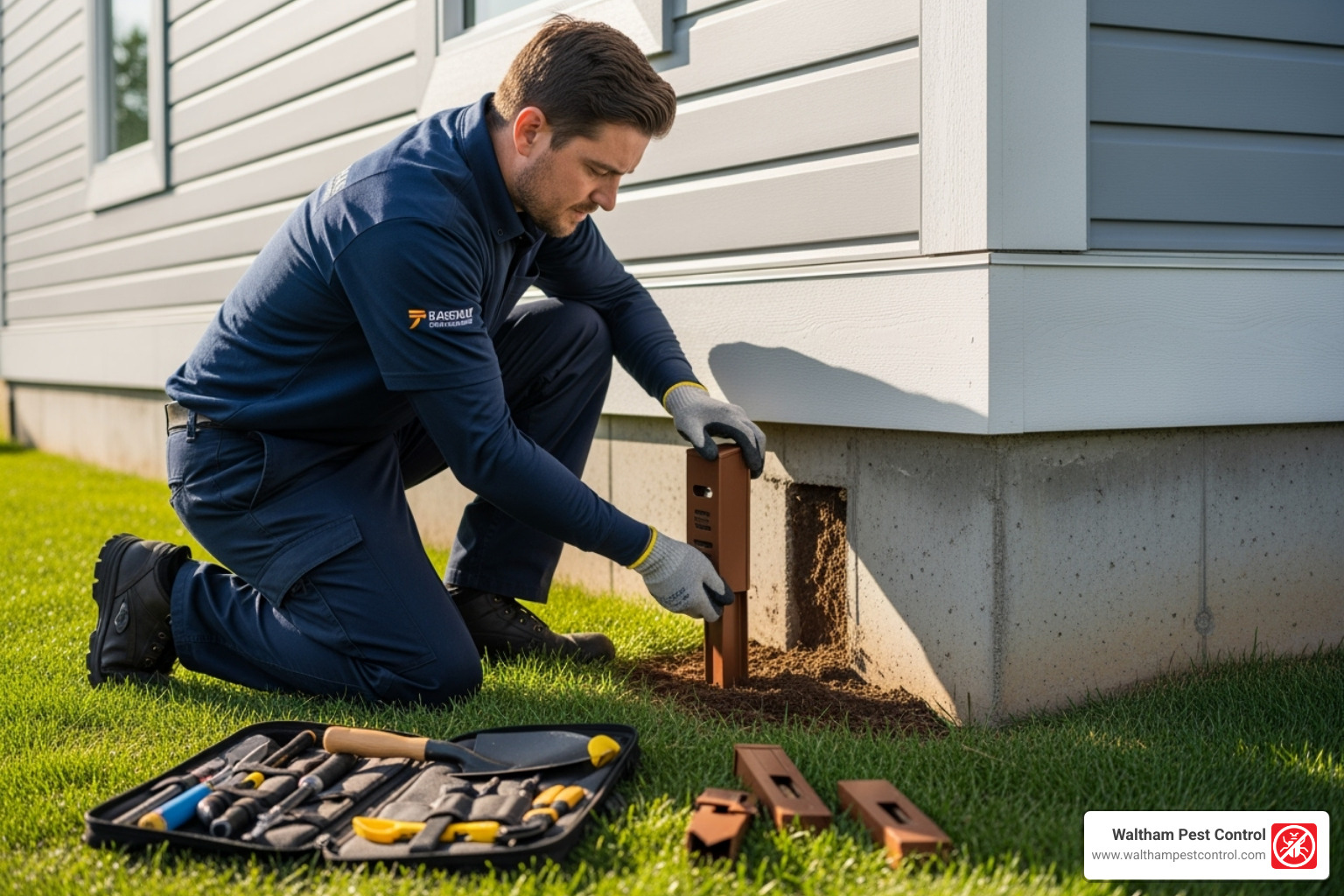
Termite Baiting Systems take a different but equally effective approach, especially when dealing with existing colonies. We strategically place bait stations around your property containing cellulose material laced with slow-acting ingredients like Hexaflumuron, Noviflumuron, or Lufenuron.
The beauty of baiting systems lies in termite behavior itself. Worker termites find the bait, consume it, and carry it back to share with their colony mates. Because the active ingredients work slowly, there’s plenty of time for the bait to spread throughout the entire colony before termites begin to die. This colony elimination method can even sterilize the queen, ensuring the colony cannot recover.
The system requires consistent monitoring by our trained professionals to ensure termites are actively feeding and the treatment is working effectively. We check the stations regularly, replacing bait as needed and tracking the colony’s decline.
Wood Treatments offer direct protection by making the wood itself toxic or repellent to termites. Borate applications using compounds like boric acid can be applied directly to unfinished wood surfaces, where they’re absorbed into the wood fibers. When termites try to feed on treated wood, the borates disrupt their metabolism.
This method is particularly effective as a pre-construction treatment during new home building. Applying borates to lumber and concrete during construction creates a durable protective barrier that isn’t affected by weather delays or future landscaping changes that might compromise traditional soil treatments.
We also install physical barriers made of stainless steel mesh or specially graded sand during new construction. These create a poison-free barrier that physically prevents termites from entering the structure from the ground up.
Comparing Your Options: Costs, Efficacy, and Guarantees
Choosing the best termite prevention method for your home can feel overwhelming, but understanding how the main professional approaches stack up against each other makes the decision much clearer. Each method has its strengths, and the right choice often depends on your specific situation, home construction, and the type of termites you’re dealing with.
Liquid soil treatments create an immediate protective barrier around your home’s foundation. This approach is highly effective for subterranean termites and offers excellent value for comprehensive protection. The process does require trenching around your foundation and drilling into concrete slabs, making it more invasive initially. However, once properly applied, these treatments can protect your home for 5-10 years with appropriate warranties and annual inspections.
Termite baiting systems take a different approach by targeting the colony directly. These systems are less intrusive to install, using strategically placed bait stations around your property’s perimeter. They’re particularly effective at eliminating existing colonies since termites carry the slow-acting bait back to share with the entire colony, including the queen. Baiting systems require ongoing monitoring and bait replacement, which means continuous professional involvement but also continuous protection.
Professional wood treatments using borates offer direct protection to the wood itself. This method shines in new construction applications where wood can be pre-treated before installation. For existing homes, borate treatments work well for specific problem areas or as part of a comprehensive prevention strategy. The protection lasts for the life of the treated wood when properly sealed, making it an excellent long-term investment.
| Factor | Liquid Soil Treatments | Termite Baiting Systems | Professional Wood Treatments |
|---|---|---|---|
| Average Cost Range | $1,300 – $5,000+ | $800 – $3,000 + annual monitoring ($200 – $500+) | $500 – $1,500+ |
| Effectiveness | Highly effective barrier against subterranean termites | Excellent for colony elimination | Direct wood protection, ideal for prevention |
| Long-term Guarantee | 5-10 years with annual inspections | Ongoing with continuous monitoring | Life of treated wood when properly maintained |
| Intrusiveness | Requires trenching and drilling | Minimal – small ground stations | Direct wood application, minimal disruption |
Important Cost Note: These average cost ranges come from general internet research and can vary dramatically based on your home’s size, infestation severity, specific products used, and location. These are not Waltham Pest Control’s actual pricing – we always provide personalized estimates after thoroughly inspecting your specific situation.
The best termite prevention often involves combining methods. For example, a liquid soil treatment might provide the foundation protection while targeted wood treatments protect vulnerable areas like deck attachments or crawl space timbers.
Long-term protection is where our professional treatments really shine. Many liquid barriers maintain their effectiveness for years, and baiting systems provide ongoing colony monitoring and elimination. The key to lasting success is our annual inspections – they catch new activity early and ensure your chosen treatment continues working effectively.
We believe in transparency throughout the process. During your consultation, we’ll explain exactly what each treatment involves, discuss realistic timelines, and outline any warranties or follow-up care. Our 40+ years of experience in Eastern Massachusetts has taught us that the most successful termite prevention combines the right treatment method with our ongoing professional monitoring.
Termite Exterminator Waltham MA
Frequently Asked Questions about Termite Prevention
Here are answers to the most common questions we receive from homeowners in Eastern Massachusetts.
Are DIY termite treatments effective and what are the risks?
While tempting, DIY termite products rarely provide the best termite prevention. The primary risks include:
- Misapplication: Professional treatments require precise mixing and application techniques (like trenching) to create a complete barrier. DIY efforts often leave gaps that termites can exploit.
- Incomplete Eradication: Store-bought sprays may kill visible termites but won”t eliminate the colony and queen hidden underground or in your walls. The infestation will return.
- Safety Risks: Professional-grade products are potent and require trained handling to ensure the safety of your family and pets. Consumer-grade products lack the strength for effective, long-term control.
For reliable and safe results, always rely on our licensed professionals.
Best Pest Control for Termites Near Me
How often should I have a professional termite inspection?
We recommend annual inspections as your best defense against hidden termite damage. An inspection is also crucial:
- In High-Risk Situations: If your home has known moisture issues or is in an area with heavy termite activity.
- After a Termite Swarm: If you see swarmers on or near your property, it indicates a mature colony is nearby.
- When Buying a Home: A wood-destroying insect inspection is essential to avoid inheriting a costly problem.
The peace of mind from our professional check-up is well worth the investment.
Are there natural or eco-friendly termite prevention methods?
Yes, several effective eco-friendly methods contribute to the best termite prevention:
- Physical Barriers: During new construction, installing stainless steel mesh or specially graded sand creates a permanent, chemical-free barrier.
- Our Professional Borate Treatments: These treatments use a naturally derived mineral to make wood inedible to termites. They are low-toxicity and offer long-lasting protection.
- Environmental Controls: The most natural strategy is to make your home inhospitable to termites. This includes controlling moisture, fixing leaks, ensuring proper drainage, and eliminating wood-to-ground contact.
While some DIY methods like essential oils exist, they have limited effectiveness against a full-blown infestation.
Secure Your Home with a Proactive Prevention Strategy
The fight against termites isn’t won with a single battle—it requires a comprehensive campaign that protects your most valuable investment. Throughout this guide, we’ve explored how the best termite prevention combines smart homeowner practices with professional expertise to create an impenetrable defense against these silent destroyers.
Think of termite prevention like maintaining your health. You don’t wait until you’re sick to start taking care of yourself. Similarly, proactive termite prevention means taking action before these pests find their way into your home’s wooden structure.
The foundation of effective protection starts with moisture control—fixing those dripping pipes, cleaning gutters religiously, and ensuring water flows away from your foundation. Add proper wood management by keeping firewood stored well away from your house and maintaining that crucial gap between soil and any wooden structures. Sealing entry points around your foundation and utility lines creates additional barriers that make termites work much harder to find their way inside.
But here’s the reality: even the most diligent homeowner can’t catch everything. That’s where our professional inspections become your safety net. Our trained eyes can spot the subtle signs that indicate termite activity long before damage becomes visible—or expensive.
When prevention needs reinforcement, our professional treatments provide the heavy artillery. Whether it’s liquid soil barriers that create invisible shields around your home, baiting systems that eliminate entire colonies, or targeted wood treatments, these solutions offer protection that lasts for years, not months.
At Waltham Pest Control, we’ve spent over four decades perfecting our approach to termite management across Eastern Massachusetts. From Burlington to Concord, we’ve seen how early intervention saves homeowners thousands of dollars and countless sleepless nights. Our licensed and insured team doesn’t just treat problems—we prevent them.
Your home represents years of hard work and dreams for the future. Don’t let termites turn that investment into expensive repairs and structural headaches. The best termite prevention strategy is the one you implement before you need it.
Ready to secure your home with a plan that actually works? Contact us for a comprehensive termite inspection and prevention plan in Eastern Massachusetts. Because when it comes to protecting your home, peace of mind is priceless.
