

Tick Spray Services: 7 Powerful Reasons to Stay Safe in 2025
Protecting Your Family from Tick-Borne Diseases
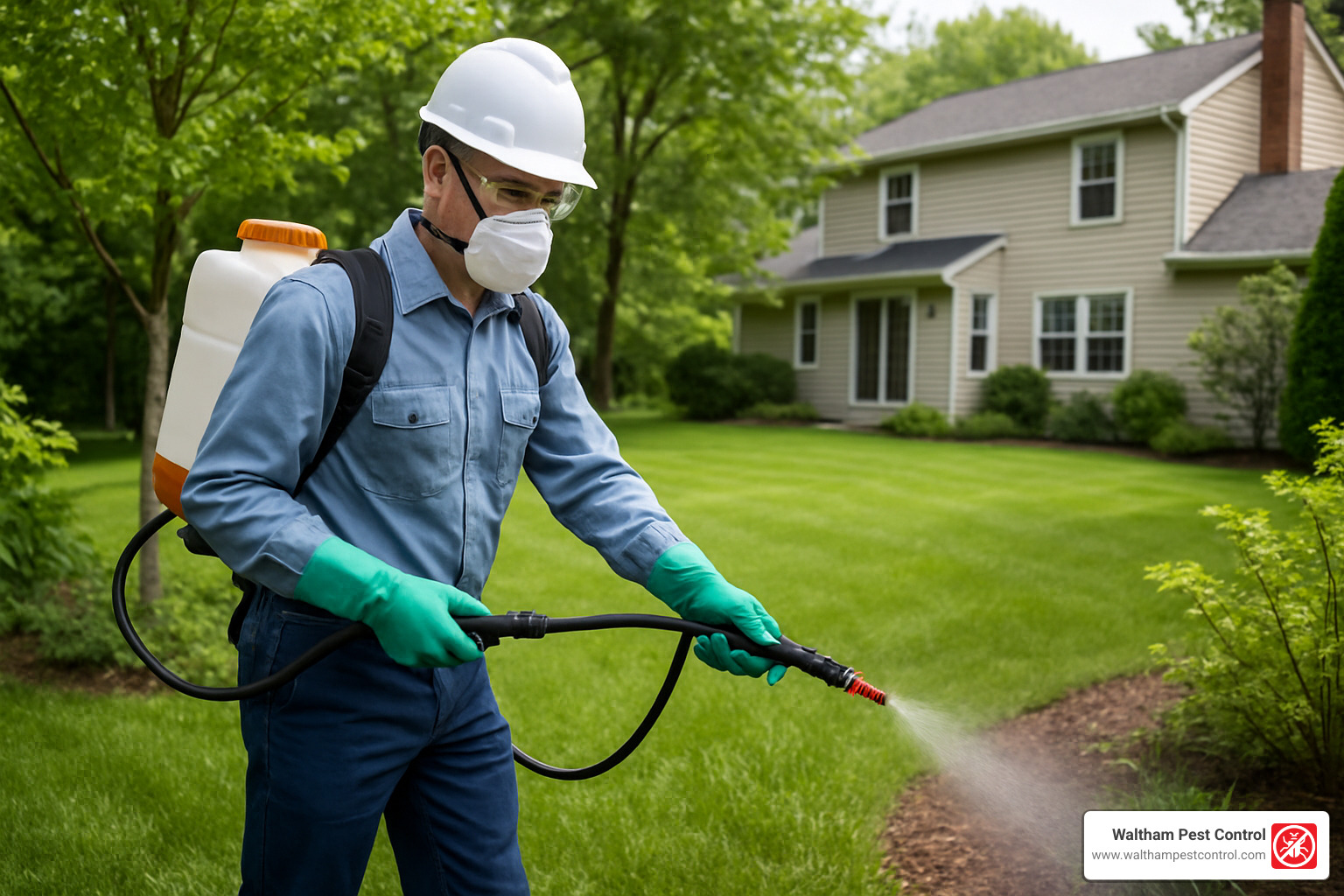
Tick spray services are professional treatments applied to your yard that create a protective barrier against disease-carrying ticks. Here’s what you need to know:
- What it is: A targeted application of tick-specific products to your yard’s perimeter, wood lines, and high-risk areas
- When to get it: Every 21-30 days from spring through fall (when ground temperatures exceed 45°F)
- What it targets: Deer ticks, dog ticks, lone star ticks and other disease-carrying species
- Benefits: Reduces tick populations by up to 90%, lowering disease risk substantially
- Safety: Treatments dry within 30 minutes, after which yards are safe for families and pets
Ticks aren’t just annoying pests—they’re dangerous disease vectors that can transmit Lyme disease, Rocky Mountain spotted fever, and other serious illnesses. With nearly 30,000 cases of Lyme disease reported annually by the CDC, protecting your property has never been more important.
Where ticks hide on your property:
– Leaf litter and ground debris
– Tall grass and overgrown weeds
– Shaded areas under shrubs and trees
– Wood piles and stone walls
– Along fence lines and property edges
My name is Waltham Pest Control, President of Waltham Pest Control, with over 40 years of experience providing effective tick spray services throughout Eastern Massachusetts. Our integrated pest management approach has helped thousands of families reclaim their outdoor spaces from these dangerous pests.
Tick spray services terms to know:
– flea and tick control services
– tick and mosquito
– companies that spray for ticks
Setting the Stage
As Eastern Massachusetts residents know all too well, ticks aren’t just a summertime nuisance—they’re a year-round concern that peaks from spring through fall. Once ground temperatures consistently reach above 45°F, ticks become active and begin their quest for blood meals.
We’ve seen a dramatic increase in tick populations throughout Burlington, Cambridge, Lexington, and surrounding communities in recent years. Many of our clients come to us after finding ticks on their children or pets, often not realizing the serious health risks these tiny arachnids pose.
“I never thought much about ticks until I found one embedded in my daughter’s scalp after playing in our backyard,” shares a Waltham homeowner. “That’s when I realized we needed professional help to make our yard safe again.”
Tick Dangers Every Homeowner Should Know
They might be tiny, but ticks are mighty when it comes to causing health problems. These blood-feeding parasites are more than just creepy crawlies – they’re disease-carrying threats that can impact your entire family, including your four-legged members.
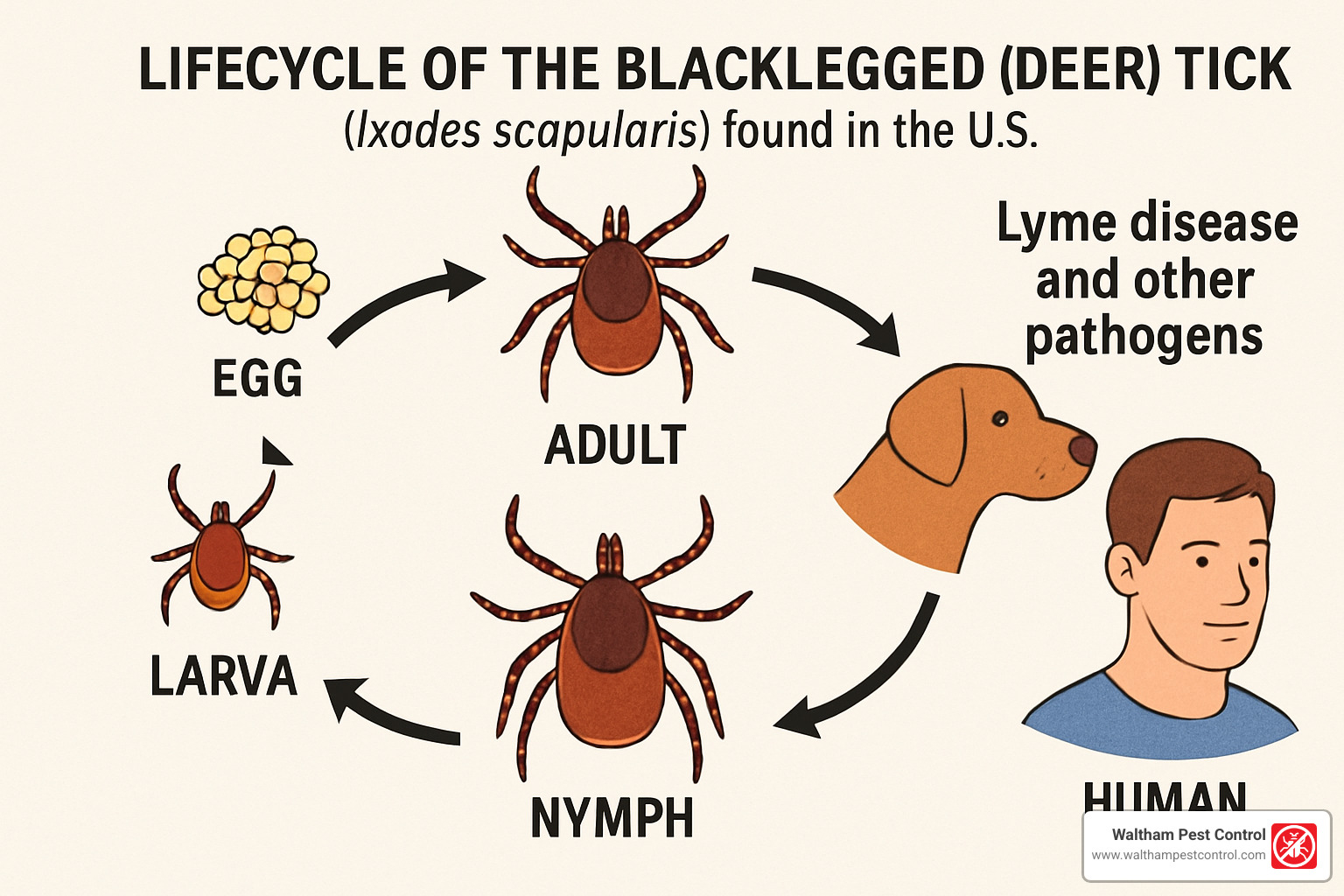
Of the roughly 850 tick species worldwide, about 90 call the United States home, with several setting up camp right here in Massachusetts. What makes these pests particularly concerning is how they feed – attaching firmly, dining slowly, and often going completely unnoticed for days while they transmit harmful pathogens.
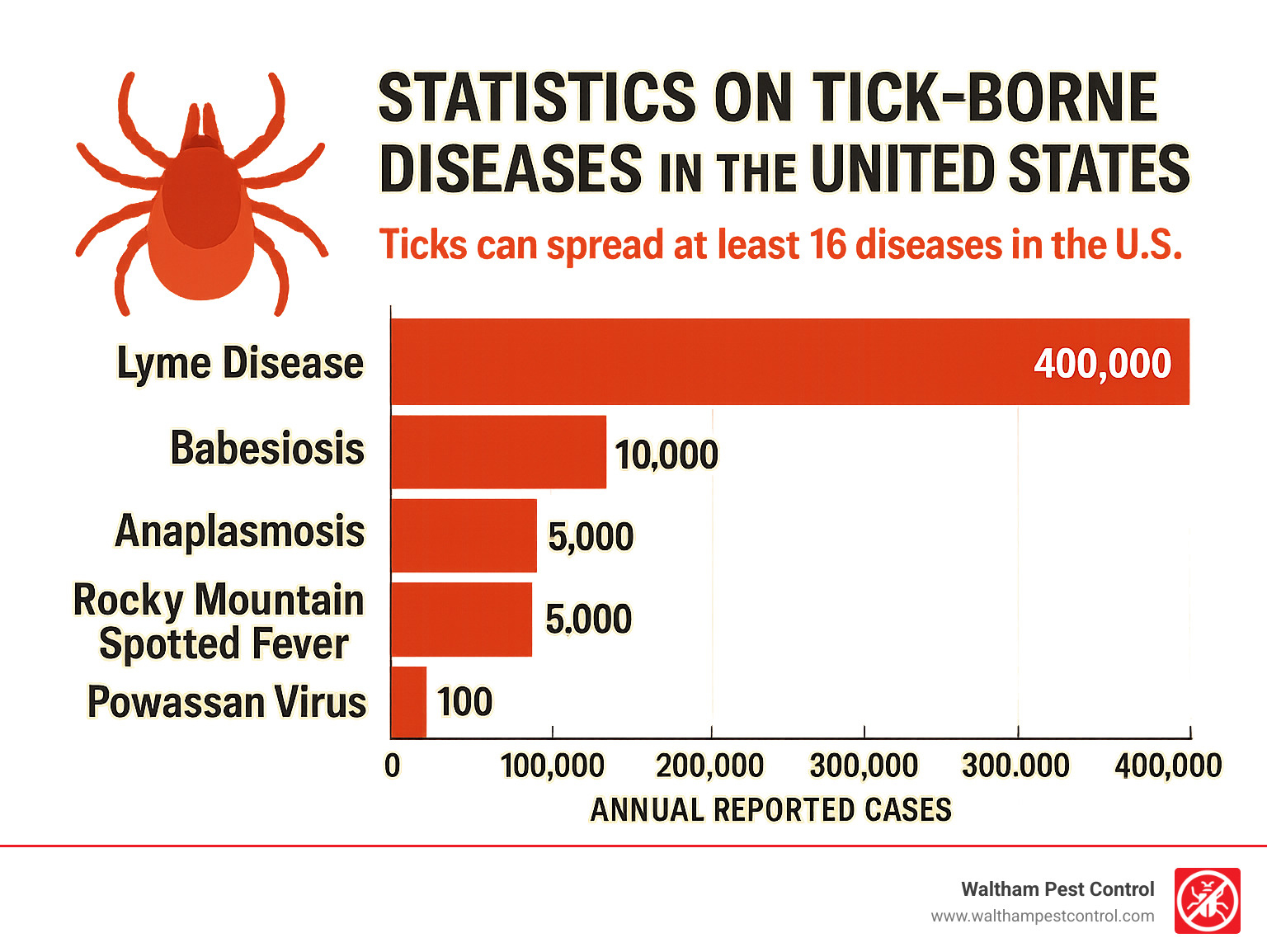
The CDC has identified at least 10 diseases that ticks can pass to humans, with five of these also affecting our pets. Here in Eastern Massachusetts, we regularly encounter these troublemakers:
Lyme disease tops the list as our most common tick-borne illness. Transmitted primarily by blacklegged (deer) ticks, it affects nearly 30,000 confirmed cases annually – though the CDC believes the actual number might be closer to a staggering 476,000 infections each year. Left untreated, Lyme can lead to severe joint pain, neurological problems, and long-term health complications.
“I dismissed the small tick I found on my leg after gardening,” shares a Newton homeowner. “Three weeks later, I was battling severe fatigue, joint pain, and a tell-tale rash. My doctor confirmed Lyme disease, and I spent months recovering.”
Babesiosis is another concern in our region. This parasitic infection attacks red blood cells and can be particularly dangerous for those with weakened immune systems. Many of our clients in Lexington and Cambridge have reported cases in recent years.
Anaplasmosis brings fever, headaches, and muscle pain that can escalate to serious respiratory issues or bleeding problems if not caught early. Meanwhile, Rocky Mountain Spotted Fever might sound like a western problem, but it appears throughout the country, including Massachusetts, causing fever, headache, and a distinctive rash that can be life-threatening.
The rare but serious Powassan virus rounds out our local concerns, potentially causing brain inflammation and meningitis – with no specific treatment available once contracted.
Our pets face their own tick troubles too. Lyme disease affects dogs just as it does humans, while ehrlichiosis and anaplasmosis can cause fever, lethargy, and even life-threatening anemia in severe cases. Many veterinarians in Burlington and surrounding areas report seeing tick-borne illnesses in pets year-round.
Where Ticks Hide on Your Property
Understanding where ticks lurk is half the battle. Despite common misconceptions, ticks don’t jump or fly – they “quest,” climbing to the edge of vegetation with front legs extended, waiting patiently to grab onto passing hosts.
On Eastern Massachusetts properties, we consistently find ticks concentrated in these hotspots:
Transition zones where your lawn meets wooded areas create prime tick real estate. This “tick zone” typically extends about 10-15 feet from your lawn’s edge into wooded areas. During our inspections in Watertown, we often find the highest concentration of ticks right along these boundaries.
Leaf litter and ground debris provide the moist, humid environments ticks love. One Arlington family was shocked when we found dozens of ticks in a small patch of decomposing leaves near their children’s play area.
Tall grass and unmowed areas offer perfect questing platforms for hungry ticks. Shaded spots under shrubs, trees, and ground cover protect ticks from drying out – their greatest vulnerability. Stone walls, wood piles, and areas under decks create ideal tick microhabitats with the humidity and protection they crave.
Wildlife pathways frequented by deer, mice, and other animals that serve as tick hosts often show higher tick concentrations. These animals act as both transportation and food sources for ticks throughout their lifecycle.
“The most eye-opening moment for many of our clients,” says our senior technician, “is when we show them just how many ticks are hiding in areas where their children and pets play daily. That’s usually when they understand why tick spray services are so important.”
Health Risks of a Single Bite
It takes just one tick bite to change your life. While the CDC reports most Lyme disease transmissions require 36-48 hours of attachment, other diseases like Powassan virus can transfer in as little as 15 minutes – often before you even realize you’ve been bitten.
Watch for these early warning signs of tick-borne illness:
The bull’s-eye rash (erythema migrans) is the most recognizable sign of Lyme disease, appearing in 70-80% of cases. This expanding circular rash around the bite site shouldn’t be ignored, but remember – not all tick-borne diseases cause a rash.
Fever and chills often serve as the first red flags for several tick-borne diseases, followed by fatigue and muscle aches that persist despite rest. Headaches, particularly when accompanied by neck stiffness, warrant attention, as does joint pain, which can progress to severe arthritis if Lyme disease goes untreated.
For our furry family members, symptoms might include fever, lethargy, lameness, joint swelling, loss of appetite, and in severe cases, anemia or neurological problems.
“We had a client in Winchester whose golden retriever was diagnosed with anaplasmosis after they found several ticks on him following a weekend of yard work,” recalls our head technician. “The dog required extensive veterinary treatment, and the family immediately scheduled tick spray services for their property to prevent future exposures.”
With tick activity beginning once ground temperatures consistently exceed 45°F, Massachusetts residents face potential exposure from early spring through late fall. According to scientific research on tick-borne illness, our region continues to see rising case numbers each year – making professional prevention more important than ever.
Tick Spray Services: How They Work, Coverage & Safety
Tick spray services are like creating an invisible shield around your yard – one that keeps those tiny disease-carriers at bay. At Waltham Pest Control, we’ve spent over four decades perfecting our approach to give you maximum protection with minimal environmental impact.
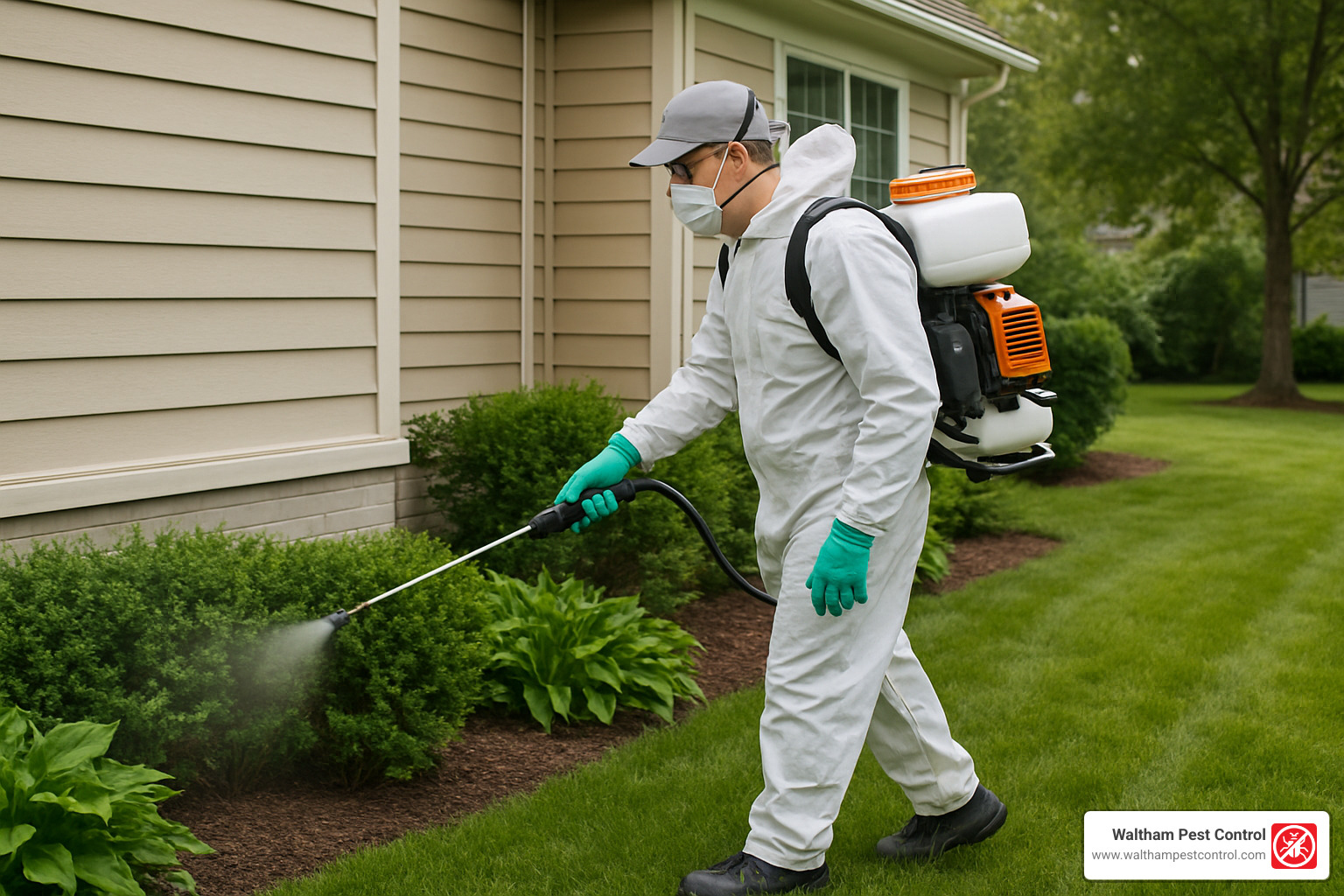
When we treat your property, we’re applying EPA-approved acaricides (fancy word for tick-killing products) to all those tick hotspots. Our technicians use specialized equipment – backpack blowers and precision sprayers – that helps us reach every nook and cranny where ticks might be hiding.
These treatments don’t just kill ticks on contact; they create a protective barrier that continues working for 4-6 weeks under normal conditions. Think of it as a tick “no-fly zone” around your property.
What sets professional tick spray services apart isn’t just the products – it’s the expertise behind the application. Our licensed technicians understand tick behavior like the back of their hand. They know exactly where these pests are likely hiding and how to target treatments for maximum effectiveness.
What Happens During a Tick Spray Services Visit
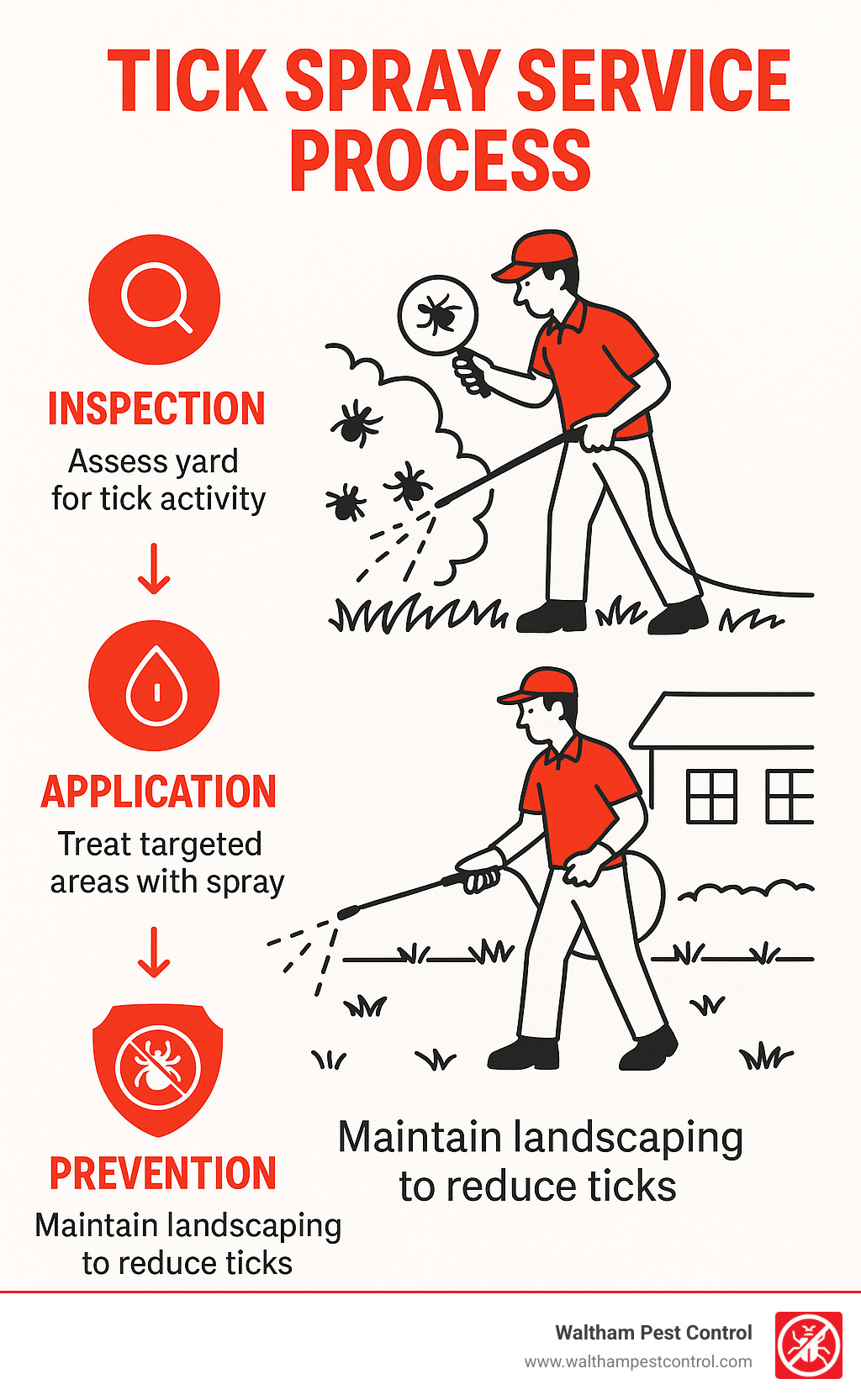
When our truck pulls up to your home, we don’t just start spraying. Our approach is thoughtful and methodical:
First, we’ll walk your entire property, looking for tick danger zones – those transition areas between woods and lawn, piles of leaves, spaces under decks, and other tick hideouts. This inspection is crucial because every yard is unique.
Based on what we find, we’ll create a custom treatment plan specifically for your property. The size, layout, and features of your yard all influence our approach. A quarter-acre lot in Lexington needs different treatment than a wooded property in Concord.
Then comes the targeted application. Our technicians treat all the high-risk areas: that critical 10-15 feet of lawn bordering the woods, extending 10-20 feet into wooded areas (with permission), under decks and porches, around play sets, along fence lines, in landscaped beds, and near stone walls or wood piles.
After application, we’ll give you clear safety instructions about when it’s safe to use your yard again – typically just 30 minutes after treatment, once everything’s dry. We’ll also document exactly what we did and offer tips for keeping ticks at bay between our visits.
As one of our clients in Concord told us: “I was impressed by how thorough the technician was during the inspection. He found tick habitats I never would have noticed and explained exactly what he was treating and why. The whole process took less than an hour, and we were able to use our yard again that same afternoon.”
For more details about our comprehensive approach, check out our flea and tick control services page.
Are Tick Spray Services Safe for Kids, Pets & Pollinators?
I get it – the word “pesticide” can make any parent or pet owner nervous. Safety is our absolute top priority at Waltham Pest Control, and we take several measures to ensure our treatments protect your family without putting them at risk.
The products we use are EPA-registered, meaning they’ve been thoroughly tested and approved for residential use when applied correctly. We’ve specifically formulated our treatments without TCVP (trichlorfon), which has been associated with higher environmental risks. Our technicians apply everything with precision to minimize drift and unnecessary exposure, and most treatments dry within just 30 minutes, after which your yard is safe for everyone to enjoy again.
For families with heightened concerns, we offer gentler alternatives. Our Organic Cedar Oil Treatments harness the natural repellent properties of cedar oil, which disrupts ticks’ ability to detect hosts and reproduce. We also offer 25(b) Exempt Products – what the EPA calls “minimal-risk pesticides” because they pose little to no risk to human health or the environment.
A mom in Arlington shared her experience: “I was hesitant about having any kind of pest treatment with young children and a dog, but after finding ticks in our yard, I knew we needed help. The organic option gave me peace of mind, and we’ve noticed a significant reduction in ticks without worrying about harmful chemicals.”
We’re careful about pollinators too. Our technicians avoid treating flowering plants when possible, time applications to minimize exposure to beneficial insects, and use targeted applications to reduce drift to non-target areas.
Areas Typically Treated
Effective tick spray services are all about strategic application – knowing exactly where those tiny vampires are likely to be lurking.
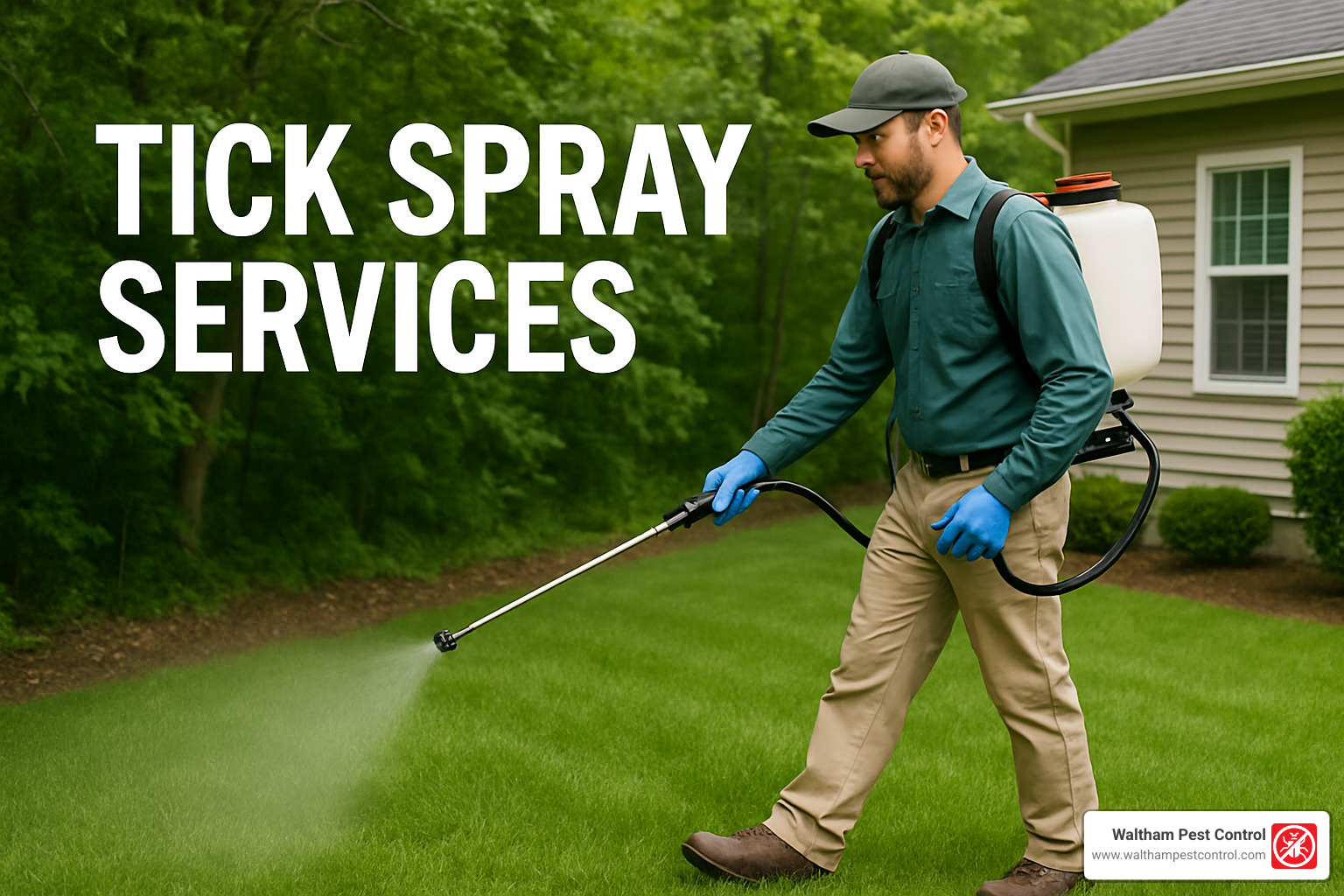
We focus our treatments on seven critical areas. First, those wood-line buffer zones – the transition areas between your lawn and wooded areas are tick central. We create a protective barrier by treating both the lawn edge (10-15 feet) and into the woods (10-20 feet).
The spaces under structures like decks, porches, and sheds provide the shaded, humid environment ticks love, so we make sure to thoroughly treat these often-overlooked areas. Your family’s play and recreation areas receive special attention – children’s play sets, outdoor seating areas, and recreational spaces are high-priority protection zones.
Fence lines and property boundaries often serve as wildlife corridors and can harbor significant tick populations. Landscaped beds with their mulch, ground cover, and ornamental plantings provide ideal tick habitat and get thorough treatment. Hardscape features like stone walls and rock gardens can hide ticks in their crevices and surrounding vegetation. And finally, we treat tall grass and low brush up to 36 inches high, where adult ticks often quest for hosts.
After treating a Sudbury home, our technician took the time to walk the property with the owner. The client later told us: “After treatment, the technician walked me around my property explaining exactly what had been treated and why. I had no idea ticks were likely hiding in so many places around my yard. The visual tour helped me understand the value of the service.”
When it comes to protecting your family from ticks, knowledge and precision make all the difference. That’s exactly what our tick spray services deliver.
Professional vs DIY Tick Control
When it comes to protecting your family from tick-borne diseases, you have options: professional tick spray services or do-it-yourself methods. While both approaches can help, understanding their differences will help you make the best choice for your family’s safety and your peace of mind.
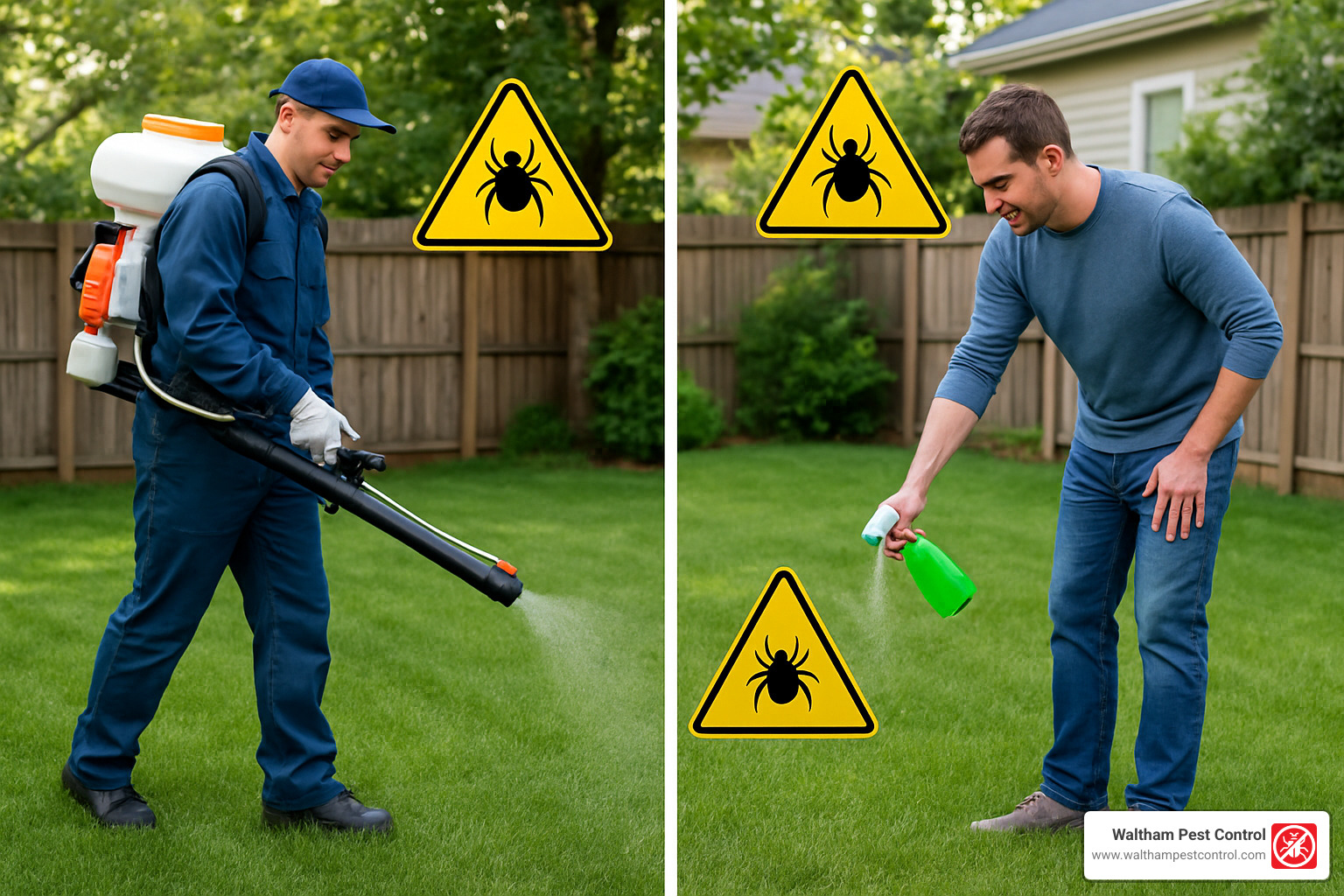
Let’s be honest – the difference in results is substantial. Professional treatments typically reduce tick populations by up to 90%, while DIY methods usually achieve only 30-60% reduction. That gap can mean the difference between a worry-free backyard barbecue and constantly checking your children and pets for ticks.
| Aspect | Professional Tick Spray Services | DIY Methods |
|---|---|---|
| Efficacy | Up to 90% reduction in tick populations | Variable results, typically 30-60% reduction |
| Product Selection | Access to commercial-grade products | Limited to consumer-grade options |
| Application Expertise | Licensed technicians with specialized training | Homeowner knowledge varies |
| Equipment | Commercial-grade sprayers with calibrated output | Consumer sprayers with limited coverage |
| Time Investment | 1-2 hours per treatment (by professionals) | 3-5 hours per treatment (by homeowner) |
| Cost per Season | Higher initial investment | Lower initial cost but may require more product |
| Guarantee | Many offer retreatment guarantees | No guarantees |
| Knowledge of Tick Biology | Expert understanding of tick behavior and habitat | Limited unless self-educated |
| Safety | Proper PPE and application techniques | Potential for misapplication or exposure |
| Comprehensive Coverage | Systematic approach to all tick habitats | Often misses key areas |
Why Professional Tick Spray Services Outperform DIY
“I spent three weekends and nearly $200 on DIY sprays last summer, and my kids still found ticks on our dog,” shared a Newton homeowner who later became our client. “After one professional treatment, the difference was incredible.”
This story isn’t unique. While the hardware store shelves are stocked with tick control products promising results, professional tick spray services offer several crucial advantages that DIY approaches simply can’t match.
Our technicians bring targeted chemistry to your yard – professional-grade formulations specifically designed for tick control that aren’t available in consumer products. These solutions are applied with calibrated equipment that ensures even coverage and proper penetration into tick habitats. The consumer sprayers most homeowners use often lack the pressure and precision needed to reach deep into leaf litter and dense vegetation where ticks hide.
Perhaps most importantly, our expert application targets the specific microhabitats where ticks actually live – areas homeowners frequently miss. We know exactly where ticks are likely hiding on your property because we’ve been finding and eliminating them for over 40 years.
We also offer something no DIY product can: a service guarantee. If ticks return between scheduled treatments, we’ll return and retreat at no additional charge. That peace of mind is invaluable, especially for families with young children or outdoor pets.
Finally, there’s the matter of your precious time. What might take you several hours to complete (often with suboptimal results) takes our professionals a fraction of the time with superior outcomes. As one Winchester client put it: “After switching to professional services, the difference was night and day—virtually no ticks and I got my weekends back.”
Supplemental Prevention Steps You Can Do
While professional tick spray services provide the foundation of effective tick control, there are several simple steps you can take between treatments to improve protection for your family.
Keep your landscape tidy by mowing lawns regularly and removing leaf litter, especially in transition zones where your yard meets wooded areas. These simple maintenance tasks eliminate prime tick habitat. Creating a 3-foot wide barrier of wood chips or gravel between lawns and wooded areas can significantly reduce tick migration into recreational spaces.
Managing wildlife that carries ticks onto your property is another effective strategy. Consider installing fencing to exclude deer, which are primary hosts for adult ticks. Many homeowners don’t realize that bird feeders can indirectly increase tick populations by attracting rodents, so consider removing them during peak tick season.
A Lexington client shared her success story: “After implementing the 3-foot wood chip barrier between our lawn and the woods as recommended by Waltham Pest Control, combined with regular treatments, we’ve seen a dramatic reduction in ticks. Our kids can play outside without constant worry.”
Personal protection remains important even with professional treatments. When spending time in potential tick areas, wear long sleeves and pants, use EPA-registered repellents, and perform daily tick checks. For pets, use veterinarian-recommended tick preventatives and check them daily for ticks, especially after outdoor trips.
By combining professional tick spray services with these supplemental prevention steps, you’ll create the most comprehensive protection possible for your family. The result? A yard you can enjoy without the constant worry of tick-borne diseases lurking in your own backyard.
Cost, Scheduling & Common Questions about Tick Spray Services
When it comes to protecting your family from ticks, understanding what to expect from tick spray services helps you make smart decisions. Let’s talk about what these services typically cost, when to schedule them, and answer those burning questions you might have.
Cost Considerations
The investment in tick spray services varies based on several key factors that affect how much work and product your property requires:
Property size makes a big difference – a sprawling yard in Lexington naturally requires more coverage than a compact Newton property. Your treatment frequency matters too, with seasonal programs typically offering better value than one-time applications. Properties with special features like dense woods or elaborate landscaping often need more thorough treatment, while those preferring organic options might see different pricing.
Based on internet research (not specific to Waltham Pest Control), the average cost for tick spray services typically ranges from $80-$275 per visit, with high-end services on larger properties potentially reaching $600 or more. Many companies offer bundle discounts when you combine tick control with other pest services like mosquito treatments.
We believe in transparent, straightforward pricing at Waltham Pest Control. When you call for a quote, we’ll assess your specific property needs without hidden fees or surprises.
Scheduling Considerations
Here in Eastern Massachusetts, tick season kicks into high gear from April through November, though these pests can become active anytime the ground temperature tops 45°F. For the best protection, we’ve found this schedule works best:
Start with an initial treatment in early spring (April) as soon as those soil temperatures consistently climb above 45°F. Follow with regular treatments every 21-30 days throughout the season. Finish with a final application in late fall, typically after the first frost but before the deep freeze sets in.
Many of our clients love our seasonal protection program, which takes the guesswork out of scheduling. As one Bedford homeowner told us: “I appreciate the reminder calls before each scheduled treatment. It’s one less thing I have to remember, and I know my yard is protected all season long.”
Looking for tick spray services in your specific area? Visit our tick control services near me page to find detailed information about your community.
How Often Should You Schedule Treatments?
Maintaining consistent protection requires the right treatment frequency. While some product labels might claim extended protection, real-world factors like rain, sun, and wildlife activity impact how long treatments remain effective.
Our standard recommendation is treatment every 21-30 days during tick season. After heavy rainfall (more than 2 inches), we often suggest retreatment since rain can wash away product effectiveness. Each season brings different challenges: spring treatments target nymphal ticks (the most likely to transmit Lyme disease), summer applications maintain protection during peak outdoor months, and fall treatments control adult ticks seeking final blood meals before winter.
“We’ve found that consistent 21-day treatment cycles provide the most reliable protection for our clients,” explains our head technician. “Properties that maintain this schedule report significantly fewer tick encounters than those with irregular treatments.”
When to Reapply & How Long It Lasts
Most tick spray services maintain their effectiveness for 4-6 weeks under ideal conditions. However, several factors affect how long protection lasts:
Heavy rainfall or frequent irrigation can reduce effectiveness sooner. Direct sunlight breaks down active ingredients faster in exposed areas. Dense vegetation offers more hiding places for ticks to escape treatment. Properties bordering untreated woodlands face constant tick pressure from neighboring areas.
For homes next to conservation land or wooded areas, we typically recommend staying closer to the 21-day treatment interval. As one Watertown homeowner noted: “Living next to conservation land, we found that maintaining strict 3-week treatment intervals made a noticeable difference compared to stretching it to 4 or 5 weeks. The extra treatment was well worth the peace of mind.”
FAQs
Q: What should I do if I find a tick with a bull’s-eye rash?
A: This requires immediate medical attention. The bull’s-eye rash (erythema migrans) is a telltale sign of Lyme disease infection. Carefully remove the tick using fine-tipped tweezers, place it in a sealed container, and bring it to your healthcare provider for identification. The sooner treatment begins, the better the outcome.
Q: What’s the proper way to remove an attached tick?
A: Grab the tick as close to your skin as possible using fine-tipped tweezers. Pull upward with steady, even pressure—don’t twist or jerk, which might leave mouthparts embedded in your skin. After removal, clean the area thoroughly with rubbing alcohol or soap and water. Dispose of the live tick by drowning it in alcohol, sealing it in a bag, or flushing it down the toilet.
Q: How do tick spray services differ from mosquito treatments?
A: While there’s some overlap, these treatments target pests with different behaviors. Tick spray services focus primarily on ground-level vegetation, leaf litter, and transition zones where ticks wait for hosts. Mosquito treatments target vertical surfaces where mosquitoes rest and breeding sites where they lay eggs.
Many of our clients opt for our combined treatment that effectively targets both pests in a single visit, providing comprehensive protection against Eastern Massachusetts’ two most common disease vectors.
Q: Are organic tick spray options effective?
A: Yes, organic options like cedar oil formulations can work effectively, though they typically need more frequent application (every 14-21 days) compared to conventional treatments. These plant-based products disrupt tick behavior and interfere with their ability to detect hosts. For families with specific concerns about conventional pesticides, these natural alternatives provide valuable peace of mind.
For more information about our services in specific communities, such as Watertown, visit our Tick Control Watertown MA page.
Conclusion
Creating a tick-safe zone around your home is not just about convenience—it’s about protecting your family’s health. With tick-borne diseases on the rise throughout Eastern Massachusetts, professional tick spray services provide a critical layer of defense against these dangerous pests.

At Waltham Pest Control, we’ve been helping families in Burlington, Cambridge, Lexington, and throughout Eastern Massachusetts reclaim their outdoor spaces for over 40 years. When I visit properties after our treatments, nothing makes me happier than seeing children playing freely without parents constantly checking for ticks.
The most effective protection comes from our integrated approach that combines professional tick spray services with practical prevention strategies. Think of it as a shield with multiple layers—each one strengthening your family’s protection.
Professional barrier treatments form the foundation, creating a protective zone that dramatically reduces tick populations. When applied by our licensed technicians, these treatments target the specific areas where ticks live and quest for hosts.
Landscape modifications complement these treatments beautifully. Simple changes like keeping grass short, removing leaf litter, and creating wood chip barriers between lawns and wooded areas can significantly reduce tick habitat on your property.
Personal protection measures remain important too. Teaching family members to perform tick checks, wear appropriate clothing, and use repellents adds another layer of security. Don’t forget your four-legged family members—pets need protection through veterinarian-recommended preventatives and regular checks.
Ticks aren’t just a summer worry in our region. They remain active from early spring through late fall, with some species even making appearances during winter warm spells. This is why a consistent, year-round approach works best.
“The peace of mind that comes from knowing my children and dog can play in our yard without risk of tick-borne disease is invaluable,” shared one Waltham homeowner. “After years of finding ticks regularly, we’ve had virtually none since beginning professional treatments.”
I’d love to offer you a free property assessment with one of our tick control specialists. We’ll walk your property together, identify risk areas, and develop a protection plan customized to your specific landscape and family needs.
Don’t wait until you find a tick attached to a family member—be proactive about protecting your loved ones. Contact Waltham Pest Control today to learn more about our comprehensive tick spray services and take the first step toward a tick-free property.
For residents in Watertown and surrounding areas, learn more about our local services at Tick Control Watertown MA.
