

Tick prevention near me: Ultimate Safety 2025
Why Tick Prevention Near Me Matters for Massachusetts Homeowners
Tick prevention near me is a critical search for Eastern Massachusetts residents. Ticks are more than a nuisance; they are a serious health threat, transmitting dangerous diseases like Lyme disease, babesiosis, and anaplasmosis. Our local environment of tall grass and wooded areas is a perfect breeding ground for these pests.
Quick Answer: How to Prevent Ticks Near You
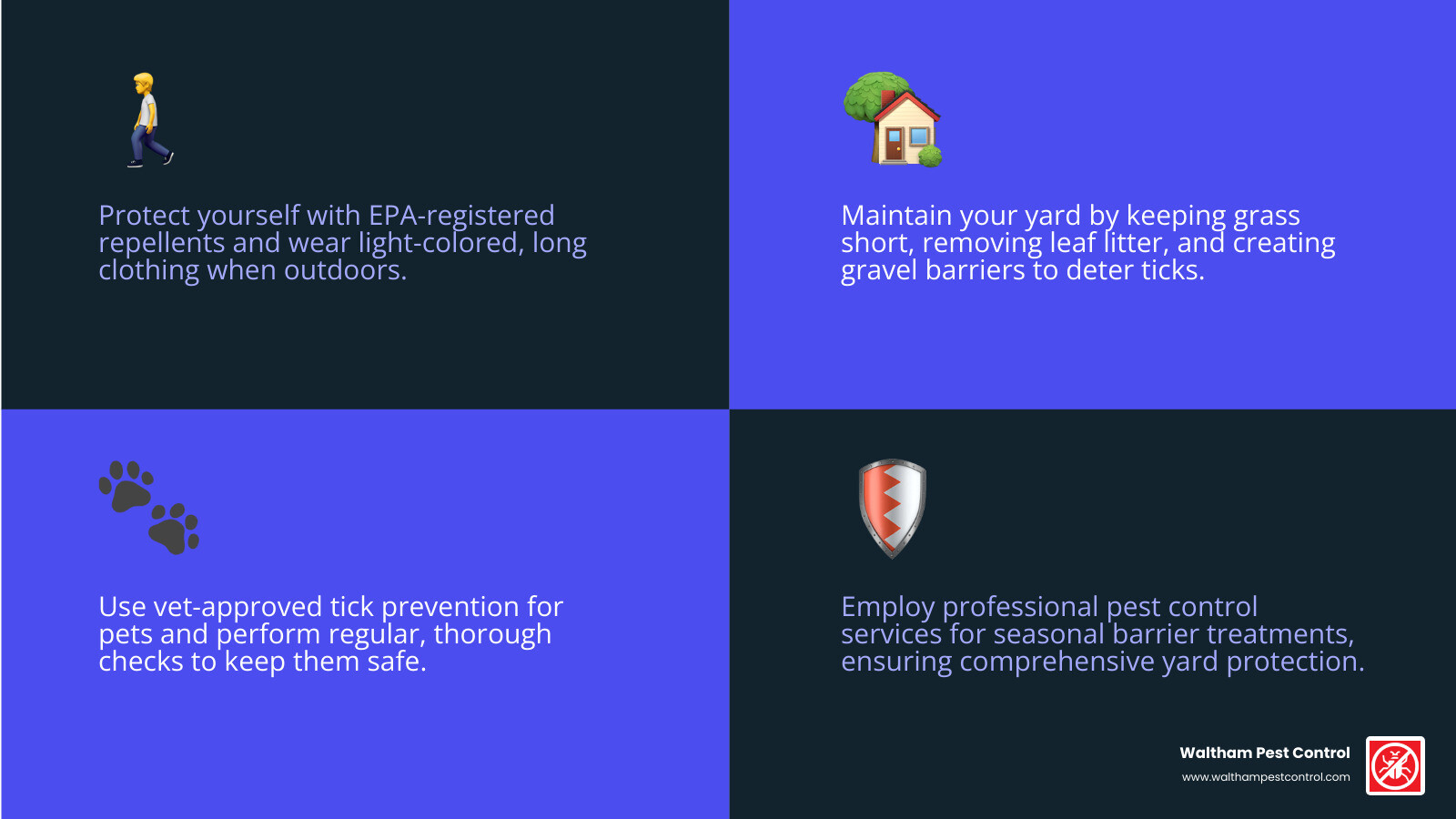
- Personal Protection: Wear light-colored, long clothing and use EPA-registered repellents.
- Yard Maintenance: Keep grass short, remove leaf litter, and create barriers between your lawn and woods.
- Pet Protection: Use vet-approved tick prevention and check pets daily.
- Professional Treatment: Schedule seasonal barrier treatments from a licensed pest control service.
A tick bite can lead to a distinctive bull’s-eye rash and, if untreated, severe long-term health issues like Bell’s palsy or irregular heartbeat. Your pets are also at risk and can carry ticks into your home.
Effective tick prevention requires a multi-layered approach combining personal safety, yard maintenance, pet protection, and professional services. By understanding that ticks avoid sunlight and hide in leaf litter, ground cover, and woodpiles, you can make your property less hospitable to them.
I’m Waltham Pest Control, President & CEO of Waltham Pest Control. For over 40 years, we’ve helped Eastern Massachusetts homeowners protect their families with comprehensive tick control. Our integrated pest management approach uses proven, safe, and effective treatments custom to our local environment.
Tick prevention near me helpful reading:
Understanding the Tick Threat in Your Area
Living in Eastern Massachusetts means sharing our beautiful outdoors with ticks, which are genuine health threats. Understanding the types of ticks, the diseases they carry, and where they live is the first step toward effective protection.
Common Ticks in Eastern Massachusetts
Our area is home to several tick species, each with its own risks:
- Deer Tick (Blacklegged Tick): Tiny and hard to spot, this tick is the primary transmitter of Lyme disease, babesiosis, and anaplasmosis.
- American Dog Tick: Larger and more visible, it can transmit Rocky Mountain spotted fever and tularemia.
- Brown Dog Tick: Unique in its ability to live indoors, it primarily affects dogs and can spread Rocky Mountain spotted fever.
- Lone Star Tick: An aggressive biter, it transmits ehrlichiosis and is linked to the red meat allergy known as Alpha-gal syndrome.
For detailed photos and identification tips, check out our Pest Control for Ticks Guide.

The Dangers of Tick Bites
When an infected tick bites, it can inject disease-causing pathogens into your bloodstream.
- Lyme disease is the most well-known, often starting with a bull’s-eye rash and flu-like symptoms. If untreated, it can lead to chronic joint pain, neurological problems, and heart issues.
- Other significant threats include babesiosis, a parasitic infection of red blood cells, and anaplasmosis, a bacterial infection causing fever, headaches, and muscle aches.
- Rocky Mountain spotted fever, despite its name, is present in Massachusetts and can be severe if not treated promptly.
The Centers for Disease Control and Prevention (CDC) offers comprehensive information on these diseases.
Identifying Tick Season and Hotspots
Ticks can be active year-round, but their peak season in Eastern Massachusetts is from April through October. They avoid sunlight and thrive in shady, moist environments. Key hotspots include:
- Tall grass and dense vegetation
- Heavy leaf litter
- Wooded edges where lawns meet forests
- Protected areas like firewood piles, fallen logs, and under decks
Understanding these hotspots is crucial for focusing your prevention efforts. For more tips, see our guide on Preventing Mosquitoes and Ticks: Essential Tips for a Safe and Enjoyable Summer.
How to Protect Yourself and Your Family from Ticks
With a few straightforward precautions, you can dramatically reduce your risk of tick bites and the diseases they carry.
Personal Prevention Measures
Your first line of defense is personal protection.
- Dress Smart: Wear light-colored clothing to spot ticks easily. Long sleeves and pants, tucked into your socks, create a physical barrier.
- Use Repellents: Apply EPA-registered repellents containing DEET, Picaridin, or Oil of Lemon Eucalyptus to exposed skin and clothing. These are proven to be more effective than most natural alternatives.
- Perform Tick Checks: After being outdoors, conduct a thorough check on yourself, your children, and your pets. Pay close attention to the hairline, scalp, armpits, groin, and behind the knees. Early removal is key, as some diseases take hours to transmit.
- Shower Soon: Showering within two hours of coming inside can wash off unattached ticks and provides another chance for a tick check.

How to Safely Remove a Tick
If you find an attached tick, remove it properly to minimize infection risk.
- Use fine-tipped tweezers to grasp the tick as close to the skin’s surface as possible.
- Pull upward with steady, even pressure. Do not twist or jerk, as this can cause the mouthparts to break off in the skin.
- After removing the tick, thoroughly clean the bite area and your hands with rubbing alcohol or soap and water.
- Dispose of the tick by flushing it, or save it in a sealed container in case you develop symptoms and need it identified.
Recognizing a Tick Bite and When to See a Doctor
A tick bite often looks like a small, red, swollen bump. However, you should see a doctor immediately if you notice:
- A Bull’s-Eye Rash: This classic sign of Lyme disease is a red, expanding rash that may clear in the center. It can appear 3 to 30 days after the bite.
- Other Rashes: Dotted red patches can signal other tick-borne illnesses like Rocky Mountain spotted fever.
- Flu-Like Symptoms: Fever, chills, headache, and muscle aches developing within a few weeks of a bite are serious warning signs.
Early diagnosis and treatment are critical to preventing long-term complications. When in doubt, contact your healthcare provider.
Creating a Tick-Safe Zone in Your Yard
You can make your yard significantly less inviting to ticks through smart landscaping and pet protection. However, it’s important to recognize when DIY efforts need professional reinforcement.
Landscaping Tips to Deter Ticks
Ticks hate sunlight and dry spaces. You can make your yard hostile to them by eliminating the shady, moist spots they love.
- Maintain Your Lawn: Keep grass mowed short to remove the tall perches ticks use for “questing.”
- Clear Debris: Regularly rake and remove leaf litter, brush, and tall weeds, especially along property lines and near the house.
- Create a Barrier: If your yard borders a wooded area, create a 3-foot-wide barrier of dry wood chips or gravel that ticks are reluctant to cross.
- Manage Clutter: Store firewood neatly away from the house and remove rock piles or fallen logs that provide shelter for ticks.
- Discourage Wildlife: Remove food sources like fallen birdseed and secure trash cans to deter deer, mice, and other animals that carry ticks into your yard.
These strategies are a key part of How to Treat Yard for Ticks and can greatly reduce tick populations.

Protecting Your Pets from Ticks
Pets can contract tick-borne illnesses and carry ticks into your home.
- Consult Your Vet: Your veterinarian can recommend the best prevention products, such as collars, topical treatments, or oral medications.
- Perform Daily Checks: Even with preventative products, check your pet for ticks daily, especially in their ears, between their toes, and under their legs. Remove any ticks immediately.
- Keep it Clean: Wash pet bedding in hot water and vacuum frequently to remove any ticks that made it indoors.
For more on keeping pets safe, see our Flea and Tick Control Services.
The Limits of DIY and Natural Tick Prevention near me
While DIY landscaping and personal repellents are valuable first steps, they are rarely enough to solve a tick problem, especially in a high-pressure area like Eastern Massachusetts. These methods reduce populations but don’t eliminate them.
Furthermore, many natural repellents have not been scientifically proven to be as effective as EPA-registered products. For significant infestations, consumer-grade sprays are often insufficient. This is where professional expertise becomes necessary for the health and safety of your family. Our guide on the Best Tick Repellent for Yard explains why professional-grade treatments offer superior protection.
The Role of Professional Tick Prevention Near Me
When DIY methods aren’t enough, it’s time to call the experts. Professional tick prevention near me services offer specialized knowledge, commercial-grade products, and proven strategies that go far beyond what homeowners can do alone. At Waltham Pest Control, we have over 40 years of experience changing tick-infested properties into safe outdoor spaces for Eastern Massachusetts families.
How Professional Tick Control Services Work
Our approach is methodical and science-based. It starts with a thorough property inspection to identify tick species and their breeding grounds—shady spots, dense vegetation, leaf litter, and wooded borders.
We use an Integrated Pest Management (IPM) approach, combining targeted, professional-grade treatments with recommendations for habitat modification. This strategy provides long-term control by breaking the tick life cycle while minimizing environmental impact. We focus applications on tick hotspots, not open lawns, ensuring maximum effectiveness. For more details, visit our Tick Control Services Near Me page.
What to Expect from a Professional Tick Treatment
Professional treatments create a protective perimeter around your property.
- Barrier Sprays: Our Tick Spray Services use products that eliminate ticks on contact. Once dry, typically within a few hours, the treated area is safe for your family and pets.
- Targeted Application: We focus on tick resting spots like under decks, in dense shrubs, and around stone walls—areas homeowners often miss.
- Seasonal Protection: One treatment isn’t enough. Ticks are persistent, so effective plans require regular follow-up visits throughout the peak season (spring through fall). Monthly applications maintain the protective barrier and prevent new infestations.
Our Tick Treatment for Yards delivers this consistent, season-long protection.
Why Choose Waltham Pest Control for Tick Prevention Near Me
Choosing the right partner is crucial for effective tick control. Here’s why Waltham Pest Control is the trusted choice for Eastern Massachusetts homeowners:
- Licensing and Insurance: We are a fully licensed and insured company and have been for over 40 years, giving you complete peace of mind.
- Local Expertise: With deep roots in Eastern Massachusetts, we understand our region’s specific tick challenges, from local species to seasonal patterns.
- Guarantees: We stand behind our work with a service guarantee, ensuring your satisfaction.
- Cost-Effectiveness: We provide a valuable investment in your family’s health and peace of mind. While average industry costs can range from $300 to over $1,000, we provide a custom quote based on your property size and infestation level to ensure you get the most effective and fair-priced solution.
We are transparent about our treatment plans, the products we use, and our guarantees. For more information on our professional approach, see our guide on Companies That Spray for Ticks.
Frequently Asked Questions about Tick Control
Here are answers to some of the most common questions we hear from homeowners searching for tick prevention near me.
What is the most effective way to get rid of ticks in my yard?
The most effective method is a comprehensive strategy that combines two key elements:
- Yard Maintenance: Make your yard less attractive to ticks by keeping grass short, removing leaf litter, and creating barriers between your lawn and wooded areas.
- Professional Treatment: A seasonal plan with targeted barrier sprays from a licensed technician is essential for eliminating ticks where they live and breed.
This multi-layered approach provides the best long-term control.
Are professional tick treatments safe for my kids and pets?
Yes. Safety is a top priority for professional pest control companies. We use EPA-approved products and apply them with precision to tick hotspots, not indiscriminately across your yard. Once the treatment has dried, which usually takes a few hours, it is safe for your children and pets to return to the area.
How often do I need professional tick treatment?
For most homeowners in Eastern Massachusetts, consistent treatment is key. Ticks are most active from April through October. An effective professional plan typically involves monthly applications during this peak season. This regular schedule maintains a protective barrier around your property and disrupts the tick life cycle, preventing future generations from developing.
Conclusion
While the tick threat in Eastern Massachusetts is real, a strategic and consistent approach to tick prevention near me is highly effective. By combining personal vigilance, smart yard maintenance, and pet protection, you can create a strong first line of defense.
However, DIY efforts alone are often not enough to combat the persistent tick populations in our region. For true peace of mind, professional pest control services are essential. Professional treatments create a lasting protective barrier around your property, targeting ticks where they live and breed with regular applications throughout the peak season.
You can reclaim your yard as a safe, enjoyable space for your family. At Waltham Pest Control, we have over 40 years of experience protecting families in Burlington, Waltham, Bedford, and surrounding communities. We understand our local tick challenges and are committed to delivering safe, effective solutions.
Don’t let ticks control your summer. Learn more about our comprehensive Tick Control services and let us help you create a tick-safe environment for your family.
