

Silent Destroyers: Detecting Termites in Your Home
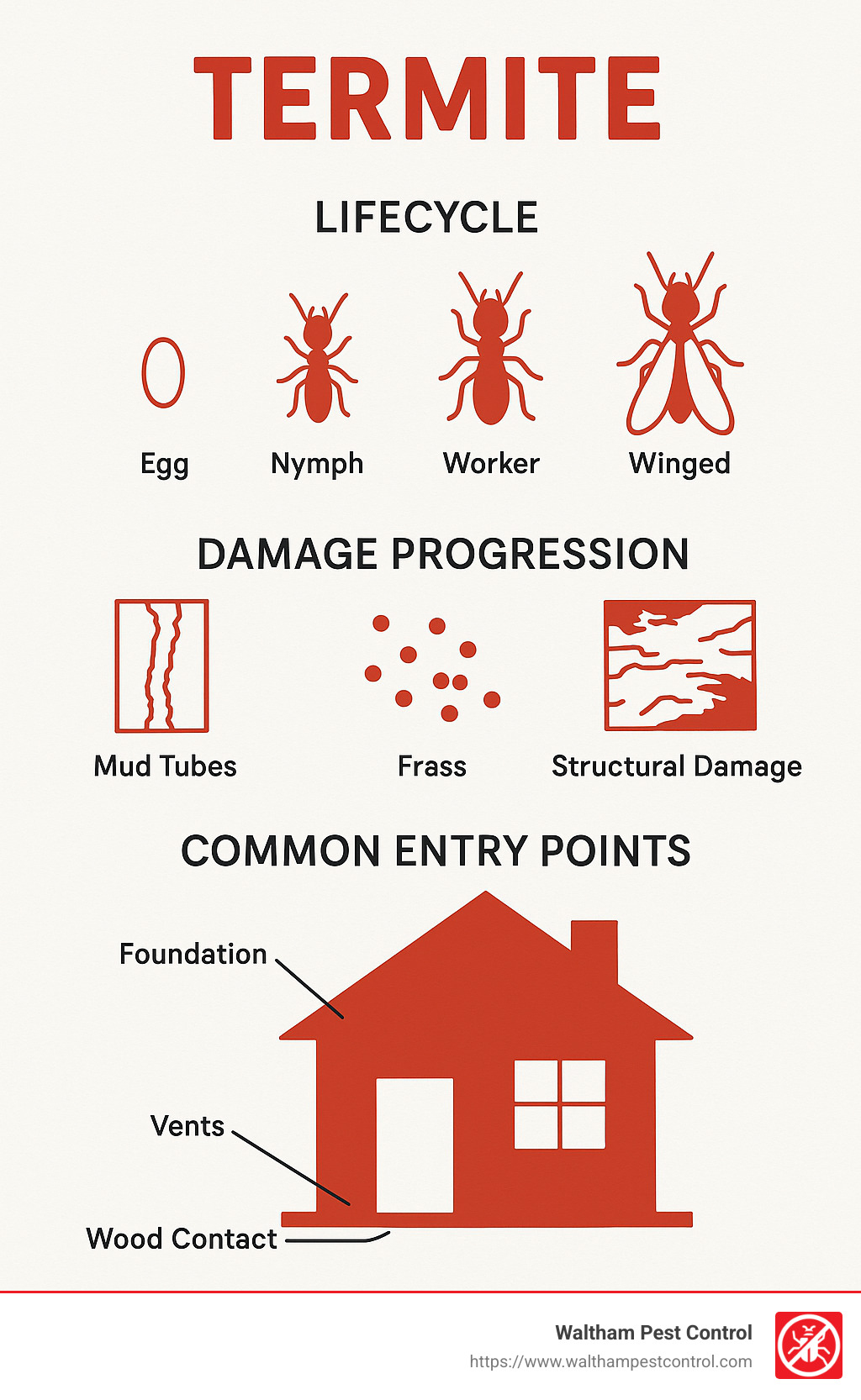
Termites inside house can cause severe structural damage without being noticed for years. These pests silently eat through wood 24 hours a day, potentially leading to costly repairs that most insurance policies don’t cover.
Quick Guide to Identifying Termites Inside Your Home:
1. Mud tubes on foundation walls or along baseboards
2. Hollow-sounding wood when tapped
3. Discarded wings near windows and doors
4. Frass (termite droppings that look like sawdust)
5. Tight-fitting doors or windows (from warped frames)
6. Clicking sounds in walls
7. Bubbling or peeling paint
Termites can enter through cracks as small as 1/64 inch, and a typical home may have 3-4 colonies underneath it, each containing up to one million termites. The average cost of repairing termite damage is about $3,000, but catching an infestation early can save you thousands.
As one exterminator adage states: “As far as houses and termites go, there are only three types of residences: those that have had termites; those that now have termites; and those that are going to have termites.”
I’m Waltham Pest Control, and with over 40 years of experience in pest control, I’ve seen the devastating damage termites inside house can cause to Massachusetts homes. My team at Waltham Pest Control specializes in identifying and eliminating these destructive pests before they compromise your home’s structural integrity.
Termites inside house terms at a glance:
– dead termites
– how do pest control companies treat for termites
– when do termites swarm
Termites Inside House: Why They’re a Hidden Danger
When it comes to unwanted houseguests, termites inside house take the prize for most destructive. Unlike the mouse that leaves droppings or the spider that spins visible webs, termites operate like silent saboteurs. They’re literally eating you out of house and home—and you might not know until it’s too late.
These wood-eating insects have a voracious appetite for cellulose, the main component in wood, paper, and cardboard. What makes them particularly dangerous is their relentless work ethic: they’re feeding 24 hours a day, 7 days a week, never taking holidays or weekends off. While you sleep soundly, they’re busy compromising your home’s structural integrity beam by beam.
“As far as houses and termites go, there are only three types of residences: those that have had termites; those that now have termites; and those that are going to have termites.” – Common exterminator adage
This isn’t just clever wordplay—it’s a sobering reality for Eastern Massachusetts homeowners. Our region’s climate and abundance of older homes create the perfect storm for termite activity. The most frightening part? By the time you notice sagging floors or buckling walls, the damage is often extensive and costly.
And here’s the financial gut-punch: most homeowners’ insurance policies specifically exclude termite damage. That means when your support beams need replacing or your hardwood floors require restoration, you’re footing the bill entirely out of pocket. With repair costs often running into thousands (sometimes tens of thousands) of dollars, termite damage can devastate both your home and your savings.
What are termites and why are they dangerous?
Termites inside house operate like a well-organized military unit. At the center of each colony sits the queen—a remarkable creature capable of laying thousands of eggs daily and potentially living for decades. Some queens can survive up to 50 years, creating generations of wood-destroying offspring.
The queen’s productivity is staggering, with mature colonies housing upwards of one million individual workers. This massive workforce moves through your home’s wooden structures like an assembly line, systematically hollowing beams and joists from the inside out. What’s particularly devious is that they leave the outermost layer intact, so your wood looks fine on the surface while being completely compromised internally.
Contrary to some myths, termites don’t directly harm human health—they won’t bite, sting, or transmit diseases. However, their presence can indirectly affect your wellbeing. Some people experience allergic reactions to termite frass (their droppings), and the increased moisture in termite-damaged areas often leads to mold growth. More concerning is the structural damage that can create unsafe living conditions as floors weaken and ceilings sag.
Main household species
Here in Eastern Massachusetts, we primarily encounter four types of these unwelcome guests:
Subterranean termites are our most common and destructive visitors. These moisture-loving pests live primarily in soil and build distinctive mud tubes—essentially termite highways—to access your home while maintaining the humidity they need. They’re incredibly resourceful, able to squeeze through foundation cracks as narrow as 1/64 of an inch (about the thickness of a credit card).
Drywood termites are less common in our region but occasionally show up, often in imported furniture or structural timber. Unlike their subterranean cousins, they don’t need soil contact and can live entirely within dry wood. This independence makes them particularly sneaky—with no mud tubes to spot, they can remain undetected even longer.
Dampwood termites prefer exactly what their name suggests: moist, decaying wood. While not typically a problem in well-maintained homes, they’ll happily infest areas with water damage, leaky pipes, or poor drainage. Think of them as nature’s cleanup crew, specializing in decomposing wet wood.
Formosan termites, sometimes called “super termites,” are an aggressive subterranean species with a well-earned reputation for destruction. Their colonies can be massive—up to several million individuals—and they consume wood at an alarming rate. While historically more common in southern states, climate change has been expanding their range northward, making them an emerging concern for Massachusetts homeowners.
Within these colonies, different termites have specialized roles. The workers are the actual wood-consumers—pale, cream-colored insects about ¼ inch long that do all the damage. Soldiers are easily identified by their larger heads and powerful mandibles, standing ready to defend the colony. The swarmers (or alates) are the winged reproducers that emerge seasonally to establish new colonies—and they’re often the first visible sign homeowners notice when an infestation is already well established.
Knowing which species has taken up residence is crucial because effective treatment strategies vary based on termite behavior and biology. That’s why professional identification is so important—what works for subterranean termites might be completely ineffective against drywood varieties.
10 Silent Warning Signs of Termites Inside House
Finding termites inside house early can save you thousands in repair costs and prevent major structural damage. These silent destroyers often go unnoticed until significant harm has already occurred. Here are the ten warning signs every homeowner should know:
Buckling or blistering wood flooring often appears as unexpected dips or soft spots in previously level floors. When termites feast on the wooden substructure beneath your flooring, the damage weakens support beams, causing visible warping that resembles water damage.
Hollow-sounding wood is a telltale sign of termite activity. Since these pests consume wood from the inside out, affected areas will sound distinctly empty when tapped with a screwdriver handle. A Burlington homeowner finded this the hard way: “I was hanging a picture and the wall sounded different. When I investigated further, I found termites had hollowed out the entire stud.”
Mud tubes on foundations or walls look like pencil-width dirt tunnels running along foundation walls, support piers, or inside crawl spaces. Subterranean termites build these protective highways to maintain the moisture they need while traveling between their underground colony and your wooden home structures. If you break open an active tube, you’ll see pale worker termites scurrying inside.
Swarmers (flying termites) typically emerge in spring when reproductive termites leave established colonies to start new ones. Finding these winged insects inside your home almost always indicates an active infestation nearby. They’re drawn to light sources, so check windowsills and light fixtures.
Discarded wings near windows, door frames, or light fixtures suggest a recent termite swarm occurred inside your home. After finding mates, swarmers shed their wings, leaving behind piles of translucent, uniform wing fragments – a concerning sign that new colonies may be forming.
Frass (termite droppings) looks like tiny wood-colored pellets resembling sawdust or coffee grounds. Drywood termites push these fecal pellets out through small holes in infested wood, creating distinctive mounds along baseboards or window sills that shouldn’t be confused with ordinary dust.
Tight-fitting doors or windows that suddenly stick or won’t close properly may indicate termite damage. As termites consume wooden frames and introduce moisture, the wood warps, affecting how doors and windows function.
Head-banging clicks from within your walls might sound like a plumbing issue, but soldier termites communicate danger by banging their heads against wood surfaces. These faint clicking sounds, most noticeable at night when the house is quiet, signal significant termite presence.
Sagging ceilings or bubbling paint occur when termites damage support structures, causing ceilings to visibly dip or paint to bubble and peel as moisture from termite activity affects wall surfaces. These signs indicate advanced damage requiring immediate attention.
Moldy or musty odor similar to mildew often accompanies large termite colonies. This distinctive smell becomes more noticeable in enclosed spaces with significant termite activity and typically comes with increased humidity in the affected area.
Early warning signs of termites inside house
The subtlest indicators of termite presence are often missed during routine home maintenance, but catching them early can prevent extensive damage:
Frass pellets are one of the earliest visible signs of drywood termites. These tiny, uniform pellets (about 1mm long) form small, neat piles beneath kick-out holes where termites expel waste from their galleries. Unlike random sawdust that varies in size, termite frass is consistently sized and deliberately placed.
Pinholes in drywall or wood surfaces appear as tiny, needle-prick sized openings where termites have accidentally breached the surface before sealing it with mud or frass. A Waltham Pest Control technician recalls: “When a homeowner in Lexington noticed tiny holes appearing in her kitchen sheetrock during routine cleaning, she scraped one open and observed a termite worker immediately investigating the breach.”
Bubbling paint on walls or ceilings often precedes actual peeling. Look for subtle bubbles or uneven textures where termites might be consuming the wood underneath. This bubbling occurs either from termites eating close to the surface or from the moisture they introduce affecting paint adhesion.
Audible & sensory clues
Your ears and fingertips can detect termites inside house even when your eyes miss them:
Clicking noises within walls or wooden furniture might be soldier termites communicating. They bang their heads against wood or shake their bodies when sensing danger, producing quiet clicking sounds. These noises are most detectable at night when termites are most active and your home is quieter.
Hollow tap test is a simple but effective detection method. Take a screwdriver handle and tap along wooden surfaces throughout your home. Healthy wood produces a solid, firm sound, while termite-damaged areas sound hollow, papery, or thin. This test often reveals hidden damage behind seemingly intact surfaces.
Musty smell resembling damp cardboard or old books might indicate a termite infestation. Large colonies produce this distinctive odor, which becomes particularly noticeable in enclosed spaces with significant termite activity. The smell typically intensifies with increased humidity in the affected area.
Severe structural red flags
By the time these warning signs appear, substantial damage likely requires professional intervention:
Dipping ceilings occur when termites damage ceiling joists or rafters. The ceiling may begin to visibly sag or develop unexpected curves, representing a serious structural concern that needs immediate attention. Never ignore even slight ceiling deformities.
Loose tiles or squeaky floors might seem like normal house aging, but they often indicate termite damage to subflooring. As supporting structures weaken, floor tiles loosen or hardwood floors develop excessive squeaks when walked upon. These symptoms worsen progressively as damage increases.
Warped doorframes result from termites consuming wood and introducing moisture. A door that suddenly sticks, won’t latch properly, or develops unusual gaps at the top or bottom may indicate termite damage to the surrounding frame.
In a particularly alarming case in Arlington, a homeowner noticed kitchen floor tiles becoming increasingly loose over several months. Our inspection revealed subterranean termites had consumed nearly 80% of the subflooring, requiring complete replacement of the structural elements before new flooring could be installed – a costly repair that early detection could have prevented.
For more scientific information about termite mud tubes and how they indicate infestation patterns, visit this detailed research resource.
How Termites Get In & What Attracts Them
Understanding how termites enter your home and what attracts them is essential for effective prevention. Termites inside house don’t appear by accident—they’re drawn to specific conditions that make your home an ideal feeding and nesting site.
Termites are incredibly resourceful invaders. They can squeeze through cracks as tiny as 1/64 of an inch—about the thickness of a credit card. This remarkable ability means virtually no home is immune to infestation, regardless of construction type or age.
Think of your home as a potential termite buffet. The wooden frame, flooring, and trim represent a feast for these persistent pests. But what specifically invites them to dinner? Several key factors create the perfect termite welcome mat.
Wood-to-ground contact creates a direct highway for subterranean termites to move from soil into your home’s structure. Your deck posts without concrete footings, wooden steps touching soil, siding that extends below ground level, or wooden lattice attached to your house all provide termites with easy access. These direct wood-to-soil connections eliminate the need for termites to build their distinctive mud tubes, allowing them to remain hidden longer.
Moisture is termite catnip. Termites inside house typically begin as moisture problems outside. Leaky outdoor faucets, poor drainage around your foundation, clogged gutters, air conditioning condensation, and sprinklers that regularly wet your siding all create the humid environment termites crave. As one of our Burlington customers finded, a simple gutter repair dramatically reduced the moisture content in their soil—and the termite pressure on their home.
The materials around your foundation can serve as termite stepping stones. Regular wood mulch placed against your foundation, firewood stacked against exterior walls, tree stumps near the house, and even cardboard stored in crawl spaces all provide both food and shelter for expanding termite colonies.
Our Eastern Massachusetts climate unfortunately creates ideal conditions for termite activity. Our warm, humid summers promote termite reproduction, while our sufficient rainfall maintains soil moisture. Even our moderate winters allow continued subterranean termite activity below the frost line.
Common entry routes for termites inside house
Termites find their way into homes through several specific pathways. Foundation cracks, even hairline ones, provide perfect entry points. These cracks develop naturally due to settling, freeze-thaw cycles, or improper drainage—and termites exploit them relentlessly.
Utility penetrations create termite highways into your home. Where plumbing, electrical conduits, or gas lines enter, small gaps often exist. These penetrations essentially punch holes in your home’s termite defense system.
The expansion joints between concrete slabs or where additions join original structures create natural entry points. These seams are particularly vulnerable because they’re designed to allow movement—the same flexibility that accommodates seasonal expansion also welcomes termites.
Porch attachments deserve special attention. Where porches or decks connect to your main structure, termites can move from soil to wood and then into your house, especially if these attachment points aren’t properly sealed.
Homes with brick veneer often have small gaps between the brick and structural framing. Termites can steer these gaps to reach wooden elements while remaining completely hidden from view.
A particularly instructive case occurred in Lexington, where a homeowner had recently landscaped around their foundation, inadvertently breaking the chemical barrier that had protected the home. Within months, subterranean termites established multiple entry points through tiny foundation cracks that had been exposed during the landscaping work.
Environmental lures you can fix today
The good news? You can modify several conditions around your home immediately to reduce termite attraction.
Excess moisture is perhaps the most important factor to address. Fix leaking outdoor faucets and pipes without delay. Ensure downspouts direct water at least 3 feet from your foundation. Grade soil to slope away from your foundation with a minimum 6-inch drop over 10 feet. And don’t forget to repair any leaking basement windows or doors that might be creating damp conditions.
Clogged gutters contribute significantly to foundation moisture. By cleaning them regularly, you prevent overflow that can saturate soil around your foundation. This simple maintenance task dramatically reduces the moisture that attracts termites to your home’s perimeter.
Dense vegetation near your foundation creates humid microclimates that termites love. Plants placed too close to your home limit airflow, keeping foundation areas damp and making it difficult to inspect for termite activity. Maintain at least 12 inches between mature plants and your foundation—your home will thank you.
Surprisingly, your exterior lighting choices influence termite activity. Swarming termites are strongly attracted to light, particularly during their spring mating season. Consider replacing standard bulbs near entrances with yellow “bug lights” or installing motion-activated lights that don’t remain on continuously during swarming season.
Traditional wood mulch placed against your foundation is essentially inviting termites to dinner. Consider alternatives like rubber mulch, decorative stone, or cedar/cypress mulch (which contains natural repellents, though these diminish over time). Whatever mulch you choose, keep it at least 15 inches from foundation walls to create a termite-discouraging gap.
By addressing these environmental factors, you create a home that’s significantly less attractive to termites. As we often tell our Waltham customers, your best defense against termites inside house is making your property as uninviting to them as possible.
Taking Action: Professional vs. DIY Treatment Options
When you find termites inside house, quick action is essential to prevent further damage. You’ll need to decide between professional treatment and DIY approaches. While the DIY route might seem appealing to your wallet initially, understanding the complete picture will help you make the best choice for your home and family.
Treatment options for termites inside house
Professional pest control companies typically offer several effective treatment methods, each with specific advantages for different situations.
Liquid Termiticide Barriers create a protective zone around your home’s foundation. These treatments involve trenching around your foundation and sometimes drilling through concrete slabs to create a complete chemical barrier. When subterranean termites attempt to enter, they either die upon contact with the treatment or are repelled away. One Massachusetts homeowner told me, “I was nervous about the drilling, but the team was so careful and clean. Five years later, we haven’t seen a single termite.” These treatments typically provide 5-10 years of protection, making them a long-term solution with minimal disruption once applied.
Termite Bait Systems take a different approach by targeting the colony itself. Professionals install stations around your property’s perimeter containing wood or cellulose material that attracts termites. Once termites begin feeding, a toxic bait is added that workers carry back to the colony, gradually eliminating the entire population, including the queen. While these systems may take longer to achieve control than liquid barriers, they’re less invasive and particularly effective in environmentally sensitive areas. The quarterly monitoring ensures ongoing protection and early detection of any new activity.
Fumigation is the most comprehensive treatment for severe or widespread infestations, particularly for drywood termites. Your entire home is tented and filled with gaseous pesticide that penetrates all wood structures. While highly effective, fumigation requires you to vacate your home for 2-3 days and doesn’t provide residual protection after treatment. As one Lexington resident shared, “Having to leave home was inconvenient, but knowing every termite was eliminated gave us peace of mind worth the disruption.”
Heat Treatment offers a non-chemical alternative where infested areas are heated to temperatures lethal to termites (120-140°F). This method works well for localized drywood termite problems and requires less preparation than fumigation. However, like fumigation, it doesn’t provide ongoing protection.
Spot Treatments involve direct application of termiticides to localized infestations. While less disruptive and less expensive than whole-house treatments, their effectiveness is limited for subterranean termites. They’re better suited for isolated drywood termite problems and often need to be combined with monitoring.
| Treatment Method | Advantages | Limitations | Best For | Longevity |
|---|---|---|---|---|
| Liquid Barriers | Long-lasting protection, creates complete barrier | Requires trenching, drilling | Subterranean termites, preventive treatment | 5-10 years |
| Bait Systems | Low disruption, environmentally friendly, eliminates colony | Slower acting, requires monitoring | Subterranean termites, environmentally sensitive areas | Ongoing with monitoring |
| Fumigation | Eliminates all termites throughout structure | Requires temporary relocation, no residual protection | Drywood termites, widespread infestations | One-time treatment |
| Heat Treatment | Non-toxic, no chemicals, minimal prep | Limited to accessible areas, no residual protection | Localized drywood termite infestations | One-time treatment |
| Spot Treatments | Minimal disruption, lower initial cost | Limited effectiveness for widespread infestations | Isolated drywood infestations | 1-2 years |
While DIY termite control products exist, they come with significant limitations. Store-bought termiticides are typically diluted versions of professional products and lack the penetration and longevity of professional applications. Most homeowners don’t have the specialized equipment needed for proper soil treatment or the training to identify all entry points and infestation areas.
I’ve seen many cases where incomplete DIY treatment led to continued damage and eventually much higher costs than professional treatment would have been initially. If you do attempt DIY treatment, safety must be your priority: wear appropriate protective gear, follow all label instructions carefully, and keep pets and children away from treated areas.
According to internet data, professional termite treatment in the U.S. typically ranges from $500 for limited treatments to $5,000 or more for whole-house fumigation of larger homes. This wide range reflects differences in home size, infestation severity, treatment method, and regional factors.
When to call a licensed expert
While you might handle some prevention measures yourself, certain situations demand immediate professional intervention:
Swarmers indoors are a clear warning sign. Finding winged termites or their discarded wings inside your home indicates an established colony that requires professional inspection and treatment. These reproductive termites emerge from mature colonies, and their presence indoors almost always signals an active infestation.
Active mud tubes on your foundation or interior walls are another red flag. If you break open a mud tube and find live termites inside, or if the tube is repaired within days, you have an active infestation that needs professional attention. These mud highways are built by worker termites to maintain the moisture they need while traveling between their colony and your home’s wooden structures.
Visible structural damage to any wood elements, particularly load-bearing components, necessitates professional assessment. By the time damage is visible, the infestation is typically well-established and requires comprehensive treatment. A professional can determine the extent of the damage and recommend appropriate repairs along with treatment.
Home purchase or sale situations always warrant professional termite inspection. In fact, many mortgage lenders require a clean termite inspection report before approving financing. A thorough professional inspection can identify existing infestations or conditions that might lead to future problems.
Warranty claims or renewals typically require professional inspection. If you have an existing termite warranty, regular professional inspections are usually required to maintain coverage. These inspections help catch new infestations early when they’re easier and less expensive to treat.
I remember a particularly striking case in Arlington where a homeowner attempted DIY treatments for over a year before finally calling us. By that time, termites had damaged floor joists so severely that floors were visibly sagging. The structural repairs alone cost over $15,000—far more than professional treatment would have cost initially. That’s why early professional intervention is so important when dealing with termites inside house.
For more information about selecting the right termite control company, visit our guide on how to choose a termite control company.
Prevention & Maintenance Checklist
Preventing termites inside house is significantly easier and less expensive than treating an established infestation. A proactive approach to termite prevention can save Eastern Massachusetts homeowners thousands in potential repair costs and the headache of dealing with these destructive pests.
When I visit homes in Concord, Lexington, or Arlington, I often tell homeowners that termite prevention is like maintaining your car—regular attention prevents catastrophic failures. Here’s a comprehensive approach to keeping your home termite-free:
Your annual inspection routine should include examining foundation walls for mud tubes, checking wooden structures for hollow sounds by tapping them gently, and inspecting door and window frames for subtle warping. Don’t forget to look for discarded termite wings near windows and doors during spring swarming season. Take a flashlight into crawl spaces or basements to examine exposed wood, and consider scheduling a professional inspection at least once yearly for peace of mind.
Moisture control is perhaps your strongest defense against termites. These pests are attracted to damp environments, so repair leaky pipes promptly, ensure downspouts direct water at least 3 feet from your foundation, and maintain proper grading that slopes away from your home. Regular gutter cleaning prevents overflow that can saturate soil near your foundation. In those damp New England basements, dehumidifiers can make the environment less hospitable to termites while also preventing mold issues.
One of our clients in Wellesley learned this lesson the hard way. After years of ignoring a small roof leak, they finded termites had established a colony in the water-damaged attic framing. The repair costs far exceeded what fixing the original leak would have required.
Structural maintenance plays a crucial role in termite prevention. Seal foundation cracks with appropriate concrete patching, repair damaged siding (especially near ground level), and ensure at least 6 inches of clearance between soil and wooden elements of your home. Water-damaged wood should be replaced quickly, as it’s particularly attractive to termites. Don’t forget to seal utility entry points with steel wool and caulk to block these common termite highways.
Your landscaping practices can either invite termites or help keep them at bay. Keep mulch at least 15 inches away from your foundation, store firewood at least 20 feet from your house (and lifted off the ground), and remove tree stumps and dead trees near the house. Those beautiful shrubs against your foundation? They may be retaining moisture and preventing you from spotting termite activity—consider maintaining some clearance for better airflow and visibility.
Proper ventilation improvements can dramatically reduce your termite risk. Ensure crawl spaces are adequately ventilated, install vent screens to prevent termite entry, and maintain good attic ventilation to reduce moisture throughout your home. Consider powered ventilation for particularly damp crawl spaces, and keep air circulating in storage areas and basements where stagnant, humid conditions might otherwise develop.
A real-world success story comes from our client in Concord who implemented our prevention checklist after witnessing their neighbor’s severe infestation. By adjusting downspouts, replacing wood mulch with stone around the foundation, and scheduling annual professional inspections, they’ve maintained a termite-free home for over a decade despite being in an area with high termite pressure.
For more detailed information about protecting your property, visit our comprehensive guide on termite prevention: protecting your home from costly damage.
Ongoing monitoring tools
Between professional inspections, several monitoring tools can help you detect termite activity before significant damage occurs. Think of these as your early warning system—the smoke detectors of termite protection.
Termite monitors provide a simple but effective first line of defense. These can be as basic as wooden stakes placed in soil around your foundation or more sophisticated commercial monitoring stations. Some homeowners place cardboard traps in crawl spaces or near suspected entry points. Checking these regularly can reveal termite activity before they reach your home’s structural elements.
Moisture meters have become increasingly affordable and user-friendly in recent years. These handheld devices measure wood moisture content, helping you identify areas with excessive moisture that might attract termites. By regularly monitoring potential problem areas, you can address moisture issues before they lead to infestations. While consumer-grade meters provide good information, professional-grade meters offer the most accurate readings.
Technology has brought us smart sensors that take home monitoring to a new level. These devices can detect unusual moisture levels in walls, subtle vibrations that might indicate termite activity, and temperature variations that could suggest insulation damage from pests. These sensors are particularly valuable for monitoring hard-to-access areas like wall voids or remote corners of crawl spaces.
I always recommend maintaining a simple documentation system for your termite prevention efforts. Keep a home monitoring journal where you record inspection dates and findings, take dated photographs of potential problem areas, and track changes over time. This documentation becomes invaluable for identifying developing issues and can be extremely helpful if you ever need to make an insurance or warranty claim.
Cost-effective inspection schedule
A systematic approach to termite monitoring provides the best protection while managing costs. Think of this as your termite prevention calendar:
Conduct thorough self-checks quarterly—once each season is easy to remember. Focus on high-risk areas like your foundation, crawl spaces, and attic. Use the tap test on wooden structural elements, checking for that distinctive hollow sound that might indicate termite damage. Examine any termite monitors you’ve installed, look for new mud tubes or frass, and document your findings with photos and notes.
Schedule a professional inspection yearly, ideally in early spring before swarming season begins. Professional inspectors have the training and equipment to spot subtle signs you might miss and can access areas that are difficult for homeowners to examine properly. Ensure the inspection includes moisture readings throughout your home, and request a written report with specific recommendations. Many homeowners find it cost-effective to combine this with their regular pest control service.
During spring swarm watch (typically March-May in Massachusetts), be particularly vigilant. After warm spring rains, check window sills and light fixtures for discarded wings—often the first sign of a new termite colony establishing nearby. Inspect your exterior foundation during warm days after light rain, when termite activity tends to increase. If you spot swarmers, contact your pest control professional immediately.
Don’t forget to schedule a special inspection after any major construction work. New construction can disrupt existing termite barriers, renovations may expose previously hidden damage, and even landscape changes can create new termite pathways into your home.
Following this layered schedule provides comprehensive protection that balances DIY vigilance with professional expertise. As we’ve seen with our clients throughout Eastern Massachusetts, this approach typically catches termite activity early when treatment is simpler and less expensive—saving both money and peace of mind.
Frequently Asked Questions About Termites Inside House
How often should I inspect my home?
Finding the right inspection schedule for your home is a bit like preventive healthcare – regular check-ups can catch problems before they become serious. For most Eastern Massachusetts homeowners, I recommend conducting your own visual inspections every three months. During these personal inspections, take a flashlight and spend some time examining your foundation, crawl spaces, and wooden structural elements.
These quarterly self-checks should be complemented by professional inspections at least once a year. Early spring is ideal timing for these professional visits, as this gives you a chance to address any issues before termite swarming season kicks into high gear.
If your home has battled termites before or sits in a high-risk area (like properties adjacent to wooded lots or homes with persistent moisture issues), you might want to consider more frequent professional inspections. Several of our clients in vulnerable parts of Middlesex County have found that twice-yearly professional inspections provide greater peace of mind.
Certain events should always trigger an additional inspection, even if you’ve recently had one. These include major rainstorms or flooding, completing renovations or landscaping projects, purchasing a new home, or hearing that neighbors have finded termite activity.
One of our long-time Lexington clients put it perfectly: “After finding termites once, I learned my lesson. The annual inspection fee is a small price to pay compared to the damage they caused before we caught them.”
Is termite damage covered by homeowners insurance?
Here’s the unfortunate reality that surprises many homeowners: most standard homeowners insurance policies specifically exclude termite damage. This often comes as an unwelcome shock when finding an infestation.
Insurance companies typically classify termite damage as a maintenance issue rather than a sudden or accidental event. Their perspective is that proper home care and regular inspections should prevent this type of damage, so they place the responsibility squarely on the homeowner’s shoulders.
This exclusion makes prevention and early detection particularly crucial, as you’ll likely bear the full financial burden for both treatment and repairs. The average repair cost hovers around $3,000, but I’ve seen severe cases where structural damage exceeded $20,000 – all coming directly from the homeowner’s pocket.
While some specialized insurance policies or riders might offer limited termite coverage, these are relatively rare and often come with significant restrictions or high premiums. Most professional termite control companies (including Waltham Pest Control) offer service warranties that guarantee retreatment if termites return during the warranty period, but even these typically don’t cover repair costs for existing damage.
Your best financial protection against termites inside house combines four key elements:
1. Scheduling regular professional inspections
2. Acting quickly at the first sign of termite activity
3. Maintaining a termite warranty or service agreement
4. Following prevention best practices religiously
Can termites infest homes with concrete or brick foundations?
Yes, absolutely – and this misconception gives many homeowners a false sense of security. While concrete and brick aren’t food sources for termites, they certainly don’t form an impenetrable barrier against these determined pests.
Subterranean termites can squeeze through cracks as tiny as 1/64 of an inch in concrete foundations. To put that in perspective, that’s about the thickness of a credit card! These resourceful insects regularly exploit tiny foundation cracks that develop from normal settling, expansion joints between concrete sections, spaces around utility penetrations, the seam between your foundation and sill plate, and even gaps in mortar between bricks.
Once they steer through these entry points, termites gain direct access to the wooden structural elements they crave. We’ve treated countless homes throughout Burlington, Lexington, and Eastern Massachusetts with concrete foundations that developed significant termite problems.
I remember one particularly eye-opening case involving a newer construction home in Waltham with what appeared to be a solid poured concrete foundation. Within just three years of construction, subterranean termites had finded and exploited hairline cracks that developed during normal settling. By the time we were called, they had already begun damaging floor joists. The homeowner was completely shocked – he had firmly believed his concrete foundation made the home termite-proof.
The most effective protection for homes with concrete or brick foundations includes regular inspection of the foundation for cracks, proper sealing around utility penetrations, maintaining a chemical barrier in the soil surrounding the foundation, keeping wood materials away from the foundation, and ensuring proper drainage to reduce moisture against foundation walls.
While brick and concrete don’t provide termites with nutrition, they certainly don’t always stop them. Proper prevention and monitoring remain essential regardless of what your foundation is made of – termites inside house will find a way if given the opportunity.
Conclusion
Protecting your home from termites inside house requires vigilance, knowledge, and timely action. These silent destroyers can cause devastating damage before most homeowners even realize they have a problem. The financial impact can be substantial, with repairs averaging $3,000 but potentially running much higher—and most homeowners insurance policies won’t cover a penny of it.
Throughout Eastern Massachusetts, from coastal communities to inland suburbs, termites represent a significant threat to residential structures. The region’s climate and building styles create ideal conditions for termite activity, making proactive prevention essential.
Your home is likely your biggest investment, and termites pose a silent threat to that investment every day. After helping thousands of homeowners over four decades, we’ve seen how devastating termite damage can be when left unchecked. The good news? With the right knowledge and approach, you can protect your home effectively.
Early detection truly is your best defense. Those warning signs we’ve discussed—mud tubes snaking up your foundation, wood that sounds hollow when tapped, small piles of frass that resemble sawdust—are your early warning system. When you spot these signals, immediate action can save you thousands in repair costs.
Prevention costs pennies compared to treatment and repairs. Simple maintenance like fixing leaky pipes, keeping mulch away from your foundation, and ensuring proper drainage aren’t just good homeownership practices—they’re your first line of defense against termites. Many homeowners we work with in Lexington and Burlington have maintained termite-free homes for decades simply by following these preventative measures faithfully.
Regular inspections provide invaluable peace of mind. Combining your quarterly self-checks with annual professional inspections creates a powerful early warning system. Think of it as a health check-up for your home—catching small problems before they become major issues.
Professional treatment is essential for active infestations. While DIY methods might have their place in prevention, when it comes to eliminating established colonies, professional equipment and expertise make all the difference. I’ve seen too many homeowners try to tackle infestations themselves, only to call us months later with significantly worse damage.
Ongoing vigilance protects your investment for years to come. Even after successful treatment, maintaining prevention practices and regular monitoring helps ensure long-term protection. As one of our long-time clients in Arlington puts it: “After dealing with termites once, the annual inspection fee feels like the best insurance policy I could buy.”
As we’ve seen with thousands of homes across Eastern Massachusetts over our 40+ years in business, the homes that avoid serious termite damage are those with vigilant owners who understand the threat and take proactive measures. The old exterminator’s adage remains true: homes either have had termites, have termites now, or will have termites in the future. The difference lies in how quickly you detect them and how effectively you respond.
At Waltham Pest Control, we’ve dedicated over four decades to protecting Eastern Massachusetts homes from termites and other pests. Our experienced technicians understand the unique challenges of termite control in our region and provide customized solutions to match your home’s specific needs.
For more information about scheduling a comprehensive pest inspection, visit our pest inspections page or contact our office. When it comes to termites, an ounce of prevention truly is worth a pound of cure—or in this case, potentially thousands of dollars in structural repairs.
