

Termite Larvae: Uncover 3 Hidden Dangers
Understanding the Hidden Foundation of Termite Colonies
Termite larvae are the soft-bodied, white juvenile termites that develop from eggs, forming the foundation of every termite colony. These tiny insects, measuring less than 1/10 inch (2.5 mm) long, are kept hidden deep within the colony’s nursery. They are fed pre-digested cellulose by worker termites through a process called trophallaxis. Over weeks or months, these larvae undergo incomplete metamorphosis to become workers, soldiers, or reproductive termites, which can cause billions of dollars in structural damage annually.
The presence of termite larvae indicates an established, active colony that requires immediate professional attention. While homeowners usually see adult termites, understanding the larvae is crucial because these young termites represent the colony’s future destructive potential. A queen can lay thousands of eggs daily, and each surviving larva contributes to the colony’s ability to consume wood.
I’m Waltham Pest Control, President & CEO of Waltham Pest Control. With over 40 years of experience in Eastern Massachusetts, I’ve seen how understanding termite development helps eliminate infestations before they cause catastrophic damage. This guide will help you understand these hidden threats.
What Are Termite Larvae and How Do You Identify Them?
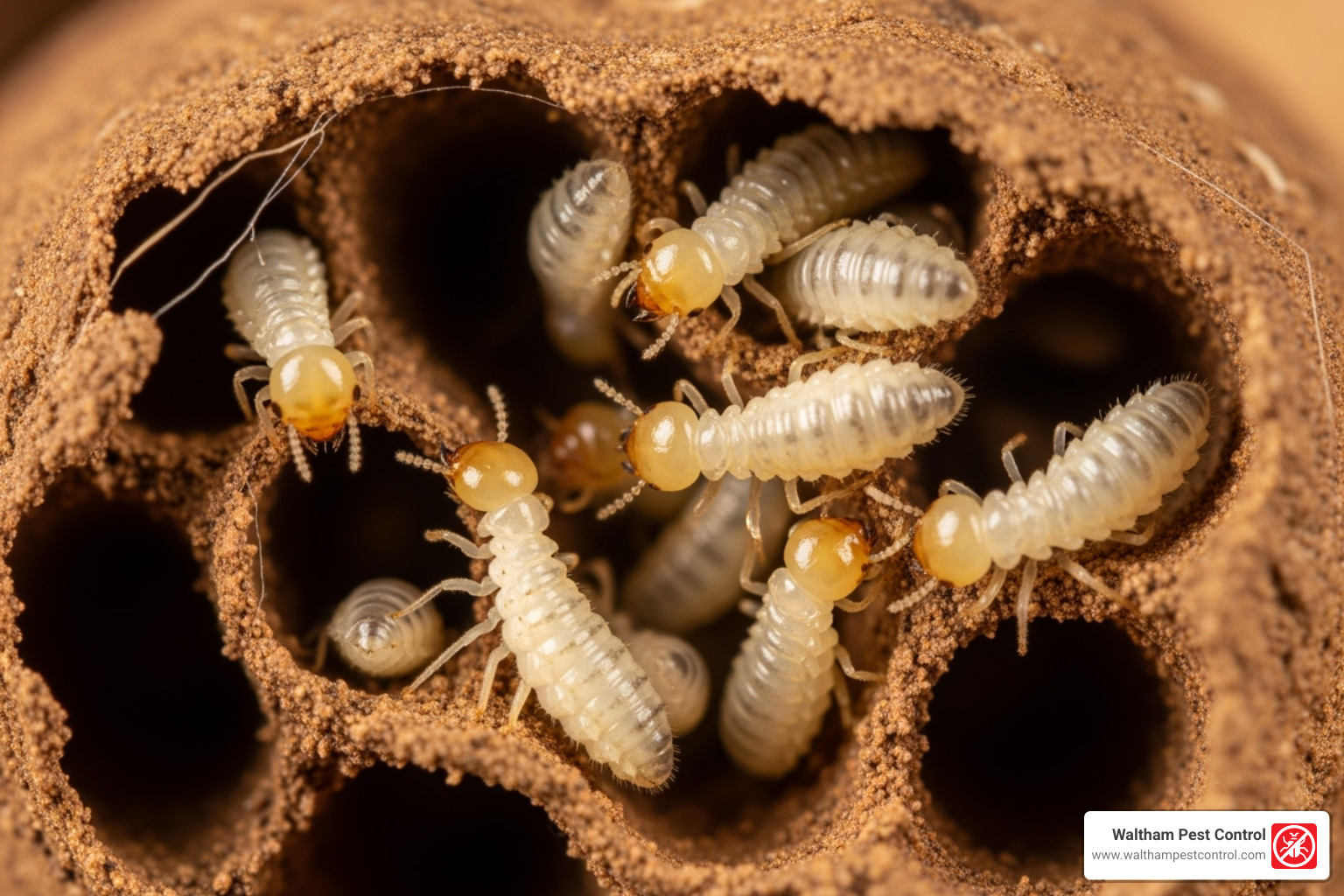
Termite larvae are the first stage of a termite’s life after hatching from an egg. Termites undergo incomplete metamorphosis, meaning they hatch looking like miniature versions of adult termites. They grow larger through a series of molts. While experts may call them nymphs or immatures, we’ll refer to these freshly hatched young as termite larvae.
Because they are so vulnerable, larvae are kept deep inside the colony in a hidden nursery, making them incredibly rare for a homeowner to spot. If you do find them, it’s a sure sign that a thriving termite colony is well-established on your property.
Physical Appearance of Termite Larvae
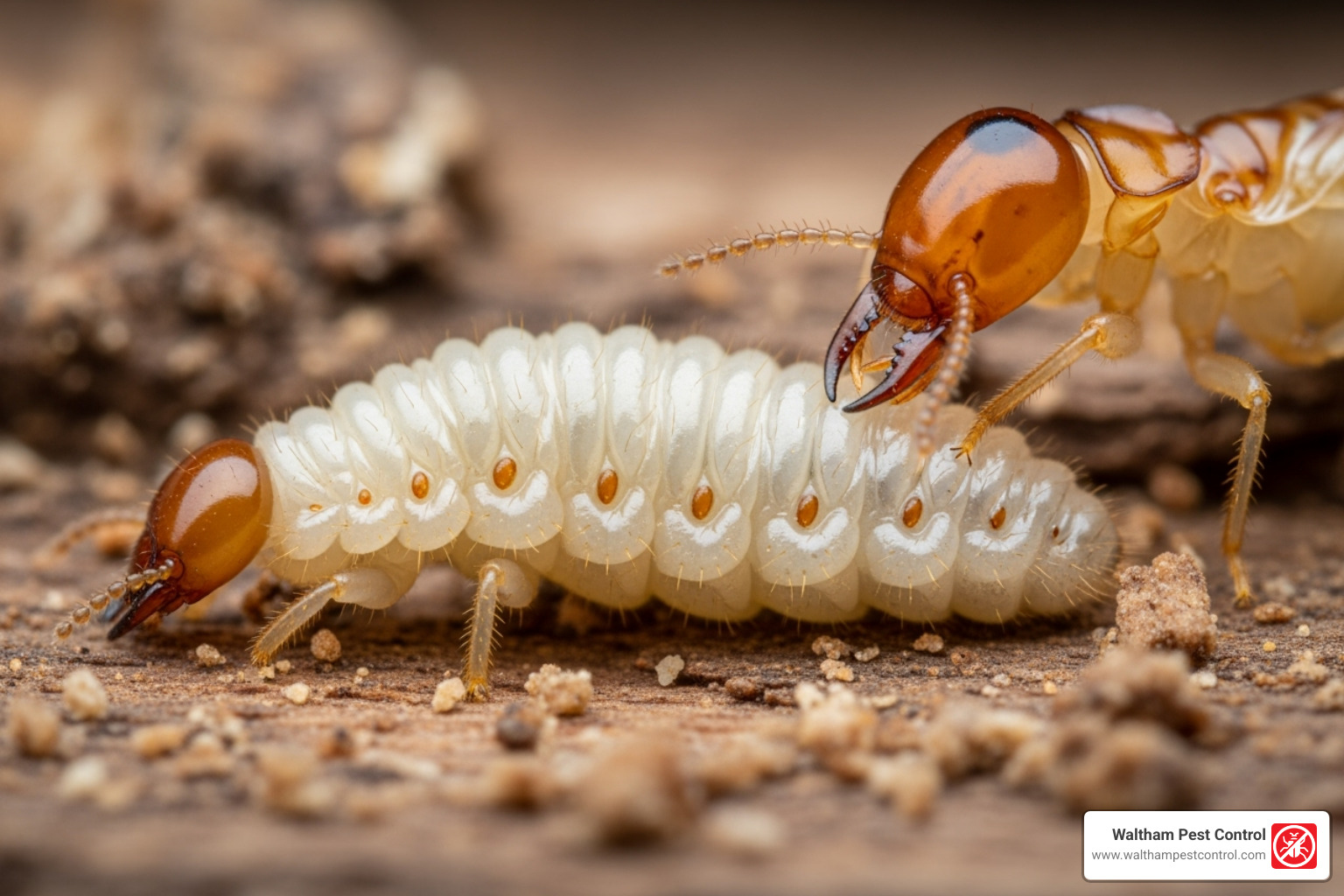
Termite larvae are minuscule, usually less than 1/10 of an inch (2.5 millimeters) long. Their bodies are soft, delicate, and typically white and almost translucent, helping them blend into the dark nest.
They resemble smaller, less developed worker termites, with a distinct, segmented head, six tiny legs, and short, straight antennae. Unlike grub-like or worm-like larvae of other insects, termite larvae already have a recognizable insect body plan.
Distinguishing Termite Larvae from Other Pests
It’s easy to confuse tiny, pale insects. Knowing the difference is key to effective pest control. This table compares termite larvae to other common pests. For more help, entomology resources from university extensions can be very useful.
| Feature | Termite Larvae | Ant Larvae | Wood-Boring Beetle Larvae | Maggots | Booklice (Psocids) |
|---|---|---|---|---|---|
| Appearance | Small, white, translucent, soft-bodied | Grub-like, C-shaped, legless, often creamy-white | White, C-shaped, distinct head, tiny spines | White, soft-bodied, tube-shaped, no legs | Small, white/pale, soft-bodied, flat |
| Legs | Six tiny legs | No legs | Six tiny legs (often hard to see) | No legs | Six legs |
| Head | Separate, segmented head | Indistinct or tiny head | Hardened head capsule | Indistinct or tiny head | Distinct head |
| Antennae | Short, straight antennae | None (or very tiny) | Short, often retractable | None | Long, slender antennae |
| Diet | Pre-digested cellulose (fed by workers) | Fed by adult ants | Wood | Decaying organic matter | Fungus, mold, paper |
| Location | Deep within termite colony/nursery | Ant nest | Inside wood (tunnels, galleries) | Decaying food, garbage | Damp areas, books, paper, moldy surfaces |
| Metamorphosis | Incomplete (gradual development to nymph/adult) | Complete (larva -> pupa -> adult) | Complete (larva -> pupa -> adult) | Complete (larva -> pupa -> adult) | Incomplete (gradual development to nymph/adult) |
As the table shows, key differences like the presence of legs and a distinct head help separate termite larvae from legless ant larvae or maggots. If you’re unsure what you’ve found near wooden structures, it’s best to seek professional identification to avoid delaying treatment for a serious issue like termites.
The Crucial Role of Larvae in the Termite Colony
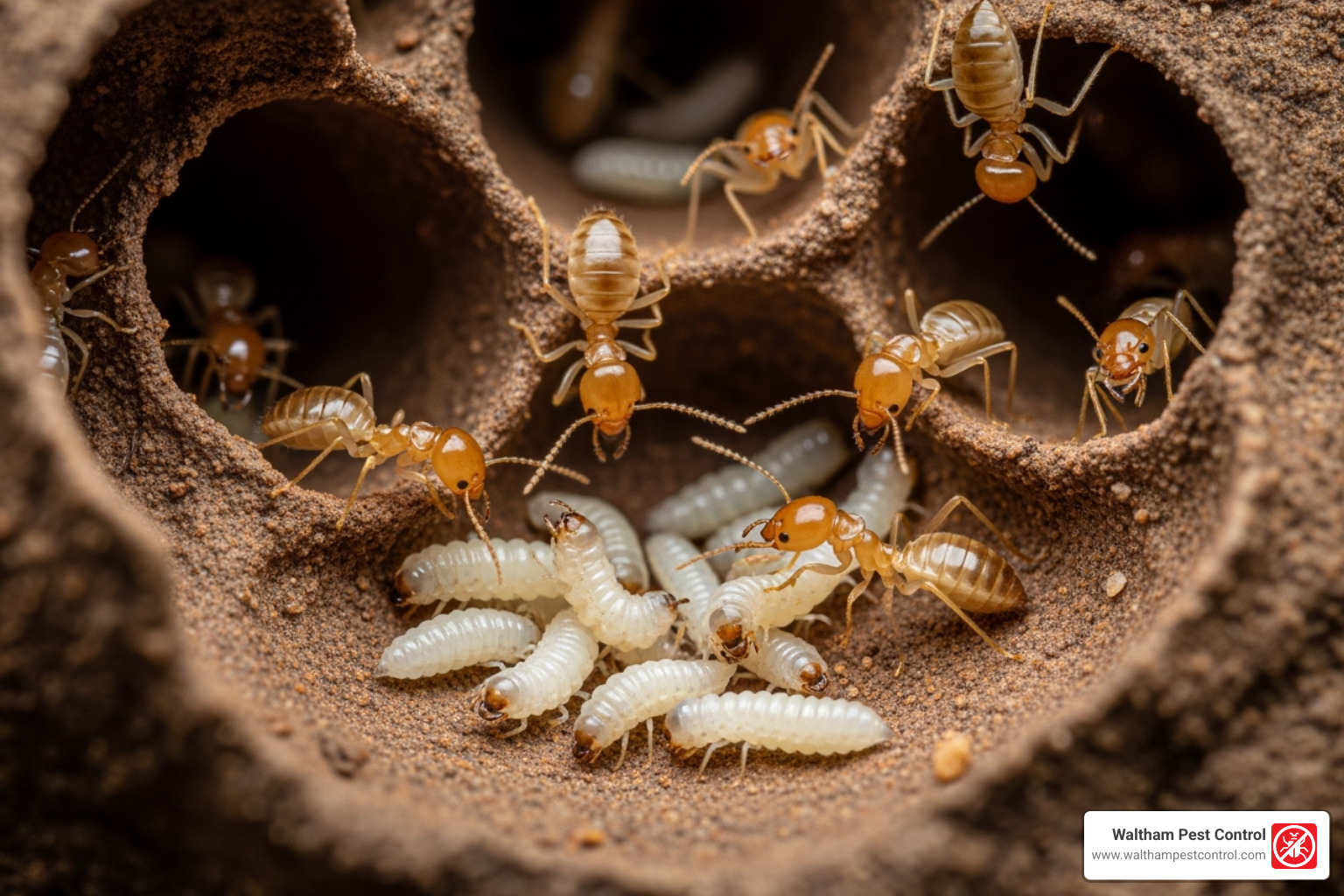
Termite larvae are the blueprint for the colony’s future. Every worker, soldier, and reproductive termite begins as a larva. Their future role is not predetermined but is molded by the colony’s needs through chemical signals.
The Termite Life Cycle Explained
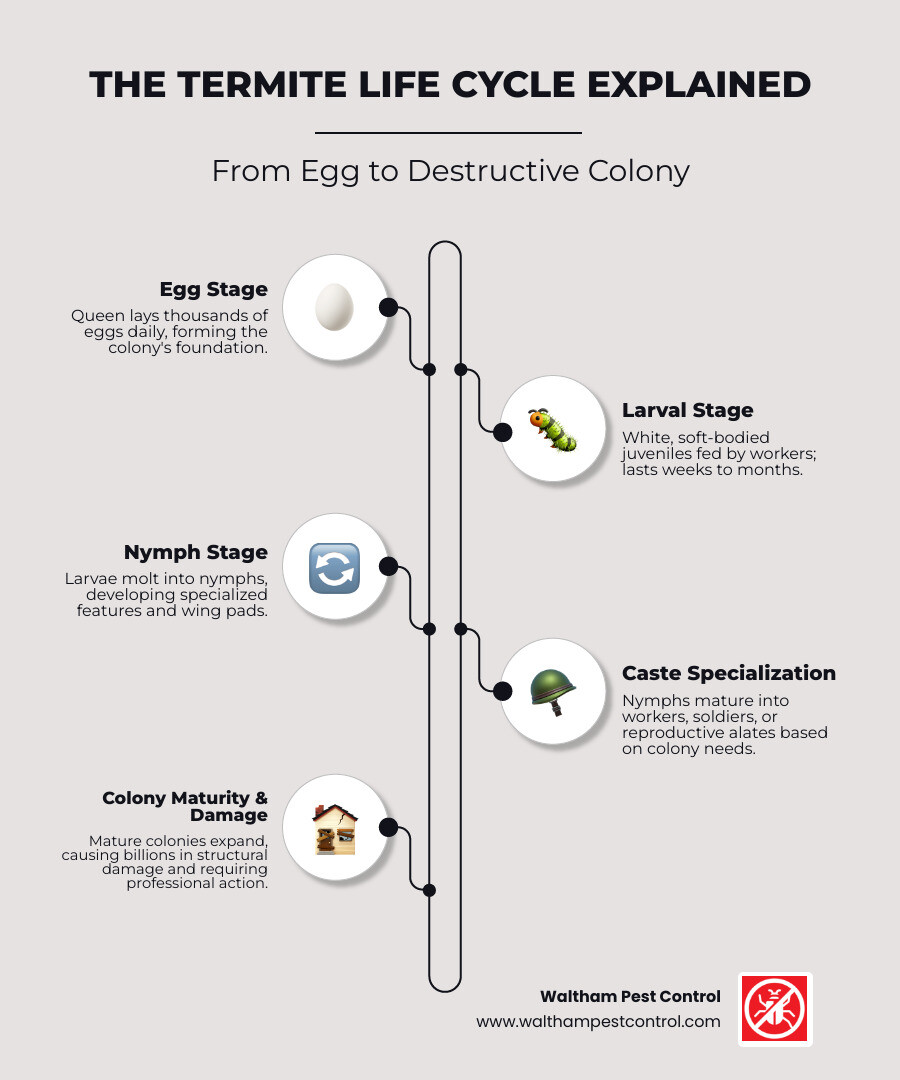
A termite queen lays hundreds or thousands of eggs daily, which are kept safe in the nest’s nursery. From these eggs hatch the soft, white termite larvae.
Worker termites immediately begin caring for the larvae, feeding them pre-digested food. The larval stage can last from a few weeks to several months, depending on the species and colony conditions like food availability, temperature, and moisture.
Through a series of molts, the larvae grow and become nymphs. Nymphs are immature termites that continue to molt until they mature into their final adult caste.
How Larvae Develop into Different Castes
The development of termite larvae into specific castes is regulated by pheromones released by the king and queen, ensuring the colony has the right number of members for each role. A larva can develop into one of three main castes:
- Worker Termites: The most numerous caste, workers are responsible for foraging for food, building tunnels, and caring for the eggs and young, including feeding the termite larvae. They are typically blind and soft-bodied.
- Soldier Termites: The colony’s defenders, soldiers are identifiable by their large, hardened heads and powerful jaws. Their primary role is to protect the nest from predators like ants.
- Reproductive Termites (Alates): Also known as “swarmers,” these are the winged termites that emerge from a mature colony to start new ones. They have darker, tougher bodies for survival outside the nest. After a mating flight, or “swarm,” they shed their wings and become the king and queen of a new colony.
This caste system is flexible; some nymphs can revert to a worker-like stage if the colony experiences a shortage, ensuring its survival.
What Do Termite Larvae Eat?
Termite larvae are helpless and cannot digest wood on their own, as they lack the necessary gut microbes. They rely entirely on worker termites for food.
Workers consume and pre-digest wood and other cellulose materials. They then feed this nutrient-rich substance to the larvae, king, queen, and soldiers through a process called trophallaxis (mouth-to-mouth or anus-to-mouth feeding). This process is not only for feeding but also for transferring the essential gut microbes throughout the colony, allowing all members to eventually process cellulose. This communal feeding system ensures the survival and growth of even the most vulnerable termite larvae.
Uncovering an Infestation: Signs Beyond Seeing Larvae
Since seeing termite larvae is extremely rare, homeowners must learn to spot other signs of an infestation. These clues indicate that a colony is well-established, with its hidden larvae growing into the next generation of wood-destroyers.
Key Signs of Termite Activity
Spotting termite activity early can save you significant money and stress. Here are the main signs to look for:
- Mud Tubes: Subterranean termites, common in Eastern Massachusetts, build pencil-width tunnels from soil and saliva. These tubes serve as protected highways from their underground nests to the wood in your home and are often found on foundation walls or support beams.
- Frass: Drywood termites leave behind droppings called frass, which look like small piles of sawdust or coffee grounds near infested wood.
- Damaged or Hollow Wood: Termites eat wood from the inside out. Wood that sounds hollow when tapped, or shows visible tunnels, is a strong sign of damage.
- Blistered Paint or Warped Drywall: Termite activity can introduce moisture into wood and walls, causing paint to blister or drywall to look bumpy or have tiny pinholes.
- Discarded Wings: After swarming to mate, reproductive termites shed their wings. Finding piles of these small, translucent wings near windows and doors is a clear sign of a mature, expanding colony.
- Sticking Doors or Windows: As termites damage and introduce moisture into wooden frames, they can warp, making doors and windows difficult to open or close.
If you notice any of these signs, act quickly. For a more detailed list, a comprehensive guide to identifying termite signs can be very helpful.
The Indirect Damage Caused by an Infestation
While termite larvae don’t cause damage themselves, their presence confirms an active, growing colony. The damage caused by their adult counterparts can be vast and expensive. Termites threaten your home’s structural integrity by silently chewing through support beams, floor joists, and wall studs.
This can lead to sagging floors, buckling walls, and in severe cases, partial collapse. The economic impact is significant, with termites costing U.S. homeowners over $5 billion annually. Since most home insurance policies do not cover termite damage, the financial burden falls on the homeowner. The presence of termite larvae means a colony is actively reproducing, and without professional intervention, the damage will only escalate.
Professional Termite Control and Prevention Strategies
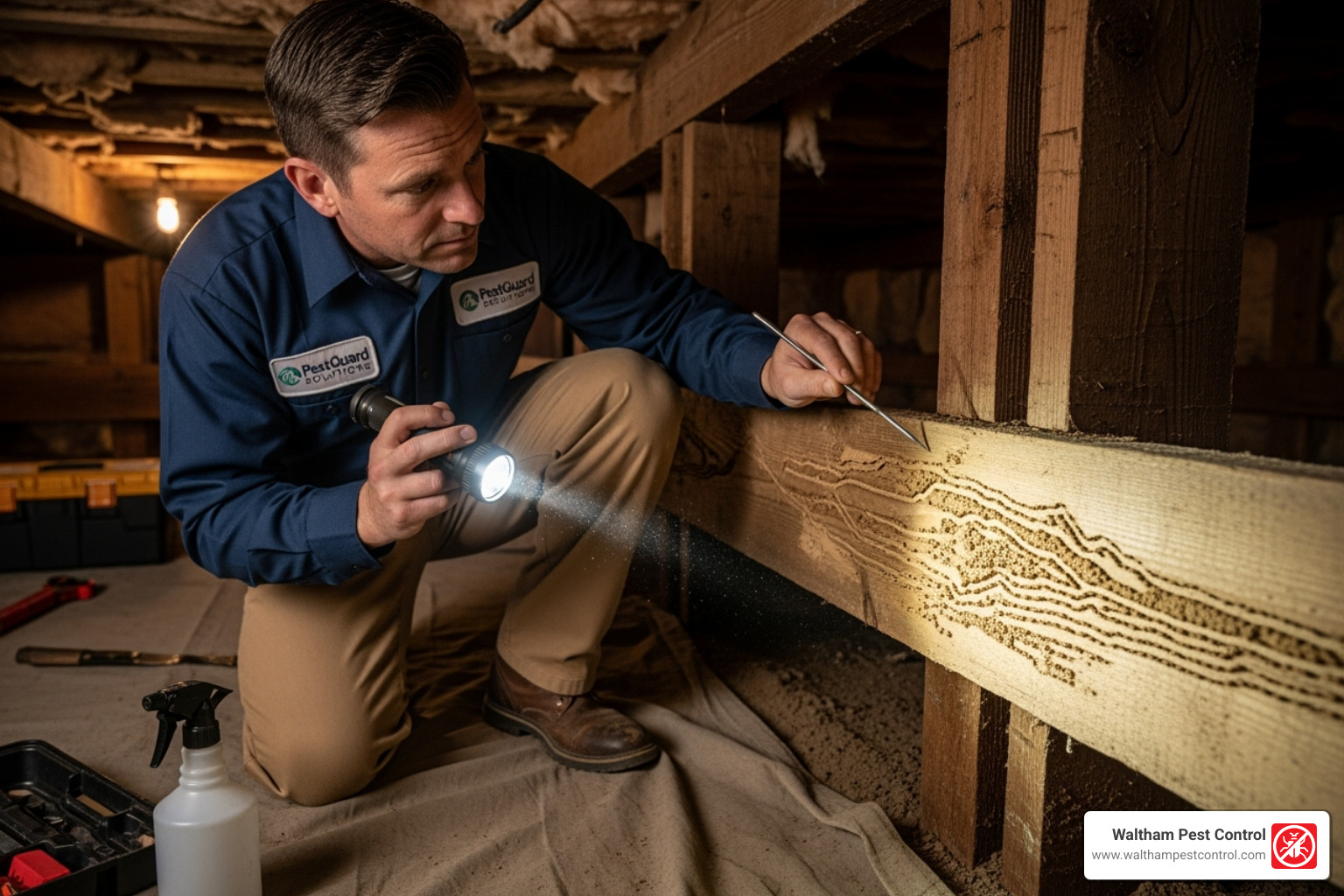
When facing a termite infestation, with its hidden queen and termite larvae, DIY methods are ineffective. Store-bought products rarely penetrate the core of the colony, making professional intervention essential for complete elimination.
Why Professional Intervention is Crucial
Termites are a complex problem that requires expert solutions for several reasons:
- Colony Size: A single colony can contain hundreds of thousands to millions of termites. Professionals have the tools and strategy to eliminate the entire population, including the queen and all termite larvae.
- Hidden Nature: Termites live deep within walls, foundations, and soil. Our licensed technicians are trained to locate these hidden nests and nurseries.
- Specialized Tools: We use professional-grade, low-toxicity termiticides and advanced equipment that are unavailable to the public and applied strategically for safety and effectiveness.
- Long-Term Solutions: Our goal is to implement a comprehensive plan that not only eradicates the current infestation but also protects your home from future threats.
- Local Expertise: With over 40 years of experience in Eastern Massachusetts, Waltham Pest Control’s professionals understand local termite behavior and the most effective treatment methods for every stage of the termite life cycle.
Common Professional Treatment Methods
We use proven methods to eradicate termite colonies and protect your home:
- Liquid Termiticides: We apply a non-repellent liquid termiticide to the soil around your foundation. Termites pass through this undetectable barrier, carrying the product back to the colony and spreading it through contact and feeding. This slow-acting method ensures it reaches the queen and termite larvae, leading to total colony elimination.
- Wood Treatments: In some cases, we apply specialized products like borates directly to infested or vulnerable wood, making it toxic to termites.
- Termite Baiting Systems: Modern baiting systems are a valuable tool. Stations containing a slow-acting insecticide are placed around your property. Foraging termites consume the bait and share it, leading to the colony’s demise.
We always start with a thorough inspection to create a custom treatment plan custom to your property’s specific needs.
Long-Term Prevention Tips for Homeowners
While professional treatment is key for active infestations, you can make your home less attractive to termites:
- Reduce Moisture: Fix all leaks and ensure gutters and downspouts direct water away from the foundation.
- Eliminate Wood-to-Soil Contact: Keep siding, wooden frames, and structural elements from touching the ground. Store firewood at least 20 feet from your home and off the ground.
- Seal Entry Points: Caulk cracks in the foundation and around pipes or utility lines.
- Use Termite-Resistant Materials: When building or renovating, consider using treated wood, concrete, or steel.
- Schedule Regular Professional Inspections: This is the best defense. Our experts can spot early signs of activity long before significant damage occurs, safeguarding your investment.
Frequently Asked Questions about Termite Larvae
It’s completely natural to have lots of questions when you’re dealing with something as mysterious and potentially damaging as termites. We often hear similar questions from concerned homeowners about termite larvae and their infestations. Here are some of the most common ones, answered with your home’s safety in mind:
Are termite larvae harmful to humans?
This is a great question, and it’s one we hear often! The good news is, termite larvae themselves are not directly harmful to us. They don’t bite or sting, and they’re not known to carry or transmit diseases. Their soft, delicate bodies are really designed for life deep within their protected nest.
However, their presence is a big red flag. While the larvae aren’t a direct threat to you, they are a very strong sign that you have an active, growing termite infestation. And that infestation can cause extensive and incredibly costly structural damage to your home. So, while the larvae themselves aren’t the problem, the destruction their future selves will cause to your property definitely is.
How fast does a termite colony grow?
The speed at which a termite colony grows can really vary. It depends on factors like the specific termite species, the environmental conditions (like temperature and moisture), and how established the queen is. A mature queen termite is a busy lady; she can lay hundreds, or even thousands, of eggs every single day! This provides a constant supply of new termite larvae to bolster the colony’s ranks.
However, it takes time for these tiny larvae to develop into full-fledged workers, soldiers, or reproductives, and for the colony to reach a size where it can cause significant, noticeable damage. A new colony typically needs several years – often somewhere between 3 to 6 years – to mature enough to produce swarmers (those winged termites you might see looking for new homes) and become a serious threat to a structure. Once a colony is well-established, though, it can grow to contain hundreds of thousands or even millions of individual termites, and that’s when the rate of damage can accelerate dramatically.
Can I get rid of termite larvae myself?
Unfortunately, no, you cannot effectively get rid of termite larvae yourself. And here’s why: as we’ve talked about, termite larvae are incredibly well-protected. They’re hidden deep inside the secret nurseries of the termite nest, far from sight. They don’t forage for food outside the colony, so you’ll very rarely, if ever, see them out in the open.
Trying to tackle a termite problem with DIY solutions, like spraying visible termites or using over-the-counter products, will only eliminate a tiny fraction of the active population. It simply won’t reach the queen, the thousands of termite larvae, or the vast majority of the colony that’s hidden away within your walls or underground. To truly eliminate a termite infestation and protect your home from further damage, professional treatment is absolutely required. Our specialized methods are designed to target and eliminate the entire colony, ensuring comprehensive eradication right from the source.
Conclusion: Safeguard Your Home from Termites
While you may never see a termite larva, understanding its role is key. These tiny creatures represent the future of a destructive colony, growing into the workers and soldiers that cause billions in property damage annually.
The most important takeaway is that early detection is vital. Because termites operate in secret, the longer an infestation goes unnoticed, the more extensive and costly the damage becomes.
Proactive prevention is your best first defense. Control moisture, eliminate wood-to-soil contact, and seal potential entry points to make your home less appealing to termites.
But if you suspect you already have an infestation, or if you’ve seen any of the warning signs we discussed, professional help isn’t just a suggestion—it’s your best and most effective defense. DIY methods simply can’t penetrate the hidden depths of a termite colony, where the queen continues to churn out termite larvae that will grow to cause even more heartache. You need a solution that targets the entire colony, not just the visible few.
For proven termite solutions in Eastern Massachusetts, we at Waltham Pest Control are ready to help. With over 40 years of experience, our licensed and insured professionals provide cost-effective pest management to keep your property safe. Don’t wait for the damage to escalate. Schedule a professional termite inspection today to safeguard your home.
