

Rodent Infestation Control: 5 Powerful Tips 2024
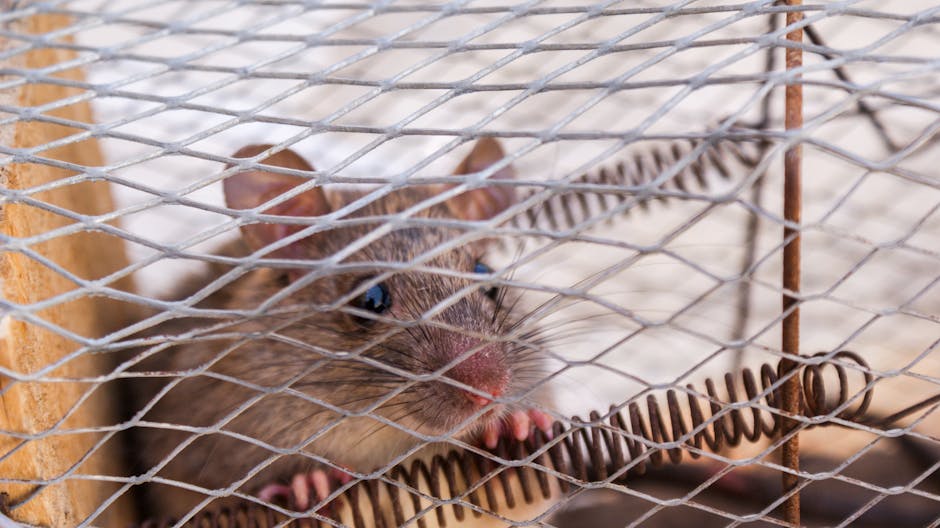
Rodent infestation control is a crucial aspect of maintaining a safe and healthy living environment. These unwelcome guests can cause significant damage to homes and businesses by gnawing through wires and structures. They also pose serious health risks as carriers of various diseases, such as salmonella, hantavirus, and Lyme disease. To keep your property rodent-free, employ effective strategies that focus on eliminating entry points, maintaining cleanliness, and utilizing appropriate control methods.
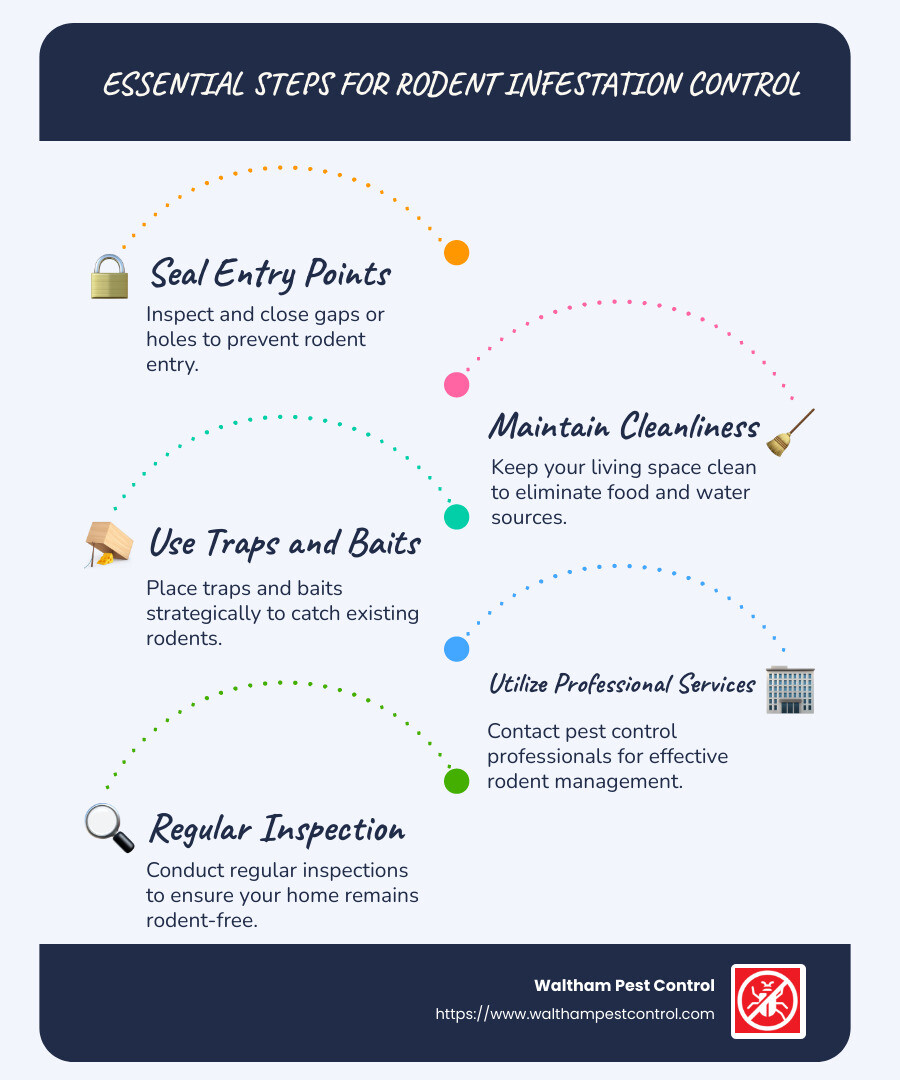
- Seal Entry Points: Inspect and close any gaps or holes that rodents could use to enter your home.
- Maintain Cleanliness: Ensure no food or water sources are readily available for rodents.
- Use Traps and Baits: Deploy traps and baits in strategic locations to catch existing rodents.
- Seek Professional Help: Contact pest control professionals, like Waltham Pest Control, for reliable and effective rodent management.
I’m Waltham Pest Control, President & CEO of Waltham Pest Control Co., Inc., with over 40 years of expertise in rodent infestation control. My team provides top-notch pest control services, ensuring a pest-free environment for Massachusetts homeowners and businesses.
Signs of a Rodent Infestation
Rodents are sneaky creatures. You might not see them, but they leave behind clues. Knowing these signs can help you catch an infestation early.
Noises in the Attic
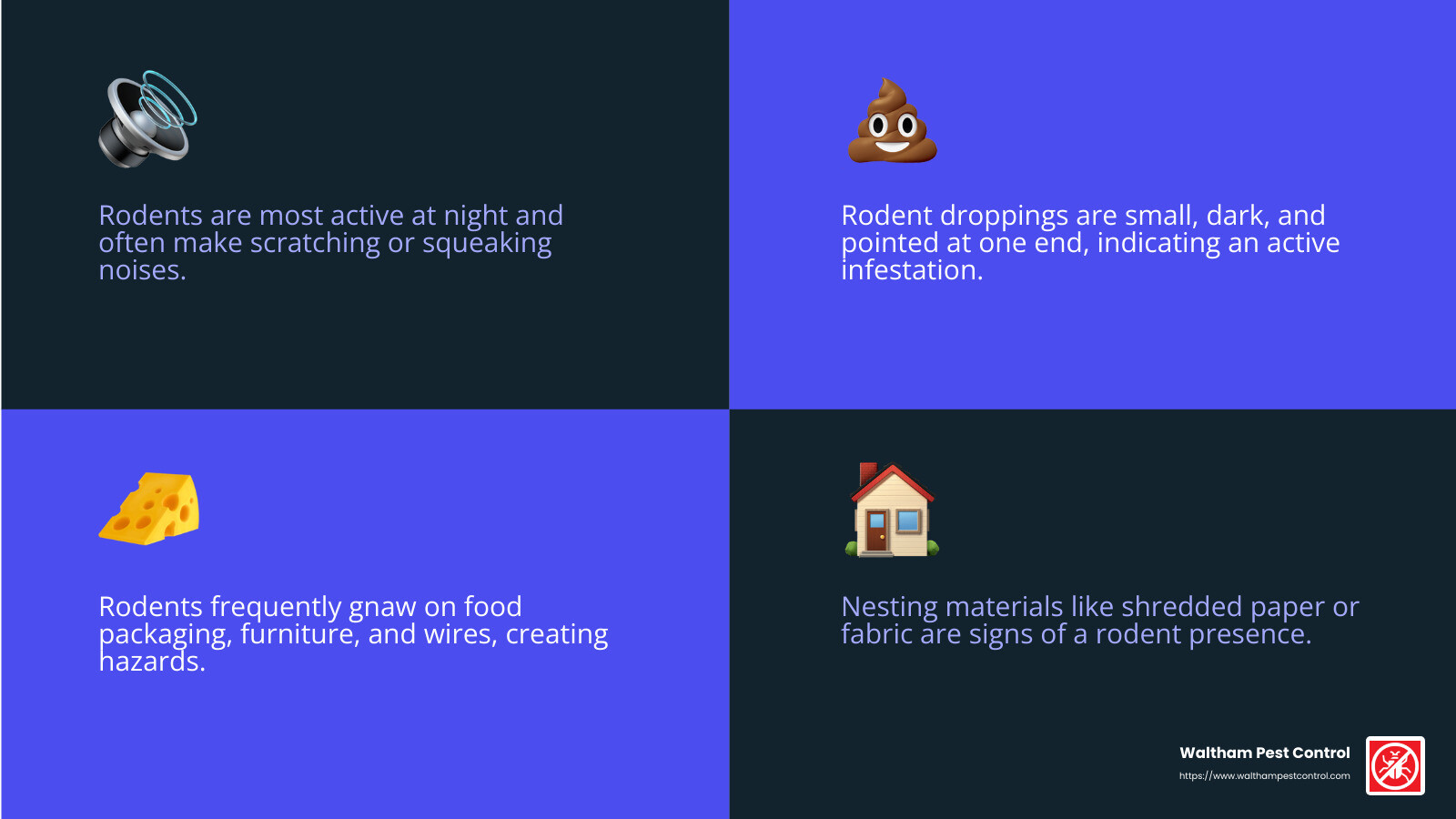
If you hear scratching or squeaking sounds, especially at night, it might be rodents. Mice and rats are most active after dark. They love to explore attics, walls, and ceilings. Listen for odd noises that seem to come from above or inside the walls.
Droppings
Rodent droppings are a telltale sign. They are small, dark, and pointed at one end. You might find them in cupboards, drawers, or near food packages. If you clean up droppings and find more later, it’s a sign of active infestation.
Gnawed Holes
Rodents have strong teeth and love to chew. Look for gnaw marks on food packaging, furniture, and even electrical wires. They can chew through walls and floors to create entry points. This not only damages your home but can also be a fire hazard.
Nesting Materials
Rodents build nests using shredded paper, fabric, and dried plant matter. Check hidden areas like behind appliances or inside storage boxes for these materials. Finding nests means rodents are settling in.
Grease Marks
Rats and mice often leave grease marks along walls and baseboards. This happens when their oily fur rubs against surfaces. These marks can indicate where rodents are traveling in your home.
Recognizing these signs early can help you take action before the infestation grows. If you notice any of these signs, consider reaching out to Waltham Pest Control for a thorough inspection and effective solutions.
What Attracts Rodents to Your Home
Rodents, like mice and rats, are always on the lookout for ideal living conditions. Understanding what draws them to your home can help you keep them out.
Food Sources
Rodents are scavengers. They search for easy food, so leaving crumbs on the floor or having open food packages can be an invitation. Store food in airtight containers and clean up spills quickly. Even pet food can attract rodents if left out.
Shelter
Homes provide rodents with protection from the weather and predators. They love to nest in warm, quiet areas. Attics, basements, and wall cavities are common hiding spots. Keeping these areas clutter-free can make them less appealing.
Water Availability
Rodents need water just like we do. They are drawn to places with leaky pipes, standing water, or even condensation. Fix leaks and ensure good drainage to remove these water sources.
Clutter and Debris
Piles of clutter or debris provide perfect nesting materials and hiding spots for rodents. Regularly clean and organize your home to reduce these opportunities. Pay special attention to garages, sheds, and other storage areas.
Entry Points
Rodents can squeeze through surprisingly small spaces. Gaps around doors, windows, or cracks in the walls are like open doors for them. Seal these entry points with materials like caulk or steel wool to keep them out.
Vegetation Close to Home
Overgrown plants or trees near your home can serve as pathways for rodents. Trim back vegetation to eliminate easy access. This also reduces cover that rodents use to hide from predators.
By addressing these factors, you can make your home a less attractive place for rodents. If you’re dealing with an infestation, reaching out to professionals like Waltham Pest Control can provide effective solutions and peace of mind.
How to Prevent Rodents from Invading Your Home
Keeping rodents out of your home requires a proactive approach. By following these simple steps, you can significantly reduce the chances of a rodent infestation.
Seal Entry Points
Rodents are experts at finding their way into homes through small gaps and cracks. Inspect your home’s exterior for any openings around doors, windows, vents, and the foundation. Use materials like caulk or steel wool to seal these gaps. This simple action can stop rodents from entering your home in the first place.
Proper Food Storage
Food is a major attraction for rodents. Store all food items in airtight containers made of glass or metal. This includes pet food, which should never be left out overnight. Regularly clean up crumbs and spills to remove any potential food sources.
Trim Vegetation
Rodents often use overgrown plants and trees as bridges to access your home. Trim back any vegetation that touches or is close to your house. This not only prevents easy access but also removes hiding spots for rodents.
Regular Cleaning
A clean home is less inviting to rodents. Regularly clean and organize your living spaces, especially kitchens and storage areas. Pay attention to places where crumbs might accumulate, such as under appliances or furniture.
Secure Outdoor Storage
Rodents can find shelter in outdoor storage spaces like sheds and garages. Ensure these areas are secure and free of openings that rodents could use. Keeping these areas tidy and organized also reduces the likelihood of rodents nesting.
Secure Trash Bins
Garbage is a goldmine for rodents. Use trash bins with tight-fitting lids to keep them out. Regularly take out the trash and avoid leaving bags of garbage outside the bin.
By implementing these rodent infestation control methods, you can create an environment that is less appealing to rodents, keeping them at bay. If you still encounter issues, consider reaching out to professionals like Waltham Pest Control for expert assistance.
Effective Rodent Infestation Control Methods
When it comes to rodent infestation control, there are several methods you can use to tackle the problem effectively. Let’s break down some of the most effective strategies.
Traps
Traps are a safe and effective way to control rodents. There are different types of traps, but snap traps are the most common. They work by quickly killing the rodent, making them a humane option. Place these traps along walls, behind appliances, and in areas where you’ve noticed droppings or gnaw marks. Remember to check and reset traps regularly.
Poison
Rodent poison, also known as rodenticides, can be effective but should be used with caution. These are typically placed in tamper-resistant bait stations to prevent accidental exposure to children and pets. Always follow the label directions when using poisons, and consider using them outdoors to reduce the risk of secondary poisoning.
Professional Pest Control
Sometimes, the best solution is to call in the experts. Professional pest control services have the knowledge and tools to effectively manage rodent infestations. They can identify entry points, implement exclusionary plans, and use specialized treatments that are not available to the general public. Hiring professionals can save you time and ensure the problem is dealt with thoroughly.
Exclusionary Plans
Exclusionary plans focus on keeping rodents out by sealing entry points and making your home less attractive to them. This involves a thorough inspection of your home to find and seal gaps, cracks, and other potential entryways. Exclusion is a long-term solution that not only addresses the current infestation but also prevents future ones.
Sanitation Practices
Maintaining a clean environment is crucial in controlling rodent populations. Regularly clean your home, focusing on areas where food is stored or prepared. Dispose of garbage promptly and keep trash bins sealed. By reducing food and water sources, you make your home less inviting to rodents.
Implementing these methods can effectively control and prevent rodent infestations. If you find yourself overwhelmed, professional services like Waltham Pest Control are always ready to assist.
Rodent Infestation Control: Professional Services
When dealing with a rodent infestation, sometimes the best course of action is to seek professional help. This section will discuss how professional services can assist in managing and preventing rodent problems effectively.
Inspection
The first step in professional rodent control is a thorough inspection. Experts will examine your home to identify entry points, nesting areas, and signs of rodent activity. They’ll inspect places like exterior walls, attics, and basements, looking for gnaw marks, droppings, and other evidence of infestation.
Extermination
Once the inspection is complete, the extermination process begins. Professionals use a combination of traps and baits strategically placed to target rodents. Unlike DIY methods, these traps and baits are often more effective and safer, as they are handled by trained technicians who know how to minimize risks to humans and pets.
Exclusion
Exclusion is a crucial part of professional rodent control. This involves sealing off entry points to prevent rodents from entering your home in the future. Technicians will use materials like steel mesh to block gaps and holes, ensuring these persistent pests can’t chew their way back in. This step not only addresses the current infestation but also helps prevent future invasions.
Waltham Pest Control
If you’re in the Greater Boston area, Waltham Pest Control offers comprehensive services to tackle rodent infestations. Their team of experts is trained to handle all aspects of rodent control, from inspection to exclusion. With their help, you can ensure your home remains rodent-free, protecting your property and health from the risks these pests pose.
By choosing professional services, you gain access to specialized knowledge and tools that make rodent control more efficient and effective. Whether you’re dealing with a minor issue or a major infestation, professional help can make a significant difference in maintaining a safe and healthy home environment.
Frequently Asked Questions about Rodent Infestation Control
How do I get rid of rodents permanently?
To permanently rid your home of rodents, start by sealing all entry points. Rodents can squeeze through tiny holes, so inspect your home carefully. Look for gaps around doors, windows, and in the foundation. Use materials like steel wool or caulk to block these entryways.
Next, remove nesting sites. Rodents love clutter, so clear out piles of paper, fabric, and cardboard inside and outside your home. This limits their hiding spots and discourages them from settling in.
Cleaning food and water sources is also crucial. Rodents are attracted to crumbs and standing water. Regularly clean your kitchen, store food in airtight containers, and fix any leaky pipes to keep your home less appealing to these pests.
What is the best rodent control method?
The best method often depends on the severity of the infestation. Traps are a popular choice. They come in various types, such as snap traps and live traps, and can be very effective when placed correctly.
Poison is another option but must be used with caution. It’s crucial to follow instructions carefully to avoid harming pets or children. Professional pest control services can manage this method safely and effectively.
For many, seeking professional services is the best route. Professionals can assess your situation, use a combination of methods, and ensure the problem is handled thoroughly and safely.
What should you do to control rodent infestation?
To control a rodent infestation, start by sealing entry points as mentioned earlier. This prevents more rodents from entering your home.
Focus on sanitation. Keep your living space clean and free from food debris. Regularly take out the trash and use bins with tight-fitting lids to avoid attracting rodents.
Finally, consider professional help if the problem persists. Companies like Waltham Pest Control offer comprehensive services, including inspection, extermination, and exclusion. They use their expertise to create a custom plan that addresses your specific infestation and helps prevent future issues.
By combining these steps, you can effectively manage and control rodent infestations, ensuring your home remains safe and pest-free.
Conclusion
Keeping your home free from rodents is essential for maintaining a safe and healthy environment. Rodents not only cause structural damage but also pose significant health risks. By understanding the signs of an infestation and implementing preventive measures, you can protect your home from these unwelcome guests.
Professional help is crucial when dealing with a rodent infestation. While DIY methods might offer temporary relief, they often fail to address the root cause of the problem. Professional pest control services, like those offered by Waltham Pest Control, provide comprehensive solutions that are both effective and safe.
Waltham Pest Control, with over 40 years of experience, specializes in rodent infestation control. Our team of licensed and insured experts conducts thorough inspections, implements effective extermination strategies, and establishes exclusionary plans to prevent future infestations. We are committed to delivering quality and cost-effective pest management solutions custom to your needs.
If you’re facing a rodent problem, don’t hesitate to reach out for professional assistance. Contact Waltham Pest Control today to schedule an inspection and take the first step towards a rodent-free home.
By prioritizing professional intervention and adhering to proactive measures, you can ensure that your home remains a safe haven, free from the dangers and disruptions caused by rodents.
