

Rat Problem Solution: Top 5 Effective Tips 2025

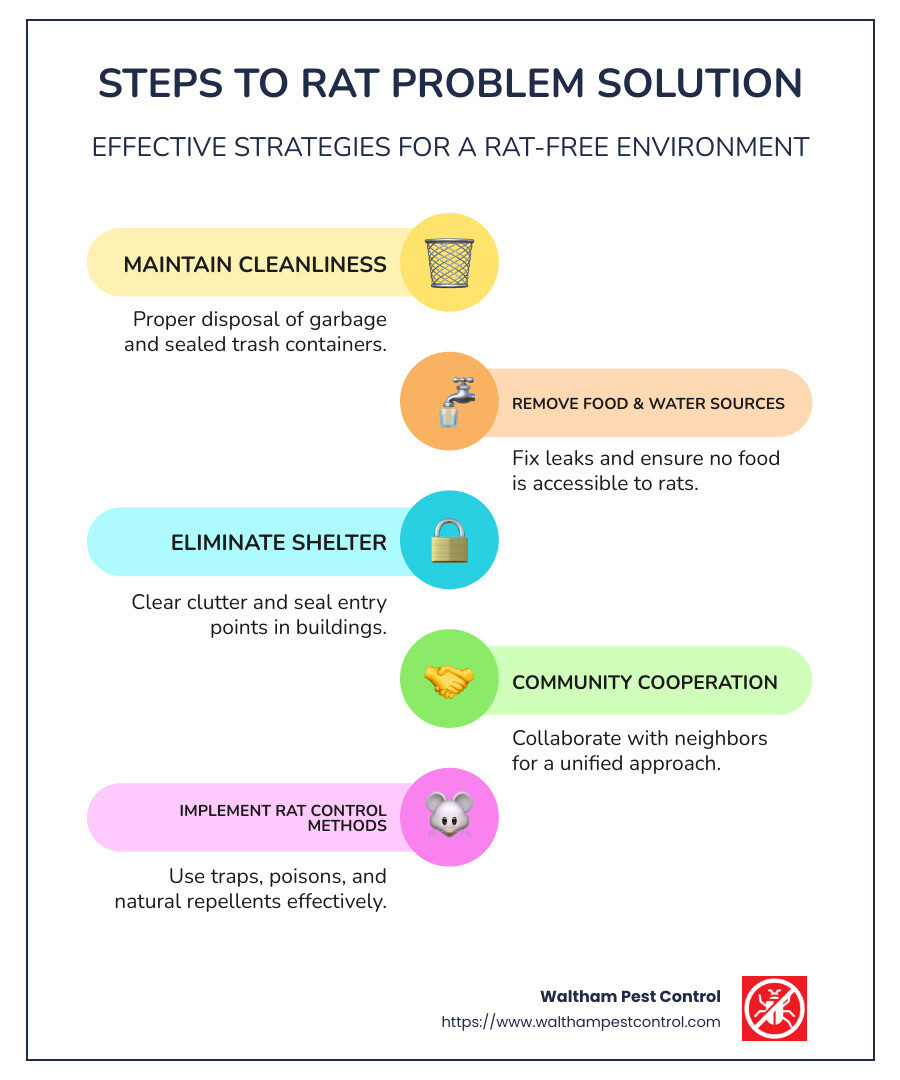
Rat problem solution is more than just setting traps and hoping for the best. It demands a community effort and a well-coordinated response to effectively reduce and manage rat populations in neighborhoods. Here’s how you and your neighborhood can address this issue:
- Keep your environment clean: Dispose of garbage properly and seal all trash containers.
- Eliminate food and water sources: Fix leaks and ensure no food is left accessible to rats.
- Remove shelter and entry points: Clean up clutter in and around your property, and seal any cracks or gaps in your building.
- Work together with neighbors: A community-wide strategy makes it harder for rats to find refuge and sustenance.
Building a resilient defense against rats not only improves sanitation but improves the overall quality of life. Initiatives like the Neighborhood Rat Reduction Initiative demonstrate how collective action leads to substantial progress.
I’m Waltham Pest Control, bringing over 40 years of experience in pest control with Waltham Pest Control. My expertise in rat problem solution aims to foster healthier, pest-free environments for homes and businesses alike.
Simple rat problem solution word guide:
– rat infestation removal
– get rid of rats at home
– rat prevention in home
Identifying Rat Infestations
Rats are stealthy creatures, but they leave behind telltale signs. Knowing these signs can help you catch an infestation early and take action before it spirals out of control.
Common Signs of Rats
Rats are not subtle when they invade your space. Here are some common indicators of their presence:
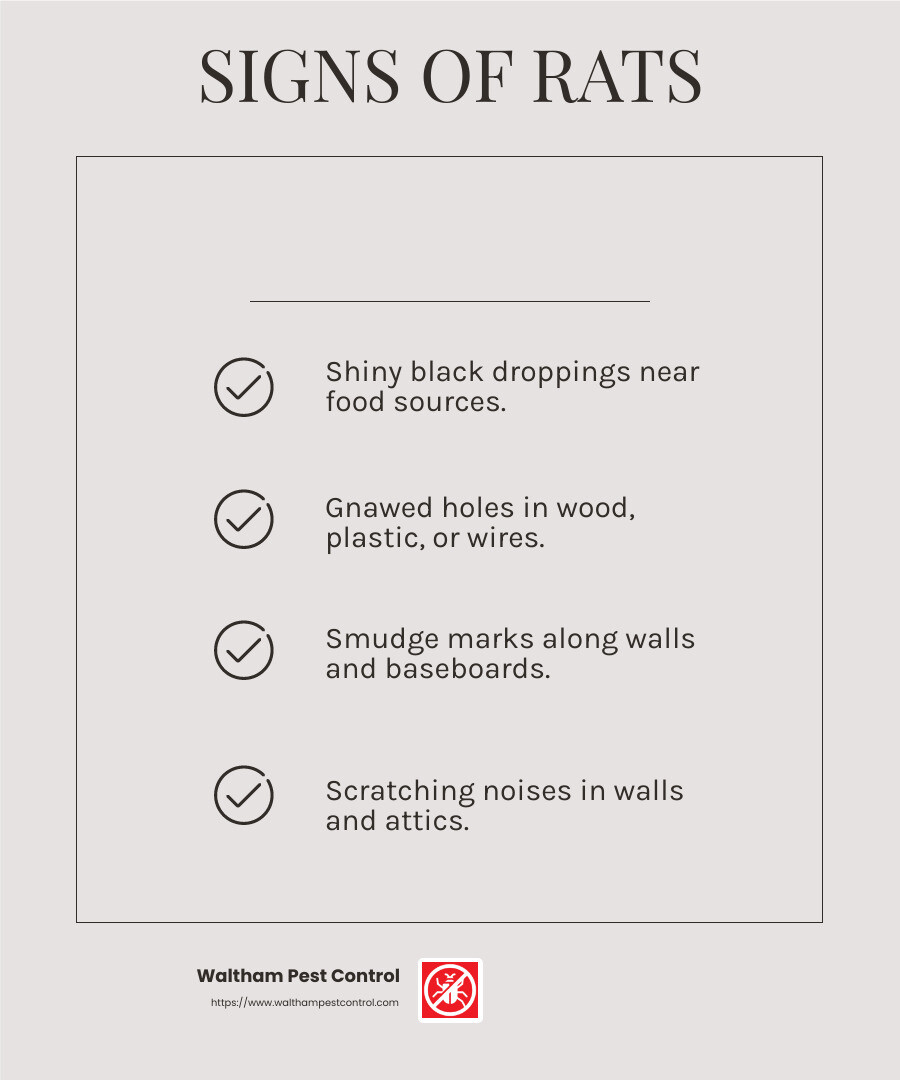
- Shiny black droppings: These are often found near food sources or along their travel paths. Fresh droppings are dark and soft, while older ones become gray and brittle.
- Gnawed holes: Rats have strong teeth and will chew through wood, plastic, and even electrical wires. Look for small, rough-edged holes.
- Smudge marks: As rats squeeze through small spaces, they leave greasy smears from their fur. These marks are often found along walls and baseboards.
- Scratching noises: At night, you might hear faint scurrying or scratching sounds, especially in walls, attics, or basements.
- Nests: Rats build nests from shredded paper, fabric, and other soft materials. These are often hidden in dark, secluded areas.
How to Check for Rats
If you suspect a rat infestation, it’s crucial to confirm their presence. Here’s how you can check:
- Listen for scurrying: Rats are nocturnal, so listen for movement in the dark. Turn on lights in a quiet room and listen for sounds.
- Look for chewed spots: Inspect areas around food storage, baseboards, and electrical cords for signs of gnawing.
- Check for fresh droppings: Look in corners, near food sources, and along walls for droppings. Fresh droppings are a definite sign of current rat activity.
- Watch for pawprints: In dusty areas, look for small footprints or tail marks. You can sprinkle flour or talcum powder to detect tracks.

By being vigilant and knowing what to look for, you can identify a rat problem early and take the necessary steps to address it. This proactive approach is key to an effective rat problem solution.
Next, we’ll explore how to prevent rat infestations by keeping them out and removing their food and shelter sources.
Preventing Rat Infestations
Keeping rats out of your home is all about making it less inviting for them. By focusing on removing their food sources, eliminating potential shelters, and sealing entry points, you can effectively prevent infestations.
Removing Food and Water Sources
Rats are resourceful scavengers, and they can survive on the tiniest crumbs. Here’s how to cut off their food and water supply:
- Use covered trash containers: Always use heavy-duty plastic or metal trash cans with tight-fitting lids. This prevents rats from rummaging through your garbage for meals.
- Fix plumbing leaks: Even a small leak can provide enough water for rats. Regularly inspect and repair any plumbing issues to remove this water source.
- Clean up pet food: Avoid leaving pet food out overnight. Store any leftovers in airtight containers that rats can’t chew through.
- Store food properly: Keep all food, including pet food and birdseed, in rat-resistant containers. Avoid storing food in basements or other areas where rats can easily access it.
Eliminating Shelter
Rats seek out dark, cluttered spaces to nest. Make your environment less appealing by:
- Removing clutter: Keep your home and yard tidy. Regularly clean up piles of paper, fabric, and other nest-building materials.
- Rat-proofing buildings: Ensure all buildings are secure and free from entry points. This includes sealing cracks and holes in walls, floors, and roofs.
- Cleaning yards: Maintain a clean and trash-free yard. Remove any outdoor shelters like old appliances or junk piles.
- Piling wood properly: Stack firewood and other materials at least 18 inches above the ground and away from walls to prevent rats from nesting.
Sealing Entry Points
Rats can squeeze through tiny openings, so sealing entry points is crucial:
- Use hardware cloth: Cover basement windows and other vulnerable areas with 1/2 inch hardware cloth to prevent rats from squeezing through.
- Employ steel wool and caulking: Fill small holes and cracks with steel wool and seal them with caulk to create a barrier rats can’t chew through.
- Apply foam insulation: Use foam insulation to seal larger gaps in walls or around pipes.
- Install self-closing doors: Ensure doors close tightly and use spring locks or latches to keep them securely shut. This prevents rats from sneaking in.
By making these adjustments, you can create an environment that’s much less inviting to rats, helping to keep them at bay. In the next section, we’ll discuss various rat control methods, including traps, poisons, and repellents.
Rat Control Methods
When it comes to rat problem solutions, using the right control methods is key. Here, we’ll explore various options, including traps, poisons, natural repellents, and smart technology.
Using Traps
Traps are a classic and effective way to control rats. Here’s how to use them safely and effectively:
- Wooden Base Snap Traps: These are traditional traps that kill rats quickly. To use them:
- Baiting Traps: Use peanut butter or dried fruit as bait. Rats are attracted to these scents.
- Placing Traps: Position traps along walls or in areas where you see droppings. Rats like to travel along edges.
- Safety Precautions: Keep traps away from children and pets. Always wear gloves when handling traps to avoid leaving human scent.
Using Poisons
Poisons can be effective but require careful handling due to their toxicity:
- Common Poisons: Ingredients like warfarin, chlorophaconone, and Pival are often used. They cause internal bleeding in rats.
- Safety Measures: Always use tamper-proof bait stations to prevent accidental ingestion by pets or children.
- Disposal of Poison: Follow local regulations for disposing of unused poison and dead rats to protect wildlife and the environment.
Natural Repellents
If you prefer a non-lethal approach, natural repellents can help keep rats away:
- Peppermint Oil and Lavender: These oils have strong scents that rats dislike. Soak cotton balls in the oil and place them in rat-prone areas.
- Citronella and Cinnamon: Use these scents to deter rats. They can be used in sprays or diffusers.
- Vinegar: While not as strong as oils, vinegar can also be used to clean surfaces and deter rats with its smell.
Smart Technology Solutions
Modern technology offers innovative ways to tackle rat infestations:
- Remote Rodent Sensors: These devices alert you when there’s rat activity, helping you monitor and address infestations promptly.
- Smart Boxes: These are advanced traps that use technology to capture and contain rats effectively.
- IoT for Pest Control: The Internet of Things (IoT) can connect various pest control devices, allowing for real-time monitoring and management of rat populations.
These methods offer a range of options for dealing with rat infestations, from traditional traps to high-tech solutions. Next, we’ll discuss how community efforts can improve rat control, drawing on successful case studies from cities like Boston.
Community Efforts in Rat Control
Case Studies
When it comes to tackling rat infestations, individual efforts can only go so far. Community-wide initiatives and coordinated responses are crucial for long-term success. Let’s explore some effective community strategies and real-world examples.
Neighborhood Initiatives and Coordinated Response
Rats don’t respect property lines, so it’s vital for neighborhoods to work together. A united front can make a significant impact by addressing sanitation, eliminating food sources, and sealing entry points across multiple properties. By sharing resources and strategies, neighborhoods can create a less inviting environment for rats.
City Programs and Sanitation Improvement
Cities play a critical role in rat control by implementing programs that improve sanitation and reduce rodent habitats. For instance, cities can enforce stricter waste management policies, ensuring trash is stored in secure containers rather than plastic bags. This reduces the food available to rats and helps curb their populations.
Boston Anti-Rat Plan
Boston launched a comprehensive anti-rat plan, emphasizing the importance of data and technology. The city uses geo-mapping and remote sensors to monitor rat activity and identify hotspots. This data-driven approach allows for targeted interventions, making the efforts more effective. “Boston doesn’t like rats,” said Boston’s Chief of Operations, highlighting the city’s commitment to reducing rodent populations.
New York City Rat Control
New York City became famous for appointing a “rat czar” to lead its war on rats. The city focuses on addressing the “garbage conundrum,” promoting the use of secure containers instead of plastic bags. This initiative is part of a broader effort to eliminate food sources and improve urban sanitation, making it harder for rats to thrive.
Canton Township Efforts
In Canton Township, community groups and local authorities have collaborated to tackle rat infestations. Their efforts include public education campaigns and neighborhood clean-ups, which help reduce clutter and potential rat habitats. By involving residents, Canton Township has successfully minimized rat activity and improved the quality of life for its citizens.
These case studies demonstrate the power of community efforts in rat control. By working together and leveraging city programs, neighborhoods can achieve lasting results in their fight against rats. Next, we’ll answer some frequently asked questions about rat problem solutions.
Frequently Asked Questions about Rat Problem Solutions
How do I get rid of rats permanently?
To permanently eliminate rats, a multi-step approach is essential:
- Fill Holes: Seal all entry points where rats can enter your home. Use materials like steel wool, hardware cloth, and caulking to block holes and gaps.
- Remove Habitat: Clear away clutter in and around your home. Rats love hiding in piles of debris, so keep your yard tidy and store woodpiles at least 18 inches off the ground.
- Set Traps: Use traps as an immediate solution to catch rats. Wooden base snap traps are effective when placed correctly. Ensure you follow safety precautions to avoid harming pets or children.
- Use Baits and Poisons: Baits and poisons can be effective but should be used cautiously. Products like warfarin and chlorophaconone are common, but ensure they’re placed in tamper-proof bait stations to protect non-target animals and humans.
What is the best way to stop rats?
Stopping rats from invading your space involves maintaining cleanliness and eliminating food sources:
- Tidy House and Garden: Regularly clean your home and garden. Remove any potential nesting sites and make sure there are no easy hiding spots.
- Secure Rubbish Bags: Use covered trash containers and avoid leaving garbage bags outside. This prevents rats from accessing a food source.
- Clean Up Pet Food: Don’t leave pet food out overnight. Store it in sealed containers to prevent attracting rats.
What scent will keep rats away?
Certain scents are known to repel rats. You can use these natural repellents around your home:
- Peppermint Oil: Known for its strong smell, peppermint oil can deter rats. Place cotton balls soaked in peppermint oil in areas where rats may enter.
- Rosemary and Citronella: These herbs and plants emit smells that rats dislike. Plant them in your garden or use their essential oils indoors.
- Sage and Lavender: Like peppermint, these herbs have strong scents that can drive rats away. Use dried herbs or essential oils for the best effect.
By combining these strategies, you can create an environment that is less appealing to rats, helping to keep them away for good. Next, we’ll dive into more advanced rat control methods, including smart technology solutions.
Conclusion
Addressing a rat problem solution requires a comprehensive approach that involves both individual actions and community efforts. Rats are not just a personal issue; they thrive in environments where they find ample food and shelter, often spreading between neighboring properties. That’s why a community effort is crucial in tackling the problem effectively.
Waltham Pest Control has been at the forefront of providing effective rat control solutions in Eastern Massachusetts for over 40 years. Our experience and commitment to quality ensure that we deliver the most effective pest management strategies. We understand that the key to long-term prevention lies not only in eliminating existing infestations but also in implementing measures that prevent future ones.
Community Effort
A coordinated response is essential for any successful rat control initiative. By working together, neighborhoods can significantly reduce the rat population. This involves:
- Sanitation Improvement: Keeping public areas clean and ensuring that trash is stored in secure containers can greatly reduce food sources for rats.
- Public Education: Informing residents about the importance of sealing entry points and maintaining clean environments can empower them to take proactive measures.
- City Programs: Collaborations with local government can improve efforts, as seen in cities like Boston, which have launched multi-agency action plans to address their rat populations.
Long-term Prevention
For long-term prevention, it’s important to implement strategies that make environments less hospitable to rats:
- Regular Inspections: Conducting regular checks for potential entry points and signs of rat activity can help catch issues early.
- Smart Technology: Utilizing smart technology, such as remote rodent sensors, can provide real-time data on rat activity, allowing for timely interventions.
- Natural Repellents: Incorporating natural repellents like peppermint oil and lavender can deter rats without harming the environment or non-target species.
By employing these comprehensive strategies, both at the individual and community levels, we can achieve a sustainable rat problem solution. For professional assistance, contact Waltham Pest Control to ensure your home and neighborhood remain rat-free. Together, we can create a safer and healthier environment for everyone.
