

Rat Problem in Garden? 5 Proven Effective Solutions!

Rat problem in garden can be a frustrating and damaging issue for any urban gardener. Rats not only destroy crops and plants but also pose significant health risks. If your garden is besieged by these pesky rodents, it’s crucial to address the problem quickly and effectively. Here are some key points to consider when dealing with this issue:
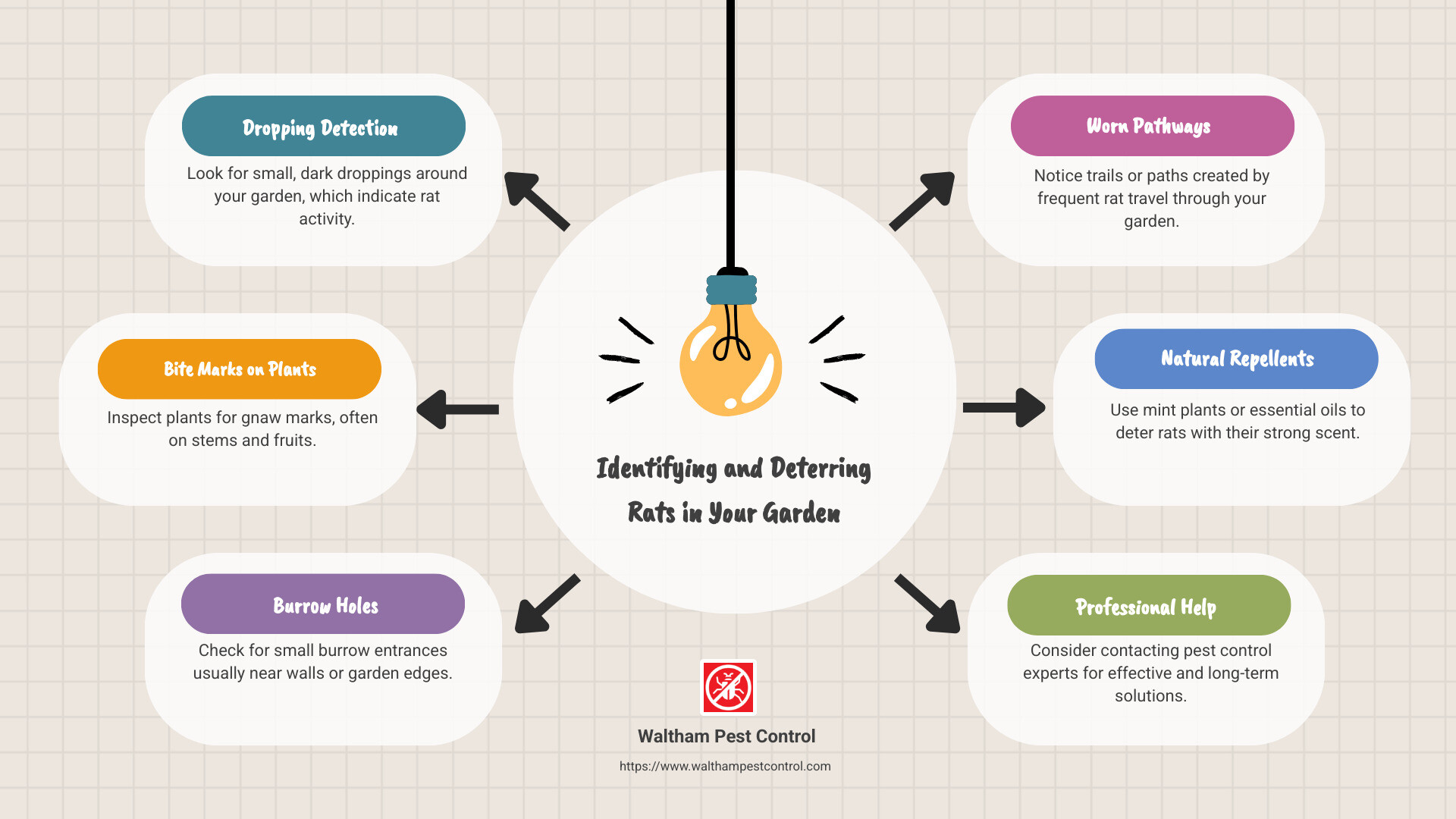
- Identify Signs: Look for droppings, bite marks on plants, burrow holes, and worn pathways in your garden.
- Natural Deterrents: Use potent homemade repellents with mint plants or essential oils.
- Professional Help: Consult with experts like Waltham Pest Control for effective management solutions.
I am Waltham Pest Control, President & CEO of Waltham Pest Control, offering over 40 years in pest management with a strong focus on resolving the rat problem in garden scenarios. With my experience in urban pest solutions, I can help you tackle and mitigate any rodent issues effectively.
Explore more about rat problem in garden:
– rat infestation in garden
– rat infestation removal
– rat prevention in home
Understanding the Rat Problem in Your Garden
Urban gardens can be a haven for the Norway rat (Rattus norvegicus), the only rat species found in New York City. Known as commensal rodents, these rats thrive in environments closely associated with humans. This means your garden, with its abundance of food, water, and shelter, is prime real estate for them.
Why Urban Gardens Attract Rats
Urban gardens provide everything a rat needs to survive and thrive. Here’s what makes your garden so appealing to them:
- Food Sources: Rats are not picky eaters. They consume everything from fruits and vegetables to grains and even meat. In a garden, fallen fruits, unprotected compost, and even pet food can serve as a feast for these rodents.
- Water Sources: Rats require a constant supply of water. Leaky faucets, birdbaths, or even puddles can be enough to sustain them.
- Shelter: Rats are excellent burrowers. Gardens with loose soil, compost piles, or clutter provide the perfect hiding spots. A single burrow can house a family of rats, offering them warmth and protection.
The Norway Rat: A Closer Look
The Norway rat is particularly well-suited to urban environments. These rats are excellent swimmers and climbers, making them incredibly adaptable. They typically dig burrows near food sources and are known for their rapid breeding, which can quickly escalate a small problem into a large infestation.

Recognizing the Signs
To tackle a rat problem in your garden, it’s crucial to identify their presence early. Look for:
- Burrow Holes: These can be found in loose soil and are typically 6-9 cm in diameter.
- Droppings: Rat droppings are cylindrical, about 15mm long, and are often found near food sources.
- Gnaw Marks: Rats gnaw on wood, plastic, and even crops like sweetcorn, leaving behind parallel teeth marks.
Understanding these signs and the reasons why rats are attracted to gardens is the first step in addressing the issue. In the next section, we’ll explore preventive measures to keep these unwelcome guests out of your garden.
Preventing Rats from Entering Your Garden
Keeping your garden free from rats involves a few key steps. Removing food sources, securing compost, storing trash properly, eliminating standing water, and tidying the garden are all essential. Let’s break down these methods to make your garden less inviting to these unwanted guests.
Remove Food Sources
Rats are opportunistic feeders, so keeping food out of their reach is a top priority.
- Fallen Fruit: Regularly check for and remove any fallen fruit from trees or plants. This prevents rats from finding an easy meal.
- Pet Food: If you feed your pets outside, make sure to bring in any leftover food immediately.
- Bird Feeders: These can be a major attraction for rats. Consider using bird feeders that catch fallen seeds or stop feeding birds if you notice rat activity.
Secure Compost
Compost bins can be a buffet for rats if not handled properly.
- Rodent-Resistant Containers: Use compost bins designed to keep rodents out. These often have tight-fitting lids and sturdy construction.
- Avoid Table Scraps: Especially meat and dairy, which can attract rats more than plant-based waste.
- Keep It Moist: Rats dislike wet environments, so keep your compost moist by adding green and brown materials and watering it regularly.
Store Trash Properly
Trash can quickly become a food source for rats if not managed correctly.
- Sturdy Cans with Tight-Fitting Lids: Ensure your trash cans are robust and have lids that seal tightly.
- Regular Disposal: Empty your trash regularly to prevent any buildup that might attract rats.
Eliminate Standing Water
Water is essential for rats, so removing excess sources can help.
- Repair Leaky Faucets: Fix any leaks to prevent puddles from forming.
- Cover Water Bowls: If you have pets, cover their water bowls at night or when not in use.
- Improve Drainage: Ensure your garden has proper drainage to prevent water from pooling.
Tidy Your Garden
A tidy garden is less appealing to rats, as it offers fewer hiding spots.
- Cut Grass: Keep your lawn trimmed to eliminate cover for rats.
- Remove Clutter: Clear out any piles of wood, brush, or debris.
- Trim Plants: Regularly trim shrubs and plants, especially those near buildings or fences.
- Clear Storage Areas: Keep storage sheds and garages clean and uncluttered to reduce potential nesting areas.
By implementing these preventive measures, you can significantly reduce the likelihood of a rat problem in your garden. Up next, we’ll explore effective rat control methods to tackle any existing issues.
Effective Rat Control Methods
When prevention isn’t enough, it’s time to look into effective rat control methods. Here’s a breakdown of various traps and how they can help manage a rat problem in your garden.
Snap Traps
Snap traps are a traditional and effective way to catch rats.
- Peanut Butter Bait: Use a small amount of peanut butter as bait. It’s sticky and aromatic, making it hard for rats to resist.
- Proper Placement: Place traps along walls or in areas where you’ve noticed rat activity. Rats tend to stick to the edges of spaces.
- Safety Precautions: Ensure the traps are out of reach of children and pets. Consider using trap boxes for added safety.
Electronic Traps
For a modern approach, electronic traps offer a humane and quick solution.
- Battery-Powered: These traps run on batteries, making them portable and easy to place anywhere in the garden.
- Humane, Instant Kill: They deliver a quick electric shock that kills the rat instantly, reducing suffering.
Bait Boxes
Bait boxes are useful for outdoor settings, though they come with certain precautions.
- Poison Bait: These boxes contain poison that rats consume, leading to death in a short time.
- Outdoor Use: Best used in gardens or other outdoor areas where pets and children won’t have easy access.
- Safety Concerns: Always follow instructions carefully to minimize risks to non-target animals.
Live Catch Traps
If you’re looking for a non-lethal option, live catch traps allow for humane relocation.
- Humane Relocation: Capture rats alive and release them at least 200 to 300 feet away from your home.
- Proper Distance: Ensure you release them far enough to prevent them from returning.
- Safety Tips: Handle traps with care to avoid bites and wear gloves when relocating.
Glue Traps
Glue traps are generally not recommended due to their inhumane nature, but they are an option.
- Least Humane: Rats caught in glue traps suffer from dehydration and stress, often taking hours or days to die.
- Potential Escape: Rats may sometimes escape, rendering these traps less effective.
By understanding these methods, you can choose the best approach to tackle a rat problem in your garden. Next, we’ll dig into natural repellents that can help keep rats at bay without the use of traps.
Natural Rat Repellents
When it comes to keeping rats out of your garden, natural repellents can be a safe and effective strategy. These options don’t just keep the rodents away but also add a pleasant aroma to your garden. Let’s explore some natural solutions.
Mint Plants
Mint plants are a fantastic natural deterrent for rats. Rats find the strong scent of mint overwhelming and tend to avoid areas where mint is present. Consider growing varieties like peppermint, spearmint, and pennyroyal in your garden. Not only will these plants help keep rats at bay, but they can also repel other insects like fleas and ticks.
For an extra layer of protection, you can make a deterrent spray by chopping mint leaves and boiling them in water. Spray this mixture around your garden, especially near plants that need protection.
Sagebrush
Sagebrush is another plant that rats dislike due to its pungent scent. Common in the midwestern U.S., sagebrush can be used in its natural form or as an oil. Sagebrush oils are potent, so use them with caution, as they can be toxic to humans if ingested.
If you can’t find fresh sagebrush, using the oil can be a great alternative. Simply mix a few drops with water and spray it around your garden. Just remember to handle it carefully.
Herbs
Many herbs are not only great for cooking but also serve as natural rat repellents. Oregano, sage, rosemary, basil, black pepper, and cayenne all have strong scents that rats find unappealing.
- Oregano and Sage: Plant these herbs around your garden to create a natural barrier against rats.
- Rosemary and Basil: These herbs can be grown in pots or directly in the ground to deter rodents.
- Black Pepper and Cayenne: Sprinkle these spices around plants or create a spray with water to discourage rats from getting too close.
By incorporating these natural repellents, you can create a garden that’s not only beautiful but also less inviting to rats. Next, we’ll discuss how to monitor and maintain your garden to ensure it stays rat-free.
Monitoring and Maintenance
Keeping your garden rat-free requires ongoing vigilance. Regular inspections and disrupting rat pathways are key strategies. Here’s how to stay ahead of any rat problem in your garden.
Regular Inspections
Early Spring Checks: Start looking for signs of rat activity as soon as the weather warms up. This is a prime time for rats to emerge and explore new territories.
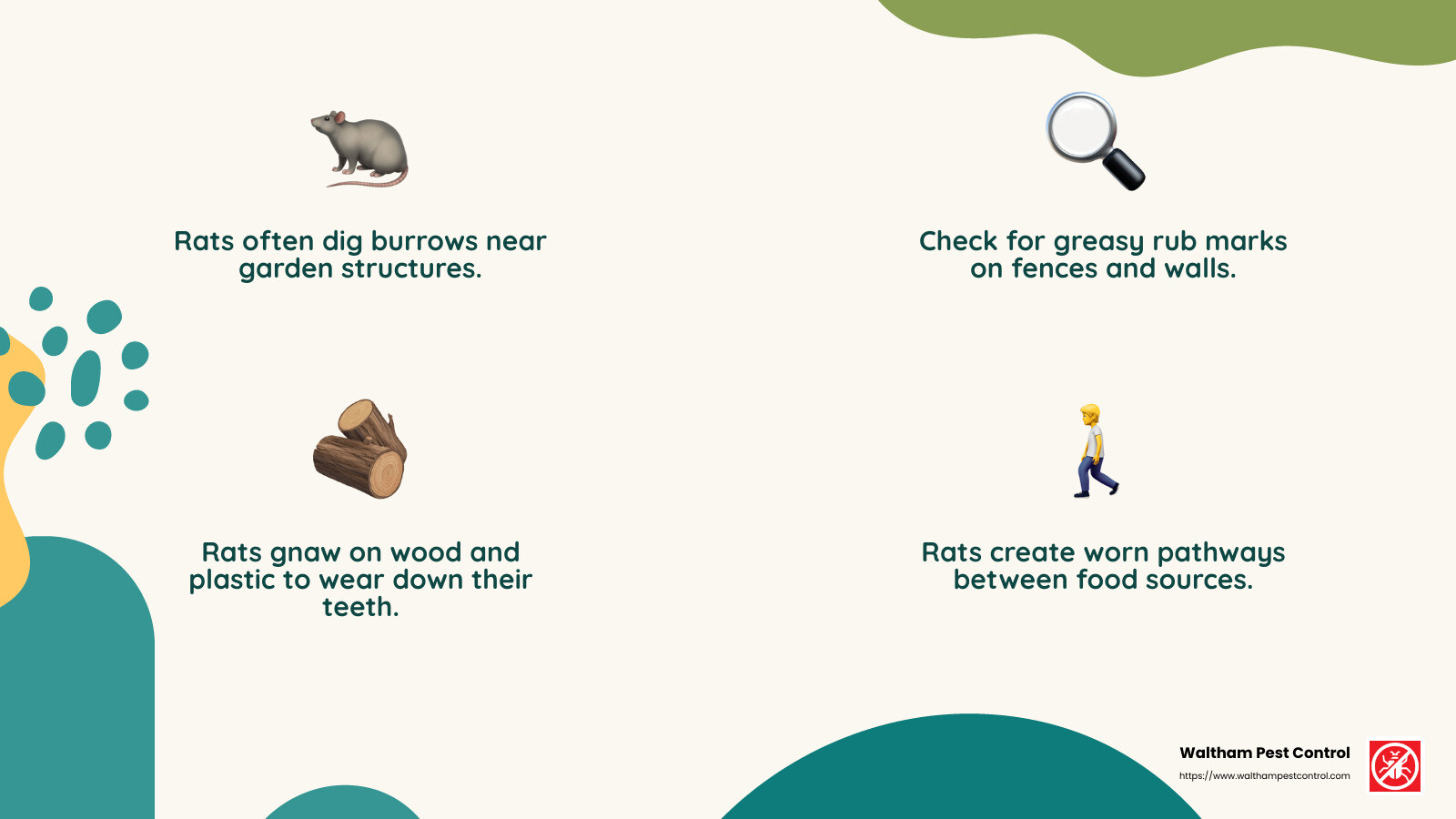
Look for Burrow Holes: Rats often dig burrows as entry points to their nesting sites. These holes are typically 6-9 cm in diameter and can be found near fences, walls, or garden structures.
Identify Smudge Marks: As rats travel along straight lines, like walls or fences, they leave behind greasy rub marks. These marks are a telltale sign of an active rat pathway.
Watch for Gnawing Signs: Rats have ever-growing incisors, so they constantly gnaw on wood, plastic, and even metal to keep them short. Look for bite marks on garden furniture, sheds, or fences.
Check for Worn Pathways: Rats create well-trodden paths as they move between food sources and their nests. These pathways can be identified by flattened grass or dirt tracks.
Droppings: Rat droppings are cylindrical and about the size of an olive. Finding these in your garden is a strong indicator of a rat presence.
Garden Perimeter: Regularly check the edges of your garden for new rat activity. Walking the perimeter a few times a week can help you catch any signs early.
Preventive Measures: Once you spot any signs, take immediate action to block entry points and remove attractants like food and water sources.
Disrupting Rat Pathways
Vinegar Wash: Rats use pheromone trails to steer. Washing away these trails with vinegar can confuse them and deter their return.
Biodegradable Soap: Similar to vinegar, using a biodegradable soap to clean smudge marks can help break the scent trail that rats follow.
Hardware Cloth Installation: For a more permanent solution, install hardware cloth (half-inch mesh) at the base of walls or fences. Ensure it extends 8 to 12 inches underground to deter burrowing.
By conducting regular inspections and disrupting rat pathways, you can maintain a garden that’s less inviting to these unwanted guests. Next, we’ll address frequently asked questions about rat problems in gardens.
Frequently Asked Questions about Rat Problems in Gardens
How do you get rid of rats in the garden?
Getting rid of rats involves a multi-pronged approach. Snap traps are a popular choice for many gardeners. They are effective and can be baited with peanut butter to attract rats. Place these traps along walls or known rat pathways for best results. Remember to handle them with care and keep them away from children and pets.
Poisons are another option, typically used in bait boxes. These should only be used outdoors and with caution due to safety concerns for pets and other wildlife. It’s crucial to follow all instructions and regulations when using poisons.
For those who prefer a hands-off approach, hiring professional pest control services is often the most reliable solution. Professionals have access to more effective tools and are experienced in dealing with infestations safely.
What gets rid of rats the fastest?
For immediate action, snap traps and electronic traps are the quickest solutions. Snap traps provide an instant kill when set up correctly. Electronic traps are battery-powered and deliver a humane, instant kill by electrocution. These devices are efficient and easy to use, offering a swift resolution to a rat problem.
Bait boxes with poison can also work quickly but require careful handling and placement. They are best used in conjunction with professional guidance to ensure safety and effectiveness.
Should I be worried if I see a rat in my garden?
Yes, seeing a rat in your garden is a cause for concern. Rats pose significant health risks as they can carry diseases like Leptospirosis. They also cause property damage by gnawing on wood, plastic, and even electrical wires. Immediate action is essential to prevent an infestation.
Addressing the presence of a single rat quickly can prevent a larger problem. Use traps or contact a pest control expert to assess the situation and take appropriate measures. Regular inspections and maintenance can also help keep your garden rat-free.
Conclusion
Dealing with a rat problem in your garden can be challenging and frustrating. While there are various DIY methods to deter and control rats, these solutions often provide only temporary relief. When it comes to ensuring a long-term solution, professional help is essential.
At Waltham Pest Control, we offer certified pest control services that are both effective and safe. Our team is equipped with the expertise and tools necessary to handle rat infestations of any size. With over 40 years of experience, we understand the unique challenges that gardens in Eastern Massachusetts face.
Our approach is comprehensive. We don’t just eliminate the rats you see; we address the root of the problem to prevent future infestations. This includes identifying entry points, removing attractants, and implementing preventive measures custom to your garden’s needs.
Choosing professional pest control ensures that you receive a thorough and lasting solution. Our licensed and insured team is committed to providing quality service, helping you maintain a beautiful, rat-free garden. If you’re facing a rat issue, don’t hesitate to reach out to us for expert assistance. Let us help you protect your garden and home with our proven pest management solutions.
