

Rat Prevention in Home: Top 5 Essential Tips 2025

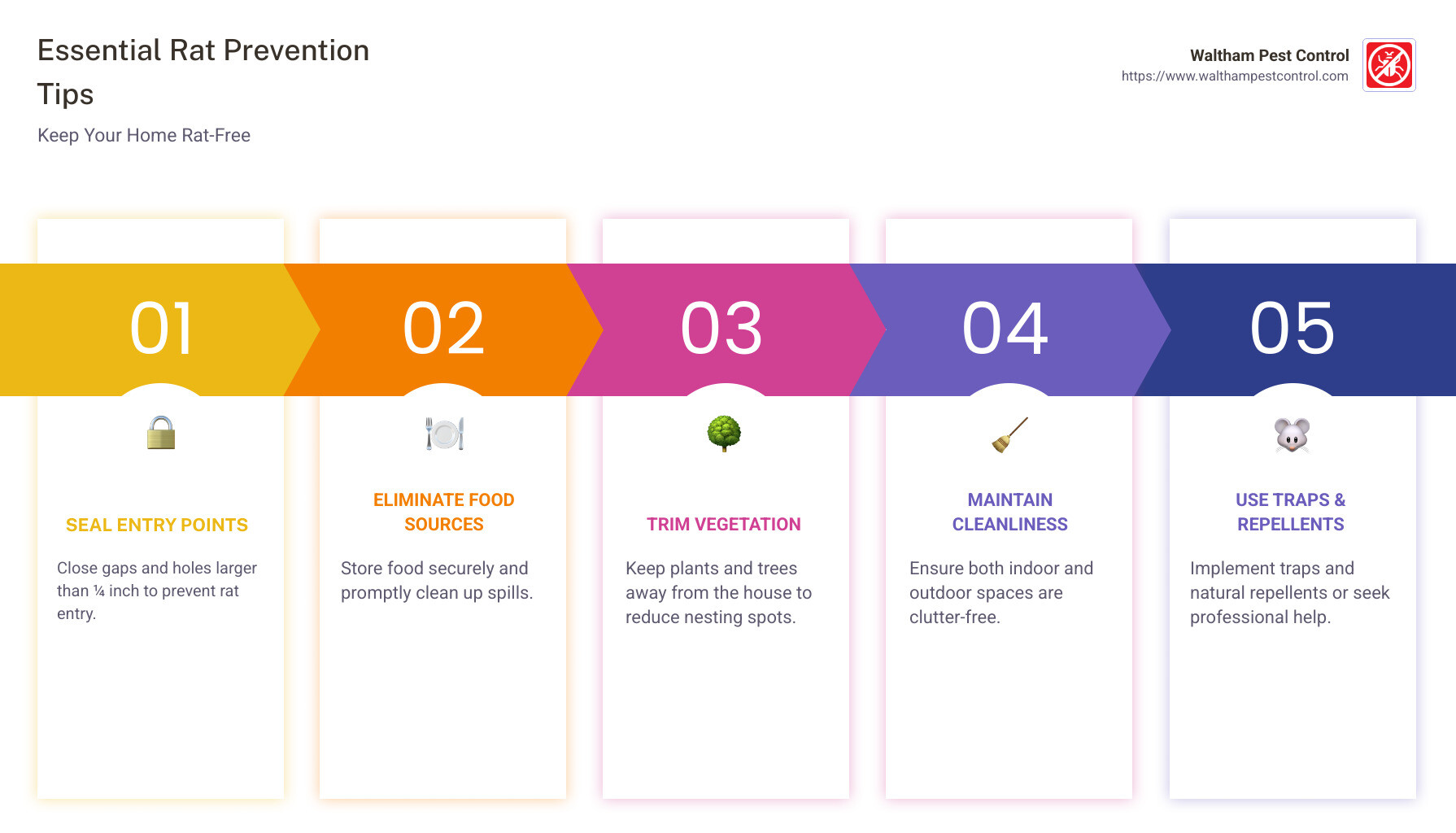
Rat prevention in home is a crucial step in maintaining a safe and healthy living environment. Protecting your home from these unwanted intruders involves a combination of measures to deter entry, eliminate food sources, and ensure regular clean-ups. Here’s a quick rundown of essential home prevention tips:
- Seal all entry points: Make sure there are no gaps or holes larger than ¼ inch.
- Eliminate accessible food sources: Store food securely and clean up any spills promptly.
- Regularly trim vegetation: Keep plants and tree limbs away from your house.
- Maintain cleanliness: Keep indoor and outdoor areas clutter-free.
- Use traps and repellents appropriately: Opt for professional pest control for lasting solutions.
Rats aren’t just a nuisance—they pose health risks and can damage property. By implementing effective strategies, you can keep your home rat-free.
I’m Waltham Pest Control, President & CEO of Waltham Pest Control, with over 40 years of expertise in pest management. Our commitment is to help you with rat prevention in home through professional and effective pest control solutions.
Easy rat prevention in home word list:
– rat infestation in home
– get rid of rats at home
– fastest way to kill rats
Understanding Rats and Their Needs
To effectively tackle rat prevention in home, understand what makes these creatures tick. Rats are not just pesky invaders; they are resourceful scavengers that can adapt to almost any environment, especially where humans dwell.
Rat Behavior
Rats are nocturnal, meaning they are most active during the night. They are social animals, often living in colonies. Their behavior is driven by survival instincts, which include finding food, water, and shelter.

Food Sources
Rats are opportunistic eaters. They will consume almost anything available, but they prefer grains, fruits, and meats. In your home, this means they might raid your pantry, rummage through garbage, or nibble on pet food left out overnight.
Key Tip: Store all food in airtight containers and keep kitchen counters clean to avoid attracting rats.
Water Sources
Rats need water, but they can survive by extracting moisture from the food they eat. Still, they are attracted to readily available water sources such as leaky pipes, pet water bowls, or even condensation on windows.
Action Step: Fix any plumbing leaks and remove standing water to make your home less attractive to these rodents.
Shelter
Rats seek warm, safe places to nest. They often hide in cluttered areas like attics, basements, or behind appliances. Outdoors, they might find refuge in wood piles, dense vegetation, or abandoned structures.
Pro Tip: Keep your home and yard tidy. Declutter regularly and store items at least 18 inches off the ground.
Scavengers
Rats are natural scavengers, constantly on the lookout for food and materials to build their nests. This scavenging behavior makes them highly adaptable, able to exploit human environments effectively.
Preventive Measure: Regularly inspect your home for signs of rat activity, such as droppings or gnaw marks, and take immediate action to address any issues.
Understanding the needs and behaviors of rats is the first step in effective rat prevention in home. By addressing these needs, you can make your home a less inviting place for these unwelcome guests. Let’s move on to identifying signs of a rat infestation to ensure early detection and intervention.
Identifying Signs of a Rat Infestation
Spotting a rat infestation early can save you a lot of trouble. Rats are sneaky, but they leave behind clues. Here’s what to look for:
Smells
Rats have a distinctive, musky smell. If you notice an unusual odor in your home, especially in enclosed areas like attics or basements, it might be a sign of rats. This smell comes from their urine and body oils, which they use to mark their territory.
Noises
Rats are nocturnal, so you might hear them at night. Listen for scratching, scurrying, or squeaking sounds in walls, ceilings, or under floors. These noises are often a clear indicator that rats are on the move.
Droppings
One of the most obvious signs of a rat problem is droppings. Rat droppings are dark, pellet-shaped, and about half an inch long. You’ll often find them near food sources, in drawers, or along baseboards. It’s crucial to clean and disinfect these areas promptly while wearing protective gear, as rat droppings can spread diseases.
Urine
Alongside droppings, rats leave urine trails. These trails can sometimes be visible under a UV light. The urine not only smells but can also stain surfaces, contributing to the musky odor associated with infestations.
Damage
Rats are notorious chewers. They gnaw on anything from electrical wires to furniture. This behavior can lead to costly repairs and even fire hazards if they chew through electrical cords. Look for chewed-up materials around your home.
Gnaw Marks
Rats need to gnaw to keep their teeth sharp and short. You might find gnaw marks on wood, plastic, or even soft metals like lead or aluminum. These marks are often rough and can help differentiate rat activity from other pests.
Rub Marks
As rats move along walls and floors, they leave greasy smudges or rub marks. These marks are from the oil and dirt in their fur. They’re often found along baseboards or where rats frequently travel.

By keeping an eye out for these signs, you can catch a rat infestation early. Early detection is key to effective rat prevention in home and can help you take swift action to protect your property. Next, we’ll explore how rats manage to enter your home in the first place.
How Rats Enter Your Home
Rats are expert invaders. They can squeeze through openings as small as a dime, making it crucial to understand how they might enter your home. Here are some common entry points to watch for:
Cracks and Holes
Rats can exploit even the tiniest cracks and holes in your home’s structure. Check your foundation, walls, and floors for any gaps. Sealing these with materials like steel wool, caulk, or cement can be an effective barrier against these unwanted guests.
Vents
Vents are necessary for airflow, but they can also be a gateway for rats. Ensure that all vents are covered with a sturdy mesh that allows air to pass but keeps rodents out.
Pipes
Pipes are another common entry point. Rats can squeeze through gaps around pipes or even travel through sewer lines. Inspect areas where pipes enter your home and seal any gaps. Using wire mesh or steel wool can be particularly effective here.
Windows and Doors
Windows and doors that don’t close properly or have gaps can be an open invitation for rats. Install weather-stripping to seal any spaces around doors and windows. Also, ensure that screens are intact and free of holes.
By focusing on these entry points, you can significantly reduce the chances of rats finding their way into your home. Prevention is key to maintaining a rodent-free environment. Next, we’ll discuss strategies for keeping rats out by eliminating their food sources.
Rat Prevention in Home: Effective Strategies
To keep your home free from rats, combine multiple strategies. Let’s explore some effective methods:
Seal Entry Points
Holes, Cracks, and Gaps: Rats can squeeze through openings as small as a quarter. Regularly inspect your home for any holes, cracks, or gaps. Use steel wool, caulk, cement, or plaster to seal these entry points. Weather-stripping around doors and windows can also prevent rats from sneaking in.
Eliminate Food Sources
Garbage Cans: Keep your trash secure by using covered metal or heavy-duty plastic garbage cans. Rats are resourceful and can chew through thin plastic.
Pet Food: Avoid feeding pets outdoors. Store pet food in rodent-proof containers to prevent rats from accessing it.
Compost and Bird Feeders: Use a fully-enclosed and liftd tumbling bin for compost. Clean up spilled bird feed promptly to avoid attracting rats.
Garden Produce: Harvest your garden produce as soon as it ripens. Fallen fruits and vegetables should be composted quickly in a secure container.
Remove Shelter
Debris and Clutter: Clear away any debris or clutter around your home. Wood piles and overgrown vegetation provide excellent hiding spots for rats. Store wood piles at least 18 inches above the ground and away from your home.
Appliances: Ensure that outdoor appliances or old equipment are not providing shelter for rats. Keep these items organized and liftd if possible.
Use Traps and Baits
Snap Traps and Cage Traps: These are effective for catching rats inside your home. Place them along walls and in areas where you’ve noticed rat activity.
Tamper-Resistant Bait Stations: If using poisons, make sure they are placed in tamper-resistant bait stations to protect pets and children. Always follow the label instructions carefully.
Repel Rats Naturally
Peppermint Oil and Essential Oils: Rats dislike strong scents like peppermint. Use peppermint oil on cotton balls and place them in areas prone to rat activity.
Mint Plants: Planting mint around your home can help deter rats naturally. The strong smell is unpleasant for them.
Predator Urine: Spraying predator urine, such as that from foxes, around your garden can act as a natural deterrent. It’s available in both powder and liquid forms at garden stores.
By implementing these strategies, you can create a less inviting environment for rats, reducing the likelihood of an infestation. Next, let’s explore how community efforts can improve rat control and prevention.
Community Efforts for Rat Control
Keeping rats out of your home is not just an individual effort—it’s a community mission. When neighborhoods work together, they can effectively reduce rat populations and prevent infestations. Here’s how:
Neighborhood Cooperation
Rats move freely between properties, so it’s crucial for neighbors to coordinate their efforts. By working together, communities can ensure that everyone is taking similar steps to seal entry points, eliminate food sources, and remove shelters. This collective approach makes it harder for rats to find a safe haven in the area.
Shared Strategies
Sharing strategies and tips among neighbors can improve rat prevention. For instance, one household might have success with certain types of traps or natural repellents, which can be beneficial for others to try. Regular neighborhood meetings or online forums can be great platforms for exchanging ideas and discussing what works best.
Community Clean-Up
Organizing community clean-up events can significantly impact rat control. By removing debris, trimming overgrown vegetation, and cleaning up public areas, communities can eliminate potential rat shelters. These events also promote a sense of unity and shared responsibility in keeping the neighborhood rat-free.
Public Awareness
Raising awareness about rat prevention is key. Informational flyers, workshops, or social media campaigns can educate residents about the importance of maintaining clean and secure properties. Highlighting the health risks associated with rats, such as the spread of diseases, can motivate more people to take action.
By fostering cooperation and communication within the community, neighborhoods can create a strong defense against rat infestations. This collaborative approach not only helps in keeping individual homes safe but also improves the overall quality of life in the area.
Next, we’ll address some frequently asked questions about rat prevention in home to provide further insights and solutions.
Frequently Asked Questions about Rat Prevention in Home
What scent will keep rats away?
Rats have a keen sense of smell, and certain scents are known to repel them. Peppermint oil is a popular choice. Its strong aroma is unpleasant to rats, making it an effective natural deterrent. You can use peppermint oil by soaking cotton balls and placing them near entry points or areas where you’ve noticed rat activity.
Other scents that can help keep rats at bay include lavender, sage, and citronella. These can be used in essential oil form or as dried plants around your home. While these scents might not guarantee a rat-free home, they can be part of a broader strategy to deter these pests.
How can I stop rats from getting in my house?
Preventing rats from entering your home involves a few key steps:
- Seal Entry Points: Rats can squeeze through small gaps, so it’s crucial to fill holes, cracks, and gaps in your home’s exterior. Use materials like steel wool, caulk, or cement to block these entryways.
- Eliminate Food Sources: Rats are scavengers and will eat almost anything. Keep food sealed and stored properly, cover garbage cans, and avoid leaving pet food out overnight.
- Use Traps and Repellents: Set up traps in areas where you’ve seen signs of rats. Consider using snap traps or cage traps. Additionally, natural repellents like peppermint oil can discourage rats.
What are the best methods for rat prevention in home?
The most effective strategies for rat prevention in home involve a combination of actions:
- Sealing Gaps: Regularly inspect your home for potential entry points. Seal any gaps around doors, windows, and pipes to prevent rats from sneaking in.
- Removing Food Sources: Keep your kitchen and dining areas clean. Don’t leave food out, and make sure trash is properly contained to avoid attracting rats.
- Using Traps: Place traps in strategic locations where you’ve noticed rat activity. This can help catch any intruders before they become a bigger problem.
- Community Efforts: Collaborate with your neighbors to ensure everyone is taking steps to prevent rats. Community clean-ups and shared tips can be very effective.
By combining these methods, you can create a strong defense against rats and keep your home safe and pest-free.
Conclusion
When it comes to maintaining a rat-free home, professional help can make a world of difference. At Waltham Pest Control, we offer quality service and ongoing maintenance plans custom to meet the unique needs of homes in Eastern Massachusetts. Our team has over 40 years of experience in providing effective pest management solutions, ensuring that your home remains safe and comfortable.
We understand that even the most diligent homeowners can find themselves dealing with a rat problem. That’s why our licensed and insured technicians are here to help. We use proven methods and materials to address infestations and prevent future issues. Whether it’s sealing entry points or setting up strategic traps, our approach is thorough and effective.
Ongoing maintenance is key to keeping rats at bay. Our services include regular inspections and treatments, so you can have peace of mind knowing that your home is protected year-round. Plus, our commitment to quality means we work with minimal disruption to your daily life.
If you’re in Eastern Massachusetts and need assistance with rat prevention or any other pest control needs, contact us at Waltham Pest Control. Let us help you safeguard your home with our expert solutions and dedicated service.
