
Rat Nest in Attic: 10 Shocking Dangers to Avoid
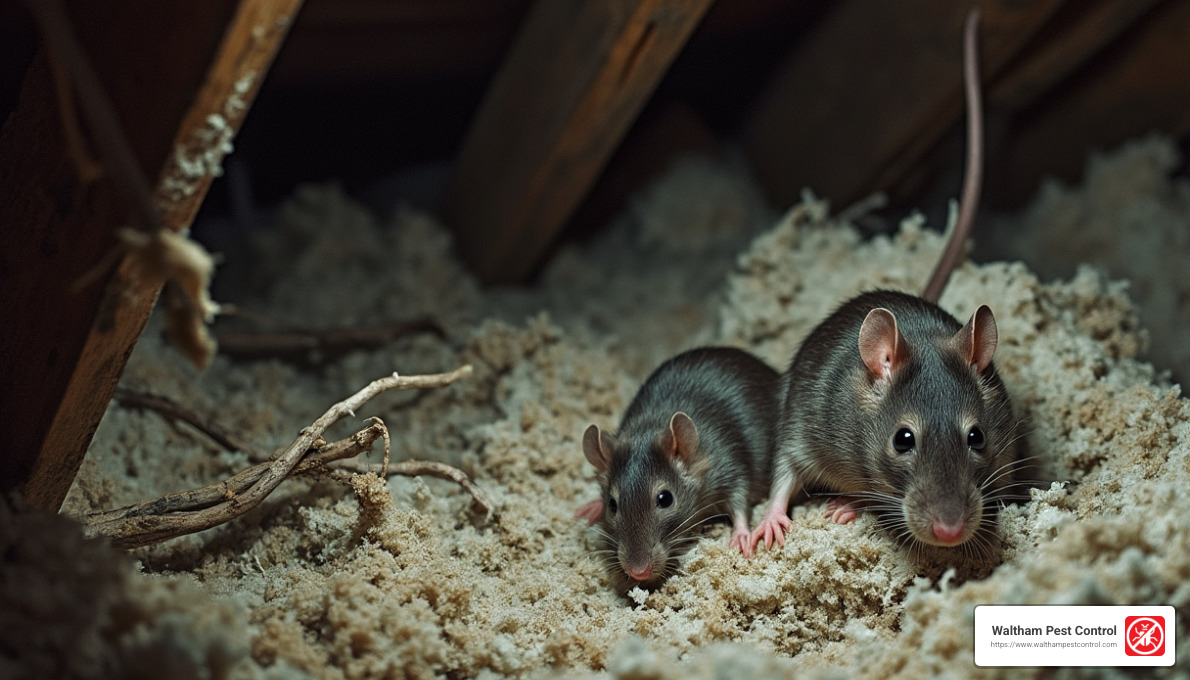
A rat nest in attic can be more than just a minor nuisance—it’s a potential health hazard and a threat to your property. When roof rats invade your attic, they pose risks such as disease transmission through droppings and urine, as well as potential damage to your home’s structure by gnawing on wires and insulation. Here’s what you need to know right away:
- Health Risks: Rats carry diseases like hantavirus and leptospirosis, which can be transmitted to humans.
- Property Damage: They chew through wires, posing a fire risk, and can compromise insulation.
- Signs: Listen for scurrying sounds and look for droppings, gnaw marks, and nesting materials.
Understanding these dangers emphasizes the importance of addressing a rat nest in attic quickly. Ignoring the problem won’t make it go away and will likely lead to bigger issues down the line.
As Waltham Pest Control, with over 40 years leading Waltham Pest Control, I’ve seen the damage a rat infestation can cause. Addressing a rat nest in attic is crucial for the safety and integrity of your home.

Rat nest in attic terms at a glance:
– rats in loft
– rat infestation in home
– rat prevention in home
Identifying Rat Nests in Your Attic
Spotting a rat nest in attic early can save you from a lot of trouble. Roof rats love attics because they’re dark, quiet, and safe. But how do you know if they’re there? Let’s break it down.
Signs of Roof Rats in the Attic
- Scurrying Sounds: At night, when everything is quiet, listen for the telltale scurrying or scratching noises. Roof rats are nocturnal, so that’s when they’re most active.
- Droppings: Look for droppings, especially in secluded areas like attics or along baseboards. They are small, dark, and banana-shaped, usually about half an inch long.
- Gnaw Marks: Rats need to gnaw to keep their teeth from growing too long. Check for gnaw marks on wires, wood, and even plastic. This can lead to serious property damage.
- Greasy Smudges: As rats move around, they leave greasy smudges along walls and baseboards. This is due to the oil and dirt in their fur.
- Musty Odor: A strong, unpleasant smell might alert you to their presence. This odor comes from their urine and is a clear sign of an infestation.
- Torn Insulation: Rats tear up insulation to build their nests. Finding shredded insulation is a strong indicator that rats are nesting in your attic.
- Actual Sightings: If you see a rat, it’s a definite sign you have a problem. Even catching a glimpse of a tail disappearing into the shadows means it’s time to act.
Roof Rat Droppings
Roof rat droppings are a clear sign of an infestation. They look like small, dark capsules and can be found near nesting sites, food sources, and along their pathways. These droppings are not just unsightly; they pose health risks. Diseases like hantavirus and leptospirosis can be spread through contact with rat feces.
Roof Rat Nests
A rat nest in attic is typically made from soft materials like shredded insulation, paper, and cardboard. These nests resemble bird nests and are often found in corners or on rafters where they are warm and secluded. Rats use these nests to sleep, give birth, and store food.
Roof Rat Sounds
Roof rats are active at night, making them easier to hear when everything else is quiet. You might notice:
- High-Pitched Chirps: These sounds are how rats communicate with each other.
- Scurrying and Scratching: As they move along floors and rafters or build their nests.
- Gnawing: Rats gnaw to keep their teeth sharp, and this can be heard when they chew on wood, wires, or other materials.
By understanding these signs, you can quickly identify and address a rat nest in your attic, preventing further damage and health risks.
Why Roof Rats Are Harmful
Roof rats may seem small, but their impact is anything but. They pose significant health risks and can cause extensive property damage. Let’s explore why these critters are more than just a nuisance.
Health Issues
Roof rats are carriers of numerous diseases and parasites that can affect you and your family. The Centers for Disease Control (CDC) lists diseases like Hantavirus, Leptospirosis, Typhus, and even Monkeypox as potential threats from these pests. These diseases can be transmitted through contact with rat droppings, urine, or nesting materials.
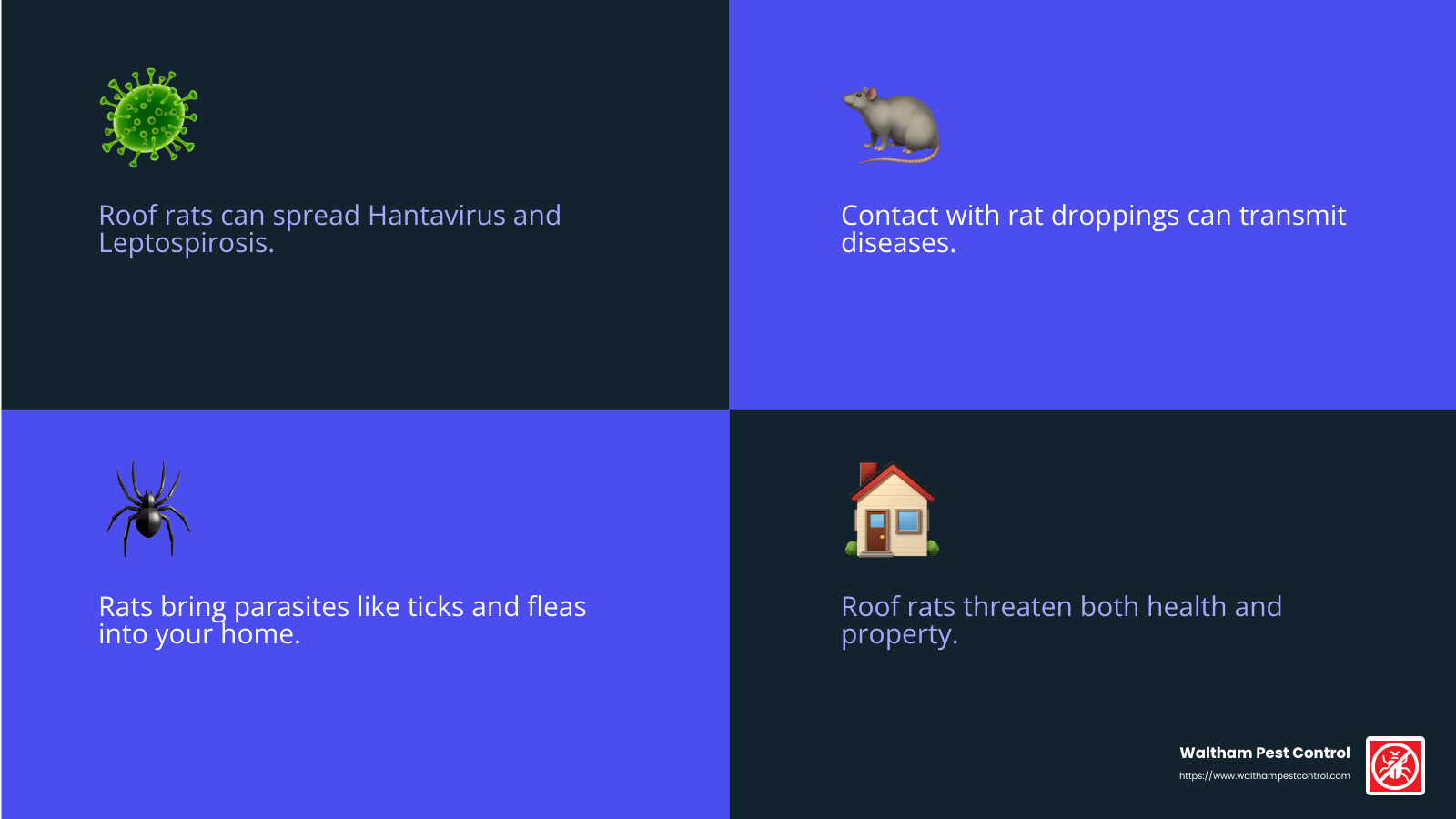
Moreover, roof rats often bring parasites like ticks, fleas, and mites into your home. These parasites can further spread diseases or infest your pets, leading to additional health concerns.
Property Damage
Roof rats don’t just threaten your health—they can wreak havoc on your home. Here’s how:
- Rafters and Structural Damage: Rats gnaw on wood to keep their teeth sharp, which can weaken your home’s structural integrity over time.
- Insulation Destruction: They tear up insulation for nesting, leading to increased energy bills due to poor temperature regulation.
- Wiring Hazards: Rats love to chew on wires, which can lead to dangerous electrical fires. This is not just a minor inconvenience; it’s a serious fire hazard that can put your entire home at risk.
- Decreased Home Value: The damage caused by rats can significantly reduce your property’s value, making it less appealing to potential buyers.

In addition to these issues, the presence of roof rats can result in unpleasant odors and visible damage, all of which contribute to a less comfortable living environment. Addressing a rat nest in attic quickly is crucial to prevent these problems from escalating. By understanding the risks, you can take proactive steps to protect your home and health.
Now that we’ve covered the dangers of roof rats, let’s look at how you can get rid of them.
How to Get Rid of a Rat Nest in Your Attic
Dealing with a rat nest in attic can be daunting, but taking action is vital to protect your home and health. Let’s explore effective ways to tackle this issue, from professional services to DIY methods and preventive measures.
Professional Rat Removal Services
When it comes to handling a rat infestation, professionals can provide a comprehensive solution. Here’s what you can expect:
- Inspection: A thorough inspection by experts will identify the extent of the infestation and any potential entry points. This step is crucial for creating an effective removal plan.
- Removal: Professionals use safe and efficient methods to remove rats, ensuring that your home is free from these pests. This process often includes the strategic placement of traps and bait.
- Exclusion: After removal, sealing entry points is essential to prevent future infestations. This might involve repairing gaps, using metal flashing, or adding mesh to vents.
- Damage Repair: Rats can cause significant damage, from chewed wiring to torn insulation. Professional services often include repairing this damage, restoring your attic to its original condition.
By opting for professional services, you benefit from their expertise and comprehensive approach to rat removal and prevention.
DIY Rat Removal Methods
If you prefer a hands-on approach, there are several DIY methods to consider:
- Snap Traps: These are a classic and effective way to catch rats. Place them near walls where rats travel, and use bait like peanut butter to lure them.
- Bait: Use rat bait carefully, as it’s toxic to both rats and pets. Always follow safety guidelines to prevent accidental ingestion.
- Trap Placement: Proper placement of traps is key. Rats tend to stick to walls and dark corners, so position traps accordingly for the best results.
- Natural Deterrents: Certain plants, like mint and eucalyptus, can deter rats with their strong scents. Consider using these around entry points to keep rats at bay.
While DIY methods can be effective, they often require time and patience. Be prepared to monitor the situation and adjust your strategy as needed.
Preventive Measures
Once you’ve addressed the immediate problem, focus on prevention to keep rats from returning:
- Seal Entry Points: Inspect your home for gaps and cracks, especially around the roof and eaves. Use materials like steel wool or caulk to seal these areas.
- Trim Trees and Vines: Overhanging branches can provide easy access to your roof. Keep them trimmed back to prevent rats from climbing onto your home.
- Store Firewood Away: Firewood and debris should be stored at least 100 feet from your home to eliminate potential hiding spots for rats.
- Secure Food and Garbage: Rats are attracted to food sources, so store food in airtight containers and ensure garbage bins are sealed tightly.
By implementing these preventive measures, you can significantly reduce the risk of future infestations and maintain a rat-free home.
In the next section, we’ll address common questions about dealing with rat nests in attics, providing further insights into effective management strategies.
Frequently Asked Questions about Rat Nests in Attics
How do I get rid of a rat nest in my attic?
Dealing with a rat nest in attic requires a strategic approach. You can choose between professional removal or DIY methods, depending on your comfort level and the severity of the infestation.
- Professional Removal: Hiring experts is often the safest and most effective way to eliminate rats. Professionals conduct a thorough inspection, use targeted removal methods, and seal entry points to prevent future infestations. This comprehensive service ensures your home is not only free of rats but also protected from future invasions.
- DIY Methods: If you’re tackling the problem yourself, start with snap traps placed strategically near walls and dark corners. Use bait like peanut butter to attract the rats. Be cautious with rat poison, as it poses risks to pets and children. Natural deterrents, such as mint or eucalyptus, can also help keep rats away.
- Preventive Measures: After removing the rats, focus on prevention. Seal any gaps in your attic, trim back trees that provide roof access, and store food in secure containers. These steps help ensure rats don’t return.
Should you destroy a rat nest?
Yes, destroying a rat nest is crucial. Leaving a nest intact can lead to health risks and further property damage. Here’s why you should act:
- Health Risks: Rats carry diseases like hantavirus and leptospirosis, which can spread through droppings and urine. By destroying the nest, you reduce the risk of disease transmission.
- Property Damage: Rats gnaw on wires and insulation, creating fire hazards and structural damage. Removing the nest helps prevent these issues from worsening.
- Professional Advice: Experts recommend removing nests as part of a comprehensive pest control strategy. This ensures that all traces of rats are eliminated, reducing the likelihood of re-infestation.
What happens if you leave rats in the attic?
Ignoring a rat problem can lead to serious consequences:
- Infestation Growth: Rats reproduce quickly, and a small problem can escalate into a large infestation if left unchecked.
- Structural Damage: Rats chew through wood, wires, and insulation, causing costly damage. Over time, this can compromise the structural integrity of your home.
- Fire Hazards: Gnawed electrical wires can spark fires, posing a significant safety risk.
Addressing a rat nest promptly is essential to avoid these issues and protect your home and health. In the next section, we’ll explore more about the importance of timely action and how Waltham Pest Control can assist you in maintaining a rat-free environment.
Conclusion
In conclusion, addressing a rat nest in the attic is not just about dealing with an immediate nuisance; it’s about safeguarding your home and health from potential hazards. Rats can cause significant damage to your property and pose serious health risks due to the diseases they carry. Ignoring the problem can lead to a rapidly growing infestation, increased structural damage, and potential fire hazards from gnawed electrical wires.
Timely action is crucial. The sooner you address the issue, the easier it is to manage and prevent further damage. Prompt intervention not only saves you from costly repairs but also ensures the safety and well-being of your family.
At Waltham Pest Control, we understand the urgency and complexity of dealing with rat infestations. With over 40 years of experience serving Eastern Massachusetts, our team is equipped to provide comprehensive pest management solutions. We offer professional inspection, removal, and prevention services to ensure that your home remains rat-free.
If you’re facing a rat problem or want to prevent one, don’t hesitate to contact us. Our skilled professionals are ready to assist you with effective and affordable pest control services. Let us help you protect your home and restore your peace of mind.
