
Rat Infestation Removal: 7 Effective Solutions 2025

Rat infestation removal is crucial for maintaining a safe and healthy environment in both homes and businesses. Immediate action can help you tackle the issue effectively. Here’s a quick guide:
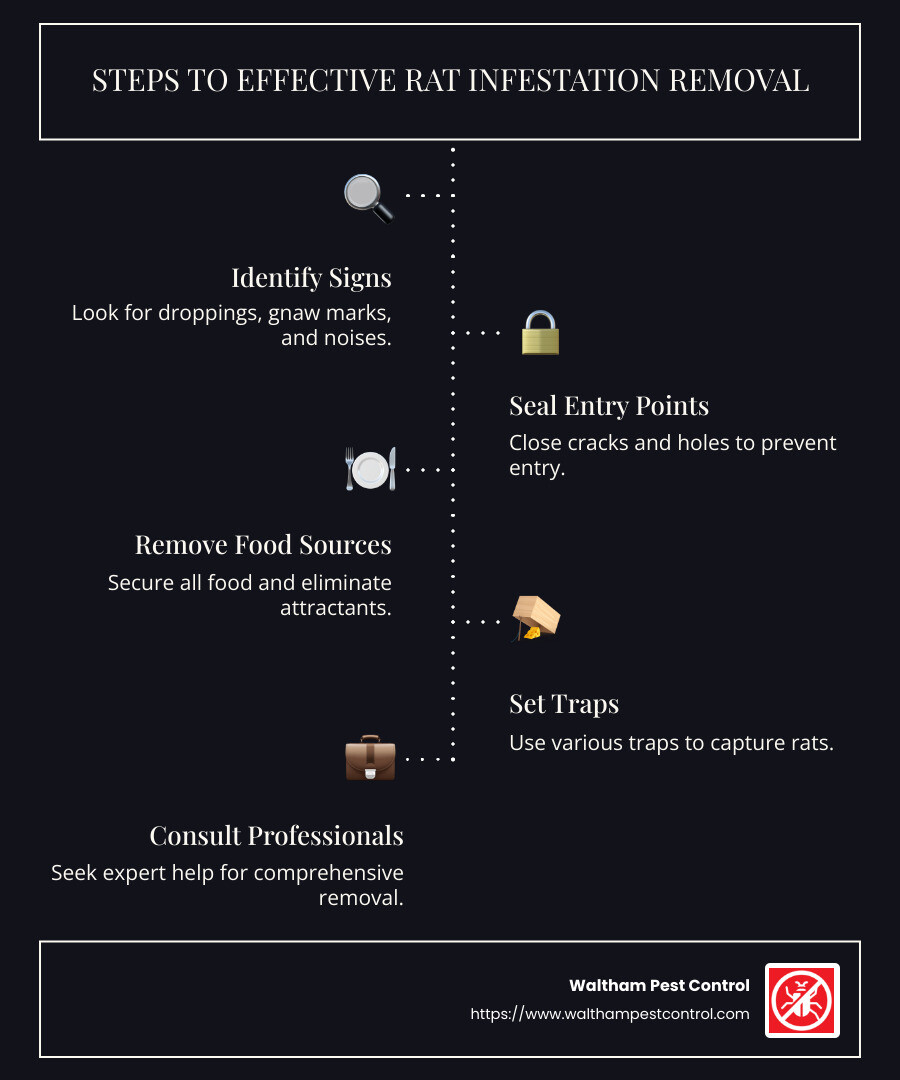
- Identify signs like droppings and gnaw marks.
- Eliminate entry points by sealing cracks and holes.
- Remove food sources to deter rats.
- Consult professionals for comprehensive rat infestation removal.
Rat infestations are more than just a nuisance. They pose significant health risks and can cause extensive damage to your property. Rats are known carriers of diseases like salmonella and leptospirosis, which can spread through rodent droppings and urine. Furthermore, their habit of gnawing on wires, wood, and plastic can lead to costly damage and even fire hazards.
My name is Waltham Pest Control, and at Waltham Pest Control, we specialize in effective rat infestation removal. With over 40 years of experience, we are committed to providing safe, reliable pest management solutions. Let’s dig into what makes rat infestations a serious concern.
Rat infestation removal helpful reading:
– rat infestation in garden
– rat infestation in home
– rats in loft
Signs of a Rat Infestation
Detecting a rat infestation early is key to preventing further damage and health risks. Here are the most common signs to look out for:
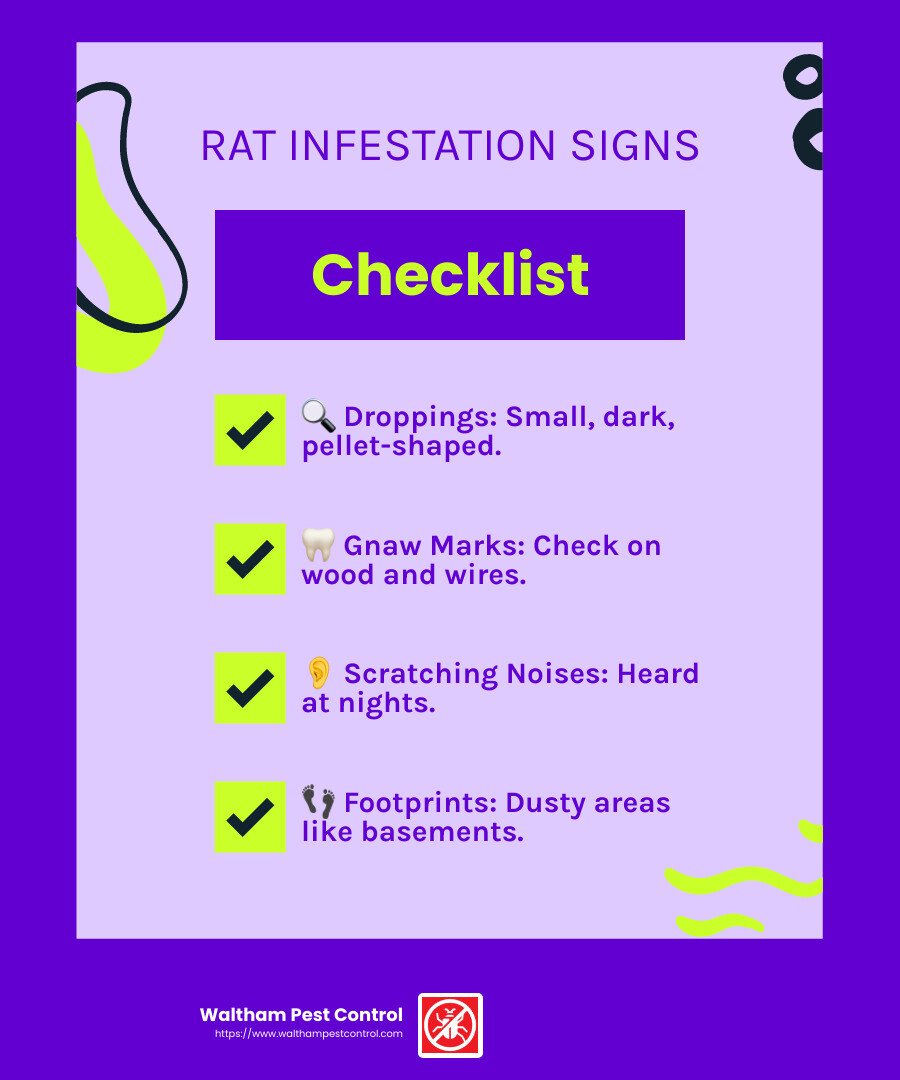
Droppings
Rat droppings are small, dark, and pellet-shaped. You’ll often find them in cupboards, behind appliances, or in dark corners where rats are active. The more droppings you see, the bigger the infestation might be. Quick cleanup is essential to prevent disease spread.
Gnaw Marks
Rats have powerful teeth capable of gnawing through wood, plastic, and even metal. Look for gnaw marks on food packaging, baseboards, or electrical wires. These marks not only indicate a rat problem but can also lead to serious property damage, including fire hazards from chewed electrical cords.
Scratching Noises
Rats are nocturnal creatures. If you hear scratching or scurrying sounds in walls, ceilings, or floorboards at night, it’s likely you have rats. These noises are more noticeable in quiet environments, signaling that rats might be nesting within your walls or ceiling.
Footprints
In dusty areas like attics or basements, rats can leave behind footprints. You can sprinkle flour or talcum powder on the floor to catch their tracks, confirming their presence.
Nests
Rats build nests from shredded materials like paper, fabric, or insulation. These nests are usually hidden in dark, secluded areas such as attics or crawl spaces. Finding a nest is a clear sign of a rat infestation.
Grease Marks
Rats have oily fur, and as they move along walls and baseboards, they often leave behind greasy smudges. These marks can help you track their movement patterns throughout your home.
Bad Odor
Rats emit a strong, musky odor due to their urine and the oils in their fur. If you notice an unpleasant smell, especially in enclosed spaces, it could indicate a rat infestation. This odor can be quite distinctive and is often a tell-tale sign of their presence.
Recognizing these signs early can help you take swift action to address the problem. At Waltham Pest Control, we emphasize the importance of early detection and effective intervention to protect your home and health. Let’s explore how these sneaky rodents gain entry into your home in the next section.
How Rats Get In
Rats are incredibly resourceful when it comes to finding ways into your home. Understanding their common entry points can help you protect your property from an infestation.
Cracks and Holes
Rats can squeeze through gaps as small as a dime. Inspect your home’s exterior for cracks and holes in walls and foundations. These small openings are prime entry points for rats. Sealing them promptly with materials like wire wool, cement, or caulk can prevent access.
Open Windows and Doors
Leaving windows and doors open, especially at night, provides an easy entry for rats. Ensure all windows have screens and doors are kept closed or fitted with tight seals. Pay special attention to basement windows and doors, as these are often overlooked.
Vents
Vents are another common entryway for rats. Check vents in your basement, attic, and walls for any gaps or damage. Installing vent covers made from sturdy materials like stainless steel mesh can help block rats from sneaking in.
Pipes and Wires
Rats are adept climbers and can follow pipes and wires into your home. Inspect areas where pipes and wires enter your house for any gaps. Seal these openings to prevent rats from using them as pathways.
Floor Drains
Floor drains, especially those in basements or utility rooms, can be a hidden entry route for rats. Ensure that floor drains are covered with proper grates that are secure and intact to keep rats out.
By addressing these potential entry points, you can significantly reduce the risk of a rat infestation. Regular inspections and maintenance are key to keeping your home rat-free. In the following section, we’ll explore effective methods for removing rats if they’ve already made their way inside.
Rat Infestation Removal Methods
Inspect Your Home Thoroughly
The first step in rat infestation removal is a detailed inspection of your home. Look for potential entry points such as cracks, vents, and floor drains. Rats can squeeze through tiny openings, so it’s crucial to identify and address these vulnerabilities. Using materials like wire wool, cement, or caulk can effectively seal these gaps. Pay special attention to areas where pipes and wires enter your home, as these are common pathways for rats.
Seal Cracks and Crevices
Once you’ve identified entry points, it’s time to seal them. Use wire wool or metal kick plates for larger gaps and apply cement or caulk for smaller crevices. This not only blocks rats from entering but also prevents them from gnawing their way back in. Rats can chew through many materials, but metal and cement are not among them.
Clean Up Your Home
A cluttered home is an open invitation for rats. Remove unnecessary items and organize your space to eliminate hiding spots. Proper food storage is essential—use secure containers to store pantry items and promptly clean up spills. Manage waste by using rat-resistant trash containers and ensure your yard is free from debris and overgrown vegetation.
Remove Potential Food Sources
Rats are attracted to easy food sources. Secure pet food in airtight containers and avoid leaving it out overnight. Regularly check your pantry for open packages and store food properly. Fallen fruits and vegetables from your garden can also attract rats, so keep your yard tidy.
Set Traps
Using traps is a practical way to catch rats without resorting to poisons. Snap traps are effective and provide quick results. For a more humane approach, consider electronic traps or live traps. Glue traps and bait boxes can also be used, but they may require more frequent monitoring. Place traps in areas where you’ve noticed rat activity, such as along walls or near entry points.
Use Natural Deterrents
Natural deterrents can help keep rats at bay. Essential oils like peppermint and eucalyptus have strong scents that rats dislike. Sprinkle cayenne pepper, black pepper, or cloves in areas where rats might enter. These methods are safe and can be a good first line of defense.
Contact a Pest Control Company
If the infestation persists, professional help may be necessary. Waltham Pest Control offers expert services to identify entry points, remove rats, and implement preventive measures. Their team can assess your situation and provide custom solutions to ensure your home remains rat-free.
By following these steps, you can effectively manage a rat infestation and prevent future occurrences. In the next section, we’ll discuss strategies for keeping rats away from your property altogether.
How to Get Rid of Rats Outside Your Home
Clean Up Your Yard
The first step to keeping rats away from your home is maintaining a clean yard. Mowing the lawn regularly and removing debris like wood and junk piles eliminates potential hiding spots for these pesky rodents. Rats prefer cluttered areas, so keeping your yard tidy is crucial. Wood piles should be liftd at least 18 inches above the ground and away from walls to deter nesting.
Inspect Your Vents
Rats are excellent climbers, and they often access homes through the roof. It’s important to inspect your roof vents and strengthen them using copper wire or stainless steel mesh. This prevents rats from chewing through the vents and gaining entry. Regular inspections can help you catch any potential breaches before they become a problem.
Remove Food Sources
Rats are opportunistic feeders, so removing potential food sources is key. Pick up any dropped fruits and vegetables from your garden. Ensure that pet food and bird seed are stored in secure, airtight containers. Avoid leaving food out overnight, as this can attract rats to your yard.
Attract Natural Predators
Encouraging natural predators, like owls and other birds of prey, can help control the rat population. Consider installing a nest box or providing a water source to attract these predators. A housecat can also be an effective deterrent, as their presence alone can keep rats at bay.
Use Dry Ice
An innovative method for dealing with rats is using dry ice. Placing dry ice in rat burrows releases carbon dioxide, which anesthetizes and kills the rats. Always use gloves and handle dry ice with care to avoid skin damage.
Set Snap Traps
Traps are a reliable method for dealing with rats outdoors. Snap traps are effective when baited with appealing foods like peanut butter or apples. Place traps near burrows or areas of high rat activity, and always wear gloves to avoid transferring your scent to the traps.
Use Electronic Traps
For a more humane option, consider using battery-powered electronic traps. These traps deliver a quick, fatal shock to rats and can be set up outside. They are safe and efficient, reducing the risk to other animals.
Use Baits and Poisons Outside
Baits and poisons can be used effectively outdoors, but they must be handled with care. Use bait stations to ensure safety and comply with any legal restrictions in your area. Always follow safety precautions to protect children, pets, and non-target wildlife.
By implementing these strategies, you can effectively manage and reduce the rat population around your home. Next, we’ll explore how to prevent future infestations and keep your property rat-free.
Preventing Future Infestations
Regular Maintenance
Preventing rat infestations requires consistent vigilance. Regularly inspect your home for new entry points, such as cracks or holes, and seal them promptly using materials like wire wool, cement, or caulk. This proactive approach keeps rats from finding a way in.
Maintaining your yard is equally important. Keep it tidy by mowing the lawn, trimming shrubs, and removing any debris that could serve as a hiding spot for rats. Regular upkeep minimizes the chances of these rodents taking up residence on your property.
Community Effort
Rats are a community problem, and tackling them requires a shared responsibility. When everyone in the neighborhood cooperates, it becomes easier to control and prevent infestations. Encourage your neighbors to maintain cleanliness in their yards and seal off potential entry points in their homes.
Organize community clean-up days to remove trash and debris from shared spaces. This not only helps in reducing rat shelters but also fosters a sense of unity and commitment to a rat-free environment.
Professional Monitoring
Even with the best preventive measures, professional pest control services can provide an added layer of protection. Regular check-ups by experts ensure that any potential issues are caught early. Pest control professionals can offer custom advice and solutions based on the specific needs of your property.
By engaging with a service like Waltham Pest Control, you can benefit from their expertise in rat infestation removal and prevention. Their team can help identify risks, implement effective treatments, and monitor your property to keep it rat-free.
Frequently Asked Questions about Rat Infestation Removal
How do you get rid of a rat infestation fast?
Speed is crucial when dealing with a rat infestation. The first step is to identify and seal off any entry points. Use traps and baits strategically to catch and eliminate rats. Snap traps and electronic traps are effective for quick action, while bait stations can help reduce the population over time. For a more immediate impact, consider hiring professional pest control services like Waltham Pest Control, who have the expertise and tools to address the issue swiftly.
Can a rat infestation be fixed?
Absolutely. A rat infestation can be fixed with the right approach. Start with proper sanitation—dispose of trash correctly and eliminate potential food sources. Regularly clean and declutter areas where rats might nest. Combine these efforts with traps and baits to tackle the infestation. If the problem persists, don’t hesitate to seek professional help. Experts like Waltham Pest Control can provide comprehensive solutions, ensuring your home becomes and remains rat-free.
How do professionals get rid of a rat infestation?
Professionals use a combination of methods to effectively eliminate a rat infestation. They begin with a thorough inspection to identify entry points and nesting areas. Traps and bait stations are strategically placed to catch and poison rats. Rodenticides may be used, but always with safety in mind to prevent harm to humans and pets. Professionals also focus on long-term prevention by sealing entry points and advising on proper trash disposal and sanitation practices. Engaging with a reputable service like Waltham Pest Control ensures that the infestation is handled safely and efficiently, with a focus on preventing future occurrences.
Conclusion
Dealing with a rat infestation is a serious matter that requires swift and decisive action. Rats not only cause structural damage but also pose significant health risks. Ignoring the problem can lead to costly repairs and potential health hazards. That’s why tackle the issue promptly and effectively.
Waltham Pest Control is here to help. With over 40 years of experience serving Eastern Massachusetts, we offer comprehensive pest control services custom to your needs. Our team of licensed and insured professionals is committed to providing quality solutions that are both effective and cost-efficient.
Taking action against a rat infestation involves a multi-step approach. From sealing entry points and setting traps to using natural deterrents and professional pest control services, each step plays a crucial role in ensuring your property remains rat-free.
If you’re facing a rat problem, don’t wait until it becomes unmanageable. Contact Waltham Pest Control today for expert advice and solutions. We are dedicated to helping you regain control of your home and protecting your family from the dangers of a rat infestation.
For more information, visit our rat pest control service page or call us to schedule an inspection. Let us help you create a safer, healthier environment for you and your loved ones.