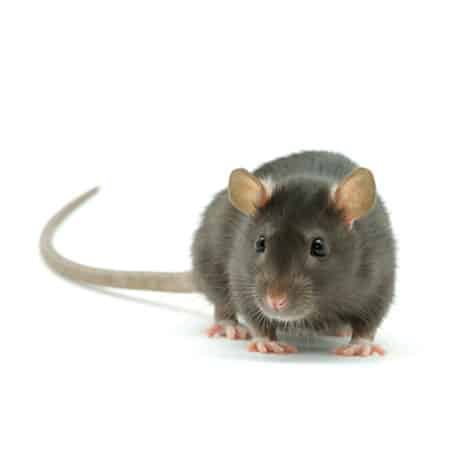

Rat Infestation in Home: Top 5 Proven Prevention Tips
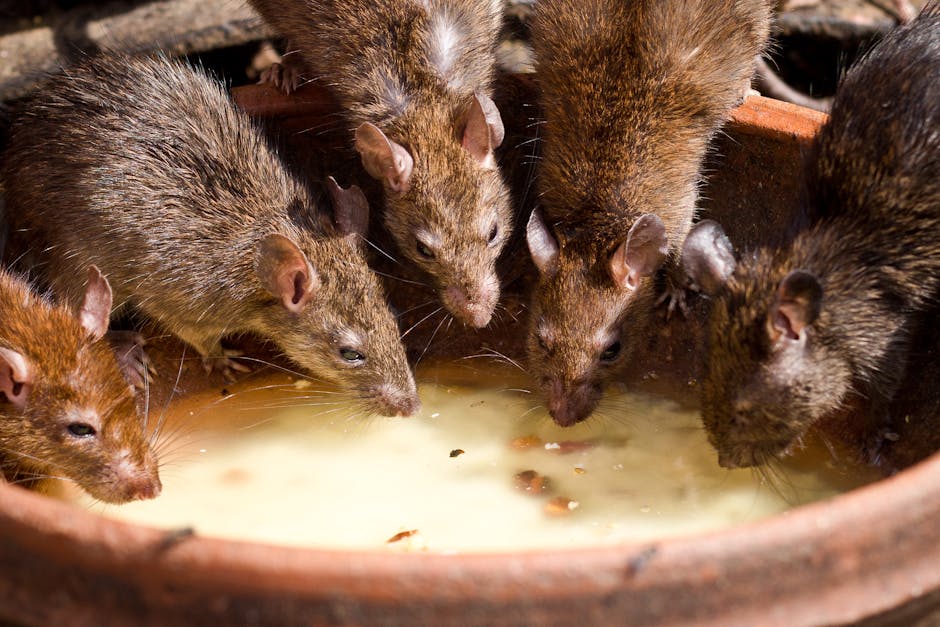
If you’re dealing with a rat infestation in home, it’s crucial to act fast. Rats are more than just a nuisance; they pose serious health risks and can cause significant damage to property. They spread diseases, contaminate food, and leave gnaw marks on everything from wood to insulation. Recognizing the signs early—such as droppings, gnawed items, and strange sounds—can prevent costly repairs and health issues.
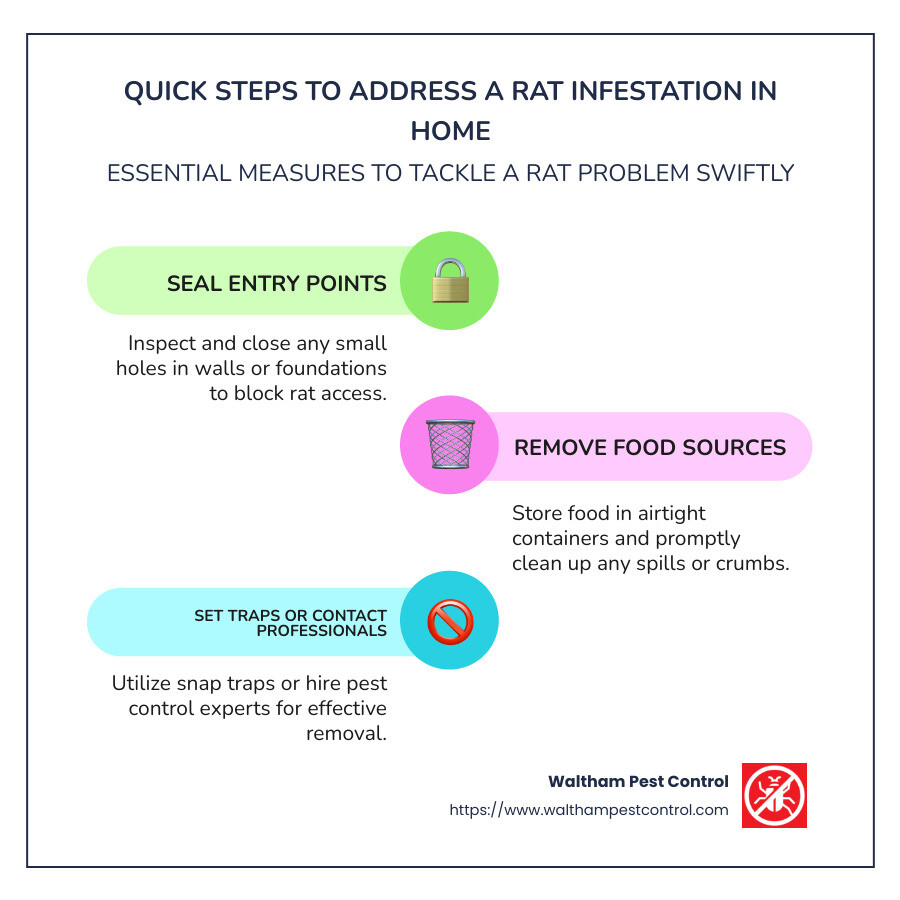
Quick Steps to Address a Rat Infestation in Home:
- Seal Entry Points: Look for small holes in walls or foundations and seal them.
- Remove Food Sources: Keep food stored in airtight containers and clean up crumbs promptly.
- Set Traps or Contact Professionals: Use snap traps or hire pest control experts for safe and effective removal.
Understanding why rats invade homes can help you prevent future infestations. They are constantly on the lookout for food, shelter, and water, making cluttered areas and improperly stored food a prime attraction.
I’m Waltham Pest Control, with over 40 years in pest control, specializing in addressing rat infestation in home issues across Massachusetts. In this guide, we’ll dig deeper into how you can safeguard your home from these destructive pests.
Related content about rat infestation in home:
– fastest way to kill rats
– rats in loft
– rodent removal near me
Identifying Rat Infestations
Common Signs of Rat Infestation in Home
Rats are sneaky creatures, often hiding until their numbers grow too large to conceal. Spotting the signs of a rat infestation in home early can save you headaches down the road. Here’s what to look for:
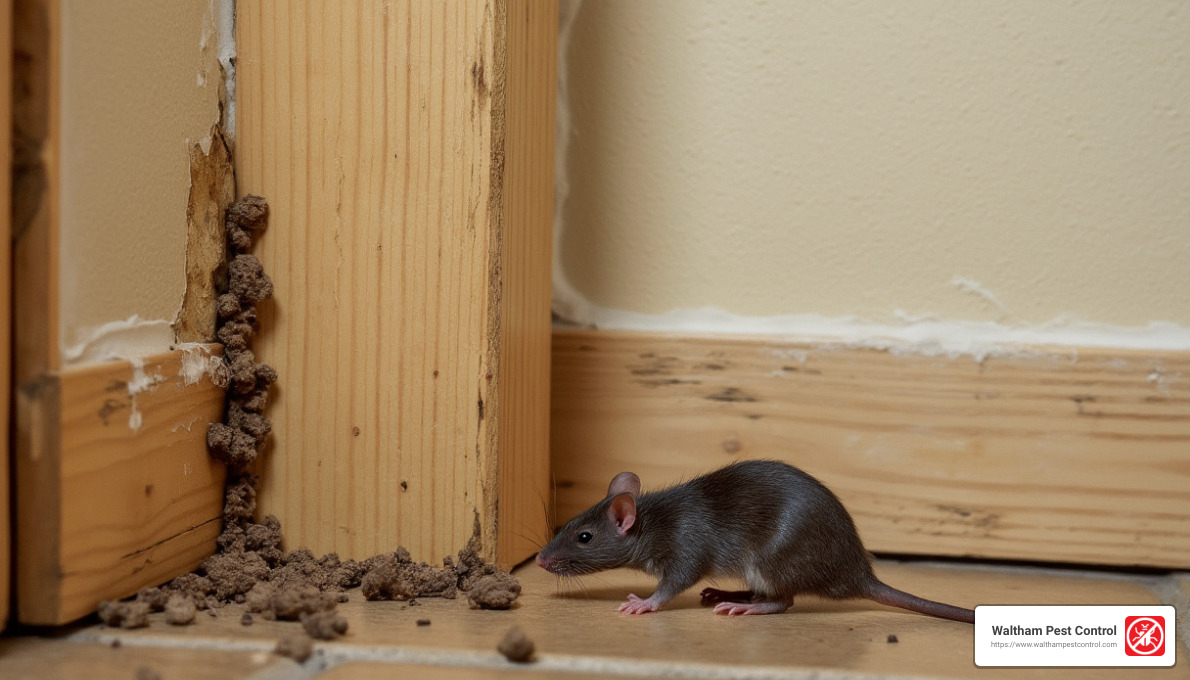
- Droppings: Small, dark, and pellet-shaped droppings are often found near food sources, in cupboards, or under sinks. These are a clear sign of an active rat population.
- Gnaw Marks: Rats have a constant need to gnaw on objects to keep their teeth sharp. Look for rough, large teeth marks on wood, plastic, or even electrical cables.
- Rub Marks: As rats travel along walls and floorboards, the grease and dirt from their fur can leave smudged trails. These rub marks often appear as dark streaks.
- Nesting Material: Rats build nests using shredded paper, fabric, or dried plant material. Finding these materials in secluded areas is a strong indicator of their presence.
- Pawprints and Tail Marks: In dusty areas, you might notice small footprints and the drag marks of a tail.
- Holes in Walls: Rats can chew through walls and floors to create entry points. These holes are typically around the size of a quarter.
- Stale Smells: Rats leave behind a strong, musky odor that can be particularly noticeable in enclosed areas.
How to Check for Rats
If you suspect a rat infestation, taking the time to investigate can confirm your suspicions:
- Listen for Sounds: At night, when rats are most active, listen for scratching or scurrying noises in walls, ceilings, or attics.
- Look for Hiding Places: Check dark, seldom-visited areas like basements, attics, and behind appliances. These are common hiding spots for rats.
- Check for Fresh Droppings: Fresh droppings are moist and dark, indicating recent activity. Older droppings are dry and gray.
- Watch for Tracks: Sprinkle some flour or talcum powder in suspected areas and check for tracks the next day. This can help determine their paths.
By understanding these signs and checking for these indicators, you can catch a rat infestation in home early and take steps to eliminate it before it becomes a larger problem.
Why Rats Invade Homes
Rats are opportunistic creatures, always on the lookout for food sources, shelter, and environments that offer easy living conditions. Understanding why they invade homes can help you take preventative measures.
Food Sources
Rats need very little to survive, but they thrive when food is abundant. They are attracted to homes where food is easily accessible. Common attractions include:
- Unsecured Garbage: Open or poorly sealed trash cans are a buffet for rats. They are especially drawn to food scraps and leftovers.
- Pet Food: Leaving pet food out overnight or storing it in easily accessible containers can invite rats into your home.
- Pantry Items: Rats can chew through packaging to get to grains, cereals, and other stored foods. It’s crucial to store food in airtight containers.
Shelter
Rats seek out safe, warm places to nest and reproduce. Homes provide ideal shelter options:
- Cluttered Spaces: Piles of boxes, newspapers, or clothes offer perfect nesting sites. Rats are more likely to settle in cluttered environments.
- Attics and Basements: These areas are often undisturbed, providing quiet and security for rats to build nests.
Poor Sanitation
Homes with poor sanitation practices are prime targets for rats. This includes:
- Spilled Food: Even small crumbs can attract rats. Regular cleaning and prompt spill management are essential.
- Standing Water: Leaky pipes or standing water sources can sustain a rat population. Fix leaks promptly to discourage their presence.
Bird Feeders
Bird feeders can unintentionally attract rats. The seeds and nuts intended for birds often fall to the ground, providing a food source for rodents. To minimize this risk:
- Use Catch Trays: Installing catch trays under feeders can reduce spillage.
- Regular Cleanup: Regularly clean the area around feeders to prevent accumulation of seeds.
Compost Piles
While composting is great for the environment, it can also attract rats if not managed properly. Ensure your compost is:
- Secured: Use a rat-proof compost bin with a lid that locks.
- Balanced: Avoid adding meat or dairy products, which can attract rodents.
By addressing these factors, you can reduce the likelihood of a rat infestation in home and maintain a rodent-free environment. Next, we’ll look at practical steps you can take to prevent rats from entering your home in the first place.
Preventing Rat Infestations
Preventing a rat infestation in home requires proactive measures to make your living space less inviting to these unwelcome guests. Here’s how you can effectively keep rats out:
Sealing Entry Points
Rats can squeeze through surprisingly small openings, so sealing entry points is crucial.
- Holes in Walls: Inspect your home’s exterior and interior for holes or gaps. Use steel wool or caulk to fill small holes and patch larger ones with metal sheets.
- Foundation Cracks: Regularly check your foundation for cracks and seal them promptly to prevent rats from sneaking in.
- Pipe and Vent Openings: Install metal collars around pipe openings and cover vents with hardware cloth to block access.
- Floor Drains: Ensure floor drains are tightly fastened to prevent sewer rats from entering through plumbing systems.
Removing Food and Water Sources
Eliminating food and water sources is key to deterring rats.
- Secure Garbage: Use heavy-duty trash containers with tight-fitting lids to prevent rats from accessing your waste.
- Fix Plumbing Leaks: Leaky pipes provide a constant water source for rats. Repair leaks promptly to cut off their supply.
- Clean Spills: Regularly clean up spills and crumbs in your kitchen and dining areas to remove potential food sources.
- Store Food Properly: Keep pantry items in airtight containers to prevent rats from chewing through packaging.
- Stop Feeding Birds: If you have a rat problem, consider pausing bird feeding or using huskless bird food to minimize spillage.
Reducing Shelter
Rats seek out safe, hidden places to nest. By reducing potential shelters, you make your home less attractive to them.
- Remove Clutter: Declutter your home, especially in basements, attics, and garages. Store items on shelves at least 18 inches off the ground.
- Clean Yards: Keep your yard tidy by removing debris and trimming overgrown vegetation where rats might hide.
- Lift Wood Piles: Stack firewood and other materials at least 18 inches above the ground and away from walls to reduce nesting opportunities.
- Rat-Proof Buildings: Ensure that all buildings on your property are rat-proof by sealing gaps and maintaining cleanliness.
By taking these steps, you can significantly reduce the risk of a rat infestation in home and create a less hospitable environment for rodents. Next, let’s explore how to effectively get rid of rats if they do manage to invade your home.
Getting Rid of Rats
If you’ve finded a rat infestation in your home, it’s crucial to act quickly to eliminate these pests. Here, we’ll explore various methods to get rid of rats, including traps, poisons, and professional pest control.
Using Traps
Traps are a common and effective way to control rat populations without using chemicals. There are two main types of traps you can use: snap traps and live traps.
- Snap Traps: These are traditional traps with a wooden base and a spring-loaded bar that snaps shut when triggered. To increase their effectiveness, attach a 2-inch square of cardboard to the trigger. Bait these traps with foods attractive to rats, such as peanut butter or bacon, and place them along walls or behind objects where rats frequently travel.
- Live Traps: These traps capture rats without killing them. They are a humane option if you prefer to release the rats elsewhere. However, be aware that releasing rats can be illegal in some areas, so check local regulations first.
Placement of Traps: Ensure traps are out of reach of children and pets. Place multiple traps in areas where you’ve noticed rat activity to increase your chances of success.
Using Poisons
Poison baits are another option for controlling rat populations, but they require careful handling due to their toxicity.
- Types of Poisons: Common rat poisons include warfarin, chlorophaconone, and Pival. These substances work by preventing blood clotting, leading to internal bleeding in rats.
- Safety Measures: Always follow the instructions on the poison label. Keep poisons out of reach of children and pets, and place baits in secure, low-traffic areas like behind boxes or pipes.
- Disposal of Poison: Once the rat problem appears to be resolved, remove and dispose of any leftover poison according to the product’s instructions. This helps prevent accidental exposure to non-target animals.
Professional Pest Control
For a thorough and effective solution, consider hiring a professional pest control service, like Waltham Pest Control. They offer several advantages:
- Licensed Applicators: Professionals are trained and licensed to handle rat infestations safely and efficiently. They can identify entry points and nesting sites that may not be obvious to homeowners.
- Cost-effective Solutions: While hiring professionals may seem expensive upfront, their expertise can save you money in the long run by preventing recurring infestations.
- Expert Help: Pest control experts can provide custom advice and implement a comprehensive plan to eliminate rats from your home.
By using traps, poisons, or professional services, you can effectively address a rat infestation in home. It’s important to take action promptly and choose the method that best suits your situation. Next, we’ll address some frequently asked questions about dealing with rat infestations.
Frequently Asked Questions about Rat Infestation in Home
What do you do if your house is infested with rats?
When faced with a rat infestation in your home, the first step is to evaluate the severity of the problem. For minor infestations, setting up traps or using baits may suffice. Snap traps and live traps can be effective for catching individual rats. However, if the infestation is extensive, it’s advisable to contact a professional exterminator like Waltham Pest Control. They have the expertise to handle the situation safely and efficiently, ensuring that all rats are eliminated and future infestations are prevented.
Why is there suddenly so many rats in my house?
A sudden increase in rat activity can often be traced back to changes in the environment around your home. Poor sanitation, such as leaving food waste accessible or not securing garbage properly, can attract rats. Additionally, food sources like bird feeders or pet food left out can draw rats in. Nesting sites such as cluttered basements or attics provide shelter for these rodents. Addressing these factors can help reduce the likelihood of an infestation.
How do I get rid of rats in my house fast?
To quickly eliminate rats, consider using a combination of methods:
- Traps: Set up multiple snap traps or live traps in areas where you’ve noticed rat activity. Place traps along walls or behind objects, as rats tend to follow these paths.
- Baits: Use poison baits if traps alone are not effective. Ensure that baits are placed in secure locations to prevent accidental ingestion by pets or children.
- Professional Pest Control: For fast and effective results, hiring a professional pest control service can be the best option. They have the tools and knowledge to swiftly address the infestation and prevent future occurrences.
By taking prompt action and using these strategies, you can effectively manage and eliminate a rat infestation in your home.
Conclusion
Dealing with a rat infestation in your home requires a strategic and coordinated approach. Managing such infestations is not just an individual effort but a community responsibility. When everyone in the neighborhood takes action, it significantly reduces the chances of rats simply moving from one property to another.
Community Effort: As highlighted in the research, a unified community effort is the most effective way to control rat populations. By working together, neighbors can ensure that rats do not find new homes nearby. This involves everyone sealing entry points, securing garbage, and maintaining cleanliness.
Ongoing Prevention: Prevention is always better than cure. Regular inspections and maintenance are key to keeping rats at bay. Sealing cracks and holes, removing food sources, and reducing clutter are steps that should be consistently followed. Regularly checking for signs of rats, such as droppings or gnaw marks, can help catch an infestation early.
Waltham Pest Control: For those living in Eastern Massachusetts, Waltham Pest Control offers expert services to help manage and prevent rat infestations. With over 40 years of experience, we provide licensed, insured, and cost-effective solutions custom to your needs. Our team is committed to ensuring your home is safe and pest-free.
For more detailed information on how we can assist you with rat infestations, visit our Waltham Pest Control service page.
By taking these steps and working together, we can create a safer and healthier environment for everyone.