

Raccoons on roof at night: 2 Major Dangers
Why Nocturnal Roof Visitors Are a Serious Problem
Raccoons on roof at night are a common and concerning wildlife issue for Massachusetts homeowners. These masked bandits are drawn to rooftops for shelter, safety, and easy access to food.
Quick identification guide for raccoons on your roof:
- Sounds: Heavy thumping, loud scratching, chattering, or purring after dark
- Visual clues: Damaged shingles, torn vents, raccoon droppings, oily smudge marks
- Timing: Most active between dusk and dawn (raccoons are nocturnal)
- Season: Higher activity in spring/summer when females seek denning sites for babies
- Access points: Overhanging tree branches, damaged soffits, unsecured vents
The presence of raccoons on your roof often signals a bigger problem. As one wildlife expert noted: “Most likely, they have found a place to live up there – either some gap under an eave or in a soffit that they can live in, or most likely of all: they’ve found or torn open a hole, and are crawling into the attic and living there.”
These nocturnal visitors pose serious health risks and can cause thousands of dollars in structural damage. Female raccoons are particularly destructive, often tearing through soffits, fascia boards, and roofing materials to create secure denning sites for their young.
I’m Waltham Pest Control. In my 40+ years with Waltham Pest Control, I’ve helped countless Eastern Massachusetts homeowners with raccoons on roof at night. From minor nuisances to major infestations requiring full attic remediation, I understand the urgency these invaders create for families seeking safe, pest-free homes.
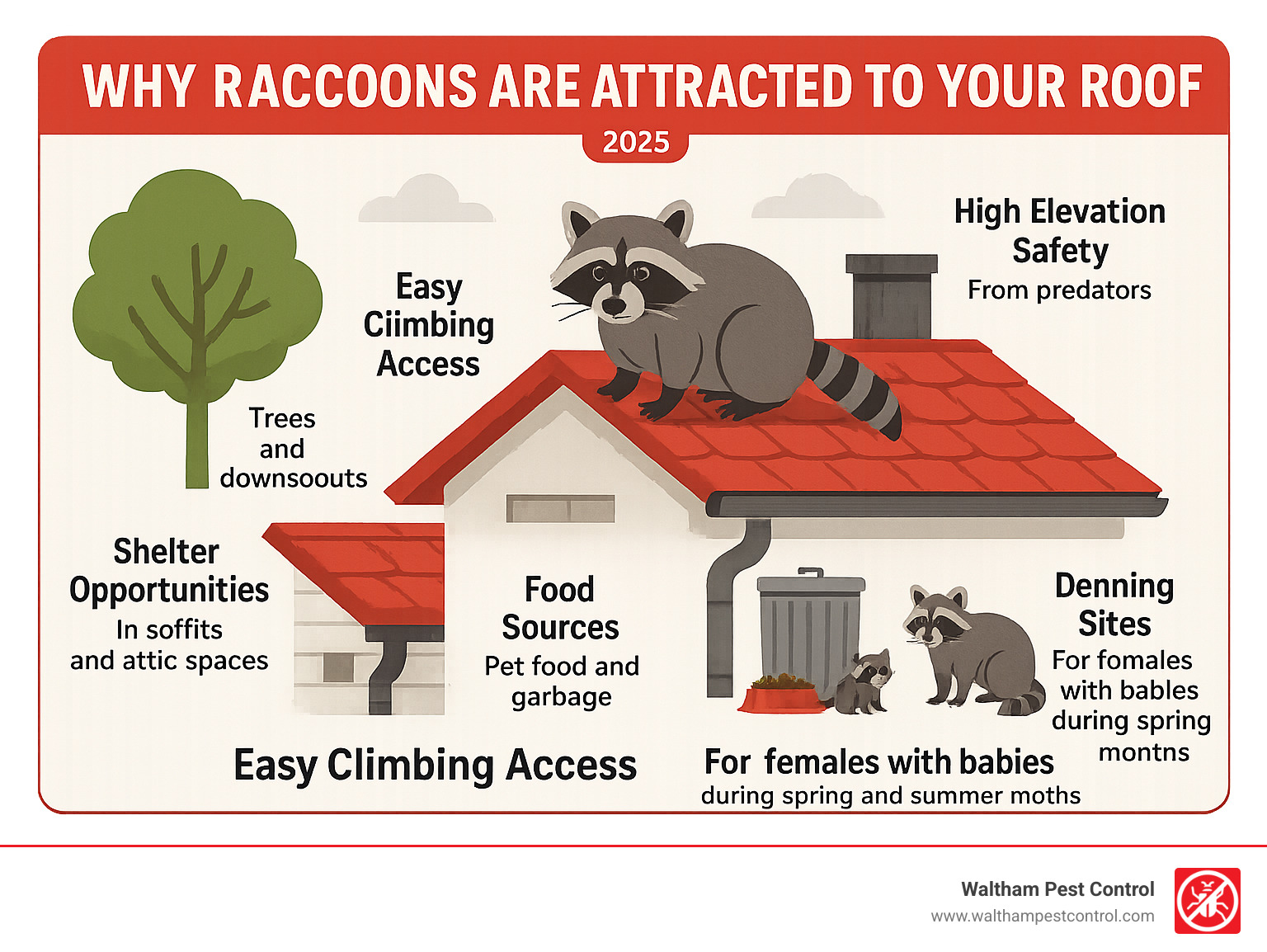
Why Raccoons Are Attracted to Your Roof
For a raccoon, your roof is a five-star hotel. These clever creatures realize our homes offer everything they need for comfortable living, and they aren’t shy about moving in.
Easy access is a major draw. Raccoons are athletic climbers, and suburban landscapes make their job easier. Overhanging tree branches are a highway to your roofline. Downspouts, siding, and brick walls also provide plenty of grip for their paws.
Once on the roof, raccoons find the high ground safety they crave. In nature, they seek tall trees to avoid predators. Your roof serves the same purpose, offering a quiet, liftd view of their territory.
Seeking shelter is a primary motivation, especially during harsh New England weather. A temporary rest stop becomes permanent when raccoons find unsecured chimneys and vents, which are open invitations into your warm attic.
The situation is more urgent during spring and summer activity. Female raccoons with babies are determined to establish secure denning sites. A mother raccoon will go to great lengths to create a safe nursery, even if it means tearing through your soffits, fascia, or roofing.
Searching for food adds another layer of attraction. Raccoons are opportunistic feeders. If your neighborhood offers easy meals like unsecured garbage, pet food, or bird feeders, they’ll keep returning. Your roof becomes their base of operations.
This combination of shelter, safety, food, and easy entry makes roofs irresistible to raccoons on roof at night. Once they identify your home as prime real estate, they often become permanent residents.
Understanding these motivations is crucial for prevention. For more details on these troublesome creatures, see our guide on raccoon habits.
Telltale Signs of Raccoons on Roof at Night
Hearing what sounds like a bowling ball dropped in your attic? You likely have raccoons on roof at night, and they aren’t subtle guests. Raccoons leave behind plenty of clues that make identification straightforward once you know what to look and listen for.
The Sounds: What You’ll Hear After Dark
Nocturnal raccoons are most active between dusk and dawn, and their sounds are hard to miss.
- Heavy thumping: Raccoons can weigh up to 40 pounds, and their movements are heavy and loud. This sound usually means they’re exploring your roof or having a territorial dispute.
- Loud scratching: This is a concerning sound, as it typically indicates they’re trying to break into your attic by tearing at shingles, soffits, or vents with their sharp claws.
- Scampering or walking sounds: You’ll often hear the patter of their paws as they move through gutters, explore chimneys, or test different areas of your roofline.
- Chattering or purring: Raccoons have a large vocabulary, including growls, hisses, and purrs. These vocalizations often indicate communication or excitement about finding a way into your attic.
- Crying or whining from baby raccoons: Persistent, high-pitched crying, especially in spring and summer, likely means a mother raccoon has established a nursery in your home. This requires immediate professional attention, as separating mothers from babies leads to more destructive behavior.
- Sounds of fighting: Raccoons are territorial, and disputes over your roof can result in aggressive vocalizations and altercations that sound like a wrestling match overhead.
The Sights: Visual Clues and Physical Damage
Daylight inspections can reveal the physical evidence of your uninvited guests.
- Damaged shingles or tiles: Raccoons have strong paws and sharp claws that make quick work of roofing materials. They will tear, lift, or chew through asphalt shingles, cedar shakes, or tiles.
- Torn soffits and fascia boards: These are prime targets for attic access. Raccoons will gnaw, claw, and pull at these materials to create entry holes.
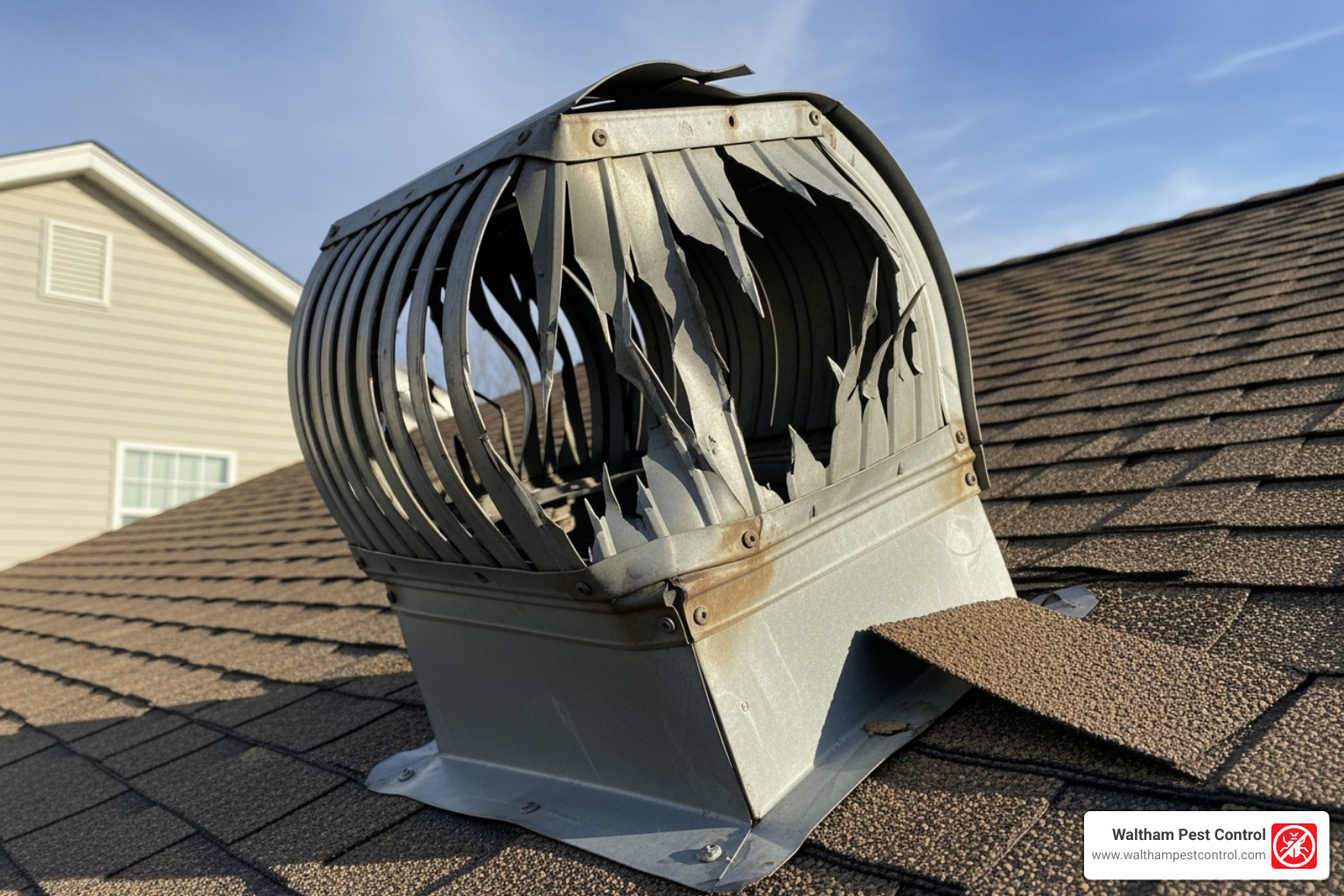
- Damaged vents or chimney caps: Lighter materials on vents and chimneys are easily manipulated or destroyed by determined raccoons.
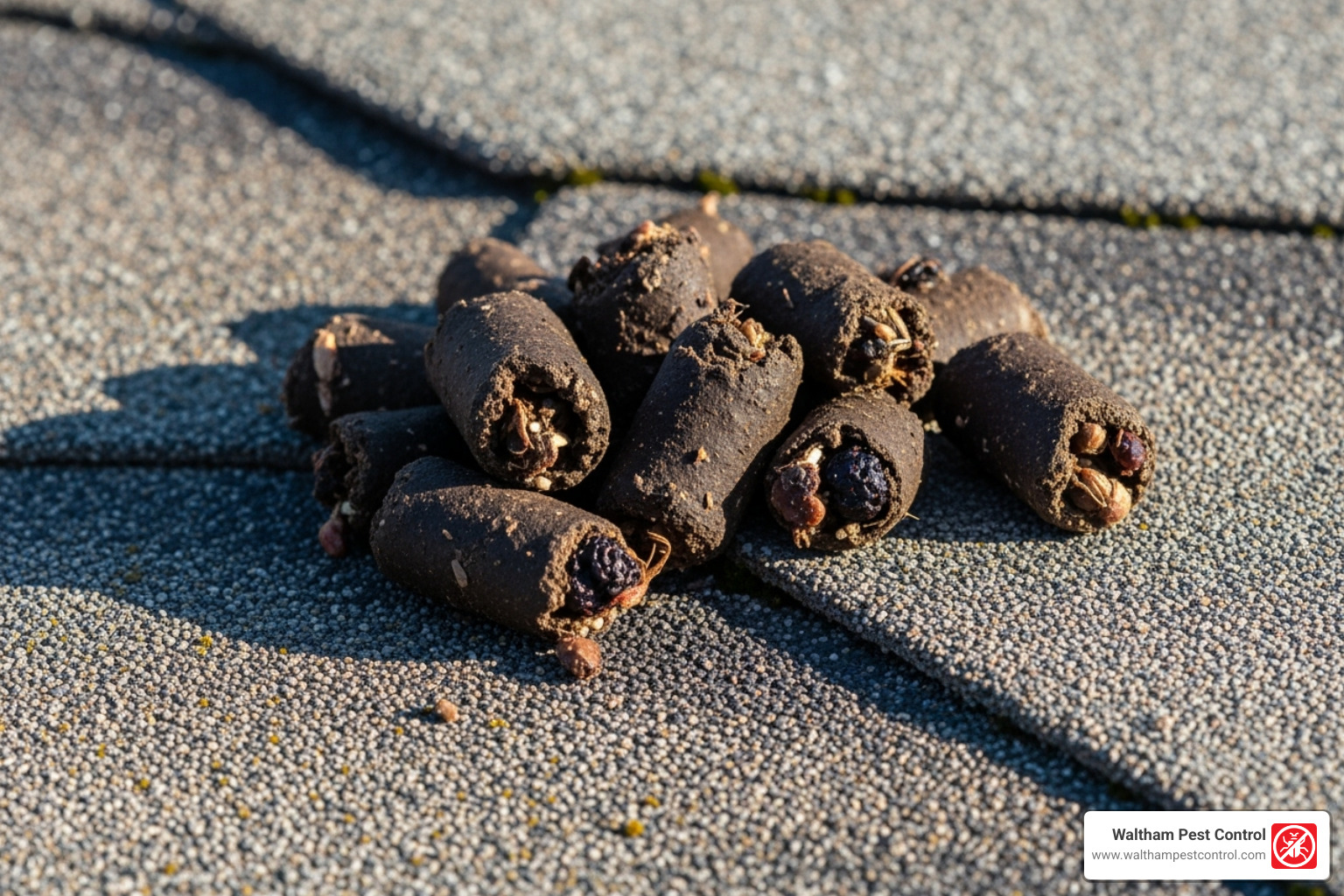
- Raccoon droppings: Raccoons create communal bathroom areas called latrines. Droppings are 3-5 inches long, dark, and tubular, often containing visible berry seeds. Finding these on your roof or in gutters indicates a persistent presence and poses serious health risks.
- Oily smudge marks: The oils and dirt from their fur leave greasy smudges on walls, downspouts, and bricks, marking their travel routes.
- Claw marks on trees: Look for vertical scratches on the bark of nearby trees, especially on branches that provide roof access. These marks reveal the raccoon highway system.
Even if you’re a heavy sleeper, these visual clues provide clear evidence that raccoons on roof at night have targeted your home. Catching these signs early is key to preventing major property damage.
The Dangers of a Rooftop Raccoon Invasion
The sounds of raccoons on roof at night signal more than a nuisance. These invaders bring serious health risks and can cause thousands of dollars in property damage.
Serious Health and Safety Risks
Raccoons carry multiple pathogens that threaten human health.
- Raccoon Roundworm (Baylisascaris procyonis): This parasite’s microscopic eggs are shed in raccoon droppings. If inhaled or ingested, the larvae can cause severe neurological damage, blindness, or death. Scientific research on Baylisascaris procyonis confirms this is a serious medical risk.
- Rabies Transmission: As primary rabies carriers, any raccoon acting strangely (daylight activity, disorientation) could be infected. Rabies is fatal without prompt treatment, making professional removal essential.
- Leptospirosis: Spread through raccoon urine, this disease can cause flu-like symptoms and progress to kidney or liver failure.
- Fleas and Ticks: Raccoons can bring these pests into your home, carrying risks like Lyme disease.
- Aggressive Behavior: A cornered raccoon, especially a mother protecting her young, will defend itself with sharp claws and teeth, inflicting serious injuries.
Costly Damage to Your Home
The physical destruction caused by raccoons often shocks homeowners. They don’t just visit your roof; they remodel it.
- Structural Damage: Raccoons tear through shingles, soffits, and fascia with surprising force, exposing your home’s underlying structure to the elements.
- Water Damage: Once the roof’s barrier is compromised, rain and snow seep in, causing rot, mold, and costly structural damage.
- Contaminated Insulation: Raccoons destroy insulation by tearing it for bedding and saturating it with urine and feces. This ruins its effectiveness and creates a biohazard that requires complete removal.
- Damaged Electrical Wiring: Raccoons often chew on wires, stripping insulation and creating serious fire hazards.
- Unpleasant Odors: Accumulated droppings, urine, and nesting materials create odors that can permeate your entire home and are nearly impossible to eliminate without professional cleanup.
Raccoons on your roof are threatening your family’s health and your home’s integrity, demanding immediate professional attention.
Your Action Plan: Prevention and Professional Removal
Finding raccoons on roof at night doesn’t have to be a disaster. With the right prevention strategies and professional help, you can protect your property and restore peace.
How to Prevent Raccoons from Accessing Your Roof
The most effective approach is stopping raccoons before they become a problem by making your home less appealing.
- Trim tree branches: Keep branches at least 6-8 feet away from your roofline to remove their highway to your roof.
- Install chimney caps: A sturdy metal cap blocks what looks like a penthouse apartment to a raccoon seeking a den.
- Secure roof and attic vents: Replace flimsy plastic covers with heavy-duty metal mesh that raccoons can’t chew through.
- Repair damaged soffits: Raccoons exploit existing weaknesses. Seal any gaps with strong materials like galvanized wire.
- Securing garbage cans: Use tight-fitting lids and bungee cords, or store bins in a garage or shed.
- Removing outdoor food sources: Bring pet food inside at night and clean up fallen fruit. Consider raccoon-proof bird feeders.
- Raccoon-Resistant Roofing Materials: When reroofing, consider materials that are harder for raccoons to damage. Metal roofing is slick and hard to grip. Heavy-duty shingles (reinforced asphalt, fiberglass) offer more resistance. Slate or tile is nearly impossible for them to damage.
Safe Cleanup and When to Call a Professional
Once raccoons are inside, cleanup is a serious health concern. This isn’t a DIY job—the risks are too significant.
DIY removal is dangerous. Raccoons carry diseases and become aggressive when cornered. Trapping a mother without her babies creates a bigger problem, as she will cause extensive damage trying to return.
The health risks from droppings (airborne roundworm eggs) are severe. Proper cleanup requires protective gear (N95 respirators, gloves, coveralls) and following biohazardous waste protocols.
Call a professional if you notice signs of a persistent infestation, such as ongoing noises, fresh droppings, or continued sightings. Professional help is necessary when you have an active raccoon presence, suspected entry, or evidence of nesting, especially with babies.
At Waltham Pest Control, we have handled complex raccoons on roof at night situations for over 40 years. Our licensed technicians use humane removal methods, assess and repair damage, and secure your home against future invasions. We handle the dangerous cleanup process with proper equipment, protecting your family’s health.
For details on our approach, visit our guide on humane raccoon control. When raccoons become more than a nuisance, professional intervention is essential.
Frequently Asked Questions about Raccoons on Roofs
In my four decades of experience, I’ve heard the same worried questions from homeowners. When you’re listening to raccoons on roof at night, these concerns are very real.
How can I tell if the raccoon on my roof has babies?
This is a critical question, as the presence of babies changes the removal approach. Look for these signs:
- Time of year: Females typically give birth between April and July. Activity during these months strongly suggests a nursery.
- Sounds: Baby raccoons make distinct high-pitched chittering and crying sounds, different from adult vocalizations.
- Female’s behavior: A mother will make multiple trips to and from the same spot on your roof to forage for her young.
- Increased noise: The overall noise level increases as the babies grow and become more active.
If you suspect babies are involved, do not attempt removal yourself. Separating a mother from her young creates a desperate situation and leads to more damage.
Will raccoons on my roof leave on their own?
Unfortunately, raccoons rarely leave on their own. Your attic provides the safe, warm shelter they need to survive and raise a family. Once they establish a den, they become territorial and will stay until forced to leave. Ignoring the problem only leads to more damage and greater health hazards. The only solution is to make the area inhospitable and seal all entry points, a job best left to professionals.
What does it cost to remove raccoons from a roof?
The cost of raccoon removal varies widely depending on the situation. Because every infestation is unique, providing a general price range can be misleading. For an accurate assessment and quote tailored to your specific problem, it’s best to contact Waltham Pest Control directly.
Several factors affect the final cost:
- Number of raccoons: A single raccoon is less complex to remove than a mother with babies.
- Extent of damage: Repairing torn soffits, damaged insulation, and multiple entry points can exceed the removal cost.
- Professional cleanup: Contaminated areas require specialized equipment and biohazard disposal methods.
- Trapping and exclusion process: The process involves multiple visits for trapping, removal, and securing entry points with durable materials.
While the upfront investment may seem significant, it’s less expensive than the ongoing damage raccoons will cause.
Get Professional Help for Your Raccoon Problem
Raccoons on roof at night are a serious threat to your family’s health and your home’s structural integrity. The risks from diseases like raccoon roundworm and rabies, combined with the potential for thousands of dollars in damage, require professional expertise.
DIY removal is dangerous and often backfires, especially when babies are involved. A professional assessment is crucial because every situation is unique. At Waltham Pest Control, we have helped Eastern Massachusetts homeowners with wildlife problems for over 40 years. Our licensed and insured team understands that effective raccoon removal requires comprehensive exclusion work, thorough cleanup, and monitoring to ensure they don’t return.
Our humane approach prioritizes your family’s safety and the animals’ welfare. We solve the problem permanently with strategic exclusion and repairs to prevent future invasions.
We proudly serve communities throughout Eastern Massachusetts, including Waltham, Burlington, Cambridge, Newton, Lexington, Concord, and dozens of surrounding towns across Middlesex County, Essex County, and beyond. Whether you’re in Salem or Framingham, our team is committed to quality, cost-effective solutions.
Don’t let raccoons turn your home into their playground. The longer you wait, the more damage they cause. If you hear sounds or see evidence of raccoon activity, it’s time for professional help.
Contact us for residential pest control services and let us restore the peace and safety your family deserves.
